
Everything I read said that if you want to beat the crowds, you’ll want to get there early. I was up at 5:15 AM and moving, and there was still a pretty good crowd when I arrived. I can only imagine what it would be like during prime time. That said, it was quite amazing.
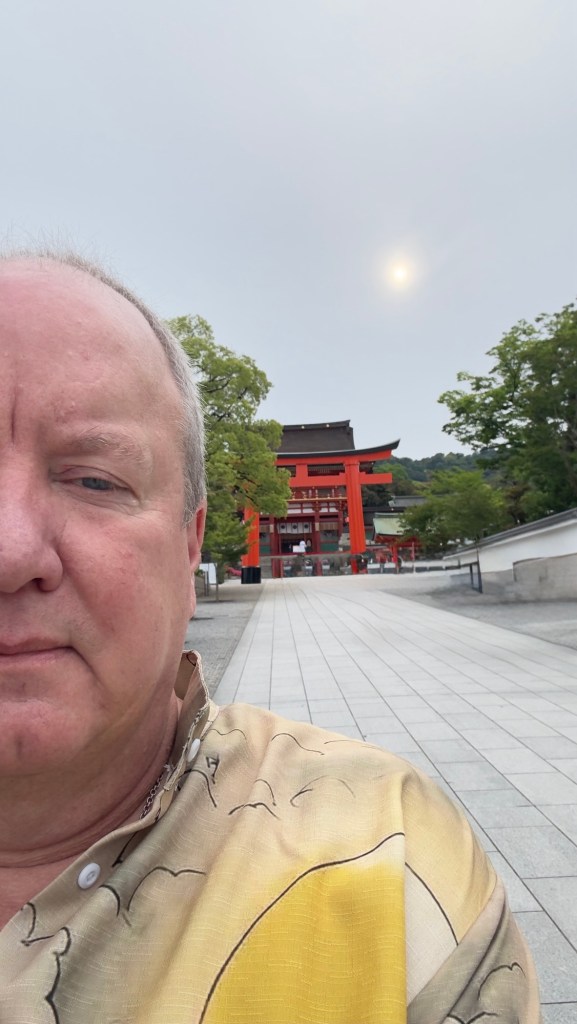
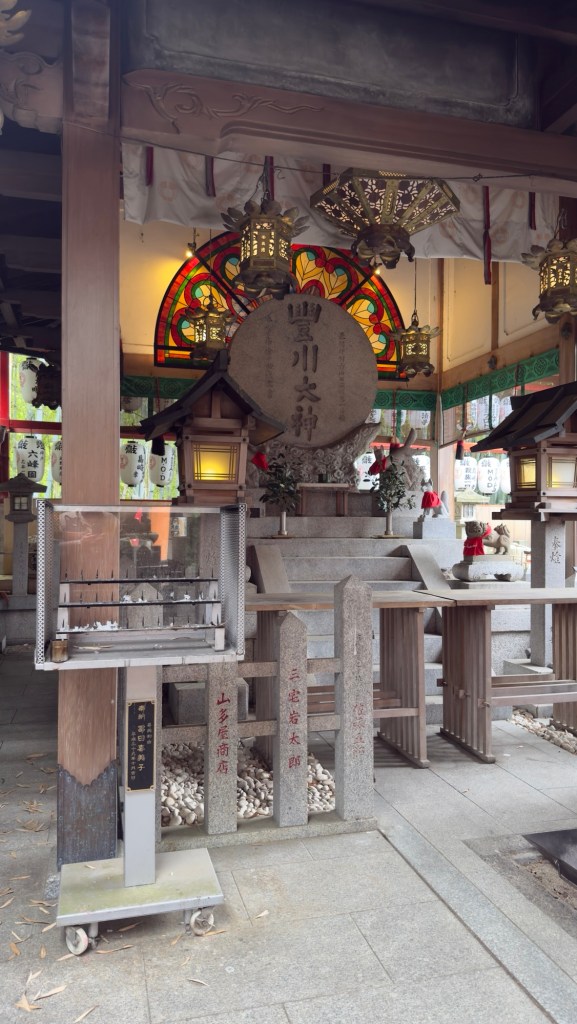
Fushimi Inari Shrine (伏見稲荷大社, Fushimi Inari Taisha) is an important Shinto shrine in southern Kyoto. It is famous for its thousands of vermilion torii gates, which straddle a network of trails behind its main buildings. The trails lead into the wooded forest of the sacred Mount Inari, which stands at 233 meters and belongs to the shrine grounds.
Fushimi Inari is the most important of several thousands of shrines dedicated to Inari, the Shinto god of rice. Foxes are thought to be Inari’s messengers, resulting in many fox statues across the shrine grounds. Fushimi Inari Shrine has ancient origins, predating the capital’s move to Kyoto in 794.
The torii gates represent a transition from the mundane to the sacred. They are places where spirits are said to pass through. Each gate is sponsored by individuals or organizations. There are thousands of them on these grounds.

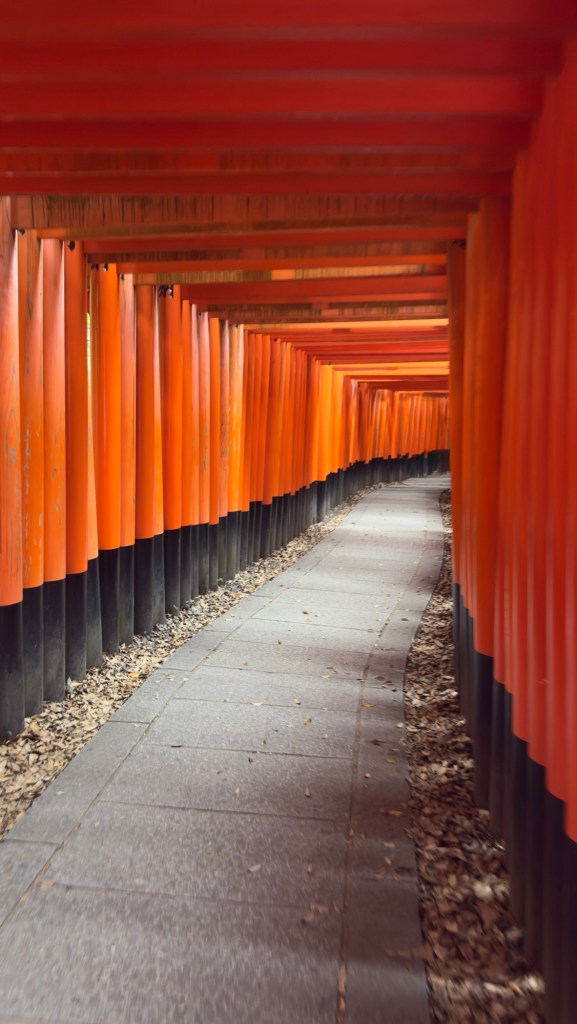
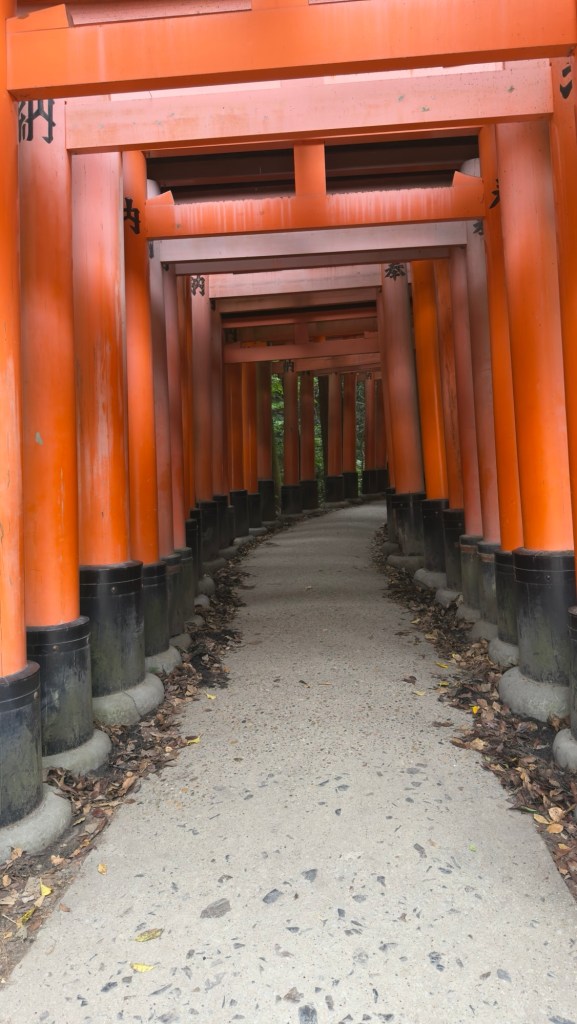

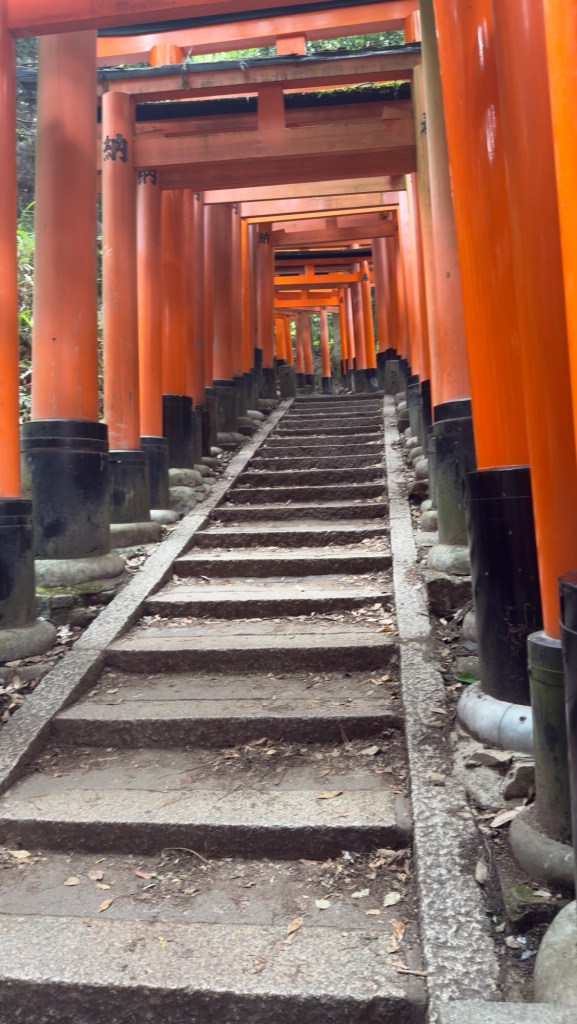
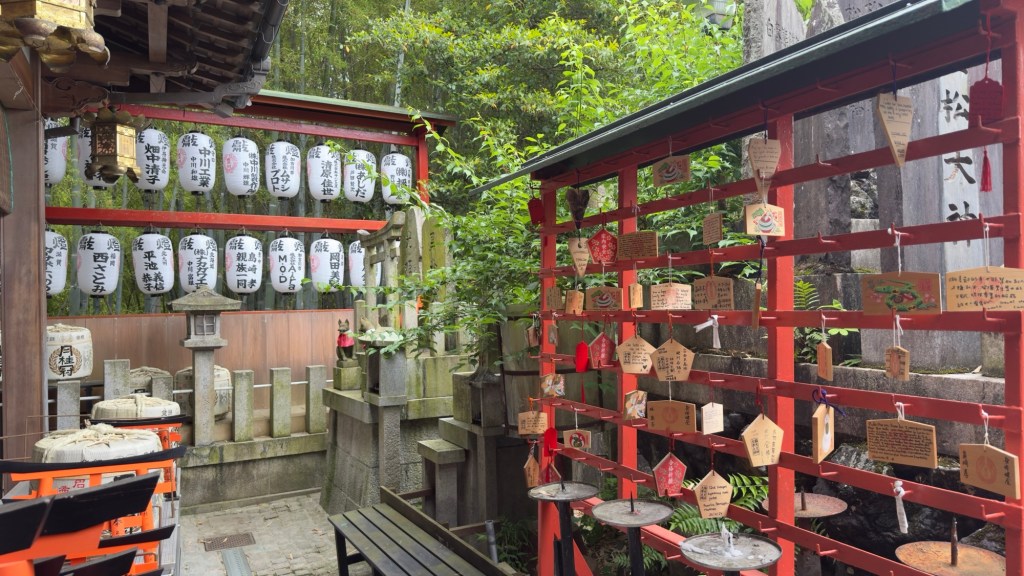
I did not make it all the way to the top, but that was not in the plan. Along the way, there are also many shrines.
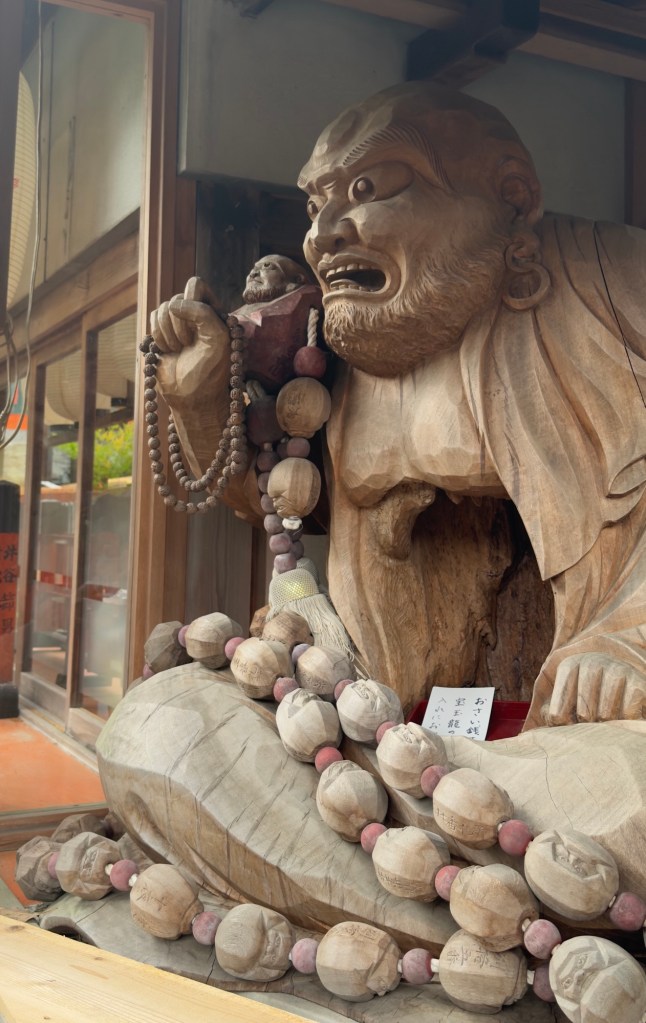
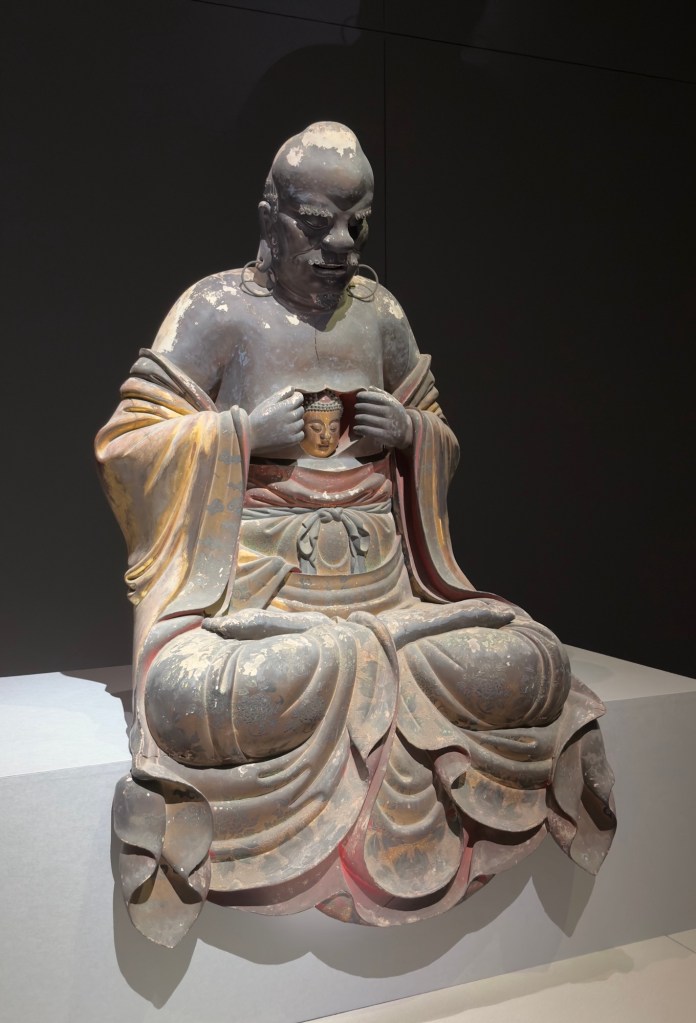
After climbing so many stairs, I had a sneaking suspicion that I looked like this guy. If me saying that is disrespectful, I do apologize. I suspect he is one of the many gods.
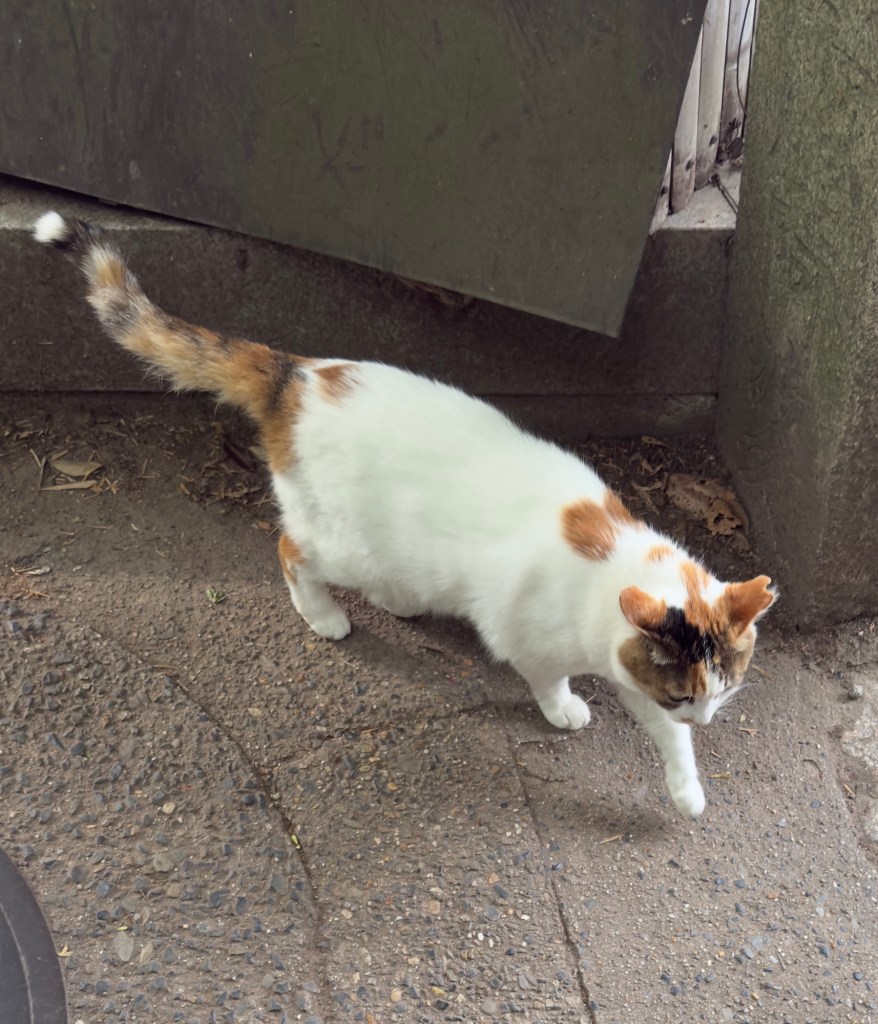
At one particular shrine, there were a number of cats. This one was on an errand, but he was kind enough to give me a leg bump as he moved past.
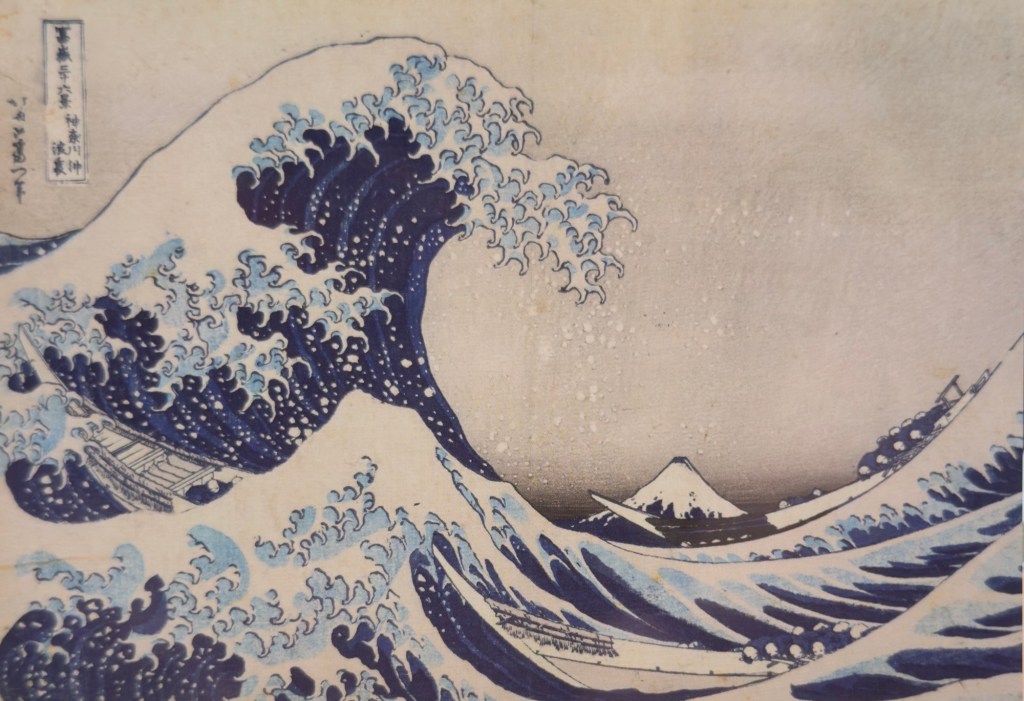
I took a short train, and a very crowded one because it was rush hour, and made my way to my next stop. I had planned on going to one place but ended up going to another. I saw all these people lined up waiting to get in and thought that was my line, so I got in line with them. It turns out I was in line for a special exhibit at the Kyoto Museum. They don’t let you take pictures, so I didn’t. (I know, I took pictures at the church when I wasn’t supposed to take pictures at the church, yada yada ya) However, I bought a book of pictures so I would have them because one was a painting we are all familiar with.
They allowed us to take pictures of one item. It has to do with the revealing of the Buddha within. I will not try to explain it. This is not my department, but it is an interesting idea.
I then made my way to my originally planned destination, which was right across the street.
Sanjūsangen-dō is a buddhist temple of the Tendai sect.
The temple was founded in 1164 by Taira no Kiyomori for the cloistered Emperor Go-Shirakawa. It is officially known as Rengeō-in (蓮華王院, hall of the Lotus King) and belongs to the Myōhō-in temple complex.
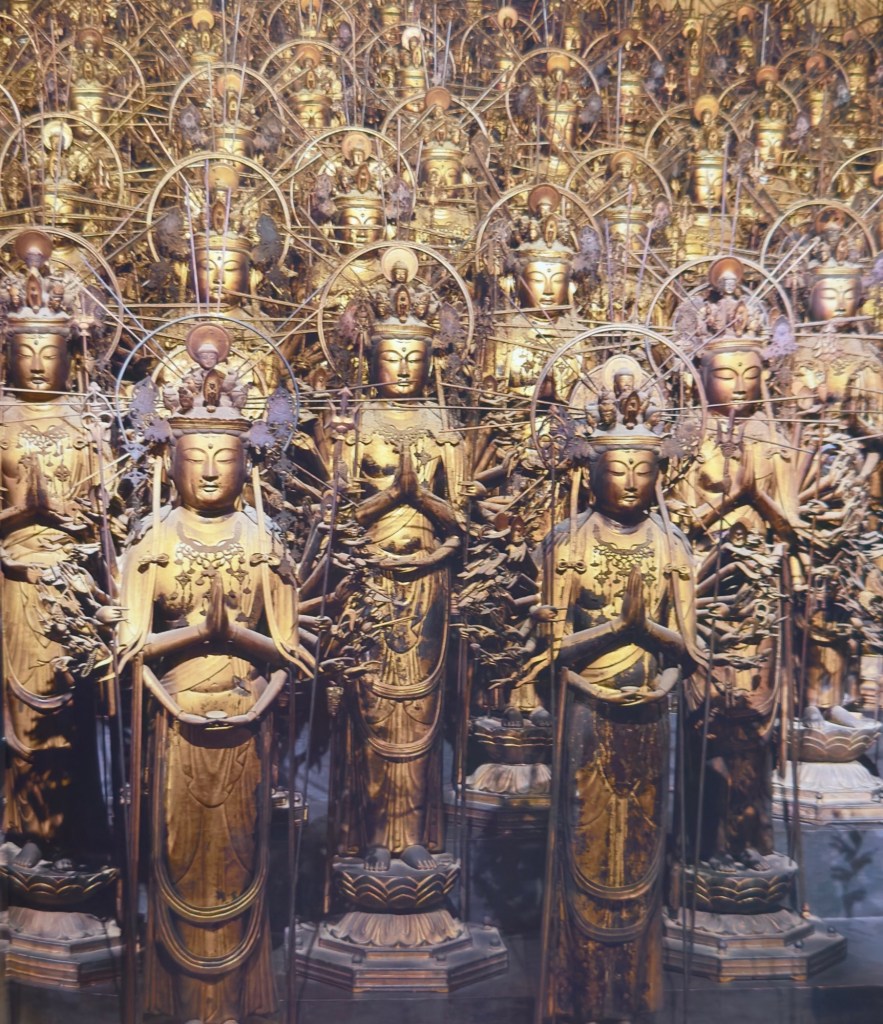
Sanjūsangen-dō is most famous for its massively long hondō (main hall) dating from 1266 (Kamakura period) and designated a National Treasure of Japan, and the collection of sculptures it houses, including 1001 standing Thousand-armed Kannon, 28 standing attendants, a statue of Fūjin and a statue of Raijin, and the principal image of the temple, a big seated statue of Thousand-armed Kannon, all of them designated National Treasures in the category of sculptures, most of them dating to the Heian to Kamakura periods.
In case you didn’t read all of that, there are 1001 statues! Again, you can’t take pictures of it, so I bought a picture book and took pictures of the pictures in the picture book.
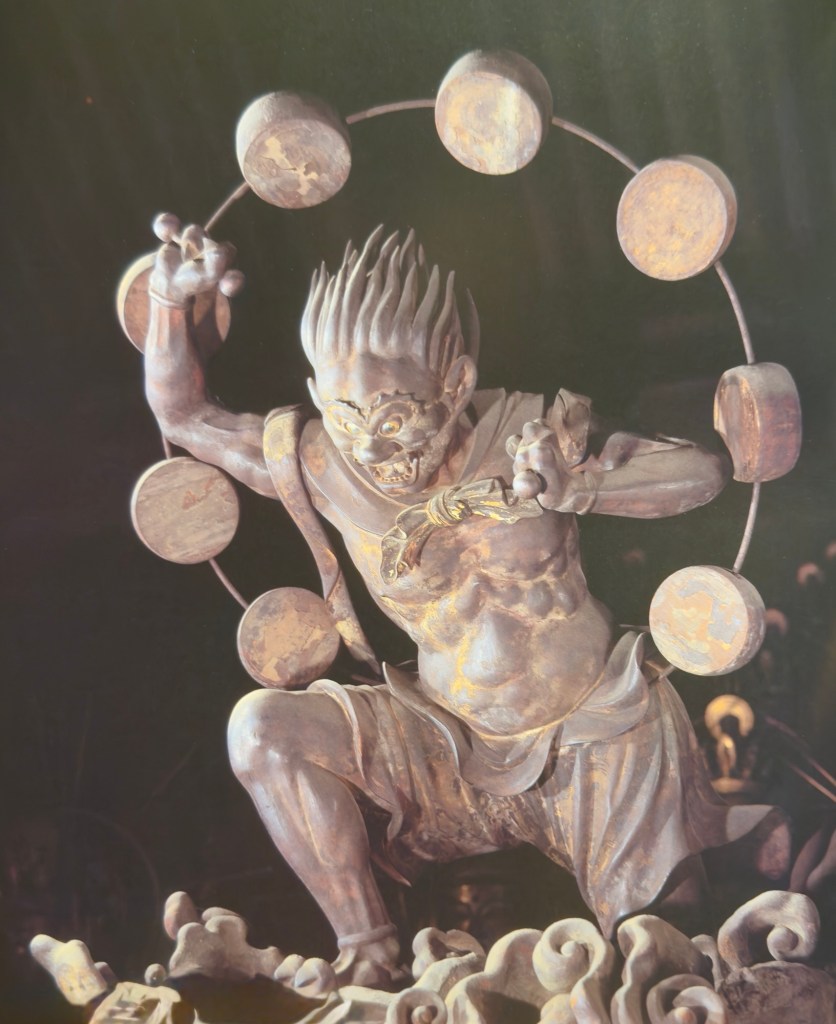
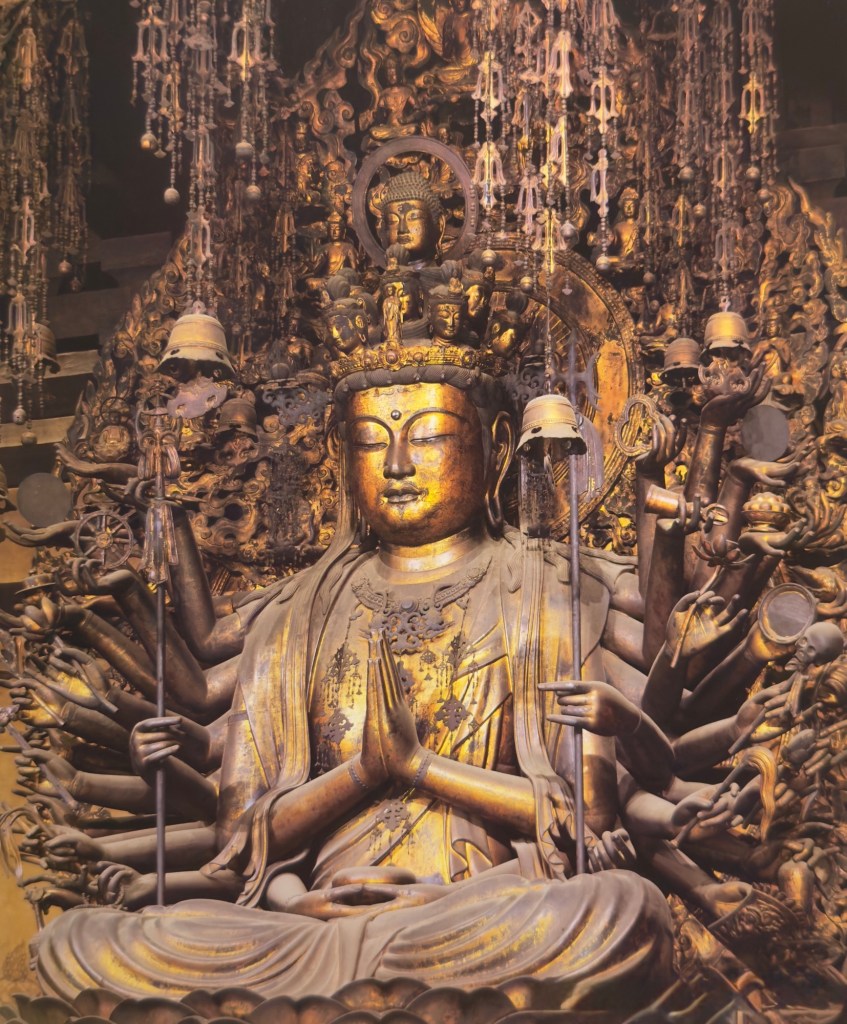
When I left the hotel this morning, I had anticipated being back in time for breakfast. Because I made that extra side trip, that didn’t happen, so by this time, I was done for a little while. I headed back to the hotel to freshen up and then find some lunch.
I was hungry enough that I forgot to take pictures of my lunch, but there was a line to get in. It was ramen noodles—not the kind you get at Jumbo’s grocery—and very tasty. I had the one in the bottom right-hand corner of the picture.
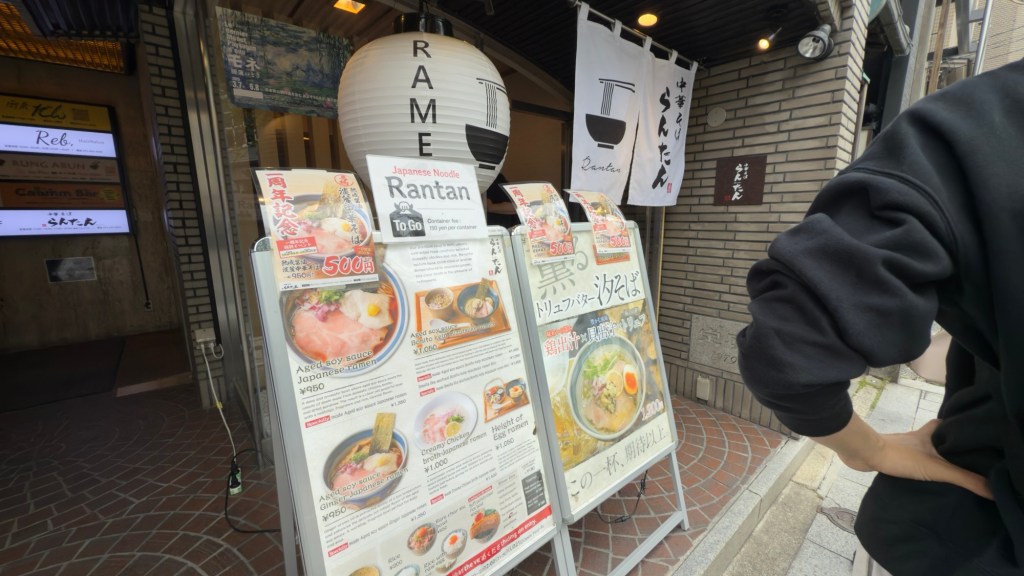
Seeing as I had no idea what I ordered, it came with something round and yellow with green flex in it, a bit like a coin, on top. I thought it was a tasty morsel. I popped it in. It was a big ol’ pat of butter! I discreetly removed it from my mouth and got it back in the bowl, where it did melt.
When it comes to eating Ramen noodles, the key is to slurp. I have been raised my entire life not to slurp my food. I would get smacked for slurping my food. I don’t know how to slurp food! I try. I watch the others and see how they do it. I cannot slurp. I have a slurping deficiency. I was afraid I’d slurp it right down and choke on it, and then that would’ve been bad. Nobody seemed to care, and I managed just fine.
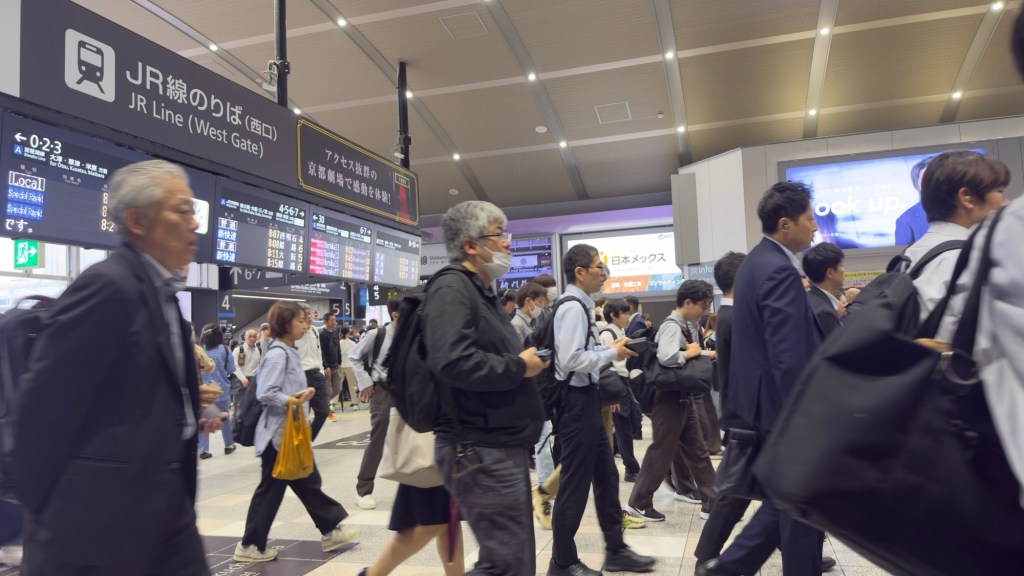
I have discovered that you don’t want to be out during rush hour or lunch hour. These people are busy; they have places to go, and they really don’t want the big dumb American in their way.
This is turning into the day that I want to go here, and I really didn’t mean to go there, but since I am here I guess I will see what’s happening, and then I’ll go to where I wanted to go. Confused? It’s easy to get that way.
So, after lunch, I returned to my room and propped up my feet. My feet were very happy.
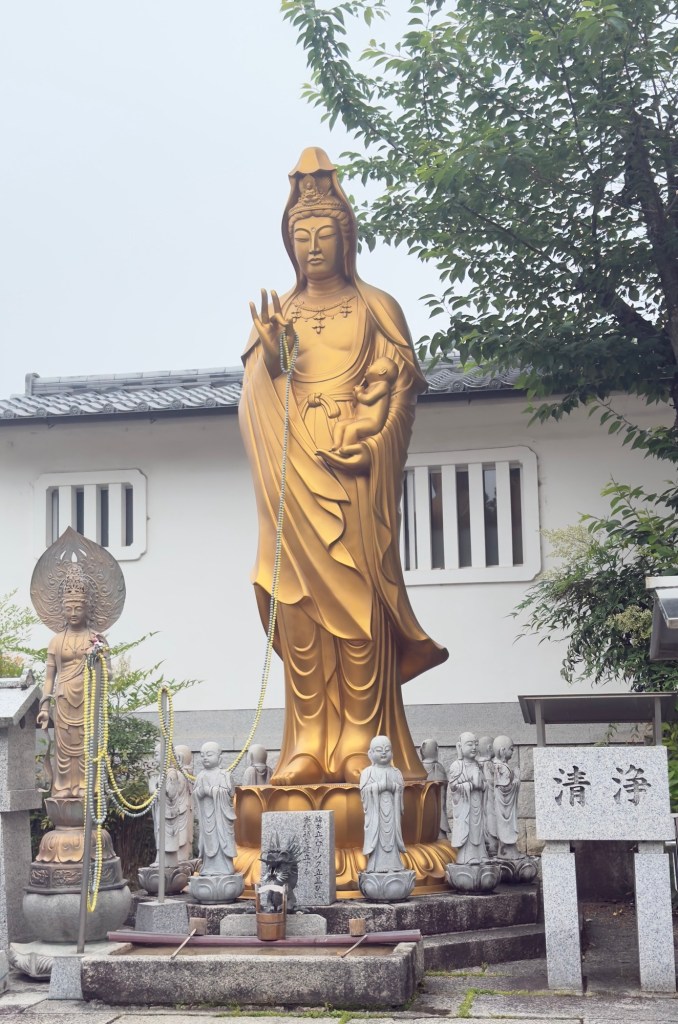
Another bus ride brought me to what I thought was the bamboo forest, but it was, in fact, a temple. At the temple was a very big statue—a statue of a very big happy lady.

She’s 500 tonnes of concrete and steel but Buddhist lore says Kannon’s a real softie. As she is compassionate to all living things, this temple is a memorial for many forgotten souls. Underneath the statue you’ll find a memorial for the 2 million Japanese lives lost in the Pacific War. But as Kannon does not discriminate, there is also another memorial hall for the unknown soldiers of World War 2. These were the foreign soldiers who died while protecting their countries. Built 10 years after the end of WWII, it’s clear to see that Japan was still reflecting on the devastating effects of the war. (Source)
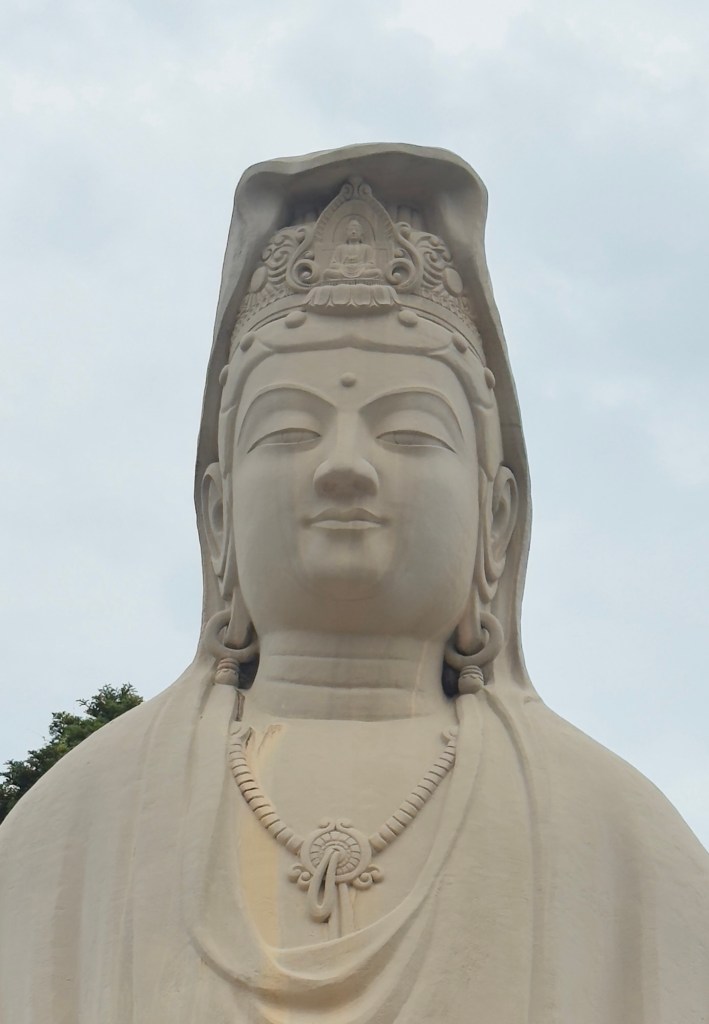
After my visit there, I did find my desired location, which was actually right next-door.
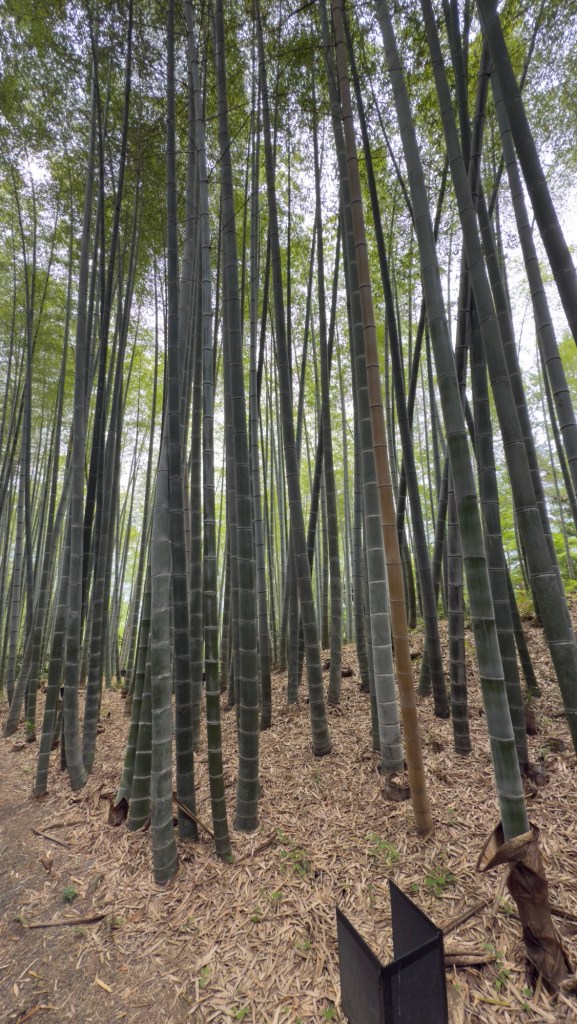
The Bamboo Forest, Arashiyama Bamboo Grove, or Sagano Bamboo Forest is a natural bamboo forest in Arashiyama, Kyoto, Japan. It consists mostly of mōsō bamboo.
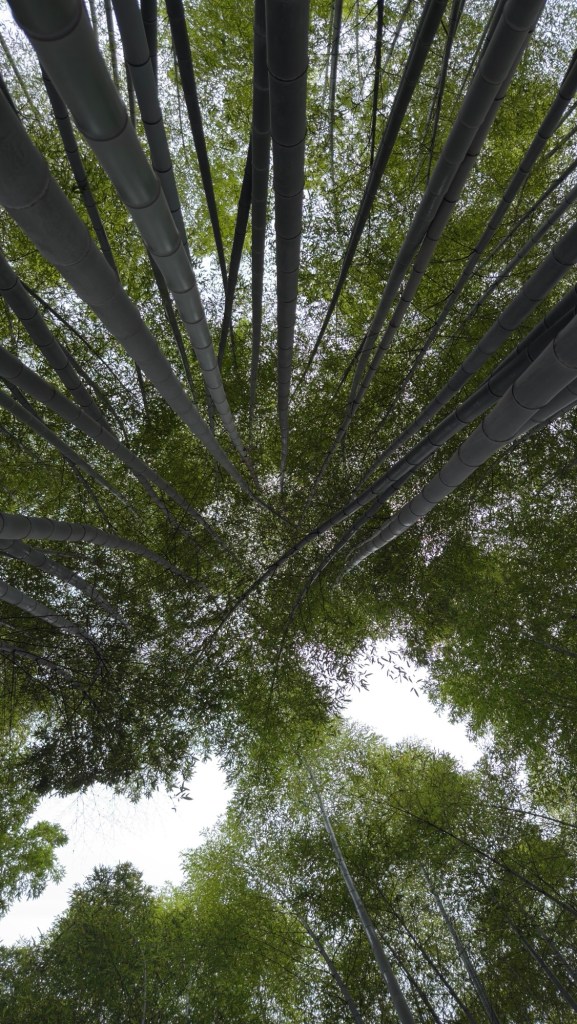

And my favorite photo of the day…
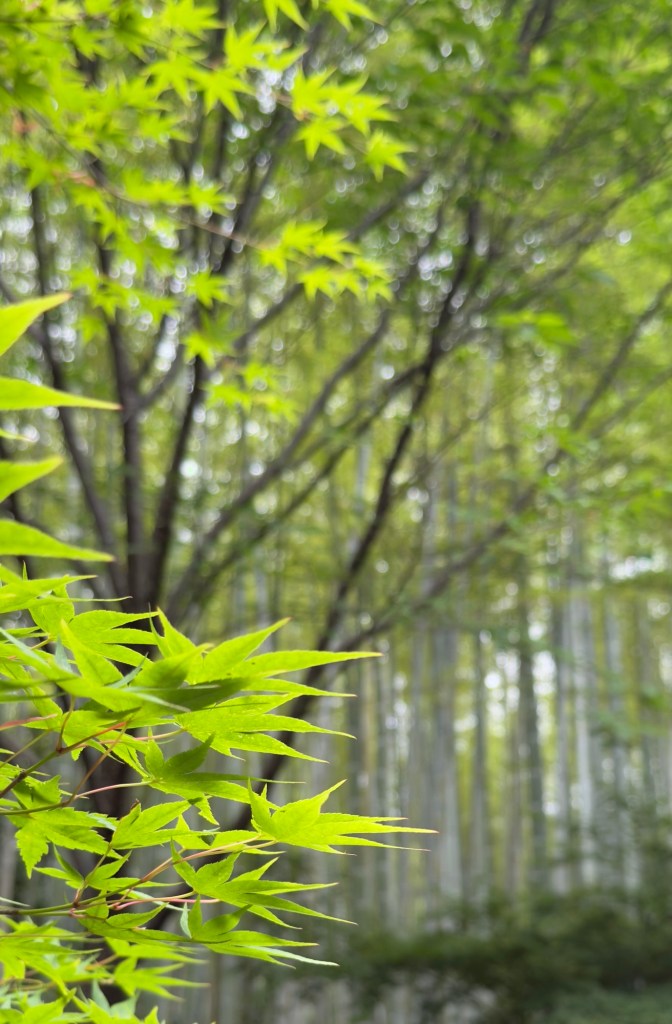
After leaving the serenity of the forest, the beauty of the psithurism, and fighting my way through several thousand schoolchildren, I decided that I would like an ice-cold beer. Some very happy fellas with twirling signs directed me into a location that was very near my hotel. I did not know what I was getting myself into. I REALLY did not know what I was getting myself into. It was a karaoke bar! And there were people singing!

At this point, I finished my beer and had a whiskey.
That is it, for now, my karaoke-loving friends. I’m going out tonight for supper. It’s a very special place, and there are only six seats available—that’s the whole restaurant. If I get in, I will have a supplemental post; otherwise, I will wander down after a bite of supper somewhere and see my friend Uno, whom I met last night, and let him know that I did get to the temple he wanted me to see.
Tomorrow is another travel day. We will be off to Osaka sometime around 11 AM. It’s about an hour on one of the slower trains. Osaka is my last station before coming home. What a trip.
 Candle in a Cave