
The U.S. standard railroad gauge (distance between rails) is four feet, eight-and-one-half inches.
Why such an odd number? Because that’s the way they built them in England, and American railroads were built by British expatriates.
Why did the English adopt that particular gauge? Because the people who built the pre-railroad tramways used that gauge.
They, in turn, were locked into that gauge because the people who built tramways used the same standards and tools they had used for building wagons, which were set on a gauge of four feet, eight-and-one-half inches.
Why were wagons built to that scale? Because with any other size, the wheels did not match the old wheel ruts on the roads.
So, who built these old rutted roads?
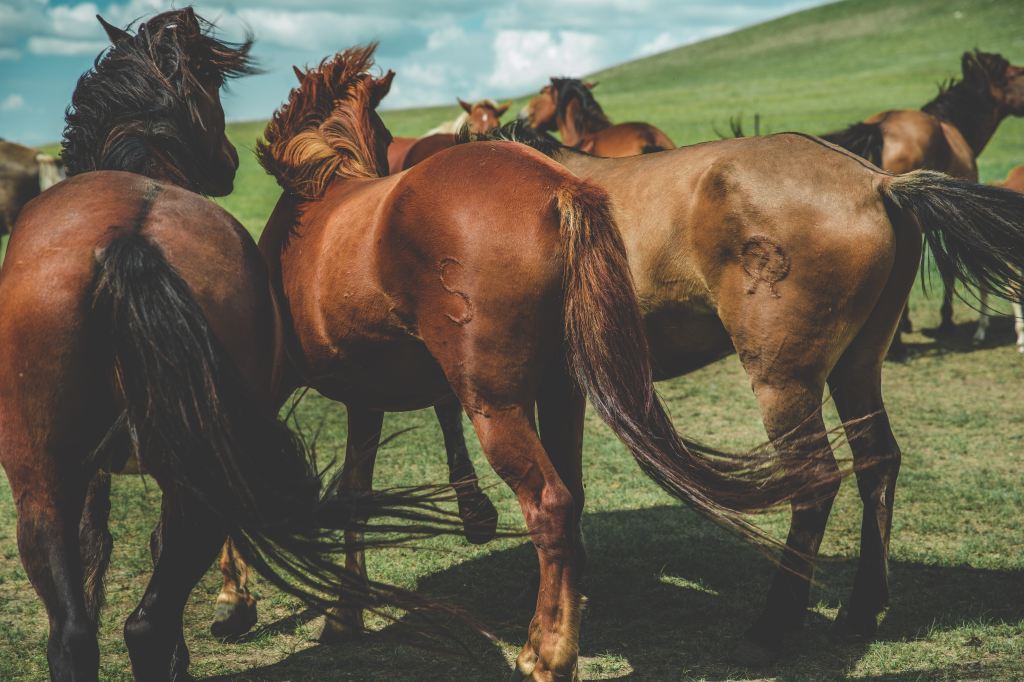
“The first long-distance highways in Europe were built by Imperial Rome for the benefit of their legions. The roads have been in use ever since. The ruts were first made by Roman war chariots. Four feet, eight- and-one-half inches was the width a chariot needed to be to accommodate the rear ends of two war horses.”
Some things never change, but perhaps they should, especially if the standard used to measure is a horse’s… backside.
The parable we heard today comes immediately on the heels of the parable we heard last week, the Parable of the Wicked Tenants. In that parable, Jesus condemned the religious leaders because they had not fulfilled the work God had given to them—to be the light of the world. This week’s parable is much the same but is not only applicable to the religious leaders but to everyone.
The king held a wedding feast for his son and sent out the invitations. The recipients of those invitations did not take it seriously. They made trivial excuses as to why they couldn’t attend—I have a hangnail, that’s the day I plan to rearrange my bookcases, I’m pretty sure I’ll have a headache that day, and so on. Upon receiving their invitation, others took it several steps further, abusing or even killing the messengers. All this enraged the king, so he sent in his troops and destroyed the city where those who had been invited lived; then, the king told his servants, “We’re having a wedding feast for my son; invite anyone and everyone.” So they did, and the wedding hall was filled.
In the parable, the king represents God, the people invited are the Israelites, and the messengers are the prophets. Time and again, God invited the people, forgave the people, and implored the people. He tried everything to bring them into a right relationship with Himself, but they refused. The last straw was their refusal to participate in the life of His Son, Jesus. What is stated next in the parable is a prophecy of what will transpire due to their refusal. First, God will burn their city. This is referencing the destruction of Jerusalem that occurred about forty years later in 70 a.d. Second, God invited others into relationship—God invited the Gentiles. He invited us to the wedding, into relationship with Himself through Jesus, and grafted us in. (cf Romans 11:11-24) The wedding hall was full, and they all lived happily ever after. Well, almost all.
“But when the king came in to see the guests, he noticed a man there who was not wearing a wedding robe, and he said to him, ‘Friend, how did you get in here without a wedding robe?’ And he was speechless. Then the king said to the attendants, ‘Bind him hand and foot, and throw him into the outer darkness, where there will be weeping and gnashing of teeth.’ For many are called, but few are chosen.” Who is this guy, and why did he get the boot? We need to go back earlier in Jesus’ ministry for the answer.
In Matthew 7, Jesus said, “Every tree that does not bear good fruit is cut down and thrown into the fire.” (v.19) He then says, “Not everyone who
says to me, ‘Lord, Lord,’ will enter the kingdom of heaven, but the one who does the will of my Father who is in heaven. On that day many will say to me, ‘Lord, Lord, did we not prophesy in your name, and cast out demons in your name, and do many mighty works in your name?’ And then will I declare to them, ‘I never knew you; depart from me, you workers of lawlessness.’” (v. 21-23)
Many appear to have heard the word of God and seem to be doing the work of God. They are doing and saying all the right things, but, as the saying goes, all that glitters is not gold. Soon after today’s parable, Jesus will say, “Woe to you, scribes and Pharisees, hypocrites! For you clean the outside of the cup and the plate, but inside they are full of greed and self-indulgence. You blind Pharisee! First clean the inside of the cup and the plate, that the outside also may be clean.” (Matthew 23:25-26) The man removed from the wedding appeared to be saying and doing everything right. He was all shiny on the outside but not so much on the inside. The man was happy being in his four-foot, eight-and-one-half- inch rut and did not think he needed to change. He said in his heart, take me as I am, or don’t take me at all; and God said, “OK,” and didn’t take him.
We read in St. Paul’s letter to the Philippians, “Beloved, whatever is true, whatever is honorable, whatever is just, whatever is pure, whatever is pleasing, whatever is commendable, if there is any excellence and if there is anything worthy of praise, think about these things. Keep on doing the things that you have learned and received and heard and seen in me, and the God of peace will be with you.” Keep on doing the things you have learned, received, heard, and seen. In other words, you were on a particular path, but you came to understand that it was the wrong path and, therefore, learned a new way. Keep going in this new way.
That old hymn, Just as I am—we can hear those words and think that God will take us just as we are. Will He? Yes, He will. No question. No doubt. Warts and all, but God does not plan on you staying just as you are. The former Bishop of Durham, N.T. Wright says, “When the prostitutes and extortioners came to Jesus, he didn’t say, ‘You’re all right as you are.’ His love reached them where they were, but his love refused to let them stay as they were. Love wants the best for the beloved. Their lives were transformed, healed, changed.” (Matthew for Everyone, vol. 2, p. 84) The man removed from the wedding feast wanted to go to the party but also wanted to stay as he was. In his arrogance, he did not believe he needed to be transformed, healed, and changed.
Peter Senge, a professor at MIT and the author of The Fifth Discipline, a book on business management, recalls the words of a consultant, “People don’t resist change; they resist being changed.” (p.144) That is true in business, and that is true in our daily lives, including our life with God. In our pride, we say, “I’m good enough, and I don’t need to change. God will just have to take me as I am.” We resist the changes that need to be made in our lives in order to reflect the righteousness we are called into. In the context of the parable, we say to the King, “The clothes I have on are good enough for me, so they’ll just have to be good enough for You.” The King says, “The standard by which you are measuring yourself is equal to a horse’s backside. Therefore, refusing to be transformed into the Image of God means you’ll never be anything more than a horse’s… backside.” Your refusal to be transformed means you’ll be removed from the wedding feast.
Jesus said, “Enter [the Kingdom of Heaven] by the narrow gate. For the gate is wide and the way is easy that leads to destruction, and those who enter by it are many. For the gate is narrow and the way is hard that leads to life, and those who find it are few.” (Matthew 7:12-13) Break out of the ruts of your life and follow the path where Jesus has led the way. By doing so, you will not be fashionable or a part of the crowd. As a matter of fact, you may find very few along the way, but if you are following Jesus, then He will lead you through the narrow gate and into the wedding feast.
Let us pray:
Father of love, hear our prayer.
Help us to know Your Will
and to do it with courage and faith.
Accept the offering of ourselves,
all our thoughts, words, deeds, and sufferings.
May our lives be spent giving You glory.
Give us the strength to follow Your call,
so that Your Truth may live in our hearts
and bring peace to us and to those we meet,
for we believe in Your Love.
Amen.
 Candle in a Cave