
Although we are not a part of the Roman Catholic Church, we follow many of the practices they have established. Although we are not a protestant church, we believe much of what they have brought to the discussion. We, as Episcopalians, are the “bridge church” between Roman Catholicism and Protestantism, which means, for the most part, we agree with both. That being said, we do pretty well with either, but the two have some significant differences, so if you ever want to watch a catfight between them, bring up some contentious doctrine and step back—take for example, Papal Infallibility. I’ve no way of proving it, but my guess as to the cause of this animosity on this topic is that 95% of both groups have no idea what Papal Infallibility means.
What does it not mean? Papal Infallibility does not mean that every word the Pope speaks is infallible and that he is without error. Even the popes agree with this. Pope Francis stated, “The Pope is not an oracle; he is infallible on the rarest of occasions, as we know.”
So the Popes are not infallible, but there have been occasions when they’ve spoken and what they’ve said is understood as infallible. This occurs when they speak ex cathedra—“from the chair” of St. Peter—and is a very specific process under strict rules. The exact number of times it has occurred is up for debate, but there are only seven definitive incidents. Two of these involved the nature of Christ; one dealt with matters after death, two more were in response to heresy, and the final two pertained to the Blessed Virgin Mary. It is the last that we consider today.
In 1950, Pope Pius XII declared, “By the authority of our Lord Jesus Christ, of the Blessed Apostles Peter and Paul, and by our own authority, we pronounce, declare, and define it to be a divinely revealed dogma: that the Immaculate Mother of God, the ever Virgin Mary, having completed the course of her earthly life, was assumed body and soul into heavenly glory.”
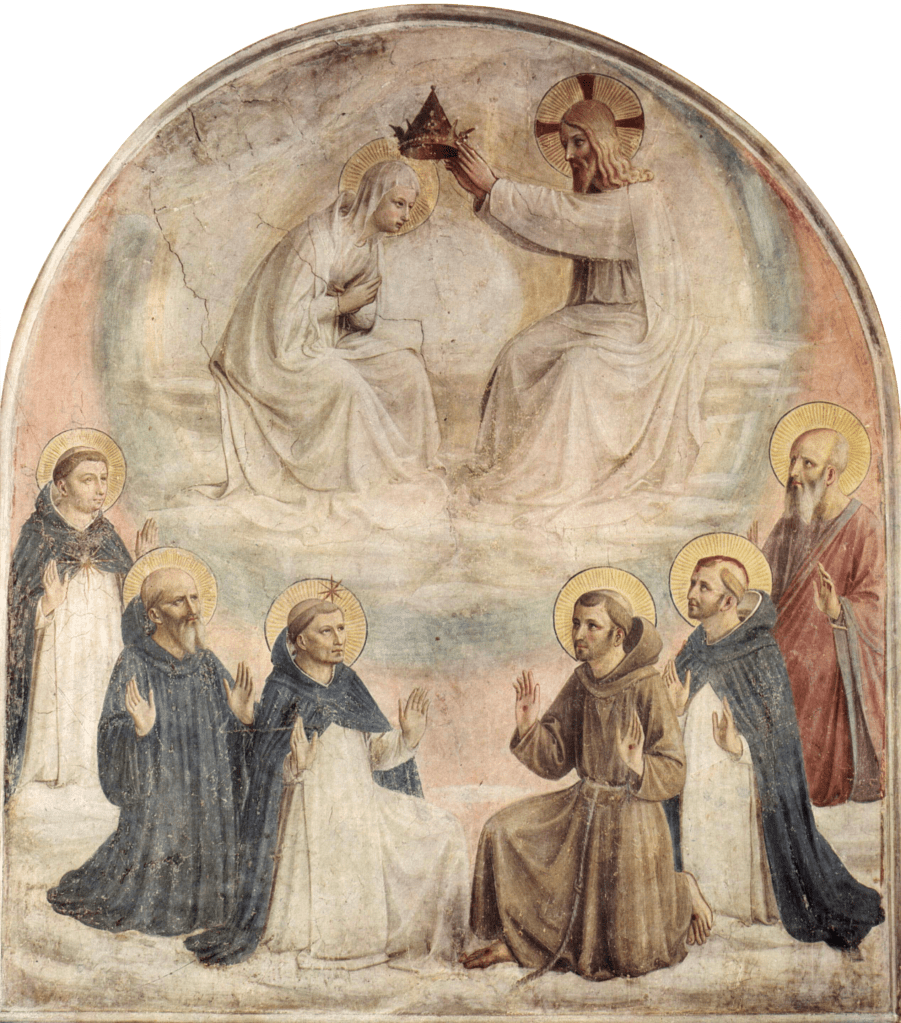
The Assumption of the Blessed Virgin Mary. It could not be imagined that Mary, whom God had chosen to bear His Son, would allow Mary’s body to be corrupted by death, so she was assumed—carried up—into Heaven and now lives the fully resurrected life we will attain on the last day. Some believe that she was carried up before she died, while others say that she died but then was immediately resurrected and carried up. Either way, she lives today as we will one day live.
The Feast of the Assumption fell off the Anglican calendar during the Reformation in England. It returned in the 20th century but has yet to be widely celebrated. Within the Episcopal Church, it remains a high feast day but only takes the general name of St. Mary the Virgin, omitting the word “assumption.”
Your salvation is not dependent upon your belief in this matter. Still, I believe your faith can be more deeply enriched by at least contemplating it, for, other than Christ Jesus, who else more wholly submitted to the will of God than Mary, the Mother of God?
I want to close with an excerpt from a sermon from an unknown Greek author: “Mary stood at your right hand, robed in a gown of gold, with adornment intricately wrought. Just as, being a woman, she was named queen and lady and Mother of God, so also now, standing as queen at the right hand of her most regal Son, she is celebrated in the sacred words of Scripture as clothed in the golden gown of incorruptibility. And so as we gaze upon him who is our king and lord and God, and upon her who is queen and lady and the Mother of God, contemplating them with the clear-sighted eye of our minds, let us repeat again and again unceasingly: The queen stands at your right hand, robed in a gown of gold with adornment intricately wrought.” (Little Office of the Blessed Virgin Mary, p.165)
Blessed are you among women. And blessed is the fruit of your womb. Amen.
 Candle in a Cave