
For June 18, 2023
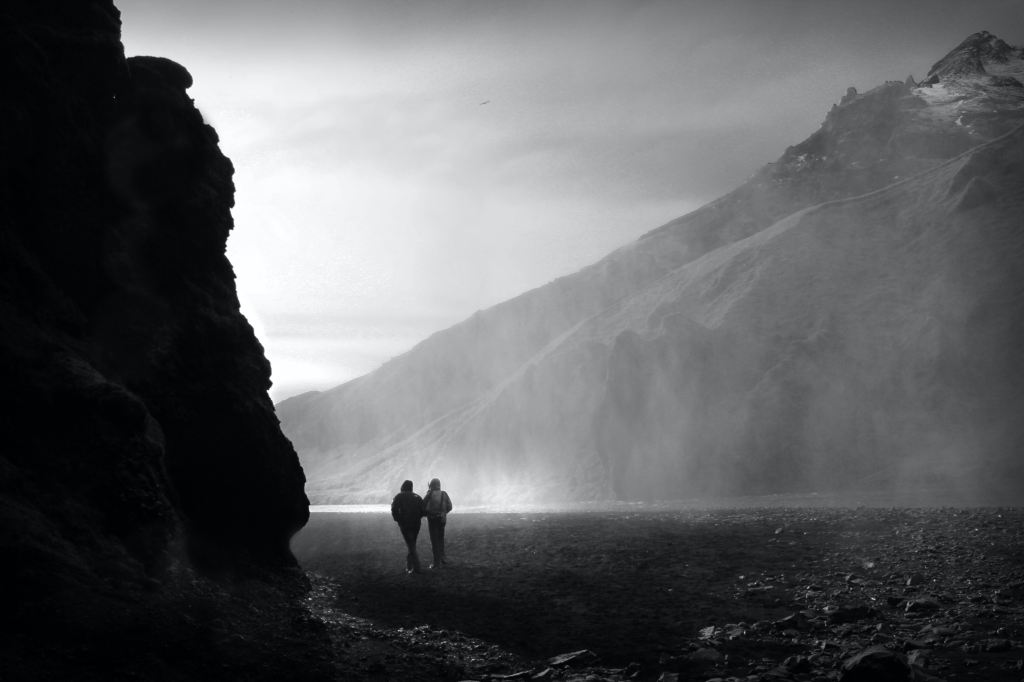
Walden; or, Life in the Woods, written by Henry David Thoreau, was first published in 1854. In it, Thoreau speaks about the two years, two months, and two days he spent living near Walden Pond in Massachusetts.
Being a naturalist, Thoreau wrote about his observations in nature but also about living a simpler life. He observed, “A man is rich in proportion to the number of things which he can afford to let alone.” A man is rich in proportion to the number of things he can do without. So, what can we do without? The list is a lot longer than you would think.
Some things make life more entertaining, but we can live without them: TV, sports, putt-putt golf—I would say, books, but my mind just won’t go there—social media, etc.
There are other items that make life more convenient, but we can also live without them, such as cars, computers, stoves, running water, coffee makers—note, I did not say coffee—cell phones, and the like.
There are even body parts that are unnecessary: one of your lungs, stomach, appendix, one of your kidneys, spleen; and just ask any politician, and you’ll learn you can live without a brain.
Today, in our Gospel reading, Jesus sent out the twelve disciples and gave them their marching orders: “Proclaim the good news, ‘The kingdom of heaven has come near.’ Cure the sick, raise the dead, cleanse the lepers, cast out demons.” He also told them what they were to go without: “Take no gold, or silver, or copper in your belts, no bag for your journey, or two tunics, or sandals, or a staff; for laborers deserve their food.” Go and do this work and take nothing with you except the clothes on your back and shoes on your feet. I could understand not sending them out with a second pair of shoes, but no money. Seems foolhardy. What would be the purpose?
I’ve shared with you that my favorite book is The Stand by my friend Stephen King. At one point, four of the characters are sent on a journey. Like Jesus’ disciples, they are told to take only the clothes on their backs and the shoes on their feet. One of the characters, Glen Bateman, is a sociologist. When the discussion comes up, and someone asks why they were sent out with nothing, Glen tries to provide an answer. He says, “Maybe to gain strength and holiness by a purging process…. The casting away of things is symbolic, you know. Talismanic. When you cast away things, you’re also casting away the self-related others that are symbolically related to those things. You start a cleaning-out process. You begin to empty the vessel.” (p.1198)
The same is true with the disciples that Jesus sent out. He sent them without anything so that they could become empty vessels. Not so that they would remain so, but so that they could then be filled with God and a reliance on God.
St. Paul writes to Timothy, “Now in a great house there are not only vessels of gold and silver but also of wood and clay, some for honorable use, some for dishonorable. Therefore, if anyone cleanses himself from what is dishonorable, he will be a vessel for honorable use, set apart as holy, useful to the master of the house, ready for every good work.” (2 Timothy 2:20-21)
The disciple of Jesus is emptied and then set aside for God’s honorable use. Yet notice, in both those instances—The Stand and the Gospel (and, no, I’m not putting them on equal terms)—the one thing those individuals were not told to go without was one another. The four went together in The Stand, and the disciples we learn in Luke and Mark, were sent in pairs; and you see in Matthew’s Gospel, they were named in pairs. You are to go with nothing but the clothes on your back and the shoes on your feet, but you are to go with one another.
I read about a recent study on loneliness that the Surgeon General published in May. The results were published in several sources. In a Forbes interview, the Surgeon General, Dr. Vivek Murthy, said, “Our epidemic of loneliness and isolation has been an underappreciated public health crisis that has harmed individual and societal health. Our relationships are a source of healing and well-being hiding in plain sight—one that can help us live healthier, more fulfilled and more productive lives.” (Source) We are living in an epidemic of loneliness and isolation. We have so many things that we don’t need, but the one thing we truly need—one another—many are lacking.
Remember the study of the 1,600 Harvard graduates I shared with you last week? The author of the study wrote, “Turns out, there was one—and only one—characteristic that distinguished the happiest 10 percent from everybody else: the strength of their social relationships.” (Source) In sharing that, I focused on our need for relationship with Jesus, but this week, I want you to understand your need for one another, particularly as it relates to your Christian walk and your daily life.
In Life Together, Dietrich Bonhoeffer writes, “If there is so much blessing and joy even in a single encounter of brother with brother, how inexhaustible are the riches that open up for those who by God’s will are privileged to live in the daily fellowship of life with other Christians!… It is grace, nothing but grace, that we are allowed to live in community with Christian brethren.” (p.20)
Bonhoeffer was thinking of Finkenwalde, the underground seminary he taught during the Nazi reign, but what he said applies to us all. Christianity does not exist outside of community, and it provides benefits to God’s people.
Through our life together, we are able to witness the work of God in one another. We hold one another accountable and can provide guidance. We come together in worship and prayer and live out our faith in word and deed.
A Lutheran pastor and professor, Reed Lessing, tells the story of a Native American ritual for training young braves:
On the night of a boy’s thirteenth birthday, he was placed in a dense forest to spend the entire night alone. Until then, he had never been away from the security of his family and tribe. But on this night, he was blindfolded and taken miles away. When he took off the blindfold, he was in the middle of thick woods. He was terrified!
Every time a twig snapped, he visualized a wild animal ready to pounce. Every time an animal howled, he imagined a wolf leaping out of the darkness. Every time the wind blew, he wondered if a storm was coming.
After what must have seemed like an eternity, the first rays of sunlight entered the interior of the forest. Looking around, the boy saw flowers, trees, and the outline of the path. Then, to his utter astonishment, he saw the figure of a man standing just a few feet away, armed with a bow. It was the boy’s father who had been there all night long!
When we become empty vessels for God, we discover the many things we can live without. However, within our Christian life, we cannot live without one another. Jesus is with us until the end of the ages, but we also need someone beside us to guard and care for us, just as we need to be there to guard and care for others.
Jesus sends us out to do the work He has called us to, but He has called us into relationship with Himself and one another so that we would not be alone along the way. Look around you. These are the ones that God has called you to walk with. They are here for you, and you are here for them. That is a sacred and holy bond, and as Bonhoeffer said, it is a grace—God’s undeserved favor—that we should be in community together.
Let us pray: Heavenly Father, author and inspirer of all things holy, hear our prayers for our Church. Send forth Your Spirit that Your Divine Will may humbly guide us. Touch our hearts with true generosity to raise up a house of God for the inspiration and renewal of all your faithful. We ask this in Jesus’ Name. Amen.
 Candle in a Cave
I don’t know about the putt putt golf line. I live in a community of about 7300 people and we have access to two putt putt golf courses.