
“Love is awful. It’s awful. It’s painful. It’s frightening. It makes you doubt yourself, judge yourself, distance yourself from the other people in your life. It makes you selfish. It makes you creepy, makes you obsessed with your hair, makes you cruel, makes you say and do things you never thought you would do.”
This is the moment when the camera shifts from the priest to two women in the congregation. The woman with black hair turns to the brunette and says, “There’s something wrong with your priest.”
Then the camera shifts back to the priest, who continues, “It’s all any of us want, and it’s hell when we get there. So no wonder it’s something we don’t want to do on our own. I was taught that if we’re born with love, then life is about choosing the right place to put it. People talk about that a lot, feeling right, when it feels right, it’s easy. But I’m not sure that’s true. It takes strength to know what’s right. And love isn’t something that weak people do. Being a romantic takes a hell of a lot of hope. I think what they mean is, when you find somebody that you love, it feels like hope.” (Credit: BBC’s Fleabag, written by Phoebe Waller-Bridge)
We know that Jesus was without sin. This is true, but He was a criminal; otherwise, why would He have been crucified? In his meditations, St. Bernard asked the same question: “What crime hast Thou committed that Thou shouldest have to be condemned to death, and that death the death of the cross? Ah, I will understand, replies the saint, the reason for Thy death; I understand what has been Thy crime: ‘Thy crime is Thy love.’ Thy crime is the too great love which Thou hast borne to men: it is this, not Pilate, that condemns Thee to die” (The Love of Jesus Crucified, p.20).
Jesus was a criminal, and his crime was “the superabundance of love” (Ibid.) that He holds for you—for us all. But how did Bernard and others come to such a conclusion?
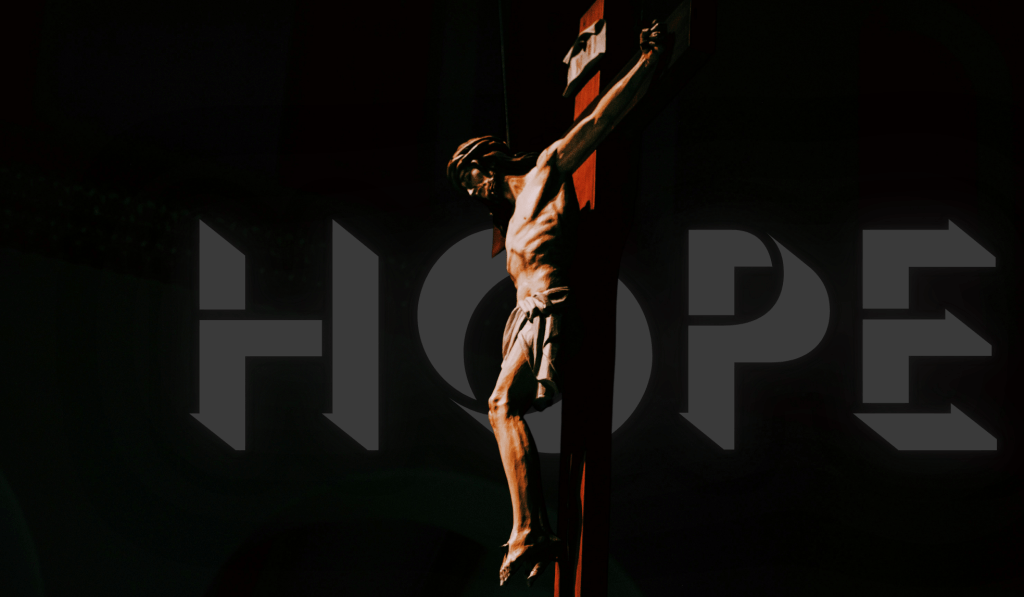
It doesn’t take much imagination to picture the horrors Jesus endured after His trial and ending with His crucifixion. Authors have written about it, filmmakers have made movies, scientists and doctors have analyzed it, and historians have provided the facts. There are many ways to be put to death, but crucifixion ranks among the most gruesome and painful. Yet, the question that saints asked was “Why?” In asking this, they weren’t questioning from a theological perspective. They all knew Jesus was the only one who could save us. Instead, they were asking, “Why couldn’t a different, less horrific way be found?” (Ibid., 21) There are two parts to the answer.
In the first part, St. Alphonsus Liguori asked, “Would it not have sufficed for him to have offered to his eternal Father one single prayer for the pardon of man? For this prayer, being of infinite value, would have been sufficient to save the world and infinite worlds besides. Why, then, did he choose for himself so much suffering and a death so cruel?” (Ibid.) St. John Chrysostom asked the same question, but also provides the beginning of an answer: “A single prayer of Jesus would indeed have sufficed to redeem us; but it was not sufficient to show us the love that our God bore us: ‘That which sufficed to redeem us was not sufficient for love’” (Ibid.). Jesus did not believe that a simple prayer was enough to show us how much he loved us. Chrysostom continues, “This was the principal cause of the Passion of our Lord; he wished it to be known how great was the love of God for man,—of God, who would rather be loved than feared” (Ibid., 23). Jesus could have prayed, and we would have been forgiven and restored to God, but Jesus wanted to express His love for us in a way that would be beyond doubt. “This,” Jesus said from the Cross, “is how much I love you.” “Greater love has no one than this, that someone lay down his life for his friends” (John 15:13).
The second part of the answer to “Why?” is more about us than about Jesus.
Imagine that Jesus prayed, not from the Cross, but from the upper room, “Father, forgive them.” And suppose there was a voice from Heaven, unmistakably the Father’s, who responded, “My Son, their sins and the sins of the whole world are forgiven.” Then see Jesus as He turns to the disciples and to us and says, “Your sins are forgiven. See what great love I have for you.”
Perhaps I’ve become too cynical, but I think most people would say, “Thanks, but one little prayer… is that really love? I mean, yeah, I appreciate it and all, but how does that prove you actually love me?”
If for no other person, Jesus knew my cynicism and declared, “Not only will I tell you that I love you, but I will show you to what extent I am willing to go so that you will know, without question, that I love you so that you can be with me. St. Thomas Aquinas wrote, “‘By this—that is the Passion—man understands the greatness of the love of God to man.’ And St. John had said before, ‘In this we have known the love of God, because He hath laid down his life for us (1 John 3:16)’ (Ibid., 23).”
The priest’s words, “Love is awful. It’s painful. It’s frightening.” I think Jesus could have written something similar. “Love is awful,” He would say. “It is painful. It is frightening. It makes you say and do things you never thought you would do—offer your face to be spit upon, your brow for a crown of thorns, your back to be whipped, your hands, feet, side… your very life.” Jesus says, “It takes a lot of courage to love, but I look at you, and I know nothing but love. I look at you, and I have such great hope. Hope that you will believe and receive my love so that we may be one.”
Jesus was a criminal, but Jesus was also a romantic through and through, and as St. Bernard tells us, “The secrets of his heart are revealed through the wounds of his body” (Ibid., 24). However, the saint adds, “Such love, wholly claims for itself our love” (Ibid., 25). If Jesus loves you with such a superabundance of love, how will you love Him? And if this is how you have been loved, how will you love others?
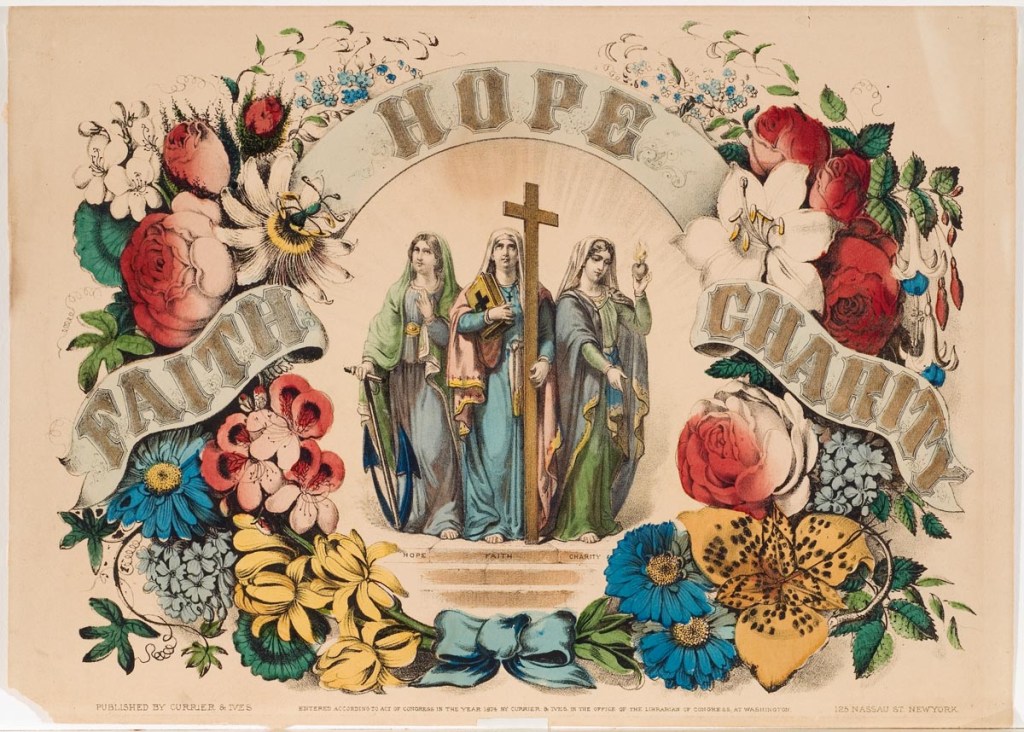
During this past Season of Lent, we embarked on a study of the seven Heavenly Virtues. We learned that these include the four Cardinal Virtues and the three Theological Virtues. The Cardinal Virtues are fortitude (spiritual courage), justice (seeking the common good), prudence (establishing rules), and temperance (moderation and balance). The first two Theological Virtues are faith, which is the loving and protective relationship with the Father, and hope, which informs our souls that this relationship is eternal. Love is the third Theological Virtue. It is the essence of the relationship, for “God is love” (1 John 4:7). Supporting all seven virtues is humility. If humility is lacking, we will fail. Finally, St. Padre Pio reminds us, “Humility and love are the main supports of the whole vast building on which all the rest depends. Keep firmly to these two virtues, one of which is the lowest and the other the highest.” In our Christian walk, if we begin with humility and love, all these others will follow.
This is the Sunday of the Resurrection. It is the day that Jesus conquered death and gave us, through His love for us, eternal life. Live a life that writes your own sermon: “Love is awful. It is painful. It is frightening. Love gives me hope. Love gives me the power to love, not only my neighbor, but my enemy as well. Love gives me the strength to overcome my sins, faith that I might stand and be true, compassion that I may care. Love makes me do things that I never imagined I could do.” Jesus endured much so that you might know the great love He has for you. Receive that love, and then, like Jesus, be a criminal, be a romantic, and through your practice of the Heavenly Virtues, express that love to God and the world.
Love is awful. It’ll make you do some crazy things, but these days, the world can use that kind of crazy.
Let us pray: Our most sweet Lord, we desire to do whatever You ask of us. We pray, help us, and grant that we may please You entirely and continually, now and forever. Mary, our Mother, entreat Jesus for us, so that He may give us His holy love; for we want nothing else in this world or the next but to love Jesus. Amen.



 Candle in a Cave