There was a priest who was such a golf addict that one Sunday, he called in sick and went golfing instead. An angel saw this and reported to God. “Let me handle this,” God said. The angel watched, but to his horror, the priest was playing the best game of his life. On the par three, seventh hole, the priest hit the perfect hole-in-one. The angel was livid. “I thought you were going to do something about this,” he said to God. “I am,” God replied. “Who’s he going to tell?”
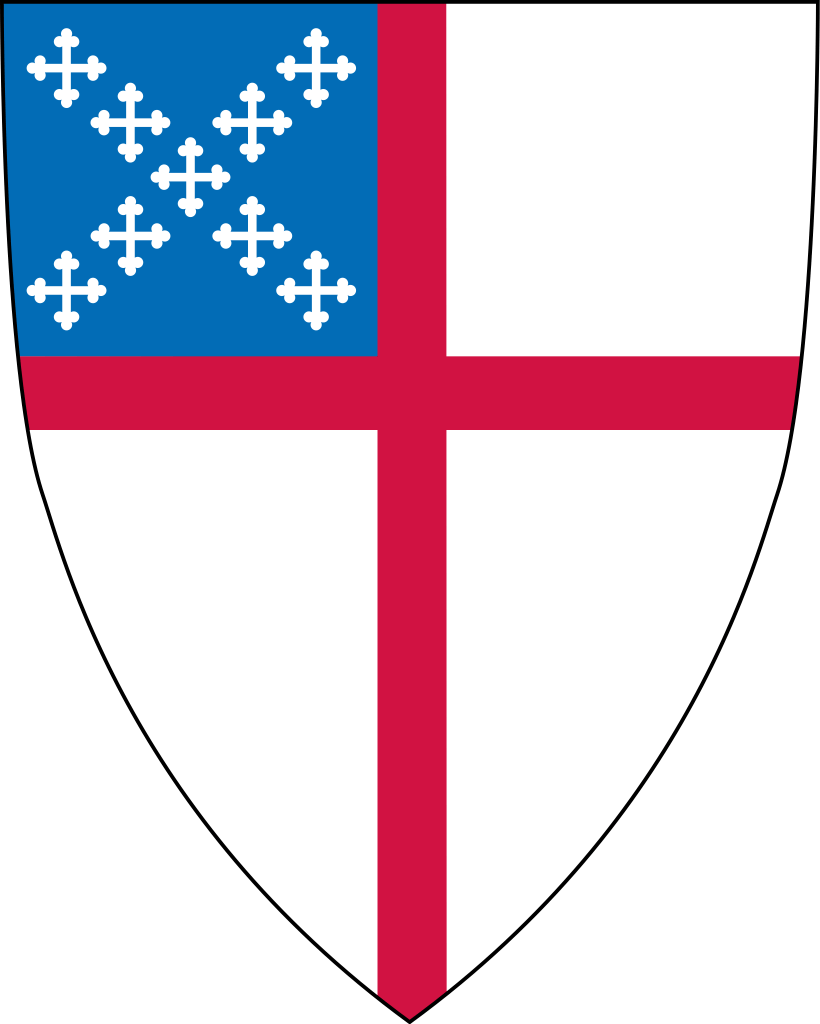
Why a golf story? Because the game of golf was invented in Scotland. Why think of Scotland? The Apostle Andrew, the Saint we celebrate today, is the Patron Saint of Scotland. How did a Jewish fisherman from Israel end up the Patron Saint of Scotland? That answer is a bit more fuzzy, but there are two likely scenarios. The first legend tells of Andrew’s extensive travels and that on one occasion, he did come to Fife, a region of Scotland on the northeast shore of England, and established a church there, now known as St. Andrew’s. Perhaps more believable, the second legend is that some of Andrew’s relics were brought to Fife in the 4th century, and a church was built to house them. Whichever the case, Andrew became widely known throughout Scotland, and many churches were named in his honor. As Episcopalians, we also have a connection to Andrew, which is memorialized in the shield of the Episcopal Church.
Our connection starts, of course, with Holy Scripture. We know that Andrew was Peter’s brother and that he was the one, at least in John’s Gospel, who introduced Peter to Jesus. We also know that Andrew was the one who brought the loaves and fish to Jesus before the miraculous feeding. From there, history and legend tell us that, like the other Apostles, Andrew went out proclaiming the Gospel, which eventually led to his arrest and martyrdom. He was to be crucified like Jesus, but he did not deem himself worthy to be crucified in the same manner, so he was instead crucified on a saltire, an “X” shaped cross. This “X” was incorporated into the flag of Scotland, which has a blue background with a large white “X” across it.
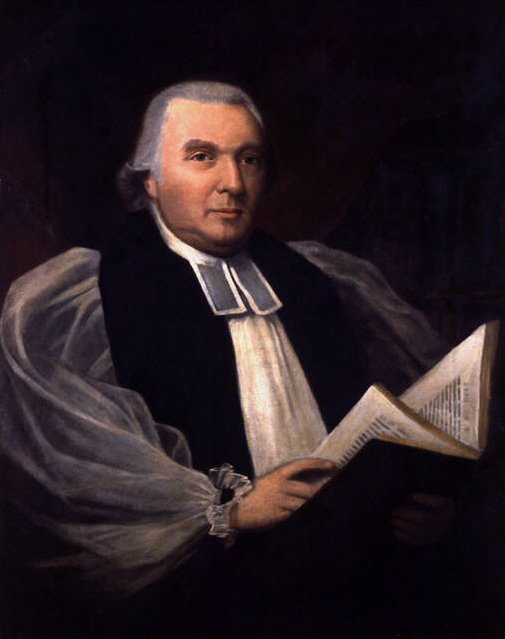
As we learned a few weeks ago, following the American Revolution, the fledgling United States had no Bishops, so Samuel Seabury first went to England in an attempt to be consecrated, but when that failed, he went to Scotland, and the bishops there consented. The following two American bishops were consecrated in England, so when James Madison was consecrated by those three, Madison became the first fully American bishop and reunited the Scottish and English lines of the Episcopacy, which brings us to the Episcopal Shield.
As you are aware, on the shield is a large red cross in the center, the Cross of St. George—a shout-out to England because George is the Patron Saint of England, but also, in the upper left quadrant of the shield is that blue field, with the nine small white crosses. Those nine small crosses represent the nine original dioceses of the Episcopal Church, but they are also in the shape of a saltire, an “X” on a blue field, the Scottish flag, and a shout-out to Andrew.
As a Christian people, we are a part of something much larger than ourselves. We, gathered here today, are the Body of Christ, but we, gathered throughout the world and across the centuries, are also the Body of Christ. We stand alongside Andrew and all the others as a Testament to the wondrous workings of our God and the truth of His Word.
I remember a time when I was probably ten or so, going squirrel hunting with my Grandaddy. It was a beautiful fall day with just a bit of fog. As I walked along looking up in the trees for the crafty squirrel, I came into this slight clearing, and in front of me were these four trees in a row, all the same height and age. Nothing too remarkable about that – trees are as thick as grass in that part of Louisiana – but the first tree was completely bare of leaves, already shed for winter; the second still had its leaves, but they were brown; the third also had leaves, but were this brilliant yellow; and the fourth was still green as though winter hadn’t touched it at all. Perhaps that isn’t so remarkable to some, but it’s been almost fifty years since I saw those trees, and the memory of them still blesses me today. There is a perfect chance that I was the only person on the planet who ever saw them like that, but it was truly remarkable. Yet, had I been wandering around with my head down, I never would have seen them.
Today, we, as the human race, spend a lot of time looking down. We look down at our phones and get caught up in what we see on those tiny screens. We look down because the terrors of the world can sometimes be so overwhelming. We look down, so focused on our own lives—whether because of careers or troubles or vanity—we look down on our own lives and are consumed with our little sphere. But by looking down, we never see God’s blessings around us.
It is time to look up. See the blessing of the smile of the stranger sitting next to you. Look up from the terrors of this world and see the wonders of creation. Look up from yourself and your concerns and see the other. You all have probably heard the words of Mr. Rogers that he spoke to the children while sitting in his neighborhood: “When I was a boy and would see scary things in the news, my mother would say to me, ‘Look for the helpers. You will always find people who are helping.’” Looking up and seeing the helpers is good advice, but I invite you to take it one step further: look up and see God. Look up and see the blessings.
All that is evil in this world could fit on the head of a pin compared to all the blessings surrounding us. Those blessings for which we should give thanks may be four trees in a clearing on a foggy morning that are seen only by you, but they are God’s gifts to you.
Look up. Look up and know that the Lord is God. Look up and experience the joy that God has prepared for his people.
The Psalmist writes,
Make a joyful noise to the Lord, all the earth! Serve the Lord with gladness! Come into his presence with singing! Know that the Lord, he is God! It is he who made us, and we are his; we are his people, and the sheep of his pasture. Enter his gates with thanksgiving, and his courts with praise! Give thanks to him; bless his name! For the Lord is good; his steadfast love endures forever, and his faithfulness to all generations.
Look up and, Give thanks to the Lord; bless His name! For the Lord our God is good.
King Henry VIII’s title: “Henry the Eighth, by the Grace of God, King of England, France and Ireland, Defender of the Faith and of the Church of England and also of Ireland in Earth Supreme Head.” A lot to remember, but relatively short when considering the late Prince Philip’s title consisted of 133 words.
The Royals. The British monarchy seems to have lost something since the death of Queen Elizabeth, but their lives are still interesting and, when you dig a little below the surface, a bit odd.
It is fairly common knowledge that you don’t touch a member of the royal family unless initiated by one of them, and then only a handshake, and that the King is not required to have a driver’s license. However, other aspects of their lives…
Everyone must weigh in before and after the meal when invited to Christmas dinner. According to Edward VII, who set the rule, you didn’t have fun if you didn’t gain any weight.
Queen Elizabeth had someone break in her shoes. According to an aide, “a flunky wears in Her Majesty’s shoes to ensure that they are comfortable and that she is always good to go.” However, it seems that Charles is a bit more prissy; after each wearing, someone must iron his shoelaces.
So that Charles does not become overtaxed too early in the day, he requires his valet to “squeeze one inch of toothpaste onto his toothbrush every morning.”
That’s only the beginning of oddities, but all this to say, “It really is good to be King (or Queen.)” It also proves the point of the prophets of Israel who told the people, “You really don’t want a king.”
We’ve been studying the Book of Judges on Sunday mornings and recently been covering Gideon. We’re soon going to learn that after a great victory, the people want to make Gideon their king, but Gideon says to them, “I will not rule over you, and my son will not rule over you; the Lord will rule over you.” (Judges 8:23) However, during Gideon’s lifetime, he had seventy sons (more than one wife.) Two of the sons were Jotham and Abimelech. Jotham was good, Abimelech, not so much. After the death of Gideon, Abimelech decided that he did, in fact, want to be king. Concerned that one of his sixty-nine brothers might have similar ideas, he murdered them all except Jotham, who was in hiding.
On the day of Abimilech’s installation as king, Jotham came out of hiding and prophesied against Abimilech and his followers. Jotham told them a parable, “Listen to me, you leaders of Shechem, that God may listen to you. The trees once went out to anoint a king over them, and they said to the olive tree, ‘Reign over us.’ But the olive tree said to them, ‘Shall I leave my abundance, by which gods and men are honored, and go hold sway over the trees?’ And the trees said to the fig tree, ‘You come and reign over us.’ But the fig tree said to them, ‘Shall I leave my sweetness and my good fruit and go hold sway over the trees?’ And the trees said to the vine, ‘You come and reign over us.’ But the vine said to them, ‘Shall I leave my wine that cheers God and men and go hold sway over the trees?’ Then all the trees said to the bramble, ‘You come and reign over us.’ And the bramble said to the trees, ‘If in good faith you are anointing me king over you, then come and take refuge in my shade, but if not, let fire come out of the bramble and devour the cedars of Lebanon.’” (Judges 9:7b-15)
In the parable, the fig tree and the vine represent men who would have made good leaders for the people. Yet, like Gideon, the others recognized that they were doing good in their current position. They also recognized that the best king the people could have was the Lord, so they refused the position. However, the thornbush—Abimelech—thought he should be king despite his father’s promise that none of his sons would serve as king. When you think of the bramble or thornbush, you know that it grows through the forest, living off the life of the other trees. Eventually, it chokes the life out of them. In saying this, Jotham is saying that Abimelech will be a king who lives off the wealth of the others until he will choke the life out of them. If they do not submit to him, fire will come out of the thornbush and consume. In other words, if they do not submit, Abimelech will make war against them and destroy them completely.
Jotham was imploring the people to submit to the reign of the King of Heaven so that the would-be King Abimelech would not destroy them. The people did not listen, and it happened as Jotham had prophesied. Abimelech was eventually killed in battle, but the idea of having a king never left the people. Later, they would ask again for one, and after warning them, the Lord allowed it. Over 450 years, Israel would have forty different kings and great turmoil. Wars amongst themselves, political murders, coups, and more. It all led to the eventual destruction of everything in 70 A.D.
Having a monarch or even elected officials that act like it is never a good idea, and like with the Israelites, it never works out. They may start with good intentions, but the lure of more power, corruption, outside influences, jealousy, and whatnot cause them to fall to pieces in the end. If we were to take all of these problems and roll them into one biblical word, that word would be “evil.” Why does the evil flourish under such circumstances? Because God is placed on the sideline, and human interests and desires are raised up as new gods worthy of our devotion and attention.
In 1925, having witnessed the ravages of World War I and the work of earthly kings, Pope Pius XI issued the encyclical Quas Primas—translated “In the First.” Pius writes, “In my first letter…I referred to the chief causes of the difficulties under which mankind was laboring. I remember saying that these manifold evils in the world were due to the fact that the majority of men had thrust Jesus Christ and his holy law out of their lives; that these had no place either in private affairs or in politics: I said further, that as long as individuals and states refused to submit to the rule of our Savior, there would be no really hopeful prospect of a lasting peace among nations. Men must look for the peace of Christ in the Kingdom of Christ…. In the Kingdom of Christ, that is, it seemed to me that peace could not be more effectually restored nor fixed upon a firmer basis than through the restoration of the Empire of Our Lord.” (Source)
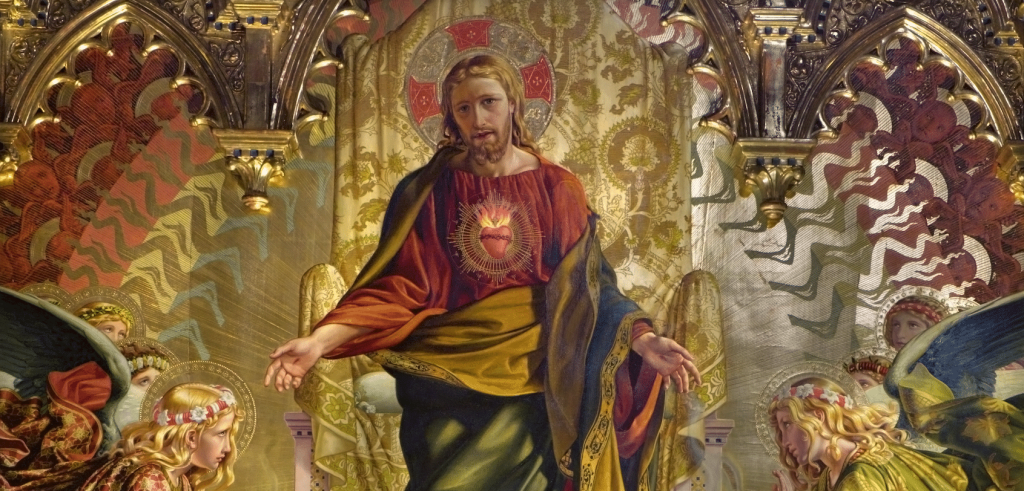
Abimilech’s little kingdom and the Kingdoms of Israel didn’t work out. A survey of history easily demonstrates that no kingdom has ever truly survived, except maybe in name. So what is the world to do? Pius suggested we establish the Empire of Our Lord. He suggests that we make Christ the King! Quas Primas established the feast day that we celebrate today—Christ the King and what it suggests is quite radical, but as Jesus said to Pilate, “My kingdom is not of this world.” (John 18:36a)
Jesus, Pius, and the Church have always taught us that we, as a Christian people, are not looking for earthly rule. As has been proven, that does not work. So, instead, we seek to have Christ Jesus rule in the hearts of all people. To allow the King of Kings to instruct us and to guide and direct us daily. When we do this, we put something much larger than ourselves into motion. As the Lord begins to rule in our lives, then he begins to rule in our families. When He rules in our families, then His influence and reign can begin to extend beyond us into those around us. As His Kingdom expands, the Empire of Our Lord becomes a reality.
We are free to fight it and deny it, but in the end, Christ will rule over all—the righteous and the unrighteous, for as St. Paul tells us, “God has highly exalted him and bestowed on him the name that is above every name, so that at the name of Jesus every knee should bow, in heaven and on earth and under the earth, and every tongue confess that Jesus Christ is Lord, to the glory of God the Father.” (Philippians 2:10-11)
There will always be many persons and things that seek to reign over your life. Abimelechs of a sort that would have you submit to them. Resist them and bend your knee only to the one who died for you and rose again. Confess Jesus as Lord of your life that He might lead you into His Eternal Kingdom.
Let us pray: Almighty and merciful God, you break the power of evil and make all things new in your Son Jesus Christ, the King of the universe. May all in heaven and earth acclaim your glory and never cease to praise you. We ask this through our Lord Jesus Christ, your Son, who lives and reigns with you and the Holy Spirit, one God, for ever and ever. Amen.
Police report: a resident of the 1000 block of Raritan Drive that a family in the area is taking over the minds of local dogs and turning them against their owners. Police were advised by the person that the only way to protect a dog is to install an anti-force field on its head before letting the animal go outside.
The Learning Center on Hanson Street reports a man across the way stands at his window for hours watching the center, making parents nervous. Police ID the subject as a cardboard cutout of Arnold Schwarzenegger.
In Jamestown, a man came to the Sheriff’s Department to “find out how to legally kill” a person who was harassing him.
Early Monday morning… a Hayfork woman requests to talk with a deputy because her housekeeper is not putting her towels away properly.
There are many reasons why I could never be a police officer, and the comedian Ron White stated one of those reasons quite succinctly, “You can’t fix stupid.”
There are so many folks out there doing stupid stuff all the time, and our police officers are the ones who so often have to deal with them. I tip my zuchetta to them.
Even though I could never pull off the job, I’m surprised that not more people are signing up for it because we are all fascinated with what they do. Not only do we spend hours watching true crime and cop shows—they’re all trying to come up with a line as famous as “Book ‘em, Danno!”—but we also like to watch and see what they’re up to in daily life. For example, I was driving along I-35 toward the city when the traffic came to a dead stop. It finally started moving but crept along for five miles. What was the source of the congestion? In the northbound lane were two police cars and a wrecker working a minor accident. There was no reason to slow the southbound traffic but tell that to everyone who was morbidly interested in what the police were up to. Tell it to the rubberneckers.
Police see more than they need to of stupidity and tragedy because they have to clean up our messes. Still, the rubbernecker intentionally looks and is fascinated and held captive by the tragedy and mayhem.
What did you think of our first reading from Zephaniah?
The great day of the Lord is near, near and hastening fast; the sound of the day of the Lord is bitter, the warrior cries aloud there. That day will be a day of wrath, a day of distress and anguish, a day of ruin and devastation, a day of darkness and gloom, a day of clouds and thick darkness, a day of trumpet blast and battle cry.
If we are here on that great day of the Lord, and TV cameras are broadcasting it for all to see, do you think there will be any watchers? Any rubberneckers? Yes, there will be, and we won’t be able to get enough of it: Twenty-four-seven, all stations. However, in the meantime, we must be satisfied by the little everyday tragedies. Take, for example, our Gospel reading—the Parable of the Talents.
Last week, we noted that in telling the Parable of the Ten Virgins, Jesus was answering the disciples’ question about the end of days. They said, “Tell us, when will these things be, and what will be the sign of your coming and of the end of the age?” (Matthew 24:3) At the end of that parable, Jesus said to them, “Watch therefore, for you know neither the day nor the hour.” Jesus told them The Parable to Talents immediately after, expanding on the necessity of watching and being prepared for His return.
The rich man was leaving on a journey and entrusted his property to three slaves. These were not slaves as we understand them, but these would have been household managers—individuals who knew what they were doing.
To one, the rich man entrusted over half his wealth; to the second, one-quarter; and the third, one-eighth. While he was away, the first two went out and doubled their master’s wealth, but the third—for several reasons—buried it in the ground. When the master returned, he called the slaves to account. The first two were praised for their good works, “Well done, good and trustworthy slave; you have been trustworthy in a few things, I will put you in charge of many things; enter into the joy of your master.” However, the third was severely reprimanded and punished. The master began by saying, “You wicked and lazy slave!” And it only got worse from there. In the end, the master said, “Throw him into the outer darkness, where there will be weeping and gnashing of teeth.”
Question: what part of the parable do you remember? What part did you focus on? What part have you heard preaching on (mine included)? Was it about the two who were praised? The ones who will, in the end, have an abundance? Or did you focus on or hear about the car crash? Did you focus on how that third slave, who lost everything, will experience what we read about in Zephaniah?
A day of distress and anguish, a day of ruin and devastation, a day of darkness and gloom.
I’m going with the latter. Our focus falls on the tragedy and mayhem, but why? There are many theories out there, and I have my own.
Remember the Pharisee in the temple praying and telling God how great of a guy he was? At some point, he looks around and sees the tax collector also praying, and the Pharisee essentially says, “And thank God I’m not like that schmuck!”
I believe our focus falls on the slave that lost it all and was cast into destruction because we can look at ourselves and think, “I may not be all that great, but at least I’m not like that schmuck!” No longer do we have to pay attention to what we are doing. We can be rubberneckers of someone else’s tragedy and, in the process, make ourselves feel better about who we are. However, the two slaves rewarded and praised by the master were not focused on what the others were doing or not doing. They were focused on the task that had been set before them. These two should be our focus and inspiration, not the failure of the third. What can we learn from them?
The master said, “I am giving you these five talents, these two talents, and this one talent to watch over to work with. As a slave, a house manager, they are your responsibility. You will be judged, not on how the others perform, but on how you perform.”
Mrs. Five could have sat back and thought herself special. “Look at me. I’ve got more than everyone else. I’m the favored child. I can do whatever I like, and the master will love me.” But that was not Mrs. Five’s attitude. We can learn from her what it means to be a good steward. She took what she had been given and, without concerning herself with what others were doing, doubled her master’s money. When it comes to matters of faith and the gifts of God, we are to perform similarly. We are to take what God has blessed us with and use it for His greater glory, remaining focused on the work before us and not becoming distracted or complacent in our favored position.
Mr. Two could have whined that he didn’t receive as much as Mrs. Five and could have also looked down on Mr. One. Mr. Two could have spent so much time concerned with the others’ blessings that he missed the opportunity to serve his master properly. We can do the same, becoming so worried that someone or some other church might have more than us that we fail to focus on our own. — Understand that although it applies, I’m not talking about material things (money, possessions, etc), but things eternal (spiritual gifts, blessings, ministry, etc.) — When we look at the great Saints, we don’t complain that they have more. Instead, we look to them for inspiration and example. And, when we see someone with less, instead of gloating over it, we come alongside and help, wanting them to succeed in the eyes of the Lord.
Finally, when we see those who have failed, we don’t rubberneck over the tragedy. Instead, we pray for ourselves, “There, but for the grace of God…,” and we pray for the one who has fallen, that they might be redeemed.
We are not in spiritual competition, for we are the Body of Christ. We need one another, so don’t become distracted and focus not on the tragedies and mayhem. Instead, care for what the Master of us all has entrusted you with individually and us as the Church so that in the end, we may also hear those words of our Master, Jesus, “Well done, good and trustworthy slave; you have been trustworthy in a few things, I will put you in charge of many things; enter into the joy of your master.”
Let us pray: Almighty and ever-faithful Lord, gratefully acknowledging Your mercy and humbly admitting our need, we pledge our trust in You and each other. Filled with desire, we respond to Your call for discipleship by shaping our lives in imitation of Christ. We profess that the call requires us to be stewards of Your gifts. As stewards, we receive Your gifts gratefully, cherish and tend them in a responsible manner, share them in practice and love with others, and return them with increase to You. Amen.
The year is 1776, and you are an Anglican priest serving in the American colonies. During the service, you come to the prayers and read the following prayer: “Almighty God, the foundation of all goodness, we humbly beseech thee to bless our gracious King George and all the royal family….” The next thing you know, a rotten egg has hit you square between the eyes.
The first idea came from William White. He suggested we ordain a priest, but that idea was quickly rebuked. It would have broken the lines of apostolic succession. The next idea was to send a priest to England and have him consecrated. This was approved, and Samuel Seabury set sail. He was a loyalist, so they believed he would have a better chance of being consecrated. Still, when he arrived, no one would consecrate him because to do so for America, the consecration required that the vow of allegiance to the king be omitted, which required an act of parliament to accomplish.
As you would imagine, the Anglican Church was not very popular around the time of the American Revolutionary War. Many Anglican priests fled the communities where they were threatened, and the patriots killed others for their refusal to renounce the king. However, following the war, the Anglicans looked for a way to move forward in America—the problem was bishops. It takes a bishop to ordain clergy and three bishops to consecrate a new bishop. America didn’t even have one, so the church in Connecticut began looking for ways to resolve the problem.
As an alternative, John Adams, the ambassador of the US to England, made arrangements with the Lutheran Church of Denmark to consecrate Seabury. Thanks be to God that didn’t happen. Can you imagine me a Lutheran?! (That’s a joke.) After thirteen months of trying, Seabury petitioned the council in Connecticut for permission to try for the consecration in Scotland. The Scottish Episcopal Church had broken from the Church of England in 1725. Connecticut and the Scottish agreed, and on November 14, 1785, Samuel Seabury was consecrated as the first bishop of the Episcopal Church in America.
Later, we would have two more bishops, William White and Samuel Provost, consecrated in England in 1792. These three came together and consecrated Thomas John Clagget, the first bishop of Maryland and the first fully American bishop, and in the process, united the Scottish and English lines of episcopal succession.
For Seabury, the first time he appeared in church, he was fully vested in rochet, chimere, academic hood, and miter. Someone commented: “He appears in a black satin gown; white satin sleeves, white belly band, with a scarlet knapsack on his back, and something resembling a pyramid on his head.” A congregational minister noted: “His appearance is singular… It is said he must either be greater than other men or else he is crazy.”
The American church asked for laborers of the harvest in the form of a bishop, and they received Samuel Seabury. From him, we are here. The first Bishop of Oklahoma was Francis Key Brooke, the 165th American Bishop. Our Bishop Poulson is the 1,131st Bishop of the American Church.
There are many ways of understanding the role of bishops, but for me, St. Cyprian of Carthage put it best, “‘The Church is in the bishop and the bishop in the Church.’ Put another way, there is no Church where there is no bishop.’” (Michael Azkoul) The bishops are a connection to the past and to Christ through the laying on of hands and the handing down of the traditions and legacy of our church; therefore, we celebrate Samuel Seabury for bringing the episcopacy to America and to us that we might worship the Lord in fullness and unity.
A farmer in Maine was approached by a stranger one day and asked how much he thought his prize Jersey cow was worth. The farmer thought for a moment, looked the stranger over, and then said: “Are you the tax assessor, or has she been killed by your car?”
A shoe manufacturer decided to open up a market in the Congo in central Africa, so he sent two salesmen to the undeveloped territory. One salesman cabled back, “Prospect here nil. No one wears shoes.” The other salesman reported enthusiastically, “Market potential terrific! Everyone is barefooted.”
A woman wrote to Dear Abby. “Dear Abby: Our son was married in January. Five months later, his wife had a ten-pound baby girl. They said the baby was premature. Tell me, can a baby this big be that early—{signed} Wondering”
Abby responded, “Dear Wondering: The baby was on time, the wedding was late. Forget it.”
In most cases, regardless of the situation and the circumstances, there is more than one way of interpreting it.
In 1925, following World War I, T.S. Elliot wrote the poem “The Hollow Men.” Through the poem, he expresses a sense of hopelessness that he is experiencing in the world and personally. The poem begins,
We are the hollow men We are the stuffed men Leaning together Headpiece filled with straw. Alas! Our dried voices, when We whisper together Are quiet and meaningless As wind in dry grass Or rats’ feet over broken glass In our dry cellar
After going further into the experience and the emotions, the poem concludes:
This is the way the world ends This is the way the world ends This is the way the world ends Not with a bang but a whimper.
I pray you are feeling thoroughly uplifted at this point.
Given the current state of the world, “This is the way the world ends” is a topic that is near the surface for many. Some will pull out their Bibles, dust them off, flip to the last book, Revelation, and start trying to sort it out (I wish you the best of luck.) Others will watch, shake their heads, and be afraid. But what we are all doing is looking at various situations and circumstances and attempting to interpret and understand them. In the end, we come to all sorts of conclusions. Why?
A clinical psychologist, Natalie Dattilo, says that when we are on the outside and look at situations, we have gaps in the information needed to come to the correct understanding, so she says, “Most of the time, we fill the gaps with our own biases, assumptions, beliefs, thoughts, ideas, and conclusions.” She adds, this is “a person’s adaptive capacity to ‘construct their own reality’ and is the way a person makes sense of things in the face of incomplete or ambiguous information.” (Source)
We take the situation in the world—a situation that we can’t come close to fully understanding—and begin to fill in the information gaps with our own biases, prejudices, ideas, etc, and come to a particular conclusion. For some, the conclusion is, “This is the way the world ends.”
An example: the current crisis in the Middle East. Do you understand that situation? I’ll answer that question for you—No. You do not. I don’t know that anyone fully understands it, so we all have gaps in the information we need to reach a proper conclusion. However, that will not stop anyone from drawing conclusions. How do we do that? We start filling those information gaps with our biases, prejudices, and so on. In other words, we start seeing that situation through various lenses.
If you are pro-Israel, then you will be biased in that direction and see the current situation through a pro-Israel lens. If you believe Hamas/Palestine are in the right, then you have a pro-Palestine lens. See how that works? If we had only one lens through which we viewed such situations, we might be able to sort it out, but there are many. For some, there is the Biblical lens: the Jews are God’s chosen people, the Bible says the Temple must be rebuilt, and the land is God’s gift. All of these are lenses. There’s the economic lens. What’s this going to do to the price of gas? The fear lens: does Iran have nuclear weapons, and will they use them? Will this spill over to the rest of the world? Lens after lens and the true picture of what is going on is completely distorted, and there is no way to establish the truth. So, how do we go about this? How do we interpret the world around us?
Bishop Robert Barron—he’s Roman Catholic, so don’t tell our neighbors I was quoting him—Bishop Barron says, “What was peculiar about ancient Israel was their reading the world through theological lenses. When they wanted to read the signs of the times, they wondered what God was doing and why. The deepest and truest reading is the theological one that seeks after the divine causality and purpose that works under and through all the other lenses.” Instead of trying to interpret the world through your self-constructed lenses, ask, “What is God doing and why?”
Jesus spoke to His disciples about the end of days. It was then that the disciples asked Him, “Tell us, when will these things be, and what will be the sign of your coming and of the end of the age?” (Matthew 24:3) In answering the question, He told them many things, including the Parable of the Ten Virgins that we heard today. “Five of them were foolish, and five were wise.” Five did not have enough oil for their lamps to last the night, and five did. The wise ones were allowed into the wedding feast, but when the foolish ones arrived late, the bridegroom told them, “Truly I tell you, I do not know you.” Jesus concluded his answer about the end of the age come by saying, “Keep awake therefore, for you know neither the day nor the hour.”
Jesus gave the disciples many signs of the end of days, and individuals have been attempting to interpret those signs through what they see taking place in the world. Still, those same individuals have gaps in their information, so they are using those self-constructed lenses to see the world, and, in the process, they are misinterpreting what is taking place. Therefore, to correctly interpret what is going on, we must set aside our lenses and seek to answer the question, “What is God doing and why?” And to come even close to an answer, we need something that is in very short supply.
Punch was a weekly satirical publication in England. In the April 10, 1875 issue, they printed the following poem (not nearly as deep as “The Hollow Men”).
“There was an owl liv’d in an oak The more he heard, the less he spoke The less he spoke, the more he heard. O, if men were all like that wise bird.”
The poem is where the expression “Wise as an owl” originated. We will never completely know the mind of God, but to come close to answering the question, “What is God doing and why?”—we need to be wise. We need wisdom.
In the Book of Proverbs, a father is speaking to his son and says, “Let your heart hold fast my words; keep my commandments, and live. Get wisdom; get insight; do not forget, and do not turn away from the words of my mouth. Do not forsake her, and she will keep you; love her, and she will guard you. The beginning of wisdom is this: Get wisdom, and whatever you get, get insight.” (Proverbs 4:4-7)
“Get wisdom; get insight.” Will this give us crystal clear answers so we can rightly interpret everything? Nope. But it will allow us to take off the lenses we’ve constructed, which means we will set aside all those biases, prejudices, opinions, and misinterpretations and at least begin to try to see what God is doing.
“Get wisdom; get insight.” Where is wisdom to be found? St. James tells us, “If any of you lacks wisdom, let him ask God, who gives generously to all without reproach, and it will be given him.” (James 1:5)
The word that gets batted around frequently these days is misinformation. In some cases, the misinformation is deliberate. Individuals and groups intentionally distorting the truth for their own benefit, but a lot of misinformation enters into the discussion because of ignorance due to a lack of wisdom. Don’t contribute, and don’t participate. If you want to begin to understand the world around you and the signs of the time, humble yourself, set aside what you think you know, and ask God for wisdom and insight. God will not deny you this request.
Let us pray: God Almighty, Your Wisdom includes An understanding of what is fair, What is logical, what is true, What is right, and what is lasting. It mirrors Your pure intellect! We entreat You to grant us such Wisdom, That our labors may reflect Your insight. Your Wisdom expands in Your creations, Displaying complexity and abundance. Your Wisdom is an eternity ahead of us. May Your wisdom flourish forever! Amen.
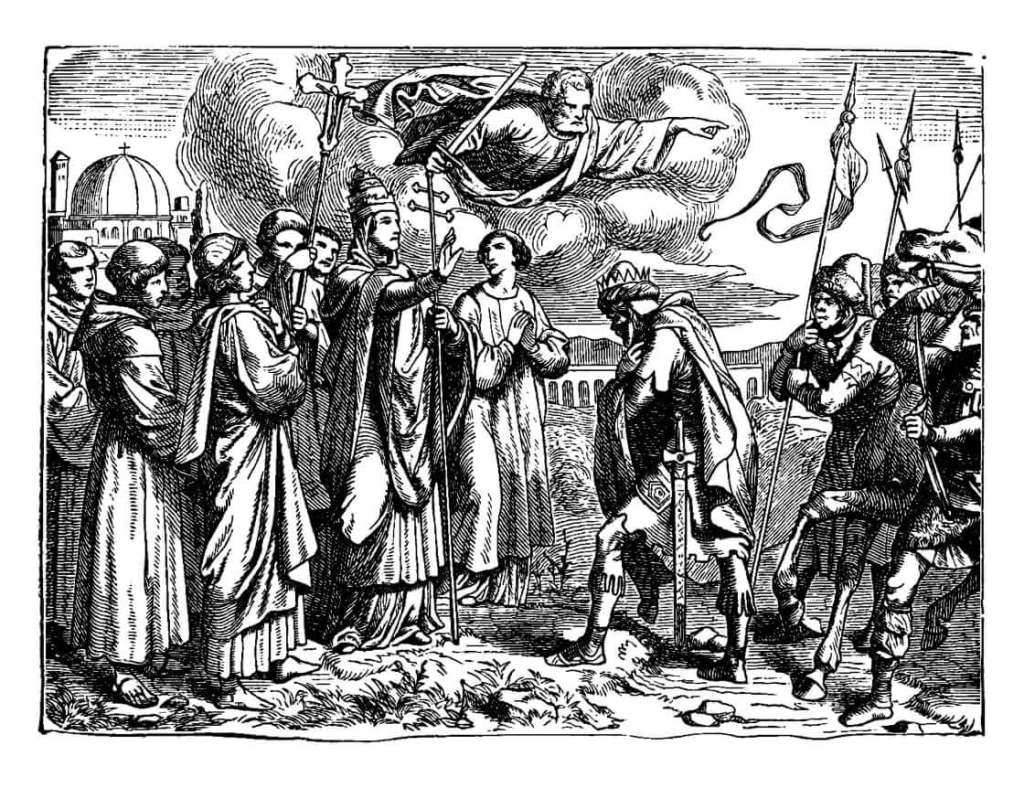
I have shared this with you before on a Wednesday, but it such a great story, it is worth repeating. The story of Leo the Great facing off with Atilla the Hun. From a Medieval Sourcebook: “Attila, the leader of the Huns, who was called the scourge of God, came into Italy, inflamed with fury, after he had laid waste with most savage frenzy” cities and towns all across Asia and Europe. When he came to Italy, it was feared that he would do the same there. The burden of negotiations fell to one man: the Bishop of Rome, later known as Leo the Great.
The text continues: “Leo had compassion on the calamity of Italy and Rome… went to meet Attila. The old man of harmless simplicity, venerable in his gray hair and his majestic garb, ready of his own will to give himself entirely for the defense of his flock, went forth to meet the tyrant who was destroying all things. He met Attila… saying “The senate and the people of Rome, once conquerors of the world, now indeed vanquished, come before thee as suppliants. We pray for mercy and deliverance. O Attila, thou king of kings, thou couldst have no greater glory than to see suppliant at thy feet this people before whom once all peoples and kings lay suppliant. Thou hast subdued, O Attila, the whole circle of the lands which it was granted to the Romans, victors over all peoples, to conquer. Now we pray that thou, who hast conquered others, shouldst conquer thyself. The people have felt thy scourge; now as suppliants they would feel thy mercy.”
As Leo said these things Attila stood looking upon his venerable garb and aspect, silent, as if thinking deeply. And lo, suddenly there were seen the apostles Peter and Paul, clad like bishops, standing by Leo, the one on the right hand, the other on the left. They held swords stretched out over his head, and threatened Attila with death if he did not obey the pope’s command. Wherefore Attila was appeased he who had raged as one mad. He by Leo’s intercession, straightway promised a lasting peace and withdrew beyond the Danube.”
For facing off against Atilla, Leo the Great (d.461) is known as “The Shield of God.”
I thought to myself, “You’ll never have to do battle like that,” but then I remembered how Michael and the angels fought against satan and his rebellious angels. After they cast out satan and the others, and it was said, “Therefore, rejoice, O heavens and you who dwell in them! But woe to you, O earth and sea, for the devil has come down to you in great wrath, because he knows that his time is short!” It isn’t Atilla the Hun that comes against us. Our enemy is far worse; therefore, we must follow the teachings of Holy Scripture: “Humble yourselves, therefore, under the mighty hand of God so that at the proper time he may exalt you, casting all your anxieties on him, because he cares for you. Be sober-minded; be watchful.” Why? “Your adversary the devil prowls around like a roaring lion, seeking someone to devour. Resist him, firm in your faith, knowing that the same kinds of suffering are being experienced by your brotherhood throughout the world.” (1 Peter 5:6-9)
And do not fear, for as Leo had Peter and Paul fighting by his side, we do as well, and more importantly, we have the Lord. As Moses told the Israelites, “The Lord will fight for you, and you have only to be silent.” (Exodus 14:14)
Your battles against satan and the evil spirits are as vicious and deadly as the battles against Atilla the Hun, but just as Leo was victorious, you will be as well. As the Psalmist declared,
Your way, O God, is holy; who is so great a god as our God?
One day, eight-year-old Melissa tells her mother, “Mommy, I’ve been thinking about us humans, and I’m a bit puzzled. How did we first appear on Earth?”
“That’s a very good question, darling,” her mother replies. “God made Adam and Eve, and they had children, and then their children had children, and as a result, mankind began.”
Later that day, Melissa asks her father the same question. “Daddy, how did we humans first appear on Earth?”
“That’s an intelligent question, Melissa,” he replies. “Millions of years ago, there were monkeys from which, gradually, the human race evolved.”
Melissa is confused by this answer and goes back to her mother. “Mommy,” she asks, “how come you told me the human race was created by God, yet Daddy said they developed from monkeys?”
“Well darling,” replies her mother, smiling, “the answer is simple. I told you about my side of the family, and your father told you about his.”
In some circles, the answer to the question of where we came from is still debated—and it is certainly not one I’m diving into today—but I think both sides (I could be wrong) could agree on the role DNA plays in our individual makeup.
It was in 1953 that James Watson and Francis Crick published a one-page article, “A Structure for Deoxyribose Nucleic Acid,” in the scientific weekly journal Nature. That article is the core of our understanding of DNA because it was there that the double-helix structure of DNA was reported.
If you jump back to your science classes in school, you may remember a bit about DNA. I had to do a bit of research. The article that I could understand stated, “DNA is made of two linked strands that wind around each other to resemble a twisted ladder—a shape known as a double helix…. [and] the two strands are connected by chemical bonds between the bases.” The DNA “makes each of us who we are.” The color of our eyes and skin to, our intellectual capacity, and how well we can see are all based on our DNA. Even more impressive is that “the DNA from any two people is 99.9% identical, with that shared blueprint guiding our development and forming a common thread across the world. The differing 0.1% contains variations that influence our uniqueness.” (Source) Two linked strands of sugars and phosphates make us who we are. Those two linked strands are also the root cause of birth defects and disease and are ultimately responsible for killing us (should we not die of some outside agent.)
In the early stages of development, if the DNA does not come together as it should, we end up with varying degrees and types of birth defects. Should a particular strand of DNA be coded wrong and begin to develop uncontrollably, tumors form. And, over time, as more minor errors enter the process, we age and die.
Why the lesson in genetics this morning? There are two aspects, two strands of our faith: orthodoxy and orthopraxy.
Orthodoxy is correct belief. As a Christian, what is it we believe? Every week, we state it: “We believe in one God, the Father, the Almighty… We believe in Jesus Christ… We believe in the Holy Spirit.” Orthodoxy is the adherence to these statements. It is why, when we make or renew our Baptismal Covenant, the celebrant asks, “Do you believe in God the Father,” and so on. Orthodoxy deals with things of grace and matters of faith. If there were only orthodoxy right belief, many of us would probably be in good shape, but there is also the other strand, orthopraxy.
Orthopraxy is correct action, dealing with ethics, morality, and behavior. Where the Creeds give us the best understanding of orthodoxy, the Law, the Ten Commandments, provides the best example of orthopraxy. Right action: Thou shall not commit murder. If you don’t kill, amongst other things, then your actions are correct.
Like the double helix of DNA, orthodoxy and orthopraxy are two strands that cannot function without the other—although there have been some who have tried. In the time of Jesus, the Pharisees relied entirely on orthopraxy. Jesus condemned them for this as the ones who looked good on the outside but who were unchanged on the inside. During the 4th and 5th centuries, St. Augustine of Hippo dealt with the other side as he confronted the heresy of Manichaeism. They believed that the outside world or our sins could not taint us. Both views were errors. Orthodoxy and orthopraxy must work in union with one another. Like the double helix, the two strands must be brought together, and this was accomplished through Jesus. He summed it up for us last week, “‘You shall love the Lord your God with all your heart, and with all your soul, and with all your mind.’ This is the greatest and first commandment. And a second is like it: ‘You shall love your neighbor as yourself.’”
With regard to our faith, right believing and right acting are expressed and practiced through our love of God and our love of one another. Wouldn’t it be nice if that were the end of it? Unfortunately, we like to complicate things because instead of living according to what Jesus said, we’ve taken it upon ourselves to establish orthodoxy and orthopraxy according to our standards. Of course, we know better than God.
Jesus said to love, but we say, “Before we can love, we must decide what we do and do not believe and how we should and should not act.” Once that is decided, we say, “I can love you if you believe the way I believe. I can love my neighbor as long as they act according to what I decide is right behavior.” In doing this, we introduce errors into this genetic “spiritual” code and bring about dis-ease, defect, and even death. By introducing errors, we’ve created an entirely new set of problems.
Taken to one extreme, orthopraxy can become fundamentalism and fanaticism—“Believe as we say, do as we say, or go to hell.” Taken to another extreme, orthodoxy can become apostasy, where everything is A-OK, and there is no right and wrong—“Believe what you like. What’s most important is that you feel good and are happy.” Combine the two and take them in a particular direction, and you’ll end up with the prosperity gospel—“Believe right, act right, and God will give you a million bucks!” The problem is that instead of allowing God to establish right belief and right action, we take it upon ourselves.
I say, My way is the right way, and all others are wrong. Jesus says, “Blessed are the peacemakers. Blessed are the merciful.” I say I can do whatever I want when I want. Jesus says, “Blessed are the pure in heart. Blessed are those who hunger and thirst for righteousness.” I say ___, and Jesus says, “Blessed are the meek,” the humble. I say I want, Jesus says, “Blessed are the poor in spirit.”
This is All Saints’ Sunday. The day that we celebrate the great Saints that have gone before us. The Saints did not become Saints because they did all things correctly. They did not become Saints because they believed all things correctly. They became Saints because they did not play God. They became Saints because, first and foremost, they sought after God and not their own understanding. Not “I.”
The author of Proverbs writes, “Trust in the Lord with all your heart, and do not lean on your own understanding. In all your ways acknowledge him, and he will make straight your paths. Be not wise in your own eyes; fear the Lord, and turn away from evil. It will be healing to your flesh and refreshment to your bones.” (Proverbs 3:5-8)
St. Francis de Sales said, “Sanctity does not consist in being odd, but it does consist in being rare.” It is a rare soul that can look beyond their understandings, prejudices, wants, beliefs… beyond “I.” It is a rare soul that can get out of the way and allow God to be God. However, when we do, we begin to catch glimpses of God’s understanding of the world around us, truths that are beyond narrowed vision, and a love that knows no limits. Refusing is quite the opposite of God’s calling on our lives.
Let us pray (this is a prayer I also shared during our Wednesday Mass): Dear Jesus, in the Sacrament of the Altar, be forever thanked and praised. Love, worthy of all celestial and terrestrial love! Who, out of infinite love for me, ungrateful sinner, didst assume our human nature, didst shed Thy most Precious Blood in the cruel scourging, and didst expire on a shameful Cross for our eternal welfare! Now illumined with lively faith, with the outpouring of my whole soul and the fervor of my heart, I humbly beseech Thee, through the infinite merits of Thy painful sufferings, give me strength and courage to destroy every evil passion which sways my heart, to bless Thee by the exact fulfillment of my duties, supremely to hate all sin, and thus to become a Saint. Amen.
The Way of Salvation fresco by Andrea di Bonaiuto da Firenze
The Book Ecclesiasticus is from the Apocrypha, and the 44th chapter begins,
Let us now sing the praises of famous men, our ancestors in their generations. The Lord apportioned to them great glory, his majesty from the beginning.
So, on this All Saints Day, let us.
About the year 115 a.d. there lived a man we know as Ignatius of Antioch. Except for a brief history, all we know of him comes to us through legend and seven letters he wrote. Concerning the legend, do you remember the story of the little boy that Jesus picked up? Having brought the child into the midst of the disciples, Jesus said, “Whoever receives one such child in my name receives me, and whoever receives me, receives not me but him who sent me.” (Mark 9:37) Well, the legend of Ignatius tells us that he was this child. Legend/history tells us that Ignatius would go on to become Bishop in Antioch. During one of the many persecutions, he was captured and taken to Rome for trial. He would be tried and executed for treason. However, during the journey between Antioch and Rome, his guards treated him somewhat civilly and were sympathetic to the elderly man, so they allowed him to write letters to the believers back home. Seven of those letters survive to this day, and through them, some of the foundational stones of the Christian Church were laid, especially as they relate to Holy Scripture, the Creeds, Bishops, Priests, Deacons, and the liturgy. Ignatius of Antioch is clearly a Saint in the Christian Church. Let us sing the praises of Ignatius.
Let’s change one word of the verse from Ecclesiasticus and say, “Let us now sing the praises of famous women.” The Blessed Virgin Mary is the most famous, but many others exist. During the time of Emperor Septimus Severus in the early third century, it was illegal to convert to Christianity. This likely deterred some, but not all. If the officials became aware, the convert was arrested and given the opportunity to recant. They were then required to make sacrifices to the Roman gods. Only then could they go about their business. If they refused, they were put to death. Felicity and Perpetua were two women who refused to recant their faith even though they had both only recently been baptized and both had just had children. On the day of their execution, they were given one last chance to recant, and when they refused, a wild bull was released into the cage where they were and trampled. Wounded by the animal, they gave each other the kiss of peace and were then put to the sword. Felicity and Perpetua are martyr saints in the Christian Church. Let us sing the praises of Felicity and Perpetua.
We could do this all day and not even hear the tip of the iceberg because the Church recognizes more than 10,000 official Saints. And when we begin to include individuals such as Dietrich Bonhoeffer, the Martyrs of Uganda, C.S. Lewis, and Evelyn Underhill, the list seems endless. However, we are still not done singing praises. Why? There are many more in the making. Today, my question for you is, “How are you becoming a Saint?” For becoming a saint should be the desire of us all. How do you go about it? My friend, St. Josemaría Escrivá wrote, “Do you really want to be a saint? Carry out the little duty of each moment: do what you ought and concentrate on what you are doing.” (The Way, 815)
Follow in the footsteps of the Saints, and in the end, not only will you hear others sing your praises, but you will hear Jesus as well when He says, “Well done, good and faithful servant…. Enter into the joy of your master.” (Matthew 25:21)






 Candle in a Cave