The sixth chapter of the Book of the Prophet Isaiah begins: “In the year that King Uzziah died, I saw the Lord sitting on a throne, high and lofty; and the hem of his robe filled the temple.” He goes on to describe the angels in attendance who were singing:
“Holy, holy, holy is the Lord of hosts; the whole earth is full of his glory.”
However, because he had seen the Lord (no one can see the Lord and live), he cried out: “Woe is me! I am lost, for I am a man of unclean lips, and I live among a people of unclean lips; yet my eyes have seen the King, the Lord of hosts!” Then he reports, “One of the seraphs flew to me, holding a live coal that had been taken from the altar with a pair of tongs. The seraph touched my mouth with it and said: ‘Now that this has touched your lips, your guilt has departed and your sin is blotted out.’ Then I heard the voice of the Lord saying, ‘Whom shall I send, and who will go for us?’ And I said, ‘Here am I; send me!’ And he said, ‘Go….’” And Isaiah went to the Israelites as the Lord commanded him.
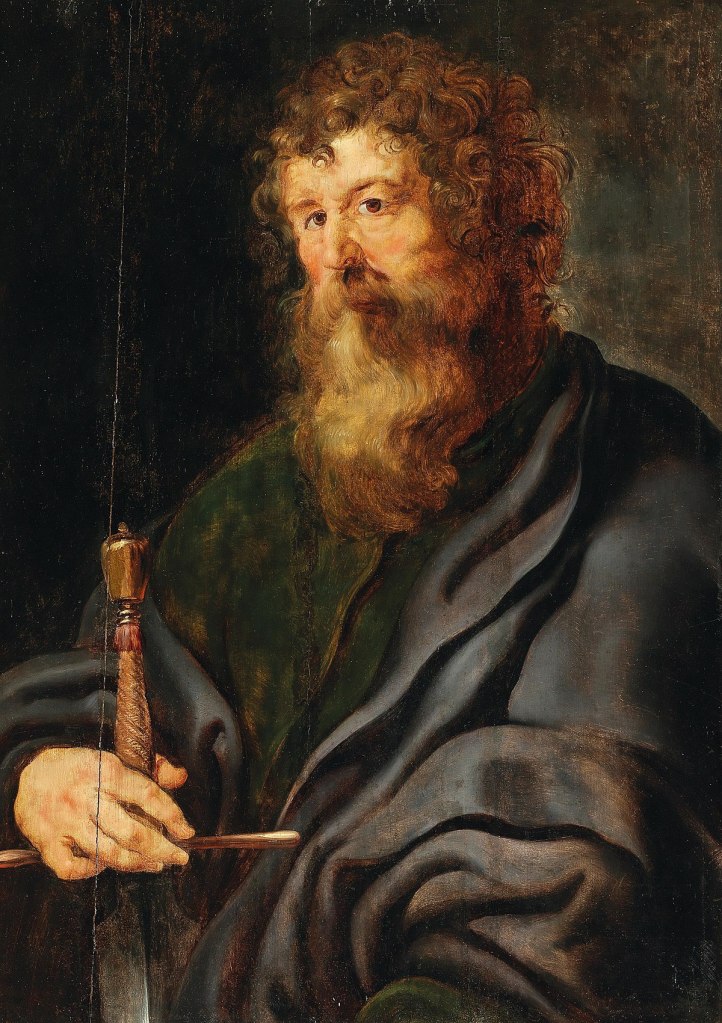
Although Paul’s encounter with the Lord was different, it was also very similar. The great light and glory of the Lord appeared around him, and he fell to the ground in fear. However, unlike the message that Isaiah was given, Paul was told to go to the Gentiles and proclaim the Good News “to open their eyes so that they may turn from darkness to light and from the power of Satan to God, so that they may receive forgiveness of sins and a place among those who are sanctified by faith in me.” In a very real way, the Lord said to Paul the same words as he spoke to Isaiah: “Whom shall I send, and who will go for us?” And Isaiah said, and Paul said, and so many others have said, “Here am I; send me!”
From the beginning, God has been calling all people back into relationship and making that relationship possible and eternal through Jesus, the only begotten Son. This is a message that you have all heard and responded to. The Lord called, and you responded, but there is more, for Jesus also said to us, “You will receive power when the Holy Spirit has come upon you; and you will be my witnesses in Jerusalem, in all Judea and Samaria, and to the ends of the earth.” Jesus is asking… he is asking us, “Whom shall I send, and who will go for us?” For various reasons, that can be a scary question to answer because we do not know where it will lead or who it will lead us to. And to my knowledge, there is really only one way to overcome the reasons and the fears: to have a passion for souls. Without any judgment, to look at them, to love them, and to desire eternal life for them. This passion for souls is constantly seeking ways to reveal God to those who are lost, broken, or unaware of his great love for them. It is a passion that must burn brightly and, therefore, must always be tended and nourished with the Word of God, prayer, and the blessed sacrament of the Eucharist. Build up this passion for souls within yourself, and when the Lord asks, “Whom shall I send, and who will go for us?” Say with Isaiah and Paul, “Here am I, send me!”
A legend from India tells about a mouse who was terrified of cats until a magician agreed to transform him into a cat. That resolved his fear … until he met a dog, so the magician changed him into a dog. The mouse-turned-cat-turned-dog was content until he met a tiger—so, once again, the magician changed him into what he feared. But when the tiger came complaining that he had met a hunter, the magician refused to help. “I will make you into a mouse again, for though you have the body of a tiger, you still have the heart of a mouse.”
In our society, we’ve become very accustomed to going out and purchasing the things we need. Need a new watch. Go and buy it. Need a new car? You can drive one off the lot today. From the highest tech item to the lowly turnip, if you need it, you can find somewhere to buy it. But what if, instead of being able to buy it, you had to make it or grow it? In the end, you would have a lot less, and there are a good many people who wouldn’t survive.
I forget where I read it, but the speaker gave the example of a fork. He held it up and asked, “Who could make it?” In the end, everyone realized that no one person could. You need someone to mine the ore, smelt the ore, form the iron… down to working with the iron to make the fork. Very few possess the skills or knowledge to accomplish the task. Therefore, we need one another to live and survive. Each must play their part. That’s where the discernment process comes in—identifying who has what skills and what knowledge and where they are best suited. Once discerned, society will put them to work. Therefore, in many cases, it is the society that determines a person’s worth—their value.
If society deems you this quality of person, then you can do this. If they deem you this, then you can do that. Aldus Huxley, in Brave New World, wrote, “A really efficient totalitarian state would be one in which the all-powerful executive of political bosses and their army of managers control a population of slaves who do not have to be coerced because they love their servitude.” Perhaps we don’t live in a totalitarian state, but we can fall into the trap of allowing society to define our value and worth. Once there, it is difficult to become more.
Not only does this play out in the secular world, but it is also true in our life in the Church and with God. Others observe our lives, actions, words, etc.—our entire being—and based on those observations, we are categorized: saint, sinner, backslider, pious, and so on. If you follow all the rules in the book, then you may fall in the saint category, but go out and get a tattoo and drink a little whiskey; well, you might as well be writing your own ticket to hell. In the process of assigning our category, we are also assigned a value in the Christian community. And, as with the secular world, we can fall into a trap—this is what everyone thinks I’m worth, so this must be it. This is as good as I’ll get.
Using the illustration of iron, if you mine and smelt some iron and end up with 1,000 grams (about 2.25 pounds) of steel, you’ll have a steel bar valued at about $100. If you take that 1000 grams and turn it into horseshoes, you will have increased its value to $250. If you took the same amount of steel and turned it into sewing needles, you would have increased its value to $70,000. Turn it into gears and springs for watches—$6M. Use those same 1,000 grams of steel for precision electronics and computers, and you’ll have increased the value of your $100 hunk of metal to $15M.
The world says you and your 1,000 grams of flesh are worth a few horseshoes, and you believe it. And not only do you believe it, you live it. When the same idea is applied to your life with God, you live that too. “I guess if I’m writing a ticket to hell, I might as well write a good one!” Once that frame of mind is set, it tends to stick. The world has defined that person, and that person fulfills the world’s expectations.
St. Paul would refer to the spirit that lives in such a person as the “old man.” In Ephesians, he says that those who live such a life “have become callous and have given themselves up to sensuality, greedy to practice every kind of impurity.” (Ephesians 4:19) We can fall into the trap of the “old man,” and it sticks. Not only does it stick, like those living in Aldus Huxley’s totalitarian state, but even though we may want something different, we love where we are. It is what we know, and it is comfortable.
My friend, Thomas Merton, writes, “For the ‘old man,’ everything is old: he has seen everything or thinks he has. He has lost hope in anything new. What pleases him is the ‘old’ he clings to, fearing to lose it, but he is certainly not happy with it. And so he keeps himself ‘old’ and cannot change: he is not open to any newness. His life is stagnant and futile. And yet, there may be much movement, but change that leads to no change. The more it changes, the more it’s the same…. The old man lives without life. He lives in death.” (March 22)
That is the trap of allowing the world around us to determine our value, and it is a tricky trap to get out of, but what if we dismissed the world’s assessment and allowed Jesus to determine our value? What if we said, “I’m no longer going to be the person that the world wants and expects me to be.” What if we even said, “I’m not going to be limited to the value my friends and family place on me.” What if we said, “I’m going to allow my value to be determined by God. God and only God will decide what this 1,000-gram hunk of flesh is worth.” How, then, would you begin to see yourself? How, then, would you begin to reevaluate your value in light of the fact that Jesus has already determined you are of infinite worth? You can disagree with that if you want. You can say, “I’m not of infinite worth to God.” And I will argue with you, and my first move in that argument will be to point to you Christ on the Cross. I’ll wait for your rebuttal. You are of infinite worth to God… so, there.
The Apostles Simon and Andrew grew up in Bethsaida, which was on the shore of the Sea of Galilee. Bethsaida means House of the Fisherman, so given its location and name, it is safe to assume it was a fishing village. Given the nature of that society, it was expected that Simon and Andrew would grow up to be fishermen. The world defined them, determined their value, and they lived into it. It doesn’t mean it was bad; it just was; however, “As Jesus passed along the Sea of Galilee, he saw Simon and his brother Andrew casting a net into the sea—for they were fishermen. And Jesus said to them, ‘Follow me and I will make you fish for people.’”
The world had assigned them a value, and then Jesus came along and said, “No. You are of greater value—infinite worth. Follow me, and I will take what little you and everyone else think you are and show you all how wrong you are. Follow me, and I will take the ‘old man’ and transform him into something new.” Jesus said, “The mouse-turned-cat-turned-dog-turned-tiger was returned to its original form because it was a tiger with the heart of a mouse, but I see your true worth; you are a mouse with the heart of a tiger. Follow me and begin to see in yourself what I see in you. Live into it.” What did the disciples do? “Immediately left everything and followed Him.” They left the “old man” behind.
Jesus points to you—each of you—and says, “Follow me.” Step outside of the opinions and value that others have placed on you, allow Jesus to define your worth, and follow Him. In doing so, you’ll discover your infinite worth in the eyes of God, and you will become the person He created you to be.
Let us pray: Lord Jesus Christ, You call us to follow You. Help us to drop our nets and abide in You. We are your disciples, committed to finding the ways that You strengthen our lives. Touch our hearts, enlighten our minds, stir our spirits. Teach us to share the fruits of our faith. Keep us by your side in faith, Lord Jesus. Amen.
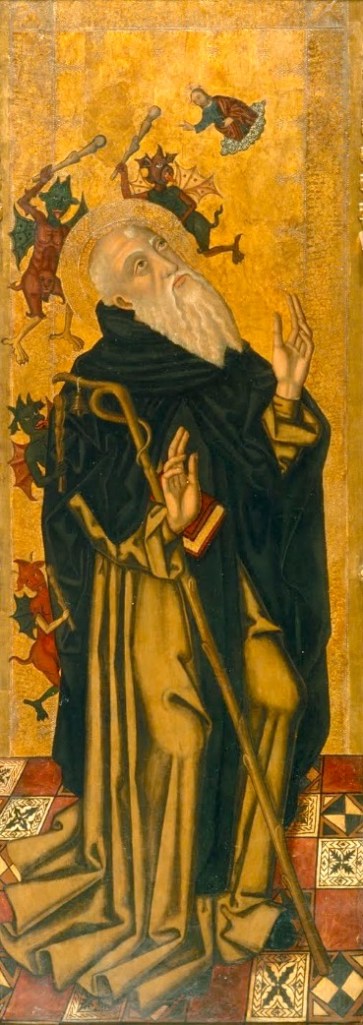
I have many heroes of the faith, one of which is undoubtedly St. Antony of Egypt.
Antony was one of the earliest Desert Fathers, dying in 356 A.D. His life is memorialized in Life of Antony, written by St. Athanasius. It is a short document and definitely worth your time. Parts of it tell of Antony’s great battles against Satan and his minion. One such event tells how Antony goes to the tombs to pray and is viciously attacked by the demons. The brothers found him the following day and mended his wounds, but he insisted on returning to the tombs the following evening. Athanasius continues the encounter.
He was carried, therefore, by the man, and as he was wont, when the door was shut, he was within alone. And he could not stand up on account of the blows, but he prayed as he lay. And after he had prayed, he said with a shout, Here am I, Antony; I flee not from your stripes, for even if you inflict more, nothing shall separate me from the love of Christ. And then he sang, ‘Though a camp be set against me, my heart shall not be afraid.’ These were the thoughts and words of this ascetic. But the enemy, who hates good, marveling that after the blows he dared to return, called together his hounds and burst forth, ‘You see,’ said he, ‘that neither by the spirit of lust nor by blows did we stay the man, but that he braves us, let us attack him in another fashion.’ But changes of form for evil are easy for the devil, so in the night, they made such a din that the whole of that place seemed to be shaken by an earthquake, and the demons, as if breaking the four walls of the dwelling, seemed to enter through them, coming in the likeness of beasts and creeping things. And the place was, on a sudden, filled with the forms of lions, bears, leopards, bulls, serpents, asps, scorpions, and wolves, and each of them was moving according to his nature. The lion was roaring, wishing to attack, the bull seeming to toss with its horns, the serpent writhing but unable to approach, and the wolf as it rushed on was restrained; altogether, the noises of the apparitions, with their angry ragings, were dreadful. But Antony, stricken and goaded by them, felt bodily pains severer still. He lay watching, however, with unshaken soul, groaning from bodily anguish; but his mind was clear, and as in mockery, he said, ‘If there had been any power in you, it would have sufficed had one of you come, but since the Lord has made you weak, you attempt to terrify me by numbers: and a proof of your weakness is that you take the shapes of brute beasts.’ And again, with boldness, he said, ‘If you are able, and have received power against me, delay not to attack; but if you are unable, why trouble me in vain? For faith in our Lord is a seal and a wall of safety to us.’ So, after many attempts, they gnashed their teeth upon him, because they were mocking themselves rather than him.
There are so many things to learn, but mocking the devil doesn’t seem all that wise; however, that is precisely what Antony did. He laughed at the devil. St. Thomas More tells us why it is not such a foolish idea. “The devil…that proud spirit…cannot endure to be mocked.”
St. James tells us, “Resist the devil, and he will flee from you.” (James 4:7b). The next time you find yourself in a spiritual battle, resist the devil and throw in a bit of mocking. The devil can’t endure it, and it will bring a bit of levity to your soul.
In the 1960s, Time Magazine was seeing a decline in subscriptions. Something had to be done, so the decision was made to make a mass appeal to potential subscribers. Previously, such appeals had required a great deal of manual labor: writing, sorting, stuffing, labeling, stamping, etc.; however, about that time, IBM had come out with a razoo machine known as a computer that promised to eliminate all that work and make life easier. Time employed the computer and put it to work. With the database uploaded and the paper trays full (or whatever it was they had back then), someone hit start. It worked, with a couple of glitches (it seems nothing has changed regarding computers.) A rancher out in Wyoming, who never got all that much mail, began receiving mailbags full of letters. All told, he received 12,634 letters, all containing the same emotional appeal to subscribe to Time Magazine. The rancher read a dozen or so of those letters and must have taken it as some sort of a sign because he then wrote a check for $6 to Time Magazine to pay for a subscription. He also included a brief note with his check—“I give up!”
The Oxford Dictionary defines signs—as in signs and wonders—as “an object, quality, or event whose presence or occurrence indicates the probable presence or occurrence of something else.” One thing that is pointing to something else. We partially define a sacrament as “The outward and visible sign of an inward and spiritual grace.” Baptism in water is the outward and visible sign of the cleansing that is taking place within our souls. However, some may view one thing as a sign, while others may see nothing at all or only coincidence. As Umberto Eco, the author of The Name of the Rose, wrote, “The understanding of signs is not a mere matter of recognition (of a stable equivalence); it is a matter of interpretation.” (Semiotics and the Philosophy of Language)
I’ve told you this story before, but I like retelling it on occasion because it helps me remember the signs of my own life.
I had graduated from college and was working for a marketing firm in Dallas, but by the mid-90s, I had my fill, so I quit the white-collar job and moved to Butte, Montana. To pay the bills, I did several jobs, including working as the custodian at St. John’s Episcopal Church.
I’m a night owl, so I would go to the church late at night to do my work and, afterward, would go into the sanctuary, lean up against the altar, and say my prayer. One night, I prayed, “Lord, you’ve given me some smarts and a pretty good education. I’m happy doing this job, but if there is something else you want me to do, you need to let me know.” (A word to the wise: never give God an open-ended option.) The honest truth: I went home and crawled in, slept a bit late the next day, and woke up about when the mailman was delivering. In the mail was a large envelope. It contained something I had not requested, nor would I have even thought to order—an application to seminary.
“The understanding of signs is not a mere matter of recognition…. it is a matter of interpretation.” I only received one piece of mail, not 12,634 pieces, but I understood that one piece of mail as a sign. I did not try to interpret it on my own but took it to faithful friends and the Church. Based on my current position, you can see that we all got the wrong interpretation! Actually, I believe we did. I can’t imagine myself doing anything else. Signs and interpretation of signs.
There are many signs within Holy Scripture, which are sometimes very clear, but often, they are up for interpretation. In his Gospel, John is kind enough to tell us when a sign has occurred, and he does so on seven occasions.
The first was turning water into wine at the wedding in Cana, and also, in Cana, he healed the official’s son who was dying. While in Jerusalem, He healed the paralytic who was lying next to the Pool of Bethesda, and then, on a hill beside the Sea of Galilee, he fed the 5,000. This was followed by the fifth sign, walking on water, and later, He healed a man who had been born blind. Finally, Jesus gave the greatest of all signs: He raised Lazarus from the dead.
For each of these events, John tells us that what the people saw was a sign, but remember, a sign is an event or object pointing to something else, but to know what they are pointing to, we must first interpret them. In doing so, we understand that Jesus is not limited to earthly restraints. He can transform the ordinary—water—into the extraordinary—the best wine. He can heal those who are dying and restore those who are broken. He can take what little we have and produce a cup that is overflowing. He has power over the natural world, and He allows us to see what has been hidden. And, finally, He shows us that, with God, death has no power over us.
So, if we have these seven signs, and those are our interpretations, then what are these signs pointing us to? What is the greater meaning? “Early on the first day of the week, while it was still dark, Mary Magdalene went to the tomb and saw that the stone had been removed from the entrance….” The seven signs that John tells us about all point to the Resurrection—itself, a sign to us of things to come.
Were these all the signs that Jesus gave? No. Toward the end of his Gospel, John tells us, “Jesus performed many other signs in the presence of his disciples, which are not recorded in this book. But these are written that you may believe that Jesus is the Messiah, the Son of God, and that by believing you may have life in his name.”
All these signs that the disciples witnessed and more that are not recorded, but… can I ask you a question? Where’s my sign? Where’s your sign? How come they got to see signs, and all we are left with are a few words in a book written 2,000 years ago? The only problem with that statement is that it is not true. Why? Because we, too, are provided signs. Signs not written in the book or identified as such are no less signs. Take our Gospel reading for today—the calling of Philip and Nathanael.
Jesus sees Philip and says, “Follow me.” Philip follows, and the first thing he does is find his buddy, Nathanael. Nathanael has his doubts but goes. Jesus sees Nathanael coming and says, “Here is truly an Israelite in whom there is no deceit!” Nathanael asked him, “Where did you get to know me?” Jesus answered, “I saw you under the fig tree before Philip called you.”
That encounter is not one of the signs identified by John. For you and I, there are some cryptic sayings that need explanation, but they are summed up as the calling of the disciples but… what would Nathanael say about that encounter? “It was a day like any other day.” “Nothing special happened.” “No signs to see here.” No. Jesus’ statement to him, “I saw you under the fig tree,” was a sign for Nathanael. It was a sign that pointed him to God, for he declared, “Rabbi, you are the Son of God! You are the King of Israel!” Nathanael was called and was known by God, and that calling and that knowing were all the signs he needed.
I’ll tell you something that you may not know: you have been called by God. You are known by God. As the Psalmist sings,
“My frame was not hidden from you when I was made in the secret place, when I was woven together in the depths of the earth.”
God saw Nathanael under the fig tree, and God saw you before the creation of the world. God called Nathanael, and God calls you. That is your sign. You don’t need 12,634 pieces of mail or an application to seminary to know this to be true. You only need to look within to see the signs clearly. The only question remaining is, “How will you interpret them?”
Let us pray: Heavenly Father, You gift us with all the good gifts that make us the people you created us to be. Help us to know and find your will and to trust that you will help us to understand the individual path you call us each to journey in life. Where there is doubt, give us courage. Give us hearts open to your quiet voice so we can hear your call. Help us to know your faithfulness and help us to be faithful to that which you call us to. Amen.
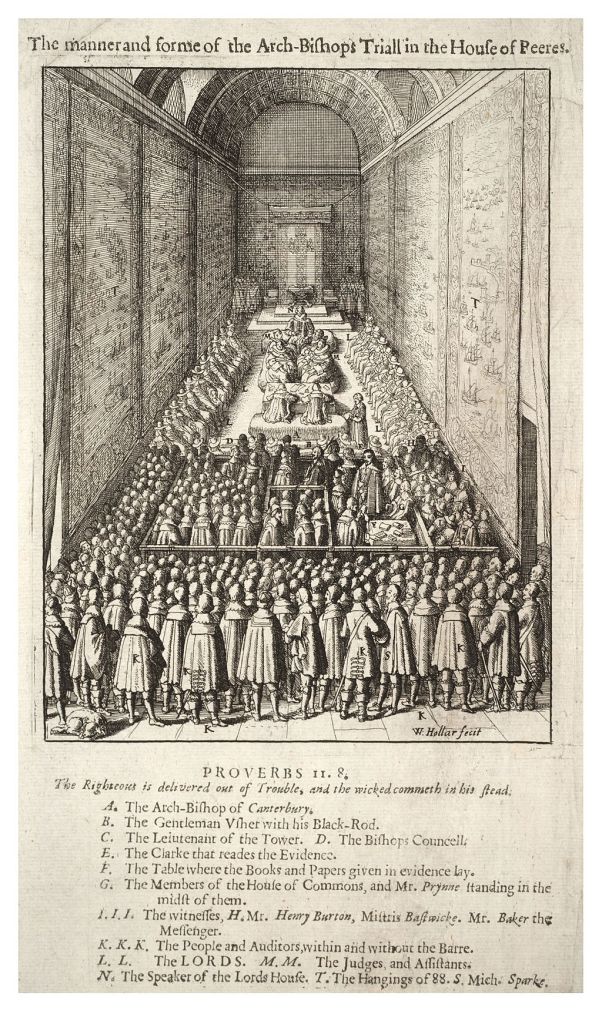
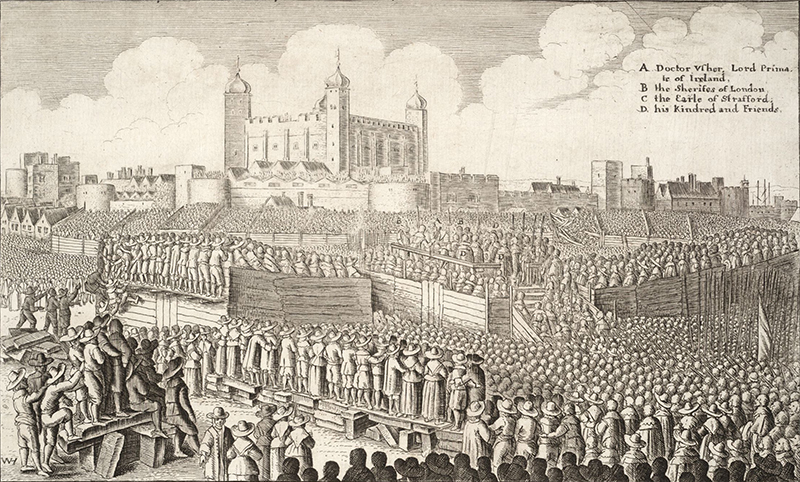
In the eyes of many, Sir Harbottle Grimston was a great man in the English parliament of 1640. He rounded up and prosecuted many who he and others saw as traitors to the state. Bringing one such enemy of the state to trial, Grimston declared, “We are now fallen on that great man: look upon him as he is in his highness, and he is the sty of all pestilential filth that hath affected the state and government of this commonwealth. He is the man, the only man, that hath raised and advanced all those that, together with himself, have been the authors and cause of all our ruins, miseries, and calamities we now groan under.” Grimston won his case, and the man he was speaking of was taken to the tower and finally beheaded in 1643 for his crimes. However, today, we do not celebrate Grimston. Instead, we celebrate the one he saw beheaded: Archbishop of Canterbury, Blessed William Laud. You see, Grimston was a Puritan, and during their short-lived rule in England, they sought to remove anything and everything that looked, sounded, or tasted like a Catholic. I don’t know how he tasted, but William Laud very much looked and sounded like a Catholic, but he was also a staunch supporter of the Church of England and the monarchy, without separation of Church and state.
Laud looked and sounded so much like a Catholic that the Pope sent a special envoy to Laud and offered him a cardinal’s hat, stating that he would “accept clerical marriage, communion in both kinds, the English Prayer Book liturgy and only a conditional re-ordination for all priest” if Laud and the others would convert to Rome. Laud was not impressed with the state of the Roman Church, so he declined.
It would seem that Laud’s influence would have ended with his death, but when the Puritans were put out of power, it was the Church that Laud had somewhat envisioned that was restored.
Today, scholars and historians either hate all 5’2” inches of him, or they love him. One says he was a “ridiculous old bigot.” The other says, “Laud was the one man who prevented the English Church from being bound in the fetters of an iron system of compulsory Calvinistic belief.” Can I get an “Amen!” Another said, “He had the misfortune to think that he was born to set the world right.” I suppose we can always listen to what others say about someone, or we can listen to what that person says about themselves. On the scaffolds facing his execution, Laud said, “This poor Church of England hath flourished and been a shelter to other neighboring churches when storms fell upon them. I was born and baptized in the bosom of the Church of England. In that profession I have ever since lived, and in that I am now come to die… bless this kingdom [of England] with peace and charity, that there may not be this shedding of Christian blood amongst them.”
I do not know enough about his life to say one way or another, but I have learned that if you are making people angry on both the left and the right, you may be on the correct path… or a fool.
Jesus said, “Everyone therefore who acknowledges me before others, I also will acknowledge before my Father in heaven.” Archbishop William Laud had his strong points and faults, but he unashamedly acknowledged the Savior. So today, we celebrate one who believed, who died for what he thought, and who—unlike so many of the Saints we celebrate—was entirely… human.
One morning, Clotile woke up, looked at herself in the mirror, and rushed off to her doctor.
Breathless and panicked, she said, “Dr. Pierre, take a look at me. When I woke up this morning, I looked at myself in the mirror and saw my hair all wiry and frazzled up, my skin was all wrinkled and pasty, my eyes were blood-shot and bugging out, and I had this corpse-like look on my face! What’s wrong with me, Doctor?”
Dr. Pierre looks her over for a few minutes, then calmly says, “Well, Clotile, I can tell you one thing… there’s nothing wrong with your eyesight.”
This past Wednesday, we celebrated the Feast of the Holy Name. A celebration of the name that God the Father gave His Son—Jesus. It is, without a doubt, the most powerful name throughout time because regardless of where and when it is spoken, it can generate powerful negative and positive emotions.
As I was preparing that sermon, I guess this one was percolating in the background because I want to come back to this idea of names, but today, instead of the names we are given at birth, I’m thinking about the names we give ourselves. For example, I can look in the mirror and think, “Now there’s one sexy beast.” Not really. Most of the time, the name I use when looking in the mirror is not so kind. And there are times when I look past the image I see in the mirror to my inner self, and the names can be even more cruel and hateful. I don’t imagine I’m the only one, so why is that? Why is it that we can be unkind to ourselves?
A few months back, we did a class by Lysa Terkeurst—Forgiving What You Can’t Forget. Most found it beneficial. I’m not sure if this is one of the major points she was trying to get across in the teachings, but one thing that has stuck with me has to do with the stories we tell ourselves. The stories of our lives with all the various players, the emotions (whether real or perceived), the joy or the pain experienced, and so on. We have these stories, and we tell them to ourselves.
If, in that story, we are the one that is hurt or done wrong, then every time we tell that story to ourselves, we re-enter it, and in those negative stories, all the hurt, pain, and anger resurfaces. We experience it all over again. That’s not a good thing because it does not allow us to heal. We remain in this rut, and over time, our lives are lived out of that rut, never experiencing joy or forgiveness.
In the telling of these stories, we give ourselves names. With the good stories, the names can be joyful: rock star, sexy beast, strong, faithful, obedient, happy. But in those other stories, the negative ones are where we employ the cruel and hateful names. And, because the negative in our lives has far more significant influence over us than the positive, we come to believe those negative names we call ourselves are who we truly are. If someone calls you “stupid” enough times, you come to believe you are stupid. From a spiritual perspective, call yourself unholy, unloveable by God, unworthy, and damned enough times, and guess what? You start to believe that as well.
To get ourselves out of the rut of the story and to begin to have a better view of ourselves, Lysa suggests that we rewrite the script of that story. For example, if there is a story in your life where someone hurt you, or you were the one doing the hurting, you can tell yourself that story repeatedly, each time experiencing the same pain, anger, and resentment you’ve always felt. The rut continues to hold you on the path, but what if you rewrote the script? What if you said, “I’m no longer going to be angry or hurt.” What if you said, “Instead of feeling angry or hurt at someone else or myself, I will rewrite the script. When I begin to tell myself that story again, instead of becoming angry at them or myself, I will choose to forgive. Instead of raging in my mind and continuing down that path, I’m going to forgive the person who hurt me, or I’m going to forgive myself and accept the forgiveness that comes from God.” It doesn’t fix it overnight; it is a process that requires patience, but over time, you begin to tell a story of forgiveness, not anger and resentment.
This same principle applies to the names we call ourselves. We must begin to rewrite that script as well, but what do we replace them with?
“In those days Jesus came from Nazareth of Galilee and was baptized by John in the Jordan. And just as he was coming up out of the water, he saw the heavens torn apart and the Spirit descending like a dove on him. And a voice came from heaven, ‘You are my Son, the Beloved; with you I am well pleased.’”
In the Catechism at the back of the Book of Common Prayer, the question is, “What is Holy Baptism?” The answer is, “Holy Baptism is the sacrament by which God adopts us as his children and makes us members of Christ’s Body, the Church, and inheritors of the kingdom of God.” (p.858)
Jesus was God’s son, so he did not need to be baptized and adopted; however, Jesus’ baptism demonstrates how we can be adopted and become sons and daughters of God. Jesus is showing us the way to the Father.
At His baptism, Jesus heard the words of the Father, “You are my Son, the Beloved; with you I am well pleased.” Henri Nouwen writes, “These words revealed the true identity of Jesus as the beloved. Jesus truly heard that voice, and all of his thoughts, words, and actions came forth from his deep knowledge that he was infinitely loved by God. Jesus lived his life from that inner place of love.” (Source, January 2)
How is it that Jesus could submit Himself to the horrors of the cross? He understood that, regardless of all that would come against Him, all that was said about Him, and all that was done to Him, He was the Beloved Son of God. In the face of it all, He could say, “I am the Beloved.” And in knowing that, He could trust the Father to see Him through.
How do we move away from the hateful and cruel names we call ourselves? Through your baptism, you have become God’s daughters, God’s sons. Of this, Nouwen writes, “I know now that the words spoken to Jesus when he was baptized are words spoken also to me and to all who are brothers and sisters of Jesus. My tendencies toward self-rejection and self-deprecation”—my tendencies to look in the mirror and speak cruel and hateful words—“make it hard to hear these words truly and let them descend into the center of my heart. But once I have received these words fully”—I am also the beloved—“I am set free from my compulsion to prove myself to the world and can live in it without belonging to it. Once I have accepted the truth that I am God’s beloved child, unconditionally loved, I can be sent into the world to speak and to act as Jesus did.” (Ibid.)
You can look in the mirror and speak words of hate, but how can you hate what God loves so dearly? Rewrite the script. You are not the person in the stories that you tell yourself. You are the beloved of God. Rewrite the script. Imagine for a moment what your life could be if you lived into that knowledge, that place of love. Imagine what it would be like to look in that mirror and say, “I am the beloved of God.” And not only say it but believe it.
In our first lesson from Genesis, we heard how God separated the light from the darkness. “Let there be light.” The author then tells us, “And there was evening and there was morning, the first day.”
Look into the mirror of your soul and say to it, “I am the beloved of God.” Believe it, and let this be the day God separates the light from the dark within you. Let this be your first day.
Let us pray: Father in Heaven, You made us Your children and called us to walk in the Light of Christ. Free us from darkness and keep us in the Light of Your Truth. The Light of Jesus has scattered the darkness of hatred and sin. Called to that Light, we ask for Your guidance. Form our lives in Your Truth, our hearts in Your Love. Amen.
Question: How does your name make you feel? Do you like it? Do you wish your parents had been a bit more creative? Turns out, our names impact who we are, how we perceive ourselves, and how others perceive us.
“The psychology of names in the context of humans is a rich and complex subject that touches upon culture, identity, and perception. Names are not just words; they are the essence of who we are, representing our heritage, values, and aspirations. They have the power to shape our self-identity and influence how others see us. In a world of diverse cultures and traditions, names are a reminder of the beauty of human individuality and the shared bonds that connect us across generations.”
John is a relatively common name; it is the third most popular name in the last 100 years. As of 2022, I share the name John with 4,354,502 others. That said, I like it. It seems to fit my vocation as a priest, and when I think of it in those terms, I feel more related to John the Baptist than the Apostle John—although they both influence how I understand myself.
Today, however, we celebrate a different name—the Holy Name of Jesus. (Officially celebrated on Monday.) The name “Jesus” is from the Hebrew Joshua, or Yehoshuah, meaning “Yahweh is salvation” or “Yahweh will save.” It was the name given to Jesus by his Father. As we read in St. Paul’s letter to the Philippians:
Therefore God also highly exalted him and gave him the name that is above every name, so that at the name of Jesus every knee should bend, in heaven and on earth and under the earth, and every tongue should confess that Jesus Christ is Lord, to the glory of God the Father.
The name Jesus is interesting and has wildly varying effects on people. It can cause some to give thanks and others to rage. It is a name that can bring peace and ravaging wars. It is truly the name above all names, but why so much division? Why so much discord when it is spoken? There are many different answers, but one thing is for sure: we can either contribute to the rancor or help bring about greater peace, for in the same way that people recall the name of an Ernest Hemingway novel when they hear my last name—For Whom the Bell Tolls—they will or will not recall the name of Jesus when they hear yours. Consider a Stradivarius violin.
Stradivarius is the name associated with the finest violins in the world. This is true because Antonius Stradivarius insisted that no instrument constructed in his shop be sold until it was as near perfection as human care and skill could make it. Stradivarius observed, “God needs violins to send His music into the world, and if any violins are defective, God’s music will be spoiled.” His philosophy was summed up in one sentence: “Other men will make other violins, but no man shall make a better one.”
Each violin was unique in itself, but each was the finest instrument of its kind. If not, Stradivarius would not attach his name to it. If he had, then the instruments he attached his name to would not have been considered of such great value, and in turn, his name would have been smeared and his influence forgotten.
In a similar manner, as the Christian people, the name of Jesus is attached to us, and if we are not viewed as the holy instruments of our God, then we tarnish the name of Jesus. In the process, we drive people away from the Truth and, in many cases, make them enemies of God.
You bear the most holy name in history: Jesus. When people speak your name, may the name they also recall in their minds be that name: Jesus, because, through you, they have experienced Him.
A man appeared before St. Peter at the pearly gates. St. Peter asked, “Have you ever done anything of particular merit? Anything that might have revealed the goodness of God in the world?”
“Well,” the man said, “once I came upon a gang of bikers who were threatening a young woman. I approached the largest and most heavily muscled biker and smacked him on the head, kicked over his bike, ripped out his nose ring, and threw it on the ground. ‘Now leave her alone!’ I then yelled.”
St. Peter was impressed: “When did this happen?”
“Just a couple of minutes ago.”
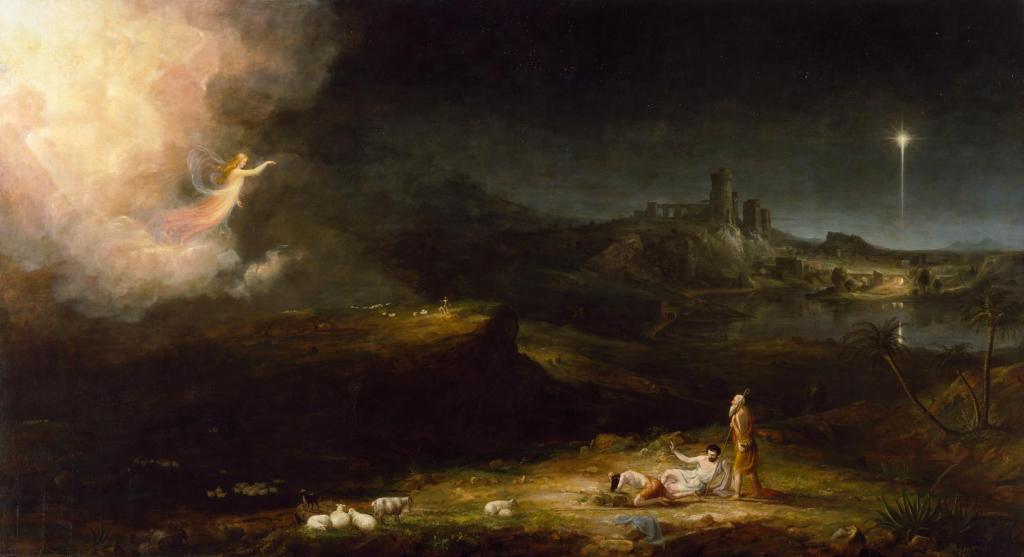
Tonight, we heard of the angels appearing to the shepherds proclaiming the birth of Jesus. It began, “Then an angel of the Lord stood before them, and the glory of the Lord shone around them, and they were terrified.” As I studied that, I began thinking about the “glory of the Lord.” Throughout Scripture, we are told of several encounters with God’s glory, and what’s interesting is that as history progresses, we are allowed more and more access to this glory.
Moses went up on the mountain to receive the Ten Commandments. Afterward, “Moses said, ‘Please show me your glory.’… But, [the Lord] said, “You cannot see my face [my glory] for man shall not see me and live.”
Later, the Prophet Ezekiel will have a grand vision of the Lord. Ezekiel spoke of the living creatures, the angels that were serving the Lord, and then “above the expanse over their heads there was the likeness of a throne, in appearance like sapphire; and seated above the likeness of a throne was a likeness with a human appearance.” There was something like gleaming metal and fire. There was a brightness and a rainbow around Him. A magnificent sight. Ezekiel concluded, “Such was the appearance of the likeness of the glory of the Lord.” God’s glory is out there yet unapproachable, but later, with Jesus, the glory of the Lord comes closer.
St. John tells us, “The Word became flesh and dwelt among us, and we have seen his glory, glory as of the only Son from the Father, full of grace and truth.” At the Transfiguration of Jesus, we are told that Peter, James, and John witnessed the glory of the Lord, and finally, in the New Jerusalem at the end of days, we will forever live in God’s glory. From John’s Revelation, “I saw no temple in the city, for its temple is the Lord God the Almighty and the Lamb. And the city has no need of sun or moon to shine on it, for the glory of God gives it light, and its lamp is the Lamb.”
The glory of the Lord drew closer, and what is so amazing is that through Jesus, we now share in this glory. It is a part of us. On the night before He was crucified, Jesus prayed, “The glory that you have given me I have given to them, that they may be one even as we are one, I in them and you in me, that they may become perfectly one, so that the world may know that you sent me and loved them even as you loved me.” The glory of God seen by the shepherds on the night Jesus was born and revealed throughout scripture is in you, but can we see it? Moses, Ezekiel, the shepherds, the Apostles, and, in the end, everyone will actually see the glory of the Lord, but what about us? What about today? If it is in us, is it something that is hidden within, or does it visibly shine? Answer: perhaps you can’t see it in yourself, but you can witness it in others.
Author Donna Ashworth published a collection of poems, Wild Hope, which includes the poem You. “If every single person who has liked you in your lifetime, were to light up on a map, it would create the most glitteringly beautiful network you could imagine. Throw in the strangers you’ve been kind to, the people you’ve made laugh, or inspired along the way, and that star-bright web of you, would be an impressive sight to behold. You’re so much more than you think you are. You have done so much more than you realise. You’re trailing a bright pathway that you don’t even know about. What a thing. What a thing indeed.” (Source: Wild Hope)
St. Irenaeus (d.202 a.d.) is one of the Church Fathers and a great early theologian. He writes, “The glory of God is a person fully alive, and the life of a person is the vision of God.” What did Irenaeus mean? The answer relies on understanding that the person who is the “vision of God” is not just any person. It is Jesus who revealed the Father. So, the glory of God is a person fully alive, and the person is fully alive when Jesus is revealed in them. A person is fully alive when the vision of God, Jesus—God’s Glory—is witnessed in their life as they trail a bright pathway of God’s love and glory behind them.
You don’t have to go live in the desert eating only bread and salt and praying the Psalms all day, every day, to reveal the glory of God and enter His Kingdom. You don’t have to become a missionary in some distant land to show Jesus to the world. You don’t even have to take on a gang of bikers to demonstrate the goodness of God. So, what must you do? Jesus said, “You are the light of the world. A city set on a hill cannot be hidden. Nor do people light a lamp and put it under a basket, but on a stand, and it gives light to all in the house. In the same way, let your light shine before others, so that they may see your good works and give glory to your Father who is in heaven.” What must you do to reveal the vision of God? Let the glory of Jesus that is in you shine before others just like it shown around the shepherds on that hillside outside of Bethlehem. Let others see the glory of the Lord in you, and they will say, “Let us go and see what the Lord has made known to us,” and they too will glorify and praise God.
You have God’s glory within you. Turn it into a bright pathway so that others may join us in coming before the child in the manger to see and receive this gift from Our Father.
Let us pray: Lord our God, with the birth of your Son, your glory breaks on the world. Through the night hours of the darkened earth, we, your people, watch for the coming of your promised Son. As we wait, give us a foretaste of the joy that you will grant us when the fullness of his glory has filled the earth, who lives and reigns with you for ever and ever. Amen.
Within our sanctuary, by the altar, is the tabernacle. Above it, the red sanctuary lamp burns, indicating that the consecrated bread and wine—the body and blood of Our Lord—are present.
For some, the bread and wine (in many cases, grape juice) are only representations or symbols. For others, they hold a slightly higher place and point to something greater but remain bread and wine. For us, we believe that the bread and wine maintain the form of bread and wine but do, in fact, become the body and blood of Jesus, but is there any proof that this transformation has taken place? It is a question of faith, but I came across the following article that may get you thinking about it. (You’ll hear this again on a Sunday.)
“On the evening of the last day of his October 1995 visit to the United States, John Paul II was scheduled to greet the seminarians at Saint Mary’s Seminary in Baltimore. It had been a very full day that began with a Mass at Oriole Park in Camden Yards, a parade through downtown streets, a visit to the Basilica of the Assumption, the first cathedral in the country, lunch at a local soup kitchen run by Catholic Charities; a prayer service at the Cathedral of Mary Our Queen in North Baltimore; and finally a quick stop at Saint Mary’s Seminary.
The schedule was tight so the plan was simply to greet the seminarians while they stood outside on the steps. But the Pope made his way through their ranks and into the building. His plan was to first make a visit to the Blessed Sacrament.
When his wishes were made known, security flew into action. They swept the building paying close attention to the chapel where the Pope would be praying. For this purpose highly trained dogs were used to detect any person who might be present.
The dogs are trained to locate survivors in collapsed buildings after earthquakes and other disasters. These highly intelligent and eager dogs quickly went through the halls, offices and classrooms and were then sent to the chapel. They went up and down the aisle, past the pews and finally into the side chapel where the Blessed Sacrament is reserved.
Upon reaching the tabernacle, the dogs sniffed, whined, pointed, and refused to leave, their attention riveted on the tabernacle, until called by their handlers. They were convinced that they discovered someone there.
We Catholics know they were right—they found a real, living Person in the tabernacle!” (Source)
Today, in our Gospel reading, we hear the story of Jesus appearing to the disciples in the upper room. On that first visit, Thomas was absent. When the other disciples tell him about it… you know the story—Doubting Thomas. “Unless I see the mark of the nails in his hands and put my finger in the mark of the nails and my hand in his side, I will not believe.”
A week later, the Lord appears again, and Thomas is present. Jesus says to him, “Put your finger here and see my hands. Reach out your hand and put it in my side. Do not doubt but believe.” Thomas answered him, “My Lord and my God!”
“Upon reaching the tabernacle, the dogs sniffed, whined, pointed, and refused to leave, their attention riveted on the tabernacle, until called by their handlers. They were convinced that they discovered someone there.” I am convinced that if those dogs, while sitting in front of the tabernacle, could have spoken, they would have professed the same words as Thomas, “My Lord and my God!”
On this Eve of the Feast of St. Thomas, when you receive the Blessed Sacrament, recognize that hidden within is your Lord and your God and receive Him with great humility and thanksgiving.





 Candle in a Cave