Sermon: Thomas Aquinas


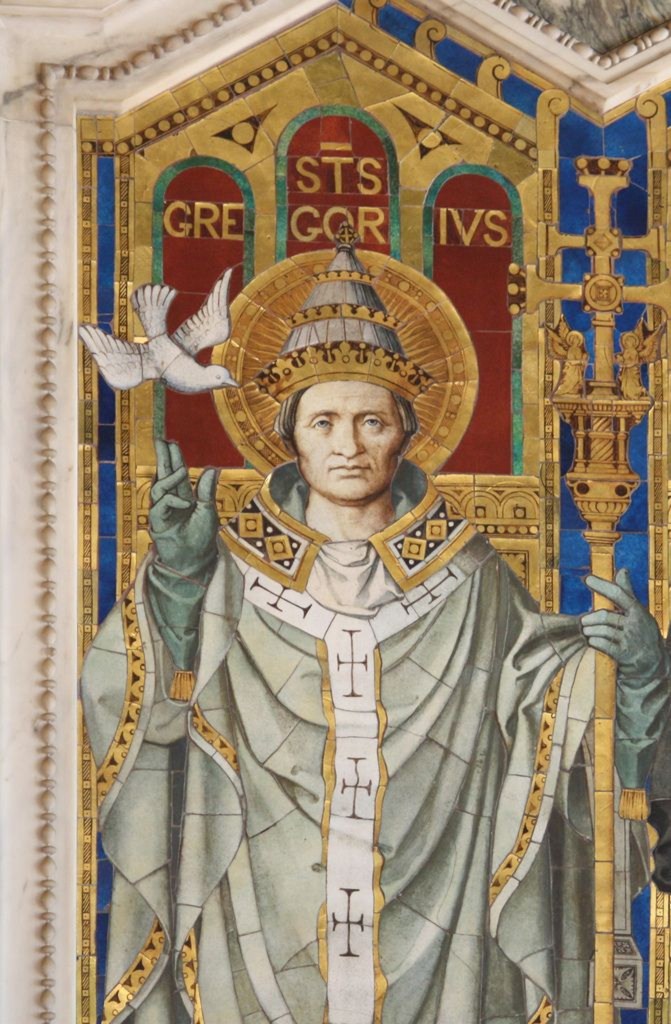
Can you prove to me that there is a God?  Sounds easy enough, but when it comes down to it… not so much.  However, several have tried, and in the eyes of many, including the Church, have succeeded, one of which is our Saint for today, Thomas Aquinas.

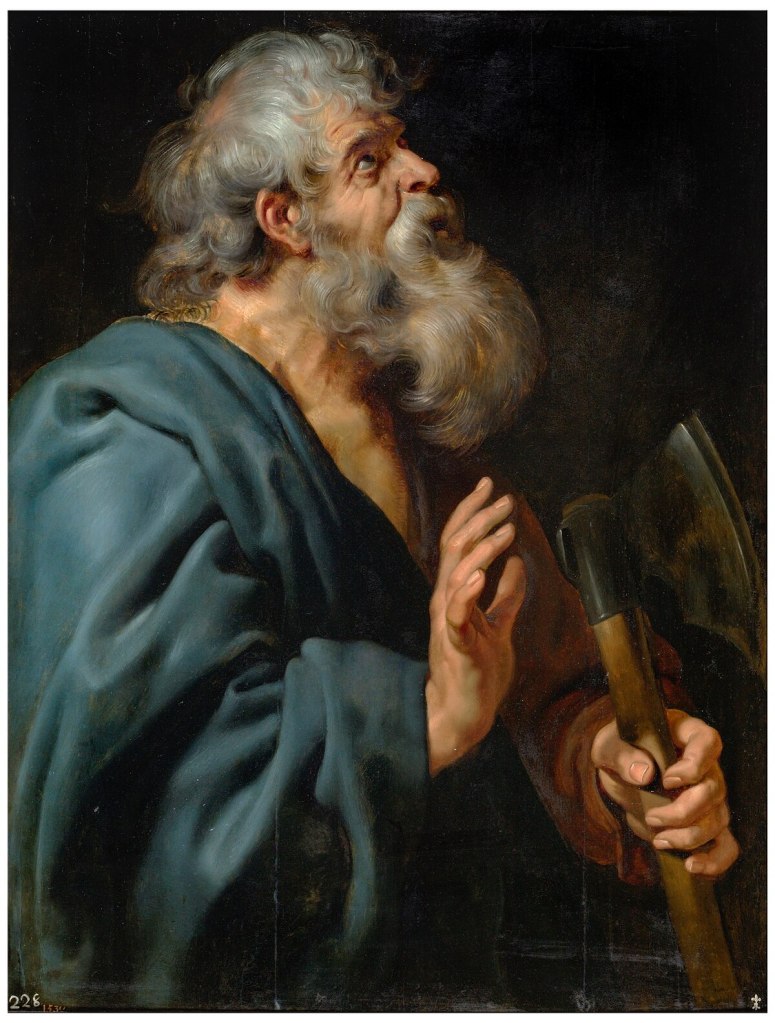
Thomas was born in 1225 in Italy. His teachings and writings can only be compared to those of St. Augustine of Hippo when considering their effect on Christian thought (think of them as the Einstein’s of Christianity).  It was during Thomas’ life that the writings of the great philosopher Aristotle were ‘rediscovered,’ and it was Thomas Aquinas who took these writings of Aristotle and integrated them into Christian thought, which means that a new way of understanding God was brought into Christian thinking and that understanding was through the use of reason.  How so?  Think of the polarized views of today.

On one side, we have science.  Science is essentially all reason.  A bit like math: one plus one equals two.  That same reason has led some in the scientific fields or understanding to deny the existence of God; for example, the creation of the universe came about through the Big Bang; therefore, all that business in Genesis is just a fairy tale, and God doesn’t exist.  The other side is Sola Scriptura, which declares that the Bible is all that is needed to prove the existence of God.  Aquinas would say, “Not so fast,” to both groups.

In his greatest work, Summa Theologica, Aquinas puts forward five logical arguments (reasons) for the existence of God, the first of which is the argument of motion.  He begins by simply saying things move.  We can all agree on that.  From there, he says, for things to move, something had to make them move.  Think of a ball on a pool table: if that ball is going to move, something has to move it, whether it is the cue stick or gravity or even a ghosty; something made it move, but what made that something move?  You can chase that as far back as you want. Still, for Aquinas, you eventually have to admit that there was something entirely different that made the very first thing move: the ‘first mover,’ something that was the initiator of all other movement, so why not call that ‘first mover’ God?  That doesn’t reveal the God of Christianity, but it establishes some ‘higher power,’ as some refer to it today.  So, when it comes to creation and someone arguing the Big Bang started it all, Aquinas would ask, “Who made it go bang?”  To those who say Sola Scriptura, Aquinas would say, “God gave you a brain.  Use it.”  The one thing the argument of reason cannot answer is how we go from ‘higher power’ to the God of Christianity.  For Aquinas, that takes one more step: revelation.

Revelation goes back to our study of St. Paul’s Epistle to the Romans, where we understood that our belief in God is a grace given to us by God.  Because of this grace, this revelation, even though we cannot prove that the ‘higher power’ is the God of Christianity, we can have faith and believe.  This same grace, faith, revelation helps us discern the Holy Trinity, the Incarnation, and ultimately the ability to declare that Jesus is Lord, for as Jesus said to Simon Peter when Peter declared Jesus as Lord, “Blessed are you, Simon Bar-Jonah! For flesh and blood has not revealed this to you, but my Father who is in heaven.”  “Flesh and blood,” that is ‘reason’ did not reveal this to you, but the “Father,” that is ‘revelation’ did.

Confused?  It’s OK if you are.  Most of us are.  The important thing to note is that there have been and are really great thinkers of the Christian faith, like Thomas Aquinas, and through their work, we can learn that things like reason and science and faith are not incompatible opposites but work together in providing a more clear understanding of God as revealed in the person of Jesus Christ.

Sermon: Epiphany 3 RCL C – “Not Just any Book”


During World War II, a soldier was stationed on an island in the South Pacific. Seeing him, one of the island’s inhabitants approached him and showed him a copy of the Holy Bible he had received from a missionary several years prior. The soldier told him, “O, we’ve outgrown that sort of thing.” The native smiled back and said, “Well, it’s a good thing we haven’t because if it weren’t for this book, you would be our evening meal.”

If you ever have to sit down with me and watch one of my favorite movies, I don’t guarantee you’ll appreciate it as much as I do. It is an odd and eclectic mix and, I confess, often violent, but let’s be honest, you’ve got to kill a zombie. One that came out in 2010 (no zombies but quite violent and rough language) was The Book of Eli, starring Denzel Washington. What is interesting, given the violence and language, is the fact that The Book of Eli appears on a number of best Catholic film lists. Why? It is about a man, Eli, living in a post-apocalyptic world trying to save the last known copy of the Holy Bible. 

Without spoiling the movie, I’ll tell you that another character, Carnegie (played by Gary Oldman), wants Eli’s Bible. Carnegie will go to any means necessary to have it. However, for Carnegie’s men, going to so much trouble for one book seems like a waste of time and resources, especially since so many are getting killed over it.

Regarding Eli and the book, Carnegie tells one of his chiefs, “Put a crew together; we’re going after him.”

“For a __ book?” The man snaps back.

Carnegie rages, “IT’S NOT [JUST A] BOOK! IT’S A WEAPON! A weapon aimed right at the hearts and minds of the weak and the desperate. It will give us control of them. If we want to rule more than one small, ___ town, we have to have it. People will come from all over; they’ll do exactly what I tell ’em if the words are from the book. It’s happened before, and it’ll happen again. All we need is that book.”

That would be funny if it weren’t true.

Robert Seiple, former president of World Vision, writes, “In 1915, A Russian Armenian was reading his Bible when he was beheaded. I saw the Bible—large, thick, and well-used. Inside was a reddish stain that permeated most of the book. The stain was the blood of this man, one of more than a million casualties of a religious and ethnic holocaust. About 70 years later, a large shipment of Bibles entered Romania from the West, and Ceausescu’s (dictator of Romania) lieutenants confiscated them, shredded them, and turned them into pulp. Then they had the pulp reconstituted into toilet paper and sold to the West.”

People want to take the Bible, weaponize it, and use it for gain, and others see it as so dangerous that they want to destroy it. One book is causing so much trouble. However, in America, studies show that we don’t read it and don’t think much of it. 

To be a member in good standing of the Episcopal Church, you only have to receive communion three times a year. That’s pretty low. When it comes to reading the Bible, American Christians as a whole aren’t much better. The American Bible Society “defines Bible users as people ‘who use the Bible at least 3–4 times each year on their own, outside of a church setting.’” 

We have a Book that people fight and die for, but we, as a Christian people, don’t give it much thought. Why?

My opinion—and that is what it is—is that it is too convenient. We’ve never had to fight for it. In this country, it’s a bit like running water. We don’t give it much thought unless, for some reason, we have to do without it. That is my opinion; however, Barna’s Christian research group has a more researched opinion.

Barna states, “We have shifted from being a nation in which people believed that right and wrong—i.e., morality—was defined by the Bible. We now live in a nation where only 42 percent believe that the Bible is true, accurate, and relevant, and where the largest share of adults believes there is no absolute moral truth, that all truth is determined by the individual.

“On what basis do they determine ‘their’ truth? Primarily emotions: if it feels like the right or appropriate thing to do, say, or believe, then that becomes the course of action, no questions asked.” (Source)

In other words, when it concerns the Bible, we’re like that World War II soldier, “We’ve outgrown that sort of thing.” Because of that attitude, the cracks are beginning to show.

In the time of Nehemiah, the people had returned to Jerusalem after being exiled to Babylon. In our reading today from Nehemiah, the people have completed rebuilding the walls around the city and have come together for one purpose—now that the city walls are restored, they want to restore their hearts to God. To do this, they ask that the Book of the Law be read so a day is set and a platform built. 

Generally, the Scriptures would have been read in the synagogue, but this day was special. We read, “Ezra opened the book in the sight of all the people, for he was standing above all the people; and when he opened it, all the people stood up. Then Ezra blessed the Lord, the great God, and all the people answered, ‘Amen, Amen,’ lifting up their hands. Then they bowed their heads and worshiped the Lord with their faces to the ground.” For about six hours, the people stood and attentively listened to God’s Word. When the reading was complete, the people got down on their knees, bowed their heads to the ground, and worshipped.

They worshipped because they had been provided the opportunity to hear God speak. Then, of all things, they wept. They cried over hearing God’s word. Why? It could have been for joy at knowing that through God’s word, they were being restored. It could have been bitter tears from knowing their sins and how far they had fallen. They could have been crying over the beauty of the message. They were likely crying for all these reasons and more, which led Nehemiah to tell them not to. He wanted them to rejoice in the Word of God and the fact that God, in His goodness and mercy, had provided them with a written document on how to maintain relationship with Him. And it is for this very reason that we, too, should be reading the Bible daily. It contains the words of life and, more importantly, the words of our God.

Preaching in the fourth century, St. John Chrysostom tells his congregation, “I exhort you, and I will not cease to exhort you to pay heed not only to what is said here, but when you are home also you should occupy yourselves attentively with the reading of Holy Scripture…. The reading of Scripture is a great defense against sin. Ignorance of the Scripture is a great misfortune, a great abyss. Not to know anything from the word of God is a disaster. This is what has given rise to heresies, to immorality; it has turned everything upside down.”

Seven or eight years ago, I had kidney stones—a most unpleasant experience. After the procedure, I still had some issues. My doctor responded to those issues: “Drink more water.” I said, “There’s also this going on.” He said, “Drink more water.” “And what about this,” I asked. “Drink more water.” When it was sorted out, I asked my doctor how I could prevent them in the future. He said, “Drink more water.” I began to see a trend.

Would you like to know more about God and how He works in the world? Read your Bible. Would you like to know about God’s plan for your life? Read your Bible. Would you like to have a better understanding of the world around you? Read your Bible. Would you like help getting from one day to the next? Read your Bible. See the trend? Don’t have a Bible? I’ll buy you one. Need help reading the Bible? Let’s talk.

Writing in the sixth century, St. Isidore says, “If a man wants to be always in God’s company, he must pray regularly and read regularly. When we pray, we talk to God; when we read, God talks to us.” Read your Bible. You haven’t outgrown it. Let God talk to you.

Let us pray: Blessed Lord, who caused all holy Scriptures to be written for our learning: Grant us so to hear them, read, mark, learn, and inwardly digest them, that we may embrace and ever hold fast the blessed hope of everlasting life, which you have given us in our Savior Jesus Christ; who lives and reigns with you and the Holy Spirit, one God, for ever and ever. Amen.

Sermon: Epiphany 2 RCL C – “Water into…”


You all know that I make wine, and many of you know that my wine is good. My wine is so good that even former Baptists like it. Given that, I don’t mind telling you a couple of short wine jokes.

It’s funny how eight glasses of water a day seems impossible, but eight glasses of wine is a sign of a good meal. 

I’ve trained my dog to bring me a glass of red wine. It’s a Bordeaux collie.

I was having wine with my wife when she said, ‘I love you so much, you know. I don’t know how I could ever live without you.’ I said, ‘Is that you or the wine talking?’ She said, ‘It’s me talking to the wine.’

One of the funniest water-into-wine skits I’ve seen has Jesus and the disciples going to a fancy restaurant. The waitress comes up to the table and asks them what they’d like to drink, at which point they all start to giggle. Jesus elbows Peter to get him to stop, then says to the waitress, “We’ll just have water.” And then they all fall out.

In John’s Gospel, Jesus performs many “signs” and turning the water into wine at the wedding in Cana is the first. In looking at it more deeply, we can see that this one event defines Jesus’ mission and purpose—transforming the lesser into something greater—the fulfillment of its higher purpose. 

This week, during our Wednesday night study of the Pivotal Players of the Church, we learned about the life and teachings of the Venerable Fulton Sheen, and this idea of the lesser being transformed into the greater came up. It was summarized in the video, so I went looking for Sheen’s actual words, and I found them. Sheen writes, “The sunshine, the carbons, and the rain could never share the life of the plant unless they died to their lower existence and were assumed or taken up into plant life. Plants could never share the sensitive and locomotive power of animals, unless they died to their lower existence and were taken up by the animal. None of the things in lower creation could live in man, and share his arts, his sciences, his thinking and his loves unless they ceased to be what they were, submitting to the death of knife and fire.” (These are the Sacraments, 1962)

If the sunlight, elements, and rain are to fulfill their higher purpose, they must give themselves up and be absorbed into the vine and the grapes. If the grapes want to ascend into and fulfill their higher purpose, they must be picked and crushed. If the wine wants to achieve its higher purpose, it must be consumed by a person. 

So that the lesser can become greater, the lesser must die to itself and become a part of something else. So, then, how can we become greater and fulfill our higher purpose? St. Paul tells us, “I have been crucified with Christ. It is no longer I who live, but Christ who lives in me. And the life I now live in the flesh I live by faith in the Son of God, who loved me and gave himself for me.” (Galatians 2:20) I have been crucified with Christ—I have died to myself—and have become a part of Christ Jesus.

We fulfill our higher purpose not by living our best life but by giving up our life, participating in Jesus’s life, and serving His purposes. How do we do this?

These days, it’s a hard thing to “sell.” We have so many other options of things to do and see—books, movies, internet, sports, hobbies etc., etc., etc. All of these are our attempts to find true fulfillment in our lives. However, to fulfill our higher purpose, we must die to self and participate in the life of Christ. We do this by being filled with God’s Holy Spirit and then—and this is the hard sell—participating in the life and ministry of the Church, for the Church is Christ’s Mystical Body. 

In his book, The Mystical Body of Christ, Fulton Sheen says, “What now is this new Body which Christ assumed after He had ascended into His glory, to which He sent His heavenly Spirit, and through which He continues to exercise His office as Teacher, King, and Priest? If I said it was the Church, I would not be believed. I will therefore let St. Paul say it clearly and unmistakably: ‘Who now rejoice in my sufferings for you, and fill up those things that are wanting of the sufferings of Christ, in my flesh, for His Body, which is the Church.’ (Col 1:24)” (p.37) Paul rejoices in his suffering for he knows it is serving God’s purposes and Christ’s Body—the Church. To achieve his higher purpose, Paul knows that he must be caught up in the Body of Christ, the Church.

Remember when John was baptizing on the banks of the Jordan River? Following Jesus’ baptism, Jesus’ “popularity” began to eclipse John’s. Some came to John and asked him what he thought about this, to which John responded that he had told them all along that he was not the Christ, and there was another coming. His conclusion, “He must increase, but I must decrease.” (John 3:30) To fulfill our purpose, those words must become ours. “Jesus must increase, but I must decrease.” The Mystical Body of Christ—His Church—must, through our participation, increase, and for this to happen, we must decrease.

Today is our Annual Meeting. There’ll be good food, vestry elections, reports given, budget shared, all sorts of fun stuff. However, the meeting is ultimately about us and how we, as the Body of Christ in this place, are dying to self and fulfilling our purpose in God’s Kingdom on Earth. God will not force us. We are quite free to choose. Jesus turned water into wine, and the water had no say in the matter, but we do. Jesus could say He chooses to transform us into the very best, and we could respond, “Ya know… thanks, but I’m happy being water.” However, if we say, “We will die to self and decrease, so that You may increase in us,” we will become something extraordinary.

I believe we have already begun that transformational process—you’re already a pretty tasty Bourdeaux Collie—but there is always more “dying” that must occur. Therefore, as individuals, we must ask, “How might I decrease so that Christ Jesus can increase in me?” and, as the Body of Christ, we must ask the same.

We generally begin the Annual Meeting in the Parish Hall, but today, I would like to start it now so that our first action together is receiving the Body and Blood of our Savior in the Eucharist. This will nourish our spirits and help us continue on the path to achieving God’s higher purpose for our lives and His Church.

Let us pray: Almighty and everliving God, source of all wisdom and understanding, be present with those who take counsel in this Annual Meeting of St. Matthew’s for the renewal and mission of your Mystical Body, the Church. Teach us in all things to seek first your honor and glory. Guide us to perceive what is right, and grant us both the courage to pursue it and the grace to accomplish it; through Jesus Christ our Lord. Amen.

Sermon: Confession of St. Peter


The Princess Bride—a brilliant film. There are several outstanding characters, one of which is Vizzini. Short, mostly bald, and thinks he’s much more intelligent than everyone else. At one stage, Vizzini gets into an argument with the Man in Black (aka the Dread Pirate Roberts and our hero in disguise.) Attempting to strike fear into the heart of the Man in Black, Vizzini says,

Vizzini: I can’t compete with you physically, and you’re no match for my brains.

Man in Black: You’re that smart?

Vizzini: Let me put it this way. Have you ever heard of Plato, Aristotle, Socrates?

Man in Black: Yes.

Vizzini: Morons. 

However, Vizzini has a favorite word—inconceivable. He uses it all the time and under many different circumstances. While traveling with Inigo Montoya (he’s looking for the six-fingered man who killed his father), Vizzini says, “Inconceivable,” for the umpteenth time, and Inigo Montoya has had enough. Looking at Vizzini, he says, “You keep using that word. I do not think it means what you think it means.”

Today is the Confession of St. Peter, that is, Peter, declaring that Jesus is “the Messiah, the Son of the living God.” However, when you and I hear those words, well, “I do not think it means what we think it means.”

Since the time of the Prophets, Israel had been eagerly waiting and searching for the Messiah—the king who would lead them into a new era. 

When Peter declares that Jesus is the Messiah, the Son of the Living God, he does not understand Jesus as the Son of God as we understand it—as the second person of the Holy Trinity. Instead, Peter is saying that Jesus is this long-awaited Messiah—Jesus is the anointed one (much like a priest or king would be anointed) who is in a special relationship with God as God’s representative to lead the people. 

For Peter and the people, this anointed one, this king, would not only rule over some small Mediterranean country but would bring all the world under his dominion. Therefore, Peter’s confession was a hugely political statement. It was a threat to Herrod, who ruled in Palestine, and a threat to Caesar in Rome, who also claimed to be the son of God. Peter’s statement is a declaration of war, which is why Jesus strictly forbade them from telling anyone that He was the Christ. It was not yet the time, for we know what Peter and the others did not. Jesus was not declaring war on Caesar. Jesus was declaring war on sin and death, and He did not want the earthly “powers” to interfere until all was ready. 

Following the death and resurrection of Jesus, the Disciples would come to fully understand the implications of Peter’s Confession, but for now, it was a foreshadowing of that greater truth. However, there was one who recognized Jesus as the True Son of God, and it was the least likely of all people.

Luke’s Gospel tells us of the death of Jesus. In the end, “Jesus cried out again with a loud voice and yielded up his spirit.” Luke then tells us, “And behold, the curtain of the temple was torn in two, from top to bottom. And the earth shook, and the rocks were split. The tombs also were opened. And many bodies of the saints who had fallen asleep were raised, and coming out of the tombs after his resurrection they went into the holy city and appeared to many. When the centurion and those who were with him, keeping watch over Jesus, saw the earthquake and what took place, they were filled with awe and said, ‘Truly this was the Son of God!’”

Just as the curtain of the temple was torn in two, the Lord God tore in two the curtain covering the centurion’s eyes and allowed him to truly see—the first of many—who Jesus was. Why, a centurion, of all people, I don’t know, but what Jesus strictly forbade the Disciples from telling is now being freely declared—Jesus is the Messiah. Jesus is the One True Son of God. Now, the whole world knows what that means.

Sermon: The Baptism of Our Lord RCL C – “Suffering”


A jet traveling from New York to California was experiencing a severe thunderstorm. As the passengers were being bounced around by the turbulence, a woman turned to the priest sitting next to her and, with a nervous laugh, asked, “Father, you’re a man of God. Can’t you do something about this storm?”

The priest replied, “Sorry, I’m in sales, not management.”

Baptism has been popping up these past several weeks. Sometimes, I plan several sermons around a particular theme or topic, but this was not one of them. Yet, here we are again—The Baptism of Our Lord.

As we understand, we have been baptized into the death and resurrection of Jesus and given new life in Him. It is an assurance of God’s love for us, but do you ever think God has a funny way of showing His love for you? If you did feel that way, you wouldn’t be the first.

Teresa of Avila was traveling in bad weather. When she attempted to cross a stream, her carriage suddenly stuck in the mud, and she fell into the water. She complained to Jesus, and He said, “That’s how I treat my friends. ” Teresa replied, “No wonder you have so few friends.”

It would seem that if we were joined with God in our baptism, then everything should be coming up roses. For many, this is their way of thinking, and when things go south, they begin to wonder. Does God love me? Has He forgotten me? Is He angry and punishing me? Or maybe God just likes to mess with us.

The movie Bruce Almighty with Jim Carrey? Very funny and surprisingly accurate. When Bruce experiences a series of unfortunate events, they bring suffering into his life. When he’s had enough, he gets mad at God and says, “God is a mean kid sitting on an anthill with a magnifying glass, and I’m the ant. He could fix my life in five minutes if he wanted to, but he’d rather burn off my feelers and watch me squirm!”

When we think of God’s love and our union with Him through baptism, and things go wrong, we begin to feel that it’s just not right. These kinds of nasty things should not be happening to me. I’m on the team. But thinking in such a way shows that we haven’t been paying attention.

We read that when Jesus was baptized “and was praying, the heaven was opened, and the Holy Spirit descended upon him in bodily form like a dove. And a voice came from heaven, ‘You are my Son, the Beloved; with you I am well pleased.’” Such a declaration from the Father could lead you to believe that nothing would ever come against Jesus, but…

“You are my Son, the Beloved; with you I am well pleased.”

The “men who were holding Jesus in custody were mocking him as they beat him.” (Luke 22:63)

“You are my Son, the Beloved; with you I am well pleased.”

The crowd “kept shouting, ‘Crucify, crucify him!’” (Luke 23:21)

“You are my Son, the Beloved; with you I am well pleased.”

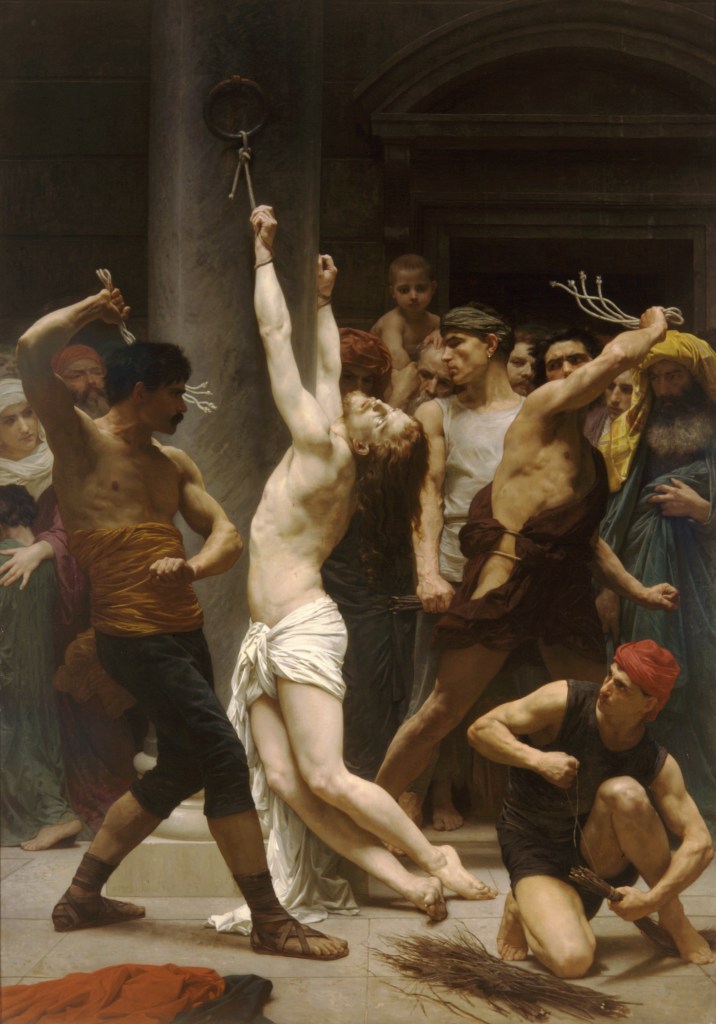
The soldiers “flogged [Jesus]. And the soldiers twisted together a crown of thorns and put it on his head and arrayed him in a purple robe. They came up to him, saying, ‘Hail, King of the Jews!’ and struck him with their hands.” (John 19:1-3)

“You are my Son, the Beloved; with you I am well pleased.”

“They crucified him (Luke 23:33)… mocked him (Luke 23:36)… he breathed his last. (Luke 23:46)”

“You are my Son, the Beloved; with you I am well pleased.” You are God’s sons and daughters. You are His beloved. With you, He is well pleased. However, from what we know of Jesus’ last day, it is not always easy to be a child of God. Although we have passed through the waters of baptism and participated in the death and resurrection of Jesus, the raging of the seas still pound against us. We have been redeemed, but all creation is still groaning and waiting. 

Archbishop Michael Ramsey writes, “The old world continues with its contradictions and its sufferings, but by the Cross and resurrection these very contradictions and sufferings can be transformed into things fruitful and creative wherein, by faith in the Crucified, the power of God may be found. There is no escaping from the facts of this world. Rather does membership within the world-to-come enable Christians to see the facts of this world with the light of the Cross and resurrection upon them, and to know that their own tasks are but the working out of a victory that Christ has already won.” (Glory: the Spiritual Theology of Michael Ramsey, p.25)

Our faith in God’s will is not a fatalistic acceptance but a faithful one—faith in the Father’s love. Faith when you pray, “Thy will be done,” for this is baptism. We are baptized into the death and resurrection of Jesus, but that death we are baptized into is an internal death of the old self—the person of sin that resided in us all. Therefore, our souls experience this new and resurrected life in Christ, but our bodies, like Jesus’, must continue to endure the crushing waves of the world and the suffering that comes with it.

How’s that old song go?

“I beg your pardon
I never promised you a rose garden
Along with the sunshine
There’s gotta be a little rain sometime.”
(Rose Garden by Lynn Anderson)

In this life, Jesus never promised us a rose garden. St. Peter confirms this. “Beloved, do not be surprised at the fiery trial when it comes upon you to test you, as though something strange were happening to you. But rejoice insofar as you share Christ’s sufferings, that you may also rejoice and be glad when his glory is revealed.” (1 Peter 4:12-13) 

Suffering is going to happen, so what are we, as a Christian people, to do when trials and suffering arrive at our doorstep? Peter answers that one for us as well. “Let those who suffer according to God’s will entrust their souls to a faithful Creator while doing good. (1 Peter 4:19)

Jesus said in the Sermon on the Mount, “You have heard that it was said, ‘You shall love your neighbor and hate your enemy.’ But I say to you, Love your enemies and pray for those who persecute you, so that you may be sons of your Father who is in heaven.” (Matthew 5:43-45a) In other words, pray to your Father in Heaven and say, “Thy will be done,” then have faith that God’s will is being accomplished regardless of the suffering that is pouring out. You may not feel all that great about it. His will might just be painful at times. In many cases, you will not understand it or know why, but have faith and “pray for your enemies.” That is, continue doing good, for this is also your Father’s will.

The Father says, “You are my child, my beloved; with you I am well pleased.” “The sufferings of this present time are not worth comparing with the glory that is to be revealed to us. For I am certain,” St. Paul tells us, “that neither death nor life, nor angels nor rulers, nor things present nor things to come, nor powers, nor height nor depth, nor anything else in all creation, will be able to separate us from the love of God in Christ Jesus our Lord.” (Romans 8:18, 38-39)

You are God’s child. He loves you, and regardless of your circumstances (that is a management decision), He is pleased with you. Therefore, stand in faith and perseverance, knowing His will is being fulfilled in your life.

Let us pray (a prayer of St. John Paul II):
O God, You are our Creator. You are
good and Your mercy knows no bounds.
To You arises the praise of every creature.
O God, You have given us an inner law
by which we must live. To do Your will
is our task. To follow Your ways is to
know peace of heart. To You we offer
our homage. Guide us on all the paths we travel
upon this earth. Free us from all the evil
tendencies which lead our hearts away
from Your will. Never allow us to stray
from You. Amen

Sermon: Harriet Beddel

Deaconess Bedell with a medicine man and Bobby Jim Tiger outside the Seminole mission

There are many sources within the Church listing the Saints celebrated. Because there are so many, most days have more than one Saint appointed. Today is no different. There are at least a dozen we could name. In the Episcopal Church, included in these feast days are those who may not be official Capital “S” Saints but who the Church describes as Holy Women and Holy Men. Today’s saint comes from this list, and she is closely linked to Oklahoma—Harriet Bedell.

Born in 1875, Harriet knew from an early age that she wanted to serve in the church, especially after hearing a missionary preach on the needs of those in China and Native Americans in this country. Her mother said no to her traveling abroad but allowed Harriet to go to school in New York to become a missionary/teacher in the United States.

She attended St. Faith’s Training School for Deaconesses. What is a Deaconess? Diane is training to be ordained a Deacon, but until 1970—Ladies, don’t shoot the messenger—until 1970, women were not allowed to be ordained, so the church created the position of deaconess. According to the Episcopalian Dictionary, “A deaconess used to be a ‘devoted unmarried woman’ appointed by the bishop to do just about anything that happened to be needed in a parish or an institution.  She could be a spinster or a widow–if she married, that automatically terminated her appointment.

She wore a distinctive, identifying garb and went wherever she could make herself useful.  She visited the sick and the poor, she gave Baptism and Confirmation instructions, she read Morning Prayer, Evening Prayer, and the Litany at public services, she specialized in work with women and children, and when licensed by the bishop to do so, she gave ‘addresses–which means she preached.  And if circumstances called for it, she mopped the floor and mowed the lawn.” (Source)

The church may not have had ordained Deacons, but they had Deaconesses doing the work of one.

Following her training in New York, Harriet traveled to Watonga, Oklahoma, where she worked alongside Deacon David Pendleton Oakerhater at the Whirlwind Mission. The Cheyenne so respected her that she was adopted into the tribe and given the name Vicsehia, which translates as “Bird Woman.” She served there for ten years until contracting tuberculosis and moved to Colorado for treatment.

Afterward, she would serve various Native American nations in Alaska and Florida. She remained very active following her retirement in 1938 and died on this day in 1969.

The daughter of Pharoh was bathing in the river when a basket, holding the infant Moses, floated down to her. Moses’ sister saw all this and ran to the daughter of Pharaoh and asked if she could find a nursemaid for the child. Pharaoh’s daughter said yes, so Moses’ sister brought Moses’ mother. Pharaoh’s daughter said to her, “Take this child and nurse it for me, and I will give you your wages.”

Harriet lived her life as though she had heard those exact words, except that in her case, the child she was to care for was the Native Americans she was called to live among. She also understood that the wages she would receive were not worldly but, instead, blessings from Our Father in Heaven and entry into His Heavenly Kingdom.

I wonder, how might our Lord be saying to you, “Take this child and nurse it for me, and I will give you your wages.”

Sermon: Christmas 1 RCL C – “Being Light”


A young girl once consulted with her priest. “I cannot stick it out any longer. I am the only Christian in the factory where I work. I get nothing but taunts and sneers. It is more than I can stand. I am going to resign.”

“Will you tell me,” asked the priest, “where lights are placed?”

“What has that to do with it?” the young Christian asked him rather bluntly.

“Never mind,” the priest replied. “Answer my question: Where are lights placed?”

“I suppose in dark places,” she replied.

Speaking of Jesus, John wrote in the Prologue of his Gospel, “What has come into being in him was life, and the life was the light of all people. The light shines in the darkness, and the darkness did not overcome it…. The true light, which enlightens everyone, was coming into the world.”

It speaks of Jesus, but it also speaks of the illuminating light of Jesus. A light that seeks out others and enlightens them in the ways of God. Jesus says toward the beginning of the Sermon on the Mount: “You are the light of the world. A city set on a hill cannot be hidden. Nor do people light a lamp and put it under a basket, but on a stand, and it gives light to all in the house. In the same way, let your light shine before others, so that they may see your good works and give glory to your Father who is in heaven.”

Jesus is the light, but he has shared His light with us so that we might also become beacons of hope and love in the darkness.

What does such light look like? 

Desmond Tutu was born in 1931, and he died on December 26, 2021. He was also one of ours—a South African Anglican bishop and theologian known for his work against apartheid and for human rights.

In 1940, Desmond’s mother worked as a cook in a hospital for women. The story tells that Desmond—he was nine years old at the time—and his mother were walking down the street, and a white man in a dark suit was walking toward them. The rules of apartheid dictated that Desmond and his mother step into the gutter, bow their heads, and allow the white man to pass. However, before they had the opportunity to do so, the white man stepped off the street first and, as they passed, tipped his hat to Desmond’s mother. After a time, Desmond asked his mother why the white man would do that, to which his mother replied, “He is a man of God.” The white man was Trevor Huddleston, Bishop in the Anglican Church.

Bishop Huddleston not only could have but should have ignored them; instead, he ignored the societal expectations and norms and honored the Image of God that was within them. He became a light in a dark world.

Tutu said much later, “I couldn’t believe my eyes, a White man who greeted a Black working-class woman.”  This one event was a great deal of the inspiration for Desmond becoming an Anglican priest.

What does it look like to be the light in the darkness? It is not necessarily something big and grand. Sometimes, it is nothing more than a tip of the hat, but that tip of the hat can speak volumes of the work of God.

Later, Bishop Tutu would say, “So often when people hear about the suffering in our world, they feel guilty, but rarely does guilt actually motivate action like empathy or compassion. Guilt paralyzes and causes us to deny and avoid what makes us feel guilty. The goal is to replace our guilt with generosity. We all have a natural desire to help and to care, and we simply need to allow ourselves to give from our love without self-reproach. We each must do what we can. This is all that God asks of us.” 

How will you be the light? You don’t have to look far, and you don’t have to come up with some grand scheme. All that is required is that you be faithful to God’s calling to love one another as He has loved us.

Let us pray (a prayer from Blessed John Henry Cardinal Newman that we can each make our own):  Dear Jesus, help me to spread Your fragrance everywhere I go. Flood my soul with Your spirit and life. Penetrate and possess my whole being so utterly that my life may only be a radiance of Yours. Shine through me, and be so in me that every soul I come in contact with may feel Your presence in my soul. Let them look up and see no longer me but only Jesus! Stay with me, and then I shall begin to shine as You shine, so to shine as to be a light to others; the light, O Jesus, will be all from You; none of it will be mine; it will be you, shining on others through me. Amen.

Sermon: Christmas 2 RCL C (Matthew 2:13-15, 19-23) – “Squirrels”


He had semi-cameo roles in Monsters, Inc., and Ratatouille and won the coveted Palm Dog Award at the Cannes Film Festival, but he is best known for his role in the movie Up. Of course, we are talking about the one and only Dug (aka: Dug the talking dog.) 

Dug is a Golden Retriever who can talk via a unique collar created by his master, Charles Muntz. The collar can read Dug’s thoughts and then translate them into English. Famous Dug lines:

“My name is Dug. I have just met you, and I love you.”

“My master is good and smart.”

And, “I do not like the cone of shame.” 

However, Dug’s most famous line is, “Squirrel!”

For those who do not know the meaning, it occurs when you are on task and getting things done, and something irrelevant to the task and often inconsequential catches your attention. (For the record, we like letting squirrels loose in vestry meetings because they frequently generate some of the best ideas.) So, some squirrels are good, while others affect us negatively. 

A study was conducted on office workers and screen time to track attention spans. The researchers would watch and time how long someone stayed on a particular task. For example, you pull up a document and begin reading/writing. How long do you continue doing this before switching to something like viewing email? In 2004, workers averaged two-and-a-half minutes. I don’t know if that is good or bad, but by 2012, the time had been reduced to seventy-five seconds. These same researchers say that today, the average attention span is forty-seven seconds.

That’s office workers; however, in the real world, the average attention span of a human is 8.25 seconds, which means you’ve dropped in and out of this sermon multiple times, and I’m just getting started. 8.25 seconds sounds pretty sad, but what makes it even more pathetic is the fact that a goldfish has an attention span of 9 seconds. Bottom line: we have a lot of squirrels running loose in our heads. I suppose that’s not so bad if we are watching TV or scrolling social media, but it does become problematic when we are trying to do things like driving or studying.

The squirrels will lead us straight into a ditch if we are not careful.

In our Gospel reading, we read about the Holy Family’s flight to Egypt. Joseph had a dream that Herod would try and kill Baby Jesus, so he quickly fled Israel with Mary and Jesus and went to Egypt, where they lived for a few years. Then, another dream tells Joseph it is safe to return to their homeland, so leaving Egypt, they eventually settle in Nazareth. In telling this story, Matthew reminds his readers of something the Prophet Hosea had said, “Out of Egypt I have called my son.” (Hosea 11:1) However, Hosea wasn’t thinking of Jesus when he said this. Instead, Hosea is referring to the Israelites’ escape from 400 years of enslavement in Egypt. The “son” Hosea is speaking of is all the people. The Lord has brought all His people out of Egypt and out of slavery.

Following their escape, the Israelites passed safely through the Red Sea, and their enemy was destroyed when the waters crashed back down. They wandered in the desert for all those years but eventually came to the Jordan River. With the Ark of God going before them, they made the miraculous crossing of the Jordan River—the river was caused to be stopped up, and they crossed on dry land. They entered the Promised Land and began the fulfillment of God’s plan. 

Some might say that God’s plan for the Israelites was to conquer the land they had been given and have a home of their own. This is true to an extent, but that was not their primary purpose. We read of it in the Book of the Prophet Isaiah what this was.

“Thus says God, the Lord,
    who created the heavens and stretched them out,
    who spread out the earth and what comes from it,
who gives breath to the people on it
    and spirit to those who walk in it:

‘I am the Lord; I have called you in righteousness;
    I will take you by the hand and keep you;
I will give you as a covenant for the people,
    a light for the nations,

    to open the eyes that are blind,
to bring out the prisoners from the dungeon,
    from the prison those who sit in darkness.’”

(Isaiah 42:5-7)

The Israelites were to be the Light of the Nations, but… “Squirrel!” They lost their focus. Their attention was drawn away from God. “Wow. That’s a pretty girl. Kinda looks like Scarlett Johansson. Who cares if she is a Gentile, and who cares if God said we weren’t to marry Gentiles? She’s the goil for me.” “Our crops failed this year, but all the Gentiles’ crops did great. It must be the gods they worship that did the trick. We’ll worship Yahweh on the Sabbath, but we’ll worship these other gods the rest of the week.” “Ever heard the expression, ‘When in Rome?’ Well, we aren’t in Rome, but if we want to get along with all our new neighbors, we better start acting like them.” “But God said we can’t.” “Yeah, well, God forgot to mention their goils look like Scarlett Johansson!” 

They were called out of Egypt to be the bearers of God’s light, but all these squirrels kept drawing their attention away from God. This led to their disobedience, and they ended up looking like everybody else, wandering around in darkness. 

So, out of Egypt, God called another Son. But this One is His True Son—Jesus. As we read today, like the Israelites, Jesus was called out of Egypt. Like the Israelites, Jesus passed through the waters of the Jordan River at His baptism. Like the Israelites, Jesus was to be a light to the nations. Unlike the Israelites, Jesus accomplished this great work of the Father. Jesus is the light that shines in the darkness, and the darkness… the squirrels did not overcome Him.

On Christmas Eve, we talked about baptism and understood that Jesus did not need to be baptized by John the Baptist because He was without sin. However, Jesus humbled Himself and submitted to the baptism of John so that He might show us the way to become sons and daughters of God.

Jesus was “called out of Egypt,” and in a spiritual sense, to be “called out of Egypt” is to be called out of slavery to sin. Jesus was “called out of Egypt,” not because He was a slave to sin but, like His baptism, He was called out of Egypt so He could go before us, lead us, and again show us the way out of Egypt where we were enslaved. 

Now, through the work of the Cross, we have been delivered through the waters of the Jordan River at our baptism and placed in the Promised Land. We are to be this light to the nations, calling all of creation out of Egypt so they, too, might participate in God’s Kingdom. However, we can only accomplish this great work if we don’t lose our focus. We can’t allow our attention to be drawn away from God by all the silly squirrels that bounce around us.

St. Paul teaches us, “Seek the things that are above, where Christ is, seated at the right hand of God. Set your minds on things that are above, not on things that are on earth.” (Colossians 3:1-2) 

There are all sorts of squirrels that can be fun to chase around and see where they lead. However, when it comes to our relationship with God, we must let them go. We can’t be drawn away from God’s righteousness, but we must keep our eyes on the narrow path that leads to Him. 

Let us pray:
Father in Heaven,
You made us Your children
and called us to walk in the Light of Christ.
Free us from darkness
and keep us in the Light of Your Truth.
The Light of Jesus has scattered
the darkness of hatred and sin.
Called to that Light,
we ask for Your guidance.
Form our lives in Your Truth,
our hearts in Your Love.
Through the Holy Eucharist,
give us the power of Your Grace
that we may walk in the Light of Jesus
and serve Him faithfully.
Amen.

Sermon: Christmas Eve RCL C (III) – “The Manger is You”


West of the Denver suburbs is the community of Indian Hills, home of the Indian Hills Community Center. The Center had a sign out front, but in 2012, they asked a volunteer, Vincent, if he could build them a larger one. 

The sign had the typical information you would expect from a sign until April Fools Day, which is when Vincent decided to have a bit of fun. I suppose the first message wouldn’t mean anything to those outside Indian Hills, but that community found it hysterical—“Indian Hills annexed by Morrison slow down.”

After that first message, the sign took on a life of its own, being changed regularly, and the punny messages became a town favorite. “Of course, I’m an organ donor. Who wouldn’t want a piece of this?!” “I’ll take the high road; you take the psycho path.” “Past, present, and future walked into a bar. It was tense.” “It’s easy to get back on your feet. Just miss two car payments. “My relationship with whiskey is on the rocks.” And my Stephen King favorite, “If clowns attack, go for the juggler.” The sign now has a Facebook page and many followers.

Signs are everywhere. Some are more complicated than others, but many have been used so much that we no longer need words to tell us what they mean. They have become simple symbols. You see a red octagon, and you know it means stop (unless, of course, you live in Enid, then it is a suggestion to stop). You see a cigarette with a red circle around it and a red slash, the prohibition symbol; you know it means no smoking. And, if you were to replace the cigarette with a penguin, you would know that you can’t take your pet penguin along.

Just as there are many signs around us, there are just as many symbols. The more complicated symbols are those that point to something beyond themselves. Take, for example, the American flag.

In some respects, the American flag is a simple symbol—it represents the United States. Easy enough, but when you ask people what that flag means, it takes on greater meaning—patriotism, honor, freedom, and so on. However, if you were to ask someone outside of the United States what the American flag represents, you would likely get a very different answer—opportunity, wealth, hope—but not all those who see it would have such positive responses. Others would see the American Flag as a symbol of oppression, imperialism, greed, the Great Satan, and more.

The American flag is, therefore, a simple symbol, but it is also very complex and nuanced. It points to something beyond itself—an idea.

Within our life with God and in Holy Scriptures, there is another kind of symbol—the prophetic or religious symbol. We can find many examples in both the Old and New Testaments. 

In the Book of Jeremiah, there was a time when the Lord was angry with the people for their disobedience. To demonstrate how angry He was, God told Jeremiah to get a clay pot and go before the leaders and inhabitants of Jerusalem. Jeremiah is then to say, “Hear the word of the Lord… I am bringing such disaster upon this place.” Then Jeremiah is to take the clay pot and throw it to the ground. The Lord, speaking through Jeremiah, says, “Thus says the Lord of hosts: So will I break this people and this city, as one breaks a potter’s vessel, so that it can never be mended.”

The clay pot was used as a religious symbol. It is a symbol that points beyond itself, but it is a religious symbol because a) it points to an action of God that b) will affect the people and change them in some way.

From there, the religious symbol can become even more—a sacrament. Water is one such symbol.

Sometimes, water is just water, but throughout Scripture, water can be so much more. In the beginning, the Spirit of God hovered above the waters. With Noah, the earth was again covered by water, destroying almost all God had created. The people, being led by Moses, were saved through the waters of the Red Sea when the waters were parted, and all passed through safely, but then those same waters crashed down on the Egyptian army, killing both horse and rider. The waters are home to the great sea monster, the leviathan.

All together, this tells us that the waters are not necessarily a safe place. In fact, the water became a religious symbol of chaos and death. Then, along came Jesus, who stood before John the Baptist and was baptized by him. Jesus was pressed into the water, the chaos and death, and then pulled back up. Jesus did not need to be baptized, but He gave the water and these actions to us as a religious symbol, a sacrament. Together, they signify to us that at our baptism, we go into the waters, we go into chaos and death, but we come back up, washed, cleaned, restored, and once again made holy in the eyes of God. As St. Paul tells us, “Do you not know that all of us who have been baptized into Christ Jesus were baptized into his death? We were buried therefore with him by baptism into death, in order that, just as Christ was raised from the dead by the glory of the Father, we too might walk in newness of life.”

Water, a symbol that became a religious symbol, which, through Jesus, became a Sacrament. It is partly how we gained our definition of a Sacrament in the Catechism—“The sacraments are outward and visible signs of inward and spiritual grace, given by Christ as sure and certain means by which we receive that grace.”

Our Gospel reading from John begins with the words, “In the beginning was the Word, and the Word was with God, and the Word was God. He was in the beginning with God.” In that statement, the Word is more than a person; yet, it is also speaking, in part, of the person of Jesus, so we can say, “In the beginning was Jesus, and Jesus was with God, and Jesus was God. Jesus was in the beginning with God.”

Jesus confirms this later in John’s Gospel. One of the Disciples, Philip, says to Jesus, “Lord, show us the Father, and it is enough for us.” Jesus answers him, “Have I been with you so long, and you still do not know me, Philip? Whoever has seen me has seen the Father.”

In the beginning, Jesus was with God, and Jesus was God. Jesus says to Philip, ‘If you see Me, you see God the Father.” Jesus is not just a religious symbol of the Father. Jesus is the Sacrament—the outward and visible sign—of God the Father. Jesus’ nature shows us the very nature of God. For example, one aspect of God’s nature is love. Jesus said, “Just as I have loved you, you also are to love one another.” Jesus’ love for us is an outward and visible sign of God the Father’s love for us, for “God is love.” 

Jesus is the Sacrament of God. 

If it ended there, we could all go home, but there is one more step. Remember, a religious symbol is pointing to an action of God that will affect the people and change them in some way. Therefore, John told us, “To all who received [Jesus], who believed in his name, he gave power to become children of God, who were born, not of blood or of the will of the flesh or of the will of man, but of God.”

If you receive the Sacrament of God, Jesus, He gives you the power to become like Him—a child of God. In other words, if you receive Jesus, you become a Sacrament of Jesus—an outward and visible sign of God’s inward and spiritual grace.

On a night like tonight, we are surrounded by symbols. The star which beckons us. The angels that call us. The shepherds who seek Him. Mary, who said “Yes” to Him, and Joseph, who is obedient and faithful. However, perhaps the symbol that most represents this night is the manger, where Jesus is to be born. Like all other religious symbols, the manger is a symbol pointing to something more, and in this case, and on this night, it is pointing to you. 

Within each of us is a manger. It can remain commonplace, storing all parts of an ordinary life. Or we can clear it out and make a place for the Christ Child to be born. A place where the Sacrament of God—Jesus—can be born in us and affect such change in our lives. The transformation of the commonplace into a holy and extraordinary place. A place where not only is Christ Jesus born but also where we are reborn as children of God—ourselves becoming sacraments—Sacraments of Jesus.

On this night, allow Christ Jesus to be born within the manger of your entire being and become a Sacrament—an outward and visible sign to all those around you of God’s great love for His Children.

Let us pray: Almighty God, you have given your only-begotten Son to take our nature upon him, and to be born of a pure virgin: Grant that we, who have been born again and made your children by adoption and grace, may daily be renewed by your Holy Spirit; through our Lord Jesus Christ, to whom with you and the same Spirit be honor and glory, now and for ever. Amen.