Sermon: Aquila and Priscilla


This past Sunday, we read in our Gospel the words of Jesus: โ€œThe Lord appointed seventy others and sent them on ahead of him in pairs to every town and place where he himself intended to go. He said to them, โ€˜The harvest is plentiful, but the laborers are few; therefore ask the Lord of the harvest to send out laborers into his harvest.โ€™โ€

In discussing this, we found that the Lord was appointing ambassadors. Those seventy and the disciples can be considered the first generation of ambassadors. Today, we honor Aquila and Priscilla, husband and wife, as second-generation ambassadors.

Around 40 A.D., Claudius was emperor, and at that time, disturbances erupted between the Christian-Jews and the Gentile Christians over the Messiahship of Jesus. The Roman historian Suetonius, lumping the two groups together, wrote that the Jews โ€œwere rioting on account of someone named Chrestus.โ€ Emperor Claudius, caring nothing about the argument, resolved it by expelling all the Jews from Rome, two of them, Aquila and Priscilla. After the expulsion, they traveled about 750 miles to Corinth, where they continued their trade of tent making. 

Perhaps because they heard him preach or because they shared the same trade of tent making, Priscilla and Aquila came into contact with Paul and became close companions in the work of the Gospel. Eighteen months later, the three traveled to Ephesus to continue God’s work, and shortly after, Paul went on to Antioch, but the couple remained in Ephesus. In writing to the Church in Corinth, Paul says in his closing, โ€œThe churches of Asia send you greetings. Aquila and Priscilla, together with the church in their house, send you hearty greetings in the Lord.โ€ By mentioning them by name, Paul demonstrates the great esteem he had for them, and also tells us that Priscilla and Aquila started a church in their home. This was typical, as churches did not begin meeting in dedicated buildings until the third century.

The Acts of the Apostles also describe Aquila and Priscillaโ€™s encounter with the Alexandrian Jew, Apollo. โ€œHe had been instructed in the way of the Lord. And being fervent in spirit, he spoke and taught accurately the things concerning Jesus, though he knew only the baptism of John.โ€ So, after hearing him preach, Aquila and Priscilla โ€œtook him aside and explained to him the way of God more accurately.โ€ Aquila and Priscilla were second-generation Christians, and by teaching Apollo, they helped raise up and train the next generation.

President Ronald Reagan said, โ€œFreedom is never more than one generation away from extinction. We didn’t pass it to our children in the bloodstream. It must be fought for, protected, and handed on for them to do the same, or one day we will spend our sunset years telling our children and our children’s children what it was once like in the United States where men were free.โ€ Replace the word โ€˜Freedomโ€™ with โ€˜Christianityโ€™ and youโ€™ll have another truth.

Aquila and Priscilla returned to Rome, where they were eventually martyred for their faith, but they did not allow their faith to die with them. They serve as an example of what it means to be an apostolic churchโ€”a church that passes on the teachings and practices to the next generation, ensuring the faith of our fathers and mothers remains alive for all future generations.

Aquila and Priscilla are like the seventy Jesus sent out as ambassadors. So are we. Pass on your faith to the next generation so that the light of the Gospel may continue to shine in this dark world. 

Sermon: St. Barnabas


In chapter four of the Acts of the Apostles, we find the following passage: โ€œThere was a Levite, a native of Cyprus, Joseph, to whom the apostles gave the name Barnabas (which means โ€œson of encouragementโ€). He sold a field that belonged to him, then brought the money, and laid it at the apostlesโ€™ feet.โ€ This is the first of many references to Barnabas, the saint we celebrate today.  

We know he was the one who introduced Paul to the other disciples and that he accompanied Paul on a missionary journey to Asia Minor. When the two entered the city of Lystra, they encountered a man who could not walk, so Paul healed him. Seeing this, the people declared, โ€œโ€˜The gods have come down to us in human form!โ€™ Barnabas they called Zeus, and Paul they called Hermes, because he was the chief speaker. The priest of Zeus, whose temple was just outside the city, brought oxen and garlands to the gates; he and the crowds wanted to offer sacrifice.โ€ Of course, Paul and Barnabas were horrified at this and proclaimed to them the Good News of the One True God, but such an event speaks to the charismatic appeal of both these men of God. Later, Barnabas went to Cyprus with Mark and is honored as the founder of the church there. According to tradition, due to his success in converting the people, he kindled the wrath of the Jewish religious leaders, who had him dragged outside the city and stoned to death.

There are many fascinating details about Barnabasโ€™ life, but that moment of courage during his first encounter with Paul speaks of his great faith. As you may recall, the Apostle Paul was not always a believer in Christ. He was present at the stoning of Stephen and even describes himself as someone who persecuted Christians: โ€œI persecuted this Wayโ€”that is the Christiansโ€”up to the point of death by binding both men and women and putting them in prison, as the high priest and the whole council of elders can testify about me.โ€ For this reason, the Christians were very afraid of Paul, but as I mentioned, it was Barnabas who brought Paul to the other disciples in Jerusalem so that Paul might plead his case. So what convinced Barnabas that Paul had truly converted and wasnโ€™t just playing some charade to get to the leaders of the Christians?

In our Gospel reading today, Jesus said, โ€œSee, I am sending you out like sheep into the midst of wolves; so be wise as serpents and innocent as doves.โ€ When we hear this passage, we often think that we as Christians must be on our guard against those who wish to bring us harm or destroy our faith. While that is true, we sometimes get so caught up in hearing that part of the message that we miss the โ€œinnocent as dovesโ€ piece. The โ€œwise as serpentsโ€ reminds us how to interact with the world, but the โ€œinnocent as dovesโ€ tells us that we are also to be like Jesus. We are to be on our guard, but we can never escape the fact that in the midst of it allโ€”good and evilโ€”we are to be like Jesus, willing to sacrifice it all for the sake of the Gospel.

Barnabas understood Paul’s reputation. He had good reason to fear him and what he might do, but he also knew Jesus and his message: โ€œYour sins are forgiven.โ€ By accepting Paul, Barnabas extended the same grace that he knew he had received himself.

Like Barnabas, we must be โ€œwise as serpents,โ€ but like him, we should never forget to be โ€œinnocent as doves.โ€ Through this virtue, we reflect the nature of Christ.   

Travel: Italy (Days Ten and Eleven)

The last two days have been remarkable in all that Iโ€™ve seen but also in who Iโ€™ve been โ€œwithโ€.

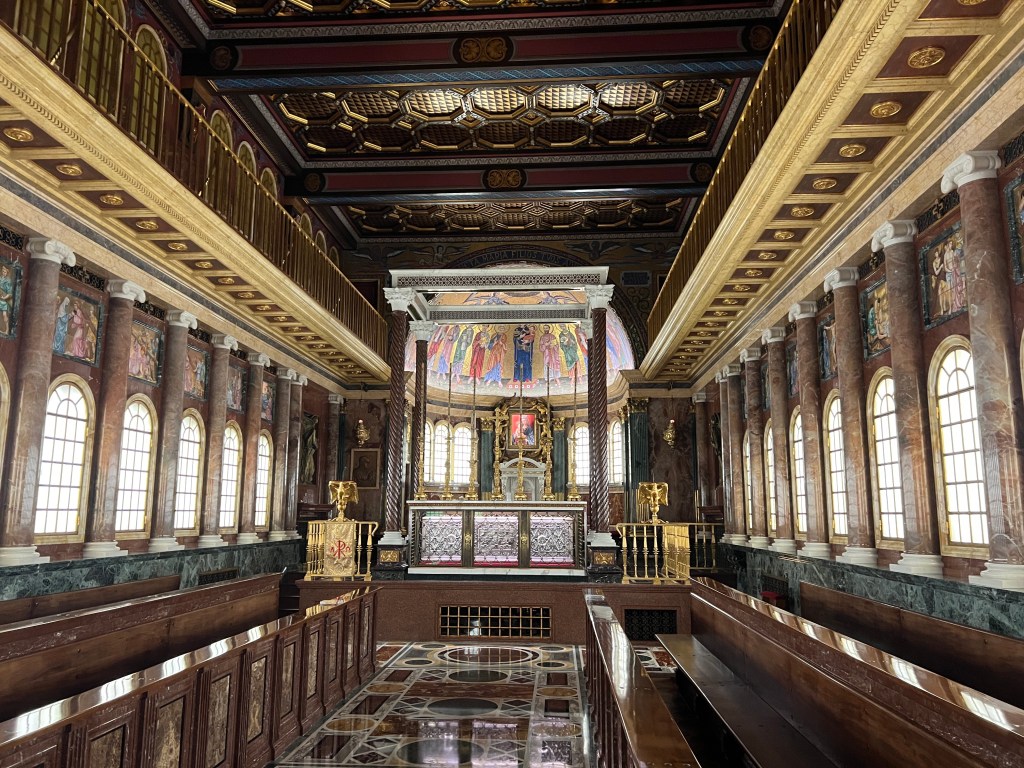
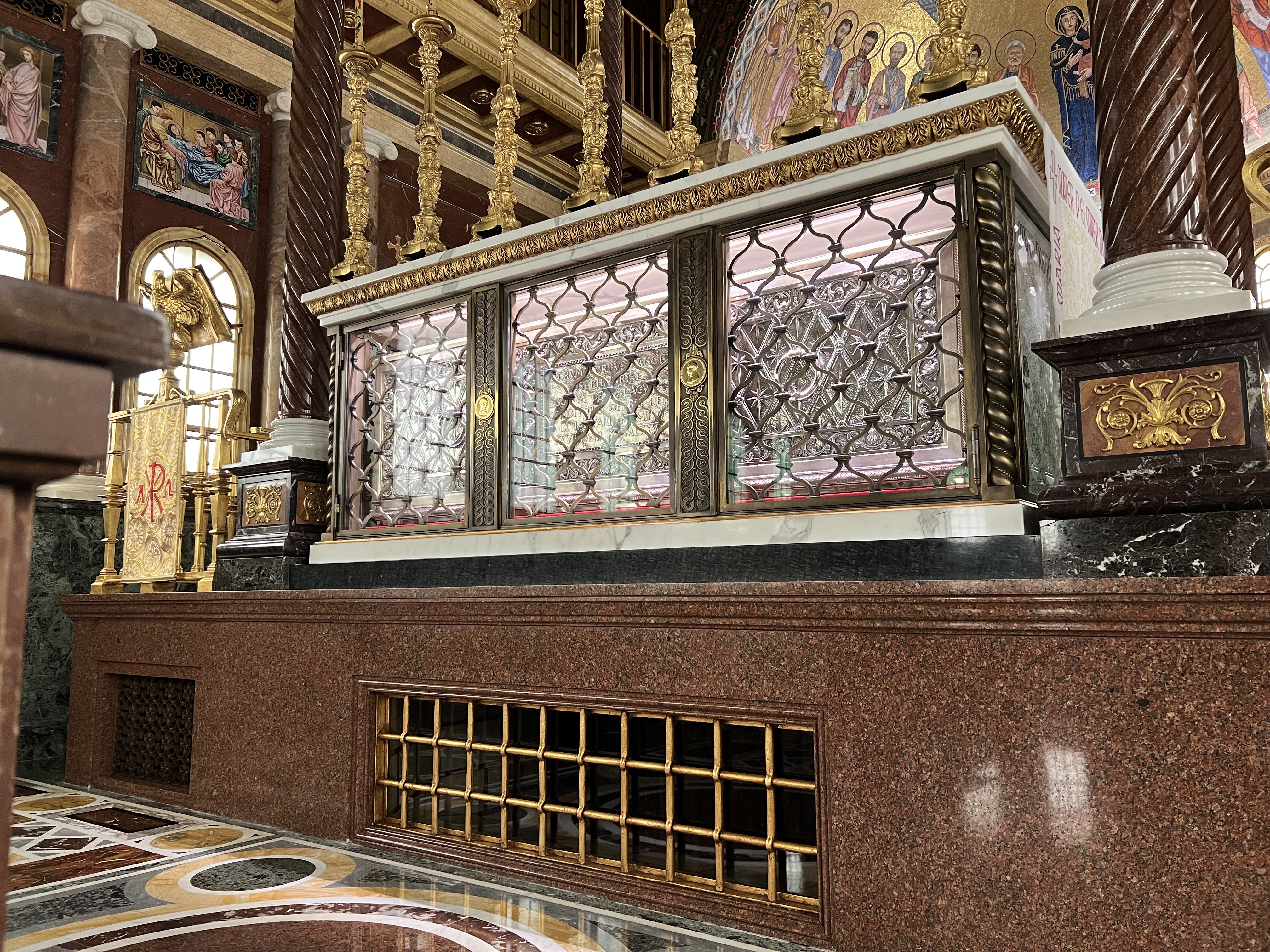
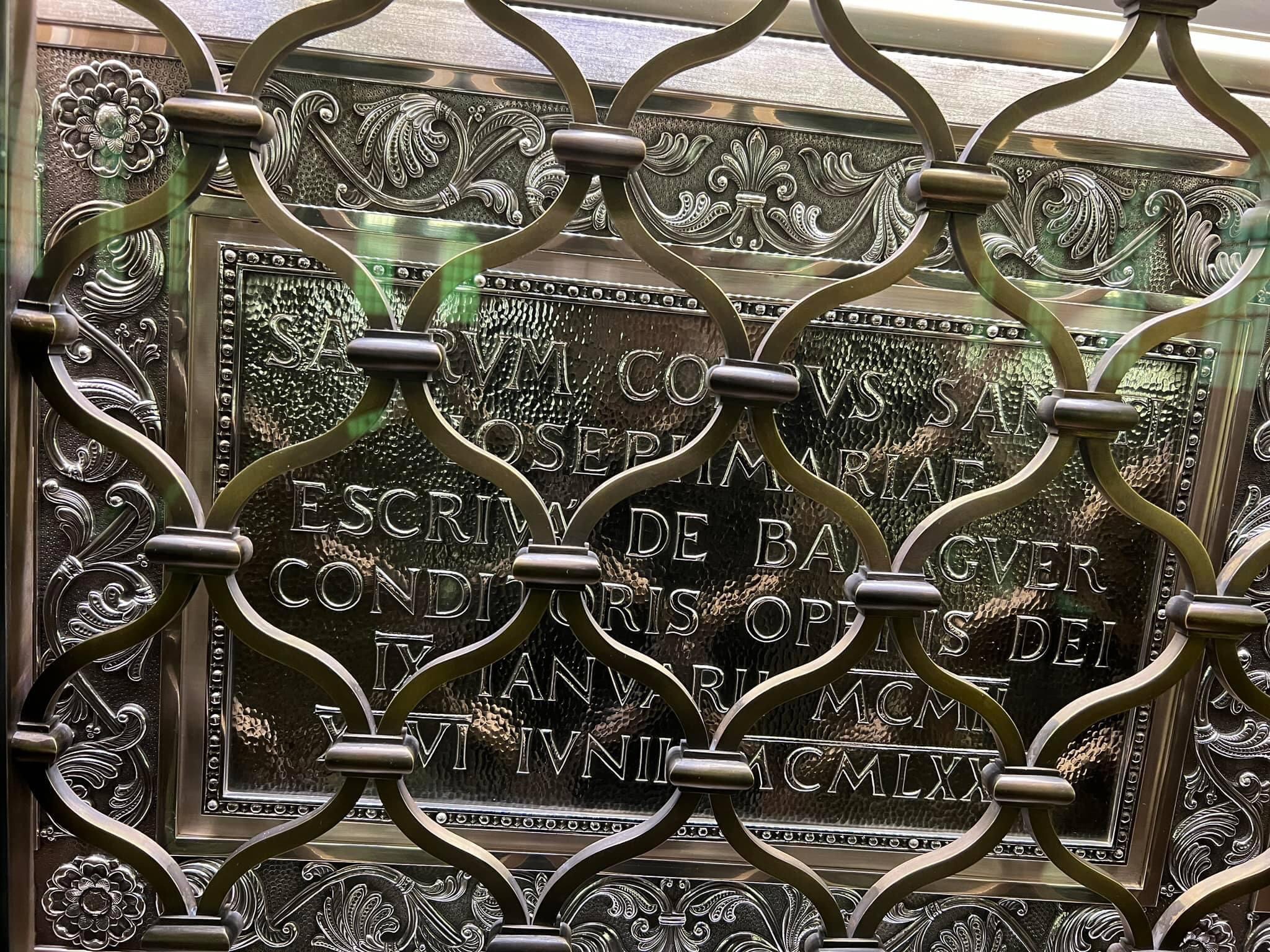
We began yesterday with a taxi ride that took us about 3 miles from our apartment to the Borghese Museum and youโ€™re thinking, โ€œHow fabulous,โ€ but I left Heidi and Scott to view the magnificent pieces there, because I was on a mission. I continued on northwest for another mile, which led me through the park and then a very upscale neighborhood and finally to Our Lady of Peace, Prelatic Church of Opus Dei. Entering, I took one flight of stairs down and came to the chapel where the mortal remains of St. Josemaria Escriva are held until the Great Day or Our Lord.

I went up and sat on the right at the front and spent time in prayer with this great Saint and then prayed my Rosary.

After my time here, I headed back to the museum to meet my friends and then take another cab ride (about three miles) to the Appia Antica Caffe for lunch and then a walk down the Appian Way to the Catacombs of St. Sebastian.

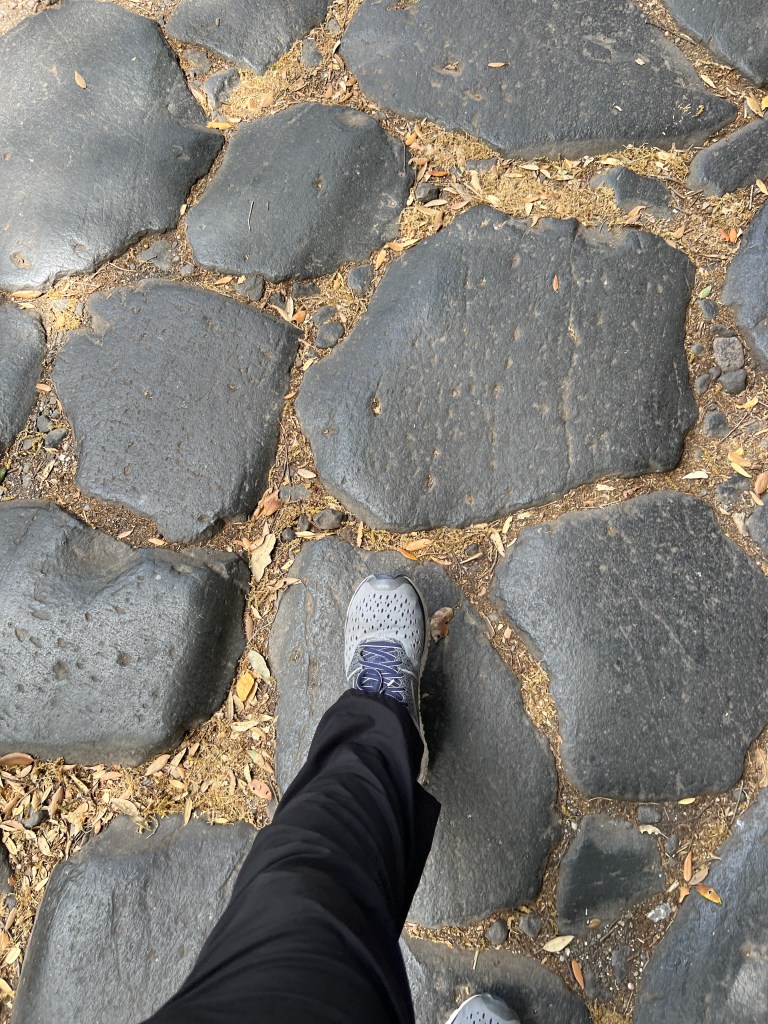
The Appian Way was one of the earliest Roman roads and very strategic with construction beginning around the year 312 b.c. The stones you see here are the original and in places you can see where the ruts have cut into them. It is also very likely that Peter and Paul would have traveled this very road and also where Peter is said to have had a vision of Jesus and asked him, โ€œDomine quo Vadis?โ€ (โ€œLord, where are you going?โ€) Youโ€™ll be able to find the entire story if you donโ€™t already know it.

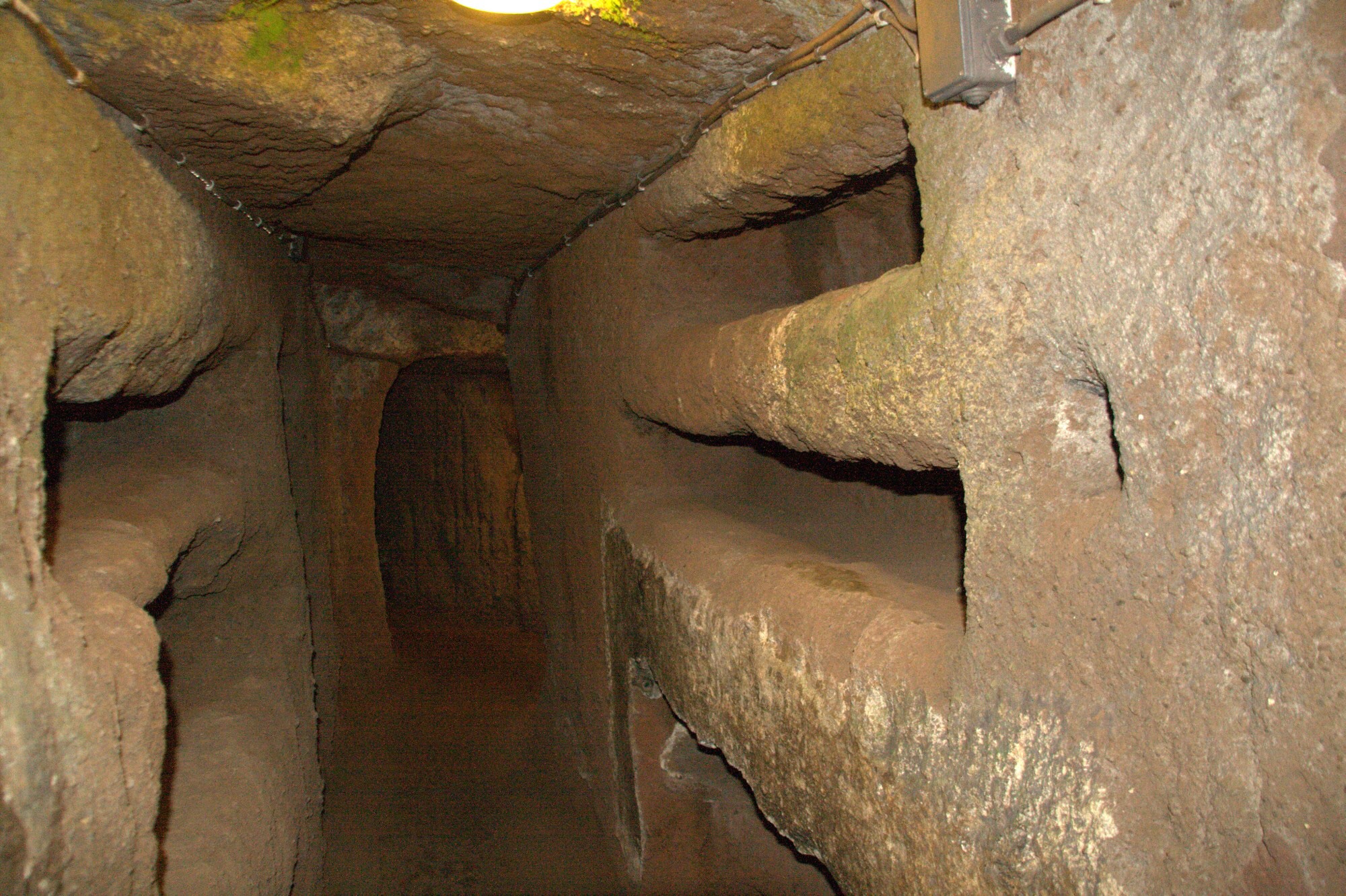
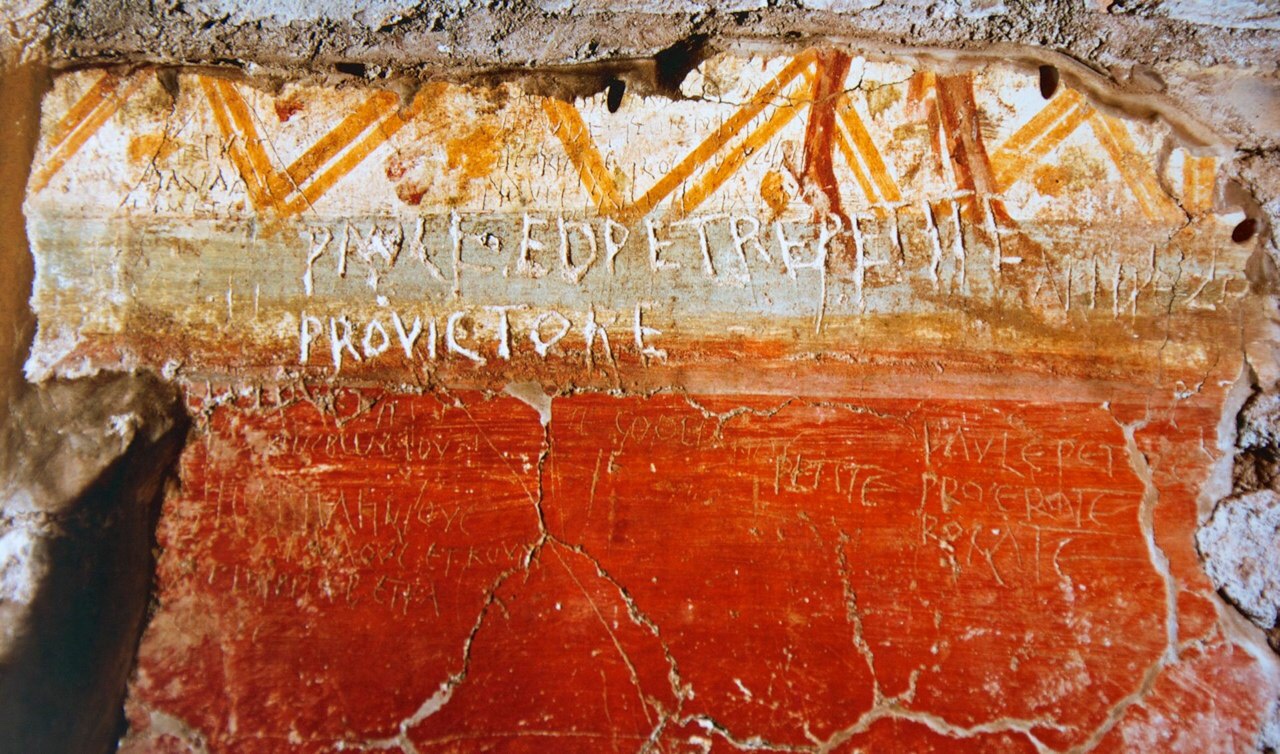
The road led us to the Catacombs where we took the tour leading us down into the tombs. Until Constantine was Emperor, Christians were not allowed to be buried inside the city walls, so the catacombs provided such a place. There are no pictures allowed, so Iโ€™ve pulled some from the internet. There are 12 km of tunnels under the church and an estimated 65,000 people were buried here. I couldnโ€™t help myself from touching the walls and soil. Many of the people buried here were some of the earliest Christians in Rome. In addition, when the barbarians were sacking Rome, the remains of both Peter and Paul were brought to these catacombs for safekeeping. We know this because of the graffiti on the walls, many of which reference the two Apostlesโ€ฆ amazing!

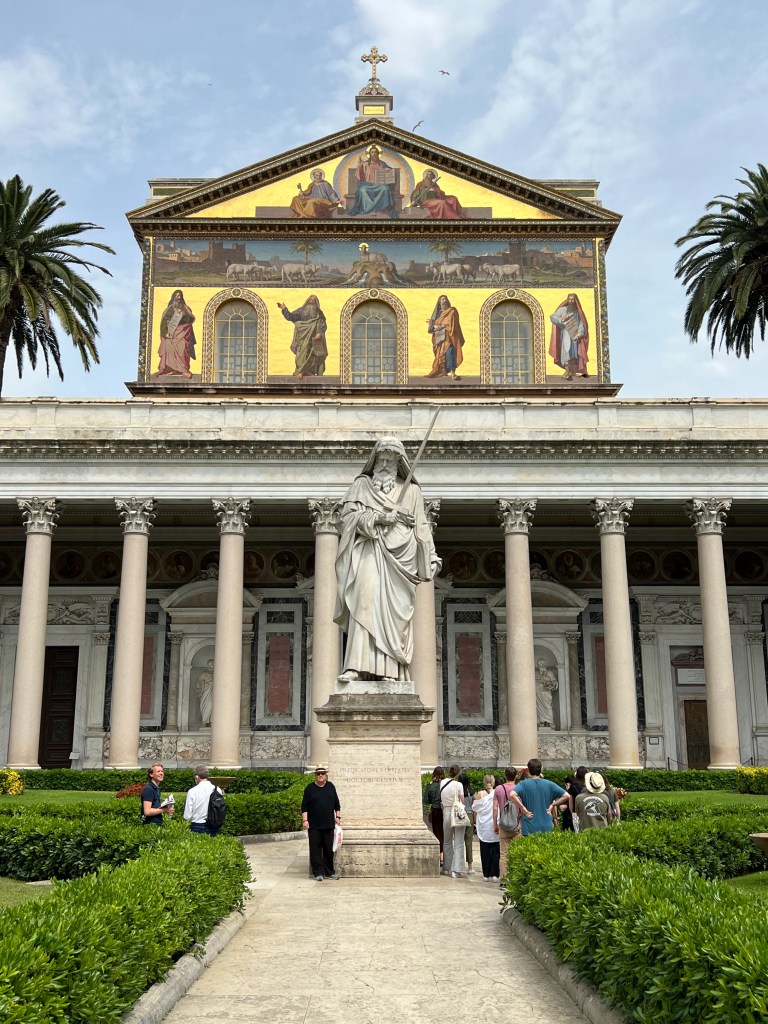
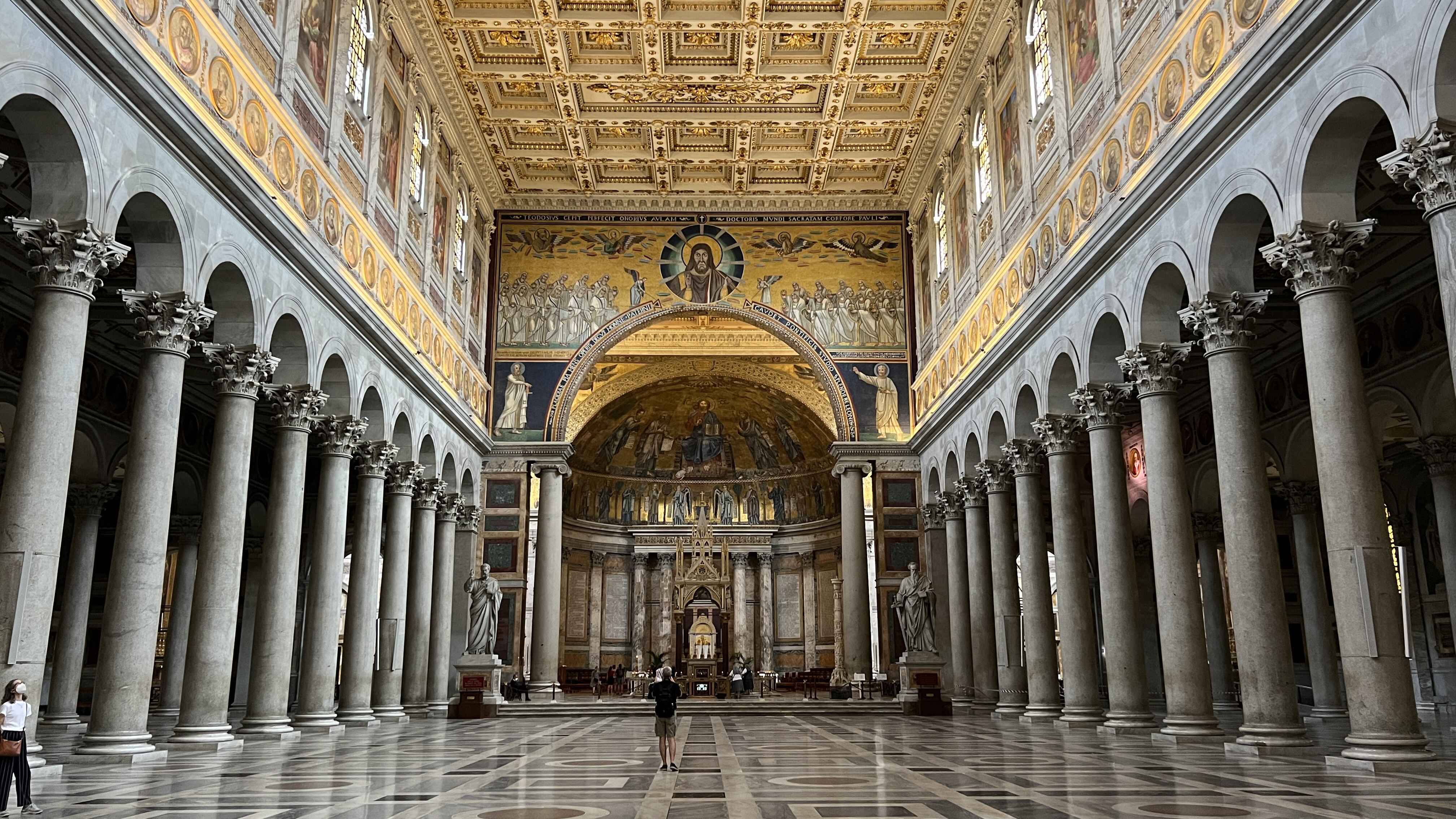
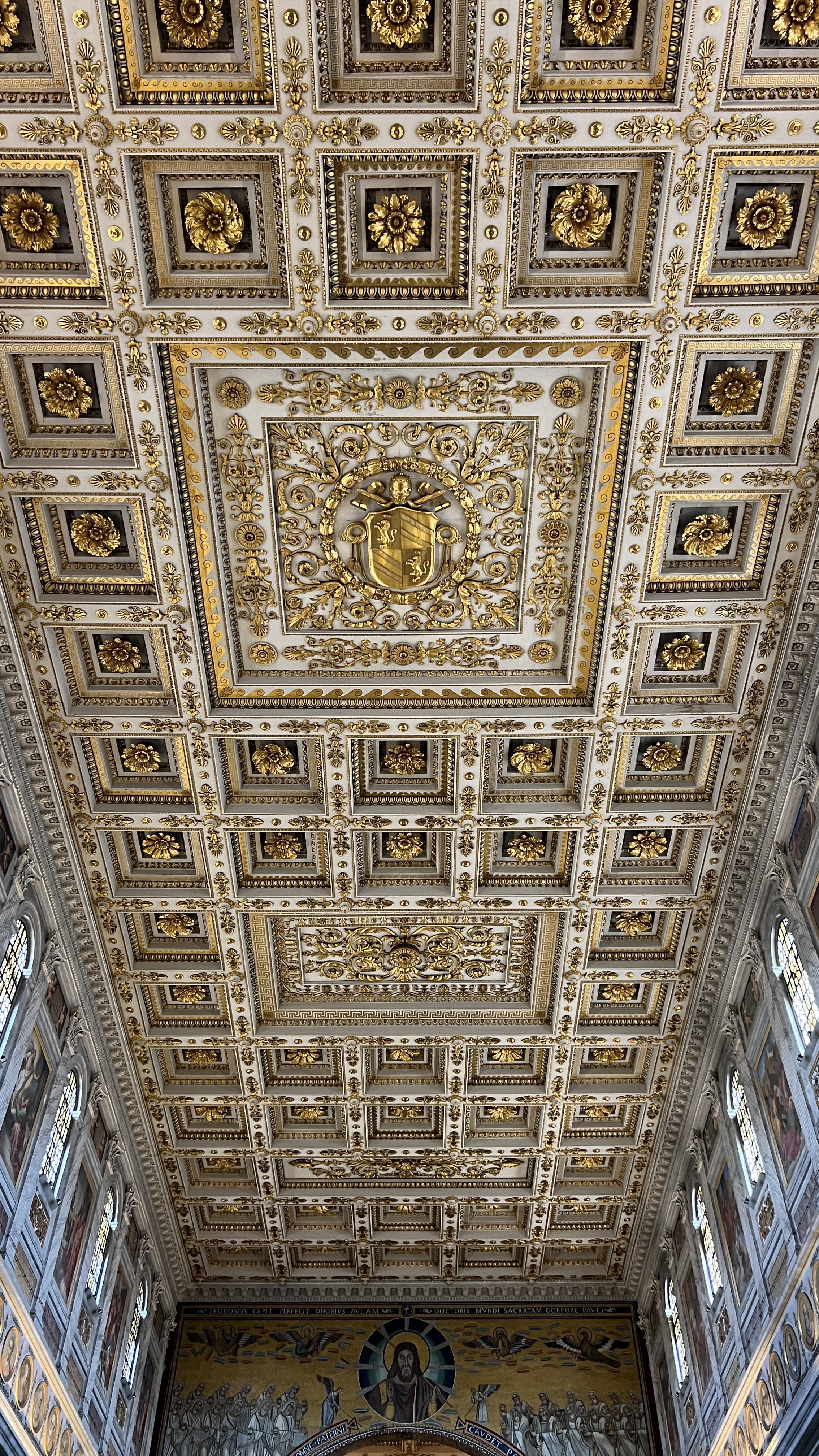
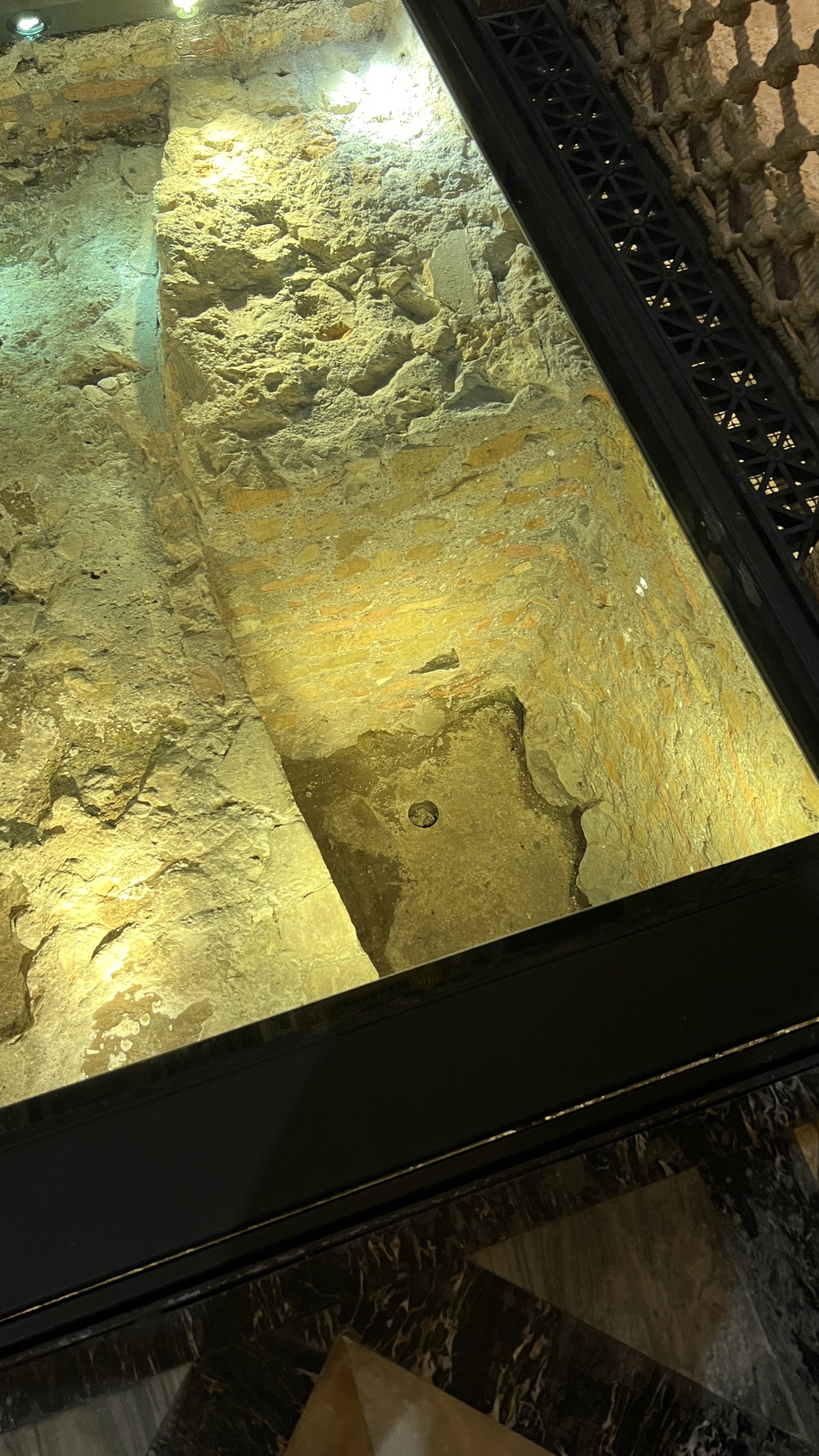
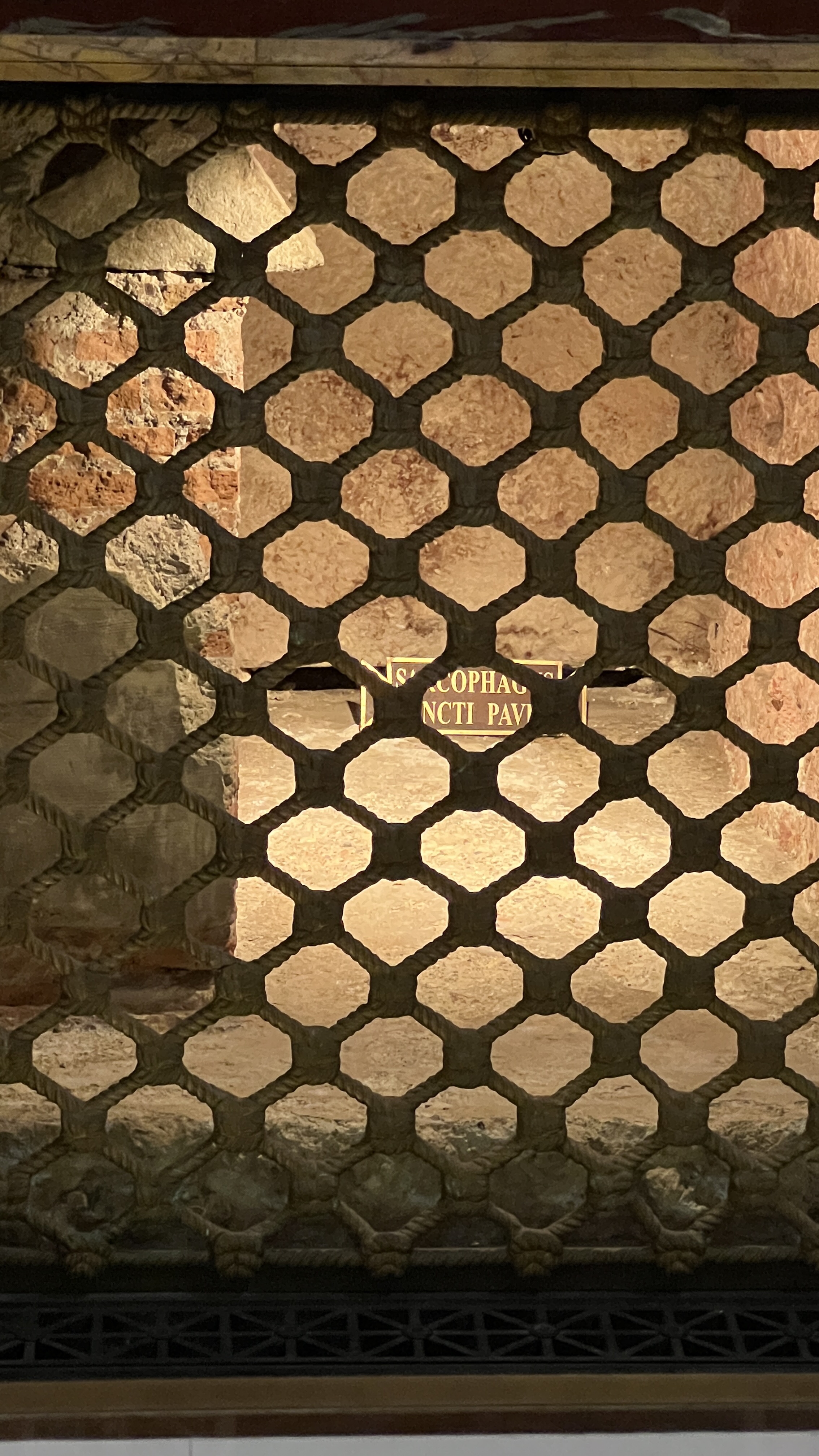
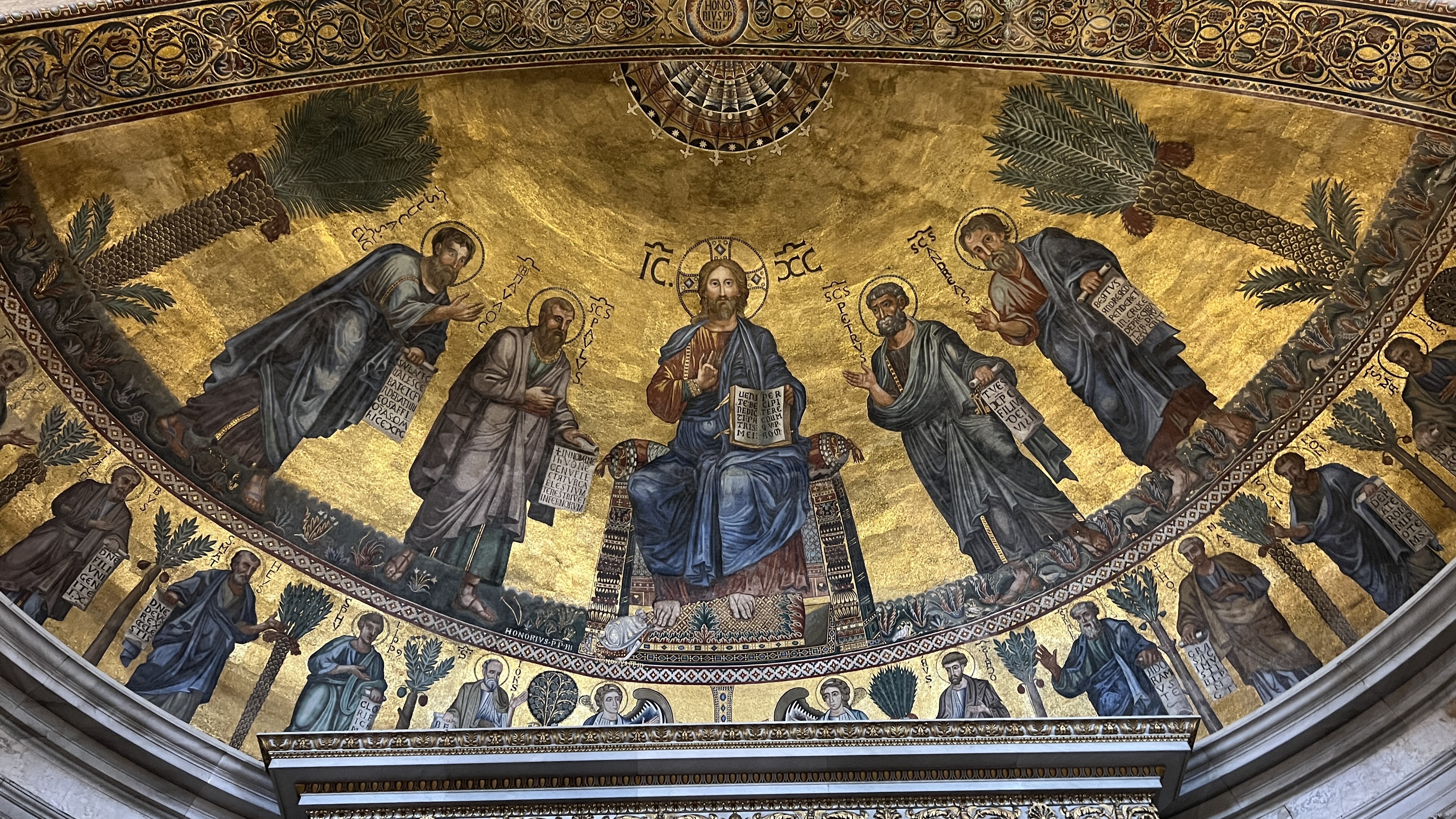
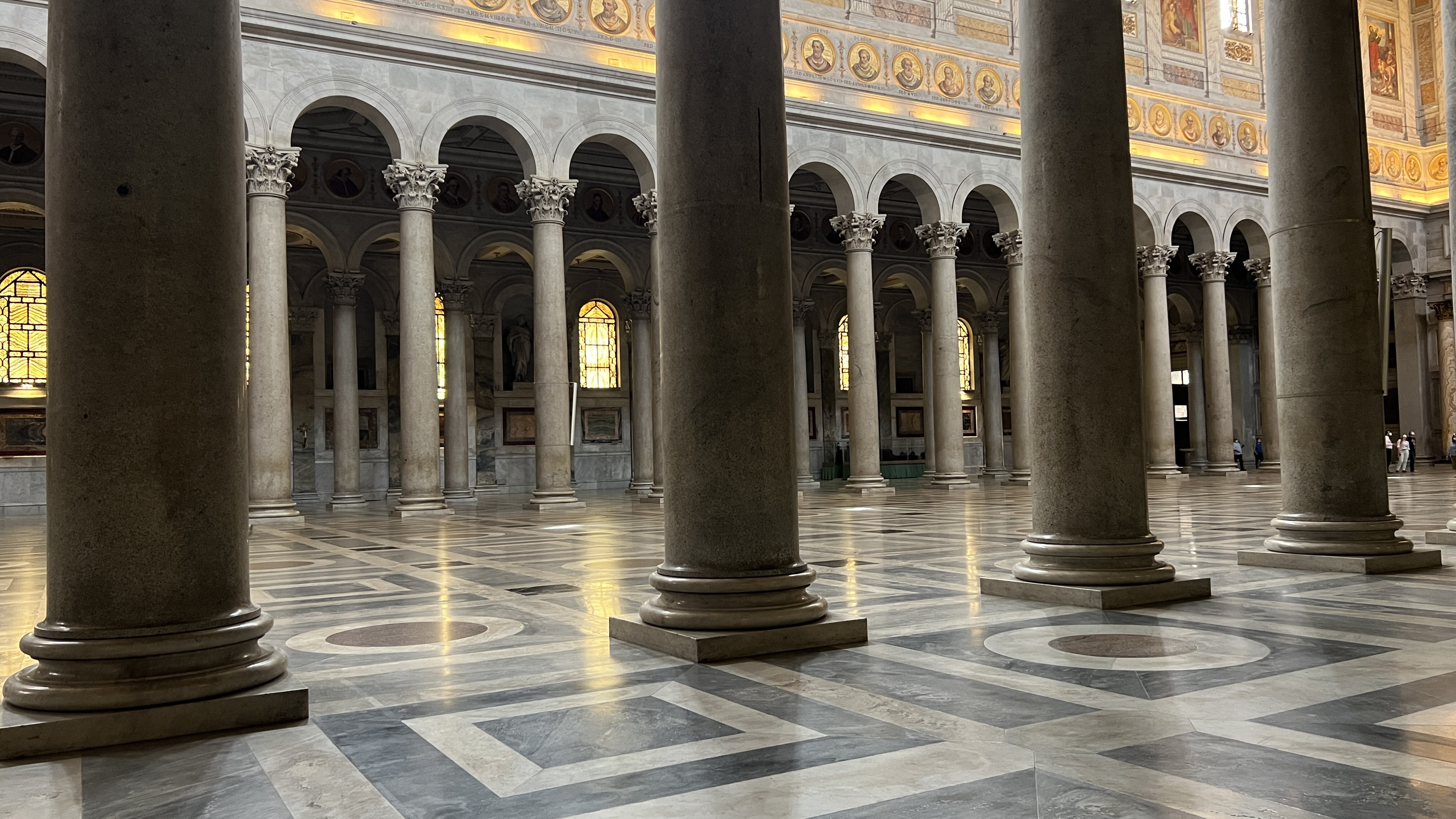
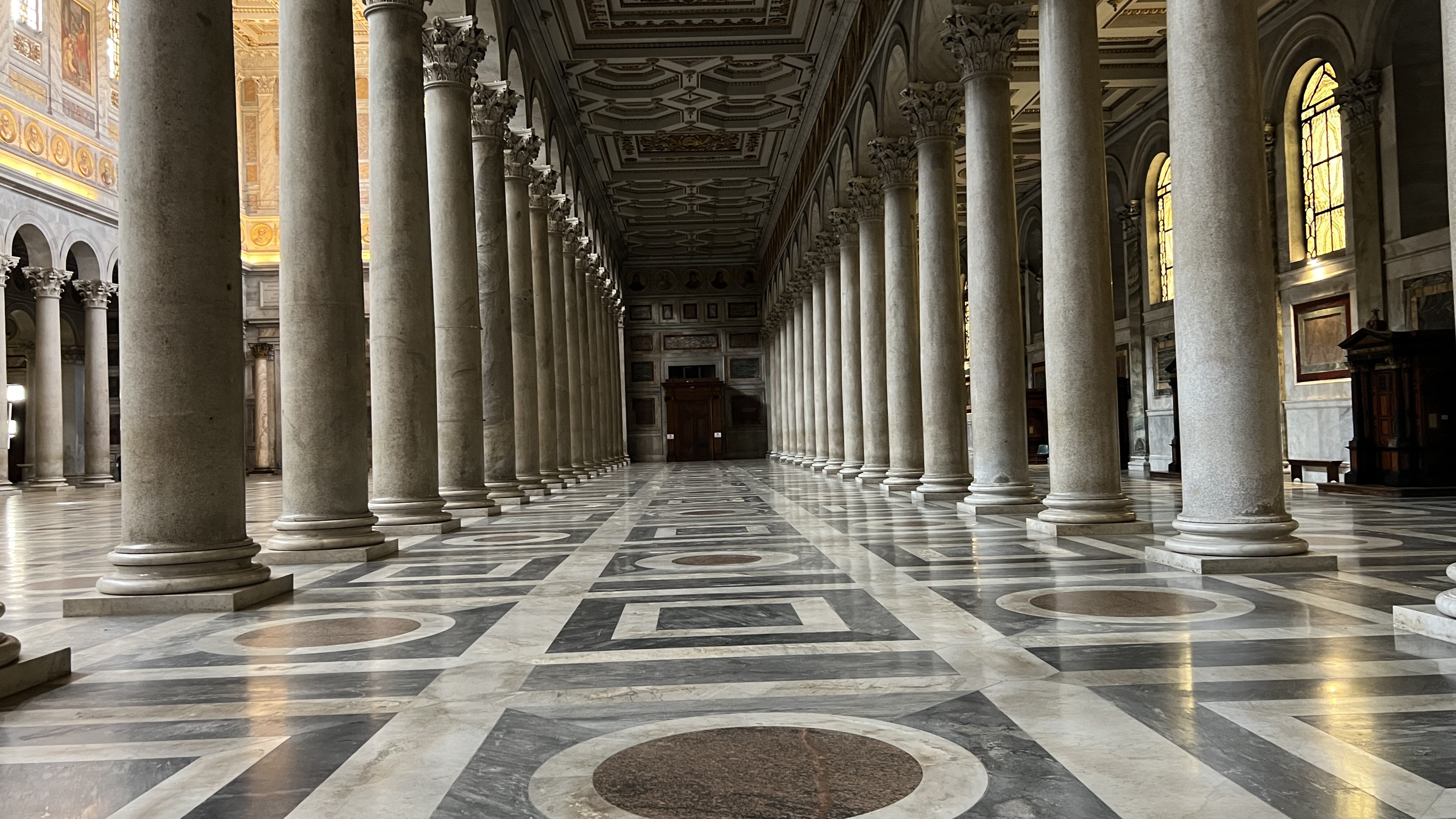
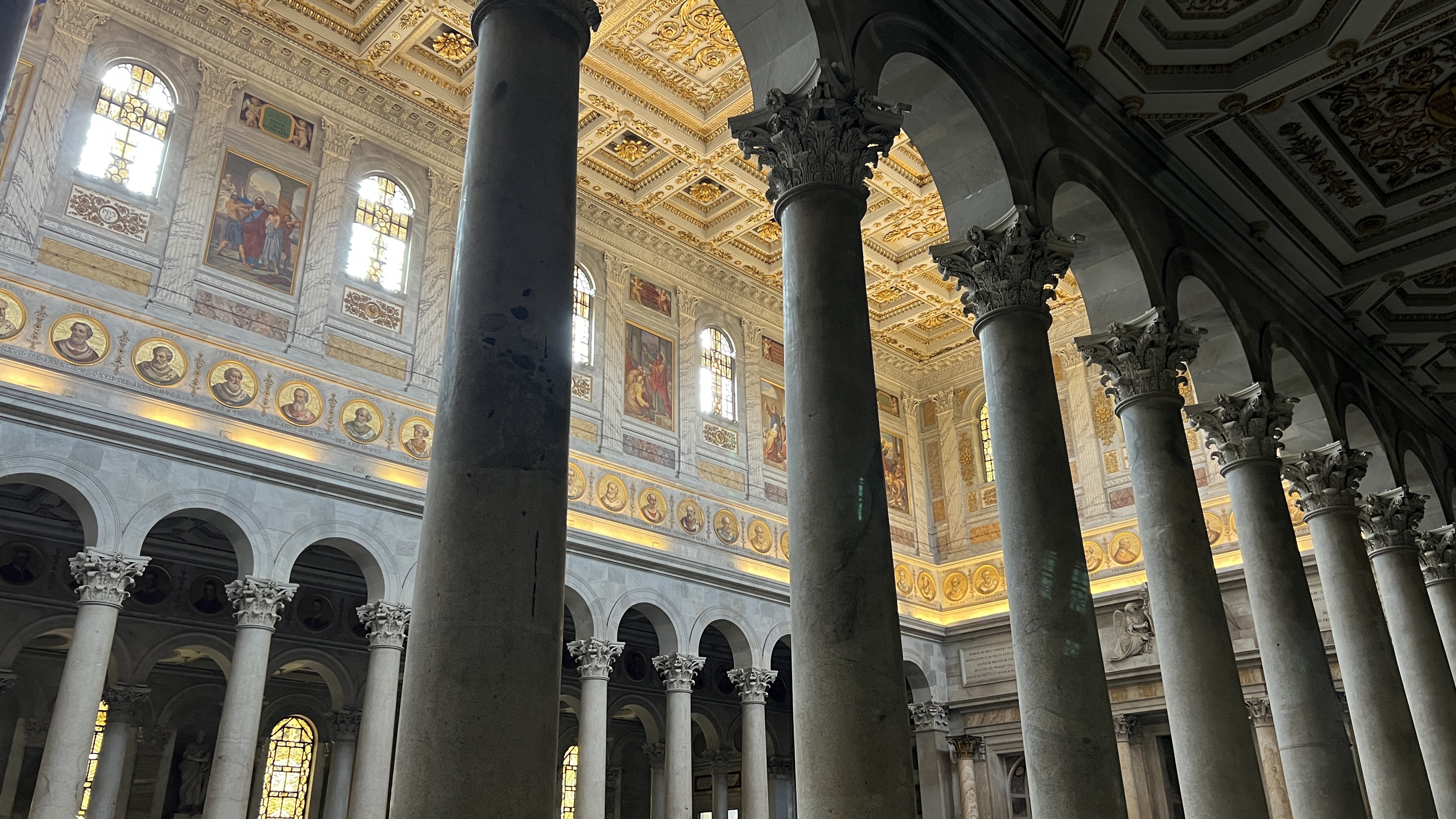
Finally, another taxi took us to the Basilica of St. Paulโ€™s Outside the Walls and the tomb of the great Apostle to the Gentiles. I could not believe how empty the church was compared to the Vatican, but it does require a bit of an effort to get to. You are able to see exactly where Paul was buried.

Thatโ€™s me about to get my head lopped off by Paul.

I was fascinated with the columns in this place.

That ended our day with the exception of a really nice meal out and when in Italy youโ€™ve got to eat Italian and the Ravioli and wine were wonderful.

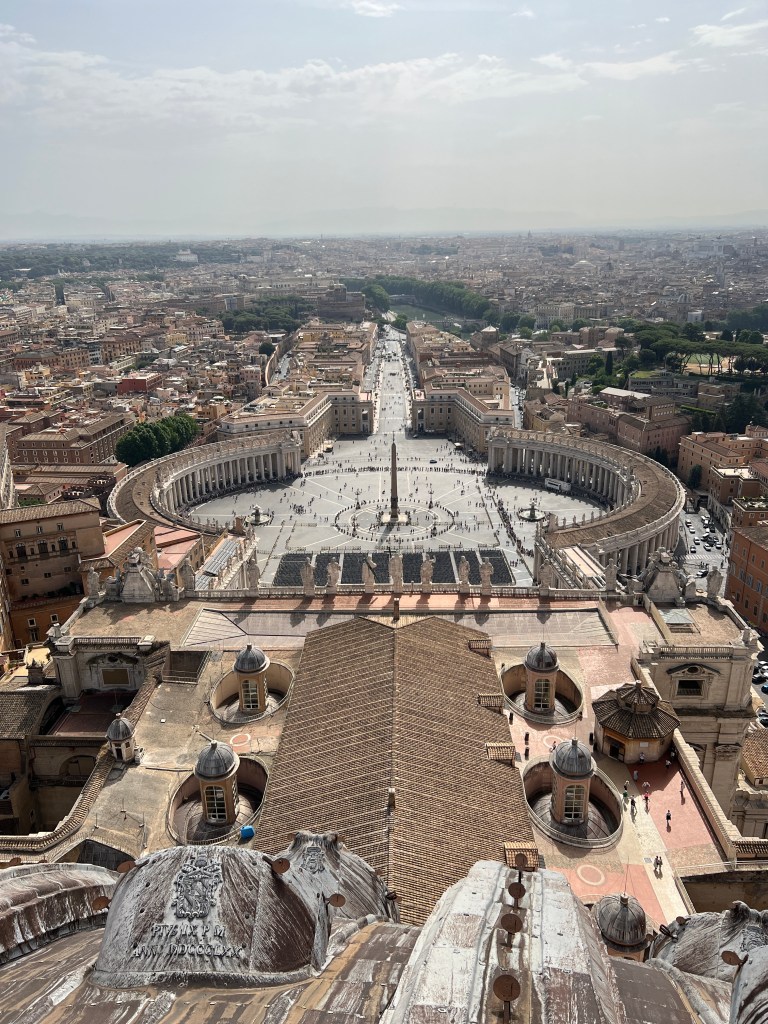
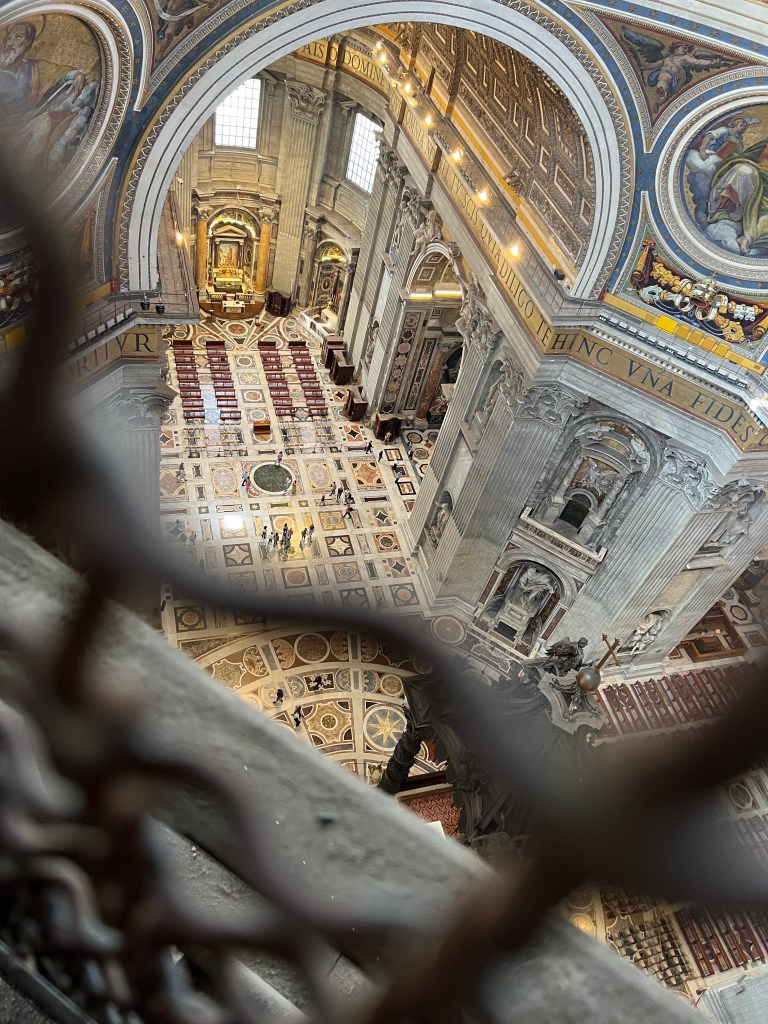
Today was another early day and I went back to the Vatican for the tour of the dome. Heidi and Scott had taken this one before, so we went in different directions.

To be honest, I was a bit apprehensive about this because of the number of steps involved and I do confess to being a wee bit winded at the top, but I did make it and the view was spectacular.

This is a view from the lower rim of the dome looking through a wire safety mesh into the church below.

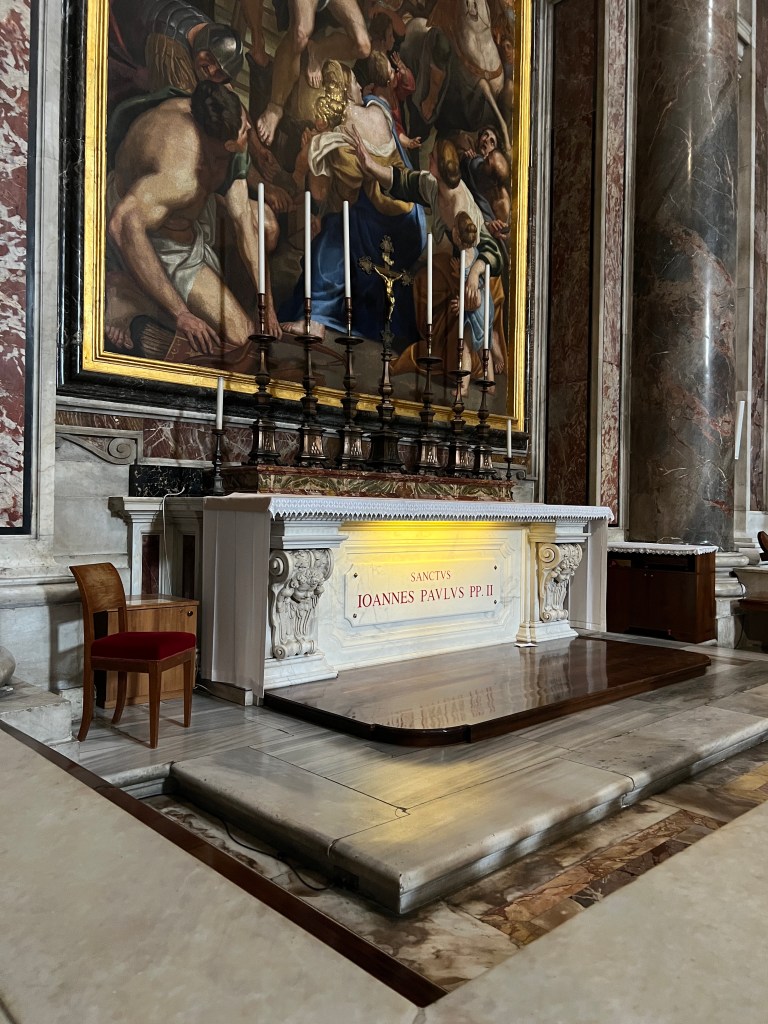
After coming back down, I had one final stop to make and after a little research last night, I knew where to find him: Pope John Paul II. You come across the tombs of so many great people, but then, like with Escriva, you come across one of your heroes and the world kind of stops.

The Rosary meant so much to him that today I stopped in the midst of all the crowds and prayed mine. So moving to be so close.

At this point my legs were jello and the crowds were massive, so I made my way back to the apartment where Iโ€™ve spent the remainder of the day napping and reading. Iโ€™m fixing supper tonight, so Iโ€™m off to do that, but one final thought: I keep talking about praying with these great Saints, but remember that some of the other great saints are your friends and your family. Take time to pray with them as well.

Iโ€™ve no idea whatโ€™s on the radar for tomorrow, so it will be a surprise to us all. Blessings.

J+