
St. Francis Xavier first arrived in Japan in 1549 with other Jesuit missionaries and proclaimed the Kingdom of God. They achieved success with an estimated 300,000 converts, but the large number of adherents to a new religion alarmed the Shoguns—How do we deal with them?—leading to a ban on Christianity and the beginning of persecutions. The first martyrs we remember today were six Franciscan Friars and twenty of their converts. They were all crucified. The ban on Christianity lasted 250 years, but it was not until after WWII that true religious freedom arrived in Japan.
The persecution and ban could have easily ended the faith in Japan, but instead, they drove it underground. So today, as we remember those first martyrs, I thought we might look at their legacy, one that remains even today: they are known as the Kakure Kirishitan, or “Hidden Christians.”
Following the ban and the persecutions, those who wished to maintain their Christian faith began to worship in Buddhist and Shinto temples to ‘hide’ among the crowds (Shinto involves the worship of ancestors and nature spirits). Since there were no Christian priests to continue teaching the faith, a rather interesting synergy of Christianity, Buddhism, and Shintoism emerged. Not only did it combine these different practices, but the texts used for worship are a blend of Portuguese, Latin, and Japanese. Today, although they might recite the Our Father, Hail Mary, and other Christian prayers, it is believed they lack a true understanding of their meaning. I do not think this implies unfaithfulness on their part. If anything, I would argue it demonstrates an even greater faith, for even though their understanding may be limited, they have not failed to deny themselves and take up their cross. In no way did they… do they—for a small number still exist today—in no way were they ashamed of the Gospel; they simply carried it on as they understood it.
Fewer than one percent of Japanese people are Christian and the Hidden Christians are gradually disappearing altogether. Patrick Downes, editor of the Hawaii Catholic Herald, reviewed a short film titled Otaiya: Japan’s Hidden Christians by Christal Whelan in 2000. Downes reports that Whelan “captured a unique Kakure Kirishitan funeral practice in which a small piece is cut from a centuries-old kimono which had belonged to a particularly holy Hidden Christian martyr. The two square inches of cloth is wrapped in paper and placed in the hands of the dead.
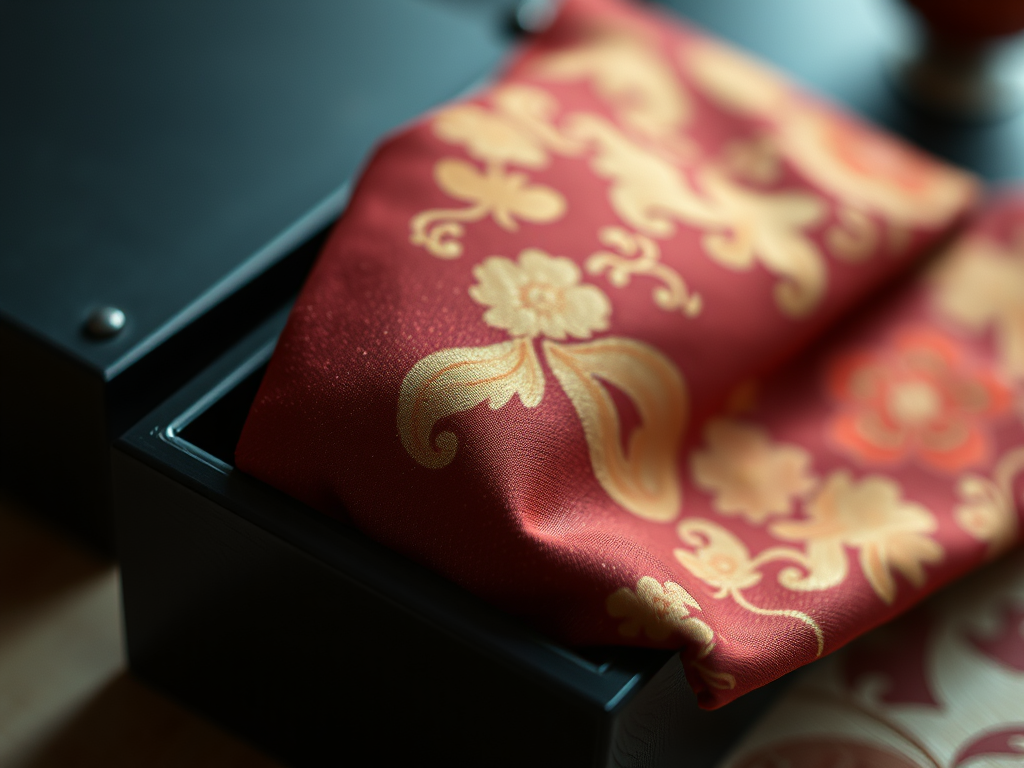
Today all that remains of the kimono belonging to one of the priests is a small piece of cloth kept folded in a box.
That kimono is a fitting metaphor for the Kakure Kirishitan a religion born of persecution, enfolded in the heavy mantle of Japanese culture, concealed over the ages in a dark lacquer box of secrecy, destined to disappear bit by bit by careful bit as each member passes into eternity.” (Source) https://www.catholiceducation.org/en/culture/catholic-contributions/kakure-kirishitan.html
It would be very easy to dismiss these Hidden Christians, descendants of early Christians and martyrs from Japan. We might say that they are not truly “Christian,” but this kind of judgment should be left to God, because these individuals—more so than many who identify as Christian—are genuinely seeking Him. And in the end, isn’t that what we are all trying to do?
 Candle in a Cave