Sermon: Lent 2 – Series: The Heavenly Virtues / Fortitude & Justice

Screenshot

To continue our discussion of the Heavenly Virtues, I have a true story for you. It is a long one, so bear with me. I suspect most of you know some of the details.

In October 1962, a U.S. U-2 spy plane flew over Cuba and snapped a few photos of activity on the ground. Those images led to thirteen days of intense global tension, particularly between the U.S. and the former USSR. It was the Cuban Missile Crisis.

The U.S. deployed nuclear missiles in the UK, Turkey, and Italy. The Soviets returned the favor of close proximity by laying the groundwork to place nuclear missiles in Cuba. Many of President John F. Kennedy’s advisors pushed for an invasion of Cuba; however, Kennedy took a less aggressive approach and instituted a naval blockade around the island, preventing the deployment of missiles from Russia.

It worked, and the Russians reversed course. The U.S. missiles in Europe would also eventually be removed as part of the brokered deal to resolve the issue. This is the story most of us are familiar with; however, over the last week or two, I learned some additional, scarier details about the events.

Those of you who were aware of what was going on probably remember Kennedy’s October 22 speech, in which he stated, “It shall be the policy of this nation to regard any nuclear missile launched from Cuba against any nation in the Western Hemisphere as an attack by the Soviet Union on the United States, requiring a full retaliatory response upon the Soviet Union.” On October 27, also known as Black Saturday, the Soviets planned to complete the installation of the missiles. As part of the overall program, the Soviets were sending in 40,000 troops, along with support equipment, and four diesel submarines—B4, B36, B59, and B130—to patrol the waters around Cuba. Each of these submarines carried 22 torpedoes.

During their sail through the North Atlantic, the subs encountered severe storms and sustained significant damage to the boats. The crew was reported to have been injured, yet they arrived, though not without being detected. On Black Saturday, the US let them know that the US was aware of their presence, especially B59, by dropping echo-ranging depth bombs. These were not designed to destroy the submarine, only to keep tabs on where the submarine was located under the waters. However, having lost all communications with Moscow because of their depth, B59’s captain and crew believed they were under attack and that WWIII had begun. Now, for the scary surprise.

Those four Soviet submarines carried 22 torpedoes each, but only the Soviets knew that on each sub, one of those torpedoes was armed with a 15-kiloton nuclear warhead (about the same size as the bomb exploded at Hiroshima). To make that situation even more horrifying, the submarine’s captain, in agreement with the submarine’s political officer, had full authority to launch the nuclear torpedo without first gaining approval from Moscow. And, just to throw in a bit more to keep you up at night, the B59’s captain and political officer had in fact approved the launch. To add a bit of incentive, the sub’s cooling system and air filtration unit were damaged and dead. The sub was filling up with CO2. Without surfacing, they had less than an hour to live, but to surface—or so they feared—was to be blown out of the water by the U.S. The captain, now suffering from the effects of the CO2, tension, and nerves, said, “The war has already started up there, and we are down here doing somersaults. We’re going to blast them now. We’ll die, but we will sink them all. We won’t disgrace our Navy or shame the fleet.”

They were going to fire a nuclear torpedo that would have destroyed the entire U.S. fleet in the vicinity in a single blinding flash. JFK had already promised to retaliate if something like that occurred and had prepped and aimed 3,000 nuclear warheads at 1,000 targets in the Soviet Union. If the U.S. fired theirs, the USSR would fire theirs. All bets were off. The world was literally minutes away from a full-scale nuclear war. What prevented it? Better question: Who prevented it?

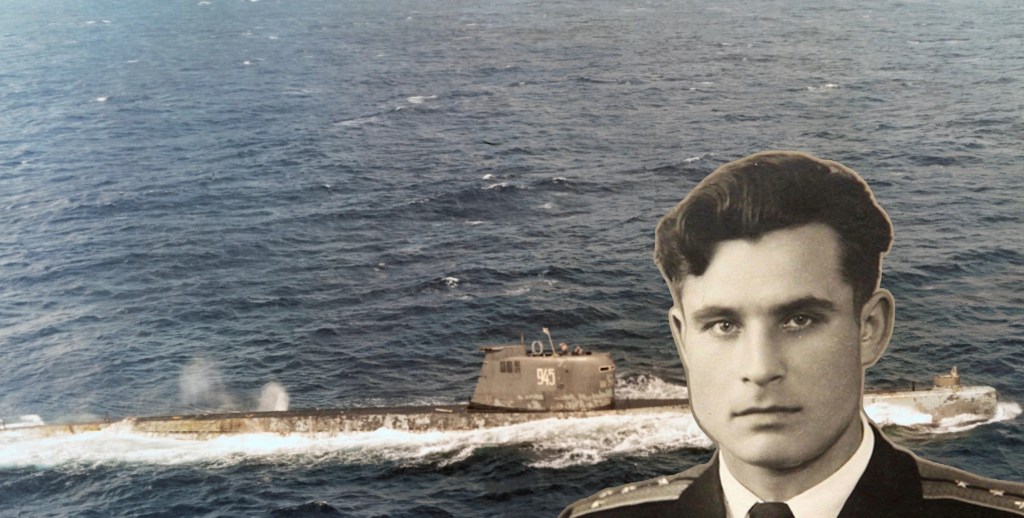
Remember, it only took the captain and the political officer to approve the launch, but aboard B59—and not on any other boats—was a third officer who outranked the captain, so his vote was also needed to launch. That person was Captain Second Rank Vasili Arkhipov.

In the face of all that was happening, the anxiety and terror of the detonations taking place around them, and the pressure from those around him, Vasili said, “No.” He insisted that they break radio silence, surface, and get a message to Moscow before proceeding. His argument and authority won the day.

While underwater, they had the means to send a very local message that was received by the U.S. ship above. The message: “This ship belongs to the Union of Soviet Socialist Republics. Halt your provocative actions.” How did the U.S. command respond? Why, they apologized. B59 surfaced, received word from Moscow that they were not at war, and limped back home. 

The history books that cover these events indicate that it was Captain Second Rank Vasili Arkhipov who single-handedly prevented all-out nuclear war and the start of WWIII.

The Heavenly Virtue of fortitude is defined as “the moral virtue that ensures firmness in difficulties and constancy in the pursuit of the good. It strengthens the resolve to resist temptations and to overcome obstacles in the moral life. The virtue of fortitude enables one to conquer fear, even fear of death, and to face trials and persecutions. It disposes one even to renounce and sacrifice his life in defense of a just cause.”

The Heavenly Virtue of Justice is defined as “the constant and firm will to give their due to God and neighbor. Justice toward God is called the ‘virtue of religion.’ Justice toward men disposes one to respect the rights of each and to establish in human relationships the harmony that promotes equity with regard to persons and to the common good.”

If you want to see a visual depiction of what these two virtues look like, look at the picture of Captain Second Rank Vasili Arkhipov on the cover of your bulletin. I have no idea whether the man was a Christian; there is no evidence to confirm it either way, but I will guarantee you this: for a person of his character to be placed in that position, on that submarine, at that time, and to have the fortitude to do what he did—what did Mordecai say to Queen Esther? “Who knows whether you have not come to the kingdom for such a time as this?”

Vasili is reported to have been a shy and humble man, and so, perhaps through the overarching virtue of humility, he was able, through God’s grace, to practice the Heavenly Virtues of fortitude and justice. For that, we give thanks, but what about us today?

Questions we are asked at baptism: “Will you persevere in resisting evil… Will you strive for justice and peace among all people?” Rephrased: When evil, in all its various forms, comes against you, and when the pressure to give in is great, will you practice the virtue of fortitude so that justice might be served, not according to your own ideas of justice, but according to God’s? Will you do so so that all people will rightly be served, cared for, and given the opportunity to live and to thrive? You see, it is very easy to practice fortitude and justice when it comes to your own ideologies, beliefs about right and wrong, and other dearly held tenets, but what about when justice for another runs in the face of those same ideas? Will you humble yourself, set aside your ideas and beliefs, and serve the other? Or will you cave to the demands of others and the pressures exerted by the world around you?

As followers of Jesus, we must pray for humility so that we may practice fortitude and act justly toward all. This is our calling, for Jesus said, “Truly, I say to you, as you did it to one of the least of these, you did it to me.” 

Let us pray: Heavenly Father, flood the path before us with light, turn our eyes to where the skies are full of promise; tune our hearts to brave music; give us a sense of comradeship with the heroes and saints of every age; and so quicken our spirits that we may encourage the souls of all who journey with us on the road of life, to your honor and glory. Amen.
Sermon: Proper 24 RCL C – “God’s Justice”


A young lady who occasionally walked through the park after work stopped on a particular day to have her picture taken. She was very excited about the whole idea. The photographer charged $5 and used one of the Polaroid instant cameras (the picture slides out and develops in a few minutes.) As she walked out of the park, the picture was fully developed, so she stopped and took a moment to review her purchase. She was not pleased with what she saw, so she turned and headed back to the photographer. When she got to him, she raised her voice and barked: “This is not right! This is not right! I would like my $5 back. You have done me no justice! No justice whatsoever!”

The photographer looked at the picture and then looked at her. Then, returning the picture and her money, he said, “Miss, you don’t need justice. What you need is mercy.”

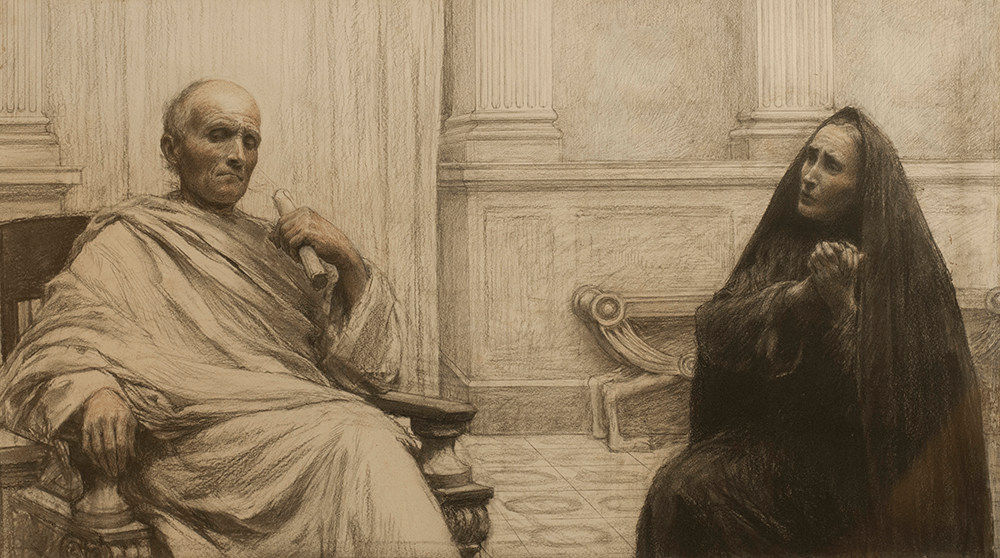
Today is the parable of the unjust judge. The judge doesn’t care what people or God thinks; he does what he wants when he wants. Along comes a widow seeking justice over some matter—we are not told what. At first, the judge ignores her, but she keeps coming. Finally, the judge says to himself, “She’s never going to give me peace, and she’s making me look foolish in the eyes of everyone, so I’ll do what she wants to get her out of my hair.” To those listening, Jesus says, “Listen to what the unjust judge says. And will not God grant justice to his chosen ones who cry to him day and night? Will he delay long in helping them? I tell you, he will quickly grant justice to them. And yet, when the Son of Man comes, will he find faith on earth?”

Jesus says, “If this unjust judge will do what she asks, then imagine how much more your Father in Heaven, who loves you dearly, will do for you.” From this excerpt, we can come to understand that Jesus is speaking about how we can go to the Father in prayer. It ties back very nicely to what Jesus said in chapter seven: “Which one of you if his son asks him for bread, will give him a stone? Or if he asks for a fish, will give him a serpent? If you then, who are evil, know how to give good gifts to your children, how much more will your Father who is in heaven give good things to those who ask him!” All this makes for a good lesson on prayer—I hope so because it is one I’ve preached. The woman is asking for justice. In seeing it as a parable about prayer, we can replace the word “justice” with whatever our petition might be. It works, but in doing so, we’ve missed the point Jesus was making, and we did so by pulling the parable out of context. The parable is about prayer, but it is about praying for one specific thing. That one specific thing is what the widow was asking for: justice. The story began in chapter seventeen when some Pharisees came to Jesus and asked when the Kingdom of God would come.

Jesus began by saying to them, “The kingdom of God is not coming in ways that can be observed, nor will they say, ‘Look, here it is!’ or ‘There!’ for behold, the kingdom of God is in the midst of you.” He then goes on to speak about some believers who would desire God’s Kingdom and who would experience great suffering before it came. He also tells them that it will be like in the days of Noah before the flood. There will be eating and drinking, buying and selling… people will be going about their daily lives, oblivious to what is coming, which is the judgment of God—the end of days when God’s justice is poured out. A justice that will right all the wrongs. The Prophet Isaiah said, “In that day the Lord with his hard and great and strong sword will punish Leviathan the fleeing serpent, Leviathan the twisting serpent, and he will slay the dragon that is in the sea.” Jesus is saying the same thing: On the last day, the Lord will punish the enemies of God’s people and restore them to Himself. Then, with that in mind, Jesus tells them the parable of the unjust judge and the widow who cried out for justice. Her cry is a prayer that runs throughout scripture.

In the sixth chapter of John’s Revelation, the angel of the Lord begins to break the scroll’s seven seals. The first four seals release the four horsemen of the apocalypse, and when the fifth seal is broken, John says,  “I saw under the altar [in the throne room of God] the souls of those who had been slain for the word of God and for the witness they had borne. They cried out with a loud voice, ‘O Sovereign Lord, holy and true, how long before you will judge and avenge our blood on those who dwell on the earth?’” The widow’s prayer is the same as these souls: justice. It is also the same one-word prayer of St. Paul that he spoke at the end of his first letter to the Corinthians: Maranatha—“Our Lord, come!” Or “Come, Lord Jesus!” Come, Lord, with your justice. All these and others are crying out for God to exact his justice on the nations. Yet, over time, that cry and that zeal have faded.

You’ve probably figured out by now that I’m not much of a sports person, so I seldom use illustrations from sporting events, but—and this one is going to sting a little for some of you—how about that Texas vs. OU game last week? Forty-nine to Zero. That had to hurt. Anyhow, if you were (maybe you still are) an OU fan, you could have been one that traveled down to Texas for the game, had a tailgate party beforehand, participated in all the bluster, there’s the kickoff and all the cheering. You’re still feeling positive when Texas scores first and maybe even still cheering and excited at the half, even though your team is down twenty-eight to zip. Then in the second half, the writing on the wall becomes quite clear. By the fourth quarter, Texas is likely using their fifth-string quarterback and has put in the water boy as a running back to try and keep from running the score up too much. If you’re even still at the game—you may have gone home and found something better to do with your time—if you’re still there, you’re likely sitting glumly and murmuring to yourself: disheartened, disappointed, and depressed. No more cheers. No more bluster. No more hope. After such a shellacking, you may give up on them all together and never watch another game.

The widow cried out for God’s justice. Those souls in Heaven cry out for justice. So many have cried out for God’s justice to be poured out, but it’s been 2,000 years since Jesus walked the earth, and we’re still waiting; many, like at that football game, have become disheartened, disappointed, and depressed. Some remain, but many have lost their zeal, and many more have simply walked away. What we read this morning from Paul’s letter to Timothy is being fulfilled, “For the time is coming when people will not put up with sound doctrine, but having itching ears, they will accumulate for themselves teachers to suit their own desires, and will turn away from listening to the truth and wander away to myths.” And it is into that very set of circumstances that Jesus speaks the last sentence of our Gospel reading: “And yet, when the Son of Man comes, will he find faith on earth?” The cry for the Lord’s return and zeal for his justice has faded.

As followers of Jesus, we must remember that Christianity is not a faith of immediate gratification. Instead, it is a lifetime of faith and of hope, in good seasons and in bad. Jesus said, “The one who endures to the end will be saved.” Therefore, regardless of current circumstances or perceived loss, be the one who, with great zeal and joy, perseveres until the end. How do you persevere? What is the secret to perseverance? My friend St. Josemaría Escrivá answers that one: “Love. Fall in Love, and you will not leave him.” (The Way #999) Fall in love with God and there will be nothing that dampens your spirit or desire to be with him. In the end, be one who can say with St. Paul, “I have fought the good fight, I have finished the race, I have kept the faith. Henceforth there is laid up for me the crown of righteousness, which the Lord, the righteous judge, will award to me on that day, and not only to me but also to all who have loved his appearing.” (2 Timothy 4:7-8)

Let us pray (a prayer of St. Thomas Aquinas): Grant us, O Lord our God, minds to know you, hearts to seek you, wisdom to find you, conduct pleasing to you, faithful perseverance in waiting for you, and a hope of finally embracing you. Amen.