The early patriarchs of the Israelites were Abraham, Isaac, and Jacob. We know Jacob had twelve sons, with Joseph being his favorite. Scripture states that Jacob “loved Joseph more than any other of his children because he was the son of his old age, and he had made him a long robe with sleeves.” Due to his favoritism toward Joseph, the other eleven brothers grew jealous of him, and things worsened when Joseph was seventeen and started having dreams: “‘Listen to this dream that I dreamed. There we were, binding sheaves in the field. Suddenly my sheaf rose and stood upright; then your sheaves gathered around it, and bowed down to my sheaf.’ His brothers said to him, ‘Are you indeed to reign over us? Are you indeed to have dominion over us?’ So they hated him even more because of his dreams and his words.” He had another similar dream involving the sun, moon, and stars. Because of the jealousy that developed from these events, Joseph’s brothers sold him into slavery and told their father that a wild animal had killed Joseph.
As we read through Scripture, we see several examples of siblings not getting along. The first is Cain and Abel, but there is also Jacob and Esau, and even the parable of the prodigal son has its share of conflict. What’s surprising is that this tension appears with Jesus and his brothers—whether they were brothers, cousins, or other relatives is a topic for another day. Early on, in the synoptic Gospels and John, we get a clear picture that there was tension.
Mark’s Gospel: Jesus has begun his public ministry, and “When [Jesus’] relations heard about it, they set out to seize him for they said, ‘He is out of his mind.’” John’s Gospel clearly states, “His brothers did not believe in him.” They thought he was crazy, which was true for James, whom we celebrate today. However, following the resurrection, James became a devoted follower. He was, in fact, chosen by the twelve Apostles (including James, the brother of John) to lead the Church in Jerusalem.
Surprisingly, it is very common for family and friends who are not believers to question your sanity or become angry when you start following the will of God. Still, for the believer, it should not be surprising, because Jesus tells us, “Brother will betray brother to death, and a father his child, and children will rise against parents and have them put to death; and you will be hated by all because of my name. But the one who endures to the end will be saved.”
The reasons why such things happen are numerous: jealousy, as in the case of Joseph; pride, as in the case of Jesus’ family (they thought he was crazy and making them look bad); or anger, because you’re no longer following the crowd. But I believe the most important reason is fear. Fear because they are now more personally confronted with their own lives. Your life and obedience to God have become a testimony to them and convicts them of the sin in their own lives, leaving them with a choice of obedience.
James’ initial reaction to his brother Jesus was one of anger; however, Jesus’ life and obedience to the will of the Father convicted James and led to a conversion. In the face of anger, fear, and jealousy because of your faith, stand tall and do not be afraid. God can even use others’ adverse reactions to accomplish His will in their lives.
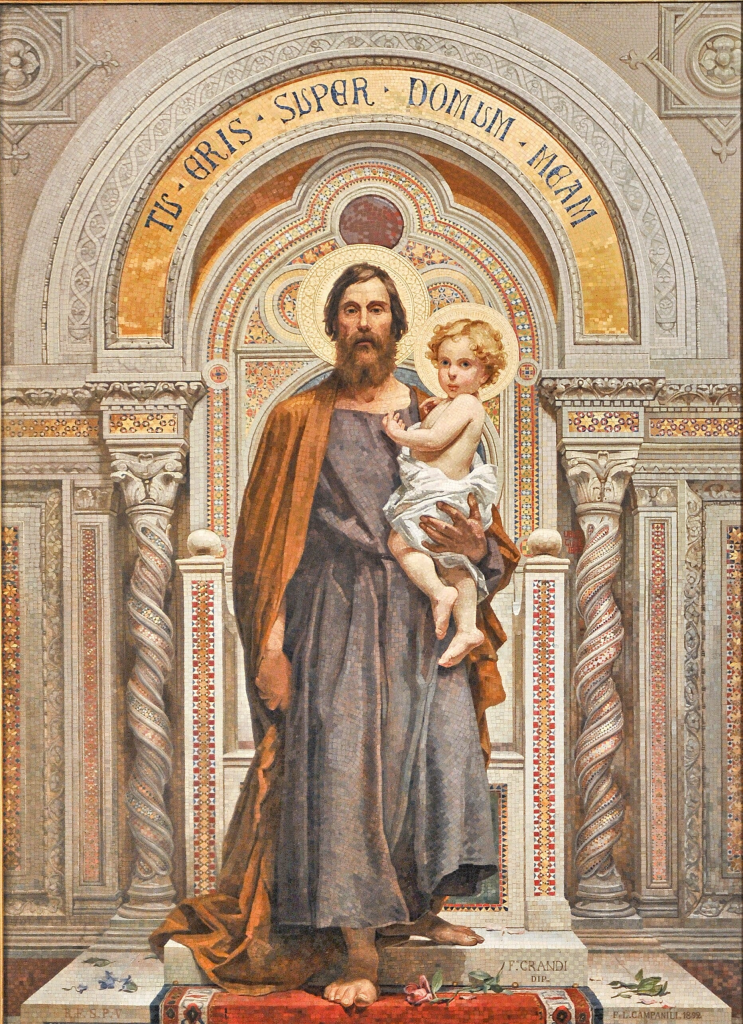
In our study of the Gospels, certain characters beyond Jesus always capture our attention. There is, of course, Jesus’ mother, Mary, the disciples, John the Baptist, and even some antagonists—Pilate, Herod, the religious leaders. However, it seems to me that one character often fades into the background: Joseph, Jesus’ earthly “step-father.” Perhaps that is where he prefers to be, in the background, but as the head of the Holy Family, he should be regarded as one of the primary figures in the life of our Savior.
What do we know about him? He was of the lineage of King David, which was quite special. He worked as a carpenter, an honest trade. He was older than Mary and likely respected in the community. I don’t think he was wealthy, but given his profession, he was comfortable. It seems that his life was probably uncomplicated right up until he discovered that Mary was pregnant. Since they were not yet married, everyone, including Joseph, assumed Mary had committed adultery; therefore, Joseph could have accused her, and she would have faced stoning. Instead, he decided to walk away quietly. However, the angel of the Lord appeared to him in a dream, saying, “Joseph, son of David, do not be afraid to take Mary as your wife, for the child conceived in her is from the Holy Spirit. She will bear a son, and you are to name him Jesus, for he will save his people from their sins.” So, instead of walking away, Joseph followed the angel’s instructions.
It required a great deal of faith, but what Joseph did was truly sacrificial. He would have been justified in accusing her, but he chose not to. He would have had to swallow a bit of pride, yet it would have been even more convenient to just walk away; however, he looked upon Mary and took her as his wife. He regarded her with love. How much did he love her? He loved her enough to say that he would give up everything. He would sacrifice all he had for her.
The love Joseph demonstrates is a sacrificial love. It is completely about and for another, regardless of whether there is any benefit for the one who loves; in fact, it may cost them a great deal. The purpose of such sacrificial love is to see Christ born in another. This is the sacrificial love that Joseph showed to Mary, and it serves as an example for us. We seek to follow Joseph’s example so that we, too, can see Christ born in another.
It’s not an easy question to answer, but what part of yourself would you sacrifice to witness God being born in another? What is so important in you that you couldn’t sacrifice it? If that’s not enough, who would you be willing to sacrifice it for? Who wouldn’t you?
St. Josemaria Escriva writes, “This is the truth of a Christian’s life: self-giving and love—love of God and, for God’s sake, love of one’s neighbor—founded on sacrifice.” The life of St. Joseph exemplified both, as seen in his life of sacrifice. He may prefer to remain in the background, but in our Christian walk, we can look to him as a model for how we are to live and love.
The early patriarchs of the Israelites were Abraham, Isaac, and Jacob. We know Jacob had twelve sons, one of whom was Joseph, his favorite. Scripture says Jacob “loved Joseph more than any other of his children, because he was the son of his old age; and he had made him a long robe with sleeves.” Because of his favoritism toward Joseph, the other eleven brothers became jealous of him, and it got even worse when Joseph was seventeen and began having dreams: “‘Listen to this dream that I dreamed. There we were, binding sheaves in the field. Suddenly my sheaf rose and stood upright; then your sheaves gathered around it, and bowed down to my sheaf.’ His brothers said to him, ‘Are you indeed to reign over us? Are you indeed to have dominion over us?’ So they hated him even more because of his dreams and his words.” He had another similar dream regarding the sun, moon, and stars. Because of the jealousy that built up around these events, Joseph’s brothers sold him into slavery and told their father that a wild animal had killed Joseph.
As we read through Scripture, we see several instances of siblings not getting along, the first of which was Cain and Abel, but there was also Jacob and Esau, and even the parable of the prodigal son has its share. Where we don’t expect to find it is with Jesus and his brothers—whether they were brothers or cousins or some other relations is a lesson for another day—but early on, in the synoptic Gospels and John, we are given a clear picture that there was tension.
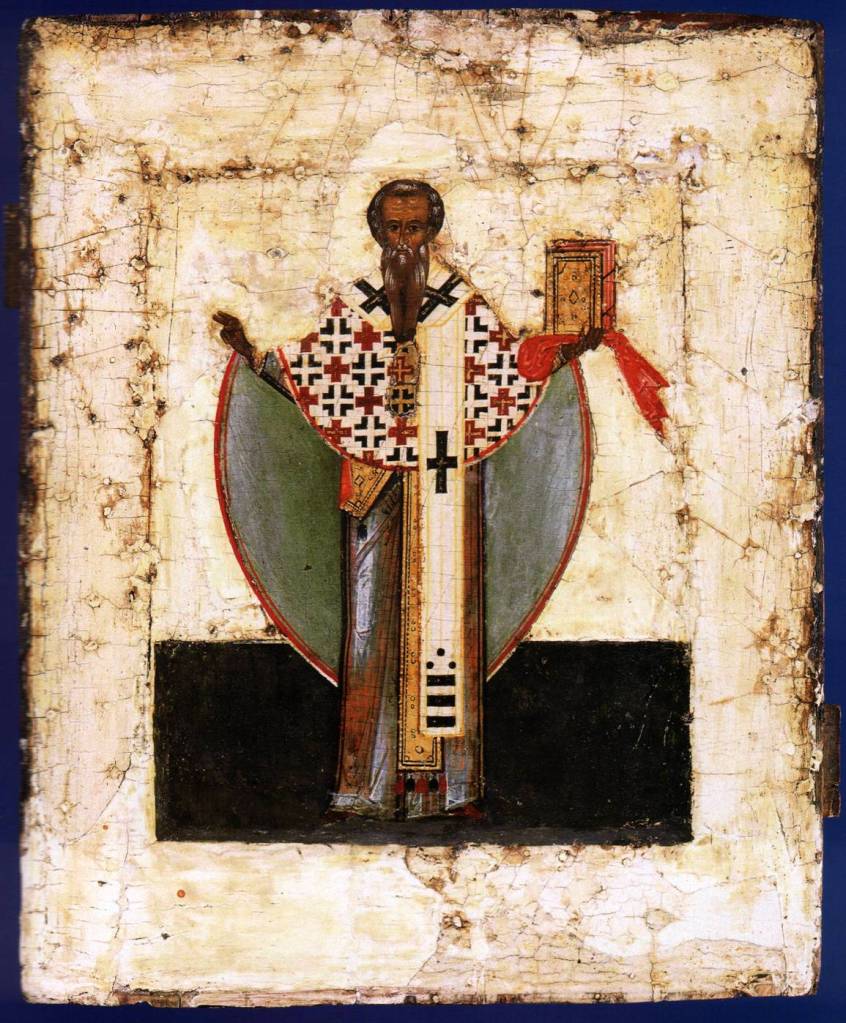
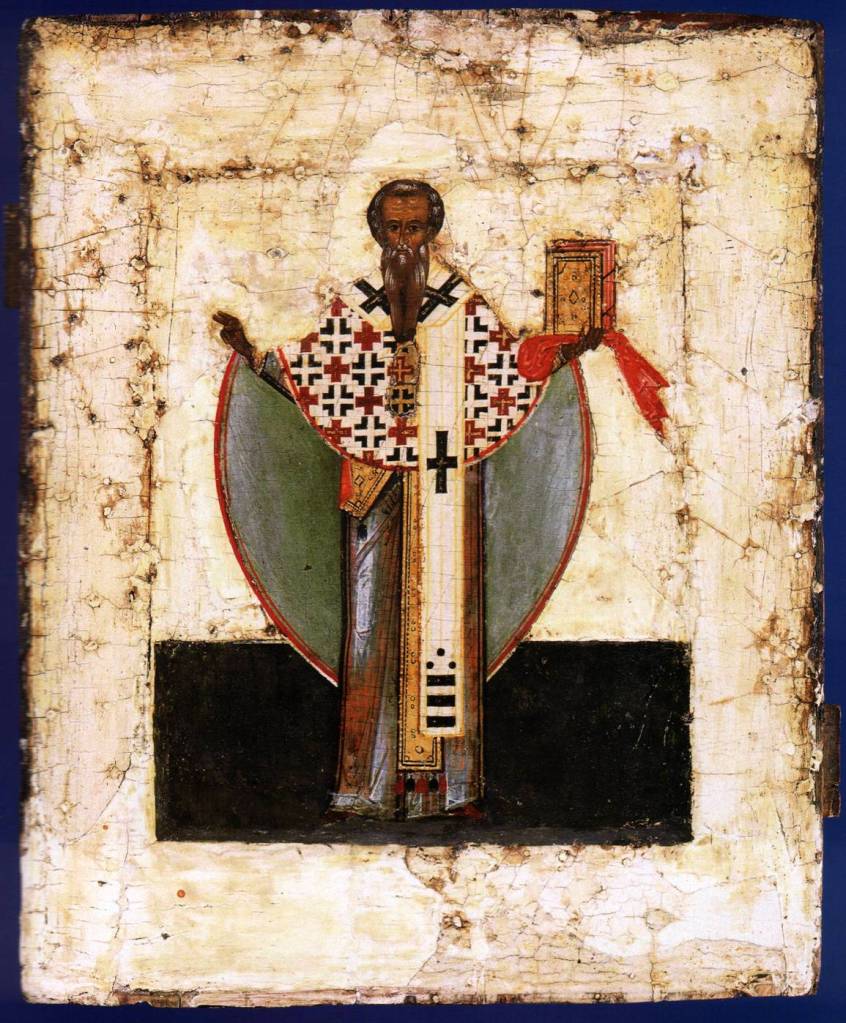
Mark’s Gospel: Jesus has begun his public ministry and “When [Jesus’] relations heard about it, they set out to seize him for they said, ‘He is out of his mind.’” John’s Gospel tells us very plainly, “His brothers did not believe in him.” They thought he was crazy, which was true for James, whom we celebrate today. However, following the resurrection, James became a devout follower. He was, in fact, elected by the twelve Apostles (including James, the brother of John) to be head of the Church in Jerusalem.
Surprisingly, it is very common for family and friends who are not believers to question your sanity or become angry when you begin to follow the will of God. Still, for the believer, it should not be a surprise, for Jesus says to us, “Brother will betray brother to death, and a father his child, and children will rise against parents and have them put to death; and you will be hated by all because of my name. But the one who endures to the end will be saved.”
The reasons why such a thing can happen are numerous: jealousy, as in the case of Joseph; pride, as in the case of Jesus’ family (they thought he was crazy and making them look bad); or anger, because you’re no longer following the crowd. But I think the most significant reason is fear. Fear because they are now more personally confronted with their own lives. Your life and obedience to God have become a testimony to them and convicts them of the sin in their own lives, leaving them with a choice of obedience.
James’ initial reaction to his brother Jesus was one of anger; however, Jesus’ life, Jesus’ obedience to the will of the Father convicted James and brought about a conversion. In the face of anger, fear, and jealousy because of your faith, stand tall and do not be afraid. God can even use the adverse reactions of others to bring about His will in their lives.
Joseph learned that Mary was pregnant, and since they were not yet married, he decided to put her away quietly, but the angel of the Lord came to him in a dream: “‘Joseph, son of David, do not be afraid to take Mary as your wife, for the child conceived in her is from the Holy Spirit. She will bear a son, and you are to name him Jesus, for he will save his people from their sins.’… When Joseph awoke from sleep, he did as the angel of the Lord commanded him; he took her as his wife.”
From here, we have a few other accounts of Joseph: the manger, when Jesus was presented in the temple as a baby, the flight to Egypt when they were fleeing Herod, and our scene today when Jesus became separated from him and Mary during the festival in Jerusalem. Outside of these events, we know very little of Joseph, the one who was called on by God the Father to raise his one and only son. If you think your kids got/get into mischief, what do you think it would have been like raising the Son of God?
We’ve talked about the “Infancy Gospels” before. These are writings outside the canon of Scripture, which – although fun to read – are not considered God inspired, and many are classified heretical, one of which is the Gospel of Pseudo-Matthew. It is not the Bible, but it is fun, and the stories tell of Jesus as a boy. Here’s a taste:
“On the first of the week, when Jesus was playing with the children on the roof of a certain house, it happened that one of the children pushed another down from the roof to the ground, and he was killed. And the parents of the dead boy, who had not seen this, cried out against Joseph and Mary, saying: Your son has thrown our son down to the ground, and he is dead. But Jesus was silent, and answered them nothing. And Joseph and Mary came in haste to Jesus; and His mother asked Him, saying: My lord, tell me if thou didst throw him down. And immediately Jesus went down from the roof to the ground, and called the boy by his name, Zeno. And he answered Him: My lord. And Jesus said to him: Was it I that threw thee down from the roof to the ground? And he said: No, my lord. And the parents of the boy who had been dead wondered, and honoured Jesus for the miracle that had been wrought.”
The boy falls off the roof and dies, so in order to defend himself, Jesus raises the boy from the dead and asks him for the truth. True or false? I don’t know (the church would have me tell you, “No.”) Regardless, can you imagine what it must have been like to raise Jesus? However, as God the Father knew who to select as his mother, God the Father also knew the perfect man to choose as his earthly father: a humble carpenter named Joseph.
In the shadow of Jesus, Mary, the disciples, and the others, Joseph is almost forgotten by us, but as the head of the Holy Family, his role is significant.
St. Bernard of Clairvaux writes: “St. Joseph was chosen among all men, to be the protector and guardian of the Virgin Mother of God; the defender and foster-father of the Infant-God, and the only co-operator upon earth, the one confidant of the secret of God in the work of the redemption of mankind.”
There is no doubt that Jesus called Joseph his father. Therefore, there is no reason why we shouldn’t call on him as well. He responds in faith and protects not only the Son of God and Mother of God but also us, for we, too, are the sons and daughters of God.
I’ve been working on my mind reading skills. Let’s see how I’m doing (you may want to grab a pen if you need help with some light math. I know I do!):
1. Pick a number from 1-10. Any number.
2. Multiply it by 2.
3. Add 8 to that number.
4. Divide it by 2.
5. Subtract. Current number – Original Number. Take your time to do it right.
6. Match that number to an alphabet letter. For example 1-A, 2-B, 3-C and so on… Got the letter?
7. Think of an European country that starts from that letter
8. Take second letter from that country and what is the first animal you think of that starts with that animal?
9. Now think of the color of that animal
Ready? Ok… let me read your mind… If you are thinking of a grey elephant, please raise your hand.
Why are we concerned with mind readers this morning? Because, after reading that first sentence of our Old Testament lesson, I figured many would need to be a mind reader in order to know what the heck was going on: “Joseph said to his brothers, ‘I am Joseph. Is my father still alive?’ But his brothers could not answer him, so dismayed were they at his presence.” What in the world is this all about? Some will know (and a bit later on I look forward to covering the story in more detail during our Sunday school lessons on the Patriarchs) but maybe we could all use bit of a refresher.
In our study, we know that Abraham was the father of Issac and Issac was the father of Jacob (who will later be named Israel). Jacob will have four wives and twelve sons. His favorite wife was Rachel and his favorite son was Rachel’s first child (and Jacob’s eleventh son), Joseph. Joseph’s younger brother, by Rachel, was Benjamin.
Because Jacob showed favoritism toward Joseph, the ten older brothers did not like him. When Jacob made Joseph a coat of many colors, the ten liked him even less. When Joseph had two dreams demonstrating that his brothers and father would eventually bow down before him… things just got nasty.
One particular day, the older brothers were out tending the flocks and Jacob sent Joseph out to find them. When the older boys saw him coming, one said, “Here comes this dreamer. Come now, let us kill him and throw him into one of the pits. Then we will say that a fierce animal has devoured him, and we will see what will become of his dreams.” They did not end up killing him, but sold him as a slave and Joseph ended up in Egypt. They took Joseph’s colorful coat, covered it in blood, and holding it out to Jacob, their father, told him that Joseph had been killed by wild animals.
Now, fast forward through twenty-two years and many adventures: then a great famine settles in the land. Jacob and his family need food, so Jacob sends those same ten brothers who sold Joseph to Egypt to trade for their needs. In order to receive the food, the ten must go and ask it of the man who in Egypt was second only to Pharaoh. They did not know it, but that man was their brother, Joseph. We are told, “Joseph recognized his brothers, but they did not recognize him.” Eventually, there is the great reveal and Joseph makes himself known. The brothers, seeing Joseph who they had treated so badly, are greatly disturbed by their actions, yet Joseph says to them… insert our lesson from today: “I am Joseph. Is my father still alive?’ But his brothers could not answer him, so dismayed were they at his presence.” He said to them, “Do not be distressed, or angry with yourselves, because you sold me here; for God sent me before you to preserve life.” In other words, Joseph forgave his brothers and said, all that has happened is a part of God’s plan, so that we might be in a position to save God’s people.
Joseph had every reason to hate his brothers; and he was one of the most powerful people in the world, so he could have done whatever he liked to them, from sending them away empty handed, to placing them into slavery, to putting them to death, but he chose another path. A path that led to reconciliation.
With that understanding, hear again the words of Jesus from our Gospel lesson: Jesus said, “I say to you that listen, Love your enemies even if they sell you into slavery, do good to those who hate you even if they think of killing you, bless those who curse you because they do not understand how God is working, pray for those who abuse you, because you may win them back as a brother or sister. If anyone strikes you on the cheek or throws you into a pit, offer the other also and allow God to work his purposes; and from anyone who takes away your coat, even if it is a technicolor coat, do not withhold even your shirt or your life. Give to everyone who begs from you even if that person has done you very wrong; and if anyone takes away your goods, do not ask for them again, for they were God’s goods to begin with. Do to others as you would have them do to you, regardless of how they’ve treated you in the past…. Do not judge, and you will not be judged; do not condemn, and you will not be condemned. Forgive, and you will be forgiven; give, and it will be given to you.’”
I’ll tell you a story that I know I’ve told you before, but like any good story, it doesn’t hurt to hear it again: it takes place in Spain. A father and son got into a tremendous heated argument, which led to the son running away. Almost immediately the father felt remorse over what he had said and so he went in search his son. He searched for months, but he could not find him. Finally, in a last frantic endeavor to find him, the father put an ad in a Madrid newspaper. The ad read: “Dear Paco, meet me in front of this newspaper office at noon on Saturday. All is forgiven. I love you. Your Father.” On that Saturday, 800 boys named Paco showed up, looking for forgiveness and love from their father.
You don’t need to be a mind reader to know that if there is one thing this world needs, it is forgiveness. We need to be forgiven by God. We need to be forgiven by others and we need to forgive those who have hurt us. So we need to stop judging over who may or may not be right. We need to stop condemning and being so stubborn because we simply don’t want to let something go. We need to start forgiving and being forgiven. In that last phrase, Jesus says, “Give, and it will be given to you.” I suppose we could think of that in terms of some sort of material gift: goods, money, etc., but in this context, I don’t think that is what Jesus is asking us to give. I think Jesus is asking us to give love. Love. For in not judging or condemning and by forgiving, we are truly loving; and by loving in such a manner, we are becoming more like Jesus, because that is exactly how he loved us.
“Good nature and good sense must ever join; To err is human; to forgive, divine.” (An Essay on Criticism: Part 2 by Alexander Pope)
In your relations with others, strive for the divine.
Let us pray:
God, our Father, You redeemed us and made us Your children in Christ. Through Him You have saved us from death and given us Your Divine life of grace. By becoming more like Jesus on earth, may we come to share His glory in Heaven. Give us the peace of Your kingdom, which this world does not give. By Your loving care protect the good You have given us. Open our eyes to the wonders of Your Love that we may serve You with a willing heart.



 Candle in a Cave