

Lucy approaches Charlie Brown and says, “Merry Christmas, Charlie Brown. ’Tis the season of peace on earth and good will toward men. Therefore, I suggest we forget all our differences and love one another.”
Charlie Brown is totally taken aback by this change of spirit. His face lights up, and he replies, “That’s wonderful, Lucy. I’m so glad you said that. But tell me, do we have to love each other only at this season of the year? Why can’t we love each other all year long?”
Lucy retorts, “What are you, a fanatic or something?”
In an interview, C.S. Lewis states, “Love is not affectionate feeling, but a steady wish for the loved person’s ultimate good as far as it can be obtained.” (God in the Dock, p.37) Bishop Robert Barron is always reminding us that to love is to “consistently will and choose the good of the other.” It would seem that both of these are taking their understanding of love from St. Thomas Aquinas, who said, “To love is to will the good of the other.”
So, love is partly about the funny feeling you get in your stomach, but more importantly, it is sacrificial. It is giving yourself, without regard for yourself, to another. What makes love so colorful and broad is how this, willing the good of the other, is expressed. That expression of love can take many forms, even some that seem to be any and everything other than love.
One of my favorite books is The Stand by Stephen King. In the beginning, one of the characters, Larry Underwood, finds himself in a bit of trouble out in California, so he heads to New York, where he spends some time with his mom.
The relationship between these two has some interesting dynamics. His mom, Alice, is quite reserved and stoic, and Larry is a bit selfish. The day after he arrived, he slept in while his mother got up and went to work, but before she did, she took care of a few things for Larry and left a note.
She had gone out and purchased all the foods he liked—canned ham, roast beef, Coke, peach ice cream. In the bathroom, there’s a new toothbrush, disposable razors, shaving cream, and even a bottle of Old Spice cologne. Of the cologne, he remembers her saying, “Not fancy but smelly enough for the money.”
Larry saw all these things but then reflected on the note she had left. At the beginning, there was no “Dear Larry,” at the end, there was no “Love, Mom.” “Just a new toothbrush, new tube of toothpaste, new bottle of cologne. Sometimes, [Larry] thought, real love is silent as well as blind.” (p.104)
However, there are times when love looks even more different than what we expect.
As I sat in my office at home, reading the lessons for this week, I startled the cat because the sequence and the contrast of the lessons made me laugh.
Our first reading from Zephaniah began,
“Sing aloud, O daughter Zion;
shout, O Israel!
Rejoice and exult with all your heart,
O daughter Jerusalem!”
Our canticle, The First Song of Isaiah, concluded with the words,
“Cry aloud, inhabitants of Zion, ring out your joy,
for the great one in the midst of you is the Holy One of Israel.”
Paul told the Philippians, “Rejoice in the Lord always; again I will say, Rejoice.”
And then we get to the Gospel lesson. “John [the Baptist] said to the crowds that came out to be baptized by him, ‘You brood of vipers! Who warned you to flee from the wrath to come?’”
Sing aloud! Rejoice and exult! Rejoice! You brood of vipers!
I laughed, but then I wondered why. Why was John so angry?
Within our psyche, some emotions are categorized as primary. These can include fear, anger, joy, sadness, disgust, contempt, and surprise. However, anger can also be categorized as a secondary emotion—a mask for a true emotion. In some cases, anger is the mind’s way of hiding fear. One specialist notes, “The brain moves us very quickly from these primary emotions to anger. It can happen so fast that we hardly even notice the switch.” (Source)
Parents probably often experience this. Think of a time when you thought your child was in danger or doing something stupid. At first, you experience fear and concern, but as soon as the incident is resolved, you might say, “Now, I’m gonna kill ‘em.” In such circumstances, fear led to anger, but why did you fear for them in the first place? For the same reason John the Baptist called those coming to him a brood of vipers—love.
You were afraid and angry because you love your children. John was also afraid for those coming to him, and his fear made him angry. John loved those coming to him because he loved them as God loved them. He feared what would happen to them if they did not turn from evil. He would have been like Jonah if he hadn’t cared about them. Remember him?
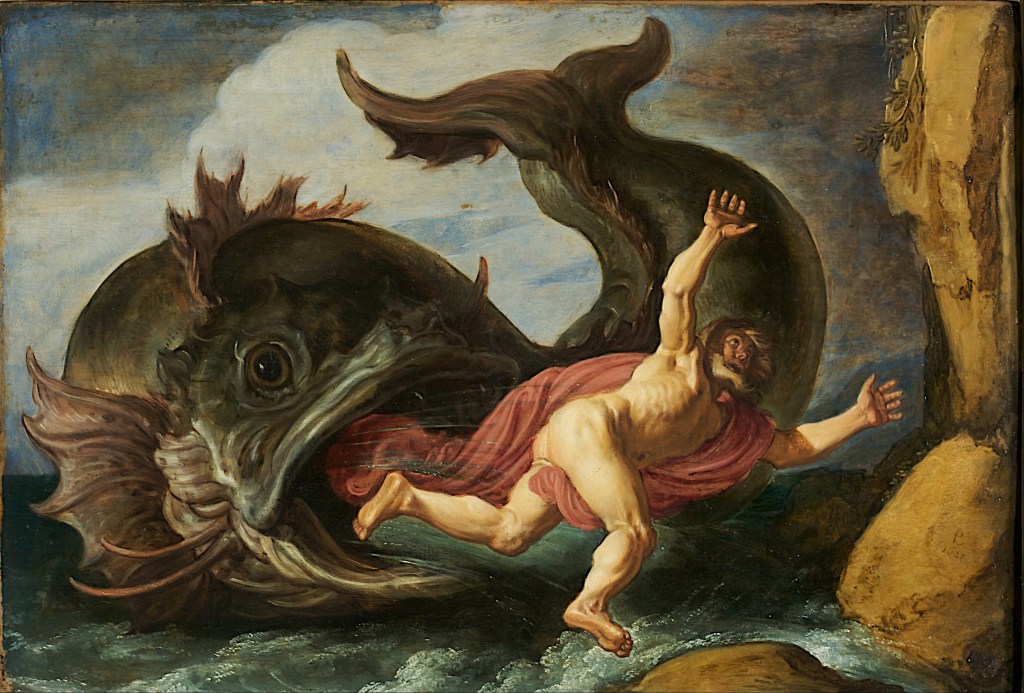
The Lord told Jonah, “Arise, go to Nineveh, that great city, and call out against it, for their evil has come up before me.” Jonah is to tell the people to repent, but instead of obeying, he flees in the opposite direction, which ends with him being swallowed by the great fish. After three days, he is spit back out on the dry land and again told by the Lord to go to Nineveh. This time, he obeys. He cries out against Nineveh, telling them the Lord will destroy them unless they repent. Miracles of miracles, the people repent, and the Lord does not destroy them. What was Jonah’s response? Jonah said, “O Lord, is not this what I said when I was yet in my country? That is why I made haste to flee to Tarshish; for I knew that you are a gracious God and merciful, slow to anger and abounding in steadfast love, and relenting from disaster. Therefore now, O Lord, please take my life from me, for it is better for me to die than to live.”
Kill me now, Lord, because I’m so angry. Not angry because I feared for Nineveh, but angry because I don’t like them. They deserved to be wiped out, but no, you’ve got to be all sweet and lovey-dovey and save them.
Jonah did not want the people to be saved, but John did. John’s anger was not a sign of his contempt for the people. John’s anger was a sign of his love for them—the steady wish for their ultimate good, a willing for their good and salvation.
There are many ways love is expressed. “Love is patient and kind; love does not envy or boast; it is not arrogant or rude. It does not insist on its own way; it is not irritable or resentful; it does not rejoice at wrongdoing, but rejoices with the truth. Love bears all things, believes all things, hopes all things, endures all things.” Love can be blind and revealed in silent acts, but it can, at times, be revealed even in anger. However it is manifested, “Love never ends,” and “God is love.”
Charlie Brown said, “Why can’t we love each other all year long?” Lucy responded, “What are you, a fanatic or something?” When it comes to love, God is a fanatic.
So, here’s a question: How much do you love those around you? Do you wish for and work toward their ultimate good? Is your love for them like a sappy Hallmark card, or is your love for them a John the Baptist kind of love—a fanatic kind of love? And if you say it is fanatic love, does that extend to their soul? Like John the Baptist, do you love them enough to share your faith and call them to God? Do you love them enough to care about their life today, but also their eternal life?
Sing aloud! Rejoice and exult! Rejoice! You brood of vipers! God loves you. Don’t keep it a secret. Go out and share God’s fanatic love with others.
Let us pray: Stir up your power, O Lord, and with great might come among us; and, because we are sorely hindered by our sins, let your bountiful grace and mercy speedily help and deliver us; through Jesus Christ our Lord, to whom, with you and the Holy Spirit, be honor and glory, now and for ever. Amen.
 Candle in a Cave