Sermon: Ascension Sunday – “The Nearness of Heaven”


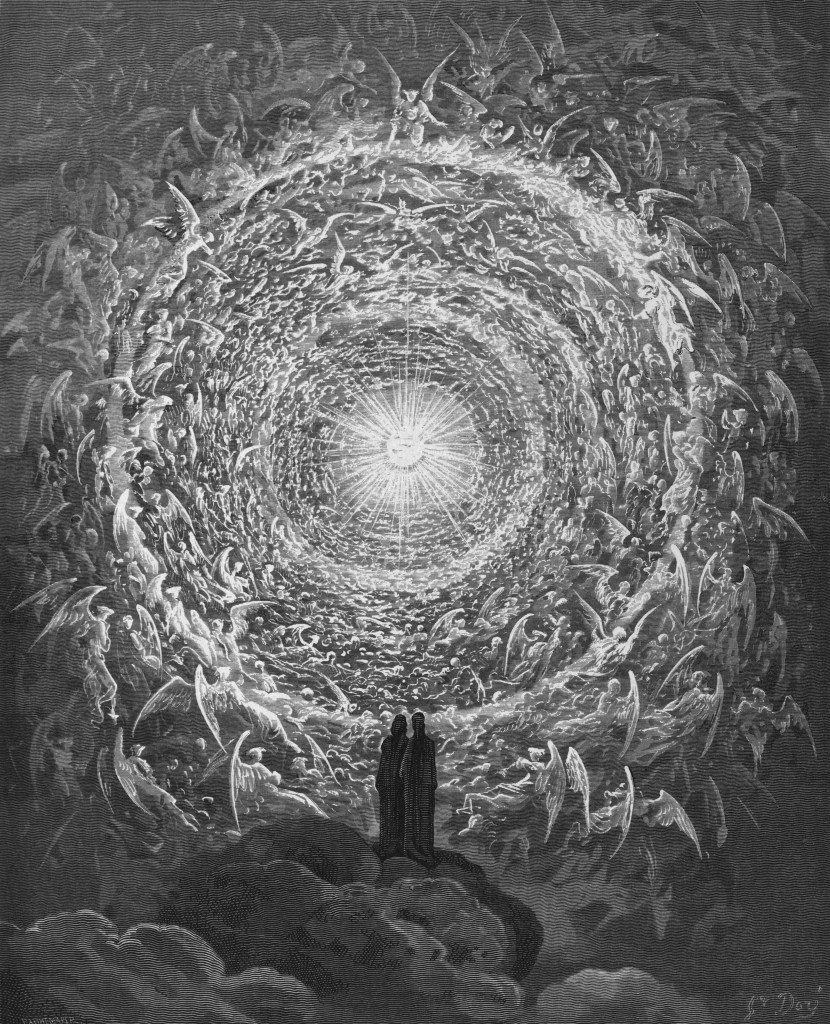
For many, the idea of Heaven or a paradise after death is just a child’s fantasy. Something we tell ourselves so life has some purpose beyond mere survival. For others, Heaven is the reason for life itself, and they have given it a great deal of thought. Although not one who put much credibility in the faith, Mark Twain did, at times, share his views on Heaven, and, as you can imagine, they came with a side of humor.

“Heaven goes by favor. If it went by merit, you would stay out and your dog would go in. – Mark Twain, a Biography

“I don’t like to commit myself about Heaven and Hell, you see, I have friends in both places.” 

Dying man couldn’t make up his mind which place to go to — both have their advantages, “heaven for climate, hell for company!” – Mark Twain’s Speechs, 1910 edition, p. 117.

When I reflect upon the number of disagreeable people who I know have gone to a better world, I am moved to lead a different life. – Pudd’nhead Wilson’s Calendar

It seems to me that for many, even if they believe in Heaven, their thoughts don’t go much further than wondering whether they’ll get in and how large their mansion will be. So today, I thought we would begin by taking a deeper look at Heaven.

First, what is it like? Throughout scripture, there are vivid visions and descriptions of Heaven. Daniel tells us,

“As I looked,

thrones were placed,
    and the Ancient of Days took his seat;
his clothing was white as snow,
    and the hair of his head like pure wool;
his throne was fiery flames;
    its wheels were burning fire.

A stream of fire issued
    and came out from before him;
a thousand thousands served him,
    and ten thousand times ten thousand stood before him;
the court sat in judgment,
    and the books were opened.” (Daniel 7:9-10)

That sounds exciting, but John, in his Revelation, surpasses them all. There is the throne room with a throne of jasper and carnelian, the sea of glass, and the four living creatures. Then, toward the end, John tells us he saw Heaven descending. It has twelve gates, each made of a single large pearl, streets of gold, and so many other amazing features.

Once past the description, we wonder where it might be located. Given all that we read in scripture, we know the general direction is up. In the Old Testament, we read how Elijah was carried up in a fiery chariot (2 Kings 2:11), and Jacob dreamed of a ladder upon which the angels of God ascended and descended (Genesis 28:10-19). Both of these lead us to believe Heaven is up.

The New Testament also points upward. Jesus said, “For I have come down from heaven, not to do my own will but the will of him who sent me” (John 6:38). And, as we read today, “a cloud took [Jesus] out of [the disciples’] sight.” Later, Paul, referring to himself, says, “I know a man in Christ who fourteen years ago was caught up to the third heaven—whether in the body or out of the body I do not know, God knows. And I know that this man was caught up into paradise” (2 Corinthians 12:2-3a). John also indicates this in his Revelation (Revelation 4:1).

So, we have this glorious description and a general location—up—but then Jesus comes along and says something that muddies the water. A Pharisee had asked Him about the coming of the Kingdom of God, and Jesus answered, “‘The kingdom of God is not coming in ways that can be observed, nor will they say, ‘Look, here it is!’ or ‘There!’ for behold, the kingdom of God is in the midst of you.” (Luke 17:20-21) To complicate matters further, the phrase “in the midst of you” can also be translated “within you” and “among you.” I suspect that if you asked Jesus which it is—in the midst of, within, or among—He would answer, “Yes.”

There is no solid consensus among the Church Fathers on the topic of Heaven, but most would agree that there is a location, though it isn’t the most important aspect. For them, the place is only the setting. The important part is that God is there and that we will have communion with Him, and this communion is not limited by time or space.

So, where does this leave us? Theologian J.I. Packer sums up our knowledge nicely: “We know very little about heaven,” he said, “but I once heard a theologian describe [Heaven] as ‘an unknown region with a well-known inhabitant,’ and there is not a better way to think of it than that. Richard Baxter expresses the thought in these lines…

‘My knowledge of that life is small,
The eye of faith is dim,
But it’s enough that Christ knows all,
And I shall be with him.’”

Further, if you need one of our own for confirmation, N.T. Wright wrote, “‘Heaven’ is, in fact, one of the most misused religious words around today, with the possible exception of the word ‘God’ itself.” (Source)

Do you remember what God said when Moses asked, “If I come to the people of Israel and say to them, ‘The God of your fathers has sent me to you,’ and they ask me, ‘What is his name?’ what shall I say to them?” God said to Moses, ‘I am who I am.’ And he said, ‘Say this to the people of Israel: ‘I am has sent me to you.’” (Exodus 3:14-15) The Name “I AM” is beyond explanation. Say whatever you will, you will fail to describe God. I believe the same is true of Heaven. If we ask God, “What is Heaven?” He will answer, “It is.”

“What no eye has seen, nor ear heard,
    nor the heart of man imagined,
what God has prepared for those who love him.” (1 Corinthians 2:9)

Heaven is a mystery, yet it is much closer than you think.

Why all this talk of Heaven? Today we celebrate the Ascension of Our Lord. We read about it in the Acts of the Apostles, and it is affirmed in the Nicene Creed:

“We believe in one Lord, Jesus Christ…
He suffered death and was buried.
On the third day He rose again
in accordance with the Scriptures;
He ascended into Heaven
And is seated at the right hand of the Father.”

Forty days after Easter, Jesus ascended into Heaven. This is the exaltation of humankind, for now Heaven is not only the home of God and the angels but also home to one of our own—a flesh-and-blood human being. The significance of this cannot be overstated. 

As Jesus ascended into Heaven in His body, He took us—the sons and daughters of Adam and Eve—with Him, for He is the Head and we are His body. Yet just as we are with Him there, He is with us here. A longer passage from N.T. Wright helps explain. “Heaven is God’s space, which intersects with our space but transcends it. It is, if you like, a further dimension of our world, not a place far removed at one extreme of our world… and the God who lives there is present to us, present with us, sharing our joys and our sorrows, longing as we are longing for the day when his whole creation, heaven and earth together, will perfectly reflect his love, his wisdom, his justice, and his peace.” (Source)

I’m not sure I like the word “dimension” in this context. Perhaps I’ve heard the opening credits of The Twilight Zone one too many times. Instead, I understand it as a veil that separates us from Heaven. This aligns with the Church Fathers. The veil is as near to us as our skin, yet we cannot see or pass through it in this lifetime. Still, just on the other side is our God and the Kingdom of Heaven.

Jesus prayed that we might be one with Him, the Father, and one another. He then prayed, “Father, I desire that they also, whom you have given me, may be with me where I am, to see my glory that you have given me because you loved me before the foundation of the world.” (John 17:24) He prayed not only that we be where He is when we’re dead, but also that we might be with Him now. And we are, because He is as near to us as the skin on our bodies, just on the other side of the thin veil.

King David prayed,

“Blessed be the Lord, the God of Israel,
    who alone does wondrous things.

Blessed be his glorious name forever;
    may the whole earth be filled with his glory!
Amen and Amen!” (Psalm 72:18-19)

The life of a Christian is to live in such recognition of and reliance on the nearness of Heaven and the Risen Lord, this oneness with Jesus, that others can see it and be drawn into it. In doing so, the Kingdom of God, Heaven itself, is expanded until it fills the whole Earth, and the prayer of David is fulfilled.

You have the ability to do this great work within you because you are not working alone. All of Heaven is by your side, and the Church works alongside you. Together, we work to bring to fulfillment another great prayer:

“Thy kingdom come,
Thy will be done,
On Earth as it is in Heaven.”

At the Ascension, Jesus didn’t float away to some far-off place and now only looks down to see who has been naughty or nice. Instead, He is very near to us all, continuing the work He began in us until its final completion (cf. Philippians 1:6).

Let us pray:
The light of God surrounds us,
The love of God enfolds us,
The power of God protects us,
The presence of God watches over us,
Wherever we are, God is,
And where God is, all is well.
Amen.
Sermon: Eve of the Ascension


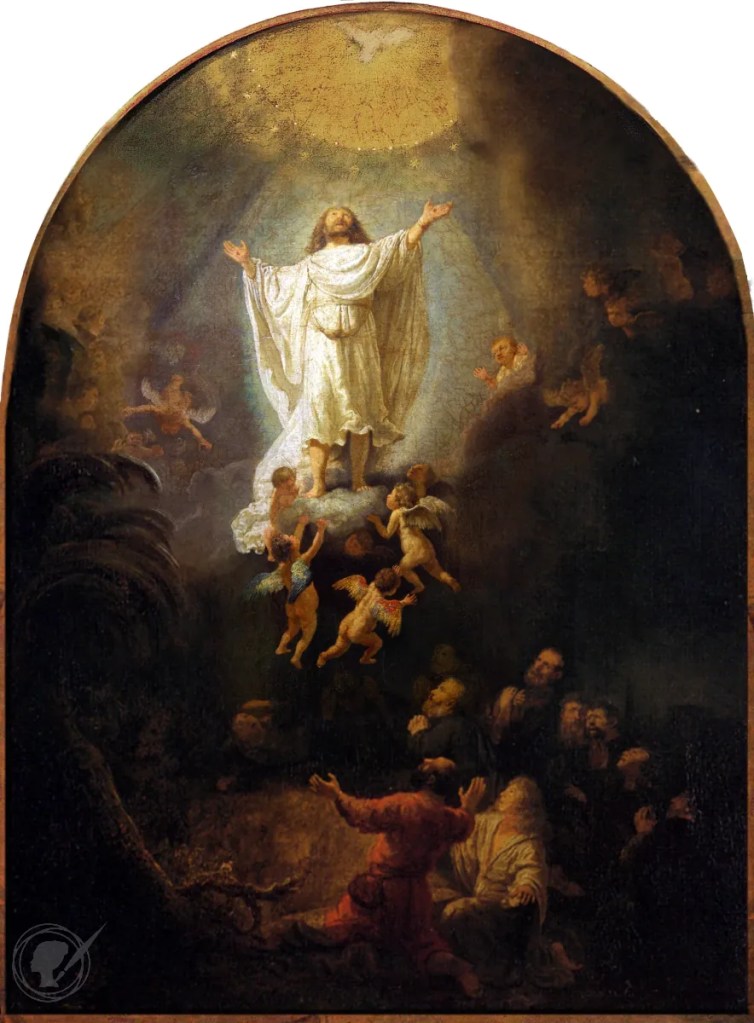
Today we are celebrating the Eve of the Ascension. In his preaching on the Ascension, St. Augustine of Hippo states: “Today our Lord Jesus Christ ascended into heaven; let our hearts ascend with him. Listen to the words of the Apostle: If you have risen with Christ, set your hearts on the things that are above where Christ is, seated at the right hand of God; seek the things that are above, not the things that are on earth. For just as he remained with us even after his ascension, so we too are already in heaven with him, even though what is promised us has not yet been fulfilled in our bodies.”

“Christ is now exalted above the heavens, but he still suffers on earth all the pain that we, the members of his body, have to bear. He showed this when he cried out from above: Saul, Saul, why do you persecute me? and when he said: I was hungry and you gave me food. Why do we on earth not strive to find rest with him in heaven even now, through the faith, hope, and love that unites us to him?”

Augustine is teaching us about two ‘states’ of the Ascension as they relate to our union with Christ, and he bases this teaching on what we learn from St. Paul’s writings to the church in Corinth: “For just as the body is one and has many members, and all the members of the body, though many, are one body, so it is with Christ.” (1 Corinthians 12:12) What does this mean for us?

We are the Body of Christ, and Christ is the head of the Body.  So no matter where he is, he is with us always unto the end of the age, because we are one.  Through his death and resurrection, we become members of him.  Therefore, since he has ascended into heaven, we too have ascended into heaven.  If we are on earth and we suffer, he is on earth, suffering with us.  We see Christ in everyone we meet, because he is in everyone we meet.  We worship him as he sits at the right hand of the Father, because he is there as well.

Bottom line: the Ascension is a mystery. That said, this is probably some sort of heresy, so just forget it after I’ve said it. As I was thinking about this, I remembered Jacob and his ladder. You’ll recall that Jacob lay down, fell asleep, and had a dream: “There was a ladder set up on the earth, and the top of it reached to heaven. And behold, the angels of God were ascending and descending on it! And behold, the Lord stood above it and said, “I am the Lord, the God of Abraham your father and the God of Isaac.” He then speaks to Jacob about the land that is promised and then says, “Behold, I am with you and will keep you wherever you go, and will bring you back to this land. For I will not leave you until I have done what I have promised you.” When Jacob woke, he said, “How awesome is this place! This is none other than the house of God, and this is the gate of heaven.”

Jesus said, “I am the gate; whoever enters through me will be saved. They will come in and go out, and find pasture.” Jesus also says, “Truly, truly, I say to you, you will see heaven opened, and the angels of God ascending and descending on the Son of Man.”

This is the possible heresy bit: it seems to me that the Ascension is the permanent placement and perfection of Jacob’s ladder, granting everyone access to the Gate of Heaven, to Jesus, after his departure.  And it is through this ladder that we have access to the head of the Body, Jesus, and to the very throne room of God.  Maybe something to think on… or maybe not.

Sermon: Easter 3 RCL C – “Do you love Me?”


I take no credit for this one. Mike Goodwin, a young Black man, is a comedian, speaker, and leadership coach. You can find plenty of his videos online; that’s where I discovered this story he shares about his grandmother.

Mike says, “My grandmother says there are only two things in your life that you have to worry about: whether you’re healthy or whether you’re sick. If you’re healthy, you ain’t got nothing to worry about. But if you’re sick, you’ve got two things to worry about: whether you’re gonna get better or whether you’re gonna get worse. If you get better, you’ve got nothing to worry about. But if you get worse, you’ve got two things to worry about: whether you’re going to live or whether you’re going to die. If you live, you’ve got nothing to worry about. If you die, you’ve got two things to worry about: whether you go to heaven or whether you go to hell. If you go to heaven, you’ve got nothing to worry about. If you go to hell, you’ve got two things to worry about: crispy or extra crispy.”

For many, a life with God has much to do with Heaven and Hell. For them, this is how the conversation of God begins: “Do you want to go to Heaven?” With that question, the opposite is implied: “Do you want to go to Hell?” So, if I approach someone and ask, “Do you want to go to Heaven?”, who do you imagine is going to say, “No, I’m good with Hell.” When the one asking the question, “Do you want to go to Heaven?” receives confirmation, “Yes, I want to go to Heaven,” the next question will be, “Do you accept Jesus as your Lord and Savior?” If the person responds affirmatively, “Yes, I accept Jesus as my Lord and Savior,” you have what is known as “the Moment of Salvation.” 

This Moment of Salvation has a great deal to the sorrow and repentance of sin, the turning to Jesus, and making amends for wrongs done. Again, not a thing in the world wrong with any of this; however—my dear Protestant leaning friends, please don’t shoot the teacher, just presenting the history here—this idea of a Moment of Salvation didn’t really come about until the Great Awakening of the 17th and 18th centuries. Prior to this, salvation was more a journey than a moment, and that journey began when you heard the words of Jesus, “Follow me.” 

“Follow me” implies not a moment of salvation but a journey of salvation and a lifetime of sanctification—the process of discipleship, that is, each day becoming more of a follower of Jesus. In following, we begin to live the life He calls us to—a life where we believe in Him and His word, a life of denying ourselves, a life of taking up our cross, a life of being a servant, a life of proclaiming the Good News, all of which is a life that cannot be sustained by only wanting to avoid Hell and go to Heaven. Therefore, Jesus never asked anyone if they wanted to go to Heaven. Jesus asked, “Do you love me?”

Peter denied Jesus three times on the night before the crucifixion; therefore, to restore him, Jesus asked Peter three times, “Do you love me?” However, this question to Peter wasn’t only about restoring him. It was also about the journey and sanctification through discipleship. In asking, “Do you love me?” Jesus was also asking, “Will you follow me? Do you believe in me? Will you deny yourself? Will you take up your cross? Will you be a servant? Will you lay down your life as I have laid down Mine? Will you do all these things and more because this is what it means to love Me?” In light of that, “Do you want to go to Heaven?” is a child’s question, a “no-brainer.” However, the answer to the question, “Do you love me?” is not. It isn’t about a moment of salvation or a moment in time. The answer to the question, “Do you love me?” is a lifetime.

Remember when Jesus said, “Not everyone who says to me, ‘Lord, Lord,’ will enter the kingdom of heaven, but only the one who does the will of my Father in heaven. On that day many will say to me, ‘Lord, Lord, did we not prophesy in your name, and cast out demons in your name, and do many mighty works in your name?’ Then I will declare to them, ‘I never knew you; go away from me, you who behave lawlessly.’” (Matthew 7:21-23) How could such a thing happen? Why is that? Because there are many who will say they want to go to Heaven, but not all are willing to give up their lives for Jesus. Not all can say they love Jesus as He calls us to.

What’s also interesting about this exchange with Peter is that Jesus did not say, “I love you, Peter, do you love me?” Why? As we said last week, Jesus proved His love on that hill outside of Jerusalem where He was crucified. If Peter didn’t understand that then, and we don’t understand that now, then we are not paying attention. Jesus’ crucifixion and death on the Cross declared in no uncertain terms, “God so loved the world that He gave His only begotten Son.” Now Jesus, now God asks us, “Do you love me?”

When asked which was the greatest commandment, Jesus said, “‘You shall love the Lord your God with all your heart and with all your soul and with all your mind.’ This is the greatest and first commandment.” (Matthew 22:37-38)

When Jesus asked Peter, “Do you love me?” he was asking Peter, “Do you agree with this? Will you love Me with all that you are?”

When Peter said, “Yes, Lord, you know that I love you,” Jesus told Peter, “Then go, feed my sheep, and fulfill the second greatest commandment—‘Love your neighbor as yourself.’” (Matthew 22:39)

When you die, you’ve got two things to worry about: whether you go to heaven or whether you go to hell. If you love God, if you love Jesus in the way He calls us to… you’ve got nothing to worry about.

Let us pray: God, our Father, may we love You in all things and above all things. May we reach the joy which You have prepared for us in Heaven. Nothing is good that is against Your Will, and all that is good comes from Your Hand. Place in our hearts a desire to please You and fill our minds with thoughts of Your Love, so that we may grow in Your Wisdom and enjoy Your Peace. Amen.