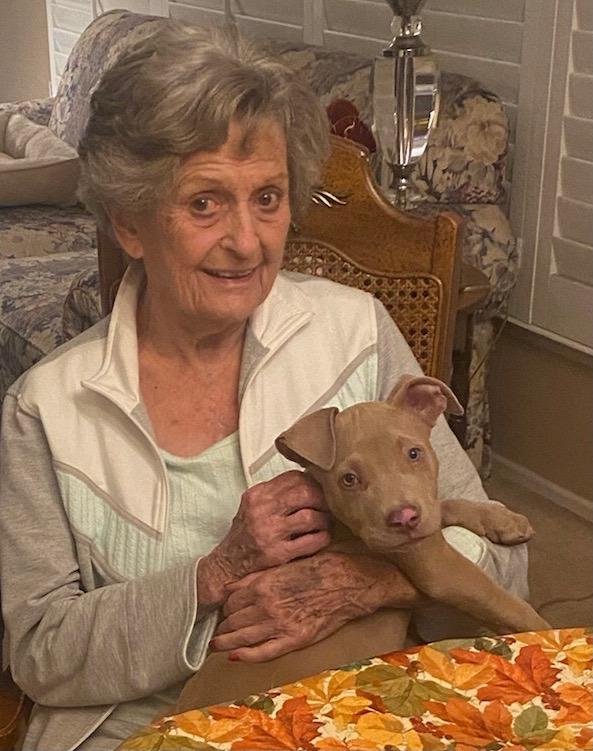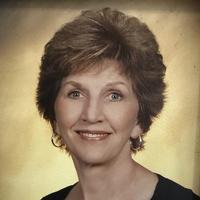
Sermon: RIP – Mary Alice Stalcup


I came across a poem that I thought Mary Alice would like, but also one that feels as though she lived it. It is often attributed to St. Augustine, but it is much more contemporary than that. It was written in the early 20th century by German musician and teacher Georg Goetsch. The title: I Praise the Dance.

I praise the dance,
for it frees people from the heaviness of matter
and binds the solitary to community.
I praise the dance,
which demands everything:
health and a clear spirit,
a poised soul and a shining body.
The dance transforms the soul
into a dwelling of light.

O human, learn to dance,
for otherwise the angels in heaven
will not know what to do with you.

The dance is wholly from the beginning.
It is the movement of creation itself,
the becoming of all things,
their passing and their re-becoming.
The dance turns the deepest, holiest things
into visible and living form.

Dance,
because the whole of creation dances:
the sun, the stars, the earth—
they all move in rhythm and harmony.
So too should you move in rhythm with God.

The author told us,

O human, learn to dance,
for otherwise the angels in heaven
will not know what to do with you.

I can assure you, you do not want to see me dance. It’s not pretty, but I do understand the deeper meaning of the author’s message. 

He is telling us that in this life, we are meant to find joy. We should learn not only to experience God through prayer and study but also to encounter Him in the people we meet. We are called to seek out ways in this lifetime to love, show compassion, practice our faith, and give of ourselves. Living this way allows those around us to experience glimpses of heaven—the eternal life to come. From what I’ve learned, Mary Alice was just such a person. She was one who learned how to dance in her soul and showed others how to do the same.

You might think that someone who has lived such a life would face no troubles, but we know that’s not true. I recall the time St. Teresa of Avila was crossing a stream in winter. She lost her footing and fell into the icy water, then complained to the Lord about all her suffering. Jesus said to her, “Don’t complain, my daughter, this is how I treat My friends.” To which Teresa responded, “If this is how you treat your friends, it’s no wonder you have so few!” 

Mary Alice, also a friend of Jesus, had every reason to complain just as St. Teresa did, but like St. Teresa, Mary Alice did not lose her faith. She heard those words of Jesus we read in our Gospel and lived them—“Do not let your hearts be troubled. Believe in God, believe also in me.” Despite her suffering, she held onto her belief, her faith in Jesus, so that on this day, we can confidently say that she is dancing with the angels in God’s Eternal Kingdom.

Those of us gathered here today are saddened by our loss, but we can also rejoice in knowing that Mary Alice, through the power of the resurrection, is now truly home. We can also rejoice in the knowledge that a place has been prepared for us, and on the day of the Lord’s choosing, he will gather us to Himself, where we will all be reunited in the very presence of His glory. As the Psalmist declares, “This is the Lord’s doing, and it is marvelous in our eyes.”
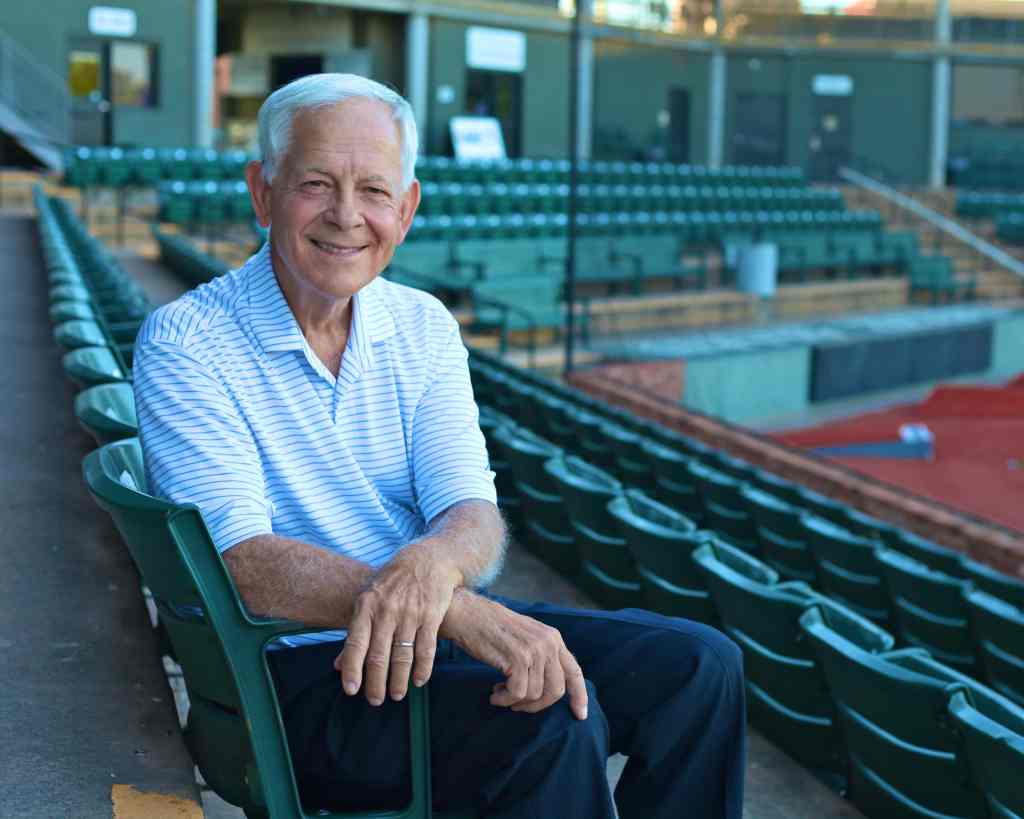
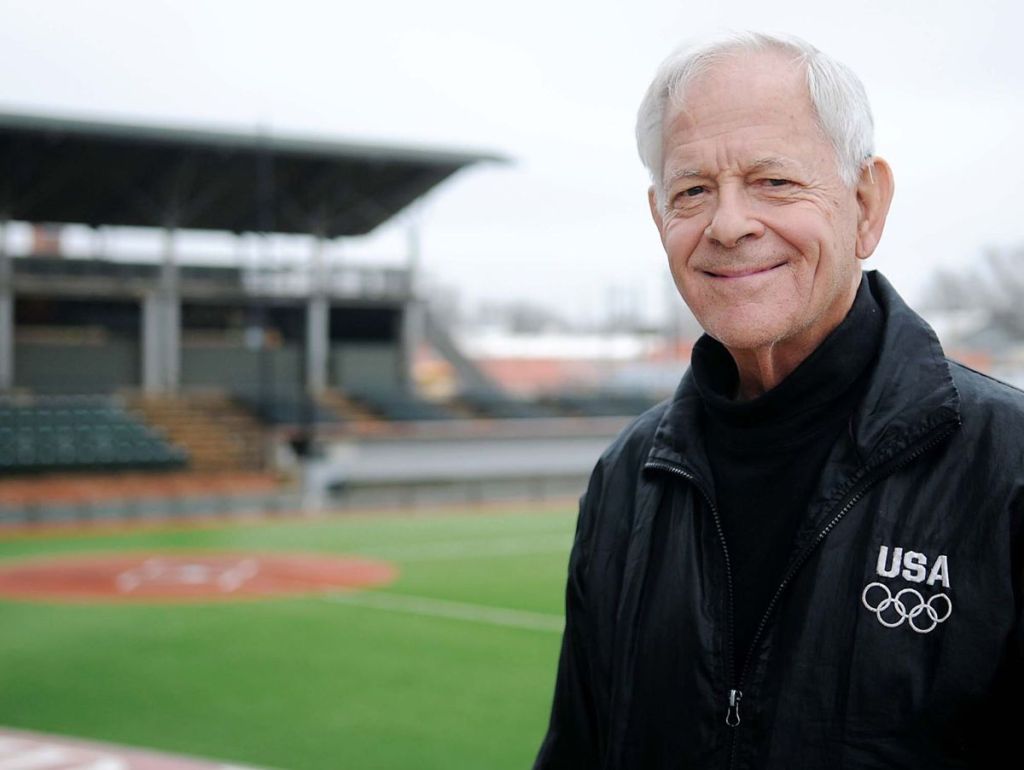
Sermon: RIP Paul Allen at the Ballpark

Jesus withdrew in a boat to a deserted place by himself. But when the crowds heard it, they followed him on foot from the towns. When he went ashore, he saw a great crowd, and he had compassion for them and cured their sick. When it was evening, the disciples came to him and said, “This is a deserted place, and the hour is now late; send the crowds away so that they may go into the villages and buy food for themselves.” Jesus said to them, “They need not go away; you give them something to eat.” They replied, “We have nothing here but five loaves and two fish.” And he said, “Bring them here to me.” Then he ordered the crowds to sit down on the grass. Taking the five loaves and the two fish, he looked up to heaven and blessed and broke the loaves and gave them to the disciples, and the disciples gave them to the crowds. And all ate and were filled, and they took up what was left over of the broken pieces, twelve baskets full. And those who ate were about five thousand men, besides women and children.

In 1996, Linda Ellis wrote a poem. If you look at the cover of your program, you’ll see what the poem is about. It appears right there between 1935, the year of Paul’s birth, and 2025, the year of his death. It is the dash, which is the name of the poem. Ultimately, the poem asks the question, “What does that dash represent and say about your life? How did you live your life?”

I remembered that poem as I considered the dash on the front of the program, which represents Paul’s life, and I came to the conclusion that Paul’s dash represents much, but that it should have an asterisk after it, directing us to a footnote. In the footnote, we would not find more details of his life; instead, there would be this list, these guiding principles that essentially formed a pillar upon which Paul’s life stood. As his priest, what delighted me was that at the base, the foundation of everything he said or did was God and his faith in Jesus.

“A good Life to me is as follows: Keeping God and Jesus in our minds often.”

Having known Paul for over ten years, I know that these words weren’t just lip service. He didn’t write this list expecting others to one day find it, and so he said to himself, “Oh, I’d better put God first so that when everyone reads this, they’ll believe I was a righteous dude.” No, I don’t believe that for a second. After many long conversations with him about his faith, I know, without hesitation, he believed that Jesus was his Savior and that it was only through God that he was able to accomplish anything. Therefore, I can say to you without hesitation that he has made his eternal home in that Heavenly Kingdom with his Savior, and has been reunited with his beloved Joan and son David, along with his mom and dad.

On that note, if I may speak to Paul directly… “I told you so!”

Anyhow, in our reading from Matthew, when the disciples told Jesus to send the people away because there was nothing to eat, Jesus replied, “They need not go away; you give them something to eat.” It doesn’t take a close scrutiny of Paul’s life to realize that he lived as though the Lord Jesus had spoken those words directly to him. Like this ballpark, there are countless public reminders of his works, but I would wager that for every known act of kindness, there are literally hundreds that you will never hear about. For Paul, it was never about the recognition. It was always about the serving—living out the true spirit of the Lord’s words. And I am quite certain he would encourage us to do the same. For as Pope Francis once noted, “Life is of no use if not used to serve others.”

For each of us, a day will come when a dash separates two dates. What will your dash say about you? And if there is an asterisk directing to a footnote, what will the reader discover as your guiding principles? If you are still trying to sort all that out, I believe Paul would encourage you to put the Lord Jesus first and know that every good gift flows from Him.

One such gift from God is a good friend. Doug Frantz, one of Paul’s friends, will now share with us what that means to him.

Sermon: RIP Paul Allen Funeral Mass


Before moving to Enid, I never once in my life said, “You know, I think I wanna live in Oklahoma.” It never really crossed my mind. I suspect the same is true for many of you gathered here today. This may be the first and last time you will ever be in Enid. And that’s OK. We all have our lives, and God allows us to live them.

However, due to this, you probably don’t know Paul in the same way as those who live here. I believe it would be very hard for someone who does not live here to grasp what he meant to this community. That’s not a criticism, and please don’t take it as such. It’s just the way things are. Even so, you won’t understand what he meant to Enid, America. He has left a remarkable legacy. It’s a legacy that you can be very, very proud of.

On the surface, that legacy is easy to see. There are the companies he built, the projects he funded, the ballparks, and the soccer fields. There are all sorts of things, and everywhere you turn, you’ll see his name. But that’s not because Paul was a big flashy kind of guy. He wasn’t running around trying to make a name for himself. He didn’t drive a fancy sports car… and can I just say thanks be to God for that, because he was a really terrible driver. He didn’t wear the latest fashion. If you didn’t know who he was, he was just this nice old guy. In these last years, if you ran into him around town, it was more than likely at one of the grocery stores where he would be stocking the shelves with beef jerky. If you saw Tammy driving him somewhere, there’s a good chance they were out delivering meals to the poor and homebound. And if it were a Sunday morning, you would find him sitting right there in the front row. And, when it was time to pray, you would find him there on his knees.

There’s the outward legacy that everyone knows, but there’s another that you had to be here to truly witness in order to understand why this town loves him the way they do.

You see, Paul was a builder. Yes, he built companies, but more importantly, and the reason he could build companies is that instead of seeing a company as something made of brick and steel, he saw the company as the people. Paul built companies because he built people. He gave them the tools they needed to succeed. He provided the encouragement for them to realize they could do great things and become builders themselves.

In our Gospel reading today, the disciples wanted to send the people away so that they could go and find something to eat. Jesus said to him, “They do not need to go away. You give them something to eat.” So often when we read that text, we think that Jesus is simply talking about food. Feed the hungry. They’re broke, they don’t have money. They don’t have food. Give them something to eat. However, there are many different ways to give someone something to eat, because the phrase is a way of saying give them what they need to grow, to have a life, to have joy, to fulfill potential. Give them what they need to have life, and to have it abundantly. When Jesus said, “Give them something to eat,” he was saying, “Build them up,” and that is Paul’s legacy. He was a builder. He was a builder of people, helping them to realize their own great worth.

For some of you, this may very well be the last time you’re in Enid, America. Even so, Paul has passed on this legacy to you. It’s a legacy that conveys the same message that Jesus said to his disciples, “You give them something to eat.” In your communities, with your families and friends and the strangers in your midst, you give them something to eat. Take this legacy and pass it along. Become builders yourselves.

Today, we mourn our loss, and today we give thanks. We mourn because, for a time, we are separated from all those who have gone before us. We give thanks because, on this day, through the power of the resurrection, Paul has been reunited with Joan and David, his mom and dad, and with all those who have gone before. Above all this is the fact that Paul has entered Our Father’s House and has been welcomed into the very Kingdom of God. In the words of the Psalmist, “This is the Lord’s doing, and it is marvelous in our sight.”

Sermon: for Andrew Allen

On Sunday, June 2nd, I was sitting at home in my comfy clothes with a tasty cup of coffee, and watching the service here at St. Matthew’s on Facebook live. Father Jim preached a fine sermon. As is our way, this was then followed by the Creed, the prayers, the confession, and the seventh-inning stretch—also known as the peace.

I watched and smiled as I saw you all greeting one another, imagining the pew hopping and all. Then, at the bottom right corner of the screen, in rolled Andrew, sitting in his wheelchair. He was all smiles. Elizabeth greeted him, then there was this steady stream of you all coming up and giving Andrew the Peace. Afterward, he rolled back out of view from the camera. The whole time I watched, it never once crossed my mind that this would be the last time I would see him. I suspect, for those who saw him that day, you never thought it would be the last time you would see him, either.

Today, we heard the words of the Psalmist, as he speaks to the Lord, 

“My frame was not hidden from you
    when I was made in the secret place,
    when I was woven together in the depths of the earth.

Your eyes saw my unformed body;
    all the days ordained for me were written in your book
    before one of them came to be.”

All the days ordained for me were written in your book, including the very last. 

Just as we did not consider that it might be the last day for Andrew, we also do our very best not to consider our own last day. It is something we fight desperately against. However, Andrew was in a rather unique position. Like Job, who spent days considering the ways of God, Andrew also—in his trials—had the opportunity to consider the ways of God. Like any of us, he did not come to fully understand, but he did give it a great deal of thought. At some point, he sat down and put some of those thoughts to verse in a poem—A Word to the Lord.

Master of beauty, craftsman of the snowflake,
inimitable contriver,
endower of the Earth so gorgeous and different from the boring Moon,
thank you for such as it is my gift.

I have made up a poem to you
containing with deep feeling everything that most matters now.
“According to thy will,” the thing begins.
It took me off and on nearly a week.
It does not aim at eloquence.

You have come to my rescue again and again
in my impassable, sometimes despairing years.
You have allowed my brilliant and beautiful friends to destroy themselves,
and I am still here, severely damaged, but functioning.

Unknowable, as I am unknown to a guinea pig,
how can I “love” you?
I only as far as gratitude and awe
confidently and absolutely go.

I have no idea whether we live again.
It doesn’t seem likely
from either a scientific or philosophical point of view,
but certainly, all things are possible to you,
and I believe in the resurrection-appearances to Peter and to Paul
as I believe I sit here in this green-blue chair.
Only that may have been a special case
to establish their initiatory faith.

Whatever end you may have for me, accept my amazement.
May I stand until death forever at attention
for your least instruction or enlightenment.
I even feel sure you will assist me again,
Master of insight and beauty.

Yes. Andrew had considered his last day. In the end, he knew that he would not be able to understand it all, so instead of entrusting his life to his own means and understanding, he handed all things over to God. With Jesus, Andrew said, “Father, into your hands I commit my spirit!”

Perhaps we never will consider our own last day, but as long as we do the same—as long as we commit our spirit and our bodies to the loving hands of Jesus—then on our last day, Jesus will bring us into our Father’s house, into that place that has been prepared for us.

Today, we mourn the loss of Andrew. Today, we also rejoice for Andrew, for he has been resurrected to eternal life. A life that is available to all who commit their bodies and souls to Jesus.

Sermon: RIP – Betty Vance Hume

It was March 19, 2018 that we were gathered here for the service for Dave, Betty’s husband for more than 70 years. At that time I shared with you a story that comes to us from around the year 125 A.D.: a Greek philosopher by the name of Aristides wrote to Hadrian, who was the Emperor, trying to explain the extraordinary success of the new religion, Christianity. In his letter, Aristides speaks of the faithfulness and righteousness of the Christians, how they treat others fairly, how they worship and pray, and even how they respond to the death of another Christian. He wrote, “If any righteous man among the Christians passes from this world, they rejoice and offer thanks to God, and they accompany his body with songs and thanksgiving as if he were setting out from one place to another nearby.” (From The Apology of Aristides)

“… as if he were setting out from one place to another nearby.”

Jesus tells us that he is going to prepare a place for us and so often we think that place is up there… far off beyond the stars, but I really don’t think the place he takes us is really all that far off. In fact, I think it is as close as right here. Just a thin veil’s width away. I say that because it seems that Jesus is often so close and the same is true with his Mother, Mary, and… the same is also true with all those that have gone before us. You can “feel” their closeness and therefore know that they are still very near… just beyond that veil.

That might sound a bit spooky to some and give rise to concerns about ghosties and the likes, but to those who understand that in death “life has changed, not ended”, it is a comfort and a blessing, because it means that we still have access to those who have gone before. We can know that they are still very much a part of our lives and in fact, since they are now closer to throne room of our God, can provide even greater assistance to us now than ever before.

Consider the words of St. Teresa of Lisieux, “My mission – to make God loved – will begin after my death. I will spend my heaven doing good on earth. I will let fall a shower of roses.” If one such as Teresa will shower us with blessings, then imagine the benefits of the blessings and prayers we shall receive from those who are so close to us, such as our mother and father and others… such as Betty.

Today, we mourn the loss of Betty, but we are joyful and give thanks that she has entered into her Heavenly reward. A place that has been prepared for her by her Savior, Jesus. We give thanks that she has been reunited with Dave and all those that have gone before us, but we also give thanks that she is also still so very near to us, continuing to love all those that she loved while still on this side of that thin veil.

As we read, the Prophet Isaiah said:

On this mountain the LORD of hosts will make for all peoples
a feast of rich food, a feast of well-aged wines,
of rich food filled with marrow, of well-aged wines strained clear.

That is a feast that all who call on the Name of the Lord will be invited to take part in. It too is a place that has been prepared for us. Until that day, when we all come together at that joyous celebration, know that those who have gone before you have not left you here alone. They are ever watching over us and they speak to the Father on our behalf; and on the day that we are called into God’s Kingdom, they—along with our Savior, Jesus—will greet us and welcome us to our true home.

Sermon: For Richard Roark

I don’t normally post the sermons I write for funerals, but I’ve decided that I would like to start because it is my way of remembering these individuals, so I suppose these types of posts will be more for me…

Archbishop Fulton Sheen said, “The rosary is the book of the blind, where souls see and there enact the greatest drama of love the world has ever known; it is the book of the simple, which initiates them into mysteries and knowledge more satisfying than the education of other men; it is the book of the aged, whose eyes close upon the shadow of this world, and open on the substance of the next. The power of the rosary is beyond description.”

During our online Morning Prayer services, when someone makes a comment, I see what they are saying. And almost without fail, there would a “Good morning” from Richard. That was always nice, but it was in the Zoom Rosary service that I could actually see him and for the last twenty months or so, almost every Tuesday at noon, Richard and I would meet and pray the Rosary together. We would occasionally have others join us, but most of the time it was just the two of us. We would visit for a few minutes about life and he would always ask if I thought anyone else would join us (he never quite understood why no one else did), and then we would get down to the work at hand. Sometimes we would pray a Rosary with special intentions, but mostly… we just got together and prayed those ancient words, meditating together on the life of our Savior.

We can read and hear about Richard’s life, which will tell us something about him, but it was this faithfulness in prayer that tells me all I really need to know. The Psalmist says,

You speak in my heart and say, “Seek my face.”
Your face, LORD, will I seek.

And that was Richard. Doesn’t make him perfect, but in his life of prayer, he sought the face of the Lord, which tells me that he did the same in his life. Seeking the face of the Lord in the faces of those he encountered.

Job said,

I know that my Redeemer lives
and that at the last he will stand upon the earth.
After my awaking, he will raise me up;
and in my body I shall see God.
I myself shall see, and my eyes behold him
who is my friend and not a stranger.

Richard sought the face of the Lord and now his eyes do behold the face of his Redeemer, who receives him as a friend and a beloved child. The inheritance and reward of his faithfulness, an inheritance and reward that awaits all who call on the name of the Lord. This is our joy and our hope and the fulfillment of God’s promise to us all.

The Salve Regina or Hail, Holy Queen is the final prayer of the Rosary. I prayed it with Richard a few hours before he died: “Hail, holy Queen, mother of mercy, our life, our sweetness, and our hope. To thee do we cry, poor banished children of Eve. To thee do we send up our sighs mourning and weeping in this valley of tears. Turn then, most gracious advocate, thine eyes of mercy toward us, and after this our exile show us the blessed fruit of thy womb, Jesus. O clement, O loving, O sweet Virgin Mary. Pray for us, O Holy Mother of God. That we may be made worthy of the promises of Christ.”

“… and after this our exile show us the blessed fruit of thy womb, Jesus.” And on this day, for Richard, she has. I am thankful to know that when I pray a Rosary down here, Richard will pray with me from his new home in the Heavenly Jerusalem.