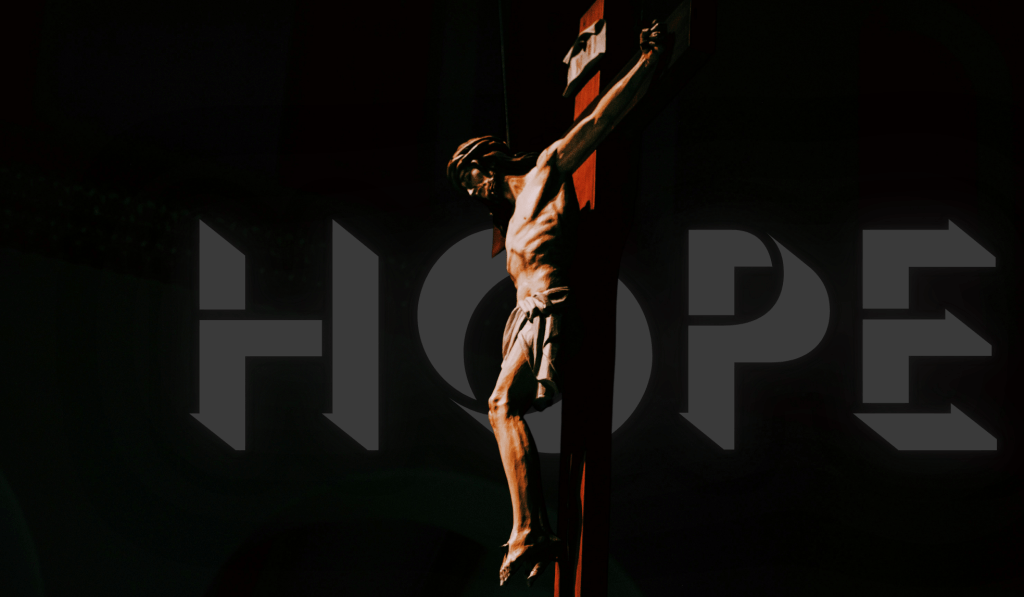
Today, after the Solemn Collects, there is the Veneration of the Cross. Three times, the person presenting the Cross will chant, “Behold the hard wood of the Cross on which was hung the world’s salvation.” It is a time to meditate on these great acts.
I’m sure there are others, but I have read several different meditations on that scene. Thomas à Kempis, St. Alphonsus Ligouri, and Catherine Emmerich are among the authors who have stayed with me, but they are all quite graphic. You need to prepare your soul a bit before engaging with them. However, I wonder, have you ever truly considered what you would have witnessed, how it would make you feel, and, more importantly, how you would respond? It’s not an easy thing to do, but many saints point out that it is an edifying practice. As we have been studying the virtues during this Season of Lent, St. Bonaventure wrote, “He who desires to go on advancing from virtue to virtue, from grace to grace, should meditate continually on the Passion of Jesus. There is no practice more profitable for the entire sanctification of the soul than the frequent meditation of the sufferings of Jesus Christ.” So, without making you squeamish by sharing some of the other writings, consider these things.
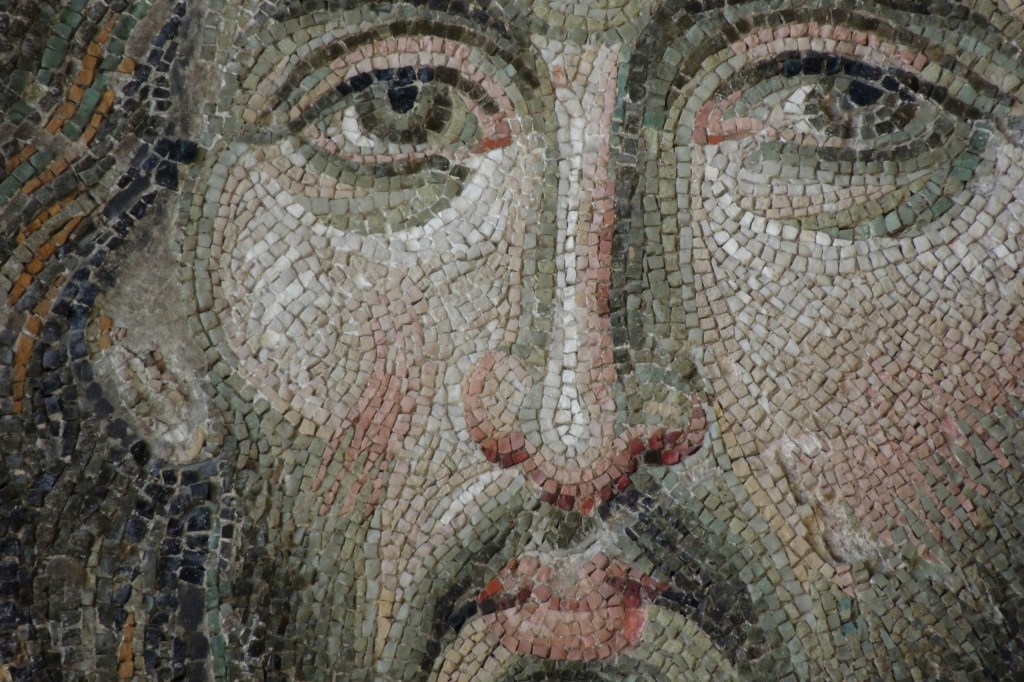
The head of Jesus was often lifted to look into the crowds as He taught them about the things of God. And, perhaps as often, it was bowed in prayer, talking with His Father. Now, it is pierced with the thorns of the crown that the soldiers so roughly pressed upon Him.
The hands of Jesus—how many people did He touch and heal? Imagine Him reaching down and making the mud He would use to give sight to the man born blind. How gentle He was with the child that He picked up and placed in His lap. See Him writing in the dust, turning back those who accused and wanted to stone the adulterer. See them raised as He gave thanks over the few loaves of bread and fish that would then feed thousands. Now, they are pierced with two nails and fixed to the Cross.
His feet were washed by the hands of the unclean woman, and later anointed with costly perfume by Mary of Bethany. Those same feet walked on the waters and traveled many miles, bringing God’s message of love to a dying world. Yet, like His hands, those feet are now nailed to the Cross.
We could look upon Him, seeing His back, born to carry the sins of the world, now whipped and bruised, or His chest, where within that most Sacred Heart beats with the fire of the Spirit, is now pierced. Christ is upon the Cross. St. Alphonsus Liguori wrote, “Behold Jesus, at length, actually dying. Behold him, my soul, how he is in his agony amid the last respirations of his life. Behold those dying eyes, that face so pale, that feebly palpitating heart, that body already wrapped in the arms of death, and that beautiful soul now on the point of leaving that wounded body. The sky shrouds itself in darkness; the earth quakes; the graves open. Alas, what portentous signs are these! They are signs that the Maker of the world is now dying.”
Seeing these things isn’t easy, but seeing is necessary. As difficult as it is to witness, don’t turn away. Stay with Him for a while and see with your eyes and your soul. This is God’s love story. St. Thomas Aquinas once asked Bonaventure which book he used to learn about the great love of Jesus. Taking a crucifix from the wall, Bonaventure replied, “This is my book whence I receive everything that I write; and it has taught me whatever little I know.”
Jesus tells us, “Greater love has no one than this, that someone lay down his life for his friends” (John 15:13). You are Jesus’ friend and His love. The Cross is the love story Jesus wrote. He wrote it for you, and He wrote it in His own Blood.
Have mercy on me, O God, according to your unfailing love; according to your great compassion blot out my transgressions. Wash away all my iniquity and cleanse me from my sin. For I know my transgressions, and my sin is always before me. Against you, you only, have I sinned and done what is evil in your sight, so that you are proved right when you speak and justified when you judge. Surely I was sinful at birth, sinful from the time my mother conceived me. Surely you desire truth in the inner parts; you teach me wisdom in the inmost place. Cleanse me with hyssop, and I will be clean; wash me, and I will be whiter than snow.
King David was on the roof of his house, looking out over the city and the land he ruled. As his eyes scanned the scene, he saw a woman on her roof—Bathsheba—who was naked and bathing. Watching her, he felt desire for her, and even though she was married, he devised a plan to have her.
Her husband, Uriah, was one of his soldiers, so he sent him to the front lines of a fierce battle where he would certainly be killed. He was, and after the appropriate mourning period, David had Bathsheba brought to him and married her.
The Lord saw David’s wickedness and sent Nathan the prophet to rebuke him for his sin. David confessed, and it is believed that David wrote the Psalm I shared with you during his time of penance. He cried out to the Lord, “Wash me, and I will be whiter than snow.”
From the very beginning of human history, when Adam and Eve were banished from the Garden of Eden, this cry has crossed the lips of all God’s children: “Wash me. Wash me from my sins so that I might be whiter than snow. So that I might be cleansed of my sins.”
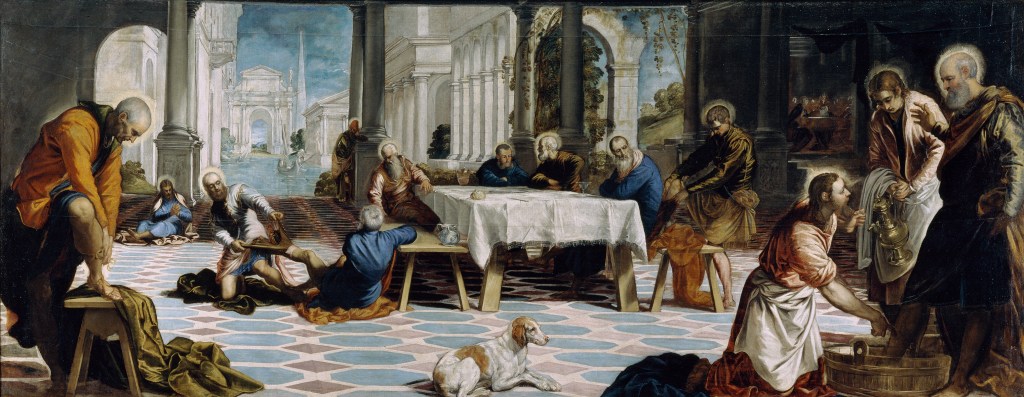
It’s always been this way; however, on the day ordained by God, Jesus opened the gates to a new path. On that day, Jesus began by taking on the role of a slave and washing the disciples’ feet. Peter objected, but Jesus insisted, “If you are to be a part of me, if you are to be where I am going, then you must allow me to wash your feet. You must allow me to cleanse you.”
Following the foot washing, scripture says, “While they were eating, Jesus took bread, gave thanks, broke it, and gave it to his disciples, saying, ‘Take and eat; this is my body.’ Then he took the cup, gave thanks, and offered it to them, saying, ‘Drink from it, all of you. This is my blood of the covenant, which is poured out for many for the forgiveness of sins.’”
It is fair to say that the disciples failed to understand the significance and connection between these two events, but after his crucifixion, they would come to realize that the footwashing was symbolic of the washing of their souls through the body and blood of Christ.
Jesus—God—humbled Himself to the role of a slave and washed their feet so that they might be outwardly clean. Jesus—God—humbled Himself to death on a cross so that their souls might be cleansed.
Today we celebrate the gift of the most Holy Eucharist. The symbolism of washing the feet points to the washing of our souls, and it is the answer to our cry, “Wash me, Lord. Wash me and I will be whiter than snow.”
Last week, I shared with you a verse from the Epistle to the Hebrews: “Faith is the assurance of things hoped for, the conviction of things not seen” (Hebrews 11:1). In our study of the Heavenly Virtues, including the three Theological Virtues, we understand that faith is a gift from God, but that faith is not something like a commodity we can acquire more of it on an as-needed basis. Instead, faith is a relationship with the Father through Christ Jesus. Faith is resting in the shadow of His wings, regardless of circumstances or outcome. However, the passage from Hebrews introduced the second of the Theological Virtues—hope.
Within philosophy, hope has mainly been seen as negative, though sometimes as positive. It is considered negative because it was seen as frivolous optimism, and positive because, in the right measure, it can provide encouragement.
In psychology, hope is considered part of positivity and positive thinking. Hope is “the perceived capability to derive pathways to desired goals, and motivate oneself via agency thinking—willpower or drive—to use those pathways.” (Source) A psychology professor at the University of Oklahoma explains, “We often use the word ‘hope’ in place of wishing, like you hope it rains today or you hope someone’s well… but wishing is passive toward a goal, and hope is about taking action toward it.” (Ibid.) From this view, hope combines positive thinking with action to achieve a specific goal.
Both of these approaches—philosophy and psychology—bump up against our understanding of the Virtue of Christian Hope, but neither completely captures it, and they differ in two main ways.
First, Christian hope is not about an action or outcome we expect to be fulfilled in the future. Instead, Christian hope concerns an outcome that has already been accomplished. Our hope is the salvation that was achieved at Golgotha on the Cross. St. Alphonsus Liguori writes, “What sinner would ever have been able to hope for pardon if Jesus had not, by his blood and by his death, made satisfaction to the divine justice for us?” (The Love of Jesus Crucified, p.117) Without salvation, there would be no hope; without it, life is just a series of days strung together that lead to nothingness. Instead, “How great is the hope of salvation which the death of Jesus Christ imparts to us.” (Ibid. p.122)
Writing to the Romans, St. Paul said, “He who did not spare his own Son but gave him up for us all, how will he not also with him graciously give us all things?Who shall bring any charge against God’s elect? It is God who justifies.Who is to condemn?” (Romans 8:32-34) Ligouri, expanding on this, wrote, “How should that Lord condemn thee, who died in order not to condemn thee? How should he drive thee away when thou returnest to his feet, he who came from heaven to seek thee when thou wert fleeing from him? ‘What art thou afraid of, sinner? How shall he condemn thee penitent, who dies that thou mayst not be condemned? How shall he cast thee off returning, who came from heaven seeking thee?’” (Love, p.122) In other words, for you, Jesus endured the horrors of the Cross, why—if you call on His name, if you have faith in Him and, through that faith, enter into a relationship with Him, and if you love Him—why would He turn from you and condemn you? Christian hope speaks to our souls and assures us that He would never do that. This also highlights the second main difference between Christian hope and the hope of philosophy or psychology: Although Christian hope helps us in this life, its main focus is eternal life.
Our hope lies in our salvation, which has already been secured. While we begin to experience the joy of that salvation in this life, it is our eternal life that Jesus cares most about. Jesus said, “I am the resurrection and the life. Whoever believes in me, though he die, yet shall he live, and everyone who lives and believes in me shall never die” (John 11:25-26). Our hope is eternal life, made possible through salvation gained through the Cross. That in turn gives us the hope we have in daily living. Through the hope of eternal life, made possible by the resurrection of the dead, regardless of the trials we endure, in the words of St. Teresa of Avila: “All shall be well, and all shall be well, and all manner of thing shall be well.” That fun line from The Best Exotic Marigold Hotel puts it: “Everything will be okay in the end, and if it is not okay, it is not the end.”
Faith is the loving and protective relationship we have with the Father. Our hope informs our souls to know that not only do we have this relationship, but that it is eternal. This leaves us with the last of the Theological and Heavenly Virtues, and it is greater than all these—love.
Let us pray (from St. Alphonsus Ligouri). I invite you to make this prayer your own: My Jesus, my hope, Thou, in order not to lose me, hast been willing to lose Thy life; I will not lose Thee, O infinite good. If, in time past, I have lost Thee, I repent of it; I wish, for the future, never to lose Thee more. It is for Thee to aid me, that I may not lose Thee again. O Lord, I love Thee, and I will love Thee always. Mary, thou, next after Jesus, art my hope; tell thy Son that thou dost protect me, and I shall be safe. Amen. So may it be. (Love, p.130)
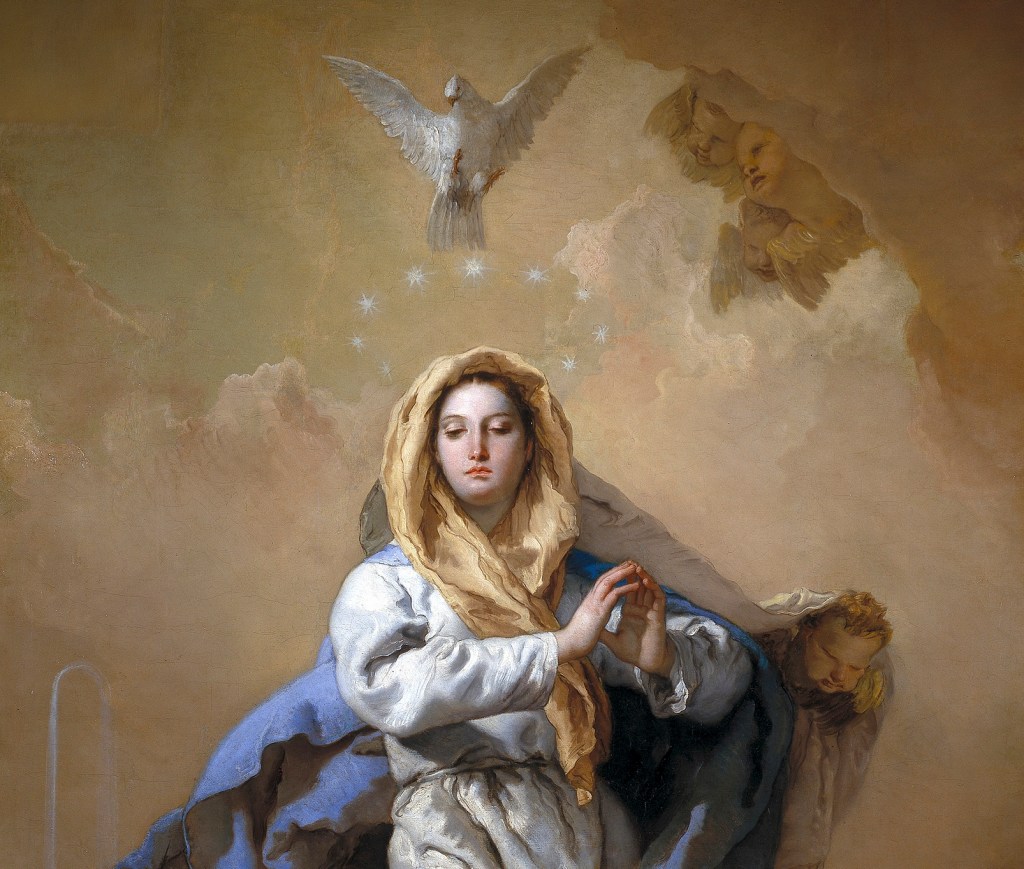
Today, we celebrate the Annunciation: when the angel of the Lord visited Mary and told her she would give birth to God’s Son. Regarding Mary, Mother Teresa writes, “Mary showed complete trust in God by agreeing to be used as an instrument in his plan of salvation. She trusted him in spite of her nothingness because she knew he who is mighty could do great things in her and through her. Once she said “yes” to him, she never doubted. She was just a young woman, but she belonged to God, and nothing nor anyone could separate her from him.”
Once Mary heard God’s message and plan, she believed. For such a young woman, that was a great demonstration of faith, but it is also a decision—through faith—that each of us must make, because even though we do not physically give birth to Jesus, we all must agree to him being conceived within us.
We know that Elizabeth was Mary’s cousin and the mother of John the Baptist. On this, Saint Ambrose once preached: “Elizabeth was filled with the Holy Spirit after conceiving a son; Mary was filled before. ‘You are blessed,’ said Elizabeth to Mary, ‘because you have believed.’” But then, speaking to his congregation, Ambrose said, “You too are blessed because you have heard and believed. The soul of every believer conceives and brings forth the Word of God and recognizes His works. Let Mary’s soul be in each of you to glorify the Lord. Let her spirit be in each of you to rejoice in the Lord. Christ has only one Mother in the flesh, but we all bring forth Christ by faith. Every soul free from contamination of sin and safe in its purity can receive the Word of God.”
Like Mary, we are blessed if we allow Jesus to be conceived within us, but it doesn’t end there; we must also allow him to be born through us so his light can shine into the world. As Jesus said at the Sermon on the Mount, “You are the light of the world. A city set on a hill cannot be hidden. Nor do people light a lamp and put it under a basket, but on a stand, and it gives light to all in the house. In the same way, let your light shine before others, so that they may see your good works and give glory to your Father who is in heaven.”
It might seem strange that we hear about the Annunciation so close to Easter, but remember, we are nine months from Christmas. Additionally, this is the time for Jesus to be conceived in us and for us to let his light shine through us. As St. Paul says, “Behold, now is the favorable time; behold, now is the day of salvation.”
Hear the words the angel spoke to you and say with Mary, “Here am I, the servant of the Lord; let it be with me according to your word.”
The lineup for the St. Louis Wolves baseball team: Who’s on first, What’s on second, and I Don’t Know is on third. I do believe that trying to keep track of the seven Heavenly Virtues can at times be equally as confusing. Just be thankful I opted not to include the discussion on the seven Capital Virtues and the seven Deadly Sins—maybe another day.
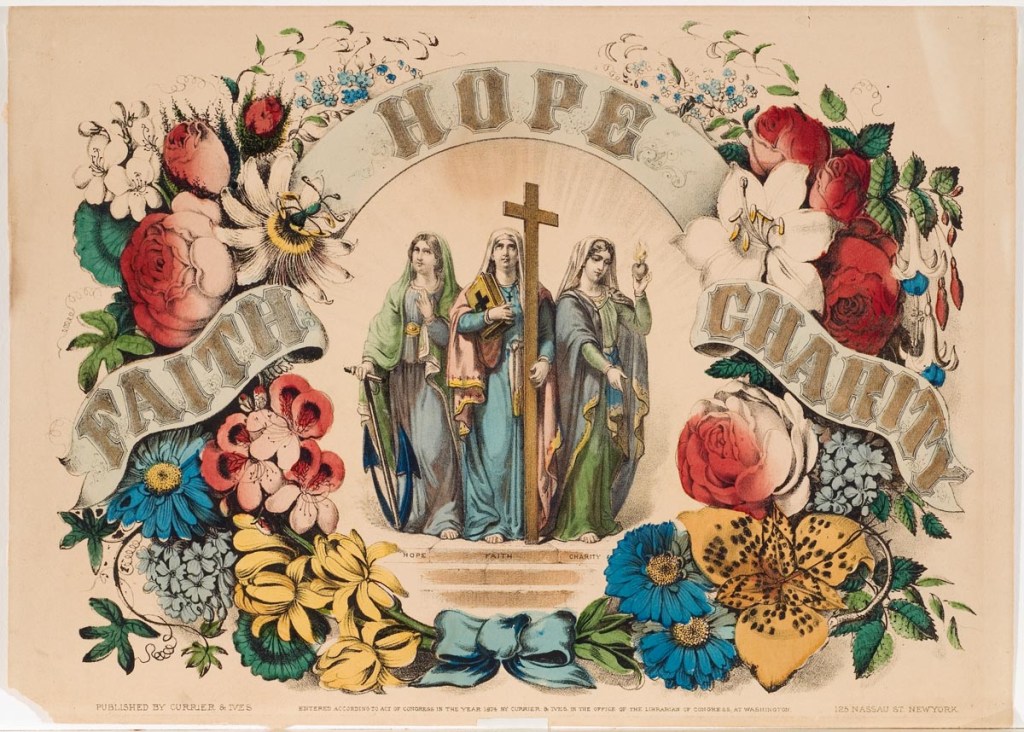
To bring everyone up to speed: the seven Heavenly Virtues consist of the four Cardinal Virtues and the three Theological Virtues. So far, we’ve covered the Cardinal Virtues: fortitude (spiritual courage), justice (seeking the common good), prudence (setting rules and measures), and temperance (moderation and balance). The Theological Virtues are perhaps more familiar: faith, hope, and charity or love. Today, we turn our attention to the first—faith.
Holy Scripture is full of discussions about faith; after all, that is what it all revolves around. There are many passages we can quote, and one of the more well-known is found in St. Paul’s second letter to the Corinthians—“We walk by faith, not by sight” (2 Corinthians 5:7). We enjoy quoting this, but I have to wonder—Do we truly walk by faith and not by sight? I would like to say yes, but I don’t think that is entirely accurate. Not because we don’t believe it to be true, but because we don’t fully understand what it means to have the faith that is proclaimed in the Bible. The issue began around the time of the Enlightenment (17th and 18th centuries), and it can be narrowed somewhat to that deep philosophical statement by the French (those darn French!) mathematician and philosopher René Descartes. He said, “I think, therefore I am.” Why is that a problem? That one little word “I.”
The word “I” shifts faith from the realm of God the Creator into the realm of us, the created. By doing so, faith becomes individualistic. It becomes what I can see, what I can do, and what I believe, which may sometimes align with other believers but often differ vastly. For example, consider the Apostles’ and Nicene Creeds.
“I believe in one God, the Father Almighty… and in one Lord Jesus Christ. I believe in the Holy Ghost the Lord, and Giver of life.” Now, before I go further, please don’t rush to the Bishop and tell him, “Father John says the Creeds are a problem!” I’m not saying that. But when we declare these statements, I know for a fact that we don’t all understand them the same way. More importantly, even though these statements speak of our faith, they do so intellectually; knowing something intellectually doesn’t have the power to transform lives. I can know that Jesus is Lord intellectually, but that knowledge won’t help much when the doctor calls up and says, “Stage four.” I firmly believe that knowledge is power, but when it comes to our faith, that knowledge must be incorporated into a life that is lived.
Another way we misunderstand faith is how we perceive it working in our lives. Say you get that call from the doctor. In your mind, you might think, “I’ll need to have greater faith to see me through this.” Or when things aren’t going well, someone who should be slapped silly might say, “You just need to have more faith.” In both cases, faith becomes something akin to adding more horsepower to an engine. “I’m gonna nitro-infuse the dual turbocharged manifold of my faith and supercharge it!” I know nothing about cars, but you get the idea. But what happens when the turbocharged faith fails? What happens when the doctor says, “We’ve done all we can do”? Didn’t you have enough faith? Was God angry with you? Or do we couch it in easier-to-swallow but vague spiritual language, “It’s God’s will”?
Our beliefs and our turbocharged faith, or lack thereof, are just two reasons why I don’t think we truly understand what Holy Scripture means by faith. There are more reasons, but enough about what faith isn’t. So, what exactly is faith? A specific incident in Matthew’s Gospel helps us grasp the answer.
“When Jesus got into the boat, his disciples followed him. And behold, there arose a great storm on the sea, so that the boat was being swamped by the waves; but he was asleep. And they went and woke him, saying, ‘Save us, Lord; we are perishing.’ And he said to them, ‘Why are you afraid, O you of little faith?’ Then he rose and rebuked the winds and the sea, and there was a great calm. And the men marveled, saying, What sort of man is this, that even winds and sea obey him?’” (Matthew 8:23-27)
This is a familiar story and a favorite for many. We understand that water symbolizes chaos and death, and that the storm represents the world around us with its challenges, concerns, hardships, and more. We are the disciples—concerned, confused, afraid, and dying. Jesus… well, Jesus is conked out in the bow of the boat. From our intellect, we shout out at the storm, “I believe in one God, Father Almighty…,” but the storm still rages. We say, “I will turbocharge my faith,” but the storm still rages. We bargain with God, saying, “Get me through this, and I’ll attend every service during Holy Week,” but the storm still rages. Do all you know to do, but the storm is still going to rage. Why? Because rage is what storms do. You try to influence that storm with your intellectual understanding or your turbocharged faith, but it doesn’t work. Yes, in this particular instance, Jesus calmed the storm, but consider this: years later, after Jesus ascended into Heaven, Peter faced another storm in Rome. Jesus didn’t calm that storm, and it ended with Peter being crucified upside down. Bartholomew was caught in a storm that ended with him being flayed alive. James faced a storm that led to his beheading. All those men in that boat—the exception might be John, who likely saw his fair share of storms—had storms that ended in their brutal and merciless deaths. Did they not have enough faith? Was their faith not turbocharged? No!
In that boat on the sea, when the storm was raging, and the disciples were terrified, Jesus was not only sleeping peacefully. He was also teaching. He was demonstrating to them—and to us—what true faith in the Father Almighty actually looks like. He was teaching that storms are going to do what storms do—rage—but you, no matter what appearance the storms in your life may take, can rest secure in the Father’s arms, knowing—not just believing—but knowing that the Father Almighty will see you through. It’s not about the storms that blow out there—you can’t change them; they will do what they do—instead, it’s about the storms that blow within your soul, and you can do something about them. True faith says, “Regardless of what I know in my mind, regardless of what I see with my eyes, and even regardless of the final outcome, there is God, and where God is… How did David put it?”
“If I ascend to heaven, you are there! If I make my bed in Sheol, you are there! If I take the wings of the morning and dwell in the uttermost parts of the sea, even there your hand shall lead me, and your right hand shall hold me. If I say, “Surely the darkness shall cover me, and the light about me be night,” even the darkness is not dark to you; the night is bright as the day, for darkness is as light with you (Psalm 139:8-12).
“I think, therefore I am.” “I will turbocharge my faith.” No. Faith is not about “I.” Faith is relational. “We walk by faith, not by sight.” Faith is a life walking with God and a life transformed by that relationship. If we walk by what we can see, the storm will terrify us; therefore, we walk by what we cannot see. That is faith.
Such faith is a grace, a gift from God. Do you need more of this faith? Then follow the example of the disciples. Ask Jesus for more—“Lord, increase our faith!” “Lord, all I can see is the storm. Help me to see you. Help me to know how to lie down in the bow of the boat next to you and rest in the Father’s arms. Help me to grow more deeply into a relationship with You.”
That is faith; however, there is more to this walk with God, for St. Paul also tells us, “Faith is the assurance of things hoped for, the conviction of things not seen” (Hebrews 11:1). Question: What is this hope he speaks of?
Let us pray: Lord God, grant us the faith to know Your will, the hope to accept it, and the love to do it, even when we don’t understand, trusting that Your way is best. We ask this through Christ Our Lord. Amen.
Cultural anthropology studies various cultures and identifies their differences. One way to categorize cultures is by whether they are driven by guilt, shame, or fear.
A guilt culture emphasizes law and judgment. Most people in such societies aim to have a clear conscience. Am I following the laws of the land and the moral standards accepted by most? A shame culture focuses on maintaining honor to avoid dishonor. Am I being viewed favorably by those around me? A fear culture involves living in the shadow of physical intimidation. Am I at risk of being physically harmed for my actions?
In the United States, we live under the first—guilt culture. Throughout history, we have developed the law of the land and built a moral code based on what we understand as Biblical teaching. The fear culture can be seen in countries like North Korea or Iran, where people fear retribution and do what is expected of them. In countries like Japan and China, culture is rooted in shame and honor—a fear of losing “face.”
In the Middle East today and during the time of Jesus, this shame and honor culture was, and still is, the main factor influencing people’s behavior. I admit, this is a new way for me to read and understand Holy Scripture, but the evidence of Jesus’ words and those of Paul and the others suggests that Jesus was much more focused on honor than on establishing strict moral laws.
Jesus said, “The Father judges no one but has given all judgment to the Son, so that all may honor the Son just as they honor the Father. Anyone who does not honor the Son does not honor the Father who sent him. Very truly, I tell you, anyone who hears my word and believes him who sent me has eternal life, and does not come under judgment, but has passed from death to life.” Jesus did not say, “Whoever does this and does not do that (law/judgment) will receive eternal life.” Jesus said, “Whoever believes my words and honors me and honors the Father will receive eternal life.” So the question is, how do we honor Jesus? Answer: We do what Jesus had been doing. What had Jesus been doing?
Leading up to these words, Jesus had healed a paralytic who had been crippled for thirty-eight years. Because he was a paralytic and sick, people assumed the man or his parents must have sinned greatly. Being sick brought him great shame. Jesus healed him and restored his honor. Similarly, Jesus healed a boy who was near death. There was also the Samaritan woman at the well. She had faced much shame—five divorces and now living with a man. Given the culture and the hostility between Jews and Samaritans, Jesus honored her simply by speaking to her. Still, through their conversation, he took her shame and restored her dignity, both to herself and to her community.
In the end, Jesus endured the shame of the cross (cf. Hebrews 12:2) to remove our shame and, in turn, granted us the greatest honor—He made us God’s children.
How do we honor Jesus? By working to restore the honor of others, fulfilling our Baptismal Vows—seeking to serve Christ in all persons, loving our neighbor as ourselves, striving for justice and peace among all people, and respecting the dignity of every human being. We honor Jesus and the Father by honoring those we encounter.
The reign of Queen Victoria, known as the Victorian Era of the British Empire, lasted from 1837 to 1901. A Tale of Two Cities by Charles Dickens primarily focuses on the French Revolution; however, Dickens, an Englishman, had Victorian London and its issues in mind while writing that great novel. He recognized that what was happening in Paris could very easily happen in London too, so the beginning of the book references both Paris and London and aptly captures the spirit of the Victorian Era. “It was the best of times, it was the worst of times, it was the age of wisdom, it was the age of foolishness, it was the epoch of belief, it was the epoch of incredulity, it was the season of light, it was the season of darkness, it was the spring of hope, it was the winter of despair.”
During that era, there was a focus on morality, proper conduct, and manners. Therefore, Victorian etiquette was sometimes quite charming—we could still use some of it today—while at other times, downright silly.
One rule that was once good and should still be followed, although with the rise of smartwatches, it would never be reinstated, was: “Pulling out your watch in company unasked, either at home or abroad, is a mark of ill breeding… If at home, it appears as if you were tired of your company, and wish them to be gone; if abroad, as if the hours dragged heavily, and you wished to be gone yourself. If you want to know the time, withdraw.” On the sillier side, we have, “A lady should not ever say ‘my husband,’ except among intimates; in every other case she should always address him by his name, calling him ‘Mr.’ It is equally proper, except on occasions of ceremony, and while she is quite young, to designate him by his Christian name. Never use the initial of a person’s name to designate him; as ‘Mr. P.,’ ‘Mr. L.,’ etc. Nothing is so odious as to hear a lady speak of her husband, or, indeed, anyone else, as ‘Mr. B.’”
All of these rules point to a society governed by various regulations that are followed by many—primarily the elite—and scorned by others as being foolish. However, rules and laws, written or otherwise, have always been a fundamental part of any society. Aristotle noted, “At his best, man is the noblest of all animals; separated from law and justice, he is the worst.”
Today, we continue our study of the seven Heavenly Virtues. As you’ll recall, they are made up of the four Cardinal Virtues and the three Theological Virtues. In particular, today, we’ll look at temperance and prudence. Together, these speak of reason and wisdom in creating, applying, and observing laws and rules.
Technically, “Prudence is the virtue that disposes practical reason to discern our true good in every circumstance and to choose the right means of achieving it. It is not to be confused with timidity or fear, nor with duplicity or dissimulation. It is called auriga virtutum (the charioteer of the virtues); it guides the other virtues by setting rule and measure. It immediately guides the judgment of conscience.” “Temperance is the moral virtue that moderates the attraction of pleasures and provides balance in the use of created goods. It ensures the will’s mastery over instincts and keeps desires within the limits of what is honorable. The temperate person directs the sensitive appetites toward what is good and maintains a healthy discretion.” Those are the technical definitions and are supported by Holy Scripture, yet when I think about them in a less technical way, I think of paint-by-numbers.
As a kid, I’m sure most of us did dome paint-by-numbers. You’d get a nice 8×12 image of a bluebird or a dog and a dozen or so small pods of paint, along with a single paintbrush. They were fun and fairly simple projects. Now, as an adult, I’ve rediscovered paint-by-numbers. I have no idea why, but I can spend hours searching for 17s and be perfectly content. I recently finished my first one, and an example of that project is on the bulletin cover.
These are not the paint-by-numbers you did as a kid. Although it looks fairly complicated, this particular project is classified as beginner. How involved have I become? I have purchased an easel, scores of brushes, clear gesso to prepare the canvas before painting, and sealer for when it’s finished. I have watched hours of YouTube videos and studied techniques. Long story short: although I haven’t reached obsession level, I do invest a significant amount of time. The bonus: it’s cheaper than collecting antique cars.
Technically, prudence “guides the other virtues by setting rule and measure.” In paint-by-numbers, prudence is best represented by the lines. Let’s say that #17 is red. When you are painting 17s without any other color around it, you’ll have an odd-shaped patch of red in the middle of a field of white canvas. That odd-shaped patch of red might seem meaningless at first. It is just there. However, when finished, you might realize it’s part of the lips of the main subject. In the short term, the adherence to the lines, the rule of prudence, may not make much sense, but in the long term, without following the rules, something is amiss. Prudence, the lines, guide everything else.
Temperance “ensures the will’s mastery over instincts and keeps desires within the limits of what is honorable.” In the world of paint-by-numbers, which can be even more challenging with a cat that enjoys swatting at your brush, temperance is twofold. First, it means staying within the lines that prudence provides. Remember the first coloring a young child proudly delivers as a masterpiece? The page has a printed image of a floppy-eared bunny. The child, in their innocence, has taken the brightest of all the crayons, gripped them in one hand, and created a fine rendition of a Jackson Pollock. In paint-by-numbers, you can do the same—throw paint everywhere—and, though this is no judgment of your artistic flair, you too can create a Pollock, but you will never end up with the image you intended.
The second part of temperance is using the right color. I have a new project in progress. This one has much more vibrant colors than the last. When I got home Wednesday night, I sat down and started working on #6. However, at some point, I got it in my pointy little head that I was working on #16, and away I went. Then, things started to make no sense. Trusting the process, I pressed on for a while longer, but then it just started to look wrong. #6 is a nice olive green. #16 is a rather bright orange. Had I desired it, I could have continued, but instead, I went back and painted over what I had done with the correct color, and the image began to emerge once again. St. Paul tells us, “‘All things are lawful,’ but not all things are helpful. ‘All things are lawful,’ but not all things build up” (1 Corinthians 10:23). Temperance: just because you can do something, doesn’t mean you should.
Together, temperance and prudence speak of wisdom and reason in creating, applying, and following laws and rules. Adhere to the rules and laws, and in the end, you’ll likely end up with a fairly nice picture. You can see for yourself how I did. The finished painting is hanging in the lounge.
These two virtues, temperance and prudence, along with the two we discussed a few weeks ago—fortitude (spiritual courage) and justice (seeking the common good)—supported by humility, are known as the Cardinal Virtues. St. Augustine helps us understand their purpose and how they function together. “As to virtue leading us to a happy life, I hold virtue to be nothing else than perfect love of God. For the fourfold division of virtue, I regard as taken from four forms of love… So we may express the definition thus: that temperance is love keeping itself entire and incorrupt for God; fortitude is love bearing everything readily for the sake of God; justice is love serving God only, and therefore ruling well all else, as subject to man; prudence is love making a right distinction between what helps it towards God and what might hinder it.” (Source)
To live such a life and to love in such a way isn’t always easy, but it does not lead to a life void of color or flavor. Instead, it represents the highest calling and the fulfillment of who we were created to be. St. Peter writes, “Keep your conduct among the Gentiles honorable, so that when they speak against you as evildoers, they may see your good deeds and glorify God on the day of visitation” (1 Peter 2:12). By practicing the Cardinal Virtues, we are well on our way to living such a life, but three more virtues are needed—the Theological Virtues of faith, hope, and love. As for these, I say… to be continued.
Let us pray (from St. Thomas Aquinas): Plant in me, O Lord, all virtues: that I may be devoted to divine things, provident in human affairs, and troublesome to no one in bodily cares. Grant me, O Lord, fervour in contrition, sincerity in confession, and completeness in satisfaction. Deign to direct my soul to a good life: that what I do may be pleasing to Thee, meritorious for myself, and edifying to my neighbour. Amen.
In today’s Gospel, Jesus spoke of two historical events: Jonah’s visit to Nineveh and the Queen of Sheba, who came to hear the wisdom of Solomon.
We are familiar with the story of Jonah and Nineveh before, but what of this Queen of Sheba?
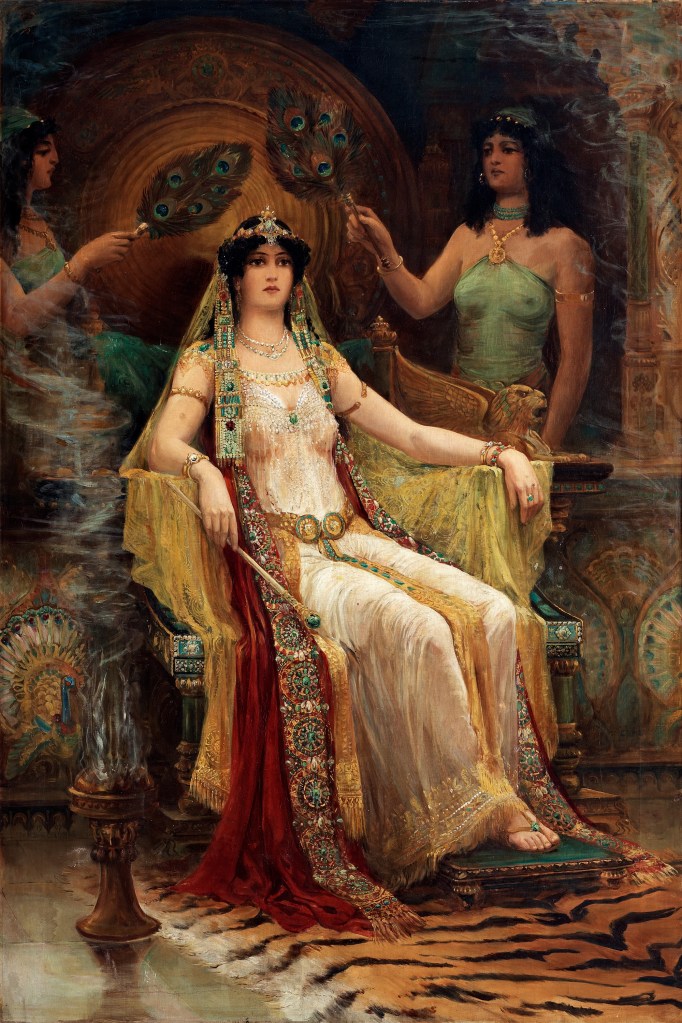
The Biblical account in 1 Kings 10 tells us that the Queen—she and her people are reported to have worshipped the sun—heard of Solomon’s great wisdom and came to see and hear for herself whether the rumors were true. She brought a great entourage and gifts. After spending time in Solomon’s courts, she is said to have said, “The report was true that I heard in my own land of your words and of your wisdom, but I did not believe the reports until I came and my own eyes had seen it. And behold, the half was not told me. Your wisdom and prosperity surpass the report that I heard. Happy are your men! Happy are your servants, who continually stand before you and hear your wisdom! Blessed be the Lord your God, who has delighted in you and set you on the throne of Israel! Because the Lord loved Israel forever, he has made you king, that you may execute justice and righteousness.” (1 Kings 10:6-9) Then Scripture says, “she turned and went back to her land with her servants.” From there, other texts pick up the story, including The Glory of Kings, which comes to us from the Ethiopian Orthodox Church.
The Glory of the Kings tells us that the Queen bore Solomon a son, Menelik, who traveled to Jerusalem at age twenty-two to meet his father. Solomon met him and was overjoyed. He tried to persuade Menelik to stay in Jerusalem, but the young man wanted to return home to modern-day Ethiopia. To honor him, Solomon sent many nobles with him and Israel’s greatest treasure, the Ark of the Covenant. (The Ethiopian Church, to this day, declares that the Ark is held in the Church of Maryam Tsion in Aksum, Ethiopia.) Menelik went on to become Menelik I, and the line of kings established through him ruled Ethiopia until 1974, known as the Solomonic Dynasty of Ethiopia because those “kings were seen as direct descendants of the House of David, rulers by divine right.” (Source)
Jesus said, “The queen of the South [The Queen of Sheba] will rise at the judgment with the people of this generation and condemn them because she came from the ends of the earth to listen to the wisdom of Solomon and see that something greater than Solomon is here!” Jesus said, “One who worshipped the sun came and heard the wisdom of God through Solomon and praised God for such wisdom. On hearing such wisdom, she returned home and took with her gifts of gold and spices, but she also took with her a far greater gift—the knowledge and the love of the One True God. She heard, and she believed.”
Jesus was condemning the nonbelievers of his time because they were not only hearing the word of God but were also being visited by one greater than Solomon—God Himself in the person of Jesus—and yet they did not believe.
Some, in the time of Jesus and even today, were so convinced they were right that they became unteachable, unwilling to have God speak a greater truth within them. Like the Queen of Sheba, be open to what God is saying to His people so that you may know Him in even greater ways.
From the 6th to the 12th century, when the Church was seeking consistency in teaching and other matters of faith, it developed the Penitentials. These were specifically designed for confession. They outlined all the various sins and prescribed the appropriate penance. A few examples: “He who steals from a church shall do penance for one year; if from a layman, forty days,” “He who destroys another by slander shall fast seven days,” and “If a monk is drunk, he shall fast for three days on bread and water”—depending on how drunk the monk was, that may be more of a blessing than penance.
From these and other teachings that emerged, such as those from the Puritans and the Holiness Movement, many came to believe that the Church’s primary function was to tell people, “Thou shalt not,” “Don’t do this or that,” or, more simply, “No!” while wagging the finger.
The question might be, “Why did the Church go down this path?” There are long, complicated answers, but perhaps the most charitable is that the Church sought to help people live virtuous lives, lives that were holy and righteous in the eyes of God. That is not a bad thing. In fact, it is a very good thing; however, along the way, as with many good things, it was hijacked, and the desire to help people was transformed into a desire to control and manipulate them. At that point, the idea of living a virtuous life became a matter of ridicule and scorn. Elizabeth Taylor said, “The problem with people who have no vices is that generally you can be pretty sure they’re going to have some pretty annoying virtues.” And, speaking of a political rival, Winston Churchill wrote, “He has all the virtues I dislike and none of the vices I admire.”
In his autobiography, The Seven Storey Mountain, Thomas Merton wrote, “The word virtue: what a fate it has had in the last three hundred years! The fact that it is nowhere near so despised and ridiculed in Latin countries is a testimony to the fact that it suffered mostly from the mangling it underwent at the hands of Calvinists and Puritans. In our own days, the word leaves on the lips of cynical high-school children a kind of flippant smear, and it is exploited in theaters for the possibilities it offers for lewd and cheesy sarcasm. Everybody makes fun of virtue, which now has, as its primary meaning, an affectation of prudery practiced by hypocrites and the impotent—that is, those who rely on a holier-than-thou approach instead of actually living the call of the virtues.”
I tell you all this because, during this Season of Lent, I don’t want to stand up here and say, “Thou shalt not” or “Don’t do that.” Instead, I would like to walk us through a study of the Seven Heavenly Virtues. Why? Because a virtuous life is really not boring or something to laugh at. Concerning such a life, Merton went on to say, “I was never a lover of Puritanism. Now, at last I came around to the sane conception of virtue-without which there can be no happiness, because virtues are precisely the powers by which we can come to acquire happiness: without them, there can be no joy, because they are the habits which coordinate and canalize—channel—our natural energies and direct them to the harmony and perfection and balance, the unity of our nature with itself and with God, which must, in the end, constitute our everlasting peace.” (The Seven Storey Mountain, p.203)
This Lent, let’s see if he is correct. Let’s see if we can discover happiness and everlasting peace in living a virtuous life.
To begin, where do the Seven Heavenly Virtues come from, and what are they? You might think they originated with the Church, but that is only partially true.
Writing in the first century, the Roman philosopher Cicero used the term “Cardinal Virtues” to identify the four virtues that Plato had already codified some five centuries earlier. The word “cardinal,” in this context, means hinge. According to the philosopher, the virtuous life hinges on or pivots around the observation of the four Cardinal Virtues.
The first of these virtues is prudence or wisdom, which is the combination of knowledge, discernment, and right action. Second is justice, seeking the harmony and peace of the whole society. Third is fortitude or courage, grounded in internal strength, and fourth is temperance or self-control.
Later, Christian writers such as Thomas Aquinas would define these virtues from a Christian perspective. Through this lens, prudence is the discernment of God’s will and the acting accordingly; justice is the application of “love your neighbor as you love yourself,” without asking who your neighbor is; fortitude is the courage to face trials and evil without wavering; and, finally, temperance is moderation or balance.
These four Cardinal Virtues provide us with the first of the seven Heavenly Virtues. The remaining three are the Theological Virtues, and, as the name implies, they come to us through Holy Scripture. I suspect many of you know the verse from St. Paul’s definition of love in his first letter to the Corinthians—“So now faith, hope, and love abide, these three; but the greatest of these is love” (1 Corinthians 13:13).
Faith, hope, and love—we’ll look at them more closely in the coming weeks, but for now, faith gives us the grace to see the path that leads to God, hope is the grace to desire God, and love is the grace that enables us to participate in a life with God.
By combining the Cardinal Virtues of prudence, justice, fortitude, and temperance with the Theological Virtues of faith, hope, and love, we arrive at the seven Heavenly Virtues. However, before we can practice any of these, one other element is required. It can be considered a virtue in itself, but it is the root of all the others—humility. Humility is the grace God gives us, enabling us to know who we are and who God is (without confusing the two), combined with the ability to have a relationship with others without the involvement of ego or destructive self-criticism. Humility is about peacefully knowing our place.
Marcus Aurelius, considered one of the Five Good Roman Emperors, ruled the Empire in the late second century. In his personal journal, he wrote to himself, “Waste no more time arguing what a good man should be. Be one.” Grounded in humility, my prayer is that over the course of this Season of Lent, we will learn more about and begin to put into practice these Heavenly Virtues so that we can do just that and attain the true happiness and everlasting peace that Merton speaks of.
Let us pray: God, our Father, You redeemed us and made us Your children in Christ. Through Him, You have saved us from death and given us Your Divine life of grace. By becoming more like Jesus on earth, may we come to share His glory in Heaven. Give us the peace of Your kingdom, which this world does not give. By Your loving care, protect the good You have given us. Open my eyes to the wonders of Your Love that we may serve You with a willing heart. Amen.