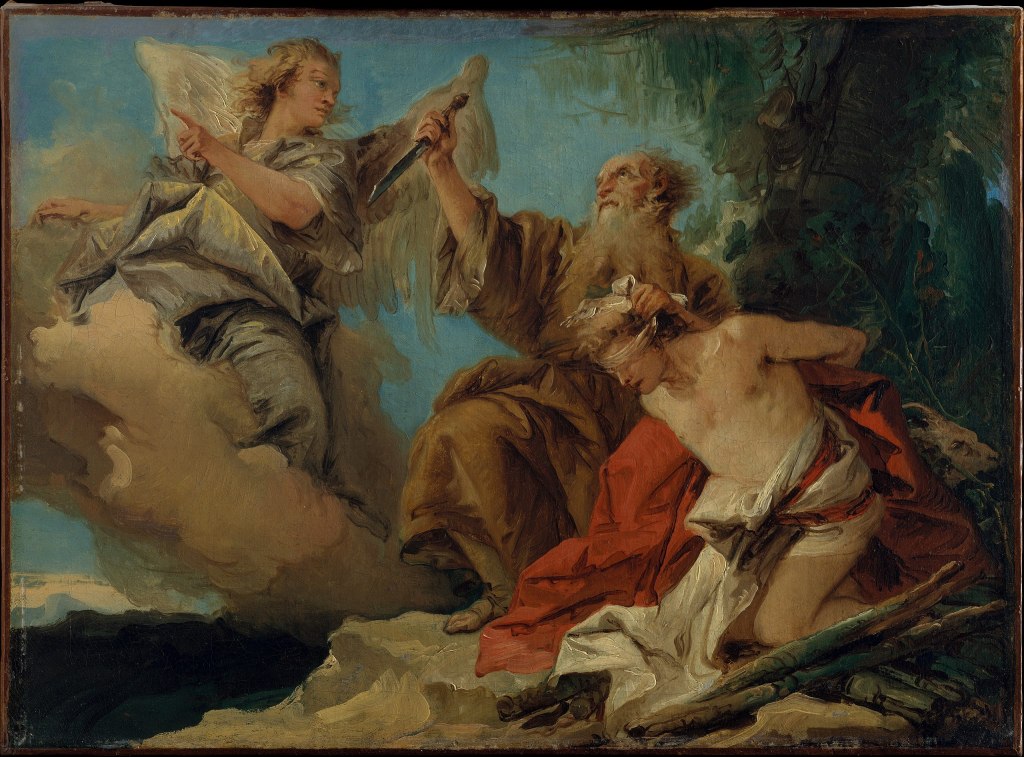
The Sacrifice of Isaac (mid-1750s) by Giovanni Domenico Tiepolo (1727 – 1804)
In her book, When God is Silent, author and Episcopal priest, Barbara Brown Taylor speaks to clergy about preaching. At one point she addresses how we should go about preaching on some of the more difficult passages, such as the one we read: the sacrifice of Isaac. Barbara says, that the Bible is full “of such raw and powerful stories. Maybe we should preach more of them and where they are obscure, troubling, or incomplete, perhaps we should leave them that way. Who are we, after all, to defend God?… The discord—like the silence—is God’s problem, not ours. When we try to solve it, we are no longer being courteous.” (p.115-116)
When it comes to her advice and that passage of scripture of Abraham and Isaac, very few have taken Barbara’s advice. They launch into long explanations of how this is only a myth and not an actual event or attempt to break down Abraham’s thought process or the psychology of Isaac or anything else so as to avoid or distract us from what the story tells us. I’m guilty of all of the above because when taken at face value, all that remains is God telling Abraham, “Take your son, your only son Isaac, whom you love, and go to the land of Moriah, and offer him there as a burnt offering on one of the mountains that I shall show you.” Abraham did not argue or weep or bargain. He was obedient. In the end, because of his obedience, Isaac was saved. In his letter to the Hebrews, Paul summarizes what took place and how it was viewed, “By faith Abraham, when he was tested, offered up Isaac, and he who had received the promises was in the act of offering up his only son.”
We can finagle, whitewash, and analyze the incident all we want to make it easier to swallow, but the Scripture itself is clear: God tested Abraham by asking him to deliver his son up as a burnt offering so that God could determine whether or not Abraham was faithful.
I do not believe that there is a parent in the room who would even consider it. In fact, I believe that every single one of us—parent or not—would fail that test. We would unapologetically tell God, likely in some rather colorful language, “No! What you ask is impossible.” If that were the end of it, we would all be lost, but Jesus refuses to lose us.
Jesus says, “What is impossible with man is possible with God.”
Jesus says, “Father, if you are willing, remove this cup from me. Nevertheless, not my will, but yours, be done.”
Jesus says, “Father, into your hands I commit my spirit!”
Jesus says, “It is finished.”
“This is the night, when Christ broke the bonds of death and hell, and rose victorious from the grave.”
In order to prove our faith, we will never be called upon to sacrifice anyone or anything, for this is the night that the sacrifice that was made once and for all restores us to God.
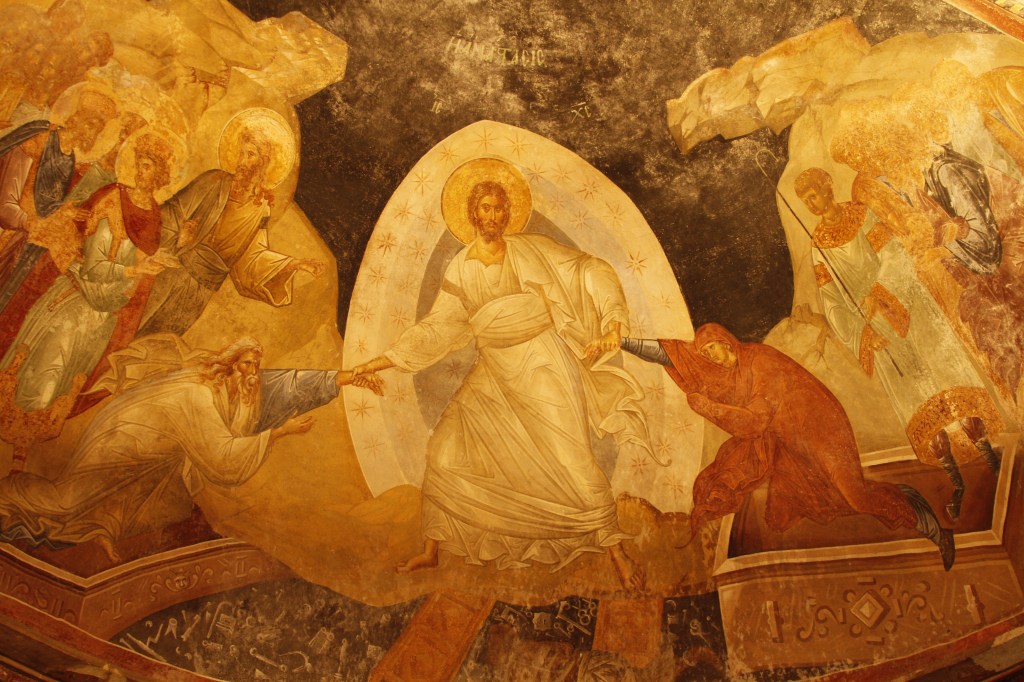
In some places, the author is listed as unknown, but in others, it is attributed to St. Epiphanius, Bishop of Cyprus (403 A.D.). Whatever the case, it is an ancient sermon and speaks of the Harrowing of Hell, when Jesus descended into the dead following his death and prior to his resurrection. It is of Jesus speaking to Adam, the first human.
Something strange is happening – there is a great silence on earth today, a great silence and stillness. The whole earth keeps silence because the King is asleep. The earth trembled and is still because God has fallen asleep in the flesh and He has raised up all who have slept ever since the world began. God has died in the flesh and Hell trembles with fear.
He has gone to search for our first parent, as for a lost sheep. Greatly desiring to visit those who live in darkness and in the shadow of death, He has gone to free from sorrow the captives Adam and Eve, He who is both God and the Son of Eve. The Lord approached them bearing the Cross, the weapon that had won Him the victory. At the sight of Him Adam, the first man He had created, struck his breast in terror and cried out to everyone, “My Lord be with you all.”
Christ answered him, “And with your spirit.” He took him by the hand and raised him up, saying, “Awake, O sleeper, and rise from the dead, and Christ will give you light.
“I am your God, who for your sake have become your son. Out of love for you and for your descendants I now by My own authority command all who are held in bondage to come forth, all who are in darkness to be enlightened, all who are sleeping to arise. I order you, O sleeper, to awake. I did not create you to be held a prisoner in Hell. Rise from the dead, for I am the Life of the dead. Rise up, work of My hands, you who were created in My image. Rise, let us leave this place, for you are in Me and I am in you; together we form only one person and we cannot be separated.
“For your sake I, your God, became your son; I, the Lord, took the form of a slave; I, whose home is above the heavens, descended to the earth and beneath the earth. For your sake, for the sake of man, I became like a man without help, free among the dead. For the sake of you, who left a garden, I was betrayed to the Jews in a garden, and I was crucified in a garden.
“See on my face the spittle I received in order to restore to you the life I once breathed into you. See there the marks of the blows I received in order to refashion your warped nature in My image. On My back see the marks of the scourging I endured to remove the burden of sin that weighs upon your back. See My hands, nailed firmly to a tree, for you who once wickedly stretched out your hand to a tree.
“I slept on the Cross and a sword pierced My side for you who slept in Paradise and brought forth Eve from your side. My side has healed the pain in yours. My sleep will rouse you from your sleep in Hell. The sword that pierced Me has sheathed the sword that was turned against you.
“Rise, let us leave this place. The enemy led you out of the earthly Paradise. I will not restore you to that Paradise, but I will enthrone you in Heaven. I forbade you the tree that was only a symbol of life, but see, I who am Life itself am now one with you. I appointed cherubim to guard you as slaves are guarded, but now I make them worship you as God. The throne formed by cherubim awaits you, its bearers swift and eager. The Bridal Chamber is adorned, the banquet is ready, the eternal dwelling places are prepared, the treasure houses of all good things lie open. The Kingdom of Heaven has been prepared for you from all eternity.”
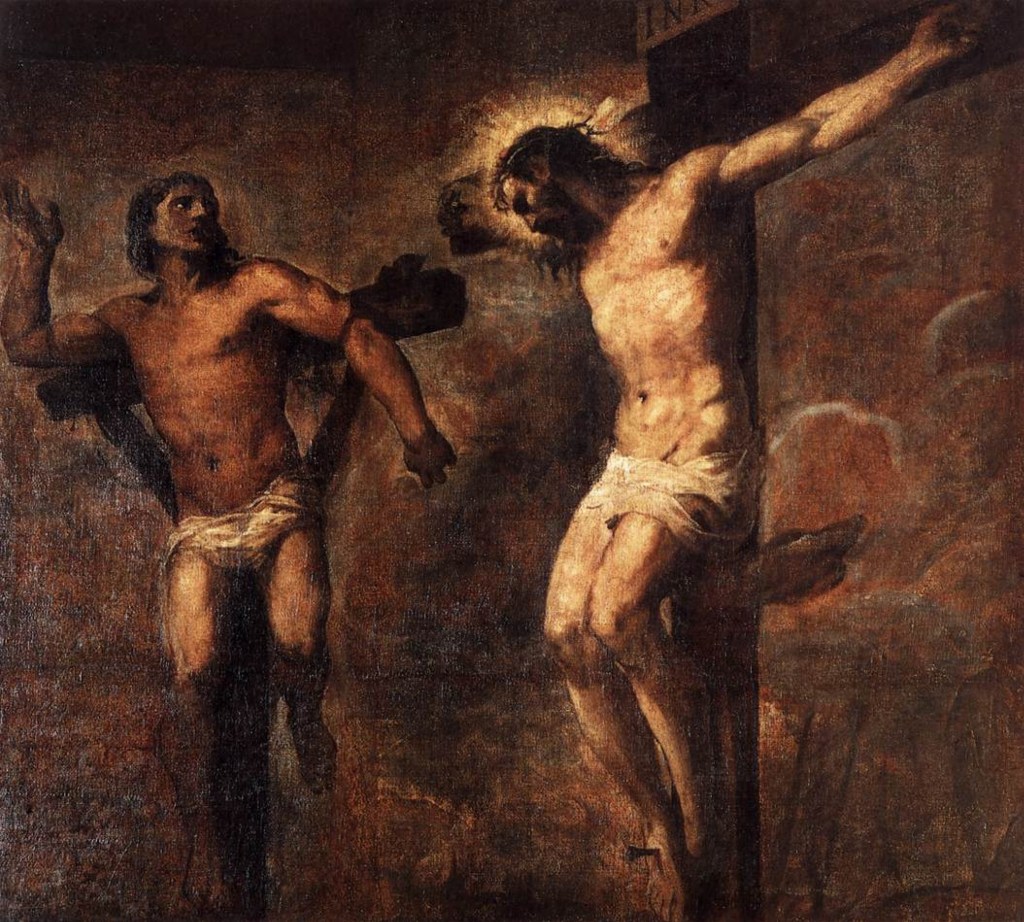
Christ and the Good Thief (c. 1566) by Tiziano Vecellio (Titian) (c. 1490-1576)
According to legend, his name is Dismas. He and his family lived in the barren land between Israel and Egypt and at a very young age he contracted leprosy. One day, a man and a woman with a baby boy were fleeing Israel and passed through that region. They were tired and hungry and in need of shelter and it was Dismas’ mother who took them in. She fed them and even provided water to bathe the baby. After the bath, Dismas also took a bath in the same water and by doing so, was cured of his leprosy.
Another legend, taking place in that same barren land between Egypt and Israel tells of how a mother and father with their young baby were fleeing Israel and encountered two thieves, Dismas and Gestas. At first, they both were determined to rob the family, but something turned in Dismas’ heart and he instead bribed Gestas not to rob them.
Either or possibly even both these events (or none of the above) had an effect on Dismas, but not enough of an effect for him to change his ways, so in the end, he and Gestas found themselves crucified on a hill outside of Jerusalem alongside a man whom many believed to be the Messiah, Jesus. Perhaps it was because of one of those earlier encounters with Jesus that caused Dismas’ heart to turn once more toward Jesus. Perhaps something in him, since he was a boy, had also been longing for a Messiah, whatever the case, at that moment, like so many others before him, Dismas understood that this Jesus was the only one who could save him, so he asked Jesus to remember him: “Jesus, remember me when You come into Your kingdom!”
At the time, to be remembered was the best most could hope for. They had not heard about the Kingdom of God. They did not understand the resurrection. The only way to experience eternal life was to be remembered by others following your death, but who was going to remember a thief. No one. A thief was no more worth remembering than yesterday’s garbage. Yet this thief with his death imminent, wanted just one person to remember him: “Jesus, remember me when You come into Your kingdom!” But Jesus is not in the business of simply remembering people. Jesus redeems, atones, and makes all things new. Jesus gives eternal life to those who call on him, even if the time is 11:59 p.m., so Jesus said to Dismas, “Truly, I say to you, today you will be with me in paradise.” Archbishop Fulton J. Sheen commented, Dismas “was a thief to the end and he even stole heaven!”
St. Paul tells us in his letter to the Hebrews, “Since then we have a great high priest who has passed through the heavens, Jesus, the Son of God, let us hold fast our confession. For we do not have a high priest who is unable to sympathize with our weaknesses, but one who in every respect has been tempted as we are, yet without sin. Let us then with confidence draw near to the throne of grace, that we may receive mercy and find grace to help in time of need.” (Hebrews 4:14-16)
Jesus’ throne on this earth was his cross, therefore, like Dismas, let us come boldly before that throne, but instead of asking Jesus to remember us, let us ask him to grant us entry into his paradise that we might have eternal life with him. Whether you are a saint or sinner, if you believe and call on him, he will not deny you entry.
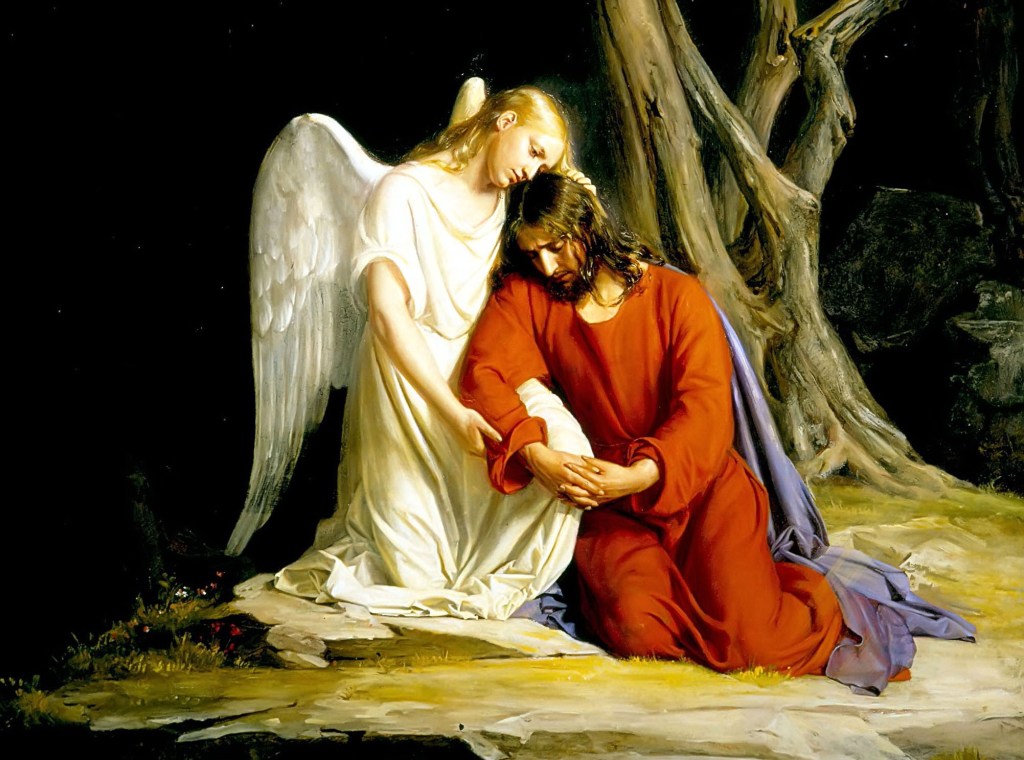
Kristus i Getsemane (1873) by Carl Heinrich Bloch (1834–1890)
Tonight is the night of the foot washing and the institution of the Holy Eucharist. It is also the night of the Garden of Gethsemane. When we think of this garden, it should remind us of another: “The Lord God planted a garden in Eden, in the east, and there he put the man whom he had formed. And out of the ground the Lord God made to spring up every tree that is pleasant to the sight and good for food. The tree of life was in the midst of the garden, and the tree of the knowledge of good and evil.” (Genesis 2:8-9) But we know how that all worked out: a snake, a lie, a piece of fruit, followed by exile. God “drove out the man, and at the east of the garden of Eden he placed the cherubim and a flaming sword that turned every way to guard the way to the tree of life.” (Genesis 3:24)
Tonight, following the foot washing and breaking of bread, Jesus taught and prayed for his disciples and for us, and then afterward, “When Jesus had spoken these words, he went out with his disciples across the brook Kidron, where there was a garden, which he and his disciples entered.” (John 18:1)
The Garden of Eden and the Garden of Gethsemane: I’m not suggesting that the two are one and the same, but we are connected to them both. Archbishop Fulton Sheen also demonstrated that link when we wrote, “As Adam lost the heritage of union with God in a garden, so now Our Blessed Lord ushered in its restoration in a garden. Eden and Gethsemane were the two gardens around which revolved the fate of humanity.” (Source)
In that first garden, we became burdened by the sin of Adam and Eve’s rebellion and in that second garden, Jesus took that burden upon himself. In that first garden, we were sent into exile, an angel with a flaming sword preventing our reentry into Paradise, but in that second garden, Jesus accepted the cup of God’s wrath on our behalf and by doing so, the angels rejoice at our return. (cf. Luke 15:10) In that first garden, there was no atonement for our sin yet in the second garden, there was, Jesus, and he submitted to the Father’s will.
In this world, there are many questions, choices, and options, but the most important question we are asked is which of these two gardens we will choose. Will we constantly fight against that angel’s flaming sword, seeking to enter a paradise of our creation by the fulfillment of our own will and desires, or will we, like Jesus, come to the other and kneel before the Father and seek his will and desires? My buddy, Stephen King simplifies the issue, he writes, “There’s really no question. It always comes down to just two choices. Get busy living, or get busy dying.” (Different Seasons, p.129)
Enter the Garden with Jesus and get busy living.
Let us pray: “Father… not my will, but yours, be done.” Amen.
Psychology Today defines cognitive dissonance as “the state of discomfort felt when two or more modes of thought contradict each other. The clashing cognitions may include ideas, beliefs, or the knowledge that one has behaved in a certain way.” (Source) So, you believe A to be true but then through study or enlightenment, you come to believe the exact opposite, Z, to be true. However, you’ve invested so much time and energy into A that regardless of how much you believe Z to be true, you won’t give in, so you now have this tension/guilt between the two or maybe a deep sense of confusion. That said it seems I tell you this story during Holy Week at least every other year. It involves Bishop Jack Nicholls, the Bishop of Sheffield, who once asked a sixth-grade girl where she thought Jesus was between Good Friday and Easter.
As a church, we understand the answer to be related to the Harrowing of Hell. The Harrowing of Hell is understood from two passages of scripture: 1) Ephesians 4:7-9 — “But each of us was given grace according to the measure of Christ’s gift. Therefore it is said, ‘When he ascended on high he made captivity itself a captive; he gave gifts to his people.’ (When it says, ‘He ascended,’ what does it mean but that he had also descended into the lower parts of the earth?” and 2) 1 Peter 4:6 — “For the gospel has for this purpose been preached even to those who are dead, that though they are judged in the flesh as people, they may live in the spirit according to the will of God.” Combined, we understand the Harrowing of Hell as Jesus descending into hell and proclaiming the Good News to those who had died before his first coming giving them the option to also accept him as Lord and Savior. Those who do are allowed to rise in glory. The iconography shows Jesus pulling people up out of the depths.
When Bishop Nicholls asked the child what Jesus was doing between his death and resurrection, the answer he was looking for was likely associated with this Harrowing of Hell, but instead of answering the question in general terms, the little girl answered it in very specific terms. After she had thought a little, she replied, “I think he was in deepest hell looking for his friend Judas.”
For me, this is where the cognitive dissonance kicks in. We are told, “Satan entered Judas, the one called Iscariot.” (Luke 22:3) In speaking to the Father about the twelve and referring to Judas, Jesus says, “I guarded them, and not one of them perished except the son of destruction.” (John 17:12) He was a thief, traitor, betrayer, and more. Yes, he did try and return the silver, but by then it was too late. So, could the little girl have been right? Would Jesus have gone looking for his “friend” Judas? Answer: No! Absolutely not! Let him burn. Answer: Yes! “God is love.” (1 John 4:8) God “desires all people to be saved and to come to the knowledge of the truth.” (1 Timothy 2:4) Jesus said, “What man among you, if he has a hundred sheep and has lost one of them, does not leave the other ninety-nine in the open pasture and go after the one that is lost, until he finds it?” (Luke 15:4)
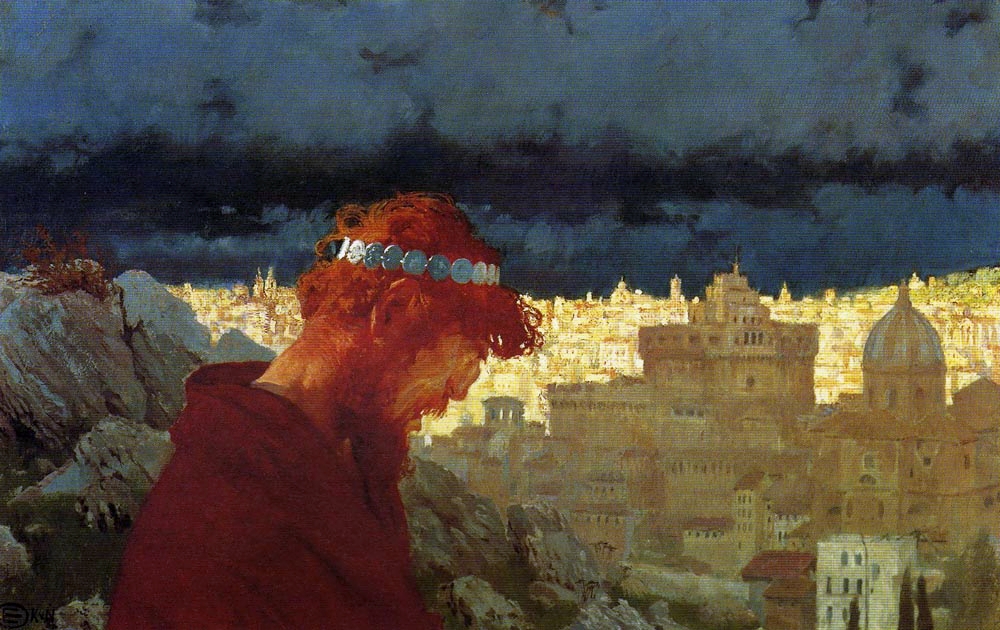
Dante placed Judas in the lowest level of hell and I think that is where he belongs, but… I also want Jesus to go looking for him and maybe even find him. Why? Because I want Jesus to come looking for and find me.
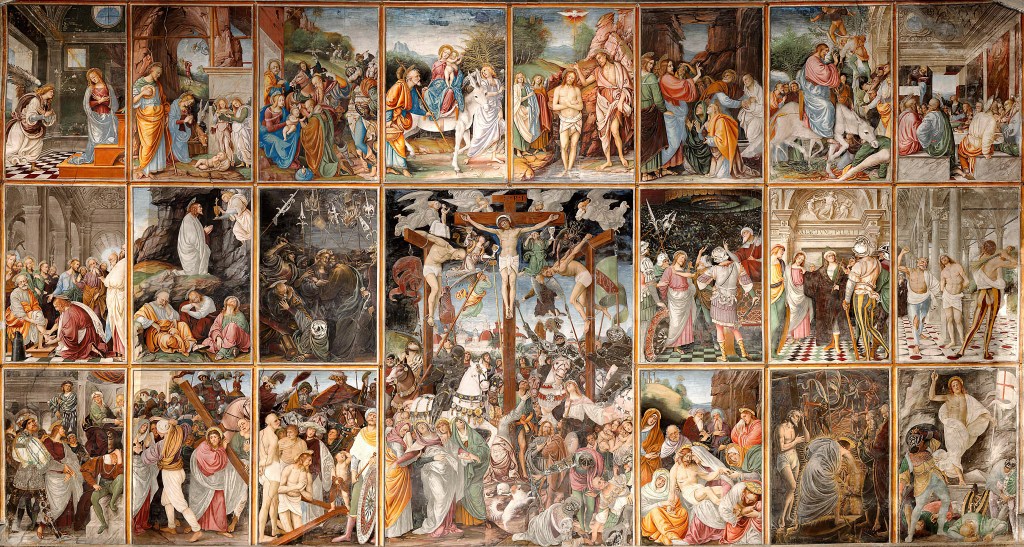
Gaudenzio Ferrari (1475–1546), Stories of The Life and Passion of Christ (1513), Church of Santa Maria delle Grazie, Varallo Sesia (VC), Italy.
The Gospels are not time-stamped so it is somewhat difficult to calculate the length of Jesus’ public ministry, but given the clues and festivals mentioned, it is estimated to have been three to three and a half years. With that understanding, we can say that the forty days Jesus spent in the wilderness and the temptation he experienced there took place about three years prior to the events we are reading today.
At the end of those forty days we are told, “When the devil had ended every temptation, he departed from him until an opportune time.” Following this, Scripture tells us, “Jesus returned in the power of the Spirit to Galilee, and a report about him went out through all the surrounding country. And he taught in their synagogues, being glorified by all.” The public ministry begins.
Throughout that ministry, we know that there were many encounters with religious leaders, demons that he exorcised, teachings, feedings, miracles, and more. For three years Jesus poured out his life for the sake of the mission, fighting every battle that came along, so when he arrived in the Garden of Gethsemane on the night before he was crucified—knowing full well what was about to happen—not only was he exhausted, he was also highly stressed. He sweated drops of blood. Hematidrosis. An exceptionally rare medical condition brought on by stress and anxiety that causes a person to sweat blood. Because of its rarity, the doctors aren’t entirely certain as to what brings it on, but it is postulated that it is related to the fight and/or flight response: “Father, if you are willing, remove this cup from me; yet, not my will but yours be done.” And then they came to arrest him, Jesus said, “Have you come out with swords and clubs as if I were a bandit? When I was with you day after day in the temple, you did not lay hands on me. But this is your hour, and the power of darkness!”
“But this is your hour, and the power of darkness!” The word ‘power’ (exousia) in that sentence can be translated in several different ways: power, right, liberty, strength, jurisdiction, authority.
Following the forty days, the devil left Jesus “until an opportune time”. That opportune time arrived on the night of Jesus’ arrest when he was experiencing the greatest anxiety. That hour and the hours to come were handed over to the power of darkness… to the jurisdiction / authority of darkness. This handing over to the darkness was not because Jesus had been defeated, instead, it occurred so that Jesus might be glorified. The darkness believed it had finally conquered God, but in being given authority for a short while, it was defeated.
What you and I experience of the darkness of this life is nothing more than the death throes of death itself.
“In the beginning was the Word, and the Word was with God, and the Word was God. He was in the beginning with God. All things were made through him, and without him was not any thing made that was made. In him was life, and the life was the light of men. The light shines in the darkness, and the darkness has not overcome it.”
As we walk with Jesus during this Holy Week, darkness may seem to have conquered, but do not be afraid, it is only the hour before sunrise.
My Granma had a pie-making business. I believe it started off with just a few pies each day, but at the peak of her pie-making career, she would make up to 40 pies each morning. She would make the crusts the night before, then get up around 2:00 a.m. to work on the fillings. When everything was done, she had these pie trays that looked like a stack of coins and she would load them up and carry them out to the car for delivery to the various restaurants.
One morning, when all was loaded and she was driving in for deliveries, she felt something brush up against the back of her leg. She knew that there were a number of feral cats in the neighborhood and thought it was probably one that had snuck in the car while she was loading the pies, so she just nudged it with her foot and it went under the seat. When she got to the first restaurant to drop off the pies, she went looking for the freeloading cat. It wasn’t a cat. It was a skunk.
We all know that, even on a good day, a skunk smells like a skunk, so the only reason I can figure that she didn’t smell the skunk in the car was that all those pies smelled so much better. The only reason that skunk didn’t spray my Granma when she pushed him up under the seat was that he knew better than to mess with Nellie Toles when she was delivering her pies.
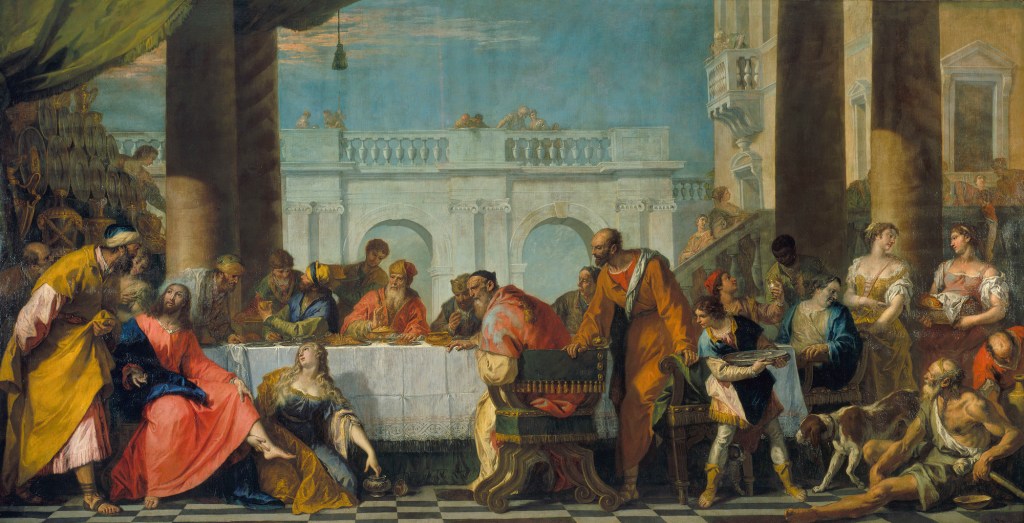
Some smells are very subtle, like identifying the different fruits and flowers in a glass of wine, but others, like a skunk, are overwhelming. They hit you like a wall. We read today in our Gospel, “Mary took a pound of costly perfume made of pure nard, anointed Jesus’ feet, and wiped them with her hair.” A more accurate translation identifies the nard as Spikenard. The perfume comes from boiling the roots of a plant that grows in the Himalayas that has a “woody, spicy, and musty” scent (Source) and a pound of Spikenard perfume would have been enough to fill a coke can.
In order to pour the perfume, either the wax seal keeping it from being spilled or the neck of the bottle, most likely made of alabaster, would have been broken, and when Mary poured out the entire content of the bottle it would have been like hitting that wall, overwhelming. When it was poured out it is all that you would have been able to smell. John tells us, “The house was filled with the fragrance of the perfume.”
There are many different messages in this one incident. We can talk about Judas’ response, we can talk about Mary and the extravagance of what she did (the perfume would have cost a year’s wages), or we could talk about Mary letting her hair down, something a woman during that time would have only done in the bedroom or…etc. There are many lessons here, but Fr. Raniero Cantalamessa in his book, Come, Creator Spirit, spoke of the significance of the alabaster jar and how it symbolizes Jesus. He writes: “The alabaster jar needs to be broken! When the woman broke the jar, says St. John, ‘the house was filled with the fragrance of the perfume.’ The broken jar was a symbol of Christ’s humanity: pure as he was, he was truly ‘a vessel of alabaster’ to be broken in his death on the cross so that the Holy Spirit within him could be poured out, to fill the whole Church and the whole world with the Spirit’s fragrance.”
In one way or another, the fragile alabaster jar had to be broken in order to release the fragrance, just as Jesus had to be broken on the cross to release the Spirit of God; and just as the fragrance of the Spikenard filled the house, the Spirit of God has filled God’s people and his Church.
It is St. Paul in his second letter to the Corinthians who writes: “Thanks be to God, who in Christ always leads us in triumphal procession, and through us spreads the fragrance of the knowledge of him everywhere. For we are the aroma of Christ to God among those who are being saved and among those who are perishing, to one a fragrance from death to death, to the other a fragrance from life to life. Who is sufficient for these things? For we are not, like so many, peddlers of God’s word, but as men of sincerity, as commissioned by God, in the sight of God we speak in Christ.” (2 Corinthians 2:14-17)
You may not notice it so much in the congregation, but on the days we have incense, when you’re in the front and those glorious clouds of smoke are wrapped around you, the scent permeates everything: your clothes, hair, your skin, you breathe it in, and it becomes a part of you. In the same way, the fragrance of Christ is to become a part of us, permeating our entire being, so that it can radiate from us, but for that to happen, like Jesus, we too must be broken open through the sacrifice of ourselves. In that breaking, the fragrance of Christ will be revealed and recognizable through our witness to the Gospel, our generosity, kindness, love, compassion, selflessness, and more.
Ask yourself: what is the fragrance of my life? Is it without scent because you’ve resisted the call of Christ, is it the smell of your own passions and desires and therefore the smell of decay, or is the fragrance of your life the fragrance of Christ as he reveals himself to others through you? Jesus said, “This is my body, which is broken for you” and in being broken, his life-giving fragrance poured out into the world.
As his disciples, allow yourselves to be broken, so that this fragrance may continue to fill the house of this world.
Let us pray: Dear Jesus, help us to spread Your fragrance everywhere we go. Flood our souls with Your spirit and life. Penetrate and possess our whole being so utterly that all our lives may only be a radiance of Yours. Shine through us and be so in us that every soul we come in contact with may feel Your presence in our souls. Loving Savior, let them look up and see no longer us but only You! Amen
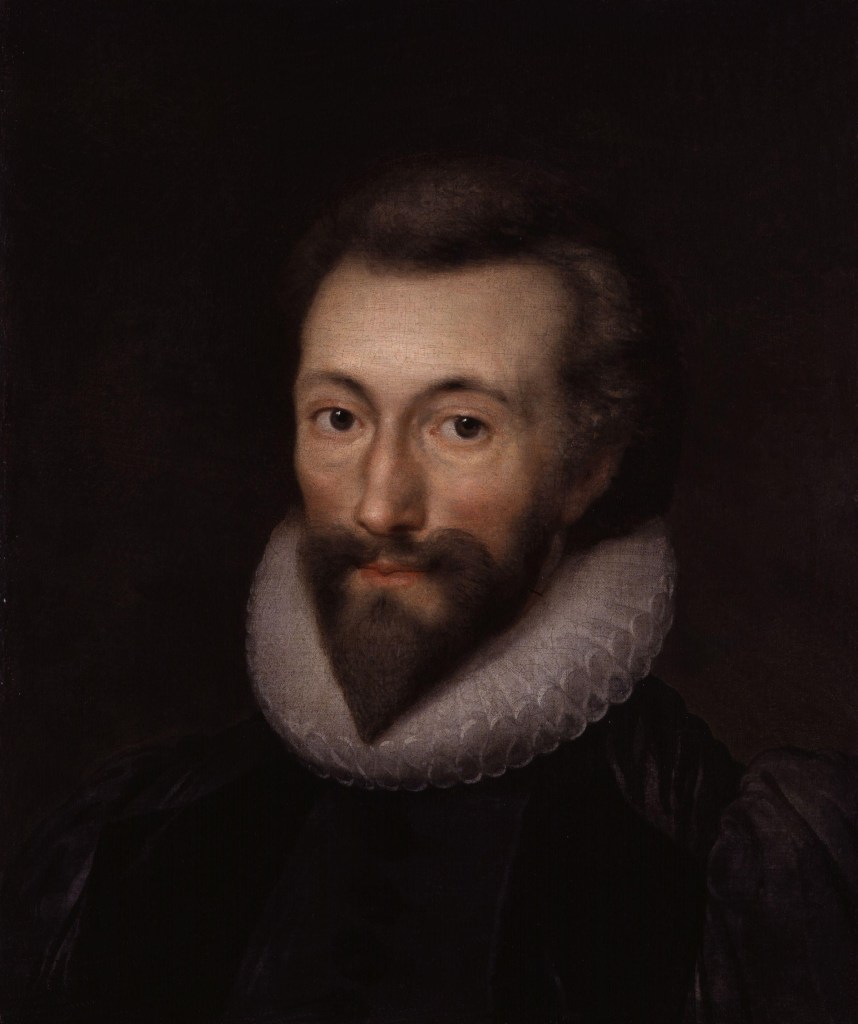
The Very Reverend John Donne whom we celebrate today died on March 31, 1631. His early career saw him as an aspiring government official and womanizer, but it would seem that somewhere along the way, he discovered God. Later, at the bidding of King James I, Donne would enter Holy Orders, being ordained a priest in 1615 and rising to Dean of St. Paul’s Cathedral in London. His first biographer, Isaac Walton, said that “he had been a Saul… in his irregular youth [and had] become a Paul, and preach[ed] salvation to his beloved brethren.” He was truly one of the great poets and preachers of his time. Of all his writings, it is Meditation #17 which is most familiar. It begins with him hearing the church bell toll, announcing the death of another:
“PERCHANCE he for whom this bell tolls may be so ill as that he knows not it tolls for him. And perchance I may think myself so much better than I am, as that they who are about me, and see my state, may have caused it to toll for me, and I know not that.”
Donne twists the story, and in an almost humorous way proposes that the bell that is ringing, and unbeknownst to him, just might be for him, suggesting that a dead person does not know that they are, in fact, dead. He continues:
“No man is an island, entire of itself; every man is a piece of the continent, a part of the main; if a clod be washed away by the sea, Europe is the less, as well as if a promontory were, as well as if a manor of thy friend’s or of thine own were; any man’s death diminishes me, because I am involved in mankind, and therefore never send to know for whom the bell tolls; it tolls for thee.”
When any of us die, we are all diminished, because even though we are many we are one body. So the tolling bell really is for us all. We’ve all died a little in the death of another. He continues:
“All mankind is of one author, and is one volume; when one man dies, one chapter is not torn out of the book, but translated into a better language; and every chapter must be so translated; God employs several translators; some pieces are translated by age, some by sickness, some by war, some by justice; but God’s hand is in every translation, and his hand shall bind up all our scattered leaves again, for that library where every book shall lie open to one another.”
Using the analogy of a book, we each make a chapter, and the absence of anyone’s chapter makes for an incomplete book. And it is God who is the author of it all. When we die, we are not lost, just written anew. He concludes by telling us that when we hear the bell toll, we should be reminded of our own death and in being reminded, turn toward God, that He might see us through it all and into his heavenly kingdom.
Whether intentional or not, the meditation is in a sense autobiographical. Through his life and the troubles he experienced and witnessed, Donne understood the greater calling, the service of God, and how we are all called to take heed to our own lives in relation to our God.
In about 512 B.C., as Darius I of Persia led his armies north of the Black Sea, the Scythians sent him a message comprised of a mouse, a frog, a bird, and five arrows. Darius summoned his captains. “Our victory is assured,” he announced. “These arrows signify that the Scythians will lay down their arms; the mouse means the land of the Scythians will be surrendered to us; the frog means that their rivers and lakes will also be ours; and the Scythian army will fly like a bird from our forces.” But an adviser to Darius provided a different interpretation: “The Scythians mean by these things that unless you turn into mice and burrow for safety in the ground or into frogs and hide in the waters or into birds and fly away, you will all be slain by the Scythian archers.” Darius took counsel and made a hasty retreat!
According to the International Bible Society, “As of 2020, the full Bible has been translated into 704 languages. The New Testament has been translated into 1,551 languages and parts of the Bible have been translated into 1,160 additional languages.” (Source) Within the English language alone, there are over 100 complete translations: ESV, NIV, KJV, NKJV, RSV, NLT, and an E I E I O. Deciding on which translation is right for you can prove to be challenging, but what we must understand about them all is that while each is seeking to convey the truth, they are all interpretations of the original. The original Old Testament was written in Hebrew and the original New Testament was written in Greek. The correct translation of these ancient languages is difficult enough, but what makes them even more so is that neither of these original languages uses punctuation when writing (no commas, periods, question marks, etc), and the Hebrew texts did not even use vowels. Bottom line: to read the original Bible texts, you are going to have to be an amazing linguistic scholar and even then, you will not likely be able to translate the text perfectly. So we pray that the Holy Spirit has guided each person who has undertaken such a task so that what is given to us is as God intended. All that to ask you one question about our Old Testament lesson: should it be a colon or a period? I’ve highlighted for you the sentence in question.
“I will be with you; and this shall be the sign for you that it is I who sent you [colon] when you have brought the people out of Egypt, you shall worship God on this mountain.”
The colon right there in about the middle is what caught my interest. Is it correctly punctuated or should it be a period?
As we read, Moses saw the burning bush and went up on the mountain to behold this marvelous sight. There, the Lord told him that he has heard the cry of his people Israel and that he is sending Moses to call them out of captivity. The Lord said to Moses, “So come, I will send you to Pharaoh to bring my people, the Israelites, out of Egypt.” But Moses said to God, “Who am I that I should go to Pharaoh, and bring the Israelites out of Egypt?” And then our sentence: “I will be with you; and this shall be the sign for you that it is I who sent you: when you have brought the people out of Egypt, you shall worship God on this mountain.”
“… this shall be the sign…” If in the sentence it is a colon, then the sign to be given is Moses bringing the people out of Egypt and worshipping on the mountain, but… if that colon is supposed to be a period, then the sign is, “I will be with you.” And everyone says, “Fr. John, you’re splitting hairs this morning,” but not really, because you see, if it is a colon, it is about what Moses will do, but if it is a period, it is all about what God will do.
We know that Moses had been a prince of Egypt, but now he is a shepherd. Not only that, he is a murderer, a runaway, and as he will soon confess that he don’t talk so good. Is that the kind of person that can free an entire nation? Not likely. We also know that in the next chapter, God will have Moses cast down his staff and it will turn into a snake. When God tells him to pick up the snake by the tail, it reverts to a staff. Then God tells Moses to place his hand inside his cloak and when he pulls it out it is covered in leprosy. When he repeats the process his hand is healed. Question: what part did Moses play in either of those two events? Other than doing what he was told: nothing. It wasn’t about what Moses could do, it was about what God could do through him: a weak sinful man.
I’m not a biblical language scholar. I got through Greek and Hebrew, but we all get lucky on occasion. That said, I believe that the verse should actually be two sentences… no colon because all that Moses said and did was to reflect what God was doing through him. God being with him was the sign. What happens later only confirms this.
It was when all the Israelites were at Meribah. They were complaining to Moses that there was no water, so the Lord said to Moses, “Take the staff, and you and your brother Aaron gather the assembly together. Speak to that rock before their eyes and it will pour out its water.” However, instead of speaking to the rock, “Moses raised his arm and struck the rock twice with his staff.” By speaking to the rock, it would have been a clear sign that God was working through Moses, but by striking the rock with his staff, Moses made it appear that it was he who had accomplished the miracle. For this, the Lord counted it against him and Moses was not allowed to enter the promised land.
The Lord told Moses to get down to Egypt land and tell old Pharoah, “Let my people go.” Moses responded, “But who am I. I’m a shepherd, a murderer, and my tongue gets tied.” God said to Moses, “Yes you are and yes it does, but I will be with you, and me being with, doing such marvelous works through you, will be a sign to everyone that I AM is with you. That the God of Abraham, Isaac, and Jacob, the God of your forefathers, is with you.”
We see Moses as this giant of a man. A man who talks to God. A savior of Israel, the one who parts the waters, but all that Moses ever did was only accomplished because of his willingness as a weak and sinful man to allow God to work through him.
Question: what does that tell you about yourself? In his weakness, the Apostle Paul cried out to the Lord and the Lord responded, “‘My grace is sufficient for you, for my power is made perfect in weakness.’ Therefore [Paul says] I will boast all the more gladly of my weaknesses, so that the power of Christ may rest upon me. For the sake of Christ, then, I am content with weaknesses, insults, hardships, persecutions, and calamities. For when I am weak, then I am strong.”
My friend, St. Josemaría Escrivá says, “You realize you are weak. And so indeed you are. In spite of that — rather, Just because of that — God has chosen you. He always uses inadequate instruments, so that the ‘work’ will be seen to be his.” (The Way #475)
Gather up all your weaknesses and place them at God’s disposal then witness—not how weak you are—but how mighty He is.
Let us pray: (in honor of St. Patrick, part of an old Irish prayer that you can make your own) As I arise today, may the strength of God pilot me, the power of God uphold me, the wisdom of God guide me. May the eye of God look before me, the ear of God hear me, the word of God speak for me. May the hand of God protect me, the way of God lie before me, the shield of God defend me, and the host of God save me. Amen.


 Candle in a Cave