
Sitting by the window of her convent, Sister Barbara opened a letter from home.
It was from her parents and enclosed was a crisp $100 bill.
Sister Barbara smiled at the gesture.
As she read the letter by the window, she noticed a shabbily dressed stranger leaning against the lamppost below.
Quickly, she wrote a note. “Don’t despair,” and signed it, “Sister Barbara.” Then, wrapping the $100 bill in the note, she got the man’s attention and tossed it out the window to him.
The stranger picked it up and went off down the street with a puzzled expression and a tip of his hat.
The next day, Sister Barbara was told that a man was at her door, insisting on seeing her. She went down and found the stranger waiting. Without a word, he handed her a huge wad of $100 bills.
“What’s this?” she asked.
“That’s the $8,000 you have coming, Sister,” he replied. “Don’t Despair paid 80-to-1.” Turns out the man was a bookie.
Early in the Church’s history, theologians attempted to classify those sins that affect our souls. When complete, there were nine categories that came to be known as logismoi (lo-gee-smee) or “evil thoughts.” One of the Desert Fathers writes, “When negative logismoi (singular “logismos“) manage to enter your spiritual bloodstream, they can affect you in the same way that a needle, full of poison, penetrates you and spreads the deadly substance throughout your body.”
Over the centuries, these logismoi were further refined, and instead of nine, they were eight. Pope Gregory the Great again refined these eight and reduced them to seven. These seven are known as the Seven Deadly Sins: lust, gluttony, greed, sloth, wrath, envy, and pride.
In our Confirmation Class, we’ve studied the Examination of Conscience from the St. Augustine Prayer Book and learned that these seven sins are broken down even further. For example, under the sin of pride is the sin of distrust, and under distrust is cowardice. Performing an examination of conscience is an excellent means for discovering areas of our souls that need attention.
Today, however, I would like to return to when there were eight categories instead of seven. In particular, I would like us to look at tristitia (tris-ti-tia), defined as sadness, despondency, or despair, which means being without hope.
In Victor Hugo’s Les Misérables, Fantine is the most tragic of all the characters. At her lowest point, she declares,
“But there are dreams that cannot be
And there are storms we cannot weather
I had a dream my life would be
So much different from this hell I’m living
So different now from what it seemed
Now life has killed
The dream I dreamed.”
That is despair in perhaps its purest form. All is lost, and I am done. I suspect that we have all felt that way at some point in our lives. It is an overwhelming feeling, and it is sinful because it negates the promises of Christ and His sacrifice on the Cross. It declares, “I am beyond even the saving hand of God,” (which also falls under the category of spiritual pride.) It says, “I have no hope.”
In the time of Jesus, the temple complex consisted of the outer courtyard where anyone, Jew/Gentile, could gather. Entering through the next gate was for Jews only. This was the Women’s Courtyard. Both Jewish men and women could be here. The next gate would lead you to the Temple area, men/priests only.
Our Gospel reading today takes place in the Women’s Courtyard, where the treasury, consisting of thirteen trumpet-shaped basons, was located.
Jesus is teaching. He sees those who are supposed to be the teachers of the Law running about, and He criticizes them for their actions; then, He watches as an elderly Jewish widow approaches one of the basons and drops in two small copper coins, which are worth only a penny. He says, “Truly I tell you, this poor widow has put in more than all those who are contributing to the treasury. For all of them have contributed out of their abundance; but she out of her poverty has put in everything she had, all she had to live on.”
Through her actions, do you see hope or despair?
Consider the widow in our lesson from the Old Testament. Elijah asks her to bring him something to drink and a little something to eat. She says to him, “As the Lord your God lives, I have nothing baked, only a handful of meal in a jar, and a little oil in a jug; I am now gathering a couple of sticks, so that I may go home and prepare it for myself and my son, that we may eat it, and die.” That sounds like despair, but Elijah instructs her to go ahead and do as he asked, saying to her, “The jar of meal will not be emptied and the jug of oil will not fail until the day that the Lord sends rain on the earth.” Despair would have waved him off as a crazy old man, but instead, the woman found a measure of hope, and through her hope, she lived.
“And at the ninth hour Jesus—hanging upon the Cross—cried with a loud voice, ‘Eloi, Eloi, lema sabachthani?’ which means, ‘My God, my God, why have you forsaken me?’” If there was ever a cry of despair, that was it, but Jesus, being tormented as He was by the sins of the world descending upon Him, did not ever give up hope, for just moments before He died, He cried out, “Father, into your hands I commit my spirit!”
Through hope, the widow in the Temple gave God all she had. Through hope, the woman trusted Elijah’s word and gave him all she had to eat. Through hope, Jesus took upon Himself the sins of the world and believed His Father would bring Him through death itself.
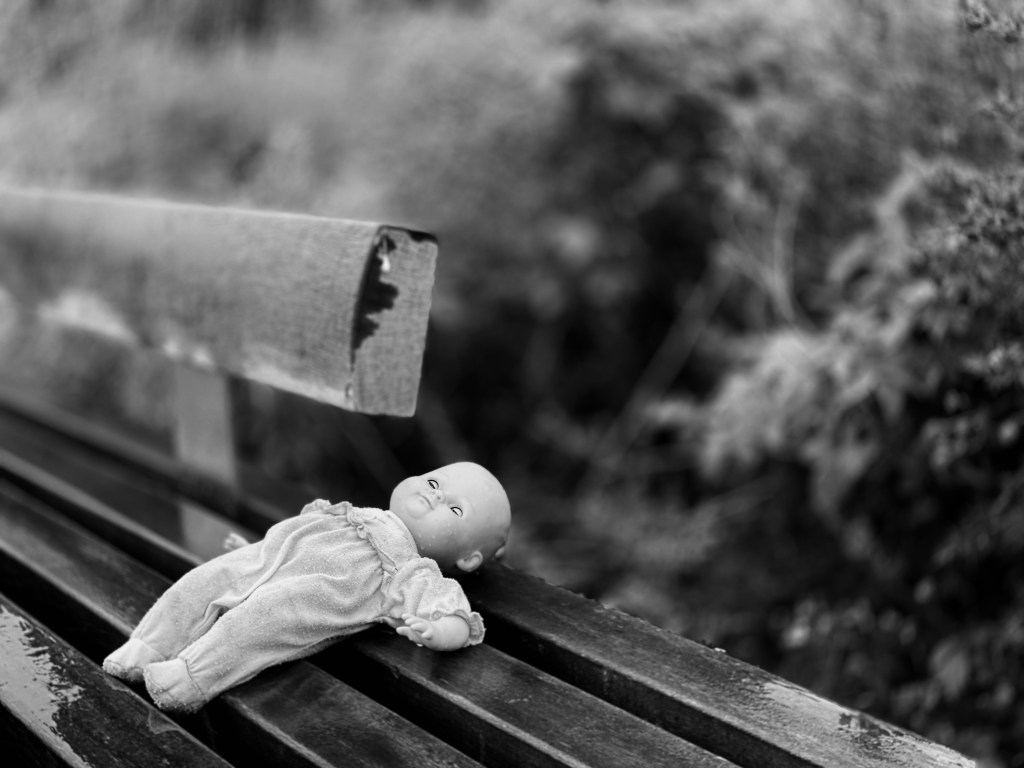
At 40, the author Franz Kafka, who never married and had no children, was walking through the park in Berlin when he met a girl who was crying because she had lost her favorite doll. She and Kafka searched for the doll unsuccessfully.
Kafka told her to meet him the next day, and they would look again.
The next day, when they had not yet found the doll, Kafka gave the girl a letter written by the doll. The doll said, “Please don’t cry. I took a trip to see the world. I will write to you about my adventures.”
Thus began a story that lasted about a year until the end of Kafka’s life. During their meetings, Kafka read the letters of the doll, which he had carefully written about the doll’s adventures and conversations. The girl found them adorable.
Finally, Kafka brought a doll (he bought one) and, giving it to the girl, told her that her doll had returned from her trip.
“It doesn’t look like my doll at all,” she said.
Kafka handed her another letter in which the doll explained, “My travels have changed me.” The little girl hugged the new doll and gave her a happy home.
Many years later, the now-adult girl found a letter inside the doll. In the tiny letter signed by Kafka, it was written: “Everything you love will probably be lost, but in the end, love will return in another way.”
There are many events that are inevitable for us all unless we live in a box, closed off from the world, that can draw us down a path toward despair. However, there is always hope. This is not a “silver lining” or wishful thinking. This kind of hope comes from knowledge. You see, this hope comes from knowing that you are loved. Hope speaks to your soul and says, “Regardless of the loss, the pain, the tears, the distress you are experiencing, you are loved by the One who is Love itself.”
In the first book of the epic tale, The Lord of the Rings, the individuals gathered around the table are beginning to despair for their future. It is then that the great wizard Gandalf tells them, “Despair is only for those who see the end beyond all doubt. We do not.” There is no sin in feeling great loss. We all will, but we—God’s Beloved—are not seeing the end of hope. We will come away changed, but we are not seeing the end of love.
American author George Iles wrote, “Hope is faith holding out its hand in the dark.” I would add to that. “Hope is faith holding out its hand in the dark and knowing that Love will take your hand in His.” In those times of pain, close your eyes, reach out your hand, and know that you are loved.
Let us pray: Praised be the God and Father of our Lord Jesus Christ, He who in His great mercy gave us new birth, a birth unto hope which draws its life from the resurrection of Jesus Christ from the dead; a birth to an imperishable inheritance, incapable of fading or defilement, which is kept in heaven for you who are guarded with God’s power through faith; a birth to a salvation which stands ready to be revealed in the last days. Amen.

 Candle in a Cave