Sermon: Bernard Mizeki


This isn’t necessarily a sermon; it may be better categorized under the heading, “Things to Ponder.”

Our saint for today, Bernard Mizeki, was from Africa. In my readings about his life, I was reminded of the writings of another African clergy person, Bishop Desmond Tutu.

Bishop Tutu wrote a rather inflammatory book as far as some Christians are concerned—God is Not a Christian: Speaking Truth in Times of Crisis—a collection of sermons and lectures.

From a lecture in 1992, Bishop Tutu says, “Is God dishonoured that Mahatma Gandhi was a Hindu? Shouldn’t we be glad that there was a great soul who inspired others with his readings of satyagraha, who inspired the Christian Martin Luther King Jr in his civil rights campaign? Do we really have to be so ridiculous as to assert that what Mahatma Gandhi did was good, but it would have been better had he been a Christian? What evidence do we have that Christians are better? Isn’t the evidence often overwhelming in the opposite direction?

“Don’t we have to be reminded too that the faith to which we belong is far more often a matter of the accidents of history and geography than personal choice? If we had been born in Egypt before the Christian era, we would have been perhaps worshippers of Isis, and had we been born in India rather than in South Africa, the chances are very, very considerable that we would have ended up being Hindu rather than Christian.” (p.15)

I believe in an omnipotent God, and I believe His word. The Psalmist declares,

“Your eyes [Lord] saw my unformed body;
    all the days ordained for me were written in your book
    before one of them came to be.”

(Psalm 139:16)

I believe the Lord knew us and our lives even before He began the act of creating; therefore, I believe He knew that I was going to be born in Louisiana and into a Christian upbringing. He knew that I would try to follow Him, and that, if it is His will, I will attain salvation through His Son, Jesus. I believe these things. However, with that said, does it also mean that I believe Gandhi was a really great guy and teacher, but because he was Hindu instead of Christian, he cannot attain salvation? That he is damned for eternity? There are plenty who will say, “Yes. He’s going to hell.” As for me, the answer is above my pay grade, but I do know that on the day of judgment, I do not want to be next in line behind Gandhi.

Jesus gave us the Great Commission: “All authority in heaven and on earth has been given to me. Therefore go and make disciples of all nations, baptizing them in the name of the Father and of the Son and of the Holy Spirit, and teaching them to obey everything I have commanded you. And surely I am with you always, to the very end of the age.” (Matthew 28:18-20) If we have one “job” on this planet, it is that; however, what happens to those we don’t reach with that message? What about those who lack the benefit of a Christian upbringing or any access to the Gospel of Jesus Christ? Is it their fault or ours, or did God simply choose who would be saved and who would not? I don’t have answers to these questions, but they are worth pondering, even if they may make us uncomfortable.

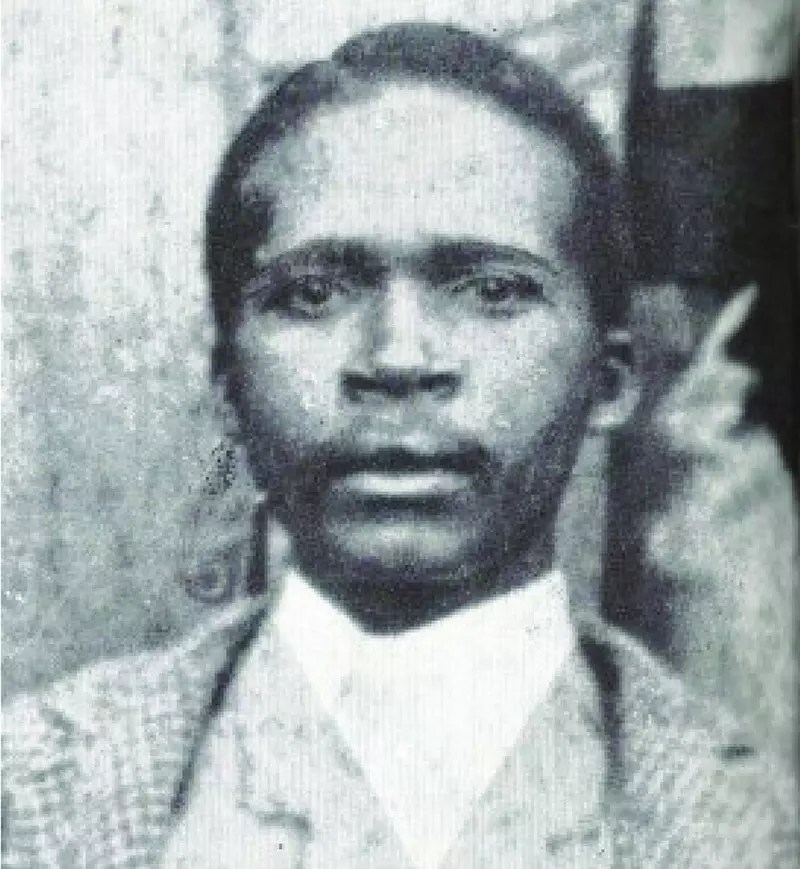
Bernard Mizeki was born in 1861 in what is now Mozambique. He later traveled to Cape Town, South Africa, where he came into contact with Anglican missionaries. He converted to the Christian faith and became a catechist in the church. He then obeyed the Great Commission and went out proclaiming. Many came to believe through his work, but in the end, some of those he was seeking to bring the message of God’s love to killed him, for they failed to understand the Good News.

Perhaps, when we ponder certain questions, we should not be overly concerned with “Who is in and who is out?” Perhaps our concern should be for souls. Who can we, like Bernard, proclaim the Good News of Jesus Christ to? From there, the work is and always has been God’s.  

Sermon: Christmas 1 RCL C – “Being Light”


A young girl once consulted with her priest. “I cannot stick it out any longer. I am the only Christian in the factory where I work. I get nothing but taunts and sneers. It is more than I can stand. I am going to resign.”

“Will you tell me,” asked the priest, “where lights are placed?”

“What has that to do with it?” the young Christian asked him rather bluntly.

“Never mind,” the priest replied. “Answer my question: Where are lights placed?”

“I suppose in dark places,” she replied.

Speaking of Jesus, John wrote in the Prologue of his Gospel, “What has come into being in him was life, and the life was the light of all people. The light shines in the darkness, and the darkness did not overcome it…. The true light, which enlightens everyone, was coming into the world.”

It speaks of Jesus, but it also speaks of the illuminating light of Jesus. A light that seeks out others and enlightens them in the ways of God. Jesus says toward the beginning of the Sermon on the Mount: “You are the light of the world. A city set on a hill cannot be hidden. Nor do people light a lamp and put it under a basket, but on a stand, and it gives light to all in the house. In the same way, let your light shine before others, so that they may see your good works and give glory to your Father who is in heaven.”

Jesus is the light, but he has shared His light with us so that we might also become beacons of hope and love in the darkness.

What does such light look like? 

Desmond Tutu was born in 1931, and he died on December 26, 2021. He was also one of ours—a South African Anglican bishop and theologian known for his work against apartheid and for human rights.

In 1940, Desmond’s mother worked as a cook in a hospital for women. The story tells that Desmond—he was nine years old at the time—and his mother were walking down the street, and a white man in a dark suit was walking toward them. The rules of apartheid dictated that Desmond and his mother step into the gutter, bow their heads, and allow the white man to pass. However, before they had the opportunity to do so, the white man stepped off the street first and, as they passed, tipped his hat to Desmond’s mother. After a time, Desmond asked his mother why the white man would do that, to which his mother replied, “He is a man of God.” The white man was Trevor Huddleston, Bishop in the Anglican Church.

Bishop Huddleston not only could have but should have ignored them; instead, he ignored the societal expectations and norms and honored the Image of God that was within them. He became a light in a dark world.

Tutu said much later, “I couldn’t believe my eyes, a White man who greeted a Black working-class woman.”  This one event was a great deal of the inspiration for Desmond becoming an Anglican priest.

What does it look like to be the light in the darkness? It is not necessarily something big and grand. Sometimes, it is nothing more than a tip of the hat, but that tip of the hat can speak volumes of the work of God.

Later, Bishop Tutu would say, “So often when people hear about the suffering in our world, they feel guilty, but rarely does guilt actually motivate action like empathy or compassion. Guilt paralyzes and causes us to deny and avoid what makes us feel guilty. The goal is to replace our guilt with generosity. We all have a natural desire to help and to care, and we simply need to allow ourselves to give from our love without self-reproach. We each must do what we can. This is all that God asks of us.” 

How will you be the light? You don’t have to look far, and you don’t have to come up with some grand scheme. All that is required is that you be faithful to God’s calling to love one another as He has loved us.

Let us pray (a prayer from Blessed John Henry Cardinal Newman that we can each make our own):  Dear Jesus, help me to spread Your fragrance everywhere I go. Flood my soul with Your spirit and life. Penetrate and possess my whole being so utterly that my life may only be a radiance of Yours. Shine through me, and be so in me that every soul I come in contact with may feel Your presence in my soul. Let them look up and see no longer me but only Jesus! Stay with me, and then I shall begin to shine as You shine, so to shine as to be a light to others; the light, O Jesus, will be all from You; none of it will be mine; it will be you, shining on others through me. Amen.