

You won’t like this one.
There was a blind girl who hated herself because she was blind. In fact, she disliked everyone, except her loving boyfriend, who was always there for her. She used to tell her boyfriend, “If I could only see the world, I would marry you.”
One day, someone donated a pair of eyes to her. When the bandages came off, she was able to see everything, including her boyfriend, for the first time.
He asked her, “Now that you can see the world, will you marry me?”
The girl looked at her boyfriend and saw that he was blind. The sight of his closed eyelids shocked her. She hadn’t expected that. The thought of looking at them the rest of her life led her to refuse to marry him.
Her boyfriend left her in tears and days later wrote a note to her saying: “Take good care of your eyes, my dear, for before they were yours, they were mine.”
We have so many different ways of communicating these days—in person, via text messaging, through video calls, emails, and more. When you think about it, you realize that each form of communication involves some aspect of time, which can be summed up in that workplace complaint, “I survived another meeting that should have been an email.” If you have time, an in-person or video call is fine, but if you are rushed, then fire off a quick email or text message. This applies not only to work but also to our personal relationships.
I remember watching a movie where one of the ladies said, “If I want to spend an hour with my husband, I have to call his secretary and make an appointment.” Maybe it was a book, but some character requested an hour of someone’s time. The response was, “No one gets an hour.”
We’re so busy these days that no one gets an hour, and if they do, they’re going to have to make an appointment and pay for it.
Perhaps it’s not all that bad, but there are days that seem like it. Days when, even though you live in the same house with someone, the best you can hope for is to wave at each other as you come and go.
Given these circumstances, which I believe are true for many, it got me to wondering about the phrase, “I love you.” No one gets an hour. No one gets that much of our time, so when we say, “I love you,” to someone—be they our children, spouses, etc.—when we say, “I love you,” what do we mean? What message are we trying to convey, or is it just a nice way to conclude the interactions we have with one another as we pass each other in our comings and goings?
Text message: “Don’t forget to pick up eggs. Thanks. I love you.” In that message, what is more important—the eggs or the love?
Don’t get me wrong. I’m not saying you don’t mean it when you say, “I love you,” but do you actually think about it when you say it? Is it something that grabs you down here in your gut, or is it an afterthought at the end of the day?
Today, in our Gospel reading, Jesus said, “I give you a new commandment, that you love one another. Just as I have loved you, you also should love one another. By this everyone will know that you are my disciples, if you have love for one another.” Three times: love one another. Love one another. Love for one another.
Maybe I’m just making an observation, or I could be completely off base. But if this is true, if no one gets an hour and we are just shouting out “I love yous” as we pass one another, then how do we, as a community of believers, express love to one another as Jesus has called us to? Put another way, Jesus said, “Everyone will know that you are my disciples, if you have love for one another.” Will those around us know that we are Jesus’ disciples based on what they witness between us?
A story is told about a pastor traveling with a Brazilian seminary student studying in the US. Along the way, the pastor asked the student if he would like to stop for a cup of coffee. The student said, “I would be honored.” So the pastor swung into a Starbucks and went through the drive-thru.
Once on their way again the student was very quiet and when pressed about his silence he said, “I thought you were asking me to be your friend. I thought we were going to sit together and share life.” (From a sermon by Monty Newton, The Making of a Compelling Christian Community)
If the world is to know that we are Jesus’ disciples, then it is more than a coffee on the go. We must sit together and share life. We must be committed to one another. I’m not saying that you are not already doing this, but like the “I love you” tagline at the end of a text message can become something that is just said but doesn’t really carry much weight, so can our commitment to one another in a Christian community. We may be there in our minds, but do our relationships reflect it?
St. John wrote in his first epistle, “Beloved, let us love one another, for love is from God, and whoever loves has been born of God and knows God. Anyone who does not love does not know God, because God is love…. Beloved, if God so loved us, we also ought to love one another.” (1 John 4:7-8, 11)
Reflecting on this passage, N.T. Wright said, “The Christian faith grows directly out of, and must directly express, the belief that in Jesus the Messiah the one true God has revealed himself to be-love incarnate. And those who hold this faith, and embrace it as the means of their own hope and life, must themselves reveal the self-same fact before the watching world. Love incarnate must be the badge that the Christian community wears, the sign not only of who they are but of who their God is.” (The Early Christian Letters, p.169)
To be committed to one another and to be that community of believers requires more than simply waving at each other on Sunday mornings. We like to wear our shirts with little alligators or polo players stitched on them, but we must exhibit our love for one another even more boldly. How do we accomplish this?
The Abbot of the monastery wanted the community he led to be much more committed to one another. Needing advice on the subject, the Abbot visited his good friend Jeremiah, a wise old Jewish rabbi. After hearing the Abbot, Jeremiah asked if he could share an experience. “Please do,” responded the Abbot. “Anything you can offer.”
Jeremiah told the Abbot that he had received an important vision: the Messiah was among the ranks of the monks. The Abbot was flabbergasted. One among his own, living in the monastery, was the Messiah! The Christ! Who could it be? He knew it wasn’t himself, but who? He raced back to the monastery and shared this exciting news with his fellow monks.
The monks grew silent as they looked into each other’s faces. Was this one the Messiah? Or that one? From that day forward, the atmosphere in the monastery changed. No one wanted to miss the opportunity to be with the Messiah. If harm was done, they immediately sought forgiveness. The monks began serving one another in ways they had never considered, looking out for opportunities to assist and seeking healing and companionship.
As travelers found their way to the monastery, word soon spread about the remarkable spirit of the place. People took the journey to the monastery and found themselves renewed and transformed. All because those monks knew the Messiah was among them. All because the visitors recognized that those monks were true disciples of Jesus. All because those monks were loving one another as Christ had loved them.
Please don’t think that I’m saying you are not committed to one another. I believe you are committed in a rather remarkable way, but we must always seek ways to strengthen the bonds between us and to bring others into our community. Not so that we can have a bigger church, but so that we can have a stronger, more faithful, and more committed church. So that everyone will know that we are Jesus’ disciples. So that everyone will know that Jesus is in our midst.
Dietrich Bonhoeffer stated in Life Together, “We must be ready to allow ourselves to be interrupted by God. God will be constantly crossing our paths and canceling our plans by sending us people with claims and petitions.”
Love one another by allowing God to interrupt you. Give each other an hour. Sit together and share life. Along the way, you will discover that the Messiah is among the members of our church. Along the way, you will love one another as Christ loves us.
Let us pray:
Heavenly Father,
look upon our community of faith
which is the Church of your Son, Jesus Christ.
Help us to witness to his love
by loving all our fellow creatures without exception.
Under the leadership or our Bishop
keep us faithful to Christ’s mission
of calling all men and women
to your service so that there may be
“one fold and one shepherd.”
We ask this through Christ, our Lord.
Amen.
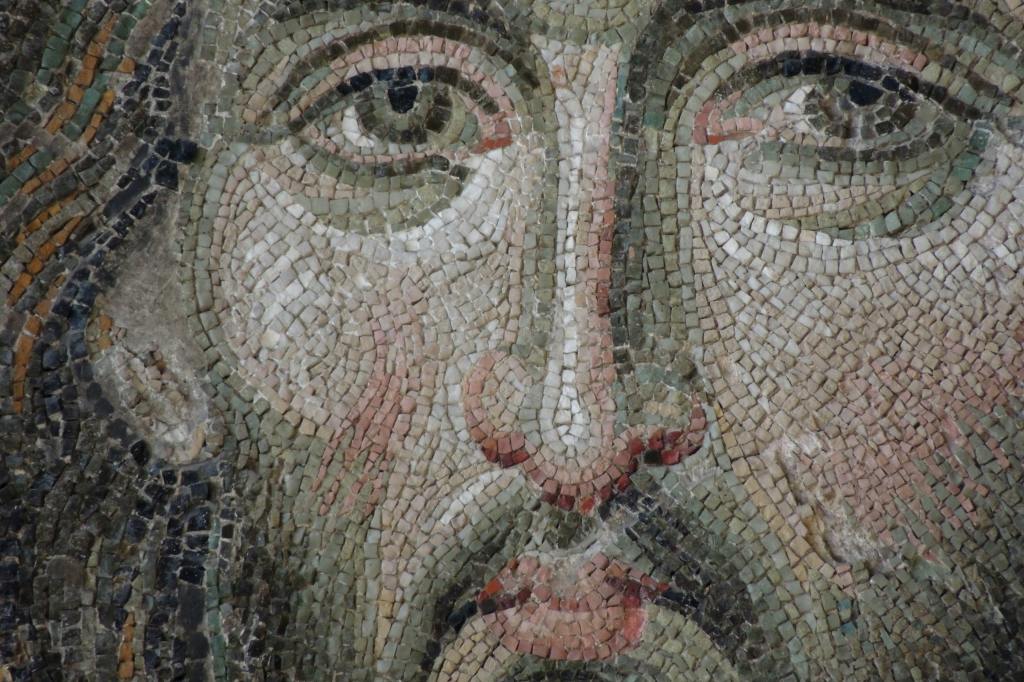
 Candle in a Cave