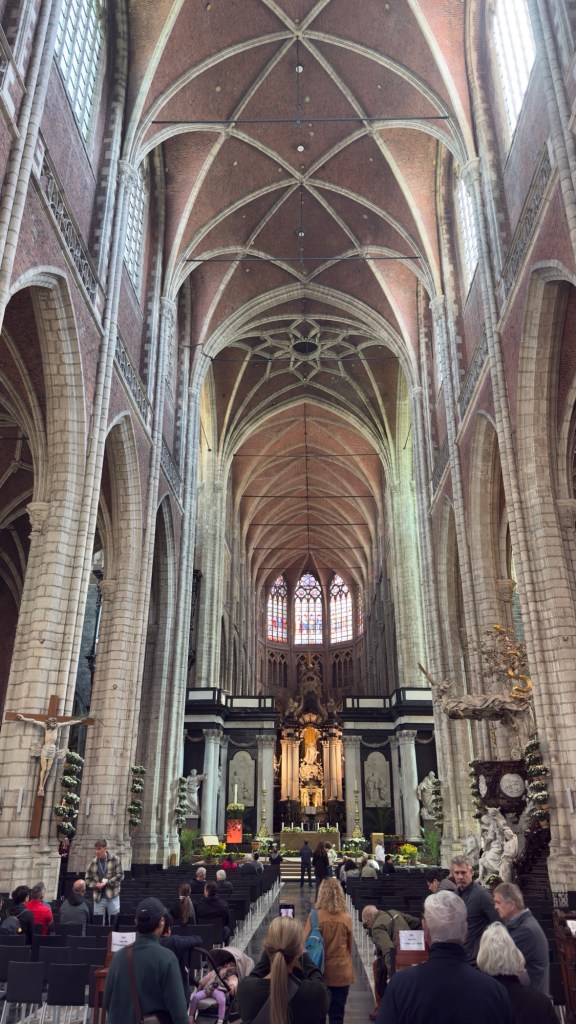
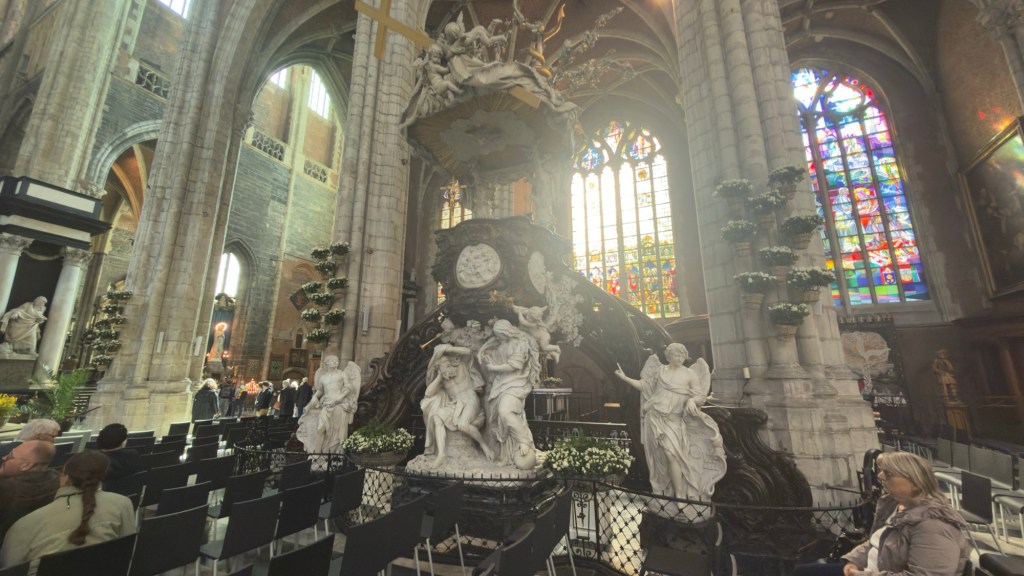
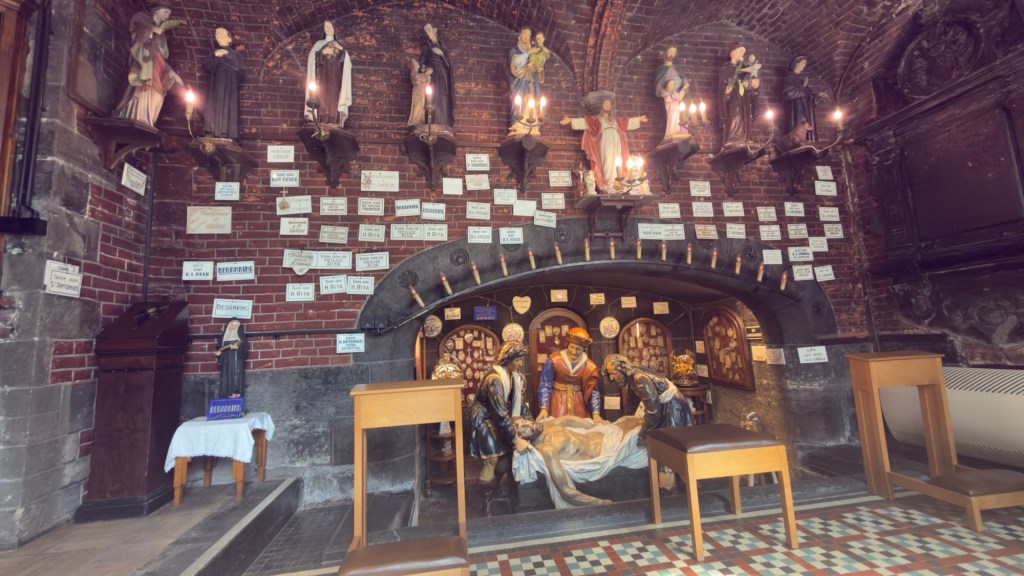
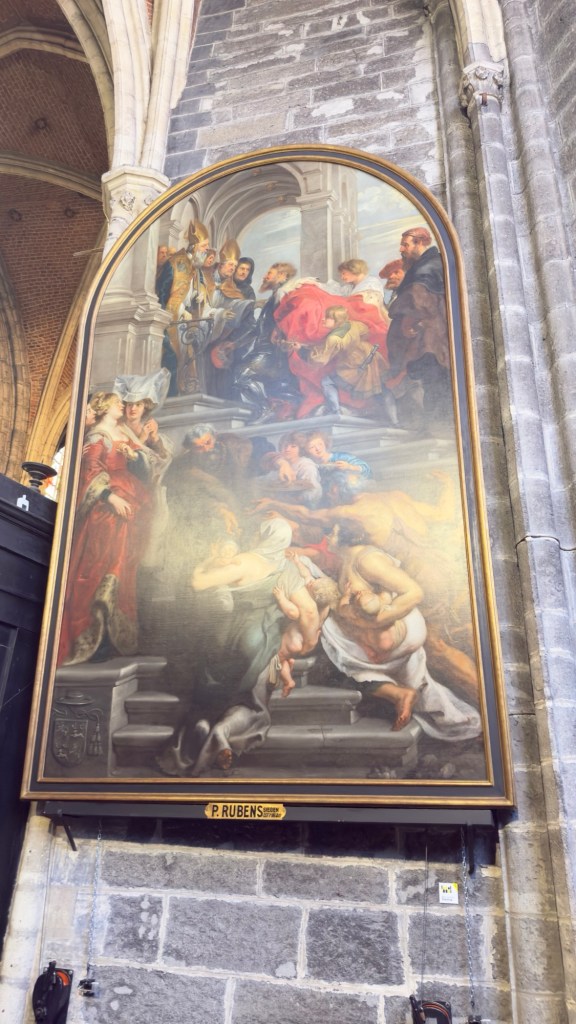
Well, the day was a busy one. I got up, had some breakfast, packed the bags, and headed down to the church. After a full day, including the mass at 4 p.m., I came back to the Casa to discover that there were no taxis available in all of Santiago. Two and a half kilometers later, I arrived at the train station after a nice, slow walk. Along the way, I stopped at a pastry shop and picked up something for breakfast in the morning. Three hours on the train, and I am now at my hotel in Madrid. The Casa Anglicana had a nice little bathroom that was about two and a half by six feet, maybe. The hot water tank in my room held two gallons, so each morning was a mad dash to beat the hot water before it ran out. Arriving at the Crowne Plaza Madrid Airport Hotel, I may have drained their hot water tank. It was really nice. I do believe it’s time for some sleep.
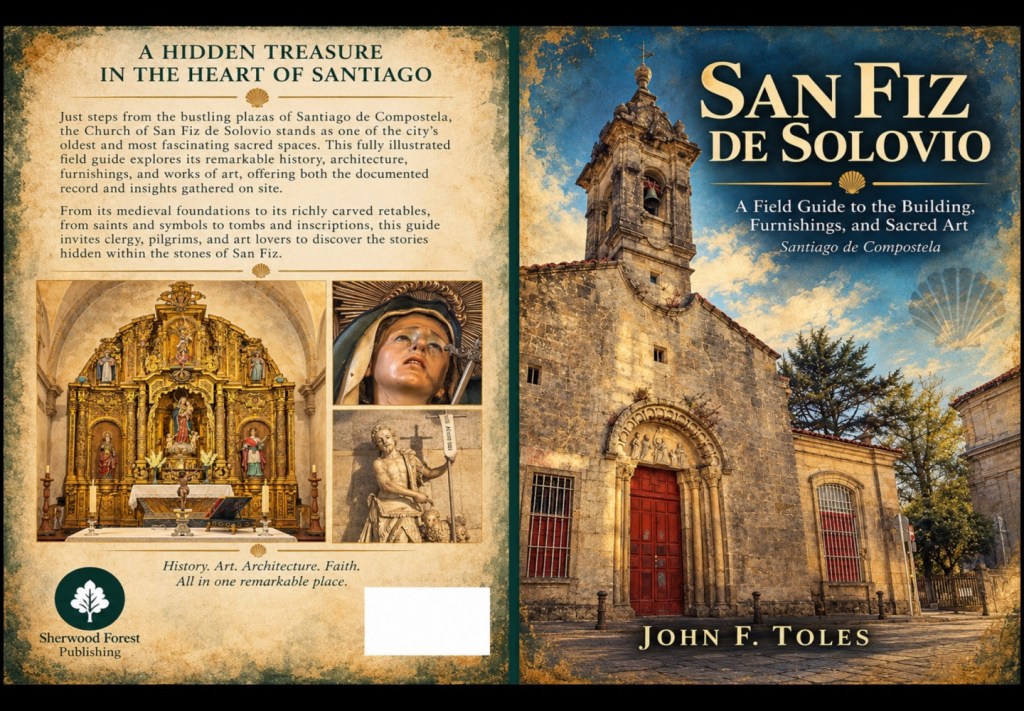
For those who are interested, here is a link to the book that I put together while I was here. I will tell you that the information is very interesting. The pictures are as good as I could take. And the layout—well, it’s a little wanting. It’s really difficult to publish books with pictures on Amazon. Anyhow, if it’s something you are interested in, you can go to Amazon and purchase a copy. Or, if you drop me a note, I will be more than happy to send you a free PDF version of it. The history of that one little church and all of the churches in Santiago is actually quite fascinating.
After five years of therapy, a psychiatrist told his patient, “We don’t often use the word cured, but I’m pleased to tell you that I believe you’re completely cured.”
To his surprise, the woman looked deeply disappointed.
He said, “What’s wrong? I thought you’d be thrilled.”
She said, “Doctor, look at it from my point of view. Five years ago I was Joan of Arc. Now I’m nobody.”
Expectations are funny things. They don’t just affect how we feel about what happens. They also shape how we interpret it.
Some expectations are fanciful: when I was about eight, I wanted a pair of leather pants because I expected to grow up and be a cowboy, and of course I couldn’t be a cowboy without them. Other expectations are more reasonable: you purchase a plane ticket from point A to point B, and you can pretty much expect to land at about the correct time at point B.
Today in our reading from Exodus, we hear of a reasonable expectation followed by disappointment.
The Israelites are a desert people; they know you can never travel too far from a water source. So, to get somewhere, you don’t necessarily travel in a straight line. Instead, you travel from one oasis to the next. This is what the Israelites did because it was smart if you wanted to live, and because God told them to: “The whole congregation of the Israelites journeyed by stages, as the Lord commanded.” By doing this, they came to Rephidim. The picture on the front of your bulletin shows the traditional site. It is an oasis. Why did they go there? The text is not explicit, but it is safe to say they had a reasonable expectation that there would be water.
Being in the desert without water is death, so the people quarreled with Moses: “Why did you bring us out of Egypt, to kill us and our children and livestock with thirst?” Then they asked a hard question: “Is the Lord among us or not?”
We read the words of the Psalmist: Hear my teaching, O my people; incline your ears to the words of my mouth. He worked marvels in the sight of their forefathers, in the land of Egypt, in the field of Zoan. He split open the sea and let them pass through; he made the waters stand up like walls. He led them with a cloud by day, and all the night through with a glow of fire.
The people at Rephidim who asked, “Is the Lord among us or not,” are the same people who have experienced these praiseworthy deeds and witnessed the power of the Lord. Yet about 45 days later, when their expectations were not immediately met, they quarreled over whether God was with them.
Despite their complaints against God, the miracle came, and water flowed from the rock at Horeb. The miracle is remembered, but so is the complaining. Moses called the place Rephidim Massah and Meribah, meaning testing and quarreling. Years later, the Psalmist will instruct the people,
Today, if you hear his voice, do not harden your hearts, as at Meribah, as on the day at Massah in the wilderness, when your fathers put me to the test and put me to the proof, though they had seen my work. (Psalm 95:8-9)
Sitting here in our nice air-conditioned church, it is easy to be critical of the Israelites: “You had firsthand knowledge of all God can do, and now you’re complaining. What’s a little water when you’ve lived through the ten plagues of Egypt and seen the sea parted?” However, I suspect there is a place in each of our lives that was once Rephidim but has become a place of Massah and Meribah—a place where we grumble because, even though we’ve done all God asked in the way He asked, there is no water.
You’ve gone to church, you’ve confessed your sins, you’ve prayed, you’ve knocked because you believe Jesus’ words, and you’ve been faithful; therefore, you have a reasonable expectation that God will act in a certain way. Yet there is no water. The prayer isn’t answered, the relationship cracks, the sickness persists… there is no water.
Like the Israelites, whether spiritually or physically, you need water to live. There is a possibility the Lord will provide a rock at Horeb—water—but there is also the possibility that Riphidim remains a barren and dry place, a place of Massah and Meribah—testing and quarreling. And in that place you may ask, “Is God with me or not?”
As a deer pants for flowing streams, so pants my soul for you, O God. My soul thirsts for God, for the living God. When shall I come and appear before God? My tears have been my food day and night, while they say to me all the day long, “Where is your God?” (Psalm 42:1-3)
In your thirst, what are you to do?
Today, Jesus tells us the parable of the father with the vineyard and two sons: “A man had two sons; he went to the first and said, ‘Son, go and work in the vineyard today.’ He answered, ‘I will not’; but later he changed his mind and went. The father went to the second and said the same; and he answered, ‘I go, sir’; but he did not go.”
Now, imagine you are that first son. You’ve been going to work in that vineyard day after hot, sweaty day, but on this day you’ve had enough. Your father asks you, and without giving any reason, you say no. Notice, the father does not offer you an increase in your allowance or any other reward, but neither does he beg or threaten. The father simply asks. You say no, but after a time you have a change of heart—nothing has changed; there is still no water—nothing has changed except you. Why did you go into the vineyard to work?
I would suggest two possible reasons. First, there is obedience. You have been asked by your father, one who is in authority over you, to carry out a task. You can obey or not. So, you may have had a change of heart because you recognize the father’s authority. However, in this case, I think obedience is a very distant second to the main reason behind your change of heart.
The main reason is the relationship between the father and the son. The son knows that the father has always cared for him, provided for his needs, and been faithful in all things. The son knows that his father loves him. Therefore, in response to the father’s love, the son goes and works in the vineyard. Nothing has changed; there is still no water, but because of the father’s loving faithfulness, you know he has his reasons. It may not look like what you wanted. It may not be what you think you need. Yet God is with you. He has always been with you and loved you.
You are faithful. To the best of your ability, you do what our heavenly Father asks, so you have a reasonable expectation that when you ask for water—peace, healing, renewal, consolation, answers—God will provide. Yet when you get to Rephidim, it is a wasteland. It hurts and is disappointing, but that doesn’t mean God is absent. We remember the Father’s loving kindness and trust that he is with us.
You say, “That’s all well and good, Father John, but I’m dying of thirst out here.” You say with David,
O God, you are my God; earnestly I seek you; my soul thirsts for you; my flesh faints for you, as in a dry and weary land where there is no water. (Psalm 63:1)
Yet when we say these things, the Lord replies as he did to the Prophet Isaiah:
When the poor and needy seek water, and there is none, and their tongue is parched with thirst, I the Lord will answer them; I the God of Israel will not forsake them. I will open rivers on the bare heights, and fountains in the midst of the valleys. I will make the wilderness a pool of water, and the dry land springs of water. (Isaiah 41:17-18)
“Yes, yes, yes,” you say. “God will do those things, but when? I’m thirsty now.”
I know.
And I wish I could tell you where your rock of Horeb is. I wish I could tell you when the water will come, but I can’t. Still, there are things I can do. I can sit with you in Rephidim. When you cannot remember what God has done, I can remember it for you. When you cannot pray, I can pray for you. When you ask, “Is the Lord among us or not?” I will stay with you as we wait. You see, that is what the Church does. We don’t pretend there is water when there isn’t. We don’t tell thirsty people they simply haven’t prayed hard enough. We don’t explain away the wilderness. Instead, we sit together, just as we are doing today. And perhaps that is how we know the Lord is among us. Because we can reach out and touch Him in the person next to us.
Let us pray: O Lord our God, grant us to trust in your overshadowing wings. Protect us beneath them and bear us up. You will carry us as little children; even to our grey-headed age, you will carry us still. When you are our strong security, that is strength indeed. Amen.
In a Peanuts cartoon, Lucy demands that Linus change the TV channel and then threatens him with her fist if he doesn’t. “What makes you think you can walk right in here and take over?” asks Linus. “These five fingers,” says Lucy. “Individually, they are nothing, but when I curl them together like this into a single unit, they form a weapon that is terrible to behold.” “What channel do you want?” asks Linus. Turning away, he looks at his fingers and says, “Why can’t you guys get organized like that?”
My initial reaction to today’s Gospel reading was to shake my head at the liturgical committee that chose it. There is no time, context, audience, or anything provided in the reading to help us understand. So let’s begin by setting the scene, which is a little easier if you were here last week, because this week’s reading is part of that same conversation.
The audience Jesus is speaking to is the twelve apostles, and he is giving them instructions because He is about to send them out.
At the beginning of the chapter, Matthew 10, where our reading is located, we are told, “Jesus called to him his twelve apostles and gave them authority over unclean spirits, to cast them out, and to heal every disease and every affliction” (Matthew 10:1). Jesus gives them instruction on their travels and what to expect: “Behold, I am sending you out as sheep in the midst of wolves, so be wise as serpents and innocent as doves” (Matthew 10:16), and also tells them to “have no fear” (Matthew 10:26) for they are of great worth to their Father in heaven.
Then comes our lesson from last week. Jesus tells them that the message they carry will not bring peace but division, saying, “I have not come to bring peace, but a sword” (Matthew 10:34b).
Today’s Gospel is the conclusion of the apostles’ marching orders, and it can be seen as encouragement, because Jesus tells them that as they go and experience the hardships along the way, there will be people who never preach a sermon, never cast out a demon, never heal the sick, yet by welcoming, encouraging, and supporting Christ’s servants they become participants in the very mission of God. “Whoever receives you, receives me, and whoever receives me, receives the Father.” Good. In other words, when someone receives you as my disciple, it will be like in times past when someone received and helped a prophet carry out their work. Elijah and Elisha provide two very good examples of this.
During the reign of King Ahab, he did evil in the eyes of the Lord, so the Lord brought a drought upon the land, as Elijah had proclaimed. Afterward, the Lord sent Elijah to Zarephath. There, Elijah encountered a widow and asked her for a little something to eat and a drink of water. She responded that she had only a little flour in a jar, enough to make one small cake for her and her son to eat, after which they would die because of their poverty and the drought. Yet Elijah said, “Do not fear… The jar of flour shall not be spent, and the jug of oil shall not be empty, until the day that the Lord sends rain upon the earth” (1 Kings 17:14), and it was done according to the word of Elijah. While the world around her suffered from the drought and went hungry, the widow and her son received the prophet’s reward and had plenty.
Later, the widow’s son died because of illness, yet because of her support and kindness to Elijah, the Lord raised the child from the dead through Elijah’s prayer.
Then there was Elisha, who frequently passed through the town of Shunem. A wealthy woman lived there, and each time Elisha passed through, she would feed and care for him. Elisha asked what could be done to repay her kindness. She would not say, but Gehazi, Elisha’s servant, told him that the woman was childless, even though she and her husband desired one. Hearing this, Elisha promised her the reward of a prophet: “At this season, about this time next year, you shall embrace a son.” (2 Kings 4:16) She was too afraid to believe it, but the following year she had a son.
When Jesus speaks to the disciples about the prophets’ reward and the righteous person’s reward, he says, “You will encounter hardships in following me and doing the Father’s will, but there will be those who help you. Because of their help, they too will receive a reward.”
Why? Not everyone can be called to be a prophet or a apostle, but all can assist the prophet or apostle in other ways.
Saint Paul tells us, “Now there are varieties of gifts, but the same Spirit; and there are varieties of service, but the same Lord; and there are varieties of activities, but it is the same God who empowers them all in everyone. To each is given the manifestation of the Spirit for the common good.” (1 Corinthians 12:4-7) And remember how, a little later, he asked a series of questions, “Are all apostles? Are all prophets? Are all teachers? Do all work miracles?” (1 Corinthians 12:29), and so on. The answer is no. Not all are this or that, but each one has been empowered with gifts “for the common good.” That’s exactly the point Lucy was making, “These five fingers… Individually, they are nothing, but when I curl them together like this into a single unit…” This same principle applies to Elijah and Elisha, the apostles, and on down through history to us gathered here today. Is this true?
Do you know how many people I’ve asked from this congregation to come up here and preach? Do you know how many times, when I ask that question, the person looks at me as though I didn’t have the sense God gave a turnip? Yet that same person may have taken on another ministry in the church or an act of hospitality. Something I had no clue how to do.
Paul again says, “For just as the body is one and has many members, and all the members of the body, though many, are one body, so it is with Christ. For in one Spirit we were all baptized into one body—Jews or Greeks, slaves or free—and all were made to drink of one Spirit.” (1 Corinthians 12:12-13) He is, of course, speaking of the church. When Jesus spoke of those who would receive a prophet’s reward or a righteous person’s reward, he was also speaking of the church, all of its members. This reward from God is not limited to the front person, the one in the dog collar and fancy robes. The reward is for the entire body of Christ, with each member exercising the gifts they have been empowered with.
A few weeks back, we spoke of our baptism and our entrance into the body of Christ. We then spoke of what it means to be loyal to God, not simply a passive relationship but one that is active in thought, word, and deed. Today, we understand that this active faith, as sons and daughters of God, is lived out in the Church, using the gifts we have been blessed with, both individually and corporately.
In The Canterbury Pilgrim, Archbishop of Canterbury Michael Ramsey speaks of the church as a building, which he then describes as a symbol of the Church formed by those who become the Body of Christ. Of this Body, Archbishop Ramsey captures exactly what Paul said, “Through the centuries this other Church—the Body of Christ—has stood: human lives united to Jesus, receiving his presence, and showing his goodness, his love, his sacrifice, his humility and his compassion. Living stones – what a mingling of metaphors! It tells of firm, solid, unmovable loyalty, and of persons alive in joy, in freedom, in creativity, in influence. This is the Church that Jesus Christ founded, the Church of which he said that the gates of death would never prevail against it.” (Glory Descending, Eerdmans, p.129)
This is the Church and the great work that takes place within these walls and within the Body of Christ. However, for our participation in it, there’s not just the prophet’s reward or the righteous person’s reward. Jesus says, “This is the will of my Father, that everyone who looks on the Son and believes in him should have eternal life, and I will raise him up on the last day.” (John 6:40) Therefore, Jesus says, “Do not work for the food that perishes, but for the food that endures to eternal life, which the Son of Man will give to you.” (John 6:27) For us, there is more than the prophet’s or righteous person’s reward, there is Christ’s reward, the food that does not perish—the forgiveness of sins and eternal life on the last day.
In your life with God and your life in the Church, use the gifts you have been empowered with and work for Christ’s reward. No gift is too small. No gift is unnecessary. And by combining them, we become the church God desires us to be. Ask yourself, where can I put my gifts to work in the Body of Christ, and then get busy. You are needed, for “The harvest is plentiful, but the laborers are few,” (Luke 10:2), and we may not all be apostles or prophets, but we are all laborers in this great Kingdom of our God.
Let us pray: Everliving God, whose will it is that all should come to you through your son Jesus Christ: Inspire our witness to him, that all may know the power of his forgiveness and the hope of his resurrection; who lives and reigns with you and the Holy Spirit, one God, now and forever. Amen
And did those feet in ancient time Walk upon England’s mountains green? And was the holy Lamb of God On England’s pleasant pastures seen? And did the Countenance Divine Shine forth upon our clouded hills?
The hymn Jerusalem, taken from a poem by William Blake, alludes to a legend that tells how Joseph of Arimathea, a tin merchant and uncle of Jesus, once brought the boy Jesus to England on a trading journey, and suggests that Jesus once walked the shores of England.
The Legend of Glastonbury goes on to describe how, after the death of Jesus, Joseph and some of the other disciples came to England. It is said that upon arrival, Joseph planted his staff, which miraculously flowered and reportedly still does so each Christmas. A sprig is taken to Buckingham Palace every year as a reminder of the miracle. The church established under Joseph of Arimathea in Glastonbury is said to be the first church in England.
That may have been the beginning of the English Church, but its early history was quite rocky, and it wasn’t until the late 6th century that it began to experience more consistent growth.
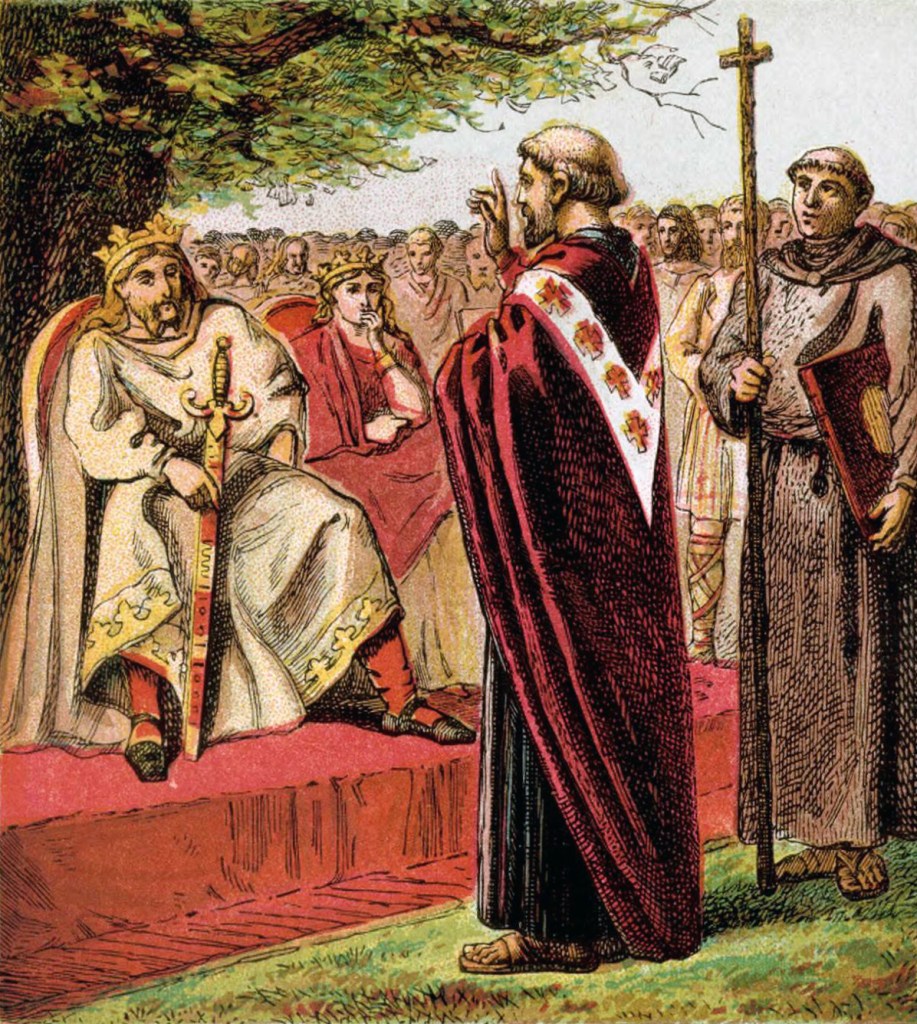
In the year 596, Pope St. Gregory the Great sent Augustine, the near-sighted prior of an abbey, along with 30 other monks to England to convert the English to Christianity. This small band of monks landed on the Isle of Thanet, located at the southeast corner of England, in the year 597.
The territory was ruled by Ethelbert, king of Kent, who was wary of these Christians, but because his wife was a Christian, he allowed the monks to stay. Eventually, Ethelbert would convert to Christianity, which encouraged his citizens to do the same. On a single day shortly after Ethelbert’s conversion and baptism, some 10,000 English were baptized in the River Swale by Augustine and his fellow monks. Not bad for a day’s work!
Augustine was consecrated as the first Archbishop of Canterbury and is known as the “Apostle to the English.” Archbishop Sarah Mullally, whom we pray for each week, is the 106th Archbishop of Canterbury.
In our Gospel reading today, Jesus saw Simon Peter and the others fishing. He said to them, “Throw your nets out into the deep water for a catch.” Simon Peter’s response was, “Look, we’re fishermen. We know what we’re doing, and we’ve been out here all night trying. They aren’t biting, but just to satisfy you…” “They caught so many fish that their nets were beginning to break. So they signaled their partners in the other boat to come and help them. And they came and filled both boats, so that they began to sink.”
That event seems to be very accurate in describing the early history of the English Church. Casting and casting – 600 years of casting – then finally bringing in the catch when Augustine and his monks arrived. One of the many lessons in studying the life of Augustine and this era of English church history is persistence in faith. Recognizing that the goal is worth reaching, no matter the setbacks and hardships. This is true in the greater scheme of things and in our own lives.
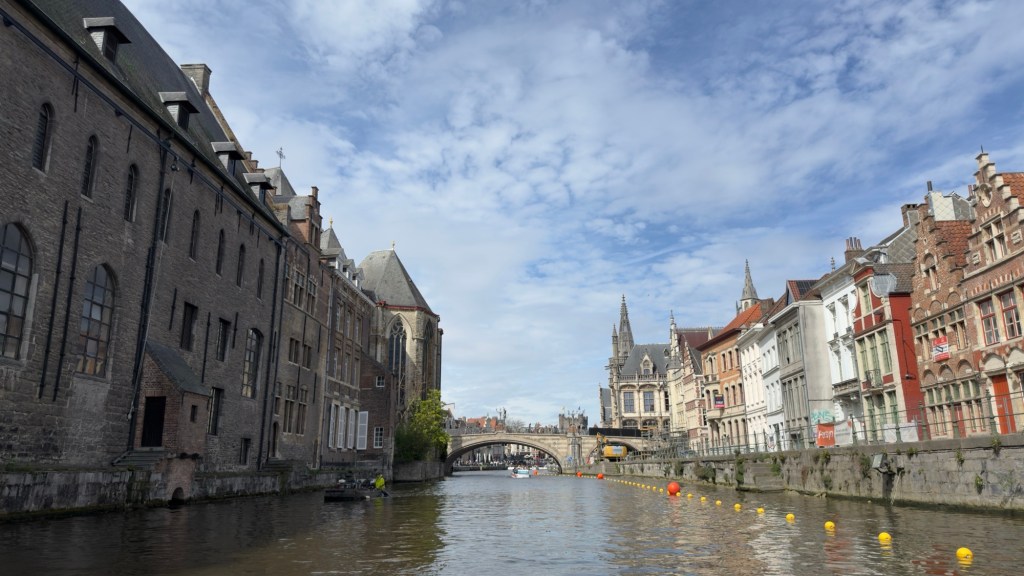
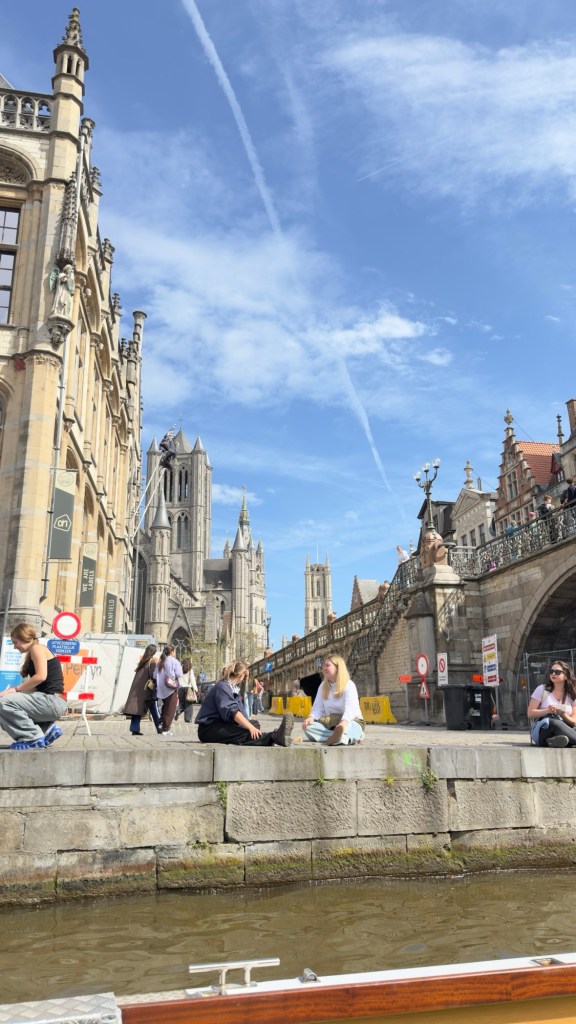
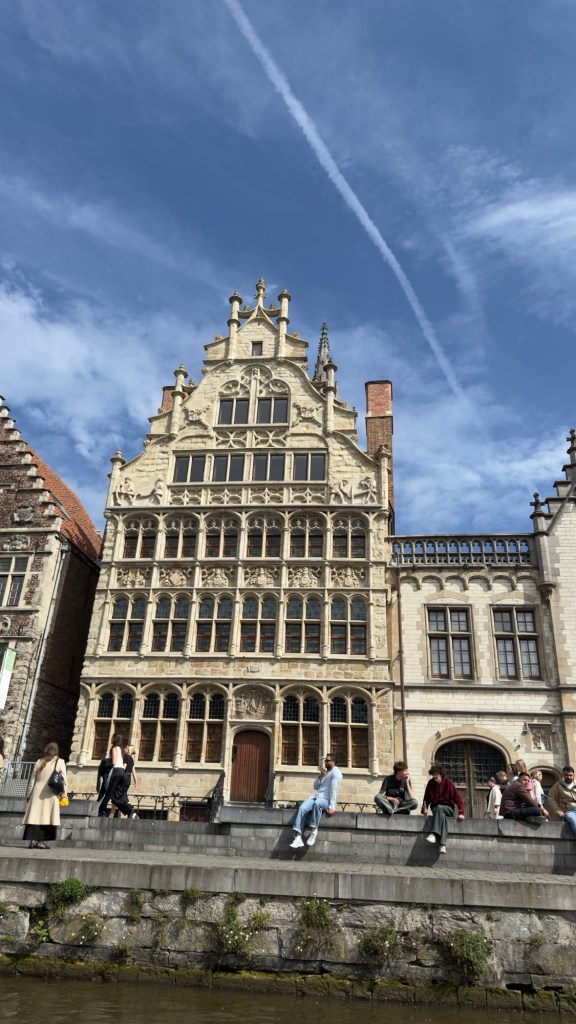
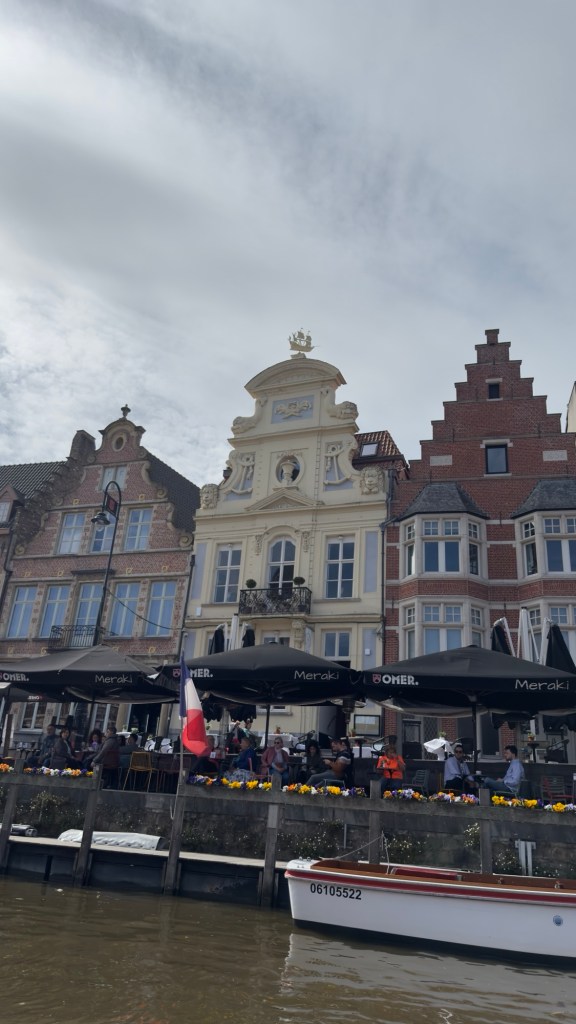
What a day and what a long one. Tonight, I want to get some pictures out, but there won’t be as much commentary… or we’ll see what happens. I did a lot of walking, and I saw so many amazing things, so let’s take a look. Warning: this is essentially an unedited photo dump.
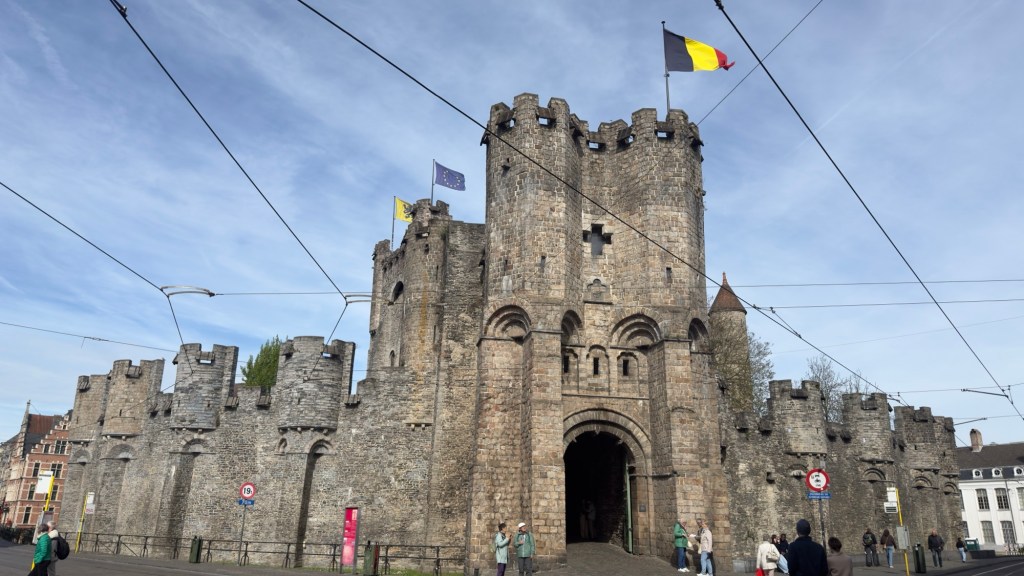
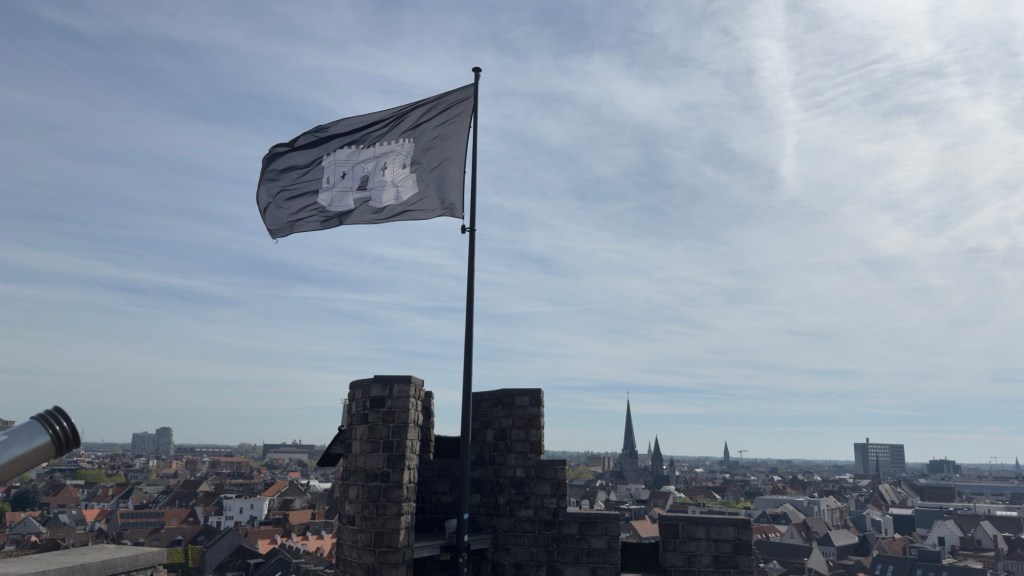
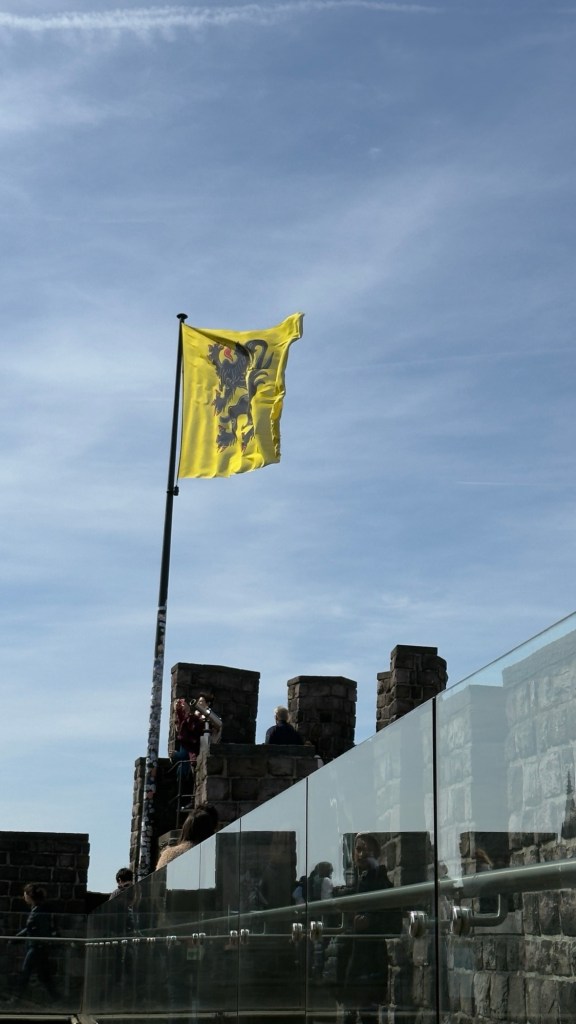
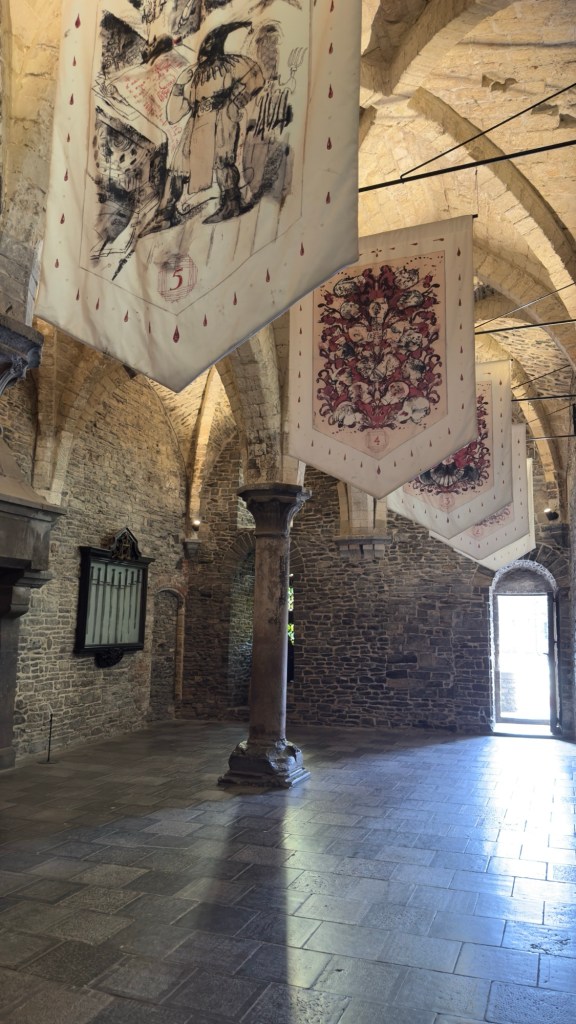
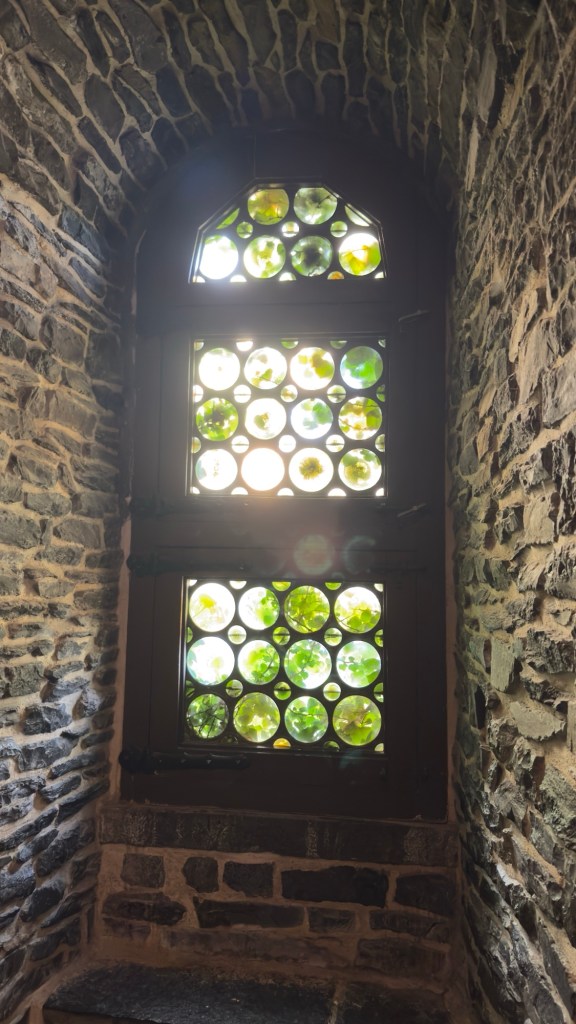
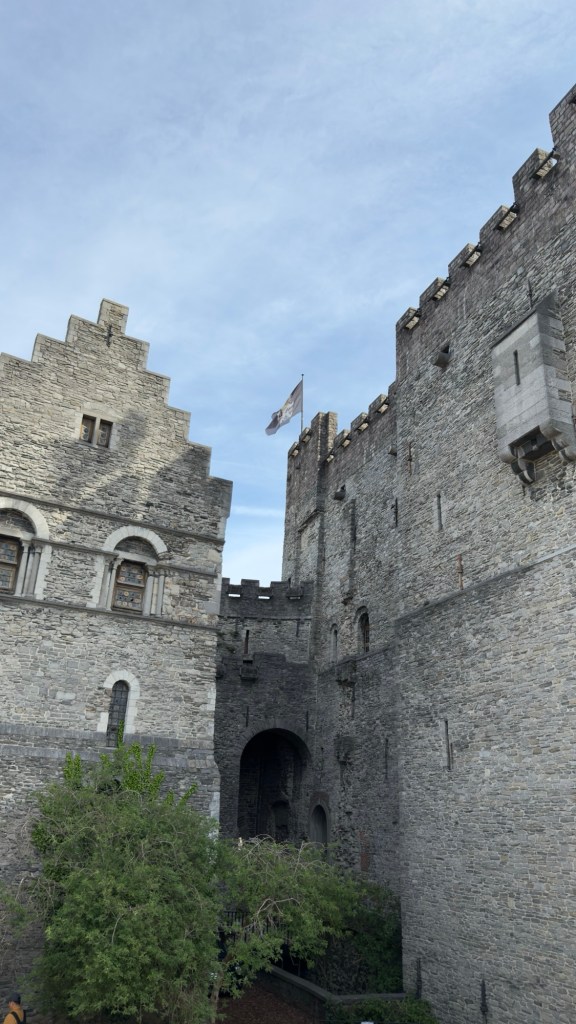
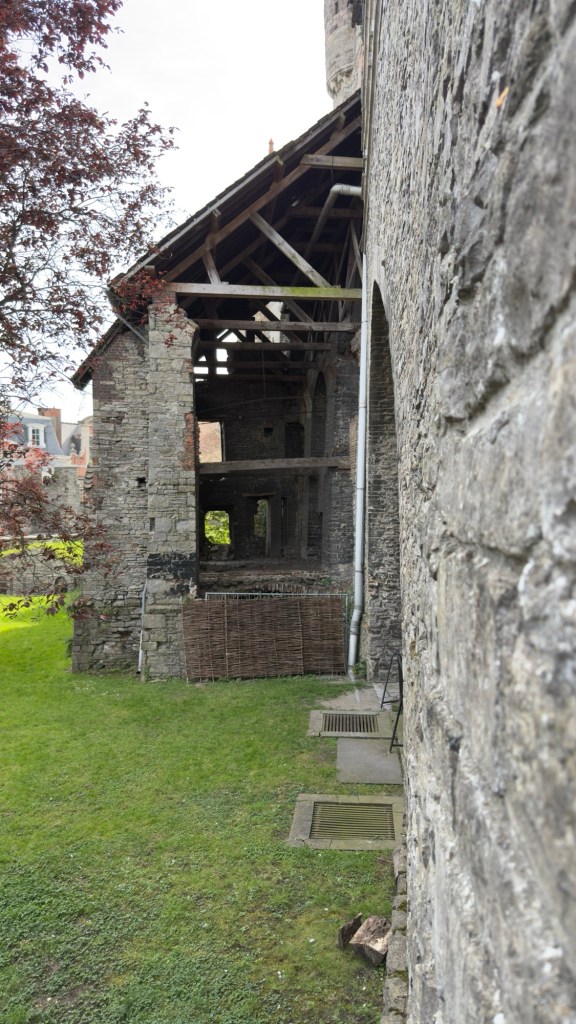
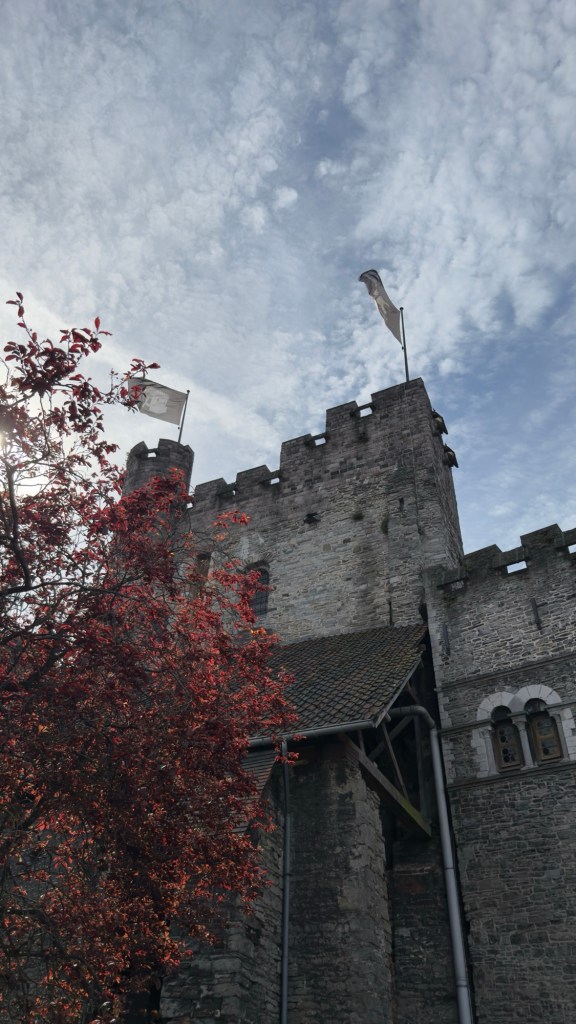
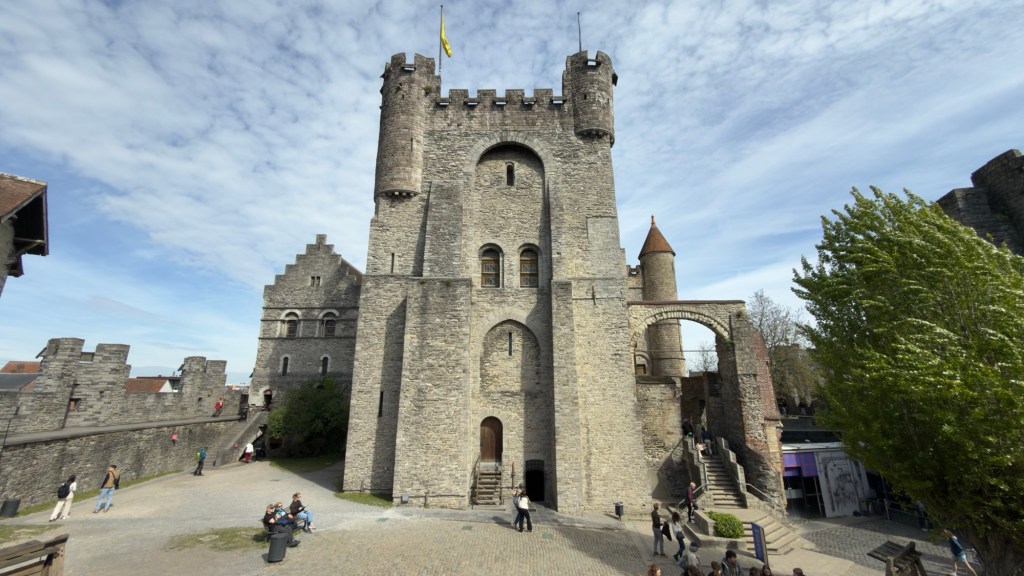
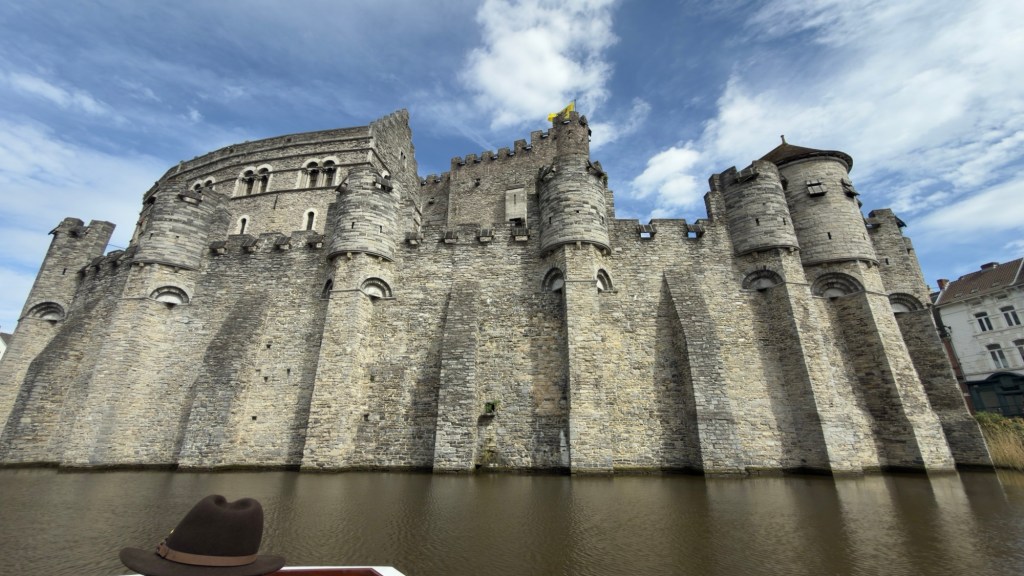
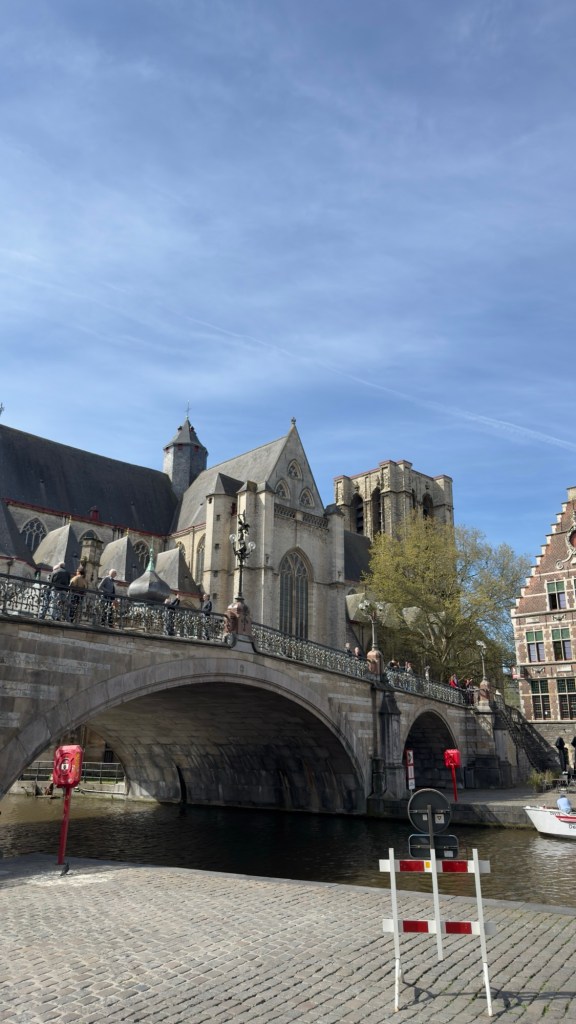
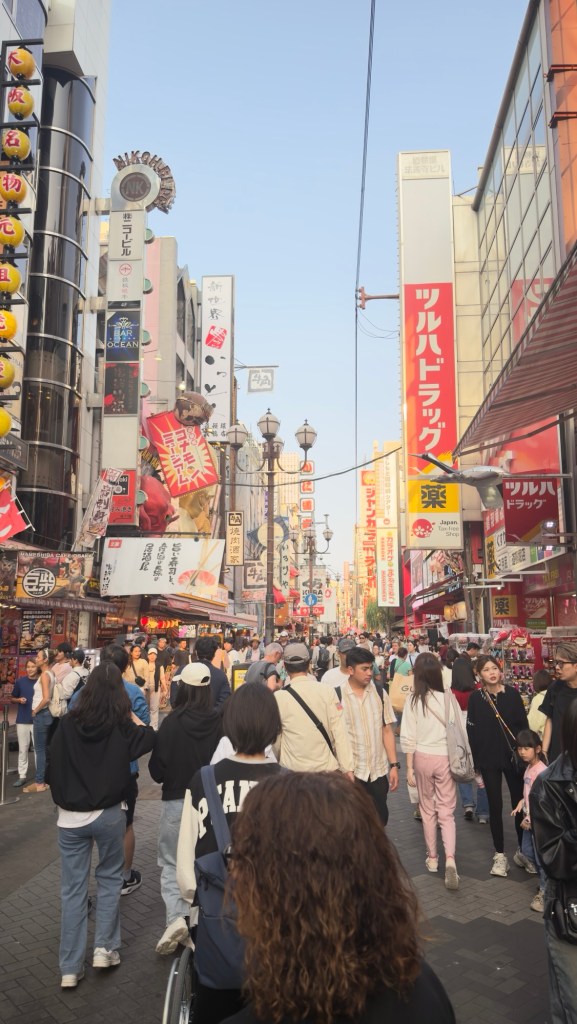
I sort of learned how to navigate the public transportation in Japan, so I didn’t feel too intimidated here. I jumped on and after a 30 minute bus ride with one transfer, I easily made my way to the old city and Gravensteen Castle. It dates from 1180 and the current restoration took place between 1893 and 1903. There are multiple spiral staircases, but I managed without too much huffing and puffing.
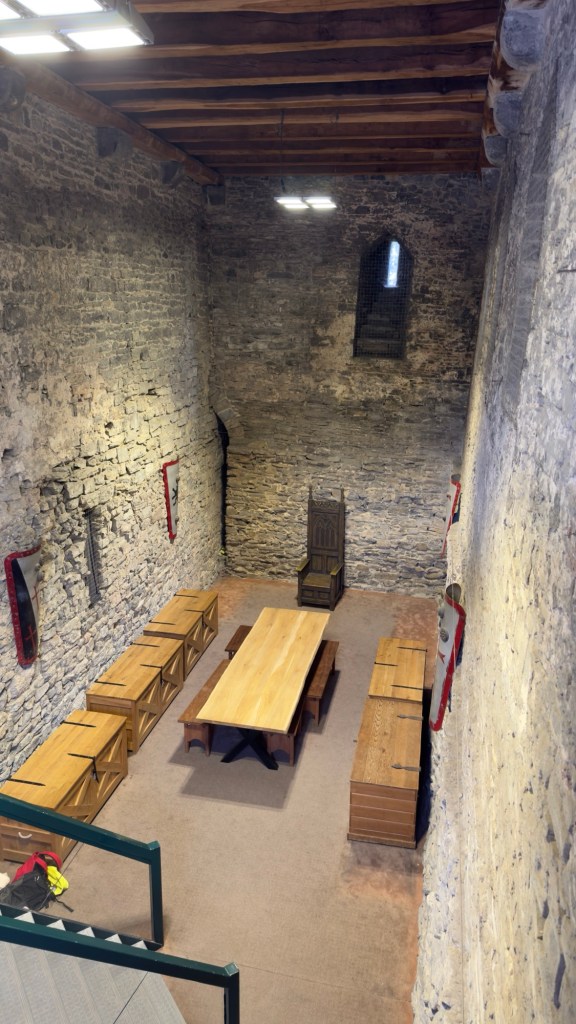
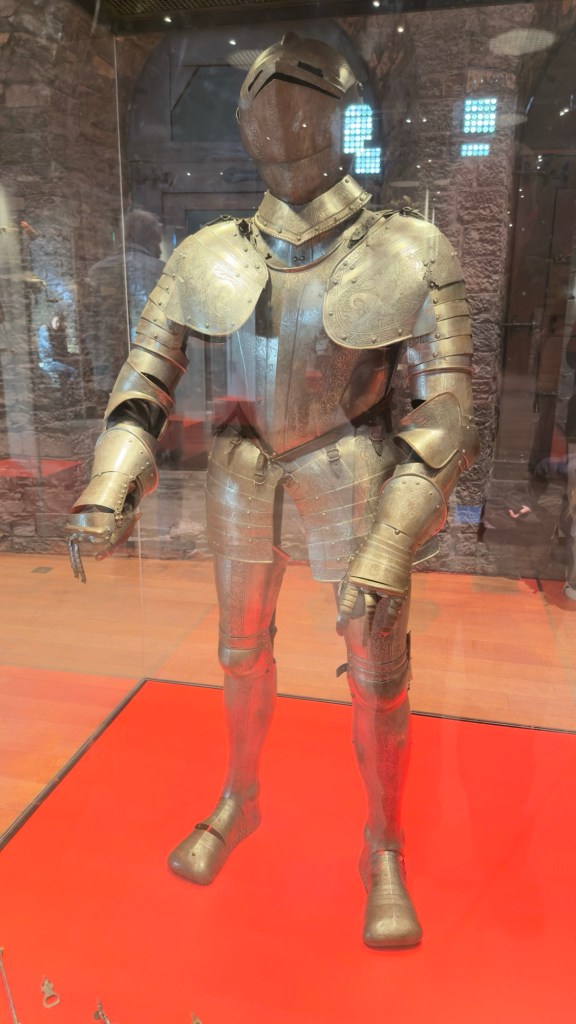
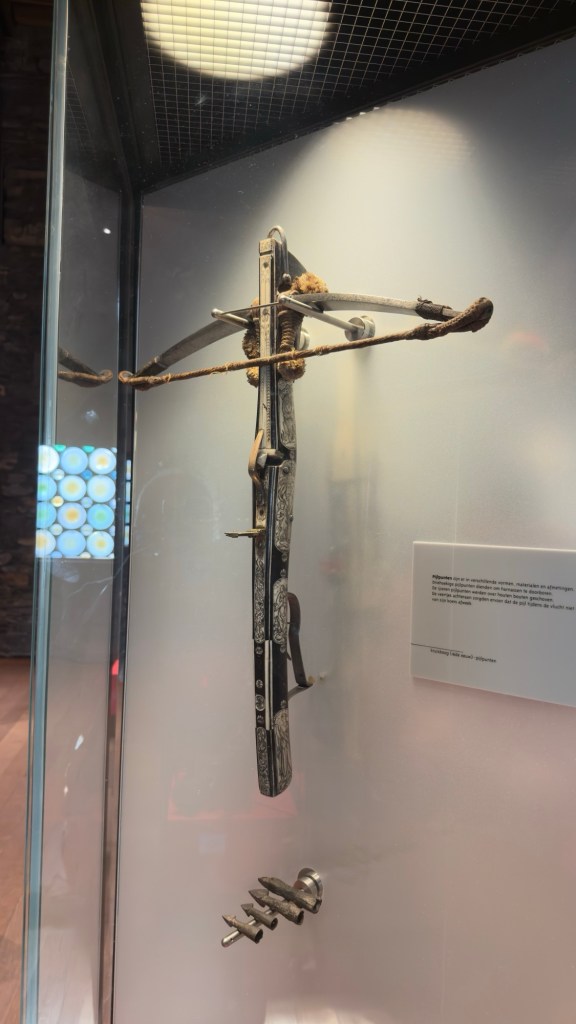
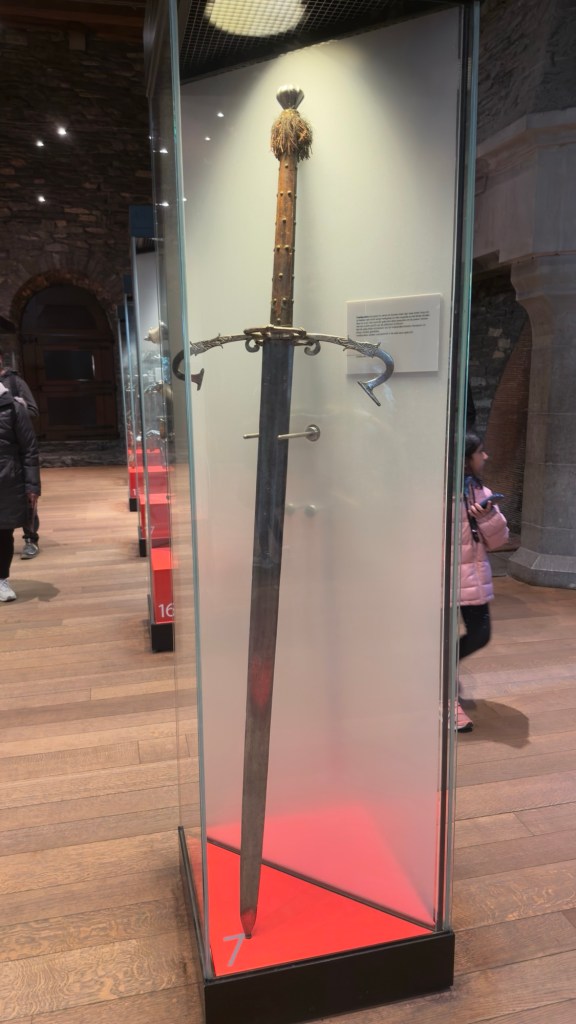
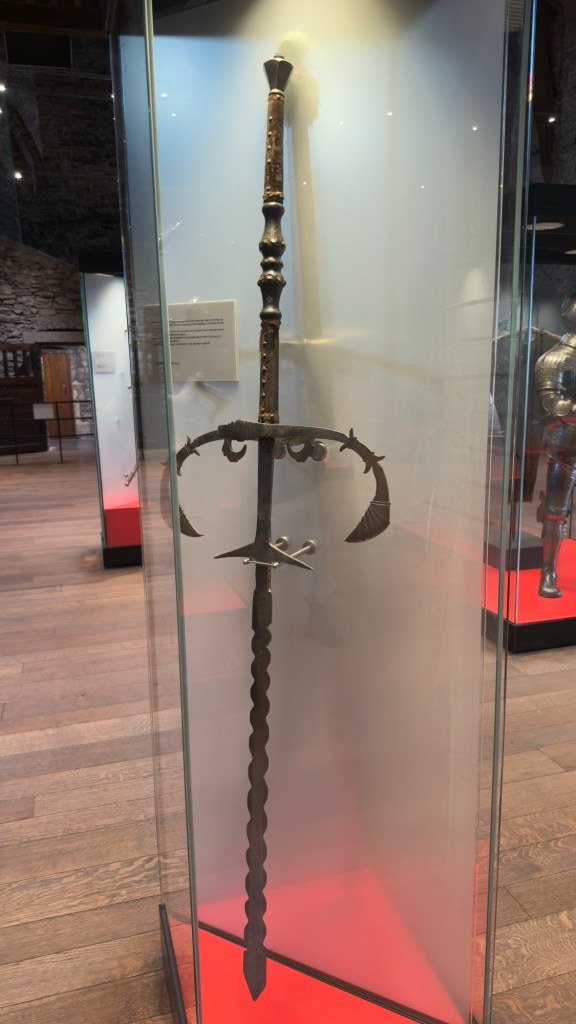
If you need a bit of medieval armory, they have some very interesting pieces. The one sword is about six feet long. Good luck swinging that!
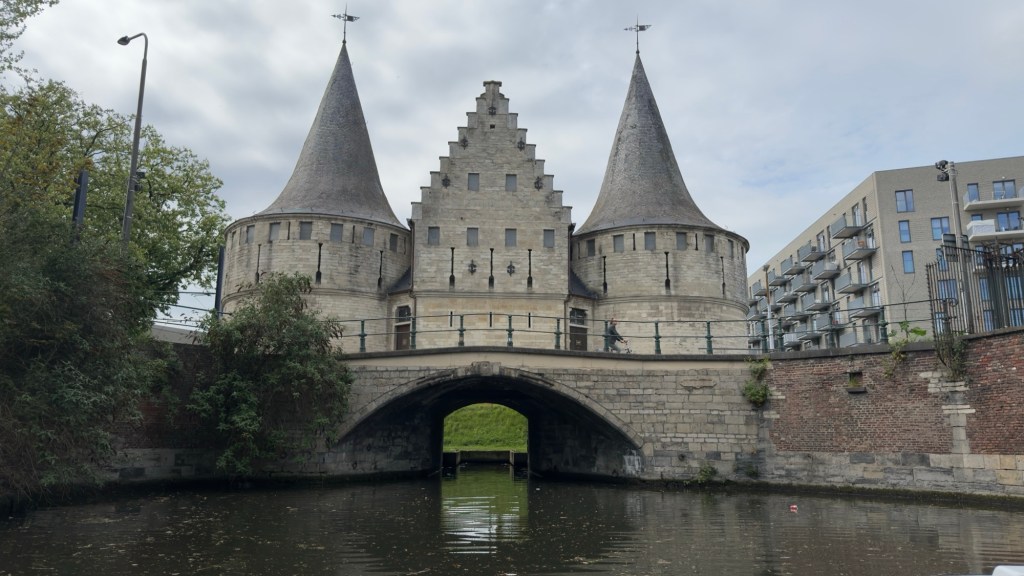
Later in the day, I took a scenic boat tour. This is the view of the castle from the boat:
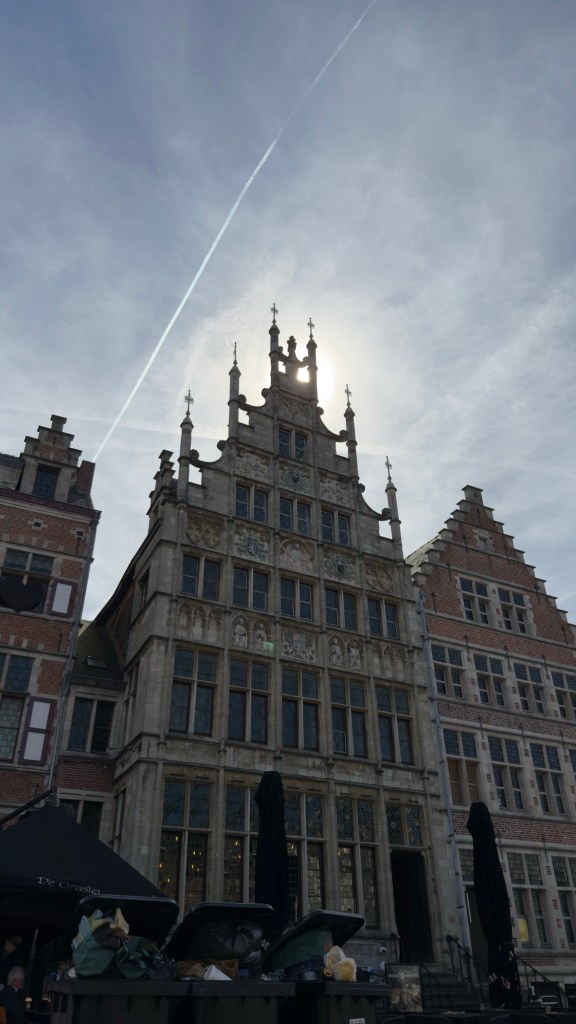
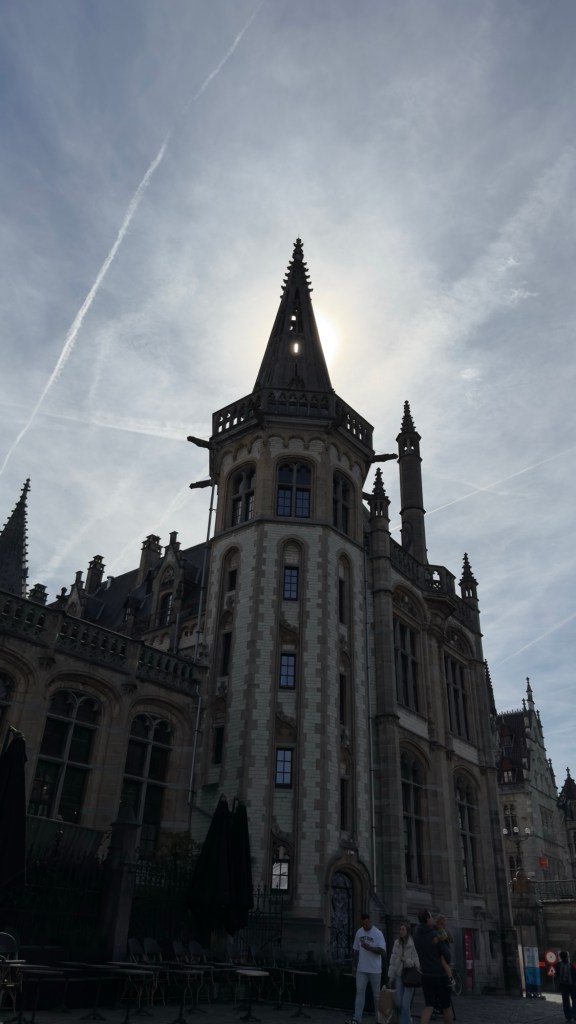
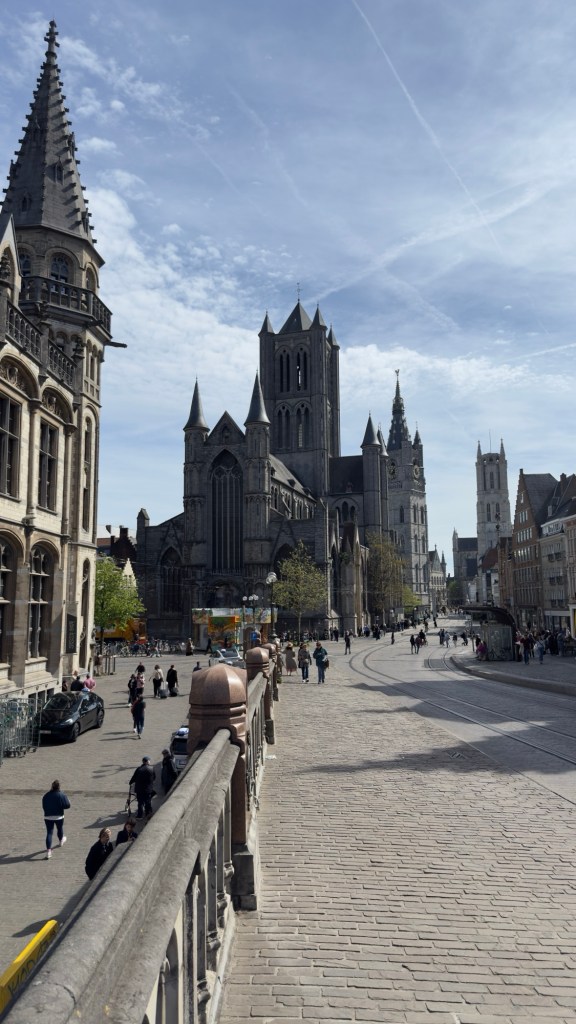
Then I walked and enjoyed some of the sights of the old city:
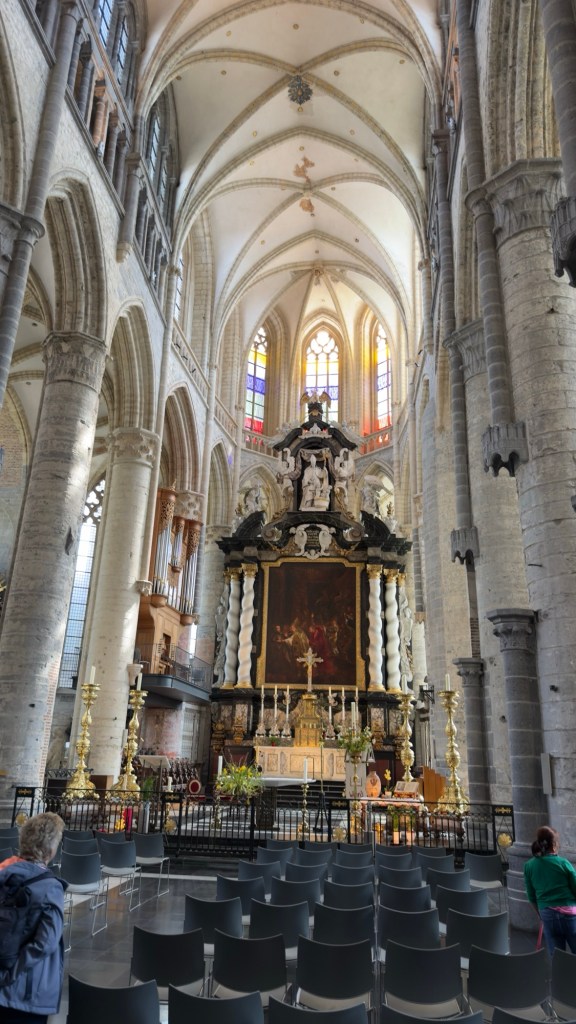
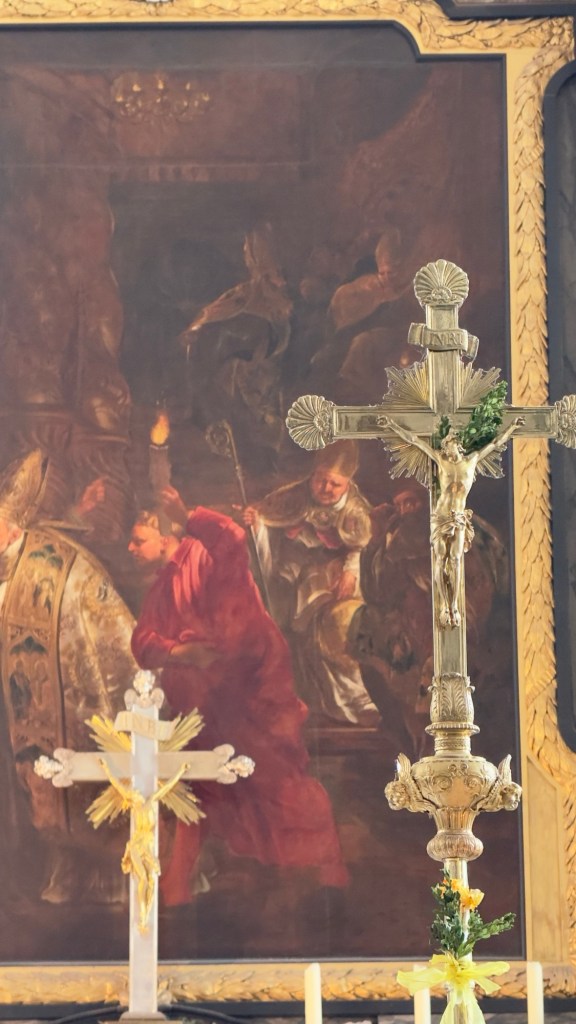
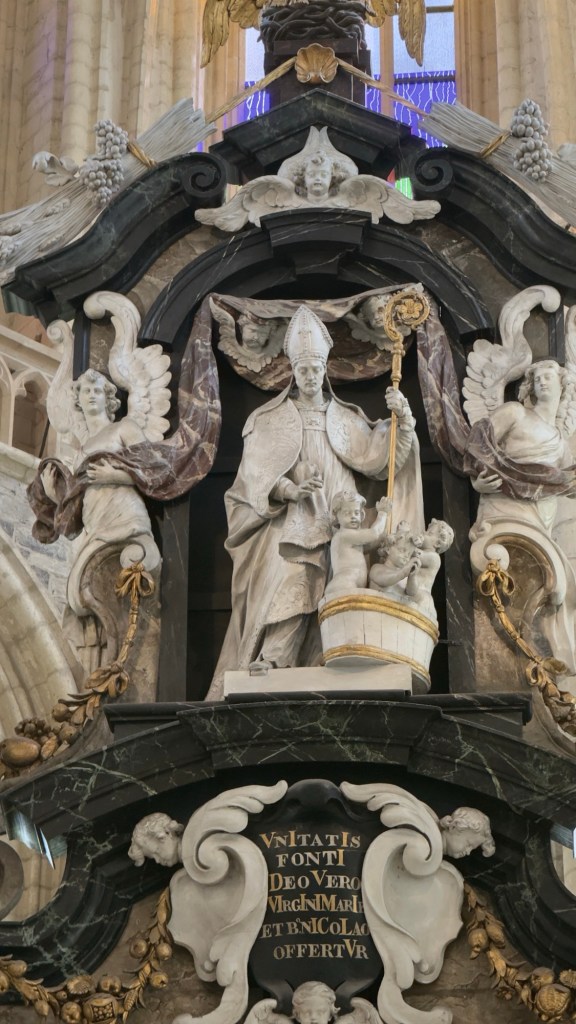
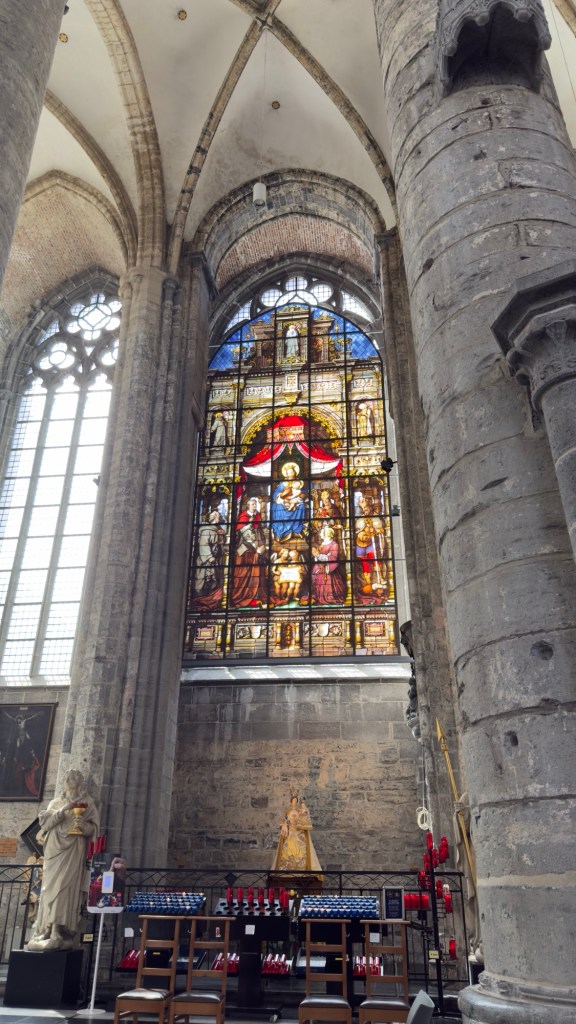
I then entered the Church of St. Nicholas. The day was cool, but the temperature dropped at least ten degrees as I entered… not that my poor heathen soul was the reason for the decrease.
One of the “artistic” shots of the day…
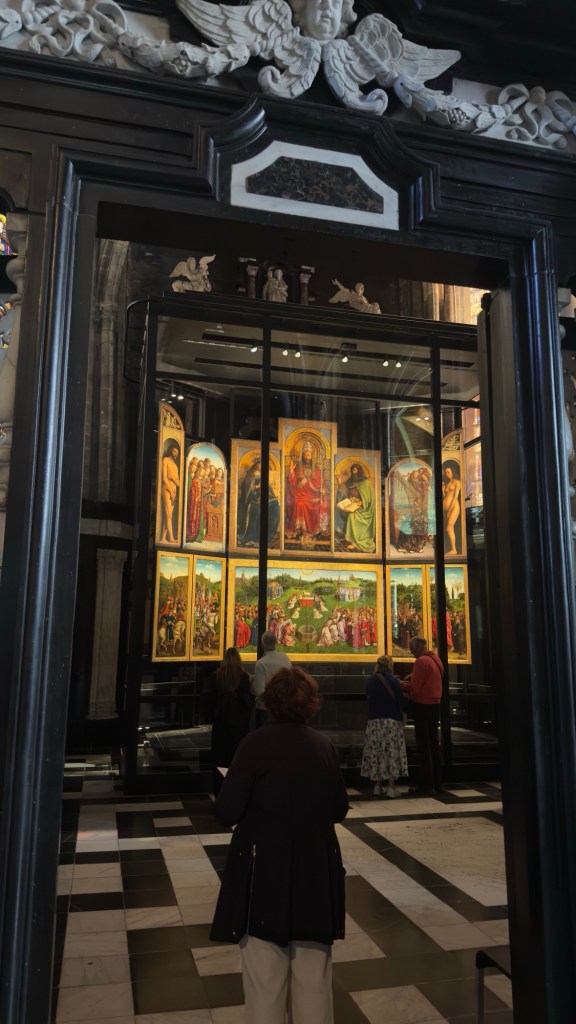
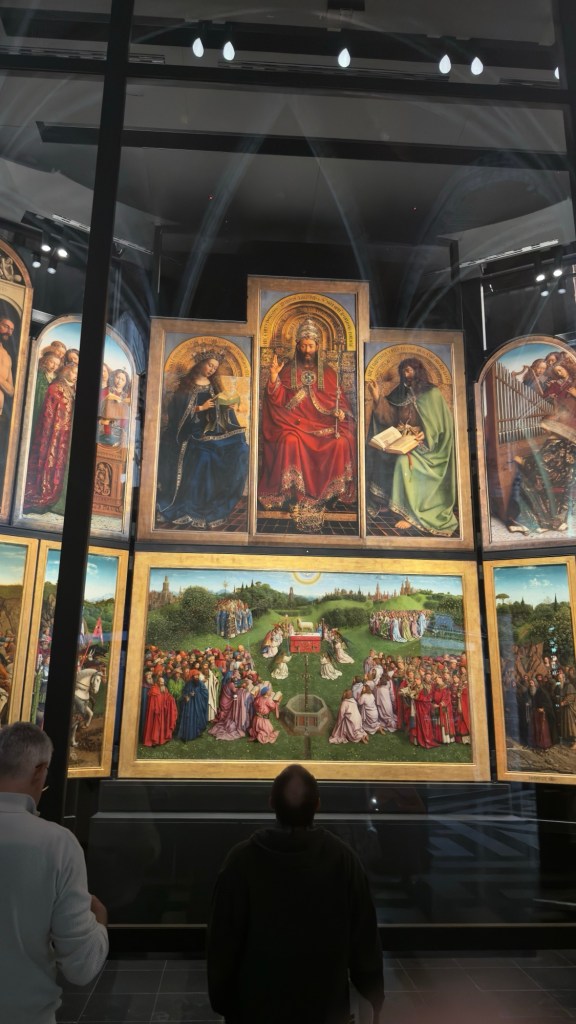
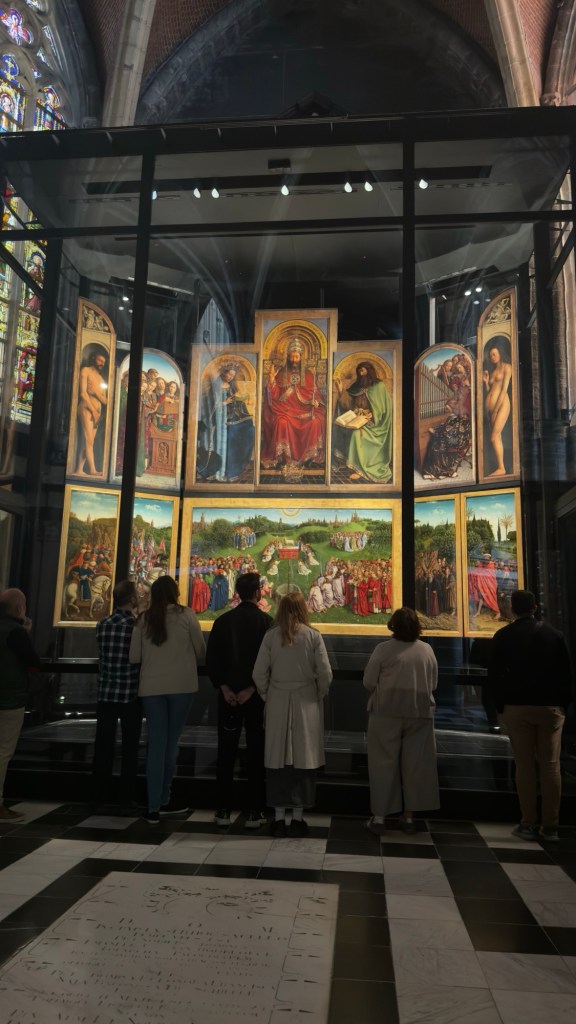
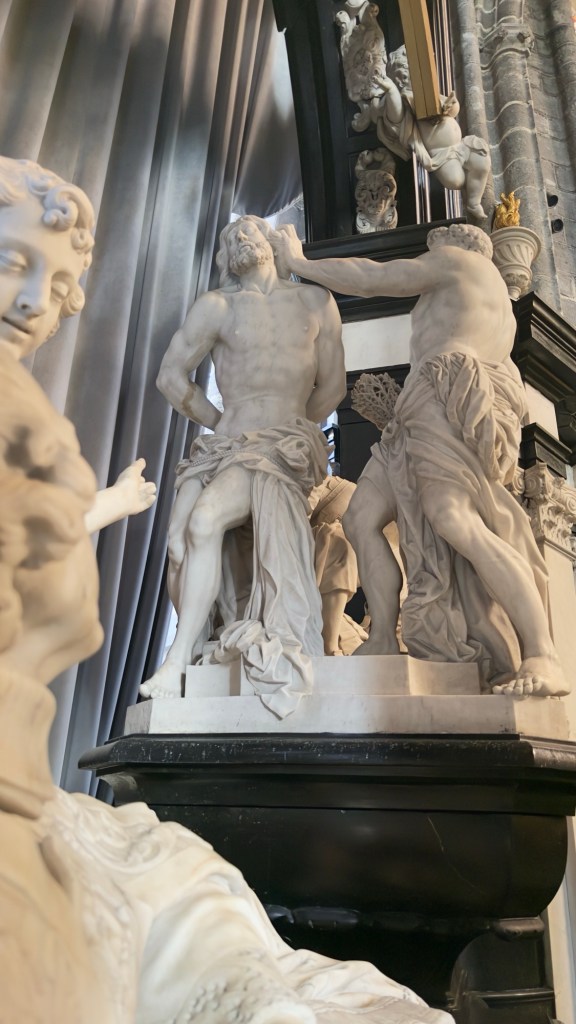
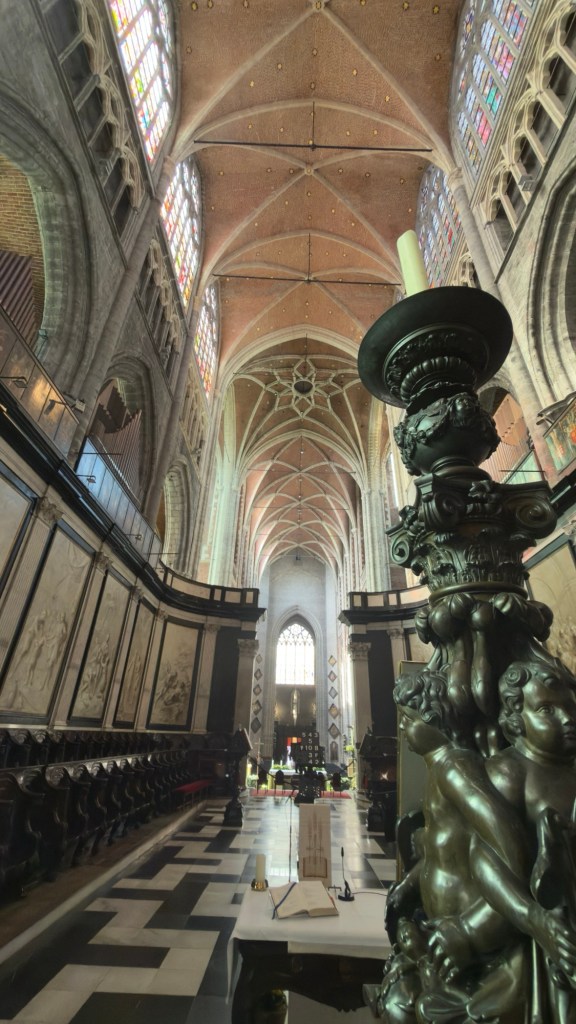
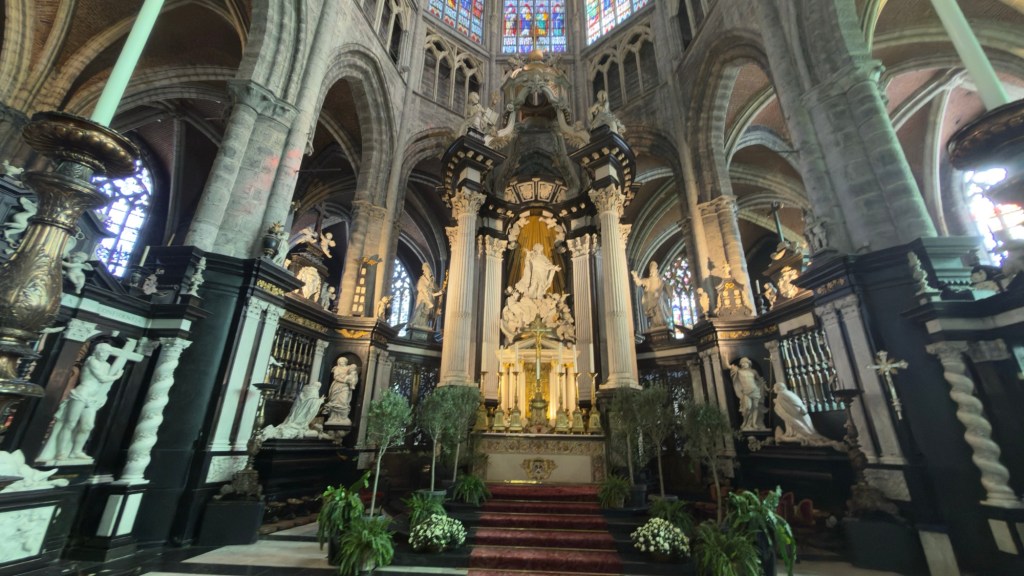
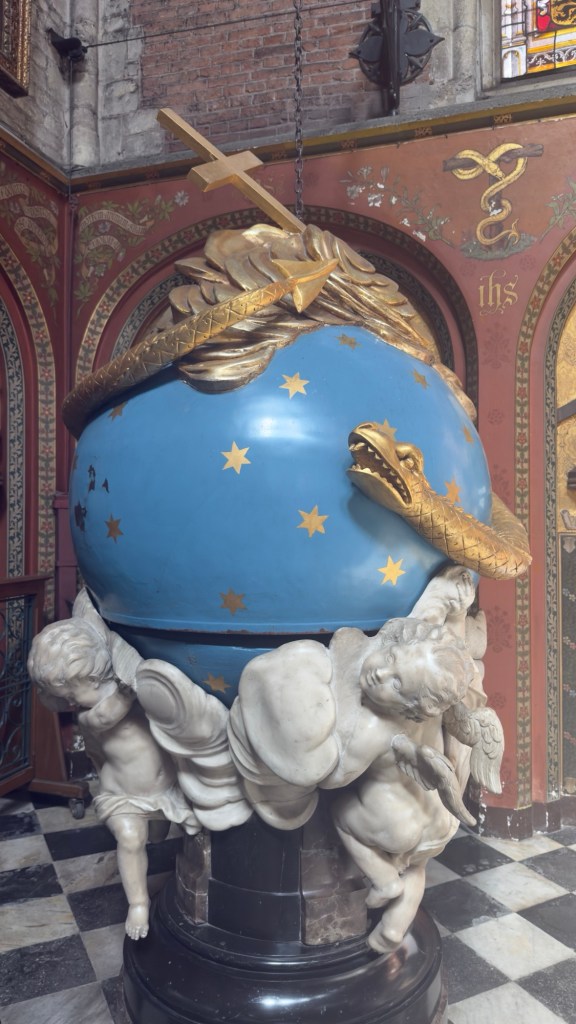
And then, I was at St. Bavo’s Cathedral. I hadn’t planned on it, in fact, I have a ticket for tomorrow, but then… when in Ghent! The pictures do no justice to the Ghent Altarpiece and the Mystical Lamb. I bought a book and will happily show it to you. Truly magnificent!
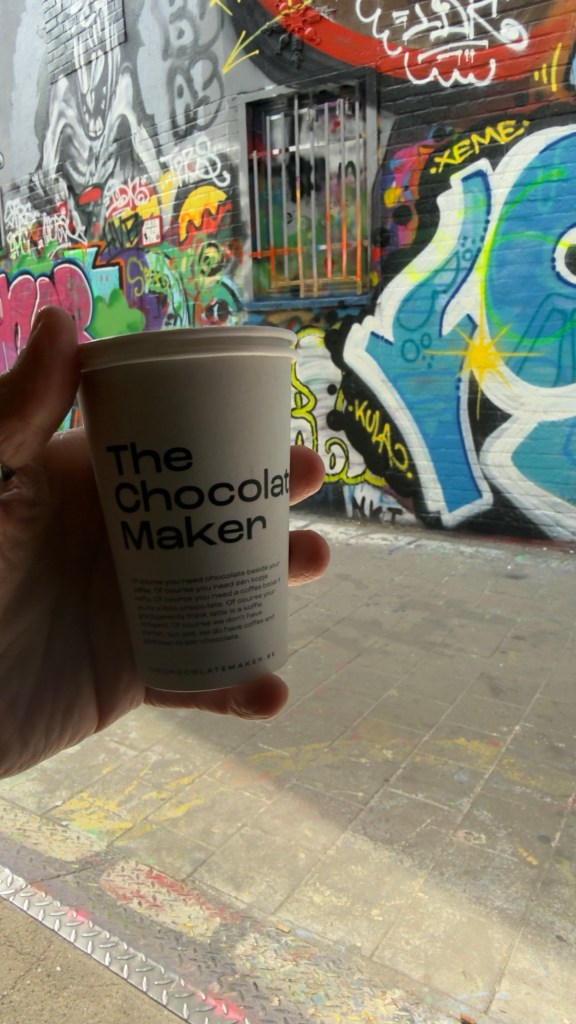
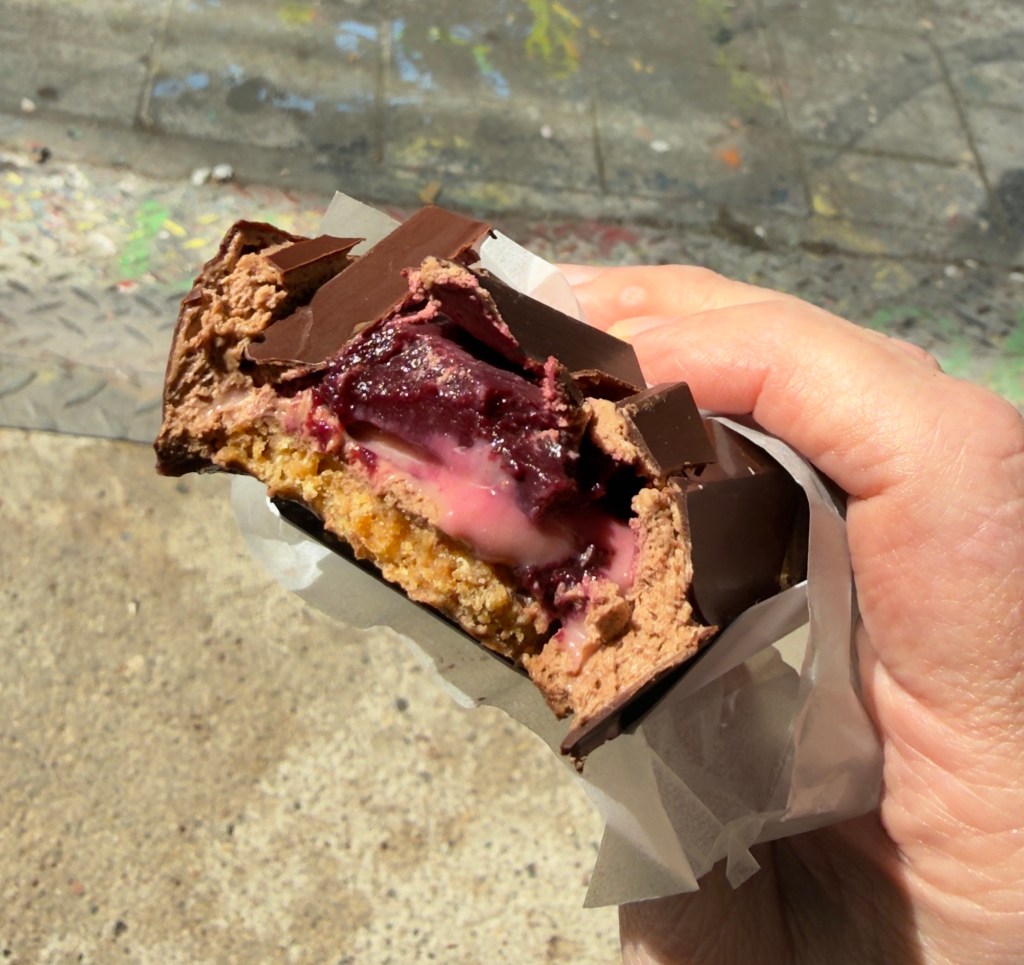
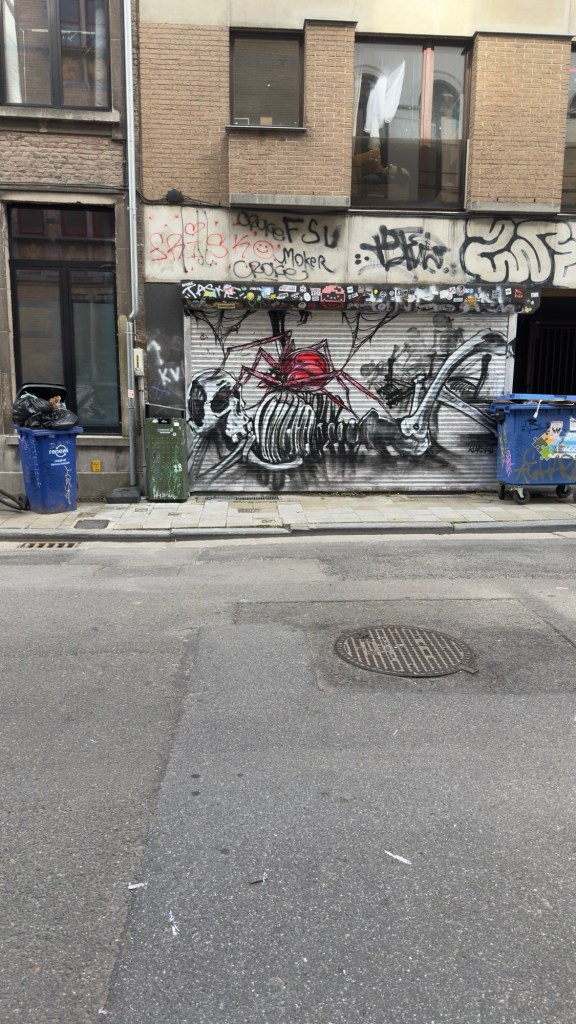
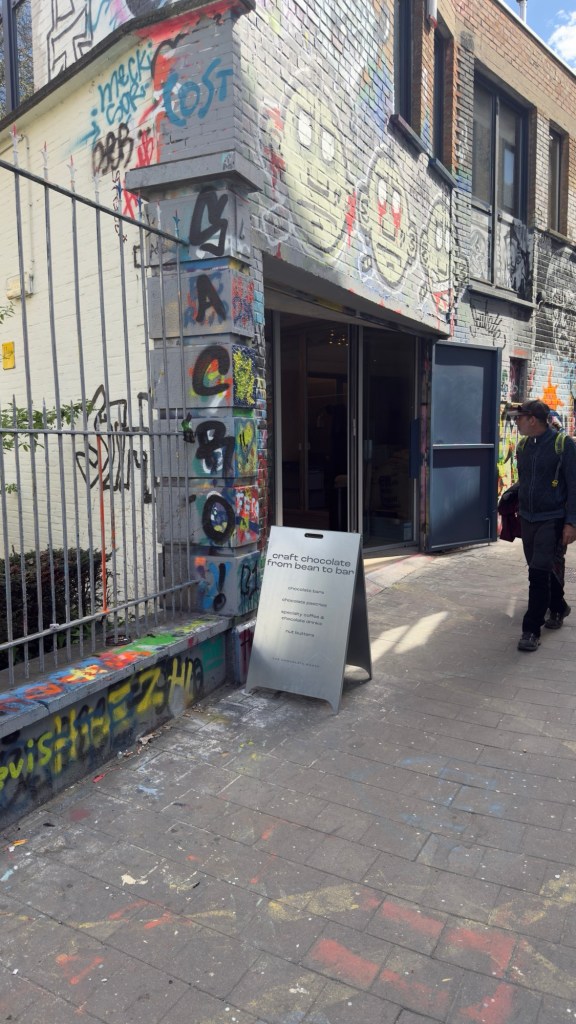
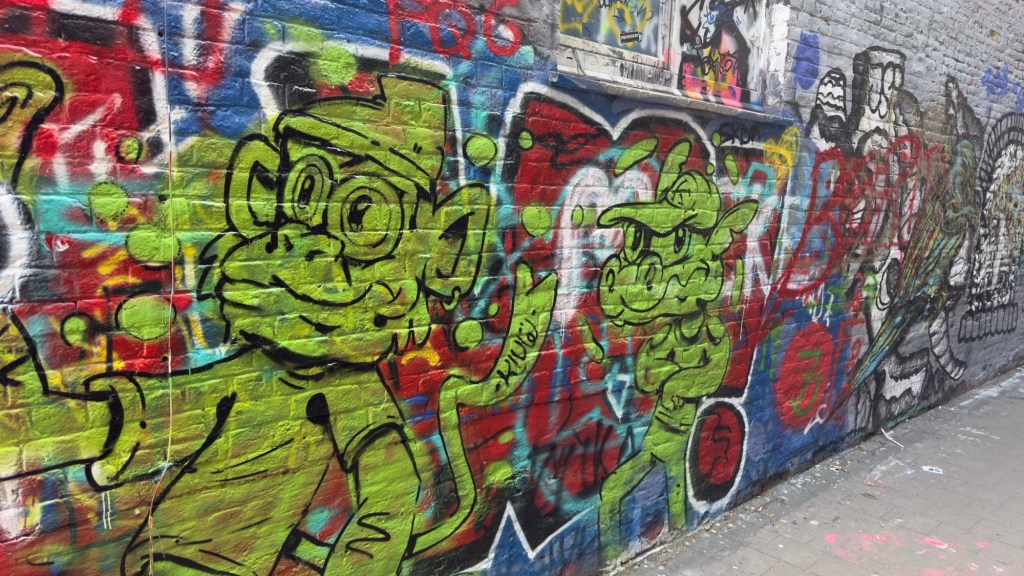
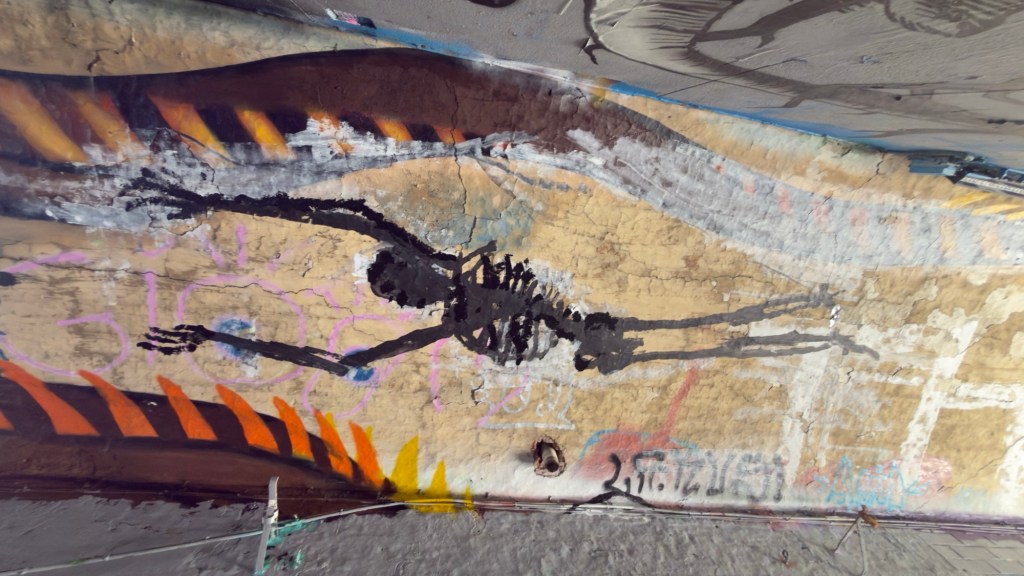
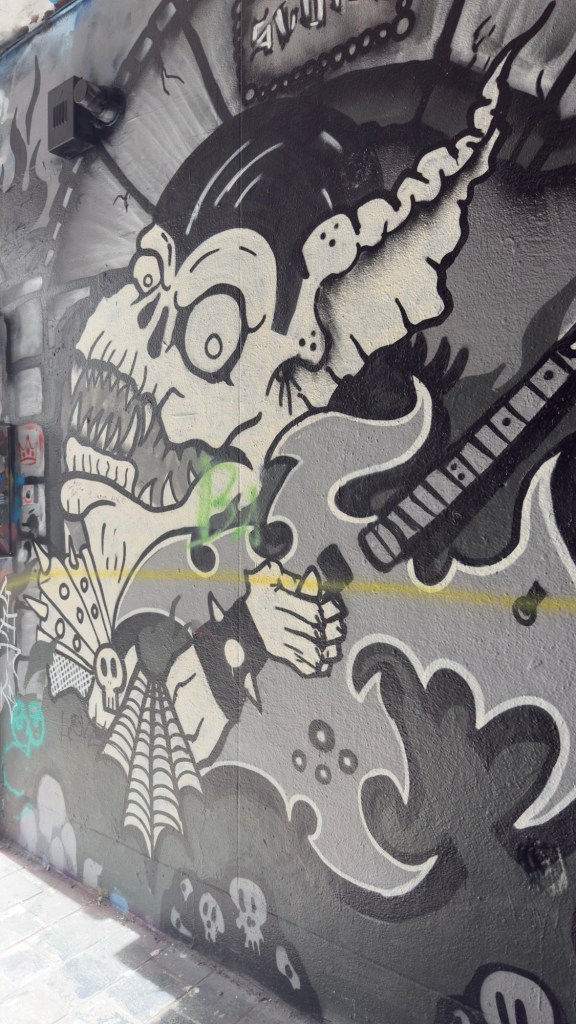
And now for something completely different! Graffiti Alley… this narrow alleyway is covered from floor to ceiling in graffiti. There is only one shop along the way, and they serve an exceptional espresso and make the most decadent chocolate treats—mine was a cookie filled with raspberry cream and covered with dark chocolate. Yeah… I ate it all.
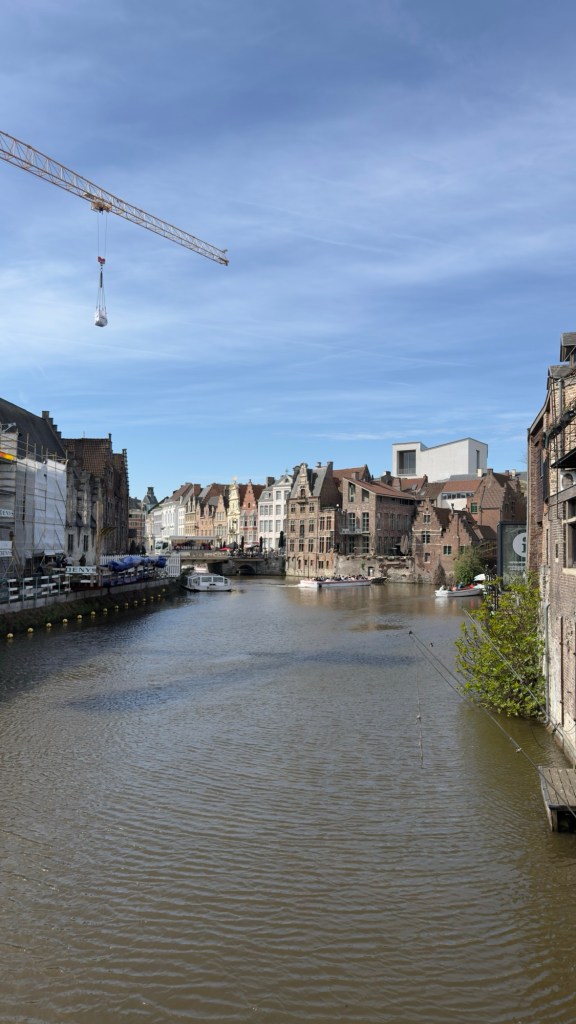
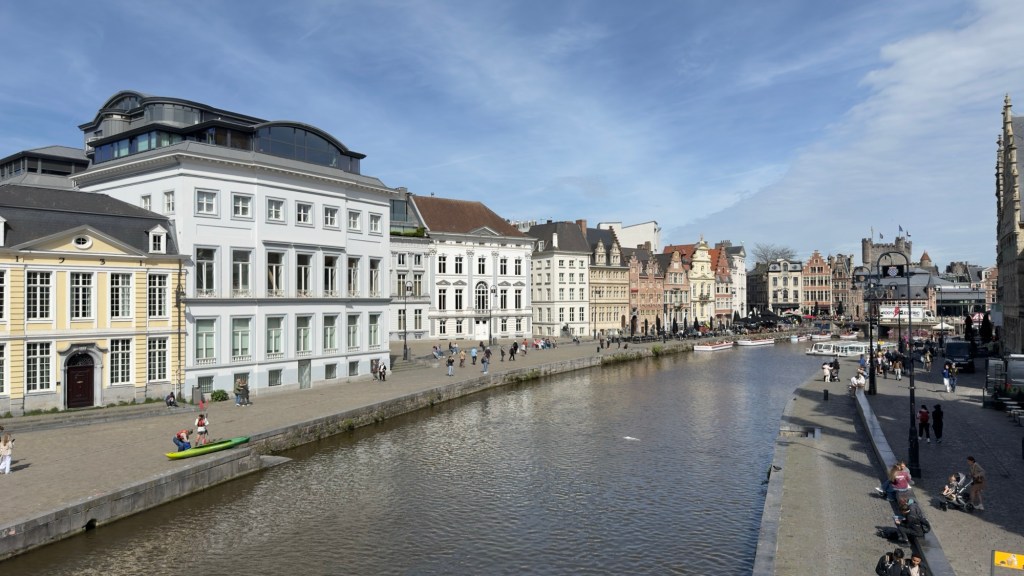
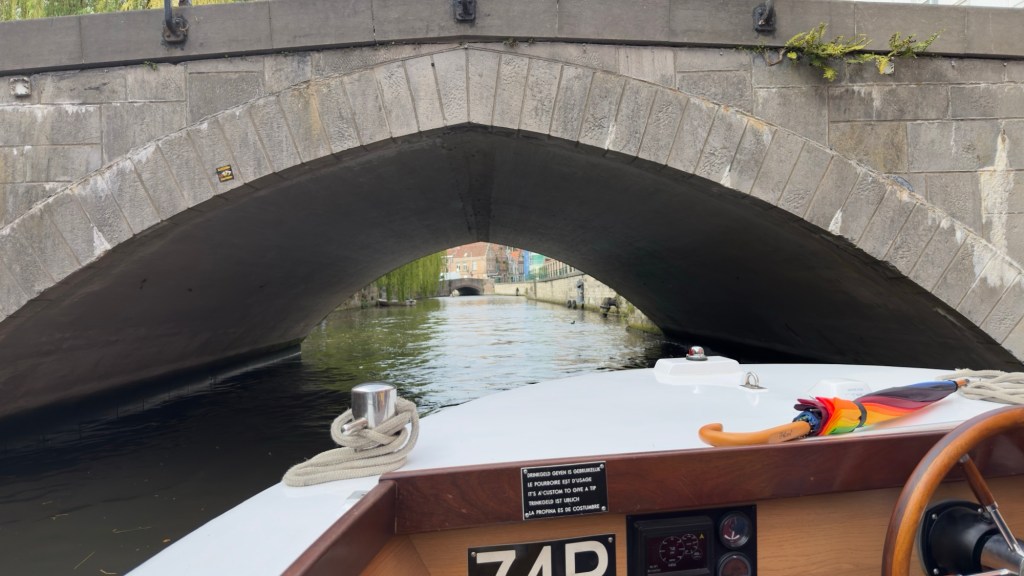
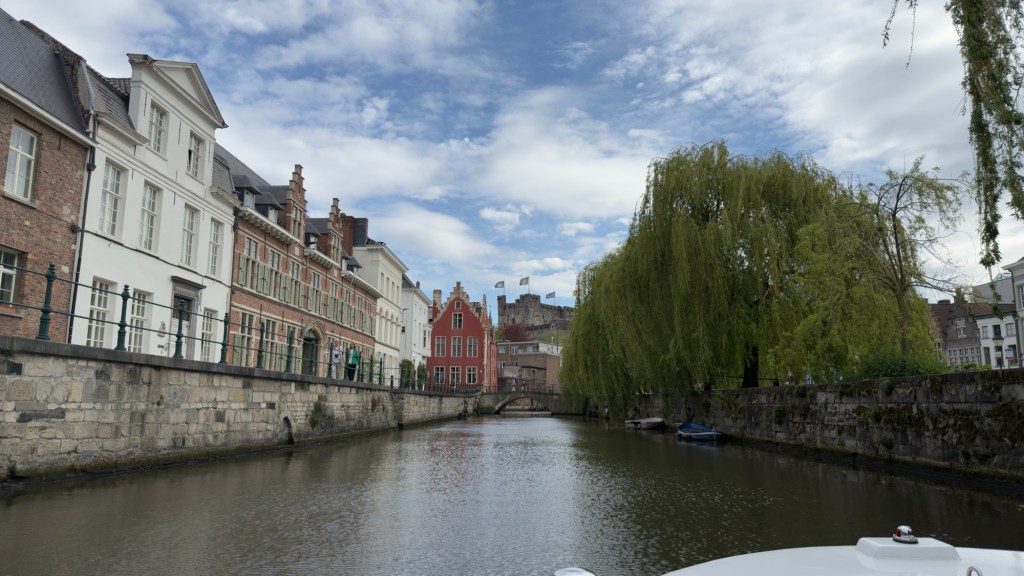
At this stage, the dogs were barking, and I was ready for a sit-down, although not quite ready to return to the hotel. A fifty-minute canal tour proved to be just the ticket.
The tour guide—who could jump from English, French, German, and Flemish without skipping a beat—actually took his hands off the wheel and took the same picture above. Said it was his favorite view and this was the most beautiful he had ever seen it. I thought I had better do the same.
That is all the photos for now. I returned to the hotel, had a nice cold Belgian beer…
…and worked on that short story for the Writing Battle. Perhaps I shouldn’t be drinking beer while writing, because it has taken a turn for the more-weird-than-usual, but it is fun. Tomorrow is museum day. I’ll try to do more writing with the post but I do hope you enjoy today’s pictures. They truly do none of this beautiful city justice.
Day nine of Japan started with a nine-hour nap. That was absolutely brilliant. Afterward, I got up and started moving. I had a nice breakfast downstairs, and then it was time for church.
I had the option of attending an English language service, but I chose a Japanese one instead. I wanted the experience of it. The rhythm of the service is the same and they provided me a bulletin in English so that I could follow along with the lessons. It worked out just fine. It was beautiful. I wish I knew what the priest was saying because he was very excited about it. Regardless, his enthusiasm was catching, and I felt like I had definitely heard a good sermon.
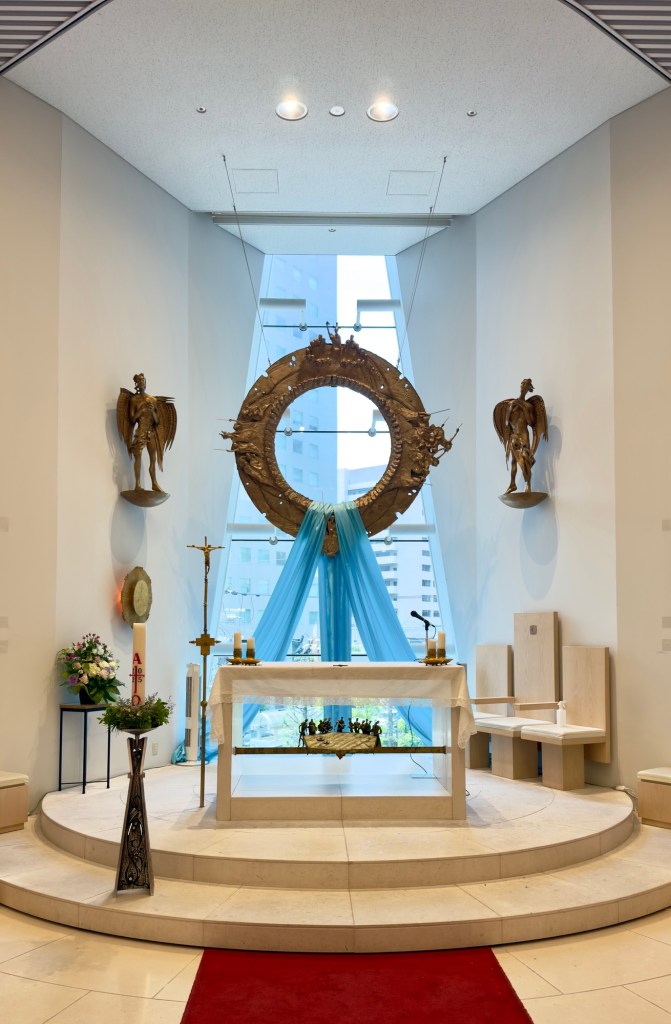
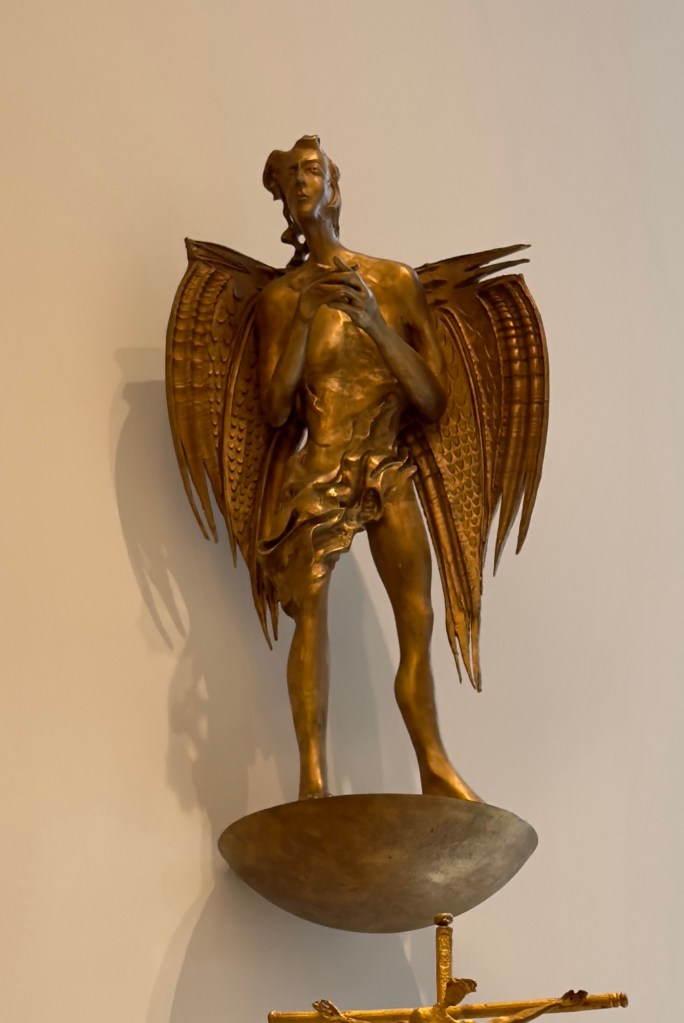
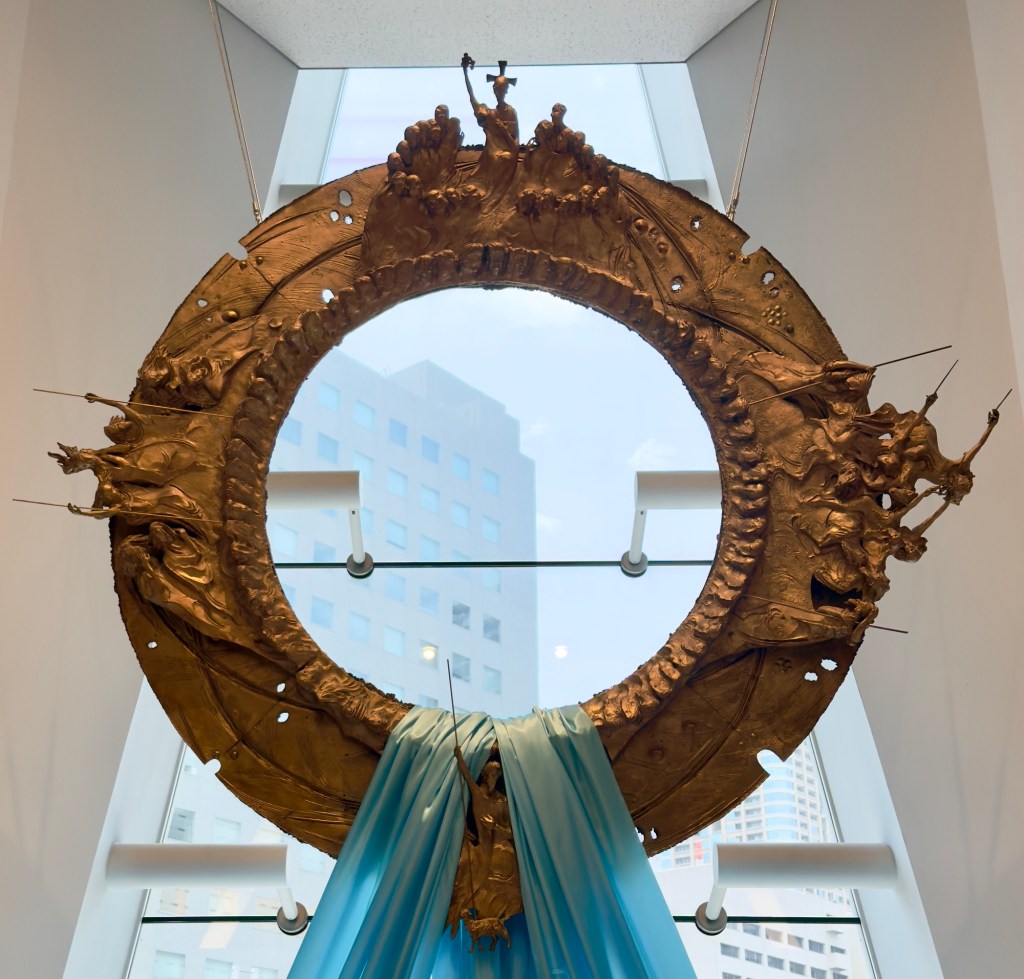
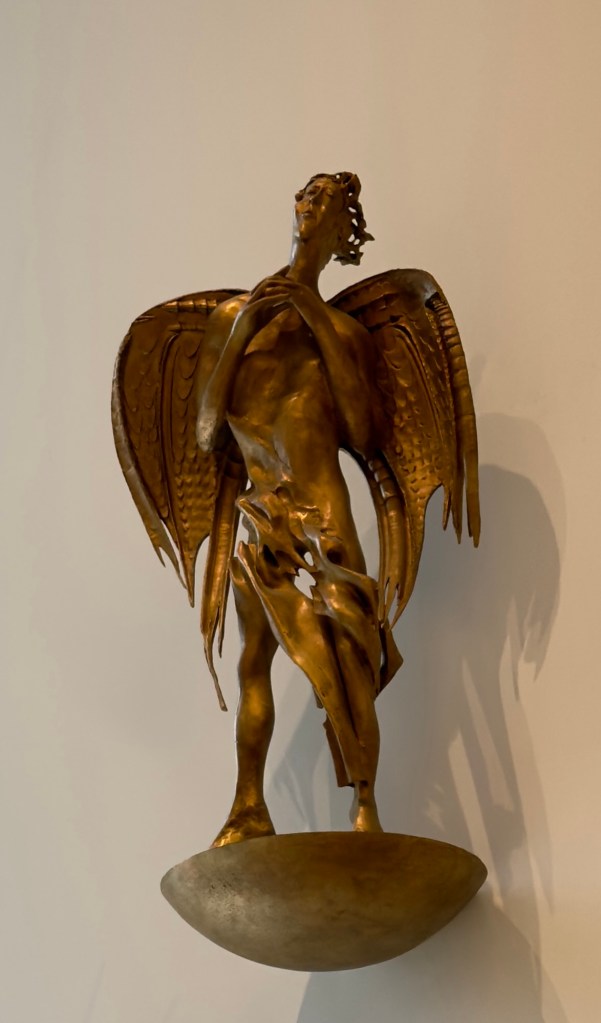
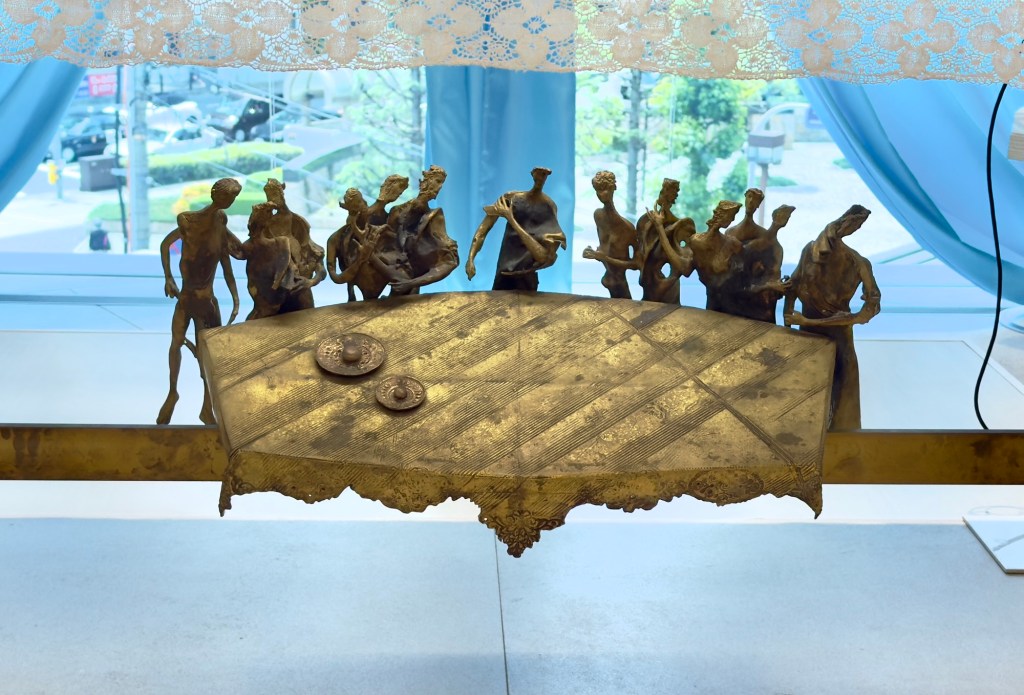
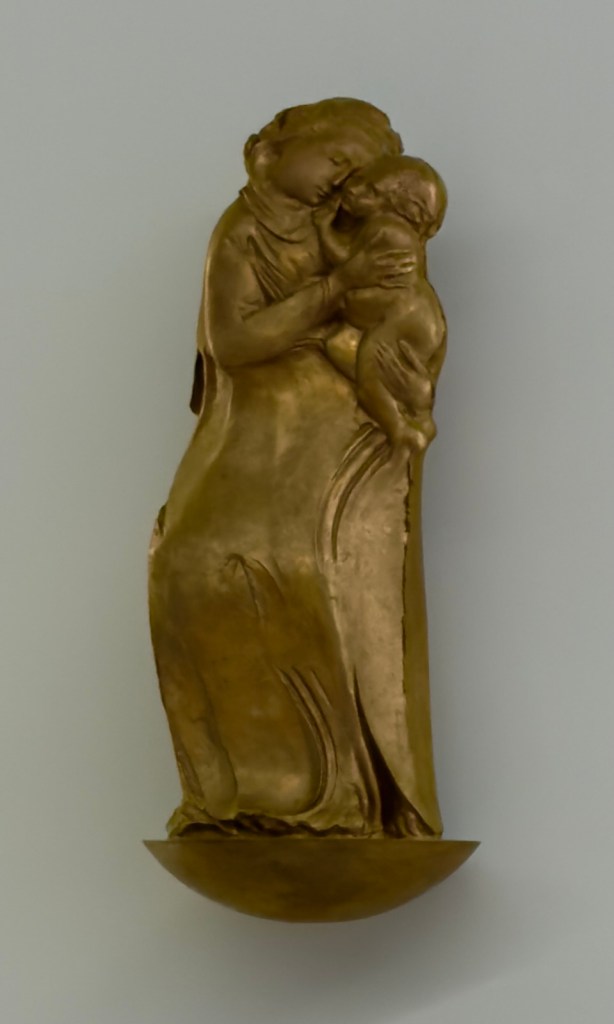
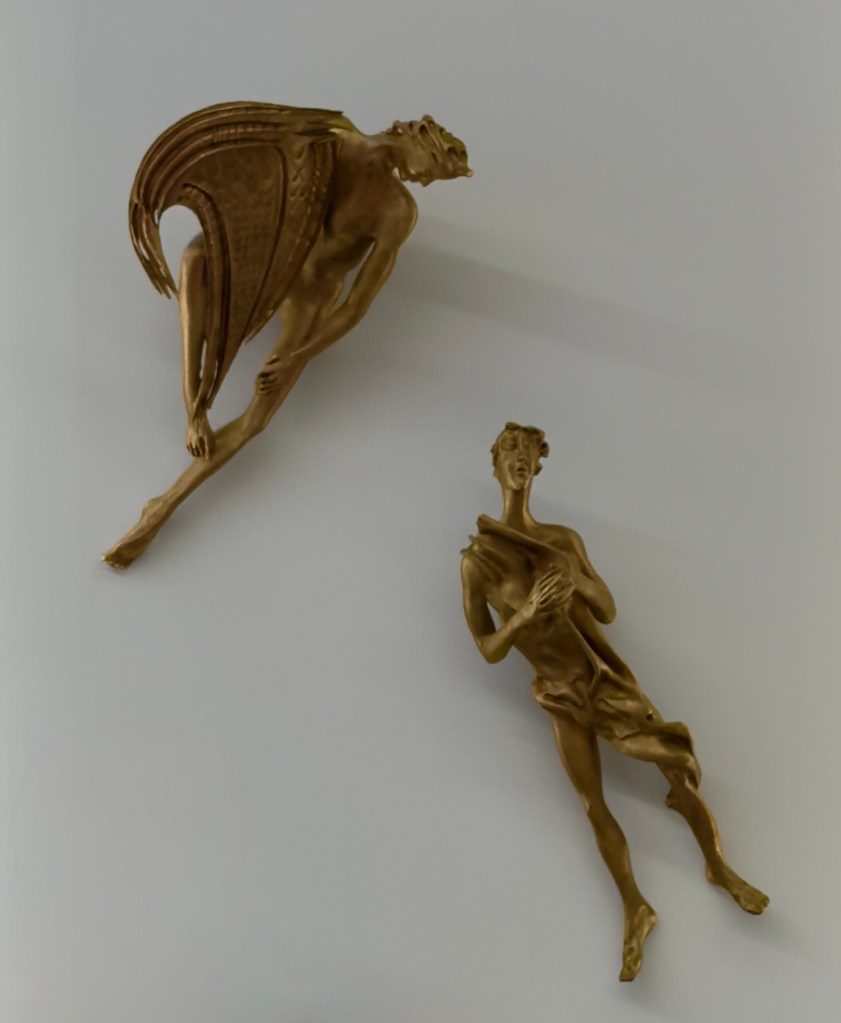
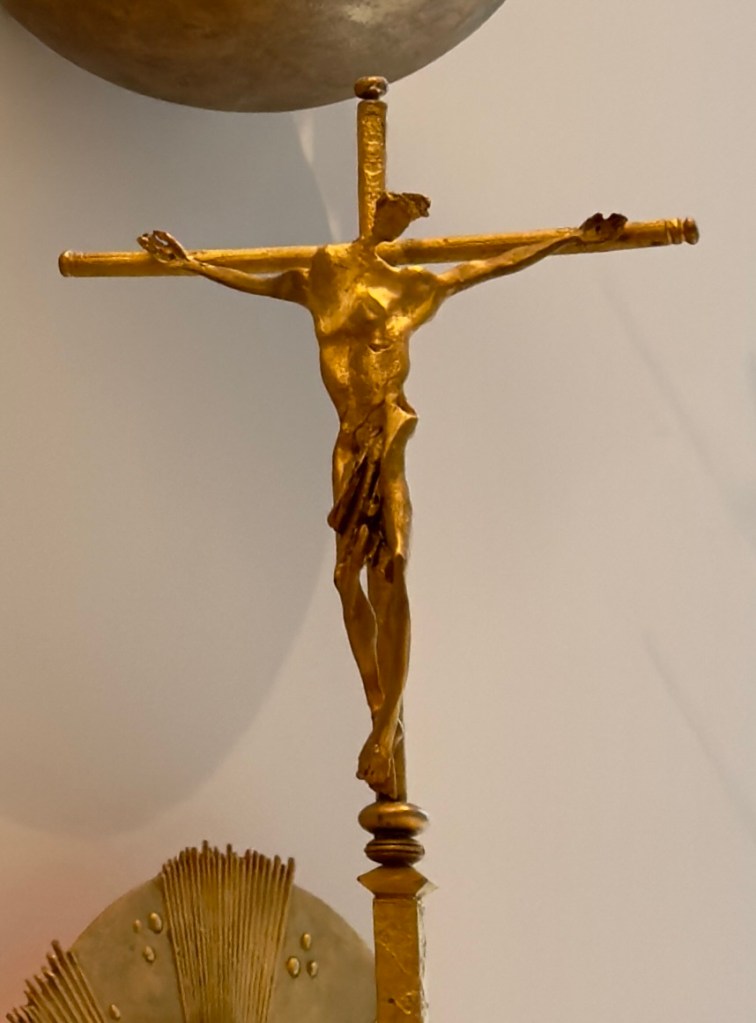
The works in the church were produced by Cecco Bonaotte, and the design of the church was done by his son, Pier Paolo Maria Bonanotte.
This church was planned by 5 churches in umeda area, Osaka. It is a four-story complex facility, produces an impressive space with the fusion of tradition and modernity. In other stories of the building, there are the satellite campus of Sophia University, the bookstore of Sanpaolo, which deals with the books of Catholic and so on.
Utilizing the natural light, the pure white church marvelously brings out the grace and lightness of the bronze sculpture by Bonanotte.
Beneath the altar / Last Supper
Processional Cross
The sanctuary was quite full (I was the only non-Japanese), and the congregation was very welcoming. If you find yourself in Osaka, I can highly recommend Holy Family to you.
Oh… I don’t know what kind of wafers they used for Mass, but they were “different.” I may have to try and find them for St. Matthew’s. Definitely not your standard styrofoam.
After all that work, It was time for an early afternoon snack. I went to my local favorite—Minori. Enid does not need another Mexican restaurant. It needs an Açai Bowl restaurant!
Peanut butter with honey, almonds, blue berries, strawberries, banana, peach, coconut, granola, açai. Yum!
After a brief rest, I headed back out. While wandering the city, I bumped into something and can’t seem to get it off my arm. Very strange. Maybe it’ll wash off tomorrow.
Being Sunday night and all, I thought the city would be quieter. That was not the case. I suppose they are getting in every minute of the weekend before back to work.
And, if you stand in this one spot for long enough, the camera comes on and your up on the big screen. Yes. I’m a dork, and stood there and took a picture of me taking a picture of myself.
That is all for today, my Japan virtual companions. Tomorrow is my last day here, and I have only one item remaining on my Japan itenerary. Am I ready to come home? I suppose I probably am. I miss you all and I miss The Queen. So, for now, I’ll leave you with this thought…
You all know that I make wine, and many of you know that my wine is good. My wine is so good that even former Baptists like it. Given that, I don’t mind telling you a couple of short wine jokes.
It’s funny how eight glasses of water a day seems impossible, but eight glasses of wine is a sign of a good meal.
I’ve trained my dog to bring me a glass of red wine. It’s a Bordeaux collie.
I was having wine with my wife when she said, ‘I love you so much, you know. I don’t know how I could ever live without you.’ I said, ‘Is that you or the wine talking?’ She said, ‘It’s me talking to the wine.’
One of the funniest water-into-wine skits I’ve seen has Jesus and the disciples going to a fancy restaurant. The waitress comes up to the table and asks them what they’d like to drink, at which point they all start to giggle. Jesus elbows Peter to get him to stop, then says to the waitress, “We’ll just have water.” And then they all fall out.
In John’s Gospel, Jesus performs many “signs” and turning the water into wine at the wedding in Cana is the first. In looking at it more deeply, we can see that this one event defines Jesus’ mission and purpose—transforming the lesser into something greater—the fulfillment of its higher purpose.
This week, during our Wednesday night study of the Pivotal Players of the Church, we learned about the life and teachings of the Venerable Fulton Sheen, and this idea of the lesser being transformed into the greater came up. It was summarized in the video, so I went looking for Sheen’s actual words, and I found them. Sheen writes, “The sunshine, the carbons, and the rain could never share the life of the plant unless they died to their lower existence and were assumed or taken up into plant life. Plants could never share the sensitive and locomotive power of animals, unless they died to their lower existence and were taken up by the animal. None of the things in lower creation could live in man, and share his arts, his sciences, his thinking and his loves unless they ceased to be what they were, submitting to the death of knife and fire.” (These are the Sacraments, 1962)
If the sunlight, elements, and rain are to fulfill their higher purpose, they must give themselves up and be absorbed into the vine and the grapes. If the grapes want to ascend into and fulfill their higher purpose, they must be picked and crushed. If the wine wants to achieve its higher purpose, it must be consumed by a person.
So that the lesser can become greater, the lesser must die to itself and become a part of something else. So, then, how can we become greater and fulfill our higher purpose? St. Paul tells us, “I have been crucified with Christ. It is no longer I who live, but Christ who lives in me. And the life I now live in the flesh I live by faith in the Son of God, who loved me and gave himself for me.” (Galatians 2:20) I have been crucified with Christ—I have died to myself—and have become a part of Christ Jesus.
We fulfill our higher purpose not by living our best life but by giving up our life, participating in Jesus’s life, and serving His purposes. How do we do this?
These days, it’s a hard thing to “sell.” We have so many other options of things to do and see—books, movies, internet, sports, hobbies etc., etc., etc. All of these are our attempts to find true fulfillment in our lives. However, to fulfill our higher purpose, we must die to self and participate in the life of Christ. We do this by being filled with God’s Holy Spirit and then—and this is the hard sell—participating in the life and ministry of the Church, for the Church is Christ’s Mystical Body.
In his book, The Mystical Body of Christ, Fulton Sheen says, “What now is this new Body which Christ assumed after He had ascended into His glory, to which He sent His heavenly Spirit, and through which He continues to exercise His office as Teacher, King, and Priest? If I said it was the Church, I would not be believed. I will therefore let St. Paul say it clearly and unmistakably: ‘Who now rejoice in my sufferings for you, and fill up those things that are wanting of the sufferings of Christ, in my flesh, for His Body, which is the Church.’ (Col 1:24)” (p.37) Paul rejoices in his suffering for he knows it is serving God’s purposes and Christ’s Body—the Church. To achieve his higher purpose, Paul knows that he must be caught up in the Body of Christ, the Church.
Remember when John was baptizing on the banks of the Jordan River? Following Jesus’ baptism, Jesus’ “popularity” began to eclipse John’s. Some came to John and asked him what he thought about this, to which John responded that he had told them all along that he was not the Christ, and there was another coming. His conclusion, “He must increase, but I must decrease.” (John 3:30) To fulfill our purpose, those words must become ours. “Jesus must increase, but I must decrease.” The Mystical Body of Christ—His Church—must, through our participation, increase, and for this to happen, we must decrease.
Today is our Annual Meeting. There’ll be good food, vestry elections, reports given, budget shared, all sorts of fun stuff. However, the meeting is ultimately about us and how we, as the Body of Christ in this place, are dying to self and fulfilling our purpose in God’s Kingdom on Earth. God will not force us. We are quite free to choose. Jesus turned water into wine, and the water had no say in the matter, but we do. Jesus could say He chooses to transform us into the very best, and we could respond, “Ya know… thanks, but I’m happy being water.” However, if we say, “We will die to self and decrease, so that You may increase in us,” we will become something extraordinary.
I believe we have already begun that transformational process—you’re already a pretty tasty Bourdeaux Collie—but there is always more “dying” that must occur. Therefore, as individuals, we must ask, “How might I decrease so that Christ Jesus can increase in me?” and, as the Body of Christ, we must ask the same.
We generally begin the Annual Meeting in the Parish Hall, but today, I would like to start it now so that our first action together is receiving the Body and Blood of our Savior in the Eucharist. This will nourish our spirits and help us continue on the path to achieving God’s higher purpose for our lives and His Church.
Let us pray: Almighty and everliving God, source of all wisdom and understanding, be present with those who take counsel in this Annual Meeting of St. Matthew’s for the renewal and mission of your Mystical Body, the Church. Teach us in all things to seek first your honor and glory. Guide us to perceive what is right, and grant us both the courage to pursue it and the grace to accomplish it; through Jesus Christ our Lord. Amen.
The human body is a fantastic creation, yet most of us don’t give it a second thought until something breaks. It’s a bit like what Jerry Seinfeld said, “The human body is like a condominium. The thing that keeps you from really enjoying it is the maintenance.” Outside of the maintenance, when we do think of it, we are primarily concerned with the outward appearance. Am I fit? How’s my hair? Do I have blemishes? “Honey, does this dress make me look fat?” That sort of thing. However, as interesting as all that can be, what goes on below the surface of the flesh is mindblowing—a few examples.
Did you know that when you listen to music, your heartbeat changes and attempts to mimic the beat? It is why soothing jazz slows you down, and that old-time rock-n-roll gets your blood moving.
The fastest-moving muscle in your body is the one that controls the contractions in your eye, helping you to focus. It does its job in 1/100th of a second.
Every second, you produce 25 million new cells.
If you live to 70, your heart will beat about 2.5 billion times; it is the only muscle that never gets tired.
The one fact that seems beyond belief is the circulatory system. A newborn’s circulatory system—all the arteries and veins—if stretched end to end, is 60,000 miles long. When you are an adult, it reaches 100,000 miles.
All this and more is happening, but when we look at another person, we see none of it.
If you’ve seen any of my travel pictures, you probably picked up on the fact that I haunt churches. The churches are the number one places to see when I visit a new city. I don’t know much about architecture or art, but I love the feel of them—how you can sit quietly and be surrounded by the centuries of prayers, sense the individuals who walked through and learn of the great history that took place in and around those walls. And most of all, to simply be there. Inside, you experience the awe and reverence that spills from your soul as the church’s grandness speaks of the greatness of God.
When I’m visiting one, I never think about everything that is going on behind the scenes. I don’t think about the choirmaster toiling away in a back office seeking the perfect hymn to fit with the upcoming services or the organist, who spends hours practicing so that the music is perfect. I don’t think about the individuals who polish the floors or pay the bills. When I see an ornate pulpit, I don’t necessarily think of the priest—I say to myself, “Man, I sure would like to preach from there.” It never crosses my mind that they may have a new refrigerator that makes a weird banging sound, but they can’t get anyone out to look at it, so they must call repeatedly. I can’t imagine someone there spending a couple of hours researching how to get the oxidation off the big red doors so that they aren’t the big pink doors. I don’t think about any of those things and so many other details. I am allowed to experience the greatness of God and His majesty and to worship when I am there. Why? Because I may not be thinking about or doing all those things, but someone is.
The pictures of the pyramids are on the front of your bulletin. I was looking at something and came across the one on the right. The pyramids are in the distance, with the city at the forefront. I wondered where that was. As it turns out, it is the exact same location as the picture on the left. That image on the left is how I always thought of the pyramids—isolated from the world, surrounded by the beautiful sands of the desert, the clear blue sky, and the remarkable symmetry of the structures, but it is only the angle from which you are looking. I had no idea. If we were there, facing the pyramids from the angle of the picture on the left, that is what we would see. If we turn 180°, the city is right there in all its chaos!
Walking into this church, I have the benefit of being able to see it from many angles. This—looking out at you—is my favorite view. It is like seeing the pyramids in all their glory—beautiful sand, blue sky, perfectly ordered—but if I change the angle and “look behind me,” it can be wild. Everything that had to take place and get done so that we could be here at this very moment, experiencing God together. However, what is even more fascinating is all that occurred in the past so that we could be here in the first place.
There’s a great film, Lucy, with… hubba hubba, you guessed it… Scarlett Johansson. In one scene, she sits in an office chair in Times Square in New York. Then, she swipes her hand and begins a rapid rewind of time. She stops the rewind; it is still Times Square, but it is being built. She swipes again; the city is gone, and she is seated in front of several Native Americans. Again, she swipes and continues to go further and further back. Through the process, she sees all that had to take place for her to be in that present moment. What if we could do the same with St. Matthew’s? What would we see? Not just what took place in the past week for us to be here but what took place over the centuries for us to be here. We would see the Bishops and the clergy and the people and would see the Land Run. Further back, we would see the establishment of the Anglican Church in the New World, and further and further until we see Jesus standing in front of a tax collector, saying to him, “Follow me.”
During all that 2,000-year history, you will discover many great women and men who made it possible for us to be here today. They are the ones we celebrate on this All Saints Day, but as I was thinking about them, I thought again about sitting in Scarlett’s chair and not swiping back, but instead swiping forward—into the future. If we did, what would we see in this place?
James Lloyd Breck is one of the saints of our Church. He was a great missionary and, in 1842, founded Nashotah House, the seminary I attended. He died in 1897, and on a gray autumn day in October, the people gathered at Nashotah House to lay him to rest. In attendance were Bishop Daniel Sylvester Tuttle, the first missionary Bishop of Montana, and Bishop Francis Key Brooke, the first Missionary Bishop of Oklahoma. Bishop Tuttle spoke at the graveside.
“There was a Grecian race in which the runners were charged to care not for themselves, nor indeed for each other, but for the torch they bore. As one and another, wearied and overcome, fell by the way, he held aloft his torch, handing it to a comrade who seized it quickly and sped on. So, with the torch borne by the Christian man. It has a triple flame: God’s truth, Christ’s love, men’s good. We are to hold it up and pass it on. One or another of us is soon to fall in the hard-trodden, dusty path. But never mind us, it is dust to dust, though it may be sacred dust that falls, and God will take care of it. Do not mind us; seize the torch, we pray you, and push on to the blessed goal.”
Those who went before us, all the Saints and that Great Cloud of Witnesses, carried that torch, and when they fell, someone else picked it up. And so, it is now our turn. We must pick up the torch with its triple flame, “God’s truth, Christ’s love, men’s good,” and carry it into the future so that when we fall back into dust, there will be someone new to pick it up and carry on.
It is a gift to be able to gather in this place, to be concerned with nothing other than the worship of the One True God, and to have fellowship with one another. It is a gift, but we must all turn and understand what makes this gift possible.
Like the saints that have gone before us, we have the responsibility to pick up that torch with its triple flame and carry it so that when the next generation picks it up, it is burning all the brighter.
How are we able to carry it? We carry it through our service to one another and the church—our attendance and participation in corporate worship, volunteering, helping in the various ministries, going out into the community and proclaiming the Gospel through word and deed, and financially supporting the Church as we are able.
We celebrate All Saints Day to honor those who have gone before us and to remind ourselves of who we are to become.
So, if you sit in Scarlett’s chair and fast forward into St. Matthew’s future, what do you want to see? When you see a vision of that future, ask yourself, “How can I help create that?” Then, in faithfulness and obedience, commit yourself to God, pick up that torch, and carry on.
Let us pray: Almighty ever-living God, by whose gift we venerate in one celebration the merits of all the Saints, bestow on us, we pray, through the prayers of so many intercessors, an abundance of the reconciliation with you for which we earnestly long. Through our Lord Jesus Christ, your Son, who lives and reigns with you in the unity of the Holy Spirit, God, for ever and ever. Amen
The words of the Exsultet, “This is the night, when…”
This is the night when the Church attempts to read all of Holy Scripture in one sitting.
This is the night when the choir and organist threaten to go on strike if I add one more piece of music.
This is the night when the parish administrator double-dog dares me to make one more change to the bulletin.
This is the night when the congregation asks, “Are we there yet?”
This is the night, the eve of our salvation when we enter into the darkness of the tomb and create a spark that becomes a flame that sets the whole world ablaze with the Light of Christ.
This is the night when we baptize Nolan, and Crawford receives his first communion.
From the song, December, 1963, by Frankie Valli and the Four Seasons, “O, what a night!”
Of all the liturgies throughout the church year, this is the highest and most grand. It is the culmination of all the other days and festivals, from the Incarnation to the Transfiguration to Good Friday to Easter. On this night, we remember all that God has done for His people, we give thanks for what He has done for us, and we celebrate the bringing into the Kingdom those new members who receive the cleansing that comes through Baptism and the participation of others in Christ’s body by becoming one with Jesus through receiving the Holy Sacrament. O, what a night.
Tonight is a reminder that we are not alone in this world. It is a reminder that the Church Triumphant—those who have gone before us—and the Chruch Militant—we today—are bound together in love through baptism into Christ’s death and resurrection. That through Jesus’ giving of Himself, we truly become one with Him and each other.
I will not be long-winded tonight because everything you see and hear is a sermon. So, I’ll encourage you to be one in Christ Jesus. So many things seek to divide us, but the bonds of love are stronger than any of these, and the only way those bonds can be severed is if we intentionally cut them ourselves.
You are Christ’s one holy catholic and apostolic Church. Let us receive Nolan into our family through her baptism and then participate with Crawford in his first communion. O, what a night.
“The candidate for Holy Baptism will now be presented.” BCP p.301.