Sermon: Agnes


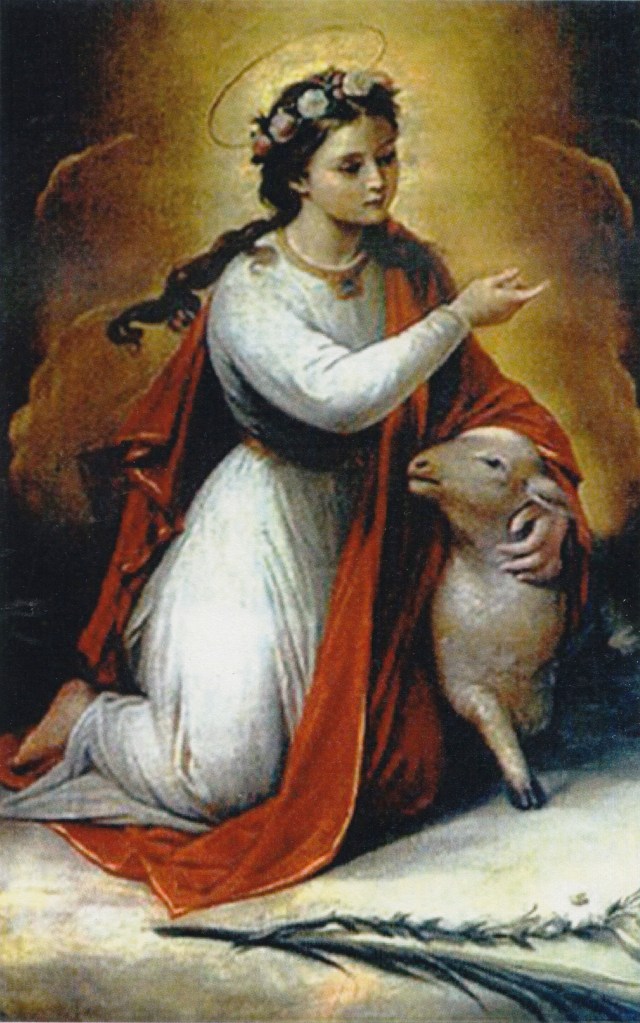
When I was 12 years old, my biggest concern was whether I was going fishing or hunting. It didnโ€™t matter much to me. When our Saint for the day, Agnes, was 12, her biggest concern was avoiding being married off. She was a very beautiful girl and from a wealthy family. It sounds wrong to us, but 12 was about the right age for young girls to be married in the 300s, when Agnes was alive.

Agnes, however, had different plans. She said, โ€œI am already promised to the Lord of the Universe. He is more splendid than the sun and the stars, and He has said He will never leave me!โ€ โ€œJesus Christ is my only Spouse.โ€ That didnโ€™t go over with the many suitors, some of whom were much older, and one eventually accused her of being a Christian before the governor, which was illegal. At age 12, Agnes was beheaded for her faith. St. Abrose remembers her in his treatise On Virgins.

โ€œToday is the birthday of a virgin; let us imitate her purity. It is the birthday of a martyr; let us offer ourselves in sacrifice. It is the birthday of Saint Agnes, who is said to have suffered martyrdom at the age of twelve. The cruelty that did not spare her youth shows all the more clearly the power of faith in finding one so young to bear it witness.

โ€œThere was little or no room in that small body for a wound. Though she could scarcely receive the blow, she could rise superior to it. Girls of her age cannot bear even their parentsโ€™ frowns and, pricked by a needle, weep as for a serious wound. Yet she shows no fear of the blood-stained hands of her executioners. She stands undaunted by heavy, clanking chains. She offers her whole body to be put to the sword by fierce soldiers. She is too young to know of death, yet is ready to face it. Dragged against her will to the altars, she stretches out her hands to the Lord in the midst of the flames, making the triumphant sign of Christ the victor on the altars of sacrilege. She puts her neck and hands in iron chains, but no chain can hold fast her tiny limbs.

โ€œA new kind of martyrdom! Too young to be punished, yet old enough for a martyrโ€™s crown; unfitted for the contest, yet effortless in victory, she shows herself a master in valor despite the handicap of youth. As a bride she would not be hastening to join her husband with the same joy she shows as a virgin on her way to punishment, crowned not with flowers but with holiness of life, adorned not with braided hair but with Christ himself.

โ€œIn the midst of tears, she sheds no tears herself. The crowds marvel at her recklessness in throwing away her life untasted, as if she had already lived life to the full. All are amazed that one not yet of legal age can give her testimony to God. So she succeeds in convincing others of her testimony about God, though her testimony in human affairs could not yet be accepted. What is beyond the power of nature, they argue, must come from its creator.

โ€œWhat menaces there were from the executioner, to frighten her; what promises made, to win her over; what influential people desired her in marriage! She answered: โ€œTo hope that any other will please me does wrong to my Spouse. I will be his who first chose me for himself. Executioner, why do you delay? If eyes that I do not want can desire this body, then let it perish.โ€ She stood still, she prayed, she offered her neck.

โ€œYou could see fear in the eyes of the executioner, as if he were the one condemned; his right hand trembled, his face grew pale as he saw the girlโ€™s peril, while she had no fear for herself. One victim, but a twin martyrdom, to modesty and to religion; Agnes preserved her virginity, and gained a martyrโ€™s crown.โ€

A Saint that demonstrates that Godโ€™s love and grace can extend to any, even the very young.

Sermon: Wedding – Kyler and Sophie


The Gospel reading from the fifteenth chapter of St. Johnโ€™s Gospel takes place at the Last Supper. There, Jesus says, โ€œMy command is this: Love one another as I have loved you.โ€ When the disciples heard this, they might have been taken aback at first, but after a while, they may have come to the conclusion that they could do it. โ€œI can minister to the sick, as Jesus did.โ€ โ€œI can help feed the hungry as He did.โ€ โ€œI can preach the Gospel.โ€ โ€œI can even be a servant to all.โ€

However, that was the fifteenth chapter; in the nineteenth chapter of John, the day after the Last Supper, Jesus radically redefined the meaning of the command to love one another as He loved us. Jesus demonstrated that His love extended far beyond ministering, serving, and preaching โ€” it extended all the way to Golgotha and His death on the Cross. 

What makes this such a great challenge for us today is that this radical commandment of Jesusโ€”love one another as I have loved youโ€”has crossed the centuries to us gathered here today. At first, we might be tempted to interpret it as the disciples didโ€”โ€œI can be a good person.โ€ โ€œI can take care of those in need.โ€ โ€œI can feed the hungry.โ€ But we know, Jesus, just as He did with the Apostles, has much more in mind.

However, we might still want to dilute it to make it more acceptable. Simpler. We might say, โ€œI will love you as much as you love me,โ€ or โ€œI will care for you as much as you care for me.โ€ The issue with this is that this kind of love is based on our own strength, with all the conditions we set. Done in our own strength, it might sound good, especially on days like today, but it can also turn sour rather quickly, because โ€œI will love you as much as you love meโ€ can also mean โ€œI will be as angry with you as you are angry with me,โ€ or โ€œI will forgive you when you forgive me.โ€ We know, this is not what Jesus intended.

No. Jesus said, โ€œLove one another as I have loved you.โ€ There are no addenda, footnotes, or appendices to this statement, which means we are called to love one another sacrificiallyโ€”to the Cross. How can we do this? Iโ€™m not sure itโ€™s even possible, but maybe we can learn a few things from those who have tried.

About twenty years ago, I had the blessed opportunity to officiate at the renewal of wedding vows for Ronny and Bunny, who had been married for fifty years. Several days before the service, I received a letter from their daughter, who had asked her mom, โ€œHow is it that two people can stay in love for so long?โ€ Her mom replied, โ€œWe chose to.โ€ Bunny went on to say, โ€œEvery morning when I get up, I choose to be in love with your dad. And because I love and respect him so much, I donโ€™t get angry with him. I couldnโ€™t imagine hurting someone I care so much for or even making the least bit angry or uncomfortable. Donโ€™t hold grudges. Instead, tell him when he makes you upset. It is just as easy to put the toilet seat down as it is to pick up socks. Hugs are a great way to dispel anger. And most importantly, the advice that makes the most sense is simply to choose to be in love.โ€ Before the renewal of vows, I had the opportunity to visit with Ronny and ask him the same thing. His advice was basically the same. โ€œChoose to be in love.โ€

When Jesus said, โ€œLove one another as I have loved you,โ€ I believe this is at least a beginning of what He had in mind. It involves dying to self so that we all can have life. As Bishop Barron often says, to love someone is to โ€œwill the good of the otherโ€โ€”to set aside our own desires so the needs of others are fulfilled.

Therefore, before God and these witnesses, I charge you, Kyler and you, Sophie, in the Name of Christโ€™s one holy catholic and apostolic Church to love one another as Christ Jesus has loved you. To build a loving home that the Lord may bless, to live your lives to the fullest, but to always remember that it can only be done through Christ Jesus our Lord. Amen.

Sermon: Dorothy Sayers


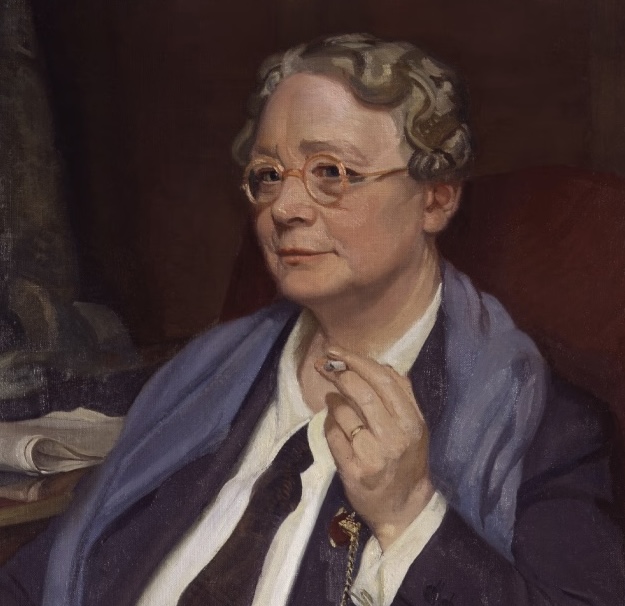
Dorothy Sayers is not one of those capital โ€œSโ€ saints, but she is on the Episcopal/Anglican Church calendar for her contributions to writing. 

Her father was an Anglican priest, so she knew the church arena well, and she had a talent for conveying the Christian message in ways that made it more understandable for the general public. One of these writings was the radio play The Man Born to be King.

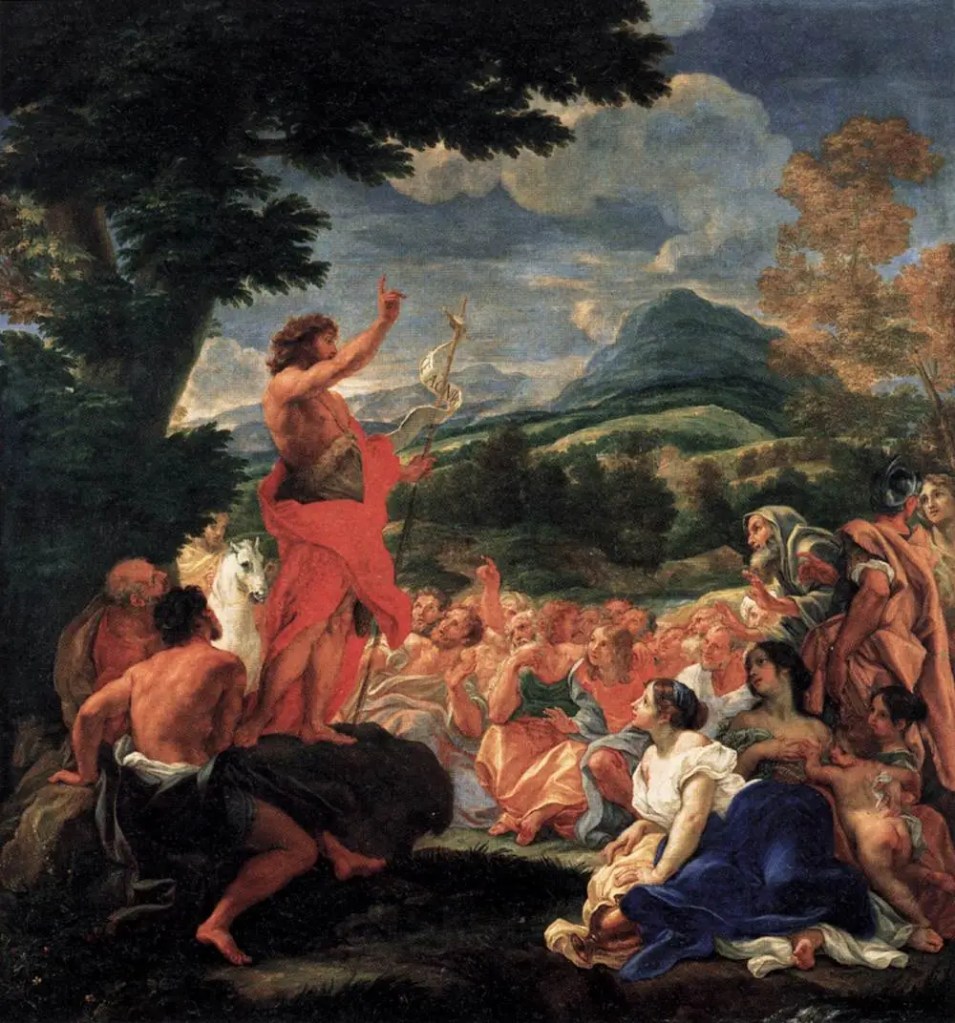
In one scene, she has a family driving out to see this new prophet in the land, John Baptist. Thereโ€™s quite a bit of interaction from the crowd, but Iโ€™ll mostly share with you the words of John.

JOHN BAPTIST: Men and women of Israel! Once more, once more I call you to repent. And quickly. For God’s Kingdom is coming as the Prophets foretold. Not in some distant future. Not a year or a week hence. Not tomorrow. But nowโ€ฆ Are you ready for it? You know very well you are not. For years, you have been saying, “Some day, some day the tide will turn. Someday, someday Messiah will come, and all will be well with Israel.” But your hour is upon you-Messiah is at your very gateโ€”and what will he find when he comes? I see a worldly priesthood, a worldly ruler, a worldly peopleโ€”a nation of shopkeepers and petty bureaucrats, their hearts fixed on cash and credit, and deaf and blind to righteousness. Sackcloth and ashes! Sackcloth and ashes! The Kingdom is at hand, and you are not prepared. Now, now repent of your sins and the sins of the whole nation. Now let God wash away your guilt in the clear waters of Jordan. Wash and be clean, that you may be fit for the task that is laid upon you, for the great and terrible day of the Lord is at hand.

The Religous leaders show up. 

JOHN BAPTIST: Some of you, I see, are Pharisees. Religious men, keepers of the Law, patterns of respectable piety, what are you doing here? (with sudden violence) Hypocrites, humbugs, brood of vipers! Who warned you to flee from the vengeance to come?

CROWD (indignant murmurs): โ€œWell, I never.. insolence. Upon my word,โ€ etc. (mingled with) โ€œThat’s right! Give it to โ€˜em hot… confounded lot of prigs.โ€

JOHN BAPTIST: Yes, I know what you will say: โ€œWe need no repentance. We keep the Law. We are the privileged children of Abraham. God will look after us, whatever happens.โ€ Don’t flatter yourselves. God doesn’t depend on you. He can find His children everywhere. He could raise them out of these desert stones, which are no harder than your hearts. You too will be lost if you don’t repent and do better. Messiah is coming like a woodman with his axe, and all the rotten trees, all the barren trees, will be cut down at the roots and thrown into the fire. All of them.

When the crowd asks what they must do to be saved, JOHN BAPTIST says,

Be generous. Do more than the Law demands. You, there, with the good coatโ€”you don’t need a cloak as well. Give it to the naked beggar beside you. And you with the picnic basket, how about sharing it with some of these poor children! (his voice rising harshly again) Renounce the worldโ€”weep, wail, and beat your breastsโ€”and await the Kingdom in fear and trembling.

When the religious leader asked who he was, JOHN BAPTIST says,

JOHN BAPTIST: I am the herald of God’s Kingdom. I baptise, but only with the water of repentance. There is a far greater man coming soon. I shan’t be worthy so much as to tie his shoe-laces. He will baptise you with spirit and with fire.

CROWD: Where is he? Show us the Messiah! Show us the Christ!

JOHN BAPTIST: Christ will come among you like a man thrashing corn. He will gather the grain and burn the chaff. There will be a great purging of Israelโ€ฆ Make ready to meet him. Draw near, confess your sins, and be baptised in Jordan. (Source)

When it first aired, the atheist got all bent out of shape because the BBC was promoting Christianity on the radio, and the conservative Christians got all bent out of shape because she hadn’t used the traditional King James Bible version. However, the general public loved it, with students being let out of school early to catch the latest installment. And, for added credibility, if needed, C.S. Lewis told Sayers that every year, he used the print version of the play for his Lenten Devotional. Thatโ€™s good enough for me.

Sermon: Advent 3 RCL A – “Yes”


When it comes to daily devotional books that you might read as part of a spiritual practice, we most often think of ones that are uplifting and joyful. Something to give a good start to the day. Iโ€™ve come across several that I quit pretty quickly, but some I get very involved with. Few are specific for priests, but there are a couple, and one that I discovered several months back is The Dignity and Duties of the Priest, by St. Alphonsus Liguori. 

In the first few pages, I thought it would be inspiring and uplifting. There was a quote by St. John Chrysostom that was setting the toneโ€”โ€œPriests should be so holy that all may look to them as models of sanctity; because God has placed them on earth that they may live like angels, and be luminaries and teachers of virtue to all others.โ€ I read that and began to feel good about my calling, but then it took a turn. A couple of pages laterโ€”โ€œIn a word, [the priest] that is not holy is unworthy to approach the altar, because by the stains that he brings with him, he contaminates the sanctuary of God. Let him not approach the altar, because he has a blemish, and he must not defile my sanctuary.โ€ On the next page, a quote from Saint Augustine further illumines this: โ€œTo the Lord is more pleasing the barking of dogs than the prayer of such priests.โ€  

It was such a wonderful bookโ€”and I mean thatโ€”but there were mornings when I would look at it and say, โ€œYouโ€™ll get your turn. Give me a minute.โ€ Then I would read and get smacked againโ€”โ€œAt present, says the holy church, I am not persecuted by the pagans, for the tyrants have ceased, nor by the heretics, because there are no new heresies; but I am persecuted by the [priest], who by his scandals robs me of many souls.โ€ For such a priest, Liguori tells us, โ€œThe end shall be, first, abandonment of God, and then the fire of hell.โ€ 

I kept readingโ€”it actually changed my understanding of the priesthoodโ€”but I kept wanting him to throw me a bone. Give me some sign of hope, because there were times I felt convinced I had no chance of heaven.

Now imagine you are Jewish and living during the time leading up to the birth of Jesus. You attend synagogue every Sabbath. You understand the teachings of the Torah and sincerely want to follow them, but you find that every turn, you stumble over one aspect of the Law or another. The only way to enter Godโ€™s Kingdom is if you are without sin, but no sooner have you made the appropriate sacrifices at the Temple for the forgiveness of sins, you fall into another pit. You want to be holy, but there seems to be no hope.

Now, imagine you’re living in the small city of Nazareth. One night, after a long, hard day, you’re making your way home. As you walk, you recall all the times youโ€™ve failed God, and you understand the consequences of those failures. Yet, until you can return to the Temple again to make the necessary sacrifices, your salvation remains in question. In your fear and frustration, you stop along the way and lean against a wall just to have a moment of quiet. Then, you see a strange light begin to shine out of the window of the house youโ€™re leaning against. Just as you’re about to move on, you hear the sweetest voice begin to speak, and it stops you in your tracks. You have no choice but to listen.

โ€œGreetings, O favored one, the Lord is with you!โ€ Thereโ€™s a brief pause, then you hear, โ€œDo not be afraid, Mary, for you have found favor with God. And behold, you will conceive in your womb and bear a son, and you shall call his name Jesus. He will be great and will be called the Son of the Most High. And the Lord God will give to him the throne of his father David, and he will reign over the house of Jacob forever, and of his kingdom there will be no end.โ€

Another pause, then you hear a young womanโ€™s voice, โ€œHow will this be, since I am a virgin?โ€

The response comes immediately: โ€œThe Holy Spirit will come upon you, and the power of the Most High will overshadow you; therefore, the child to be born will be called holyโ€”the Son of God. And behold, your relative Elizabeth in her old age has also conceived a son, and this is the sixth month with her who was called barren. For nothing will be impossible with God.โ€

Imagine you’re listening outside the window as all this happens. You realize that it is an angel of the Lord speaking to the girl. What he offers is not only salvation for the girl, but for the whole worldโ€”yourself included. The angel is offering the hope you are so desperately seeking. You know that through the Son of God, whom the angel is speaking about, you will receive forgiveness of sin, you will be given the freedom to serve and worship God without fear, and that you will be set free from the sting of death. In that moment, you understand all of this, but you also realize that everything depends on one thingโ€”the young womanโ€™s response.

St. Bernard of Clairvaux wrote in a sermon about that momentโ€”a moment when all of creation held its breath, waiting for Mary to speak: โ€œYou have heard, O Virgin, that you will conceive and bear a son; you have heard that it will not be by man but by the Holy Spirit. The angel awaits an answer; it is time for him to return to God who sent him. We too are waiting, O Lady, for your word of compassion; the sentence of condemnation weighs heavily upon usโ€ฆ. Tearful Adam with his sorrowing family begs this of you, O loving Virgin, in their exile from Paradise. Abraham begs it, David begs it. All the other holy patriarchs, your ancestors, ask it of you, as they dwell in the country of the shadow of death. This is what the whole earth waits for.โ€โ€”Mary, what is your answer? On one side is condemnation and death, and on the other is the forgiveness of sins and life eternal.

As I read Liguori’s book, I kept asking, “Is there any hope?” And for you, standing outside the window, listening to the angel’s words, you’ve asked the same question: “Is there any hope?” Yes, there is. The greatest of all hope. Why? Because “Mary said: Behold the handmaid of the Lord; be it done to me according to thy word.” Mary said yes, and Hope Incarnate, the very Word of God, the Son of God, Christ Jesus the Lord, was conceived in the Virgin’s womb.

There is often confusion about why the Blessed Virgin Mary is held in such high esteem, but the answer lies in those few words of hers, for all of salvationโ€”ours, the world’s, all of creationโ€”hinged on her response.

That great Archbishop of Canterbury from the 11th century, St. Anselm, said, โ€œTo Mary God gave his only-begotten Son, whom he loved as himself. Through Mary, God made himself a Son, not different but the same, by nature Son of God and Son of Mary. The whole universe was created by God, and God was born of Mary. God created all things, and Mary gave birth to God. The God who made all things gave himself form through Mary, and thus he made his own creation. He who could create all things from nothing would not remake his ruined creation without Mary.โ€

If I could accomplish one thing today, it would be to increase your devotion to the Blessed Virgin Mary. Our salvation is through Christ Jesus aloneโ€”no one comes to the Father except through Himโ€”however, it was through Mary and her yes that Christ took on our flesh and, through that same flesh, was able to give us hope. As Iโ€™ve told you before, this hope we possess is not mere wishful thinking. Our hope in Christ Jesus is an unshakable knowledge and expectation of what the Father has promised all along. What is that promise? We read it in the:

โ€œHe has shown the strength of his arm,
he has scattered the proud in their conceit.

He has cast down the mighty from their thrones,
and has lifted up the lowly.

He has filled the hungry with good things,
and the rich he has sent away empty.

He has come to the help of his servant Israel,
for he has remembered his promise of mercy,

The promise he made to our fathers,
to Abraham and his children for ever.โ€

The Father has promised that we will be with Him in His Kingdom, where there will be no end, and it all started with Maryโ€™s โ€œYes.โ€

Maryโ€™s life is devoted to guiding us to her Son, our Savior, Jesus Christ. Offer your devotion to her. Respect her as Queen and mother, and through her intercessions, you will be drawn deeper into your relationship with the One True God.

Let us pray: Hail, holy Queen, Mother of mercy, hail, our life, our sweetness and our hope. To thee do we cry, poor banished children of Eve: to thee do we send up our sighs, mourning and weeping in this vale of tears. Turn then, most gracious Advocate, thine eyes of mercy toward us, and after this our exile, show unto us the blessed fruit of thy womb, Jesus, O merciful, O loving, O sweet Virgin Mary! Amen.

Pray for us, O Holy Mother of God, that we may be made worthy of the promises of Christ.

Sermon: Advent 2 RCL A – “Prophet’s Call”


The American Film Institute has several โ€œTop 100โ€ lists: 100 best movies, 100 best musicals, 100 best heroes and villains, and so on. They also have the โ€œ100 top movie quotes.โ€ Way down in the 80s, we have lines like, โ€œYo, Adrian,โ€ and โ€œMy Precious.โ€ Moving up into the 40s, there is โ€œShane. Shane. Come back,โ€ and โ€œStella! Hey, Stella!โ€ Then breaking into the top ten, there are โ€œGo ahead, make my day,โ€ and โ€œIโ€™m gonna make him an offer he canโ€™t refuse.โ€ Number one on the list, youโ€™ve got to love Rhett Butlerโ€”โ€œFrankly, my dear, I donโ€™t give aโ€ฆ.โ€ However, the one Iโ€™m thinking of today comes in at number ten, spoken by Travis Bickle, played by Robert De Niro, in Taxi Driver. The line: โ€œYou talkin’ to me? You talkinโ€™ to me!?โ€ (Source)

In our Gospel reading, when John the Baptist confronts the Pharisees and Sadducees, I can picture them glancing at each other, then at John, and in their best Robert De Niro impression, asking, โ€œYou talkinโ€™ to me?!โ€ And then John firing back with number forty-four on the AFI list, โ€œI see dead people.โ€ Okay. Enough of that. 

As we know, Johnโ€™s criticism didnโ€™t stop with the religious leaders. He was an equal-opportunity rebuker, and later, he would criticize Herod for marrying his brotherโ€™s sister, which landed him in jail and eventually led to his beheading. Yet for the prophets, including John the Baptist, they were almost always upsetting someone and finding themselves in danger.

In the Acts of the Apostles, the first deacon was Stephen. He said to the religious leaders, โ€œYou stiff-necked people, uncircumcised in heart and ears, you always resist the Holy Spirit. As your fathers did, so do you. Which of the prophets did your fathers not persecute? And they killed those who announced beforehand the coming of the Righteous One.โ€ (Acts 7:51-52) They then proceeded to stone him to death.

Despite the dangers of the job, the prophet’s role is to stir up the people and point out their errors, hoping they will return to God. In fact, they are responsible for the souls of the people before God. Speaking to Ezekiel, the Lord said, โ€œSo you, son of man, I have made a watchman for the house of Israel. Whenever you hear a word from my mouth, you shall give them warning from me. If I say to the wicked, O wicked one, you shall surely die, and you do not speak to warn the wicked to turn from his way, that wicked person shall die in his iniquity, but his blood I will require at your hand. But if you warn the wicked to turn from his way, and he does not turn from his way, that person shall die in his iniquity, but you will have delivered your soul.โ€ (Ezekiel 33:7-9)

Prophet: a dangerous job before the people and before God, yet God calls those He chooses. The Prophet Jeremiah said, โ€œThe Lord put out his hand and touched my mouth. And the Lord said to me,
โ€˜Behold, I have put my words in your mouth.
See, I have set you this day over nations and over kingdoms,
to pluck up and to break down,
to destroy and to overthrow,
to build and to plant.โ€™โ€
(Jeremiah 1:9-10)

The Lord chooses and sends His prophets to speak His words, not their own. Knowing this, you might think theyโ€”dare I say, โ€œWeโ€?โ€”would respond accordingly, but it was said, โ€œThe Lord, the God of their fathers, sent persistently to them by his messengers, because he had compassion on his people and on his dwelling place. But they kept mocking the messengers of God, despising his words, and scoffing at his prophets, until the wrath of the Lord rose against his people, until there was no remedy.โ€ (2 Chronicles 36:15-16)

The same was true with John the Baptist. The people heard what was said, but they did not respond according to the will of God. Instead, they became angry with these messengers and persecuted them, often putting them to death. Thank goodness we are not like them. We accept criticism and correction very well. When someone offers Godly corrections to us, we donโ€™t get angry. No, sir. We might get even, but we donโ€™t get angry! Right?

Let me ask you this: you hear John the Baptist crying out, โ€œRepent, for the kingdom of heaven has come near.โ€ How do you respond? The human thing to do is to look at everyone around you and say, โ€œDarn tooting! Yโ€™all need to repent! Get right with the Lord!โ€ The whole time, thinking John the Baptist couldnโ€™t possibly be talking to you. Or what about this: Christian groups love to quote this one from 2nd Chronicles: โ€œIf my people who are called by my name humble themselves, and pray and seek my face and turn from their wicked ways, then I will hear from heaven and will forgive their sin and heal their land.โ€ (2 Chronicles 7:15) Whatโ€™s the first thing to go through your head? โ€œIf those left-wingers or the fascist right (I too am an equal opportunity rebuker) would just learn to pray and follow Jesus, then this whole thing could be sorted out overnight!โ€ Can I get an โ€œAmenโ€? Why do we think this way? Isnโ€™t it obvious? This call to turn from wicked ways is about them, and has nothing to do with me! 

However, the prophet confronts us and says, โ€œOh, yes, it is. It is all about you. You are the one who needs to get right with God.โ€ Like everyone else, we donโ€™t much like hearing it, but we must be willing to listen to the words of John the Baptistโ€”โ€œRepent, for the kingdom of heaven has come near.โ€โ€”and allow those words to be spoken to us personally and as the Church. We must let God correct us so we are not the ones provoking His wrath. Through this process of correction, we are allowing him to perfect us. As the Lord told the church in Laodicea, โ€œThose whom I love, I reprove and discipline, so be zealous and repent.โ€ (Revelation 3:19)

How can we let the prophets’ words speak to us and correct us? There is a powerful phrase from Martin Luther: โ€œThe Cross tests everything.โ€  

If we test our thoughts, actions, and deeds the same way the Pharisees and Sadducees evaluated theirs, we respond like they didโ€”โ€œYou talking to me?โ€ However, if we test those same thoughts, actions, and deeds by the Cross, we may discover a different outcome. It might not be what we want to hear, but it will be God’s truth.

I wonder, if we are willing and brave enough to look closely, which part of ourselves, our lives, our being would we hesitate to put to the test of the Cross? I suspect there are aspects of all our lives that are much safer tucked away in their own personal niches, their own special places of worship within our souls, even illuminated with one of those little votive candlesโ€”areas that are far too cherished by the Great โ€œIโ€ to be put to such a test. Yet, if we did, if we nailed those silly notions to that most sacred tree, the Cross, well, they would likely scream out in protest and blasphemy, just like the wicked thief did who was crucified with Jesus. But in the end, we would be set free from those things that bind us.

The prophets deliver messages to a world that is broken, but their messages are also for us. Jesus says, โ€œHe who has ears, let him hear.โ€ (Matthew 13:9) I pray that if you hear in your soul John the Baptist calling you to repentance, donโ€™t be like those who become proud and angry. Instead, submit to the call of repentance and accept the forgiveness of sins; for as St. John tells us, โ€œIf we confess our sins, [God] is faithful and just to forgive us our sins and to cleanse us from all unrighteousness.โ€ (1 John 1:9)

Let us pray: 

O God,
You raised up St. John the Baptist
to prepare a perfect person for Christ.
We call upon St. Johnโ€™s intercession
to properly prepare us with a true
sense of repentance to receive Your
grace and salvation.
Make us faithful to Truth and justice,
as You did Your servant,
John the Baptist, herald of Your Sonโ€™s
birth and death. Lord, may You increase
Your life within us.
Amen.

Sermon: RIP – Mary Alice Stalcup


I came across a poem that I thought Mary Alice would like, but also one that feels as though she lived it. It is often attributed to St. Augustine, but it is much more contemporary than that. It was written in the early 20th century by German musician and teacher Georg Goetsch. The title: I Praise the Dance.

I praise the dance,
for it frees people from the heaviness of matter
and binds the solitary to community.
I praise the dance,
which demands everything:
health and a clear spirit,
a poised soul and a shining body.
The dance transforms the soul
into a dwelling of light.

O human, learn to dance,
for otherwise the angels in heaven
will not know what to do with you.

The dance is wholly from the beginning.
It is the movement of creation itself,
the becoming of all things,
their passing and their re-becoming.
The dance turns the deepest, holiest things
into visible and living form.

Dance,
because the whole of creation dances:
the sun, the stars, the earthโ€”
they all move in rhythm and harmony.
So too should you move in rhythm with God.

The author told us,

O human, learn to dance,
for otherwise the angels in heaven
will not know what to do with you.

I can assure you, you do not want to see me dance. Itโ€™s not pretty, but I do understand the deeper meaning of the author’s message. 

He is telling us that in this life, we are meant to find joy. We should learn not only to experience God through prayer and study but also to encounter Him in the people we meet. We are called to seek out ways in this lifetime to love, show compassion, practice our faith, and give of ourselves. Living this way allows those around us to experience glimpses of heavenโ€”the eternal life to come. From what Iโ€™ve learned, Mary Alice was just such a person. She was one who learned how to dance in her soul and showed others how to do the same.

You might think that someone who has lived such a life would face no troubles, but we know that’s not true. I recall the time St. Teresa of Avila was crossing a stream in winter. She lost her footing and fell into the icy water, then complained to the Lord about all her suffering. Jesus said to her, โ€œDonโ€™t complain, my daughter, this is how I treat My friends.โ€ To which Teresa responded, โ€œIf this is how you treat your friends, itโ€™s no wonder you have so few!โ€ 

Mary Alice, also a friend of Jesus, had every reason to complain just as St. Teresa did, but like St. Teresa, Mary Alice did not lose her faith. She heard those words of Jesus we read in our Gospel and lived themโ€”โ€œDo not let your hearts be troubled. Believe in God, believe also in me.โ€ Despite her suffering, she held onto her belief, her faith in Jesus, so that on this day, we can confidently say that she is dancing with the angels in Godโ€™s Eternal Kingdom.

Those of us gathered here today are saddened by our loss, but we can also rejoice in knowing that Mary Alice, through the power of the resurrection, is now truly home. We can also rejoice in the knowledge that a place has been prepared for us, and on the day of the Lordโ€™s choosing, he will gather us to Himself, where we will all be reunited in the very presence of His glory. As the Psalmist declares, โ€œThis is the Lordโ€™s doing, and it is marvelous in our eyes.โ€

Sermon: Francis Xavier

Peter Paul Rubens โ€“ย The Miracles of St. Francis Xavier

Francis Xavier was born in Navarre, Spain, in 1507. He later moved to Paris, where he studied for the priesthood and there he met St. Ignatius of Loyola. Together, along with four others, they formed the Society of Jesusโ€”The Jesuitsโ€”and became renowned missionaries.

Francis would live out this missionary zeal. In 1537, he moved to Lisbon, Portugal, and then traveled on to India. In one of his early letters to Ignatius from India, Francis shared the following:

โ€œWe have visited the villages of the new converts who accepted the Christian religion a few years ago. No Portuguese live hereโ€”the country is so utterly barren and poor. The native Christians have no priests. They know only that they are Christians. There is nobody to say Mass for them; nobody to teach them the Creed, the Our Father, the Hail Mary and the Commandments of Godโ€™s Law.

โ€œI have not stopped since the day I arrived. I conscientiously made the rounds of the villages. I bathed in the sacred waters all the children who had not yet been baptized. This means that I have purified a very large number of children so young that, as the saying goes, they could not tell their right hand from their left. The older children would not let me say my Office or eat or sleep until I taught them one prayer or another. Then I began to understand: โ€œThe kingdom of heaven belongs to such as these.โ€

โ€œI could not refuse so devout a request without failing in devotion myself. I taught them, first the confession of faith in the Father, the Son and the Holy Spirit, then the Apostlesโ€™ Creed, the Our Father and Hail Mary. I noticed among them persons of great intelligence. If only someone could educate them in the Christian way of life, I have no doubt that they would make excellent Christians.

โ€œMany, many people hereabouts are not becoming Christians for one reason only: there is nobody to make them Christians. Again and again I have thought of going round the universities of Europe, especially Paris, and everywhere crying out like a madman, riveting the attention of those with more learning than charity: โ€œWhat a tragedy: how many souls are being shut out of heaven and falling into hell, thanks to you!โ€

โ€œI wish they would work as hard at this as they do at their books, and so settle their account with God for their learning and the talents entrusted to them.

โ€œThis thought would certainly stir most of them to meditate on spiritual realities, to listen actively to what God is saying to them. They would forget their own desires, their human affairs, and give themselves over entirely to Godโ€™s will and his choice. They would cry out with all their heart: Lord, I am here! What do you want me to do? Send me anywhere you likeโ€”even to India.โ€

He saw all those priests hanging around Paris just twiddling their thumbs, and thought, if they could see what I see, if they had any passion for souls, โ€œThey would cry out with all their heart: Lord, I am here! What do you want me to do? Send me anywhere you likeโ€”even to India.โ€

Even the Apostle Paul teaches us that not all are called to be preachers and teachers, so not all are called to be missionaries; however, each and every Christian can pray the first part of that statement: โ€œLord, I am here! What do you want me to do?โ€

It’s a little scary to do this because you never know what God will say or ask, but whatever it is, it is His desire for your life. Pray the prayerโ€”โ€œLord, I am here! What do you want me to do?โ€โ€”then, when you hear Him calling, respond like the Prophet Samuel did when the Lord called to him: โ€œSpeak, Lord, for your servant is listening.โ€ (1 Samuel 3:9)

Sermon: Advent 1 RCL A – “Made New”

Photo by Fuu J on Unsplash

Dietrich Bonhoeffer writes, โ€œIf we want to be part of these events, Advent and Christmas, we cannot just sit there like a theatre audience and enjoy all the lovely pictures. Instead, we ourselves will be caught up in this action, this reversal of all things; we must become actors on this stage. For this is a play in which each spectator has a part to play, and we cannot hold back. What will our role be? Worshipful shepherds bending the knee, or kings bringing gifts? What is being enacted when Mary becomes the mother of God, when God enters the world in a lowly manger?โ€

What is taking place when Godโ€“Jesusโ€“enters the world? It was just a few weeks ago that our Gospel lesson was quite similar to todayโ€™s, focusing on Jesus’ prophecies about the end of days. The problem with such readings is that we can become so caught up in the โ€œwhat ifsโ€ and โ€œlooking for signsโ€ of the events themselves that we overlook the most important part.

So, if we look behind the curtain of all these events, what is really happening? From Bonhoeffer: โ€œWhat is being enacted when Mary becomes the mother of God, when God enters the world in a lowly manger?โ€ 

Since this is the first Sunday of Advent, the start of the Church year, it helps us understand because Advent should inspire a deep sense of anticipation โ€” an expectation of something new.

We talk of โ€œwars and rumors of wars,โ€ about one person being taken and another left behind, and about staying awakeโ€” yes, we are to do these things: watch, pray, remain alert as we seek Jesus coming againโ€”but there is much more to it than this.

Almost everyone knows at least rumors of the Book of Revelation with all its wormwood, four horsemen of the apocalypse, and bowls of Godโ€™s wrath. Most are aware of the Second Coming of Christ. St. John reports, โ€œI saw heaven opened, and behold, a white horse. And He who sat on him was called Faithful and True, and in righteousness He judges and makes war. His eyes were like a flame of fire, and on His head were many crowns.โ€ John continues, โ€œHe was clothed with a robe dipped in blood, and His name is called The Word of God. And the armies in heaven followed Him. Out of His mouth goes a sharp sword, that with it He should strike the nations. And He has on His robe and on His thigh a name written: KING OF KINGS AND LORD OF LORDS.โ€

As Christians, we hear those words and feel like the home team just won the big game at the last second, but what is it all really about? What is the purpose? The Book of Revelation has twenty-two chapters. Most of it focuses on the end of the worldโ€”apocalyptic writing. However, at the start of chapter 21, John writes, โ€œNow I saw a new heaven and a new earth, for the first heaven and the first earth had passed away. Also, there was no more sea. Then I, John, saw the holy city, New Jerusalem, coming down out of heaven from God, prepared as a bride adorned for her husband. And I heard a loud voice from heaven saying, โ€˜Behold, the tabernacle of God is with men, and He will dwell with them, and they shall be His people. God Himself will be with them and be their God. And God will wipe away every tear from their eyes; there shall be no more death, nor sorrow, nor crying. There shall be no more pain, for the former things have passed away.โ€™ Then He who sat on the throne said, โ€˜Behold, I make all things new. It is done! I am the Alpha and the Omega, the Beginning and the End.โ€™โ€

God says, I do all these things so that I may make all things new. At that, our excitement that the home team won is slightly diminished. It is like what we were talking about a few weeks agoโ€”waiting! We have to keep waiting for the Lordโ€™s return, but now we also have to keep waiting for things to be made new. 

Well, thatโ€™s just great! When the Lord returns, I will start to experience this new life. In the meantime, itโ€™s the same ol’ same ol.โ€™โ€ Thanks for playing. Please try again. St. Paul helps us understand that this โ€œNewโ€ is not only in the future but also something we can experience today. Paul writes, โ€œif anyone is in Christ, he is a new creation. The old has passed away; behold, the new has come.โ€ (2 Corinthians 5:17) Yes, the Kingdom of God is a future event, but it is also a present reality.

However, we still canโ€™t get all excited because we look around at the state of the world today and say, โ€œWell, Father John, if this is the new Kingdom of God, then Iโ€™ll take whatโ€™s behind door number three.โ€ And there is the rub. Today, we only see in a mirror dimly, for although we are made new in Christ Jesus, the world has not yet been made new. Paul says in his letter to the Romans, โ€œFor we know that the whole creation has been groaning together in the pains of childbirth until now. And not only the creation, but we ourselves, who have the firstfruits of the Spirit, groan inwardly as we wait eagerly for adoption as sons, the redemption of our bodies.โ€ (Romans 8:22-23) 

Creation suffers, and so do we, but we are a new creation. No longer subject to eternal death, but only a short sleep before the Great Day of the Lordโ€™s return, when all is made new. 

We live in this in-between timeโ€”the now and the not yetโ€”so we wait. As frustrating as that may seem, this waiting is what Advent is all about. Bonhoeffer writes, โ€œCelebrating Advent means being able to wait.โ€ However, he goes on to say, โ€œWaiting is an art our impatient age has forgotten. It wants to break open the ripe fruit when it has hardly finished planting the shootโ€ฆ Whoever does not know the austere blessedness of waitingโ€”that is, of hopefully doing withoutโ€”will never experience the full blessedness of fulfillment. For the greatest, most profound, tenderest things in the world, we must wait. It happens not in a storm but according to the divine laws of sprouting, growing, and becoming.โ€ Yes. We will watch, pray, and remain alert, and we will also wait.

Yet, in the midst of this waiting and becoming, God offers us glimpses of future blessings through the gifts of one another and the sacraments of the Church. Therefore, today, after Confession and before the Peace, we will offer the laying on of hands and anointing with oil. Through this sacrament of Unctionโ€”of healingโ€”I pray you will see and perhaps experience the new life God is offering you, and that it will give you the courage and strength to wait with perseverance for the newness to come.

Let us pray:
God of Love,
Your son, Jesus, is your greatest gift to us.
He is a sign of your love.
Help us walk in that love during the weeks of Advent,
As we wait and prepare for his coming.
We pray in the name of Jesus, our Savior.

Sermon: Christ the King Sunday RCL C


Things you didnโ€™t know (probably):

  • The oldest goldfish lived to be 43 years. 
  • The real name for a hashtag is an “octothorpe”. 
  • Before 2011, beer was considered a soft drink in Russia. 
  • It is impossible to hum while holding your nose. (As you will all be curious about that one, and not hear the sermon until you try, go ahead.)
  • A group of cats can be called a clowder, or a cluster, or a glaring, or a nuisance, or a pounce, or a clutter.
  • More than half of the world’s population is under 30 years old. 
  • The plastic tip on the end of a shoelace is called an “aglet”. 
  • The Caesar salad was created in Tijuana, Mexico, by an Italian immigrant named Caesar Cardini. 

It’s always good to be teachable and to learn new things. I never even thought about holding my nose while trying to hum until I read that (and tried). I would like to say that as I prepare sermons and teachings, I already know and understand it all, but each week I learn something new or gain a deeper understanding. This week was no different, even though it was something I already knew, I saw it with more clarity and fullness. 

Today is the last Sunday of the Church Year: Christ the King Sundayโ€”the day we celebrate the Kingship of our Savior, Jesus. When I reflect on this and the Kingdom of God, Iโ€™ve always viewed it as a Kingdom outside of myself. A Kingdom that I can walk through and work in. A Kingdom that I, if it is Godโ€™s will, can help move forward. But this week, I heard Jesus’ words in a different way. Which words were those? โ€œThe kingdom of God is not coming in ways that can be observed, nor will they say, โ€˜Look, here it is!โ€™ or โ€˜There!โ€™ for behold, the kingdom of God is within you.โ€

For me, Christ is the King I come before, kneel before, and desire to serve to the best of my abilities. I try to do His bidding as a faithful servant in His Kingdom, which is around me. However, what happens when I say, โ€œNot only do I live and work in the Kingdom of God, but the Kingdom of God lives and works within me?โ€ I understand Godโ€™s Holy Spirit working in me, just as I understand accepting Jesus into my heart, but what does it mean to have Godโ€™s Kingdom working within me?

What prompted me to meditate on this were the words in the notebook On Prayer by Origen of Alexandria, a second-century priest. He writes, โ€œThe kingdom of God, in the words of our Lord and Savior, does not come for all to seeโ€ฆ Thus it is clear that he who prays for the coming of Godโ€™s kingdom prays rightly to have it within himself, that there it may grow and bear fruit and become perfectโ€ฆ. The Father is present in the perfect soul, and with him Christ reigns, according to the words: We shall come to him and make our home with him.โ€ And a little further, Origen says, โ€œThere should be in us a kind of spiritual paradise where God may walk and be our sole ruler with his Christ. In us the Lord will sit at the right hand of that spiritual power which we wish to receive. And he will sit there until all his enemies who are within us become his footstool, and every principality [and power] in us is cast out.โ€

Listen to these words:

โ€œGod is the King of all the earth!โ€ (Psalm 47:7)

โ€œThe Lord reigns; let the peoples tremble!โ€ (Psalm 99:1)

โ€œWho would not fear you, O King of the nations?โ€ (Jeremiah 10:7)

โ€œKing of kings and Lord of lords.โ€ (Revelation 19:16)

โ€œThe LORD is king forever and ever.โ€ (Psalm 10:16)

What if we said that Jesus is Lord, Jesus is King, out there, but also in here? What if we understood that this King of all the earth can and will conquer His enemies in this world, but can also conquer the enemies within our souls? What would happen if you let the King of kings and Lord of lords reign within you to rule not only over your external life but also over your internal one? St. Paul tells us that โ€œour God is a consuming fire.โ€ (Hebrews 12:29) What if we allowed that consuming fire to burn within? Allowed is the right word because, so often, we hold God in check. 

Do you remember the story of Charlemagne, the Holy Roman Emperor? He wanted to conquer the world for Christianity and insisted that all his soldiers be baptized. They did. All but one hand was submerged, and in that hand they held a sword. It was a statement that declared there bodies belonged to God, but that hand and that sword belonged to Charlemagne. When we say we want the consuming fire of the King of kings to reign within us, like those soldiers, we sometimes tuck away a few things in a fireproof room, because weโ€™re willing to let God rule most of our lives but keep a few exceptions. Those few exceptions are the problem. Those few exceptions are what prevent us from fully submitting to the Kingship of Christ, which then causes a ripple effect, impacting not only the Kingdom of God within us but also the Kingdom of God in this world.

All I know about her is that her name is Amy and she is on the internet. (I promise this is not some weird story about me falling in love with the operating system on my computer.) Amy is someone who posts content online, and Iโ€™ve seen two of her posts. Anyway, she tells the story of going to the grocery store. At the checkout, standing in line in front of her is a man in his 70s. As they wait, one of the cashiers approaches and says, โ€œSorry, this line is closed, youโ€™ll have to go to that one.โ€ Amy does so, but the older man looks a bit confused, so he continues to stand there. After a minute, the cashier returns to him and repeats herself, and he understands. He moves toward the line she is in, but since sheโ€™s shifted, four more people are now behind her. Amy steps forward.

โ€œYou were in line in front of me,โ€ she says. โ€œYou can go ahead of me.โ€

โ€œAre you sure?โ€ he asks. โ€œAre you sure I was in front of you?โ€ Amy assures him that he was, and he says, โ€œThank you for your honesty. It doesnโ€™t happen very often anymore, and I really appreciate you being honest.โ€ She tells him it’s no problem, but he continues, โ€œIt is such an odd world that we live in now, and I donโ€™t know what to think of it anymore.โ€

She says, โ€œYeah, it is an odd ball world. I agree with you. Itโ€™s odd. Things are not going well for society right now.โ€

He responds, โ€œSometimes Iโ€™m happy that my life is almost over so that I donโ€™t have to live in this world anymore.โ€

Amy later asked herself, โ€œWhat if letting someone get in front of you in the line at the grocery store is a massive gesture of kindness? We have to do better as a society.โ€

If letting someone in front of us in line at the grocery store is the greatest act of kindness we can perform, then thereโ€™s not only something wrong with society, but also something deeply wrong with us. If someone is happy that they are nearing the end of their life because of how they are treated in the world, then the One who said, โ€œLove one another as I have loved you,โ€ is not the King of our lives. What is the solution? 

Today in our Gospel reading, we heard about Jesusโ€™ crucifixion. After those standing around and one of the others who had been crucified with Him finished taunting Him, the good thief said, โ€œJesus, remember me when you come into your kingdom.โ€ He had no hope of reaching Heaven for himself, but he at least wanted to be remembered. However, Jesus said to him, โ€œTruly I tell you, today you will be with me in Paradise.โ€

In this context, we see paradise as something to come; however, what did Origen say? โ€œThere should be in us a kind of spiritual paradise where God may walk and be our sole ruler with his Christ.โ€ We are to create within ourselves a paradise where the King of Heaven and the โ€œKing of all the earthโ€ can be the King within so that He might rule every aspect of our lives, and that, my friends, is a scary thing. St. Paul said in his letter to the Hebrews, โ€œIt is a fearful thing to fall into the hands of the living God.โ€ (Hebrews 10:31) It is a fearful thing to fall into Godโ€™s hands to be ruled, but I will guarantee you this: it will be a far more fearful thing to fall into His hands to be judged.

Within, many choose to establish their own kingdom and sit on a throne theyโ€™ve created for themselves so they might rule over their own lives. However, a wise person will realize that within they can create a paradise for the very Kingdom of God, and within that Kingdom, there can be a throne where the King of Glory is permitted to take His rightful seat. Your soul and this world need the Kingdom of God.

Allow yourself to be consumed by the fire of God so that He may reign in your life as the Righteous King.

Let us pray:
May the light of Christ, the King of all, 
shine brighter in our hearts, 
that with all the saints in light,
we may shine forth as lights in the world.
Amen.