Sermon: Proper 27 RCL A1 – “Stepping Out of the Circle”

Peppermint Patty in the Peanuts cartoon was never the greatest of students and didnโ€™t much care for school. On test day, she asked the teacher, โ€œWhat kind of test are we having today?โ€ The teacher replied, โ€œWaa wa waaa.โ€ Translated, that means โ€œMultiple choice.โ€ Peppermint Patty replied, โ€œGood! I choose not to take it.โ€

Portions of Jean-Paul Sartre’s writings can be summed up as โ€œWe are our choices.โ€ If you think on it, thereโ€™s a good bit of truth in that statement. We make choices about everything from whatโ€™s for breakfast (if we even decide to get out of bed) to careers and spouses. However, today Joshua puts before us a much bigger decision. In fact, there is none more important. He says, โ€œRevere the Lord, and serve him in sincerity and in faithfulness; put away the gods that your ancestors served beyond the River and in Egypt, and serve the Lord. Now if you are unwilling to serve the Lord, choose this day whom you will serve.โ€

We know that kingdoms and empires come and go, and one of the great empires was the Greek.

The Greeks came to power under the man we know as Alexander the Great; however, when Alexander died, the kingdom was divided into four kingdoms, and later Antiochus IV (he was a bad man) would rule the Seleucid kingdom. It was the largest by far and included the area along the Mediterranean Sea, but it wasn’t big enough to suit Antiochus, so he looked to expand south and take the Ptolemaic kingdom, which included Egypt. However, Rome was friendly with the Ptolemaic kingdom and wanted to keep them independent. Even so, in 168 BC Antiochus advanced almost to Alexandria in Egypt, but there he encountered a Roman ambassador.

The two men knew one another, and Antiochus greeted him as an old acquaintance. But the ambassador had not come for a friendly chat. He carried an order from the Roman Senate demanding that Antiochus withdraw his army from Egypt.

Antiochus read the order and told the ambassador he needed time to discuss it with his advisers.

The Roman ambassador didnโ€™t appreciate the answer, so he took his staff and drew a circle in the sand around Antiochus. In doing so, he said to Antiochus, โ€œBefore you step outside that circle, you will give your answer.โ€

There stood Antiochus, one of the worldโ€™s most powerful rulers, forced to decide. Would he obey Rome, or would he refuse and face the consequences? He chose to withdraw.

Joshuaโ€™s words to the peopleโ€”โ€œChoose this day whom you will serveโ€โ€”likely carried the same weight and urgency.

But an enormous difference separates these two encounters. Antiochus was compelled by Rome’s power. The people of Israel were being invited to respond to the God who had already delivered them, protected them, and loved them.

One decision was compelled by fear of an empire. The other was made possible by the grace God had already poured out upon His people and would continue to do so.

Last week, we talked about becoming saints, but how does that happen? It begins with us standing in a circle; however, before we even know we are to step out of it, God is already working within us. That work of God is called prevenient grace.

Iโ€™ve recently shared with you the verse from First John, โ€œWe love because [God] first loved usโ€ (1 John 4:19). That is essentially prevenient grace. It is the grace of God that comes before any response to Him on our part. It is God acting first, awakening our hearts and stirring within us the desire to know Him, to love Him, and to follow Him.

It is this grace that prompts us to choose to step out of the circle, but thereโ€™s a bit of a catchโ€”free will. You can choose to step out of the circle in response to Godโ€™s love and follow Him, or you can choose to step out of the circle and follow your own path. God will give you the grace to follow Him, but He will never force you. Choosing God and stepping out of the circle is the first of many steps, but stepping out of the circle without choosing God leads to consequences. It doesnโ€™t mean that God will abandon you. He will be there should you change your mind, but it is a path that, without God, leads to death.

But what happens if Godโ€™s prevenient grace works in our lives and we take that first step, having chosen God? Does God say, โ€œGood. Now youโ€™re on your own. Best of luck.โ€ No. After that first step out of the circle, we then have access to Godโ€™s sustaining grace.

St. Francis de Sales explains this with a beautiful parable about a king who loved his bride very dearly.

One day, as they were walking together, the bride suddenly collapsed. She was unconscious, unable to stand, unable even to help herself.

The king immediately knelt beside her. He took a precious medicine and gently gave it to her, reviving her until she opened her eyes and began to recover.

Then he helped her to her feet. But she was still weak, so he held her up. And when she began to walk, he supported her, carrying much of her weight.

Gradually, her strength returned. The king placed a healing salve on her heart, and eventually she became strong enough to walk on her own.

But the king never let go of her hand.

When the road was difficult, he steadied her. When she grew tired, he was there to support her. And should she stumble, he would be there to catch her.

She was truly walking. Every step was her own. Yet she could never have taken those steps without the king who had first restored her to life and who continued to sustain her along the way.

Francis tells us that the king represents God and the bride represents the human soul.

The bride cannot revive herself. The king must act first. And so it is with God’s prevenient grace. Before we ever reach for God, God has already reached for us.

But that grace does not destroy our freedom. We must respond. We must consent. We must choose to take his hand.

And having taken that first step, we discover that grace has not finished its work. The king continues to hold us, strengthen us, and sustain us throughout our lives. Yet free will is at work here as well.

For example, what happens if the bride decides she no longer needs the king? What if she pulls her hand away and says, โ€œI can manage on my ownโ€? She is free to do so. Love cannot be forced. She may walk away, and she may stumble and fall.

Through all this, the king has not stopped loving her. And should she turn back, she will find his hand still extended toward her. Even the desire to reach for that hand again is a gift of his grace.

We can see sustaining grace at work in the parable Jesus told about the ten virgins.

All ten went out to meet the bridegroom. All ten responded to the invitation. Yet only five were prepared when he arrived. The others had not maintained the readiness their initial decision required. Perhaps that is the warning for us. We may have chosen God long ago, but are we still cooperating with the grace that enables us to remain faithful today?

I say to you, โ€œBecome a saint.โ€ If you are sitting here, Godโ€™s prevenient grace has worked in your life. While still standing in the circle, you accepted and cooperated with His grace and took the first step in following Him. Now you are walking in the world.

โ€œWe are our choices.โ€ Where have your choices led you? Where is God? Have you walked away from Him? Have you stumbled and fallen and donโ€™t know how to get back up again? Thatโ€™s another way of asking, โ€œHave you rejected the hand of Godโ€™s grace that has been extended to you and are no longer cooperating with that grace?โ€ If you are still holding His hand, do not let go. But if you have wandered away, know this: God has not abandoned you. He is still right there, extending His hand to you. Take it. How else do you hope to persevere if you are unwilling to take the hand of the King?

Be a saint. You may think it impossible because you have come to believe you have fallen and will never be able to get back up. You may have been on the wrong path from the very first step outside the circle. You may think it is hopeless, but the Lord our God stands there, with hands of grace outstretched, to bear you up on the wings of eagles. It is only too late when the doors to the wedding feast are closed.

The Lord said,

โ€œI, the Lord your God,
    hold your right hand;
it is I who say to you, โ€˜Fear not,
    I am the one who helps you.โ€™โ€

(Isaiah 41:13)

Godโ€™s grace is that help. Take His hand and never let it go. Take His hand and walk with Him.

Let us pray: Father in Heaven, You made us Your children and called us to walk in the Light of Christ. Free us from darkness and keep us in the Light of Your Truth. The Light of Jesus has scattered the darkness of hatred and sin. Called to that Light, we ask for Your guidance. Form our lives in Your Truth, our hearts in Your Love. Through the Holy Eucharist, give us the power of Your Grace that we may walk in the Light of Jesus and serve Him faithfully. Amen.
Living Healthier

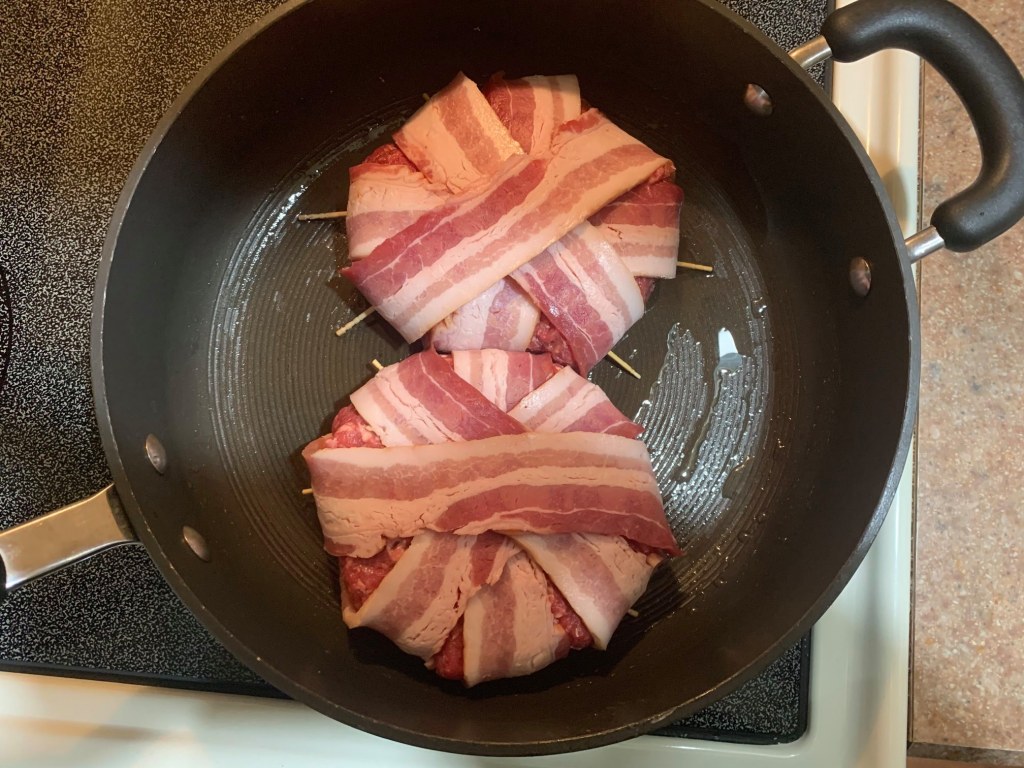
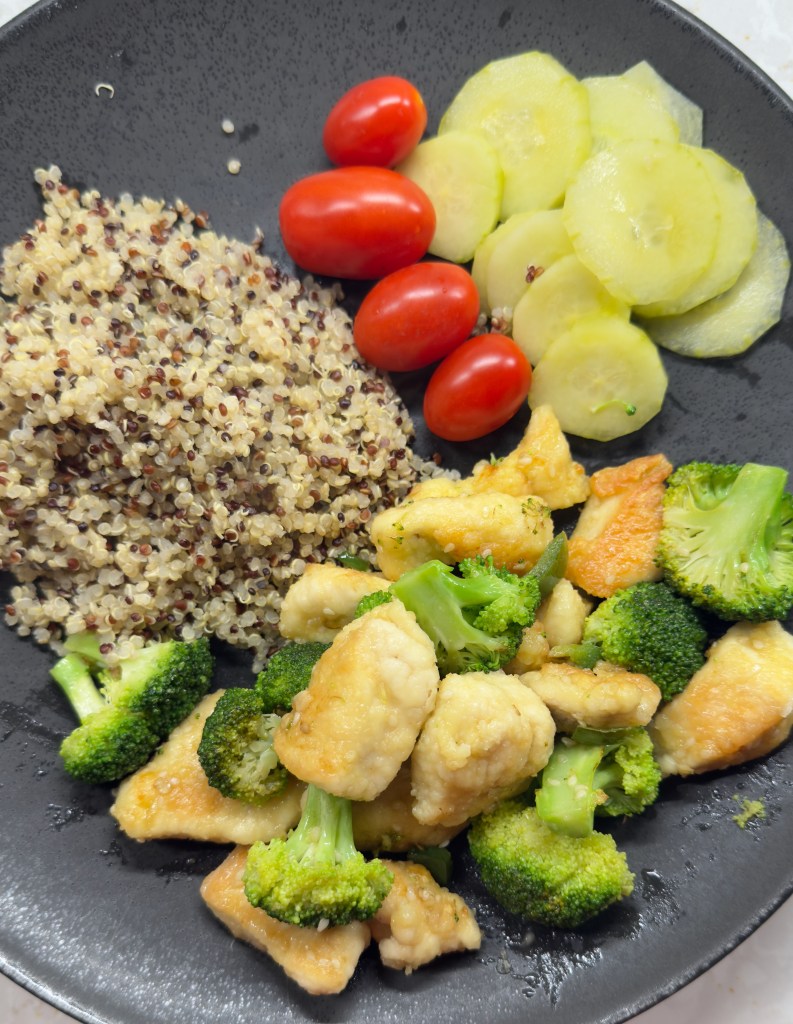
If you’ve spent any time looking at the photos I post, you know I enjoy cooking, and that what I cook isn’t always the healthiest choice. (See example one, hamburger wrapped in bacon… dang, that was tasty!) It used to be that this wasn’t a problem. I had the metabolism and exercise to counteract any negative effects. Now, at 60, apparently not so much. I got my annual blood work done last week. High cholesterol and pre-diabetes. I’m already on blood pressure medicine. (I’m sure most of you just had to look at me and knew this without the blood test.) Folks, I want at least another 25 good years, so it’s time to make some changes. I’m going to keep cooking and keep eating, but I’m on a mission to learn how to make the very best healthy foods. (The picture below was the first attempt: quinoa instead of rice, cornstarch instead of flour, a tablespoon of olive oil instead of deep frying, honey instead of sugar, broccoli instead of no vegetables at all.) I’ve ordered a new cookbook and will be exploring various spices to elevate my cooking. If you’ve got recipes, please share them. I’d love to add them to my repertoire. If you invite me over or bring me food, please, make it healthy. If you see me reaching for the donut, slap my hand. Thanks.

Sermon: Proper 18 RCL C – “Choices”

Photo by Victoriano Izquierdo on Unsplash

Tee Boudreaux is 24 years old and still living at home. Boudreaux and Chlotile are starting to worry about what he is going to do with his future. Boudreaux tells Chlotile, “Cher, let’s do a little test. We goin’ to put a ten-dollar bill, a bible and a bottle of Jacque Daniel on de table, and when Tee Boudreaux comes in, we gonna be able to figure out what he’s gonna do. If he takes de ten-dollar bill, he’s gonna be a businessman, if he picks up de bible, he’s gonna be a preacher, but if he picks up de booze, I’m afraid he’s gonna be a bum de rest of his life.” So they put the stuff out and hid in the closet when they heard Tee coming in. Tee walks by the table, picks up the ten-dollar bill, looks at it, and puts it in his pocket. Then he picks up the bible, flips through it, and puts it under his arm. He picks up the Jacque Daniel, takes a healthy swig out of it, and walks off with the rest of the bottle. Boudreaux and Chlotile were watching all of this through the keyhole, and Boudreaux sighs, “Mais Cher, it looks like our son is gonna be a dang politician!”

Mark Twain was not kind to politicians. He wrote, โ€œReader, suppose you were an idiot. And suppose you were a member of Congress. But I repeat myself.โ€ One of the places where so many politicians shine is in their campaign promises, but what if, instead of promising forty acres and a mule, they were honest? Or what if those promises were so negative that no one would vote for them? N.T. Wright says, โ€œImagine a politician standing on a soapbox addressing a crowd. โ€˜If youโ€™re going to vote for me,โ€™ he says, โ€˜youโ€™re voting to lose your homes and families; you’re asking for higher taxes and lower wages, youโ€™re deciding in favor of losing all you love best! So come onโ€”whoโ€™s on my side?โ€™โ€ But as Wright points out, what Jesus was saying in our Gospel isnโ€™t all that much better: โ€œWhoever comes to me and does not hate father and mother, wife and children, brothers and sisters, yes, and even life itself, cannot be my discipleโ€ฆ So, therefore, none of you can become my disciple if you do not give up all your possessions.โ€

When you hear those words, is the first thought that comes to your mind: โ€œSign me up!โ€ โ€œHeโ€™s got my vote!โ€ Hardly. Most likely, the first thought is: โ€œI think Iโ€™ll vote for the forty acres and a mule.โ€ But what if N.T. Wrightโ€™s politician has something else in mind. What if, instead of just some random goals, that person is asking you to give up family and friends, possessions and homes, and possibly your very life to follow him on a dangerous journey, but a journey that will provide the answer to the millions in this world that are hungry? Not just some pipe dream, but a โ€œfor factโ€ answer. If you go, risking everything, you will be a part of feeding the world, even though you may die in the process. Would that change how you viewed the offer? Yes. I think it would. Many would see it as a difficult choice, but many brave souls would see that the value for humanity far outweighs the cost, even if the cost is life.

This is the type of offer that Jesus is making. It sounds horribleโ€”leave everything, give up your life, follow meโ€”but it is an offer to be with him and have eternal life through the resurrection. The only problem, we see everything weโ€™re being asked to do and none of what is to come. St. Paul writes, โ€œIf Christ has not been raised, then our preaching is in vain, and your faith is in vainโ€ฆ If Christ has not been raised, your faith is futile, and you are still in your sinsโ€ฆ If in Christ we have hope in this life only, we are of all people most to be pitied.โ€ If none of what Jesus has promised is true, we are fools, and even though we have faith in those promises, there can still be this inkling of doubt, and that inkling can have more significant sway over our lives than all our faith, which always leads to a choice: follow God or follow the inkling. In our reading of Deuteronomy, Moses put it a bit more bluntly, “See, I have set before you today life and prosperity, death and adversity.โ€ He says, โ€œIf you obey the commandments of the Lord your Godโ€ฆ the Lord your God will bless youโ€ฆ if your heart turns away and you do not hear but are led astrayโ€ฆ you shall perish.โ€ It is a choice. Moses says we are choosing between life and death, which means we are choosing between following Jesus and following the desires of self. So how does self lead us away from Jesus?

On Wednesday night, weโ€™ve begun the study of Eat this Book by Eugene Peterson. This past week, Peterson was talking about choices. โ€œBy the time we can hold a spoon,โ€ he writes, โ€œwe choose between half a dozen cereals for breakfast, ranging from Cheerios to Corn Flakes.โ€ From there, he points out that throughout our lives, we are given all sorts of choices: the clothes we wear, the music we listen to, courses in school, career planning, on and on; and so he concludes, โ€œWe enter adulthood with the working assumption that whatever we need and want and feel forms the divine control center of our lives.โ€ The self is leading the way. 

The result, Peterson says, โ€œMy needs are non-negotiable. My so-called rights, defined individually, are fundamental to my identity. My need for fulfillment, for expression, for affirmation, for sexual satisfaction, for respect, my need to get my own wayโ€”all these provide a foundation to the centrality of me and fortify myself against diminution.โ€ (diโ€ขmiโ€ขnuโ€ขtion: had to look that one up. It means decreasing in size or importance.) โ€œMy feelings are the truth of who I am.โ€ (P.31-32)

Self leads us away from Jesus, away from God, because we wonโ€™t allow God or anyone else to interfere or even question our desires, so when Jesus says, โ€œGive up everythingโ€”your possessions, your life, your will, your selfโ€”for the promises I have made to you and follow me,โ€ combined with that inkling of doubt concerning those promisesโ€ฆ we end up making poor choices.

In Mere Christianity, C.S.Lewis tells us, โ€œEvery time you make a choice, you are turning the central part of you, the part of you that chooses, into something a little different from what it was before. And taking your life as a whole, with all your innumerable choices, all your life long, you are slowly turning this central thing either into a heavenly creature or into a hellish creature: either into a creature that is in harmony with God, and with other creatures, and with itself, or else into one that is in a state of war and hatred with God, and with its fellow-creatures, and with itself. To be the one kind of creature is heaven: that is, it is joy and peace and knowledge and power. To be the other means madness, horror, idiocy, rage, impotence, and eternal loneliness. Each of us at each moment is progressing to the one state or the other.โ€ (p.92)

The promises of Jesus are not like the promises of a politician. The promises of Jesus contain life itself. The path he calls us to walk is not always easy; it can be quite difficult and, more often than not, requires the exact opposite of the choice the self wants to make. So, as the man building a house or the king facing war, sit down and calculate the price. Not so that you can decide if following Jesus is worth itโ€”that would be foolishnessโ€”but so that you can prepare your heart and mind to be obedient even in the most costly of times.

Let us pray: Loving Father, faith in Your Word is the way to wisdom. Help us to think about Your Divine Plan that we may grow in the truth. Open our eyes to Your deeds, our ears to the sound of Your call, so that our every act may help us share in the life of Jesus. Give us the grace to live the example of the love of Jesus, which we celebrate in the Eucharist and see in the Gospel. Form in us the likeness of Your Son and deepen His Life within us. Amen.

Choosing Barabbas

GiveUsBarabbas

Now the chief priests and the elders persuaded the crowds to ask for Barabbas and to have Jesus killed. ย The governor again said to them, โ€œWhich of the two do you want me to release for you?โ€ And they said, โ€œBarabbas.โ€ – Matthew 27:20-21

There they are, side by side. ย I can have either and the choice is mine. ย Sure, I know good from evil (Genesis 3:22). ย I know the “right” choice, but today I think I will choose Barabbas. ย That’s who everyone else keeps shouting for. ย Even the preacher said it!

“Barabbas!”

Why does that feel so wrong? ย Why does it feel as though a piece of my soul just died? ย  Who is this man?

“Barabbas.”

This can’t be right. ย I don’t even know this Barabbas. ย What did this Jesus do? ย Someone said that if he didn’t die that they would kill us all. ย Don’t they know, we’re already dead.

“….”

โ€œFather, forgive them; for they do not know what they are doing.โ€ – Luke 23:34

Each day is a choice between Jesus and Barabbas. ย Today you chose Barabbas. ย There is tomorrow.

Never despair. Lazarus was dead and decaying: “iam foetet, quatriduanus set enim“–“by now he will smell; this is the fourth day,” Martha told Jesus.

If you hear the inspiration of God and follow it–“Lazare, vein foras!“–“Lazarus, come forth!”–you will return to life.

St. Josemaria Escriva – The Way #719ย