Sermon: Feast of St. Matthew


The canonical books of Holy Scripture run from Genesis through Revelation, and the Episcopal Church also recognizes the Apocryphaโ€”Bel and the Dragon, the Book of Wisdom, and othersโ€”but does not use them to establish doctrine, rather as suitable โ€œfor example of life and instruction of manners.โ€ (BCP 868) However, these are not all. Many other books have been passed down that are hard to classify and are known as the New Testament Apocrypha and Pseudepigrapha, such as the Infancy Gospel, the Ascent of Isaiah, and the Apocalypse of Peter, to name a few. The one where our story begins today is the Acts of the Holy Apostle Thomas

It is primarily the story of Thomas and how he evangelized India, but it begins in Jerusalem. โ€œAt that time we the apostles were all in Jerusalem โ€” Simon called Peter, and Andrew his brother; James the son of Zebedee, and John his brother; Philip and Bartholomew; Thomas, and Matthew the tax-gatherer; James of Alphรฆus and Simon the Cananรฆan; and Judas of James; โ€” and we portioned out the regions of the world, in order that each one of us might go into the region that fell to him, and to the nation to which the Lord sent him.โ€

If this is to be trusted, our Patron Saint Matthew was in attendance, but from there the legends and traditions take many different directions. Today, Iโ€™m using Jacobus de Voragine’s Golden Legend because that legend is linked to the painting on the cover of your bulletin. 

In Acts of the Apostles, an angel instructed Philip to go to Gaza. There, he met โ€œan Ethiopian, a eunuch, a court official of Candace, queen of the Ethiopians.โ€ The Ethiopian was trying to understand a passage from the Book of the Prophet Isaiah. Philip explained it, and the Ethiopian was converted. 

Years later, according to the Golden Legend, after the meeting in Jerusalem when they divided up the known world, we are told that Matthew went down to Ethiopia, where he โ€œstayed with the eunuch of Candace the Queen, whom Philip had baptized.โ€

Using the Eunuchโ€™s home as his base, Matthew went out and began evangelizing. Along the way, he had some rather interesting encounters with magicians. On one occasion, โ€œa man came to them and reported that the magicians had arrived with two dragons, which breathed fire and sulfur from their mouths and nostrils and killed everyone they encountered.โ€ Matthew, armed with the sign of the cross, went out to meet these magicians and their dragons. As soon as they saw Matthew, the two dragons approached him, lay down at his feet, and went to sleep.

A verbal confrontation with the magicians follows, ending with Matthew waking the dragons and sending them away. Is that a true story? Let me ask you, when was the last time you saw a fire-and-sulfur-breathing dragon?

Later, the kingโ€™s son died, and Matthew raised him to life. The king declared far and wide, โ€œCome and see God in the likeness of a man.โ€ The people came, bringing gold and wanting to make sacrifices to Matthew, but he said to them, โ€œWhat are you doing? I am not God. I am the servant of our Lord.โ€ He commanded that the gold and silver be taken and used to build a magnificent church, completed in thirty days. From this church, Matthew ministered the Gospel for thirty-three years, converting all of Ethiopia.

During that time, Matthew established a convent where some two hundred virgins lived and prayed. One of them, Ephigenia, caught the eye of the new king, Hirtacus, who ascended the throne after the king whose son Matthew had raised died. 

Hirtacus greatly desired Ephigenia and pleaded with Matthew to release her and persuade her to come and be his bride. In response, Matthew told the king to do as his predecessor had done and come to church on Sunday. The king was happy, thinking Matthew would do as he commanded.

In concluding his sermon, Matthew said that marriage is good when it is faithfully preserved in a good covenant. But then he said: โ€œYou who are gathered here know well that if a servant were to take the wife of a king, he would not only offend the king but would deserve deathโ€”not simply because he wished to marry her, but because in taking his lord’s bride he would violate the marriage that already joined them.โ€

โ€œAnd you, O king, know that Ephigenia has become the bride of the everlasting King [Jesus] and has been consecrated to him by the holy veil. How, then, can you take the wife of a mightier King and join her to yourself in marriage?โ€

As you can imagine, the king was not pleased and flew into a rage. The Golden Legend tells us, โ€œAfter the solemn celebration of the Mass, the king sent an executioner, who killed Matthew from behind with a sword as he stood beside the altar with his hands raised toward heaven.โ€

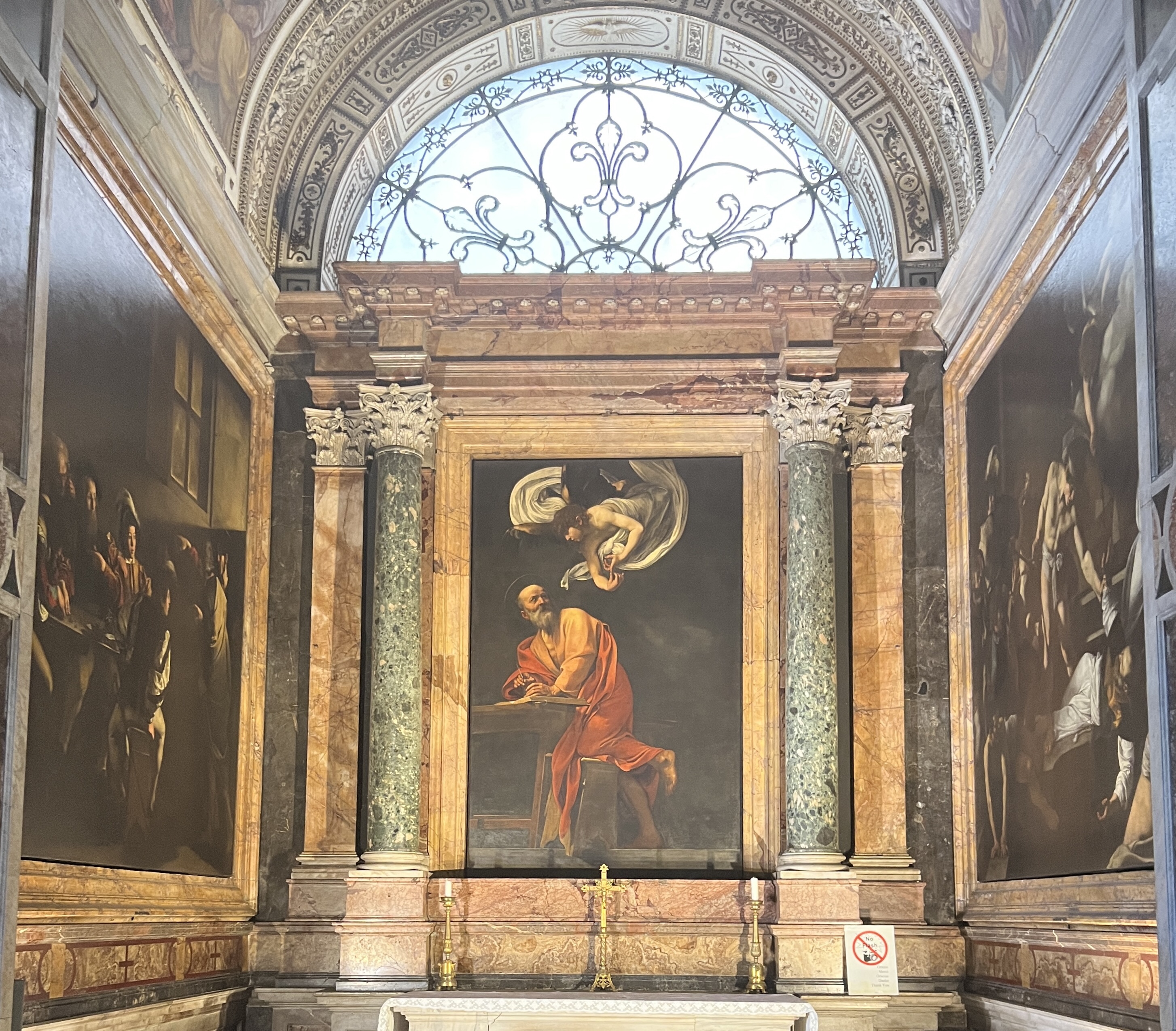
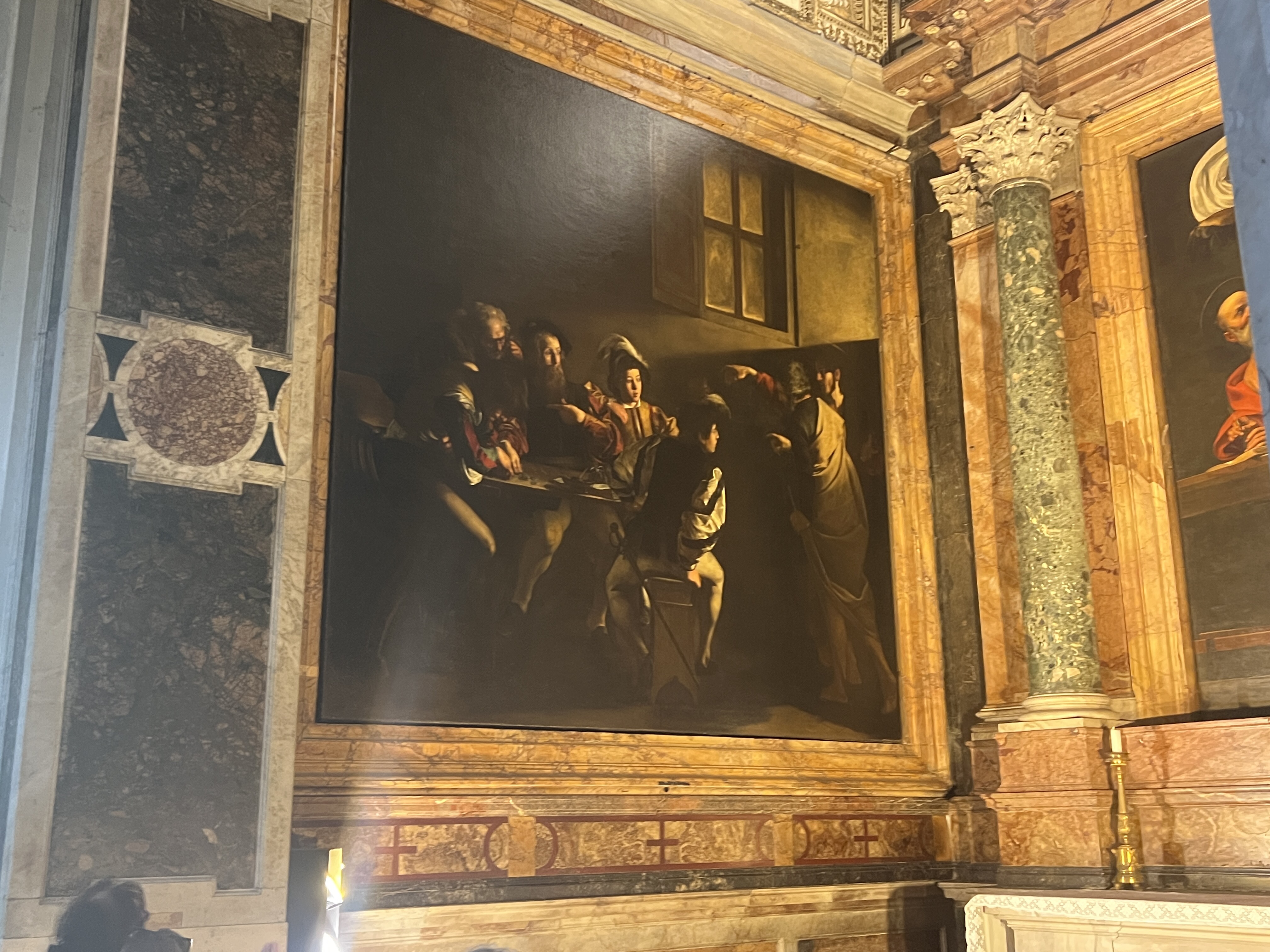
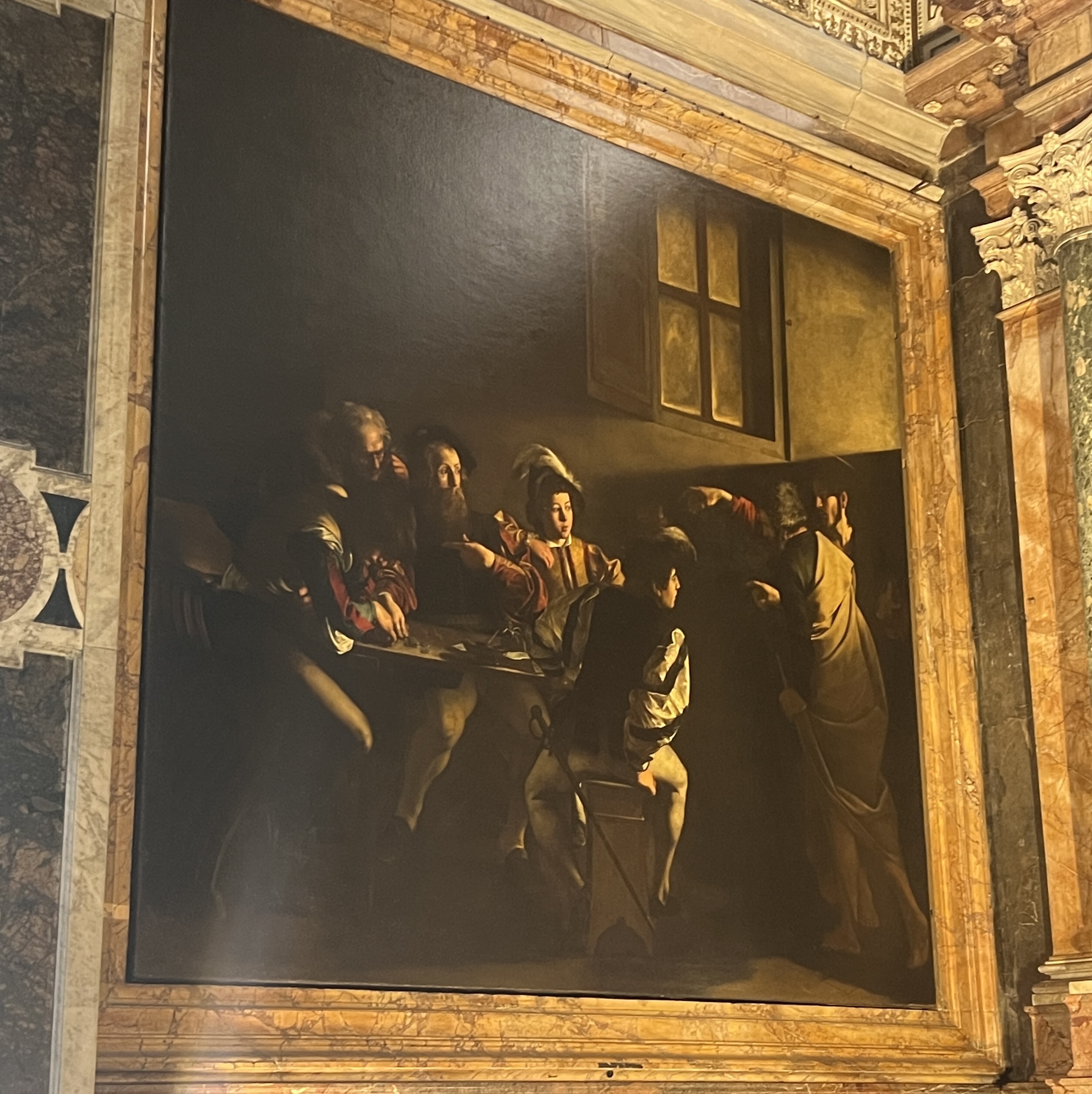
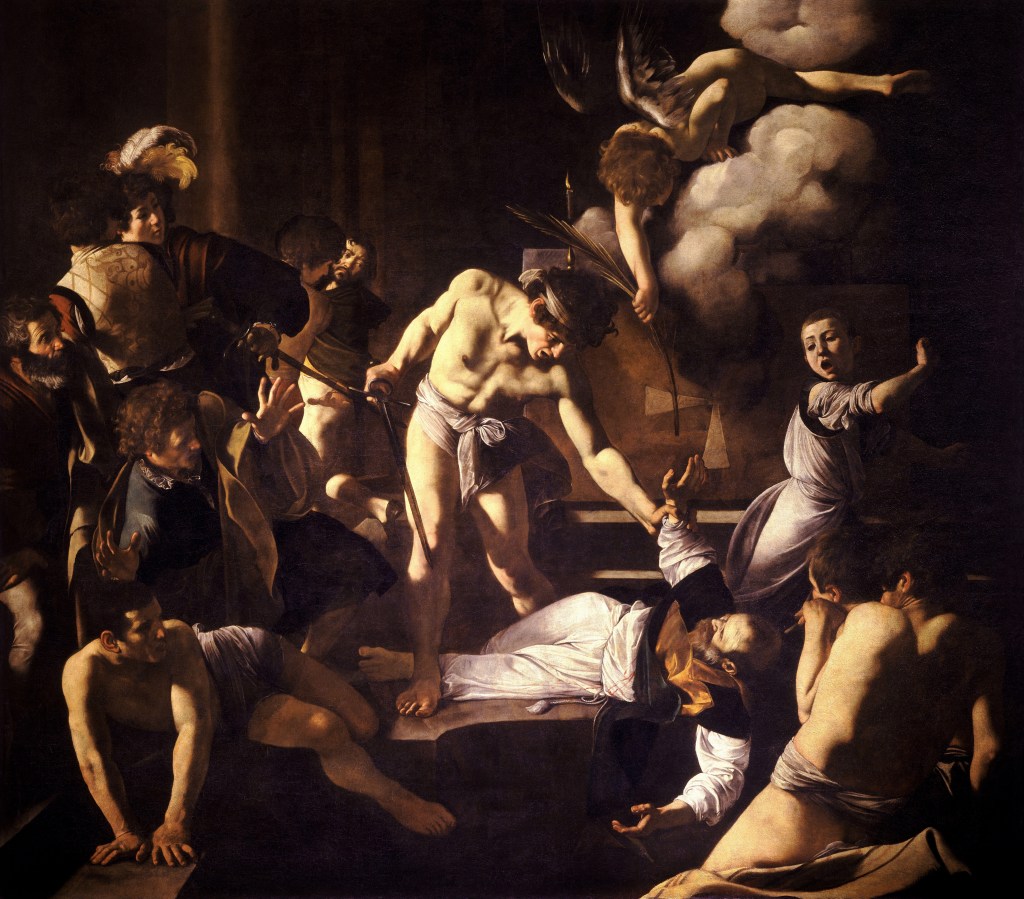
In the Church of San Luigi dei Francesi in Rome, three paintings by the great Italian painter Caravaggio hang in a small chapel near the high altar: The Calling of Saint Matthew, The Inspiration of Saint Matthew, and The Martyrdom of Saint Matthew. I would wager you would recognize them if you saw them, and The Martyrdom of Saint Matthew is the one on the cover of your bulletin.

Matthew lies on the altar steps, and his executioner holds Matthewโ€™s wrist. It appears as though Matthew is holding up his hand, as if trying to ward off another blow, but he is instead reaching out to take the palm branch the angel above the altar is handing him. 

The Book of Revelation describes the vision St. John had. At one point, John sees โ€œa great multitude that no one could numberโ€ฆ clothed in white robes, with palm branches in their hands.โ€ (Revelation 7:9) When John asks who these people are, he is told, โ€œThese are the ones coming out of the great tribulation. They have washed their robes and made them white in the blood of the Lamb.โ€ (Revelation 7:14)

Matthew reaches for the palm branch, the sign of his martyrdom. 

Is the whole story true? Iโ€™ll let you be the judge, but I suspect that behind the dragonsโ€™ wings, there is a good bit of truth about our Patron Saint. 

Some may say, โ€œThatโ€™s a nice story, Father John, but whatโ€™s it got to do with us, with me?โ€ The answer, I see, is not in the story but in the painting. 

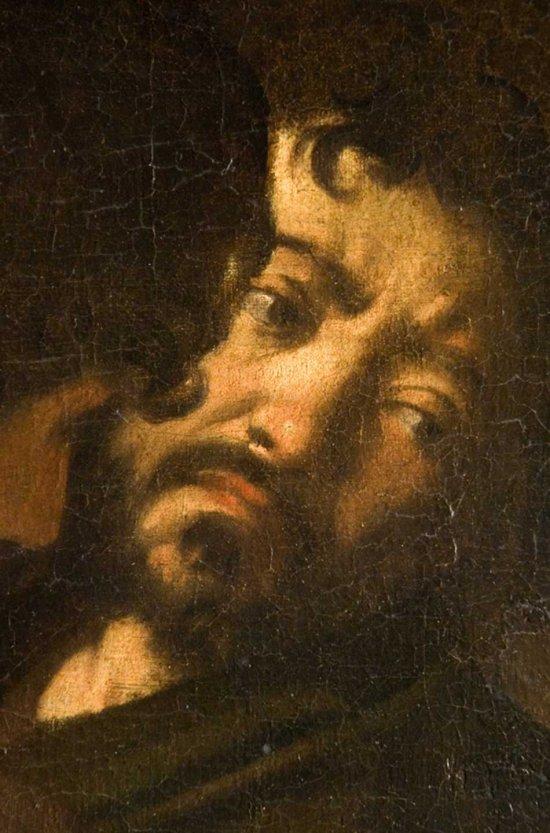
If you were at our Wednesday night study, you may recognize a face in the painting. On Wednesday, we looked at Caravaggioโ€™s painting of David and Goliath. David holds up Goliath’s head, and Goliath’s face is Caravaggio’s self-portrait. Caravaggio also includes a self-portrait in The Martyrdom of St. Matthew. 

The executioner is in the center. There is a face just to the left of the executionerโ€™s left shoulder. It is believed to be Caravaggio. He has painted himself looking on this horrific scene while running away.

Now, I don’t know what Caravaggio intended by placing himself in this painting, and I’m not going to pretend that I do. But I wonder what we might learn from this man who is running away while looking back.

He sees the violence. He sees Matthew lying on the steps. He sees the executioner standing over him. And he is leaving.

But he is still looking back.

I wonder how often that is us.

We hear the Gospel. We know what Christ asks of us. We know we are to love God with all our heart, soul, and mind, and our neighbor as ourselves. We know we are to forgive, to show mercy, to care for those in need, and to take up our cross and follow him.

And sometimes we do.

But sometimes we turn away. Sometimes the demands of the Gospel are more than we want to bear. Sometimes the world offers us something that seems a good bit easier than following Christ.

And we walk away.

But we keep looking back.

I wonder if Caravaggio’s self-portrait might tell us something about the grace of God. For even as this man is leaving the scene, he has not entirely turned his back on what is happening. Something still holds his attention.

And perhaps that is where the work of grace begins.

Look again at Matthew. He is reaching toward the palm branch, the promise of victory and eternal life. His earthly journey is coming to an end.

But Caravaggio’s journey is not over.

He is still alive. He still has time to turn around.

And so do we.

I don’t know where you would place yourself in this painting. Perhaps you would be among those fleeing. Perhaps you would be standing helplessly, watching what is happening. Perhaps you would like to imagine yourself beside Matthew, ready to share in his martyrdom.

I know where I would like to place myself.

But I also know that there have been times when I have walked away from what Christ was asking of me.

And yet, I keep looking back.

Maybe that’s the question we should take away from this painting today. Not whether we would have the courage to die as Matthew did, but whether we have the courage to turn around and follow Christ while we are still alive.

Because the man in the painting still has time.

And so do we.

Let us pray: 

O blessed Saint Matthew, once a tax collector,
now a beloved apostle of Jesus, pray for us.
You were called from a worldly life to follow the Lord,
and your example inspires us to leave behind
our sins and embrace a life of faith.

Intercede for us that we may
be open to God’s call in our lives.
Help us to recognize His presence
in the ordinary moments of our days.
Grant us the courage to follow Him
wherever He leads.

We ask for your intercession,
that we may be faithful stewards of our talents
and resources, using them for the glory of God
and the good of others.

Amen.
Sermon: Heritage Sunday / Feast of St. Matthew

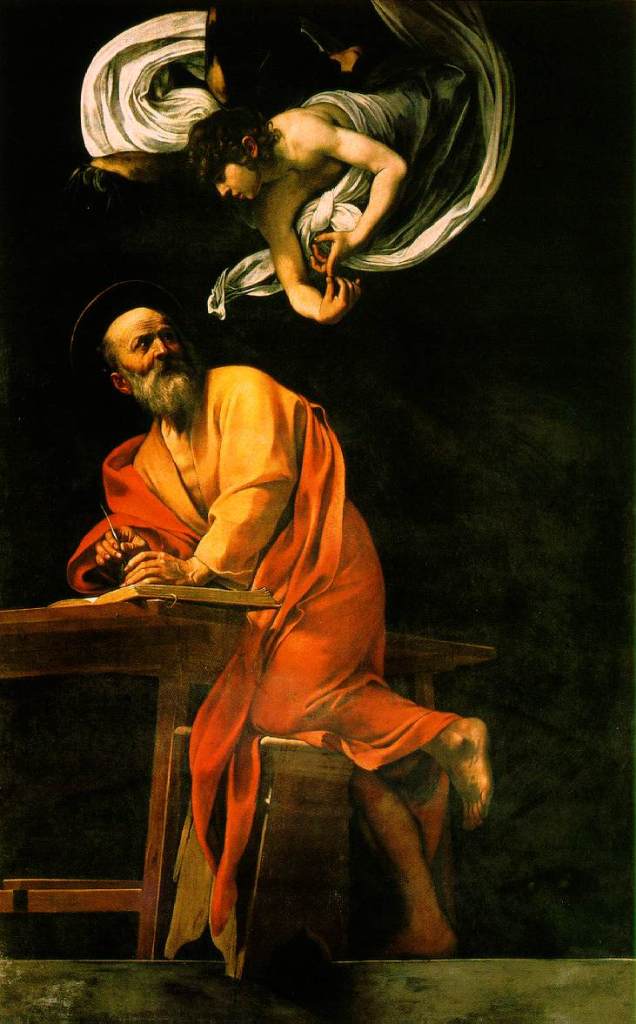
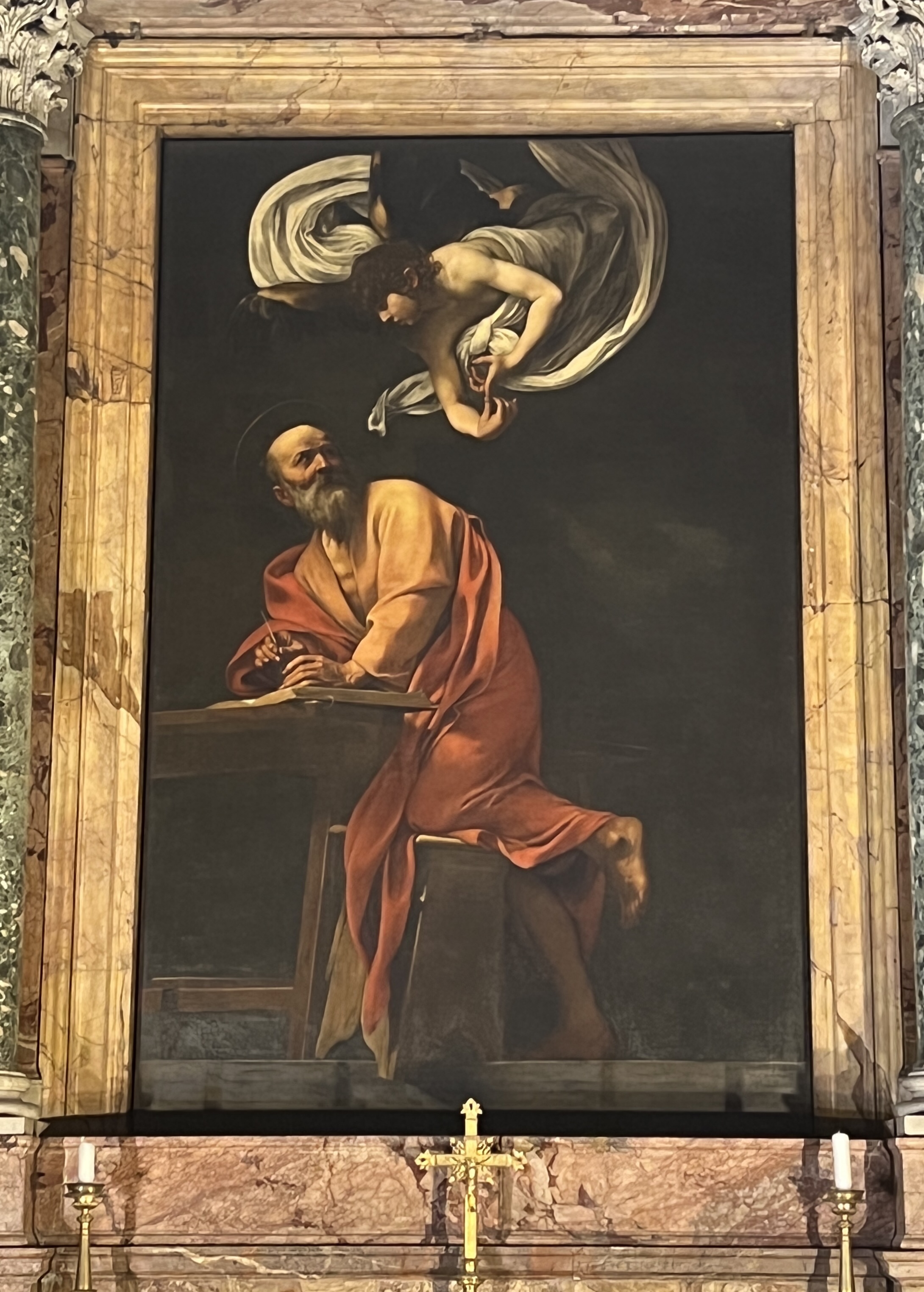
The Inspiration of Saint Matthew by Caravaggio

A farm boy got a white football for his birthday. He played with it a while and then accidentally kicked it over into the neighbor’s yard. The old rooster ran out, looked at it, and called the hens to see it.

โ€œNow look here,โ€ the rooster said, โ€œI don’t want you girls to think I’m complaining, but I just want you to see what they are doing next door.โ€

If I were a chicken, I donโ€™t know if that would motivate me or get me to cross the road and find a less demanding farm.

When it comes to cats, I donโ€™t believe there is anything that motivates them. They do what they want, when they want, although The Queen is motivated to have a nip of scotch when I pour myself one. On the other hand, dogs can be motivated by all sorts of things: affection, play, food (I would make a good dog), and other games they enjoy. People also have motivators. Food, money, fame, power, love, and such, but we are also motivated by negatives: shame, societal expectations, fear, and more. Whether positive or negative, human or animal, a motivator is an external factor that stimulates a desired response and is something learned. In addition, if the motivator is removedโ€”the reward is no longer given, the fear is no longer presentโ€”the person or animal may revert to who they were before. If a person is motivated by money and you cut their pay or their hours, then youโ€™ll likely see their productivity decline. That great motivational speaker, Zig Ziglar, said, โ€œOf course, motivation is not permanent. But then, neither is bathing; but it is something you should do on a regular basis.โ€ Motivation is good.

What is similar to motivation is inspiration, but where motivation is an external force that pushes in hopes of attaining a specific response, inspiration is an internal awakening that draws us and pulls us to something greater. The reward or punishment is not present with inspiration. It is nice if there is a reward, but if youโ€™re inspired, youโ€™ll do whatever it is, regardless. Leonardo Davinci didnโ€™t paint the Mona Lisa because someone offered him a cookie. It was an inspiration, something within him that needed to express itself.

Our life with God is the same. Some are positively motivatedโ€”they want the reward of heavenโ€”and some are negatively motivatedโ€”theyโ€™re afraid of hell. Thatโ€™s one way to do it. These external factors push us toward the desired response: I want to go to heaven, or I want to avoid hell, so Iโ€™ll behave in a certain way. However, to be inspired to follow God and his calling on your life is to be drawn inโ€”not for the reward or avoidance of punishmentโ€”but by love, by desire, by passion, by relationship.

The image on the front of your booklet this morning is named, The Inspiration of St. Matthew and is located in the church of San Luigi dei Francesi in Rome. When we study it, we begin to see the inspiration of God at work.

The angel is making several points, ticking them off with his fingers, and Matthew is staring up at him. Although his pen and tablet are on the desk, Matthew only has eyes for the messenger of God. His focus is singular. Matthew is not concerned with himselfโ€”you canโ€™t see it all, but he is standing at his desk with one knee propped up on the seat. The seat itself is tilted and about to fall over, yet Matthew is not concerned with his discomfort or the precariousness of his position. His hand is poised for action, ready to write. And notice the background of the paintingโ€”it is all black. Nothing else matters other than the angel and the message. Matthew is not motivatedโ€”heโ€™s not looking for a reward or in fear of punishmentโ€”Matthew is inspired, and he wasnโ€™t only inspired to write a Gospel. He was inspired from the very moment Jesus walked into that tax collection operation and said, โ€œFollow me,โ€ for we are told, โ€œ[Matthew] got up and followed him.โ€ Jesus did not promise him heaven or threaten him with hell. Jesusโ€™ words and presence filled Matthew with such a deep inspiration, a deep sense of call, that without hesitation or any concern for self, discomfort, possessions, danger, and everything else that accepting a call from the Savior can produce, he got up and followed Jesus with his entire self. 

Question: why are we not inspired in such a way to follow Jesus so passionately? I can come up with a few answers but I think, for the most partโ€ฆ we simply wonโ€™t allow it. We want to follow Jesus with complete abandon, but we will not give ourselves permission to do so. We say, โ€œYes, Jesus, I will follow you, butโ€ฆ but Iโ€™ve got a family. But Iโ€™ve got a job. But Iโ€™ve got responsibilities. But Iโ€™m afraid of what people will think.โ€ Thatโ€™s a pretty big โ€œbut.โ€ But! what we fail to understand is that Jesus is not asking us to abandon family or job or responsibilities, etc. Jesus is asking us to abandon our lives to him so that he can inspire our life with family, our life at work and with our colleagues, and in all those other areas of responsibility. The Lord does not want our day-to-day life to be separate from our life with Him. So often, in following Christ, we think weโ€™ve got our life with him over here and our life in the world over here, with this nice barrier between them keeping them separate. To be inspired by Jesus as St. Matthew was is to remove that barrier and allow Jesus into every aspect of your life. In doing so, you will no longer feel as though there is this conflict between the two but will instead experience peace in knowing that your life is entirely under the kingship of Christ.

It is not in the prayers we have today, but in our Rite II service each Sunday, the last sentence of the Post-Communion prayer is, โ€œSend us now into the world in peace, and grant us strength and courage to love and serve you with gladness and singleness of heartโ€ฆ.โ€ It is that peace, that gladness, and that singleness of heartโ€”our daily livesโ€”that enters us when we allow Jesus to inspire the entirety of our lives. 

Jesus says, โ€œFollow me.โ€ Be inspired, be passionate in your walk with Jesus, and follow him in every aspect of your life.

Let us pray: We thank You, heavenly Father, for the witness of Your Apostle and evangelist Matthew to the Gospel of Your Son our Savior; and we pray that, inspired by his example, we may with ready wills and hearts obey the calling of our Lord to follow him; through Jesus Christ our Lord, who lives and reigns with you and the Holy Spirit, one God, now and forever, Amen.

Travel: Italy (Day Seven & Eight)

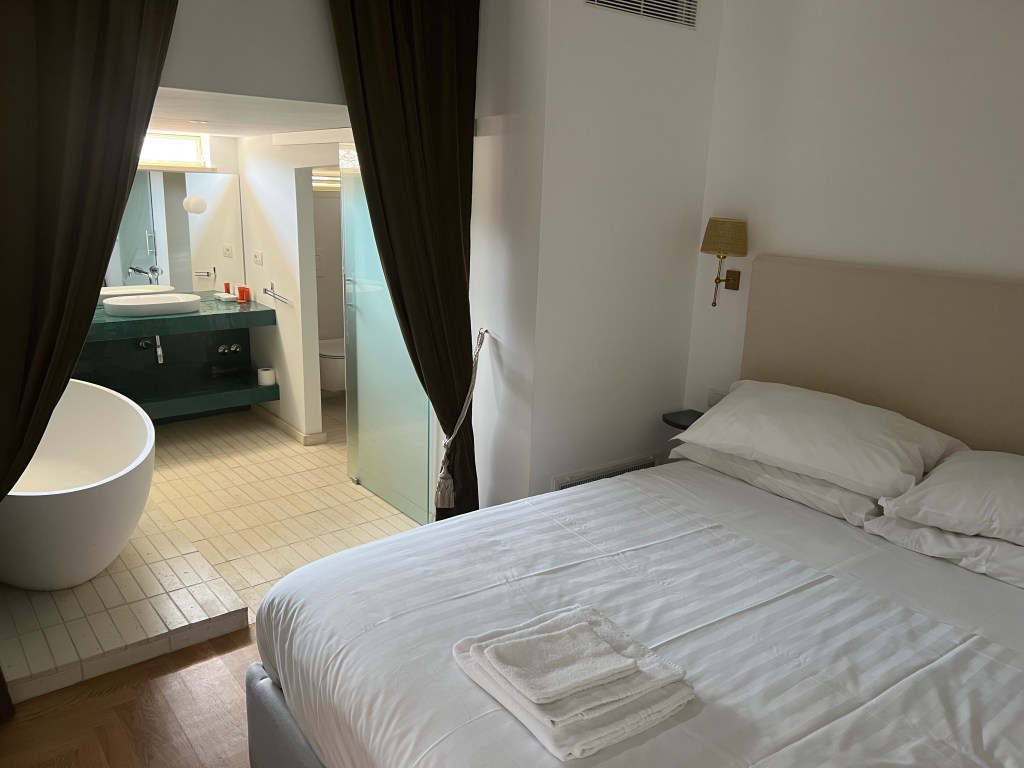
Yesterday was a day of travel from Florence to Rome via Italo (train), fun, and food. It is about a two hour ride, so once we arrived we took a cab to the VRBO and this one was an upgrade over the last (although the last was nice).

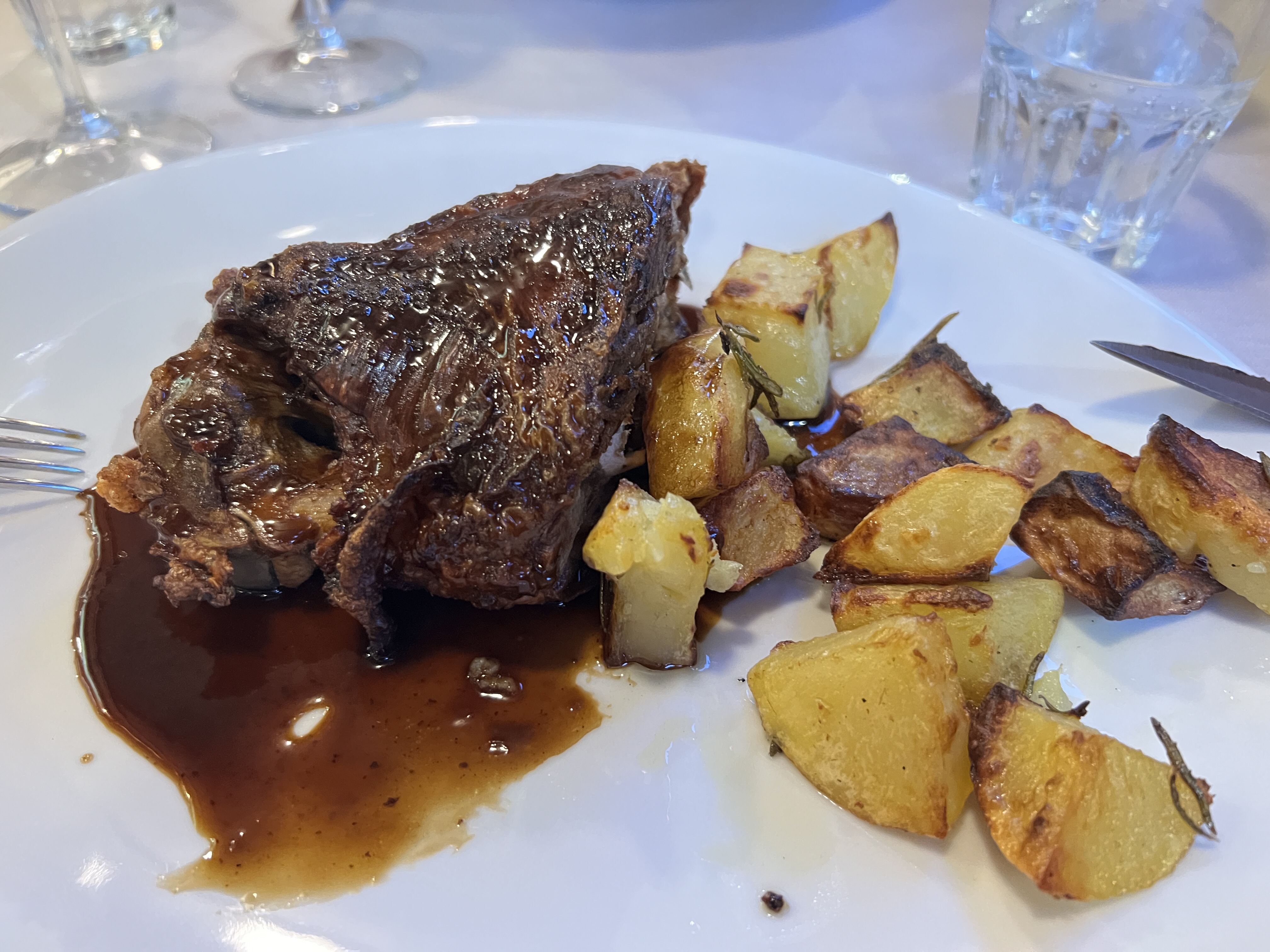
During the cab ride, I did โ€œcross the Tiberโ€ but was only there a short while before darting back across another bridge. We then went out in search of fun and food and found both. In the process, I got myself a bit of Italian ink, but youโ€™ll just have to wait to see that one. Dinner was at a restaurant recommended by Enid friends and they were so right! Ristorante Ambasciata Dโ€™Abruzzo. Delicious. We had a nice bottle of wine and I ordered the lamb. Should you find yourself in Rome, donโ€™t miss out.

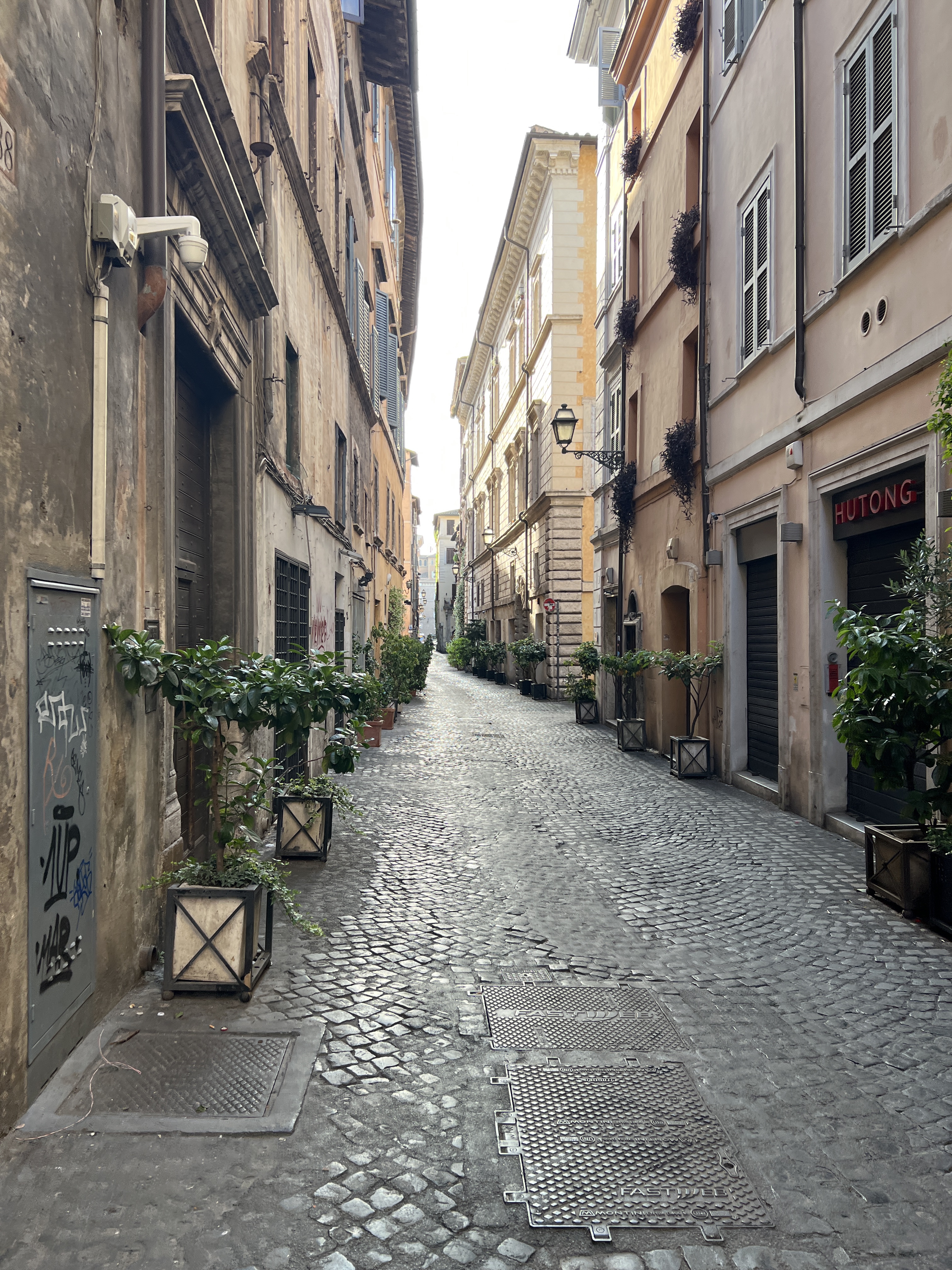
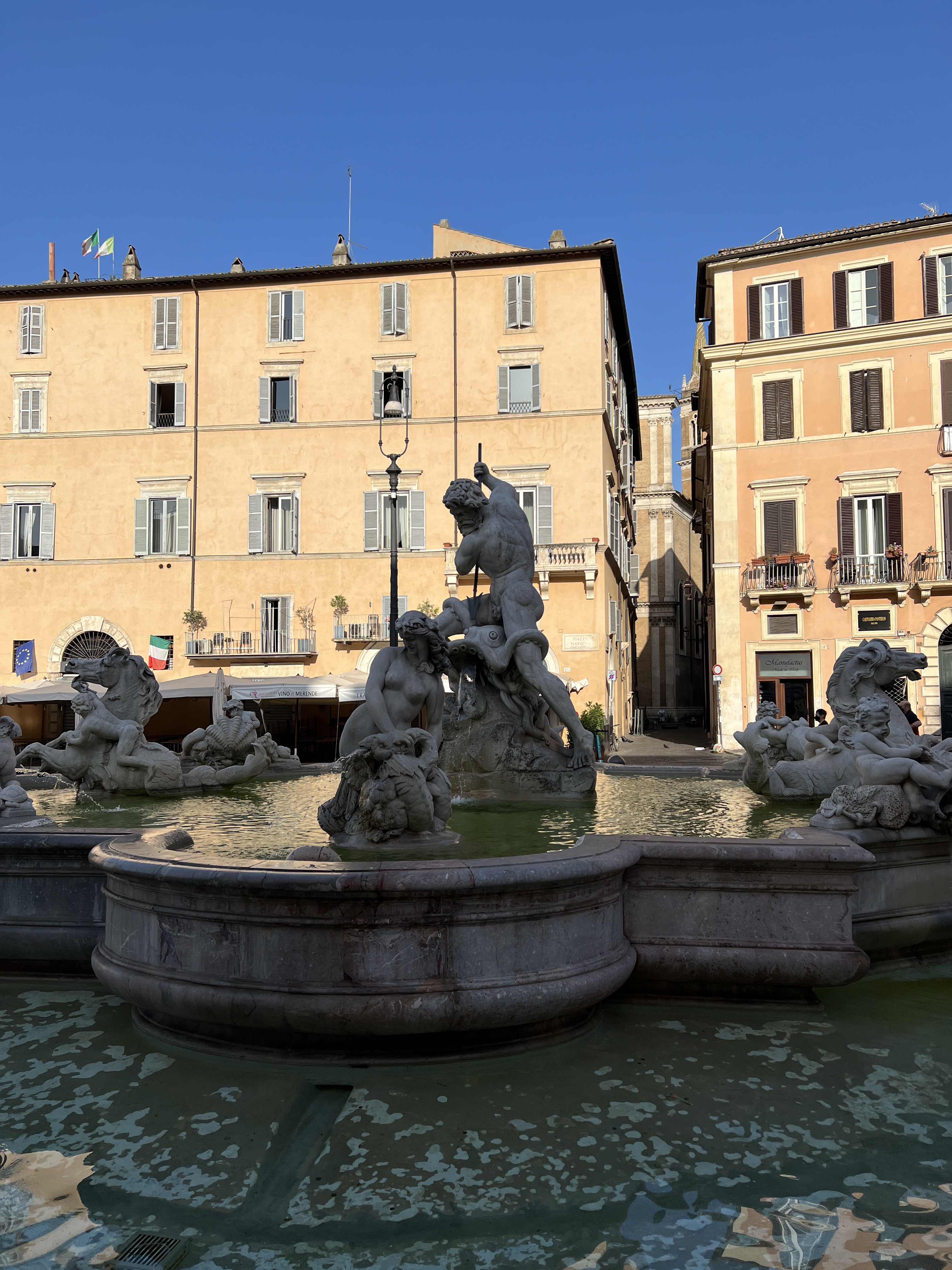
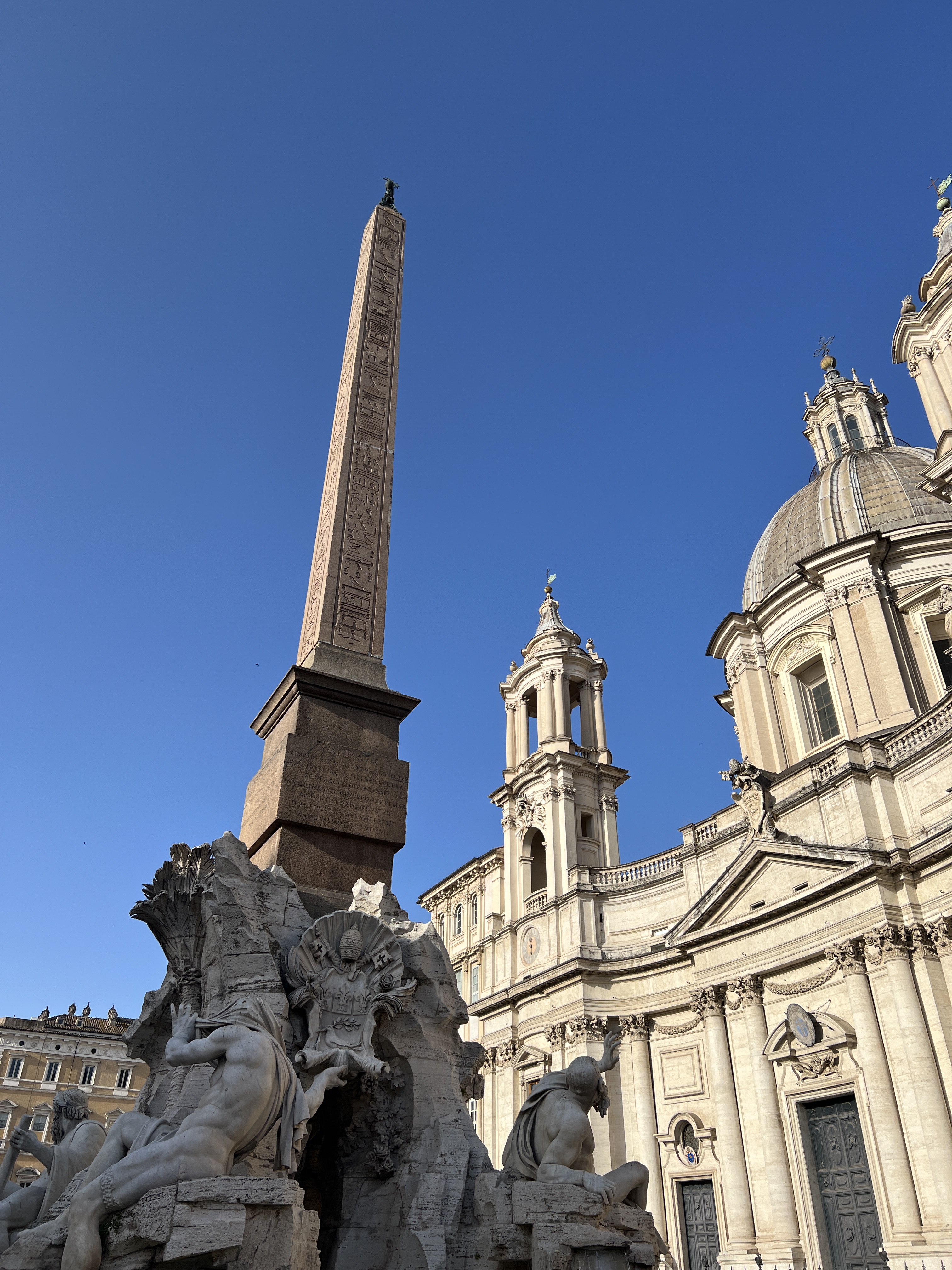
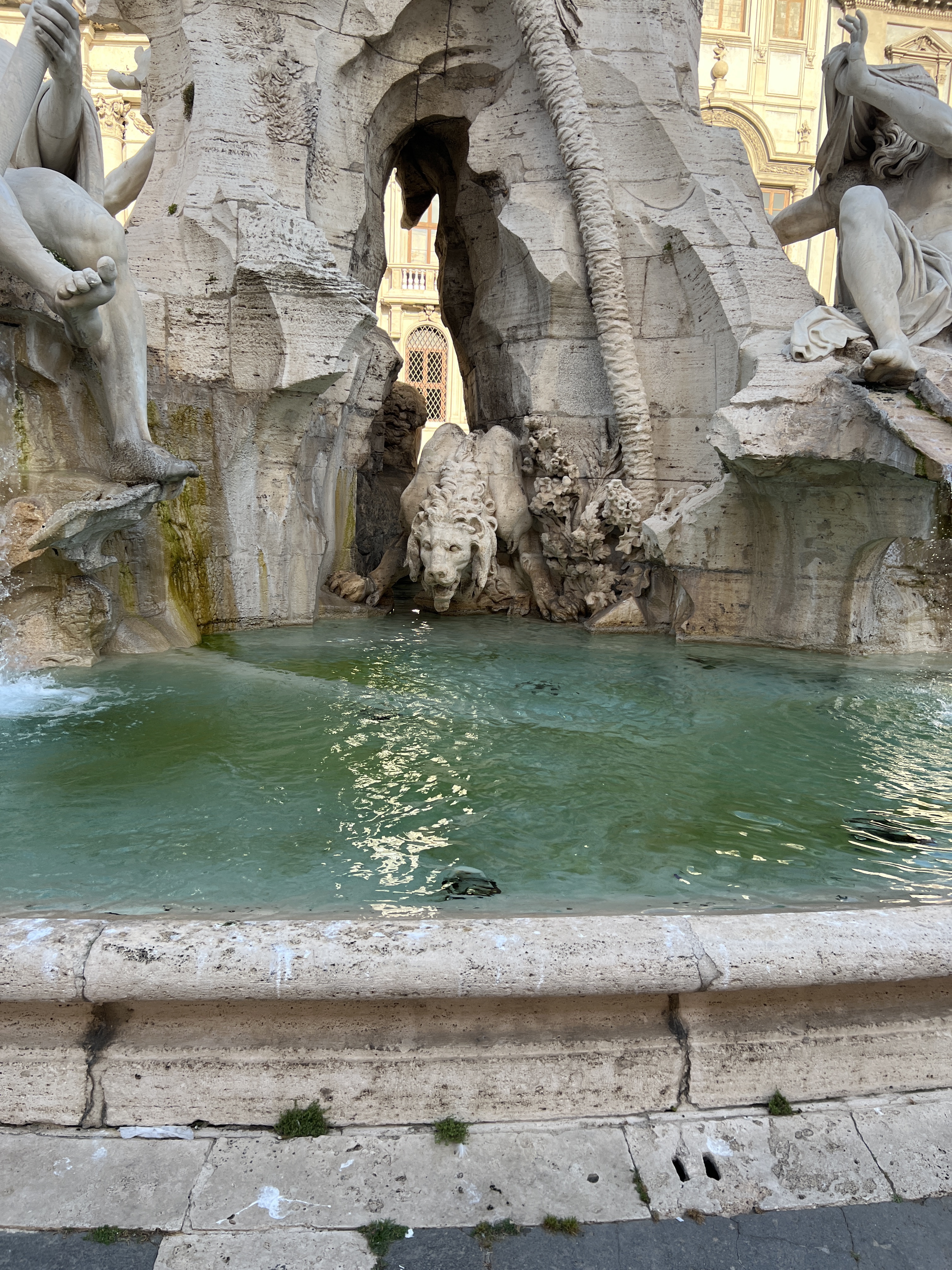
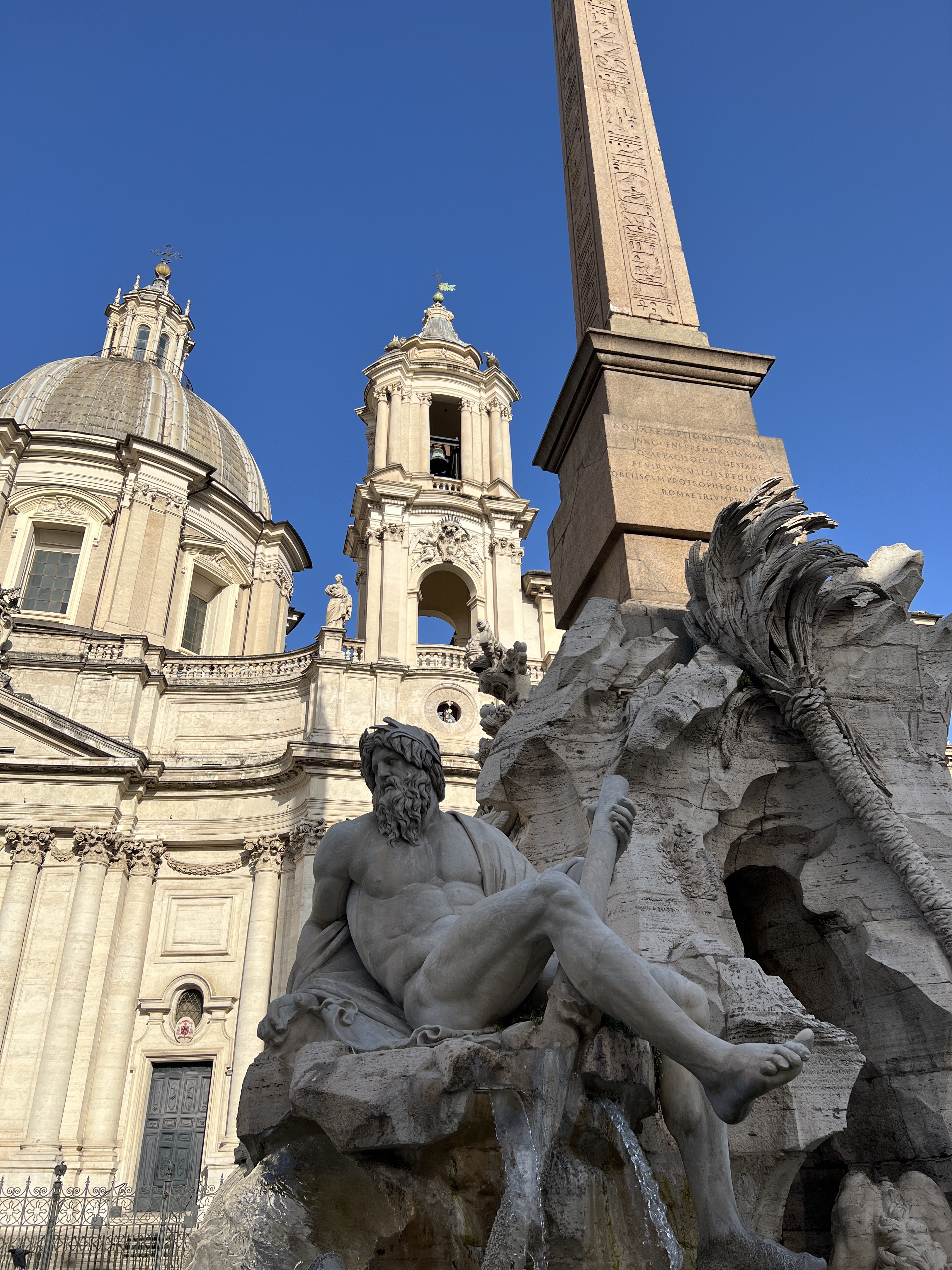
It was early to bed so that we could be up and out the door by 7:30 this morning. At that time of the morning, the streets are clear and the sky is so blue. The fountains are the Fontana dei Quattro Fiumi. The water is clean enough to drink and was one of the main source of water for the people early on.

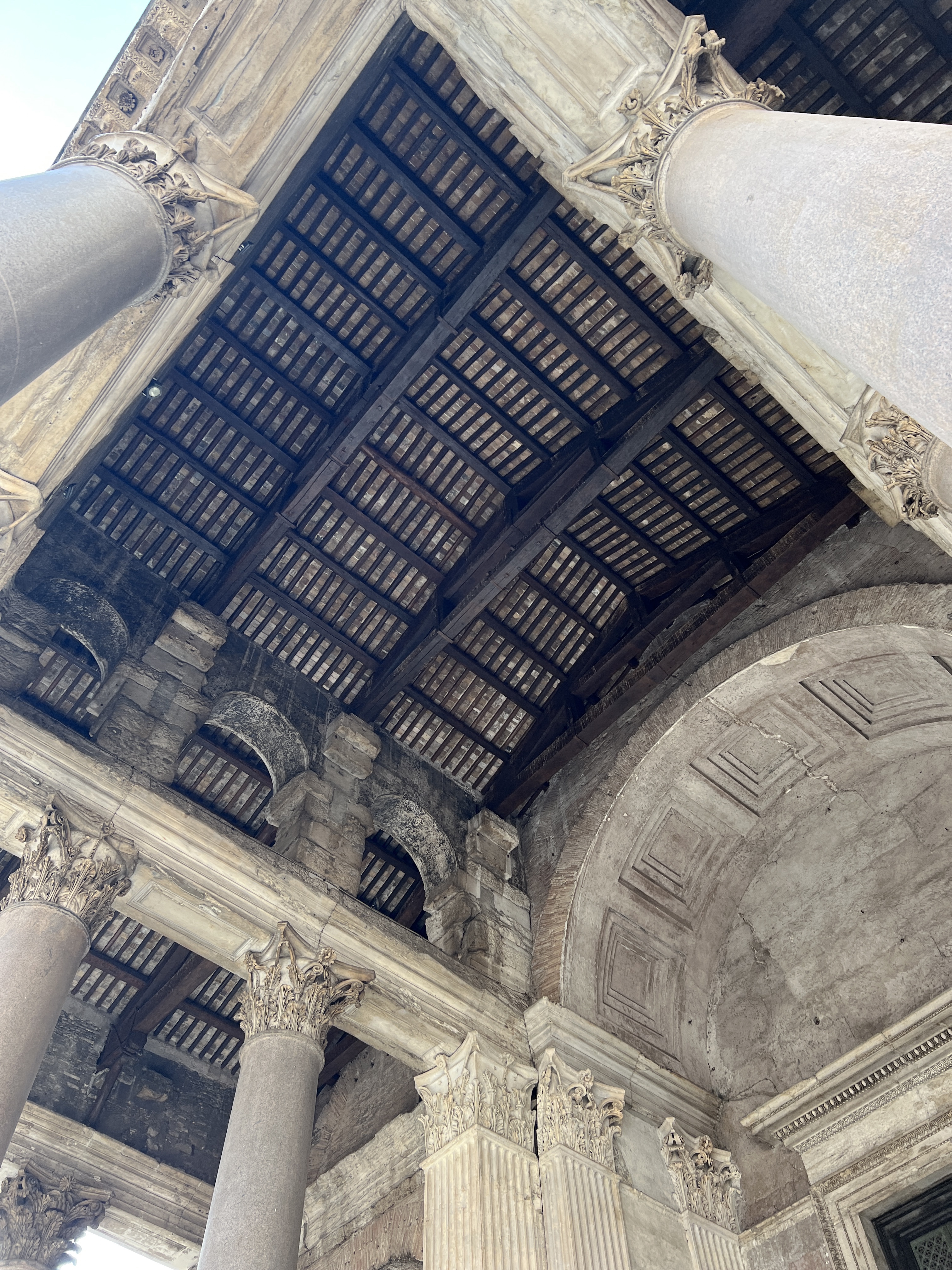
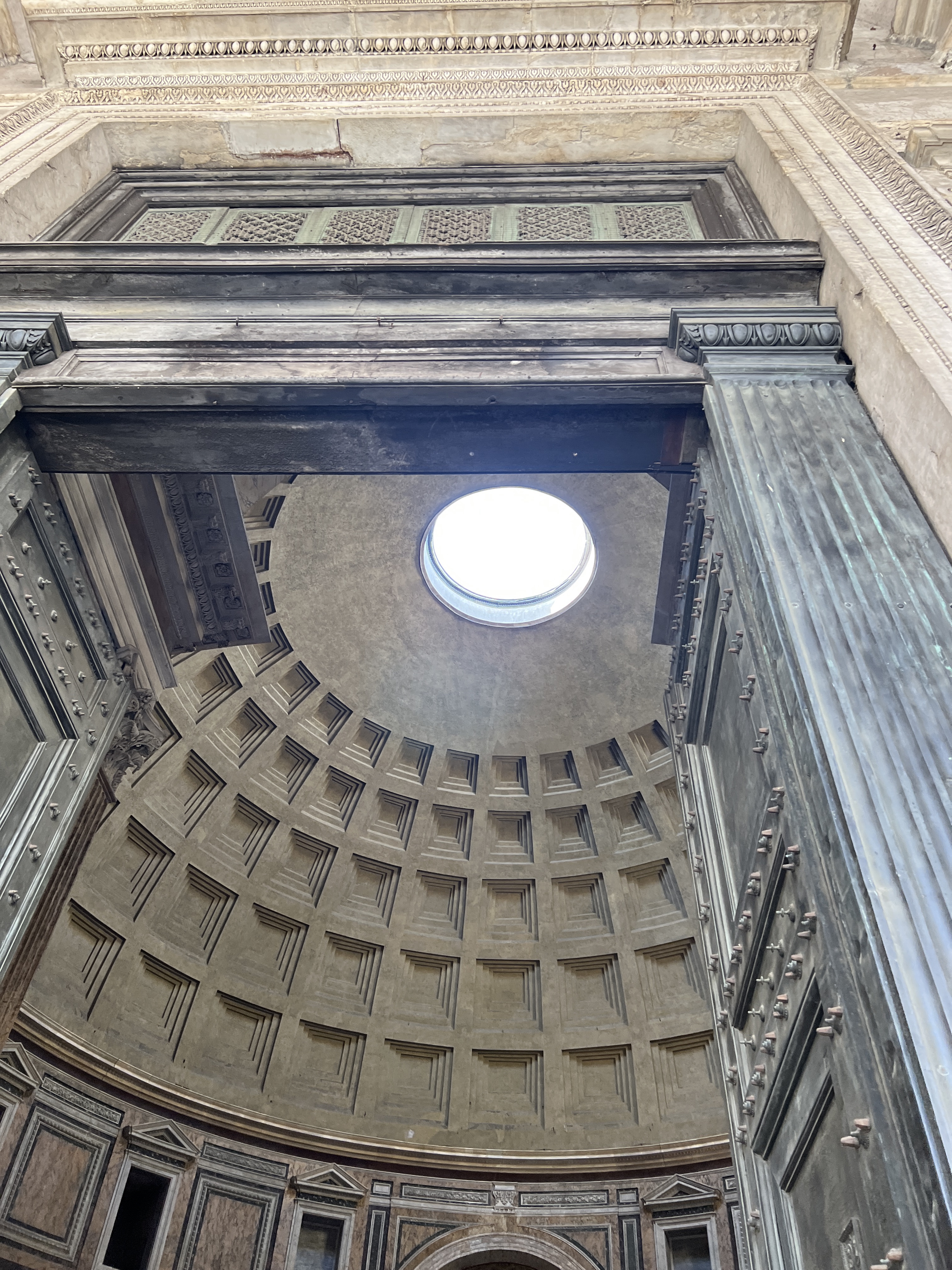
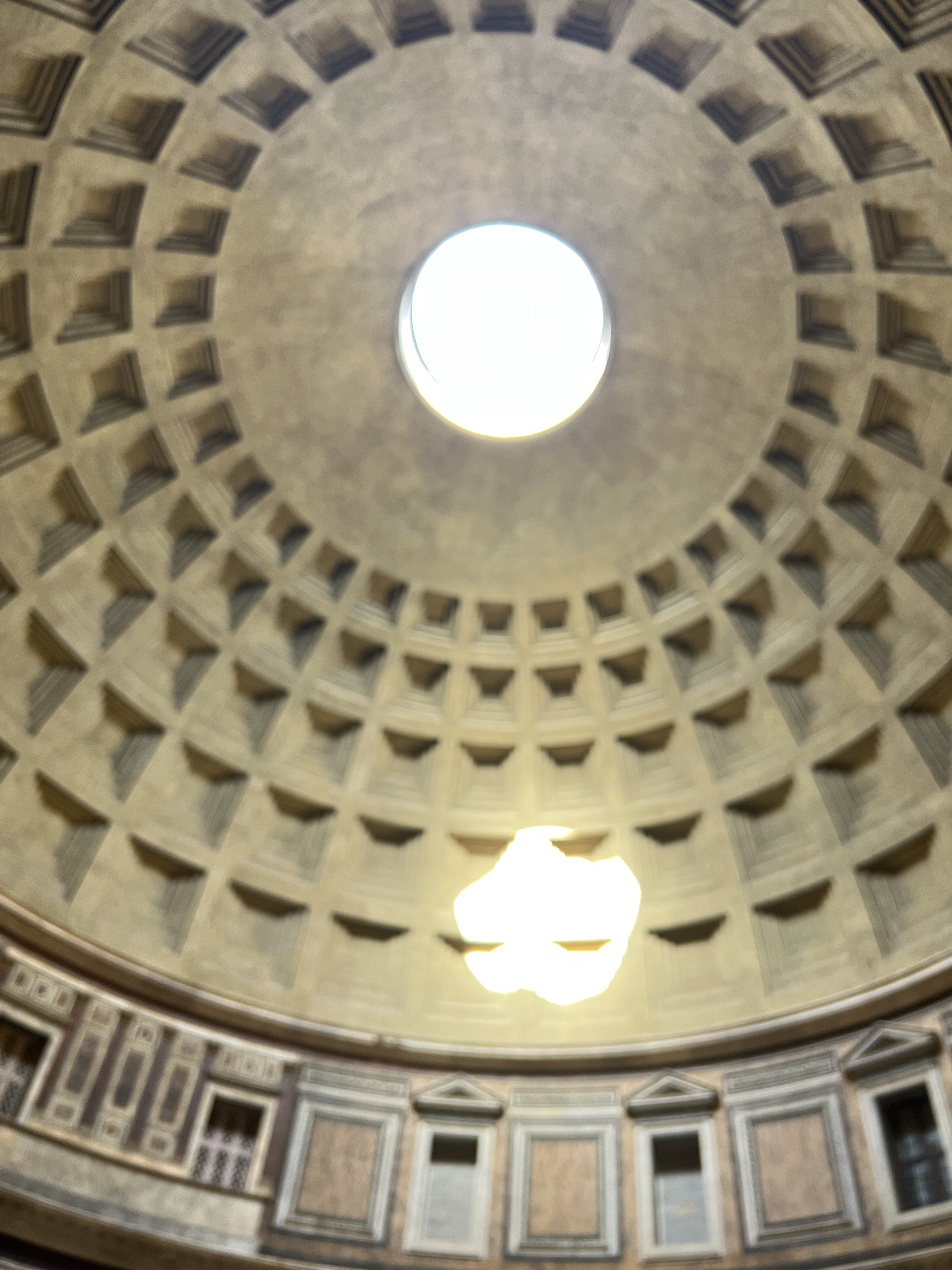
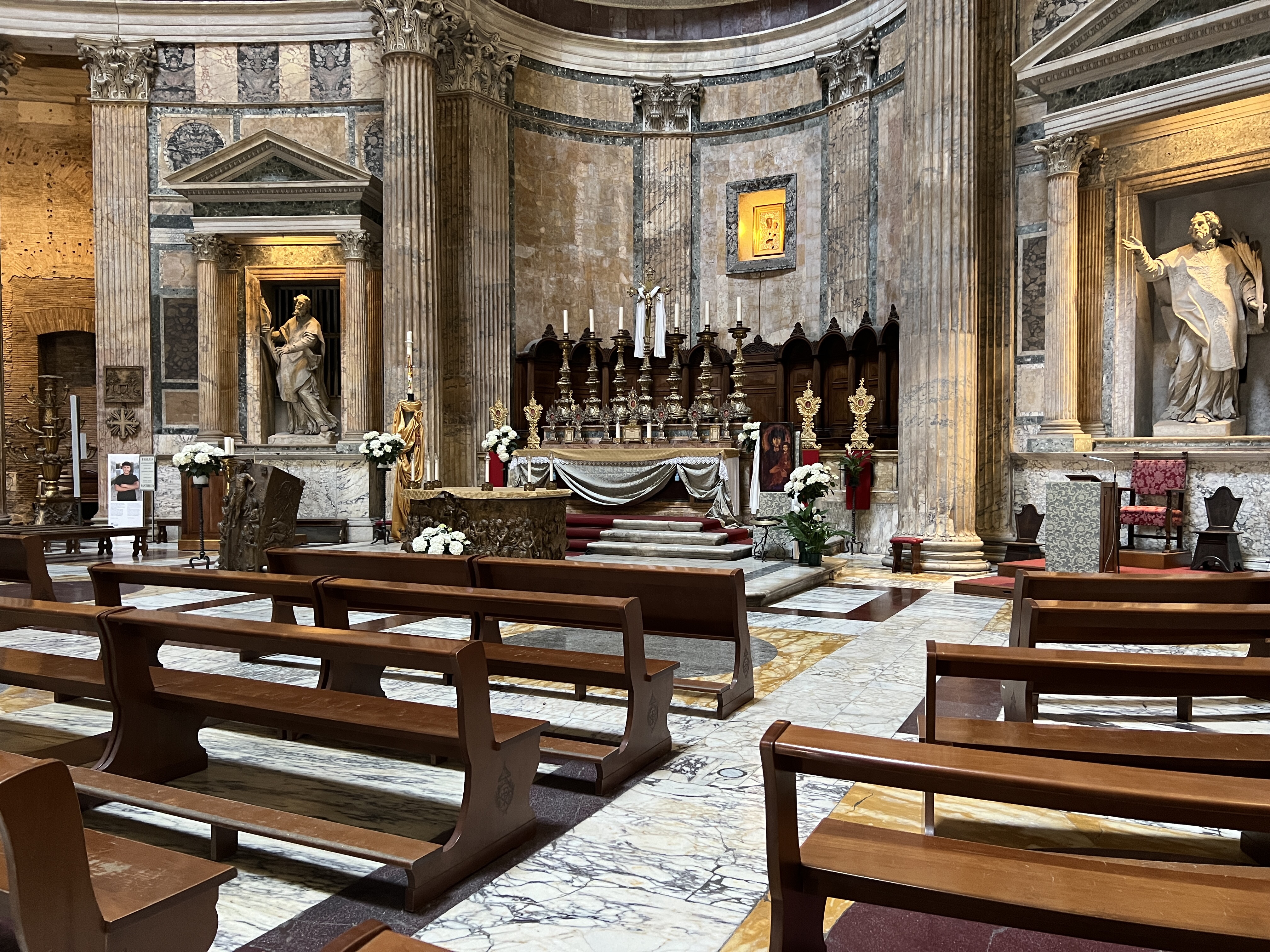
Thereโ€™s not much that I can add about this next place: the Pantheon. It is massive and imposing and beautiful and in the midst of it all there is holiness and simplicity. Each column is a single piece of marble that was brought up from southern Egypt. They are each 39 nine feet tall and weigh 60 tons apiece. The height to the oculus (hole in the ceiling) and the diameter of the base of the dome are equal: 142 feet. From that distance, the oculus looks small, but it is 30 feet in diameter.

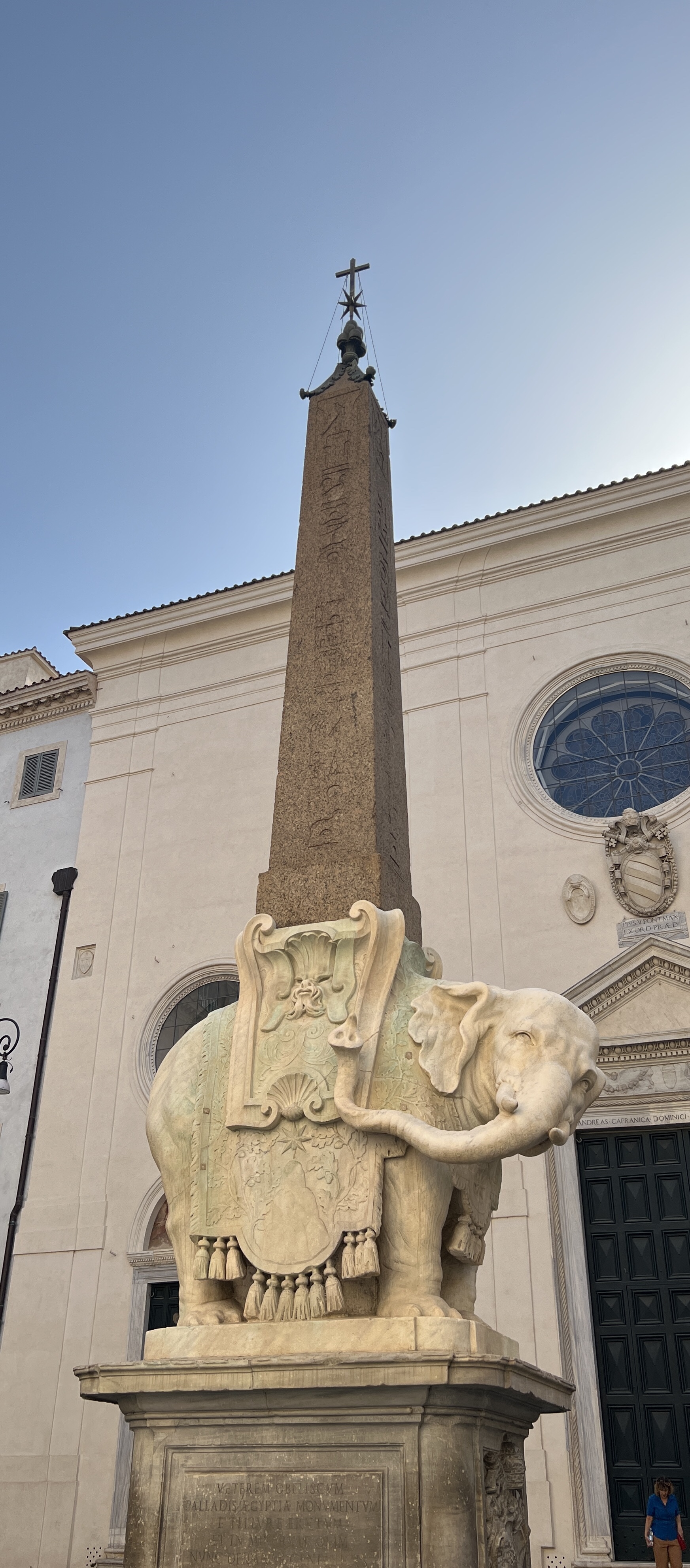
Leaving this place we walked a few blocks and came across an elephant. A Bernini elephant with an obelisk on its back. I found the right spot for the sun.

Confession: there is a street in Rome that has multiple clergy candy shops and I bought some candy: a new zucchetto in the store where the Pope and Cardinals (and all the lesser folk) shop and a bit further down came to a smaller shop and picked up a VERY nice handmade cassock at a very reasonable price. For the record, Iโ€™ll now have to purchase another inexpensive suitcase and check my bags. Poor babyโ€ฆ I know.

This was followed by a two hour lunch which was delicious and then on to the Francesi (another beautiful church) where I saw the Caravaggioโ€™s of Matthew. Iโ€™ve studied these paintings in the past, so it was moving to see them in person.

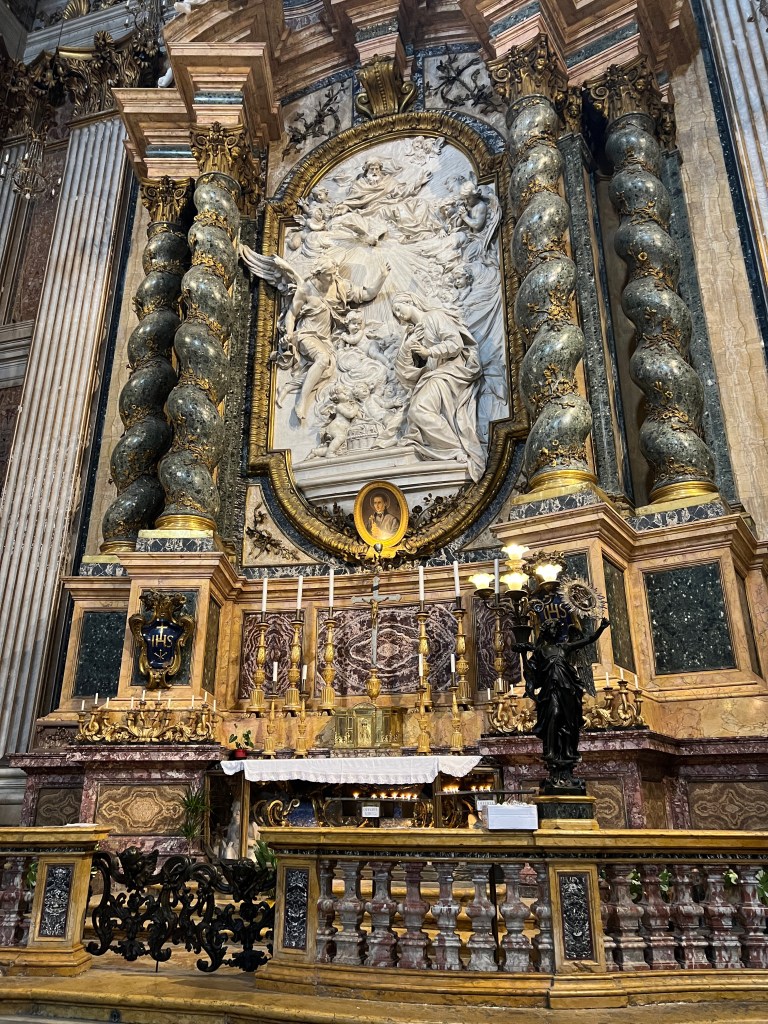
I forget when (maybe after the Pantheon) I stopped in Stanโ€™Ignazio of Loyola Church and after looking around for a bit, stopped here and prayed my Rosary for the day. At first it was noisy, but then the voices receded and there was peace.

Up until this point I have been very intentional in not looking for the Vatican. I donโ€™t want simply a glimpse. I want to take it all in at once and tomorrow is the day. I will cross over the Tiber River via the Ponte Santโ€™Angelo (The Bridge of Angels) built in 136 a.d. and adorned with angels sculpted by Bernini. Once across, I will turn left and look up and I will see. My tour of the Vatican Museum and the Sistine Chapel begin at 7 a.m. so Iโ€™m off.

Have a wonderful and peaceful night.