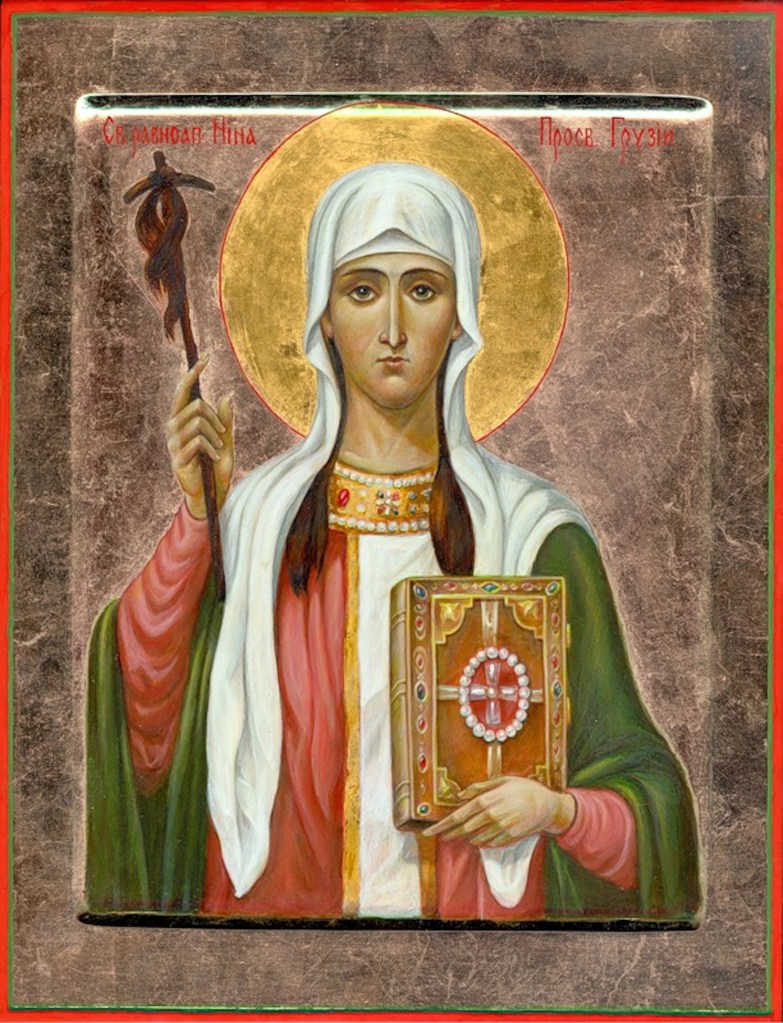
Sermon: Elizabeth, Prnicess of Hungary


The English historian Robert Blake in 1982 wrote about one of the English monarchs: he “was a tyrannical monster. His rule echoed Caligula’s and prefigured that of Hitler or Stalin. Parliament was his collective accomplice: it blotted out his debts, it carried acts of attainder which deprived his enemies or imagined enemies of land, title and life without even the form of trial, it altered the succession, it allowed the king to bequeath the Crown by will, it gave his proclamations the force of statutory law.” 

This monarch’s official title was a bit on the wordy side, “By the Grace of God, King of England, France and Ireland, Defender of the Faith and of the Church of England and also of Ireland in Earth, under Jesus Christ, Supreme Head.” We know him as Henry VIII. I suppose it is good to be king, but when we consider the monarchs of that era, Blake’s description appears fitting for most of them. Therefore, it seems a bit odd to celebrate the life of one, but Elizabeth, Princess of Hungary, was a bit different.

Following the death of her husband, the court compelled her to leave her home and take on a life of near poverty because of her extravagant lifestyle. What were those extravagances? Giving to the poor. Building hospitals. Feeding the hungry—she even opened the royal granaries during a famine in the land. She is reported to have said, “How could I bear a crown of gold when the Lord bears a crown of thorns? And bears it for me!”

She wrote, “Today, there is an inescapable duty to make ourselves the neighbor of every individual, without exception, and to take positive steps to help a neighbor whom we encounter, whether that neighbor be an elderly person, abandoned by everyone, a foreign worker who suffers the injustice of being despised, a refugee, an illegitimate child wrongly suffering for a sin of which the child is innocent, or a starving human being who awakens our conscience by calling to mind the words of Christ: ‘As long as you did it for one of these, the least of my brethren, you did it for me’”

Jesus said, “Sell your possessions, and give alms. Make purses for yourselves that do not wear out, an unfailing treasure in heaven, where no thief comes near and no moth destroys.”

That verse has inspired so many individuals to do such great things. Like Elizabeth, those “great things” did not involve building vast empires or great wealth. They had nothing to do with making a name for themselves or gaining fame. Instead, those “great things” had to do with setting themselves aside, seeing Jesus, and seeking to serve Him in others with their entire being. How far does that go? Elizabeth died from exhaustion in serving the sick and needy.

I’m not going to ask you to do the same, but just as we are called to tithe 10% of our income to the work of God, what do you think the world would be like if we also tithed 10% of our lives to the work of God? What “great things” could we do as a Christian people? I can assure you that we would be a force to be reckoned with in turning back the pain and suffering of this world.

Here’s a challenge for you: An hour has 60 minutes. Ten percent of 60 is 6… 6 minutes. How could you change the lives of those around you if you gave 6 minutes of every hour to God? I dare you to try it.

Sermon: Proper 28 RCL B – “Your Future”

Photo by Albert Antony on Unsplash

On October 30, 1938, Earth was invaded.

“Ladies and gentlemen, this is the most terrifying thing I have ever witnessed . . . Wait a minute! Someone’s crawling out of the hollow top. Someone or . . . something. I can see peering out of that black hole two luminous disks . . are they eyes? It might be a face. It might be . . . Good heavens, something’s wriggling out of the shadow like a gray snake. Now it’s another one, and another. They look like tentacles to me. There, I can see the thing’s body. It’s large, large as a bear and it glistens like wet leather. But that face, it . . . Ladies and gentlemen, it’s indescribable. I can hardly force myself to keep looking at it. The eyes are black and gleam like a serpent. The mouth is V-shaped with saliva dripping from its rimless lips that seem to quiver and pulsate.”

It may not have actually happened, but at the time, hundreds of listeners believed it was. The broadcast of War of the Worlds, written by Orson Welles. Welles said, “I had conceived the idea of doing a radio broadcast in such a manner that a crisis would actually seem to be happening, and would be broadcast in such a dramatized form as to appear to be a real event taking place at that time, rather than a mere radio play.” It worked. Before the broadcast was complete, there were police in the studio lobby demanding that Welles stop the play and announce that it was all a radio drama. There were reported riots, suicides, and mayhem. Did the author and radio cast intend for such results? No.

From an article in the Smithsonian, “No one involved with War of the Worlds expected to deceive any listeners, because they all found the story too silly and improbable to ever be taken seriously.” (Source)

Now, listen to these words given to us by John.

“Now the seven angels who had the seven trumpets prepared to blow them.

“The first angel blew his trumpet, and there followed hail and fire, mixed with blood, and these were thrown upon the earth. And a third of the earth was burned up, and a third of the trees were burned up, and all green grass was burned up.

“The second angel blew his trumpet, and something like a great mountain, burning with fire, was thrown into the sea, and a third of the sea became blood. A third of the living creatures in the sea died, and a third of the ships were destroyed.

“The third angel blew his trumpet, and a great star fell from heaven, blazing like a torch, and it fell on a third of the rivers and on the springs of water. The name of the star is Wormwood. A third of the waters became wormwood, and many people died from the water, because it had been made bitter.” (Revelation 8:6-11)

You are all still here? That’s from Holy Scripture. I thought that would have the same effect as the War of the Worlds broadcast. Why haven’t you run for the hills? Could it be that we also find these writings “too silly and improbable to ever be taken seriously”? A zombie apocalypse is far more likely. Right?

The same indifference can be said for the passage from Mark’s Gospel that we read. The Disciples wanted to know when the end would come—those last great days. Jesus said, “Many will come in my name and say, ‘I am he!’ and they will lead many astray. When you hear of wars and rumors of wars, do not be alarmed; this must take place, but the end is still to come. For nation will rise against nation, and kingdom against kingdom; there will be earthquakes in various places; there will be famines. This is but the beginning of the birthpangs.” (Mark 13:5-8) Today, there are wars and earthquakes and famines, but we’ve always had these things—from the very beginning. This is nothing new, so there’s no reason to get excited about it. It’s just another day in the neighborhood. Right?

Many have spent a lifetime trying to sort out when the end will come. They pull out the Book of Revelation, Daniel, and the Prophets. They do math, counting days and years. They assign names to individuals and events they believe are associated with the end and place them on timelines to plot the future. It is an interesting exercise, but each and every person who has taken on such a challenge has failed. Why? Jesus said, “Concerning that day and hour no one knows, not even the angels of heaven, nor the Son, but the Father only.” (Matthew 24:36) And, the bottom line, we’re really just not too concerned. We won’t say it’s silly because it is from Holy Scripture, but we’re OK with the description of it being too “improbable to ever be taken seriously.”

Fine. Let’s take this End—with a capital “E”—and set it aside for a few minutes, and talk about another end, specifically, your end.

We may not be too concerned about the end of the world, but how many of you have a five-year plan? Something that deals with goals, financial status, job, health, weight loss, etc. You’ve got your plan all laid out nicely. Question: as it relates to your end, in your five-year planning, did you include the care for the widows and orphans in your midst? How does your plan account for feeding the hungry? Clothing of the naked? Sharing the Gospel message with others? You may know the financial yield of your IRA down to the penny on the day of your retirement, but how have you planned to extend your hand in love to those around you so that on your last day, you hear those words, “Well done good and faithful servant?”

You say, “Well, Fr. John, I don’t have a five-year plan, much less an IRA, so this doesn’t apply to me.” And I say, “Not so fast.” Do you have plans for your next day off? Got it worked out what you might be doing, or just happily thinking about a day away from the boss? Have you wondered if you might have enough left over to take the kids to a movie? I hope you do. Truly! I hope you are joyfully looking forward to living your life, but have you said your prayers this past week? Have you stopped long enough to listen for the voice of God? (And just in case you’re hedging on your answer, this morning in church doesn’t count!) I’m not asking if you spent an hour each day in deep meditation, but did you stop long enough each day to pray even the Lord’s Prayer? “Thank you, Fr. John; I now feel sufficiently guilty.”

I’m not saying you shouldn’t plan; you must be responsible, and I’m not trying to make you feel guilty either; live your life and enjoy it to its fullest. In addition, I’m not saying that the end of days is not something to consider and be aware of. Still, Jesus and John in the Book of Revelation or any other apocalyptic messages were not necessarily given to us so that we would sit around and be harassed by the future. The main point behind those writings is not to have us focus on “The End” or the future, but instead, to focus on our end. How is it we are living today?

It’s not, have you identified the Great Babylon in John’s Revelation, but have you identified your place in God’s plan?

It’s not, have you discovered the person of the anti-Christ, but have you discovered the person of Jesus Christ?

It’s not whether you can afford to retire early but whether you love God each and every day.

The focus is not solely on the end of the world, your five-year plan, or your weekend plans.  It is about your relationship with God today, and it’s about encountering, serving, blessing, and being blessed by Jesus here and now.

Yes, we must be responsible in our daily lives, and we must plan for the future, but an unhealthy preoccupation with the End of Days, the future, and all the “What ifs?” can lead us astray from the opportunities of today.

The end of days, the end of the year, the end of the week, the end of this sermon—yes, these are things to be considered, but they should never lead you astray or distract you from what God is doing in this very moment and how you should be making plans for and considering your own end.

I’m honestly not trying to depress you or make you feel guilty. However, the War of the Worlds may have been “too silly and improbable to ever be taken seriously,” but your end is not. In all you do, ask, “How am I storing up treasure in Heaven,” so that on your last day, Jesus says to you, “Well done, good and faithful servant… Enter into the joy of your master.” (Matthew 25:23)

Let us pray:

Lord, for tomorrow and its needs,
We do not pray;
Keep us, our God, from stain of sin
Just for today.

Let us both diligently work,
And duly pray.
Let us be kind in word and deed,
Just for today.

Let us be slow to do our will,
Prompt to obey;
Help us to sacrifice ourselves
Just for today.

And if today our tide of life
Should ebb away,
Give us thy Sacraments divine,
Sweet Lord today.

So for to-morrow and its needs
We do not pray,
But keep us, guide us, love us, Lord,
Just for to-day.

Amen.

(This prayer is from the St. Augustine Prayer Book) 

Sermon: Proper 27 RCL B – “Hope”


Sitting by the window of her convent, Sister Barbara opened a letter from home.

It was from her parents and enclosed was a crisp $100 bill.

Sister Barbara smiled at the gesture.

As she read the letter by the window, she noticed a shabbily dressed stranger leaning against the lamppost below.

Quickly, she wrote a note. “Don’t despair,” and signed it, “Sister Barbara.” Then, wrapping the $100 bill in the note, she got the man’s attention and tossed it out the window to him.

The stranger picked it up and went off down the street with a puzzled expression and a tip of his hat.

The next day, Sister Barbara was told that a man was at her door, insisting on seeing her. She went down and found the stranger waiting. Without a word, he handed her a huge wad of $100 bills.
“What’s this?” she asked.

“That’s the $8,000 you have coming, Sister,” he replied. “Don’t Despair paid 80-to-1.” Turns out the man was a bookie.

Early in the Church’s history, theologians attempted to classify those sins that affect our souls. When complete, there were nine categories that came to be known as logismoi (lo-gee-smee) or “evil thoughts.” One of the Desert Fathers writes, “When negative logismoi (singular “logismos“) manage to enter your spiritual bloodstream, they can affect you in the same way that a needle, full of poison, penetrates you and spreads the deadly substance throughout your body.”

Over the centuries, these logismoi were further refined, and instead of nine, they were eight. Pope Gregory the Great again refined these eight and reduced them to seven. These seven are known as the Seven Deadly Sins: lust, gluttony, greed, sloth, wrath, envy, and pride.

In our Confirmation Class, we’ve studied the Examination of Conscience from the St. Augustine Prayer Book and learned that these seven sins are broken down even further. For example, under the sin of pride is the sin of distrust, and under distrust is cowardice. Performing an examination of conscience is an excellent means for discovering areas of our souls that need attention.

Today, however, I would like to return to when there were eight categories instead of seven. In particular, I would like us to look at tristitia (tris-ti-tia), defined as sadness, despondency, or despair, which means being without hope.

In Victor Hugo’s Les Misérables, Fantine is the most tragic of all the characters. At her lowest point, she declares,

“But there are dreams that cannot be
And there are storms we cannot weather
I had a dream my life would be
So much different from this hell I’m living
So different now from what it seemed
Now life has killed
The dream I dreamed.”

That is despair in perhaps its purest form. All is lost, and I am done. I suspect that we have all felt that way at some point in our lives. It is an overwhelming feeling, and it is sinful because it negates the promises of Christ and His sacrifice on the Cross. It declares, “I am beyond even the saving hand of God,” (which also falls under the category of spiritual pride.) It says, “I have no hope.”

In the time of Jesus, the temple complex consisted of the outer courtyard where anyone, Jew/Gentile, could gather. Entering through the next gate was for Jews only. This was the Women’s Courtyard. Both Jewish men and women could be here. The next gate would lead you to the Temple area, men/priests only.

Our Gospel reading today takes place in the Women’s Courtyard, where the treasury, consisting of thirteen trumpet-shaped basons, was located.

Jesus is teaching. He sees those who are supposed to be the teachers of the Law running about, and He criticizes them for their actions; then, He watches as an elderly Jewish widow approaches one of the basons and drops in two small copper coins, which are worth only a penny. He says, “Truly I tell you, this poor widow has put in more than all those who are contributing to the treasury. For all of them have contributed out of their abundance; but she out of her poverty has put in everything she had, all she had to live on.”

Through her actions, do you see hope or despair?

Consider the widow in our lesson from the Old Testament. Elijah asks her to bring him something to drink and a little something to eat. She says to him, “As the Lord your God lives, I have nothing baked, only a handful of meal in a jar, and a little oil in a jug; I am now gathering a couple of sticks, so that I may go home and prepare it for myself and my son, that we may eat it, and die.” That sounds like despair, but Elijah instructs her to go ahead and do as he asked, saying to her, “The jar of meal will not be emptied and the jug of oil will not fail until the day that the Lord sends rain on the earth.” Despair would have waved him off as a crazy old man, but instead, the woman found a measure of hope, and through her hope, she lived.

“And at the ninth hour Jesus—hanging upon the Cross—cried with a loud voice, ‘Eloi, Eloi, lema sabachthani?’ which means, ‘My God, my God, why have you forsaken me?’” If there was ever a cry of despair, that was it, but Jesus, being tormented as He was by the sins of the world descending upon Him, did not ever give up hope, for just moments before He died, He cried out, “Father, into your hands I commit my spirit!”

Through hope, the widow in the Temple gave God all she had. Through hope, the woman trusted Elijah’s word and gave him all she had to eat. Through hope, Jesus took upon Himself the sins of the world and believed His Father would bring Him through death itself.

At 40, the author Franz Kafka, who never married and had no children, was walking through the park in Berlin when he met a girl who was crying because she had lost her favorite doll. She and Kafka searched for the doll unsuccessfully.

Kafka told her to meet him the next day, and they would look again.

The next day, when they had not yet found the doll, Kafka gave the girl a letter written by the doll. The doll said, “Please don’t cry. I took a trip to see the world. I will write to you about my adventures.”

Thus began a story that lasted about a year until the end of Kafka’s life. During their meetings, Kafka read the letters of the doll, which he had carefully written about the doll’s adventures and conversations. The girl found them adorable.

Finally, Kafka brought a doll (he bought one) and, giving it to the girl, told her that her doll had returned from her trip.

“It doesn’t look like my doll at all,” she said.

Kafka handed her another letter in which the doll explained, “My travels have changed me.” The little girl hugged the new doll and gave her a happy home.

Many years later, the now-adult girl found a letter inside the doll. In the tiny letter signed by Kafka, it was written: “Everything you love will probably be lost, but in the end, love will return in another way.”

There are many events that are inevitable for us all unless we live in a box, closed off from the world, that can draw us down a path toward despair. However, there is always hope. This is not a “silver lining” or wishful thinking. This kind of hope comes from knowledge. You see, this hope comes from knowing that you are loved. Hope speaks to your soul and says, “Regardless of the loss, the pain, the tears, the distress you are experiencing, you are loved by the One who is Love itself.”

In the first book of the epic tale, The Lord of the Rings, the individuals gathered around the table are beginning to despair for their future. It is then that the great wizard Gandalf tells them, “Despair is only for those who see the end beyond all doubt. We do not.” There is no sin in feeling great loss. We all will, but we—God’s Beloved—are not seeing the end of hope. We will come away changed, but we are not seeing the end of love.

American author George Iles wrote, “Hope is faith holding out its hand in the dark.” I would add to that. “Hope is faith holding out its hand in the dark and knowing that Love will take your hand in His.” In those times of pain, close your eyes, reach out your hand, and know that you are loved.

Let us pray: Praised be the God and Father of our Lord Jesus Christ, He who in His great mercy gave us new birth, a birth unto hope which draws its life from the resurrection of Jesus Christ from the dead; a birth to an imperishable inheritance, incapable of fading or defilement, which is kept in heaven for you who are guarded with God’s power through faith; a birth to a salvation which stands ready to be revealed in the last days. Amen.

Sermon: William Temple


My favorite William Temple quote is: “Humility does not mean thinking less of yourself than of other people, nor does it mean having a low opinion of your own gifts. It means freedom from thinking about yourself one way or the other at all.”

Temple is relatively new to our calendar of saints. He died in 1944 after serving as the Archbishop of Canterbury for only a few years. He was described in a poem by Ronald Knox:

A man so broad, to some he seem’d to be
Not one, but all Mankind in Effigy.
Who, brisk in Term, a Whirlwind in the Long,
Did everything by turns, and nothing wrong.
Bill’d at each Lecture-Hall from Thames to Tyne,
As Thinker, Usher, Statesman, or Divine.

Although he was successful at many things, it is for his teaching and preaching that he is best known. It is reported during one service that he led a congregation in singing the hymn “When I Survey the Wondrous Cross” by Isaac Watts. In the last verse, Temple asked the congregation to stop, saying, “Now, if you mean [the words] with all your heart, sing them as loud as you can. If you don’t mean them at all, keep silent. If you mean them even a little and want to mean them more, sing them very softly.” The organ began to play the final verse, and two thousand voices whispered:

Were the whole realm of nature mine,
That were an offering far too small;
Love so amazing, so divine,
Demands my soul, my life, my all.

In our Gospel reading today, we read, “The Word became flesh and lived among us, and we have seen his glory, the glory as of a father’s only son, full of grace and truth.” The Word became flesh, and true love was born into the world in the person of Jesus Christ. What Isaac Watts states in that last verse is that if the universe and all that is in it were his, it would still not be enough—it would be too little to give—in exchange for the love that is Jesus, and therefore demands everything of him: his soul, his life, his all.

Therefore, William Temple was challenging his congregation with those words. If you give your all for God, holding nothing back, not even life itself, then boldly sing out those words. If you do not intend to give any part of your life for the love of Christ, keep your mouth shut, however, if you want to mean them. If you’re trying to mean those words, then whisper them. It’s a bit like Archbishop Michael Ramsey said regarding prayer. There will be days when you can pray, but there will also be those days when you can’t, so on those days, pray that you can pray. Temple is saying that if we are not giving our soul, our life, and all our life for the love of Christ, but you want to, you desire to, then whisper the words.

Were the whole realm of nature mine,
That were an offering far too small;
Love so amazing, so divine,
Demands my soul, my life, my all.

I think we would all like to sing out that verse boldly, but I suspect for many of us, it is only with a faint whisper that we can join in. My prayer for you and me is that tomorrow, we might all just be able to whisper them a bit more loudly. In the meantime, we must rely on grace to cover the difference.

Sermon: All Saints Sunday RCL B – “Be a Saint”


The human body is a fantastic creation, yet most of us don’t give it a second thought until something breaks. It’s a bit like what Jerry Seinfeld said, “The human body is like a condominium. The thing that keeps you from really enjoying it is the maintenance.” Outside of the maintenance, when we do think of it, we are primarily concerned with the outward appearance. Am I fit? How’s my hair? Do I have blemishes? “Honey, does this dress make me look fat?” That sort of thing. However, as interesting as all that can be, what goes on below the surface of the flesh is mindblowing—a few examples.

Did you know that when you listen to music, your heartbeat changes and attempts to mimic the beat? It is why soothing jazz slows you down, and that old-time rock-n-roll gets your blood moving.

The fastest-moving muscle in your body is the one that controls the contractions in your eye, helping you to focus. It does its job in 1/100th of a second.

Every second, you produce 25 million new cells. 

If you live to 70, your heart will beat about 2.5 billion times; it is the only muscle that never gets tired. 

The one fact that seems beyond belief is the circulatory system. A newborn’s circulatory system—all the arteries and veins—if stretched end to end, is 60,000 miles long. When you are an adult, it reaches 100,000 miles.

All this and more is happening, but when we look at another person, we see none of it. 

If you’ve seen any of my travel pictures, you probably picked up on the fact that I haunt churches. The churches are the number one places to see when I visit a new city. I don’t know much about architecture or art, but I love the feel of them—how you can sit quietly and be surrounded by the centuries of prayers, sense the individuals who walked through and learn of the great history that took place in and around those walls. And most of all, to simply be there. Inside, you experience the awe and reverence that spills from your soul as the church’s grandness speaks of the greatness of God.

When I’m visiting one, I never think about everything that is going on behind the scenes. I don’t think about the choirmaster toiling away in a back office seeking the perfect hymn to fit with the upcoming services or the organist, who spends hours practicing so that the music is perfect. I don’t think about the individuals who polish the floors or pay the bills. When I see an ornate pulpit, I don’t necessarily think of the priest—I say to myself, “Man, I sure would like to preach from there.” It never crosses my mind that they may have a new refrigerator that makes a weird banging sound, but they can’t get anyone out to look at it, so they must call repeatedly. I can’t imagine someone there spending a couple of hours researching how to get the oxidation off the big red doors so that they aren’t the big pink doors. I don’t think about any of those things and so many other details. I am allowed to experience the greatness of God and His majesty and to worship when I am there. Why? Because I may not be thinking about or doing all those things, but someone is. 

The pictures of the pyramids are on the front of your bulletin. I was looking at something and came across the one on the right. The pyramids are in the distance, with the city at the forefront. I wondered where that was. As it turns out, it is the exact same location as the picture on the left. That image on the left is how I always thought of the pyramids—isolated from the world, surrounded by the beautiful sands of the desert, the clear blue sky, and the remarkable symmetry of the structures, but it is only the angle from which you are looking. I had no idea. If we were there, facing the pyramids from the angle of the picture on the left, that is what we would see. If we turn 180°, the city is right there in all its chaos! 

Walking into this church, I have the benefit of being able to see it from many angles.  This—looking out at you—is my favorite view. It is like seeing the pyramids in all their glory—beautiful sand, blue sky, perfectly ordered—but if I change the angle and “look behind me,” it can be wild. Everything that had to take place and get done so that we could be here at this very moment, experiencing God together. However, what is even more fascinating is all that occurred in the past so that we could be here in the first place.

There’s a great film, Lucy, with… hubba hubba, you guessed it… Scarlett Johansson. In one scene, she sits in an office chair in Times Square in New York. Then, she swipes her hand and begins a rapid rewind of time. She stops the rewind; it is still Times Square, but it is being built. She swipes again; the city is gone, and she is seated in front of several Native Americans. Again, she swipes and continues to go further and further back. Through the process, she sees all that had to take place for her to be in that present moment. What if we could do the same with St. Matthew’s? What would we see? Not just what took place in the past week for us to be here but what took place over the centuries for us to be here. We would see the Bishops and the clergy and the people and would see the Land Run. Further back, we would see the establishment of the Anglican Church in the New World, and further and further until we see Jesus standing in front of a tax collector, saying to him, “Follow me.”

During all that 2,000-year history, you will discover many great women and men who made it possible for us to be here today. They are the ones we celebrate on this All Saints Day, but as I was thinking about them, I thought again about sitting in Scarlett’s chair and not swiping back, but instead swiping forward—into the future. If we did, what would we see in this place? 

James Lloyd Breck is one of the saints of our Church. He was a great missionary and, in 1842, founded Nashotah House, the seminary I attended.  He died in 1897, and on a gray autumn day in October, the people gathered at Nashotah House to lay him to rest. In attendance were Bishop Daniel Sylvester Tuttle, the first missionary Bishop of Montana, and Bishop Francis Key Brooke, the first Missionary Bishop of Oklahoma. Bishop Tuttle spoke at the graveside.

“There was a Grecian race in which the runners were charged to care not for themselves, nor indeed for each other, but for the torch they bore. As one and another, wearied and overcome, fell by the way, he held aloft his torch, handing it to a comrade who seized it quickly and sped on. So, with the torch borne by the Christian man. It has a triple flame: God’s truth, Christ’s love, men’s good. We are to hold it up and pass it on. One or another of us is soon to fall in the hard-trodden, dusty path. But never mind us, it is dust to dust, though it may be sacred dust that falls, and God will take care of it. Do not mind us; seize the torch, we pray you, and push on to the blessed goal.”

Those who went before us, all the Saints and that Great Cloud of Witnesses, carried that torch, and when they fell, someone else picked it up. And so, it is now our turn. We must pick up the torch with its triple flame, “God’s truth, Christ’s love, men’s good,” and carry it into the future so that when we fall back into dust, there will be someone new to pick it up and carry on.

It is a gift to be able to gather in this place, to be concerned with nothing other than the worship of the One True God, and to have fellowship with one another. It is a gift, but we must all turn and understand what makes this gift possible. 

Like the saints that have gone before us, we have the responsibility to pick up that torch with its triple flame and carry it so that when the next generation picks it up, it is burning all the brighter. 

How are we able to carry it? We carry it through our service to one another and the church—our attendance and participation in corporate worship, volunteering, helping in the various ministries, going out into the community and proclaiming the Gospel through word and deed, and financially supporting the Church as we are able.

We celebrate All Saints Day to honor those who have gone before us and to remind ourselves of who we are to become. 

So, if you sit in Scarlett’s chair and fast forward into St. Matthew’s future, what do you want to see? When you see a vision of that future, ask yourself, “How can I help create that?” Then, in faithfulness and obedience, commit yourself to God, pick up that torch, and carry on.

Let us pray: Almighty ever-living God, by whose gift we venerate in one celebration the merits of all the Saints, bestow on us, we pray, through the prayers of so many intercessors, an abundance of the reconciliation with you for which we earnestly long. Through our Lord Jesus Christ, your Son, who lives and reigns with you in the unity of the Holy Spirit, God, for ever and ever. Amen

Sermon: All Saints Day


“In politics, stupidity is not a handicap.” ― Napoleon Bonaparte

“Corrupt politicians make the other ten percent look bad.” ― Henry Kissinger

“The trouble with practical jokes is that very often they get elected.” ― Will Rogers

“When they call the roll in the Senate, the Senators do not know whether to answer ‘Present’ or ‘Not Guilty’.” ― Theodore Roosevelt

“Politicians and diapers must be changed often, and for the same reason.” ― Mark Twain

’Tis the season, but what does politics have to do with All Saints Day? The Saints, throughout the history of the Church, have stood up against those who call themselves rulers/politicians, whether they be kings or queens, presidents or emperors. In many cases, it cost the Saint their life, but they still stood firm.

Shortly before he was put to death for denying Henry VIII, Thomas More said, “I die the King’s good servant but God’s first.” As he stood firm during the Spanish Civil War, Josemaria Escriva told those with him, “Remain faithful. As for the rest, what does it matter?” Standing up to another English king, Thomas Becket said, “The more I loved the king, the more I opposed his injustice until his brow fell lowering upon me.” Joan of Arc stood before tyrants and declared, “To sacrifice what you are and to live without belief, that is a fate more terrible than dying.”

Rulers and elected officials have always pandered to the Church, seeking favor, endorsement, and—more importantly—votes. And, to its detriment, the Church has frequently allowed itself to be drawn in. Yet, the Saints teach us another way. The Saints teach us God’s way. A way that is contrary to that of the world.

Eugene Peterson writes quite a bit for clergy. I don’t remember if I’ve shared this piece with you before. It is from his book The Contemplative Pastor.

He begins one chapter by saying, “As a pastor, I don’t like being viewed as nice but insignificant. I bristle when a high-energy executive leaves the place of worship with the comment, ‘This was wonderful, Pastor, but now we have to get back to the real world, don’t we?’”

He says that when he hears this, he wants to assert his importance, but “Then,” he says, “I remember that I am a subversive. My long-term effectiveness depends on my not being recognized for who I really am. If he—high-energy executive—realized that I actually believe the American way of life is doomed to destruction, and that another kingdom is right now being formed in secret to take its place, he wouldn’t be at all pleased. If he knew what I was really doing and the difference it was making, he would fire me.

“Yes, I believe that. I believe that the kingdoms of this world, American and Venezuelan and Chinese, will become the kingdom of our God and Christ, and I believe this new kingdom is already among us.”

Yes, politics and All Saints Day go very nicely together because the Saints were revolutionaries. In their times, they believed, lived, and died for what Peterson’s subversive pastor declares. And it is why you and I should not get all riled up about what happens next Tuesday or next year or whenever. Yes, it is important, and yes, we should vote, but in doing so, we also know that the outcome—whether we like it or not—is according to the will of God and will serve His purposes, not for some earthly kingdom, but for God’s Kingdom.

Regardless of the outcome, we, the Church, the new saints of God, will do what we’ve been doing for the last 2,000 years—stand up against those who oppress God’s people and care for those in need. We will continue going about the work of our One True King, and no earthly weapon or politician will prosper against Him. 

We, the people, have nothing to fear. However, those who seek authority over us should take heed, for our God says, 

Therefore, you kings, be wise;
    be warned, you rulers of the earth.

Serve the Lord with fear
    and celebrate his rule with trembling.

Kiss his son, or he will be angry
    and your way will lead to your destruction,

for his wrath can flare up in a moment.
    Blessed are all who take refuge in him.

We are the children of the King, and He loves us. Be faithful and fear not. Stand with the Saints and be true.

Sermon: Proper 25 RCL B – “Questions”


The poet Robert Frost is reported to have said, “A jury consists of twelve persons chosen to decide who has the better lawyer.” With that in mind, I’ll let you judge if these lawyers won their case.

Q: “Now, Mrs. Johnson, how was your first marriage terminated?”
A: “By death.”
Q: “And by whose death was it terminated?”

Q: “Have you ever thought of committing involuntary manslaughter?”

Q: “Any suggestions as to what prevented this from being a murder trial instead of an attempted murder trial?”
A: “The victim lived.”

Q: What was the first thing your husband said to you when he woke up that morning?
A: He said, “Where am I, Cathy?”
Q: And why did that upset you?
A: My name is Susan.

Q: “Was it you or your younger brother who was killed in the war?”

Q: “Do you recall the time that you examined the body?”
A: “The autopsy started around 8:30 p.m..”
Q: “And Mr. Dennington was dead at the time?”
A: “No, he was sitting on the table wondering why I was doing an autopsy.”

When it comes to asking questions, preschoolers take the prize. They average 300-390 questions per day. By the time children are nine, that number drops to about 140. As adults, I suppose we think we know all the answers because we only ask 25-30 questions per day. 

Answers to some questions range from one word—yes/no—to entire volumes dedicated to a single answer. Other questions range from rhetorical to simple inquiries. For example, “Does Father John have a point?” Answer: Yes!

If you combine the texts of the New Testament, you’ll discover that Jesus asked a total of 307 questions. Today, he asked Bartimaeus, “What do you want me to do for you?” At other times, His questions become more difficult. “What are you looking for?” (John 1:38) “Why do you notice the splinter in your neighbor’s eye yet fail to see the wooden beam in your own eye?” (Matt 7:2) “Why are you terrified?” (Matt 8:26) “Why do you harbor evil thoughts?” (Matt 9:4) “Could you not watch for me one brief hour?” (Matt 26:40) “What are you thinking in your hearts?” (Luke 5:22) “What are you discussing as you walk along?” (Luke 24:17) Each of those is asked in a particular context, but even alone, in the context of our faith, they are good questions and not always so easy to answer.

On the other side, Jesus was asked 183 questions. Care to guess how many He answered? Three. You should think about that the next time someone seems to have all the answers.

Jesus asks us questions, and we ask Jesus questions, but I suspect that most of our questions fall in the category of requests for favors or healing. However, at the root of all we are asking, perhaps even subconsciously, is a more important question, and it is the same question we heard a few weeks ago in our Gospel reading—“Good Teacher, what must I do to inherit eternal life?” Even our craziest requests come back to this. “Jesus, will you help me pick the right numbers to win the lottery?” That sounds materialistic on the surface, but below the surface, it is a request for stability, fulfillment, the meeting of needs, and so on, all of which will be given on the last day—eternal life with God.

Jesus said, “Truly, truly, I say to you, whoever hears my word and believes him who sent me has eternal life. He does not come into judgment, but has passed from death to life.” Jesus also said, “All authority in heaven and on earth has been given to me. Go therefore and make disciples of all nations, baptizing them in the name of the Father and of the Son and of the Holy Spirit, teaching them to observe all that I have commanded you.”

So, we have a question that is being asked by believers and unbelievers,  “What must I do to inherit eternal life?” Fortunately, we have the answer: faith in the Son of God, Jesus. And we have a command: “Go and share this Good News. 

The Church has many secondary missions, but this going and proclaiming the Good News—that is, proclaiming the cross, the death and resurrection of Jesus, repentance, the forgiveness of sins, and eternal life, all of which can be summed up in those few words, “For God so loved the world”—this going and proclaiming the Good News far outweighs all the secondary missions/ministries combined, but… and there it is… we can preach by words all day long, yet, unless we also proclaim the Good News through those secondary missions/ministries, through our actions, then the message goes largely unheard.

You know the Scripture: “What good is it, my brothers and sisters, if someone says he has faith but does not have works? Can that faith save him? If a brother or sister is poorly clothed and lacking in daily food, and one of you says to them, ‘Go in peace, be warmed and filled,’ without giving them the things needed for the body, what good is that? So also faith by itself, if it does not have works, is dead.” (James 2:14-17)

Bottom line: we, the Church, must proclaim the Good News of Jesus Christ by word and deed. We can all agree on this, but there is a catch. To those who receive what we are offering, there is no charge. There is no cost for the message we share, and we do not charge for the works we perform; however, for us—the Church—the act of proclaiming by word and deed is not free.

I have joked with you about the two ways I can make you most uncomfortable. The first is for me to be silent. Silence makes us crazy. It shouldn’t, but it does. The second way I can make you uncomfortable and perhaps even have you tune me out is to talk about money and giving. Over the course of the last ten years, I’ve spoken to you many times about the need for silence in our lives, but I can count on one hand the number of times I’ve talked to you about money and giving. You have always been so generous with your gifts and pledges to the Church, and we are a financially healthy church, so I’ve never seen the need. Today, you are still as generous as always, and we are still a financially healthy church. That hasn’t changed. However, the needs of the world around us have, and they are greater than ever, and every indication is that it will only get worse. And it is to this world that we must proclaim through word and deed.

Not everyone has the gifts to proclaim by word, and many times, those who can proclaim by their deeds and actions are out working to provide for their own needs and the needs of their families. However, the Church is uniquely positioned to do both, but not without your financial assistance. 

Our Presiding Bishop (for one more week), Michael Curry, is fond of saying we are the Episcopal Branch of the Jesus Movement. So, St. Matthew’s is the Episcopal Branch of the Jesus Movement in Enid, Oklahoma. Through our individual actions, we can do much, but through our collective actions, we have made and are making a considerable difference in our community. We feed people experiencing poverty, pay for student meals at the local schools, put books in the hands of children through our partnership with the Enid Public Library and the Dolly Parton Imagination Library, help build soccer complexes and tennis facilities that provide healthy activities for the youth of our community, and so much more. In addition, this year, we’re hoping to add the 5% Mission Tithe back into the budget so that our reach and proclamation of the Good News of Jesus Christ can be even greater. I don’t get really excited about asking you to help us pay the electric bill, but the ability to fulfill so many opportunities, to help so many individuals and organizations, and to proclaim the Good News in creative ways gets me going. However… we need your giving to help do these things. 

Speaking through the Prophet Malachi, the Lord says, “Bring the full tithe into the storehouse, that there may be food in my house. And thereby put me to the test, says the Lord of hosts, if I will not open the windows of heaven for you and pour down for you a blessing until there is no more need.”

I am not preaching prosperity Gospel here; that is heresy, but the Lord says, “Test me on this. Bring your tithe into the church and watch what happens.” 

Yes. This is the beginning of our annual pledge drive. Yes. You are going to hear more about giving, pledging, and tithing. Yes. You can tune it all out, but… don’t. Giving our time, talents, and treasures is as much a spiritual discipline as praying and worshipping. So, I ask you to read through the information that will be provided over the next week, then, next week, prayerfully consider and make your 2025 pledge. Together, in our community and maybe even further, we will proclaim the Good News and answer the question, “What must I do to inherit eternal life?”

Let us pray: Gracious Father, the owner of all things, we pause in reverence, acknowledging that everything we possess ultimately belongs to you. We open our hearts to the profound reality that we are only temporary stewards of your eternal treasures. Help us to embrace the responsibility and privilege of managing your blessings with diligence and integrity. Amen.

Sermon: James of Jerusalem (the Just)

James the Just, 16th-century Russian icon.

The early patriarchs of the Israelites were Abraham, Isaac, and Jacob. We know Jacob had twelve sons, one of whom was Joseph, his favorite. Scripture says Jacob “loved Joseph more than any other of his children, because he was the son of his old age; and he had made him a long robe with sleeves.” Because of his favoritism toward Joseph, the other eleven brothers became jealous of him, and it got even worse when Joseph was seventeen and began having dreams: “‘Listen to this dream that I dreamed.  There we were, binding sheaves in the field. Suddenly my sheaf rose and stood upright; then your sheaves gathered around it, and bowed down to my sheaf.’  His brothers said to him, ‘Are you indeed to reign over us? Are you indeed to have dominion over us?’ So they hated him even more because of his dreams and his words.” He had another similar dream regarding the sun, moon, and stars. Because of the jealousy that built up around these events, Joseph’s brothers sold him into slavery and told their father that a wild animal had killed Joseph.

As we read through Scripture, we see several instances of siblings not getting along, the first of which was Cain and Abel, but there was also Jacob and Esau, and even the parable of the prodigal son has its share. Where we don’t expect to find it is with Jesus and his brothers—whether they were brothers or cousins or some other relations is a lesson for another day—but early on, in the synoptic Gospels and John, we are given a clear picture that there was tension.

Mark’s Gospel: Jesus has begun his public ministry and “When [Jesus’] relations heard about it, they set out to seize him for they said, ‘He is out of his mind.’” John’s Gospel tells us very plainly, “His brothers did not believe in him.” They thought he was crazy, which was true for James, whom we celebrate today. However, following the resurrection, James became a devout follower. He was, in fact, elected by the twelve Apostles (including James, the brother of John) to be head of the Church in Jerusalem.

Surprisingly, it is very common for family and friends who are not believers to question your sanity or become angry when you begin to follow the will of God. Still, for the believer, it should not be a surprise, for Jesus says to us, “Brother will betray brother to death, and a father his child, and children will rise against parents and have them put to death; and you will be hated by all because of my name. But the one who endures to the end will be saved.”

The reasons why such a thing can happen are numerous: jealousy, as in the case of Joseph; pride, as in the case of Jesus’ family (they thought he was crazy and making them look bad); or anger, because you’re no longer following the crowd. But I think the most significant reason is fear. Fear because they are now more personally confronted with their own lives. Your life and obedience to God have become a testimony to them and convicts them of the sin in their own lives, leaving them with a choice of obedience.

James’ initial reaction to his brother Jesus was one of anger; however, Jesus’ life, Jesus’ obedience to the will of the Father convicted James and brought about a conversion. In the face of anger, fear, and jealousy because of your faith, stand tall and do not be afraid. God can even use the adverse reactions of others to bring about His will in their lives.

Sermon: Proper 24 RCL B – “Losers”


Little Johnny’s fourth-grade teacher had very straight hair, so she decided to get a permanent for something different. As she sat at her desk the following morning, all the children began to file in. They all noticed her hair, but Johnny just couldn’t take his eyes off her. Becoming very self-conscious, even from the looks of such a young person, she said, “Is something wrong, Johnny?” Johnny said, “Your hair.” The teacher beamed and said, “You noticed. I just had a permanent, and I love it.” Johnny, still staring, said, “You do? Have you seen it?”

We all need a Little Johnny in our lives to keep us humble—to put us in our place when we start thinking we’re all that and a bag of chips.

When it comes to being humble, I’m always reminded of the fact that you can learn humility or someone will come along and teach it to you, and probably not in a kind way.

In our Gospel, we quickly see the lesson of humility. Still, I do believe that most of us shy away from a real-life application of what Jesus says—“Whoever wishes to become great among you must be your servant, and whoever wishes to be first among you must be slave of all.” Why do we shy away? Because we understand that being a servant or a slave is not humbling. We see it as being humiliating.

Do you remember reading Uncle Tom’s Cabin? One of those books you were assigned in school that, at the time, you thought having to read was punishment for someone in Dante’s Inferno? If so, you may remember the characters Little Eva and her mother, Marie. The two could not be more opposite. Eva is a sweet soul of a girl—seven years old or so—and her mother is a most unpleasant sort and describes Eva as “peculiar.” Why? Eva is kind to the house slaves. She plays with them and reads the Bible to them. She even volunteers to take on some of their duties when they are tired. However, according to Marie, this is not the way things are to be.

Harriet Beecher Stowe also wrote a drama, The Christian Slave, based on a portion of Uncle Tom’s Cabin that Mary E. Webb performed between 1855 and 1856. Here, Harriet gives her characters more life, and Marie talks to Cousin Ophelia in one scene.

Marie says, “Now, there’s no way with servants, but to put them down, and keep them down. It was always natural to me, from a child. Eva is enough to spoil a whole house-full. What she will do when she comes to keep house herself, I’m sure I don’t know. I hold to being kind to servants—I always am; but you must make ’em know their place. Eva never does; but there’s no getting into the child’s head the first beginning of an idea what a servant’s place is… this treating servants as if they were exotic flowers or china vases is really ridiculous.”

I do not believe that any of you hold to this way of thinking (there are many who do.) That said, when Jesus tells his disciples, “Whoever wishes to be first among you must be—servant—slave of all,” we may not hold to Marie’s way of thinking, but it is how we understand a servant or a slave. When Jesus says we are to be slaves, we understand that to mean we are the ones who are to be put down and kept down. When we are servants, we are those who are put in their place and expected to stay there, and you know what? We don’t much like it. To be put down and kept down is, in our minds, to be a loser. And we ain’t no losers!

You know what a huge sports fan I am—everybody roll your eyes. Not judging it, but I don’t get it. Messed up wiring or something. Even so, I do have my opinions, and some things irk me about it all. Take football, for example—“How ‘bout them Bears.” They’re from Philadelphia. Right? Anyhow. Let’s say the offense is on the twenty-yard line, and they’ve got to cover eighty yards to score a touchdown. The ball is hiked, and the quarterback fakes to the left and then hands it off to the running back. The running back does his thing, and, within seconds is sprinting down the field for a touchdown. The crowd goes wild, and the running back does the funky chicken in the endzone. He is a winner, he knows it, and he’s happy to tell everybody about it. Meanwhile, the other ten players on the field are more or less forgotten. Maybe that’s not the case, but that’s the way it always appears to me. Why? To me, it seems as though the other ten players are viewed as nothing more than servants. Maybe you know one or two of their names, but as long as they stay in their place and do their job, the winner can do the rest. It seems as though that winner has forgotten that he would be flat on his backside if it weren’t for those servants. Maybe I have it all wrong, but that’s the way I see it.

We all want to be the one that the camera follows around after the big play. We all want to be the winner. Nobody wants to be one of the forgotten ones. We’re above that. We’re better than that. “Teacher, we are winners. Grant us to sit, one at your right hand and one at your left, in your glory.” Grant us a seat at the winners’ table because that’s who we are.

I am not a sports fan, but I may have mentioned that I’m a fan of Stephen King. “I’m his biggest fan.” A few weeks ago, I told you I had finished reading IT, which is an exceptionally good read. No spoilers here, but I’m sure you know there’s a monster involved and other assorted characters. However, the main characters are seven kids. There’s the stuttering kid, the Jew, the Black boy, four-eyes, a hypochondriac, the girl that everyone thinks is a little tramp, and the fat kid. These are not winners. Individually, they are ridiculed, laughed at, and tormented for their differences. However, through several events, these seven became the closest of friends and formed a club—The Losers Club.

Individually, they were nothing. They were put down and kept down. Individually, they were weak, and they knew it. Yet, they come to understand that together—by serving one another—they could all be winners. Together, well… they could kill a monster.

Jesus says to us, “Whoever wishes to become great among you must be your servant, and whoever wishes to be first among you must be slave of all.” We hear those words and think we are to be the losers that are put down and kept down like Marie in Uncle Tom’s Cabin would have slaves put down; however, this is not what Jesus has in mind. Jesus wants us to be servants with Him and of each other so that together—serving one another—we can kill monsters.

The Pharisees claimed Jesus was able to cast out demons because He Himself was a demon, but Jesus said to them, “How can Satan cast out Satan? If a kingdom is divided against itself, that kingdom cannot stand. And if a house is divided against itself, that house will not be able to stand. And if Satan has risen up against himself and is divided, he cannot stand, but is coming to an end. But no one can enter a strong man’s house and plunder his goods, unless he first binds the strong man.”

There is not one of us greater than the other. We are here to serve the Lord by serving one another so that when we come face-to-face with the monster, we can stand as a house united. It may be that we will fall, but not before we get in a few good licks.

I, for one, would much rather stand as equals with you all and fail than stand alone and most certainly be knocked on my backside. In the words of Richie Tozier, four-eyes in the Stephen King book, “Welcome to the Losers Club.” At least my version of it.

Jesus said, “For the Son of Man—He is speaking of Himself—came not to be served but to serve, and to give his life a ransom for many.” Jesus came not to be served but to serve, and Jesus served us—even unto death on the cross—not because He was forced to or needed to or had to… Jesus served us because He loves us. Go and do likewise.

Let us pray: God of wisdom and love, you have sent your Son Jesus to be the light of the world, and continue to send your Holy Spirit among us to guide us into the way of truth. Open our hearts to your word, and let us ponder your actions among us. Give us your Spirit of wisdom and knowledge, of understanding and counsel. With Mary, may we rejoice in your gifts and walk in the way of truth and love. Amen.