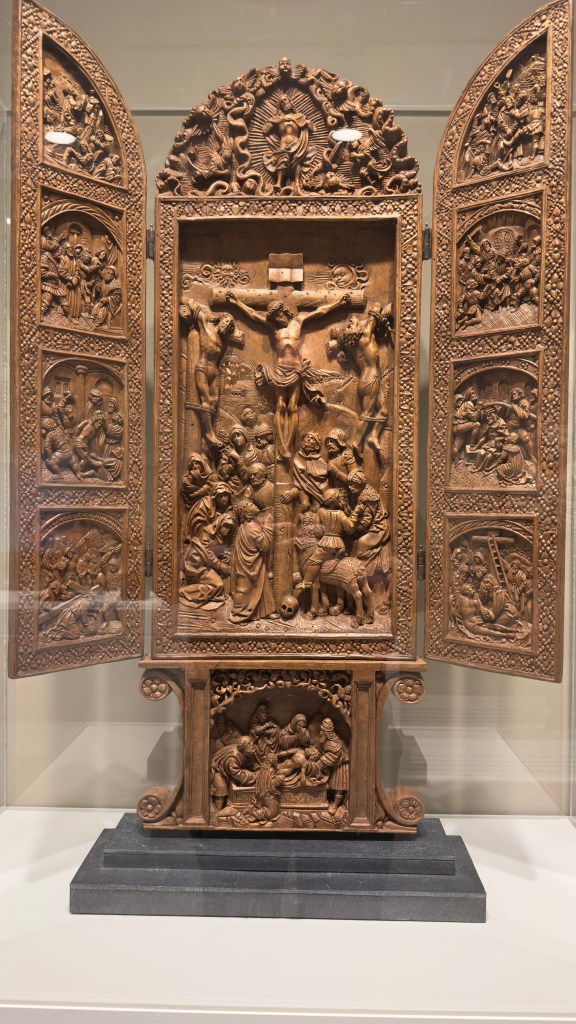
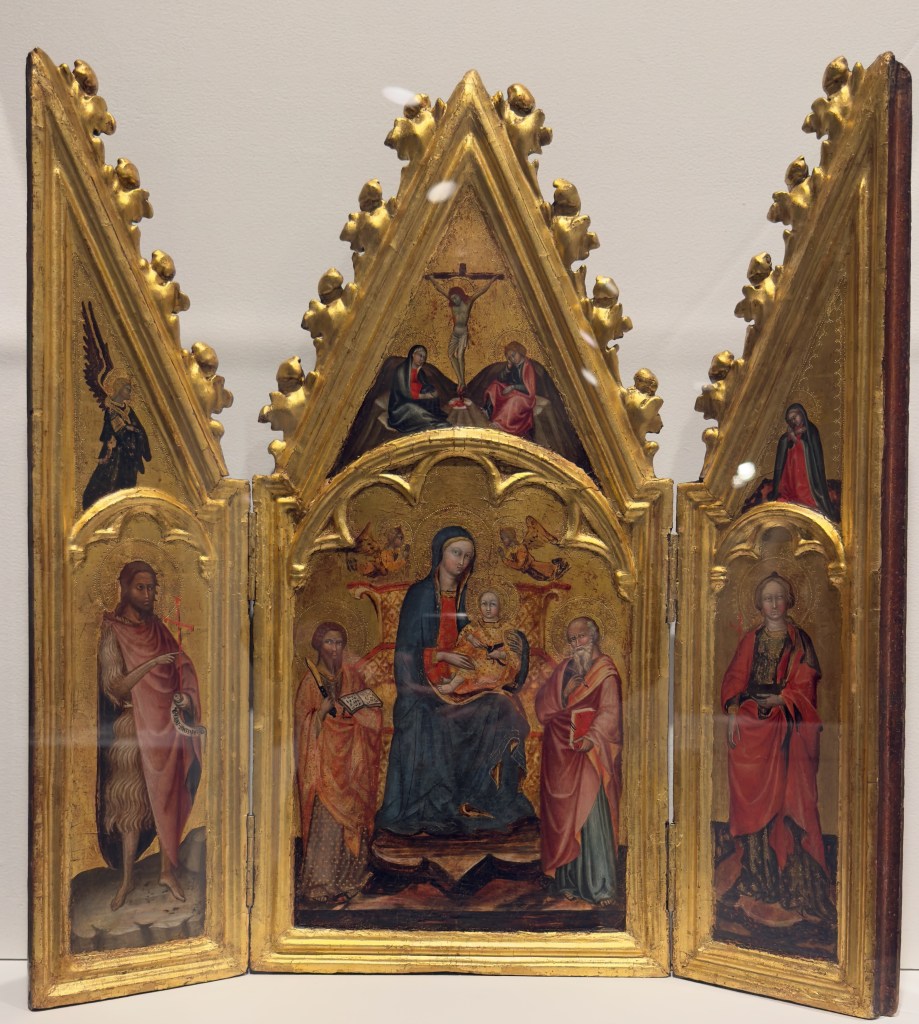
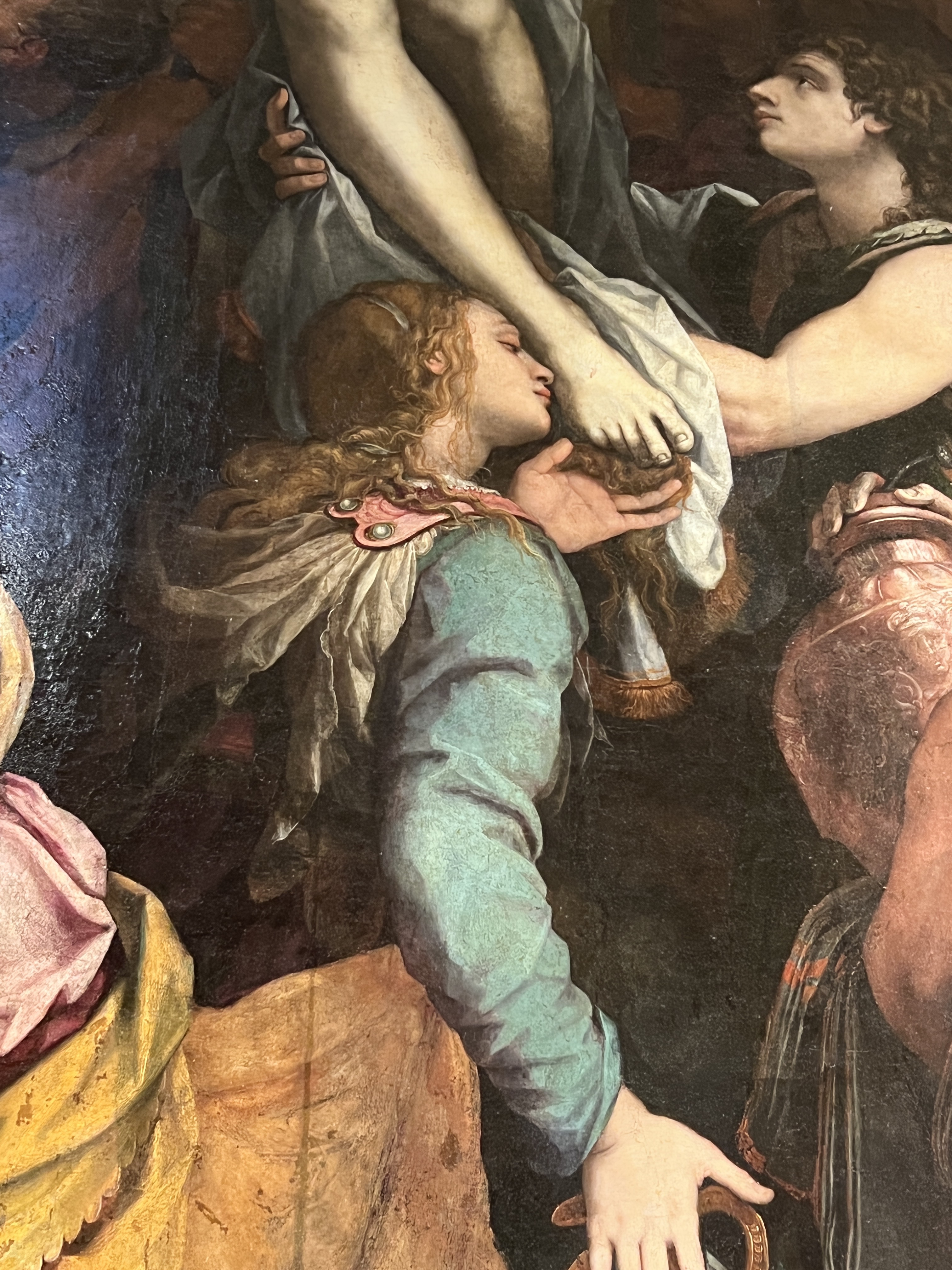
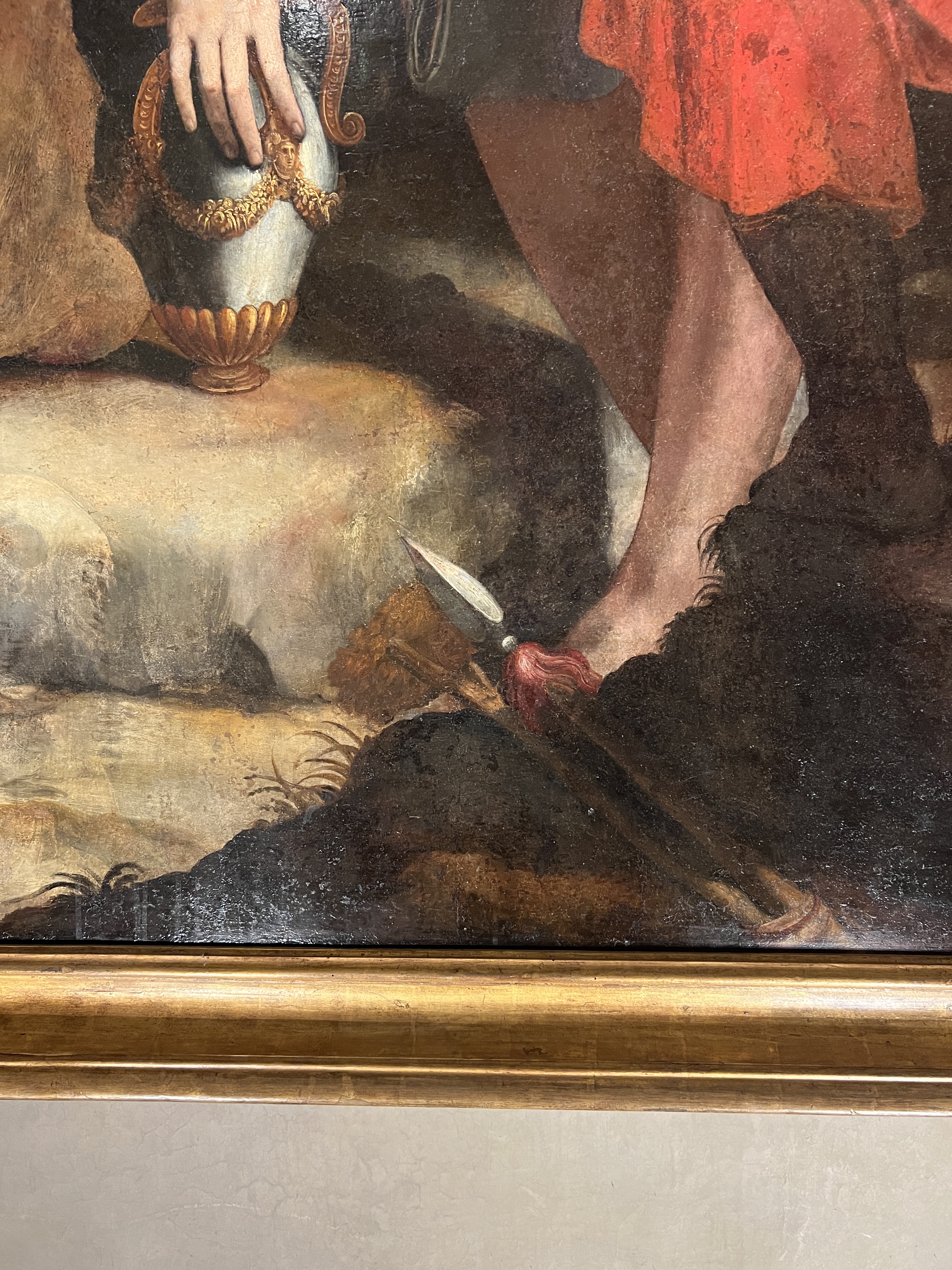
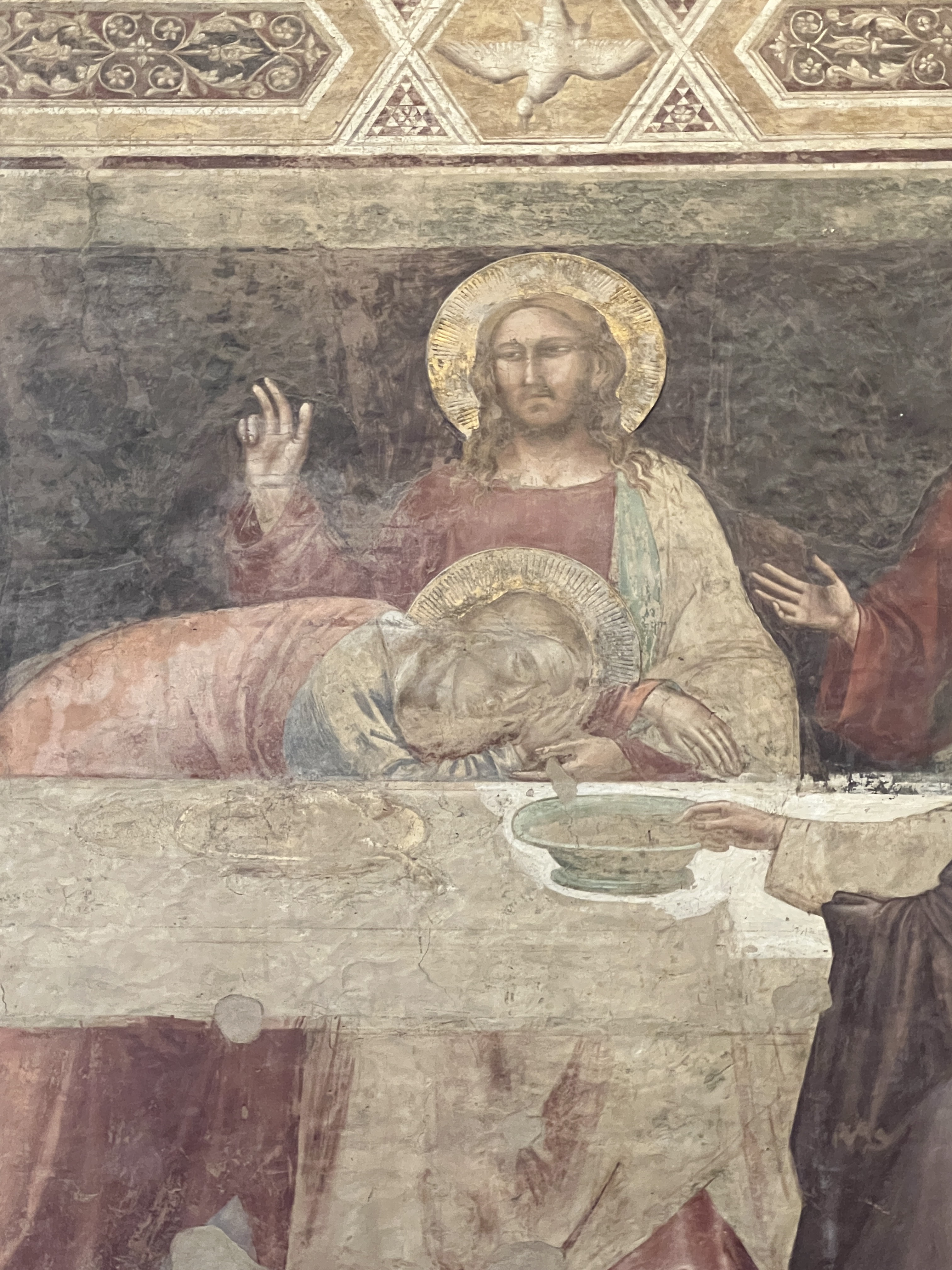
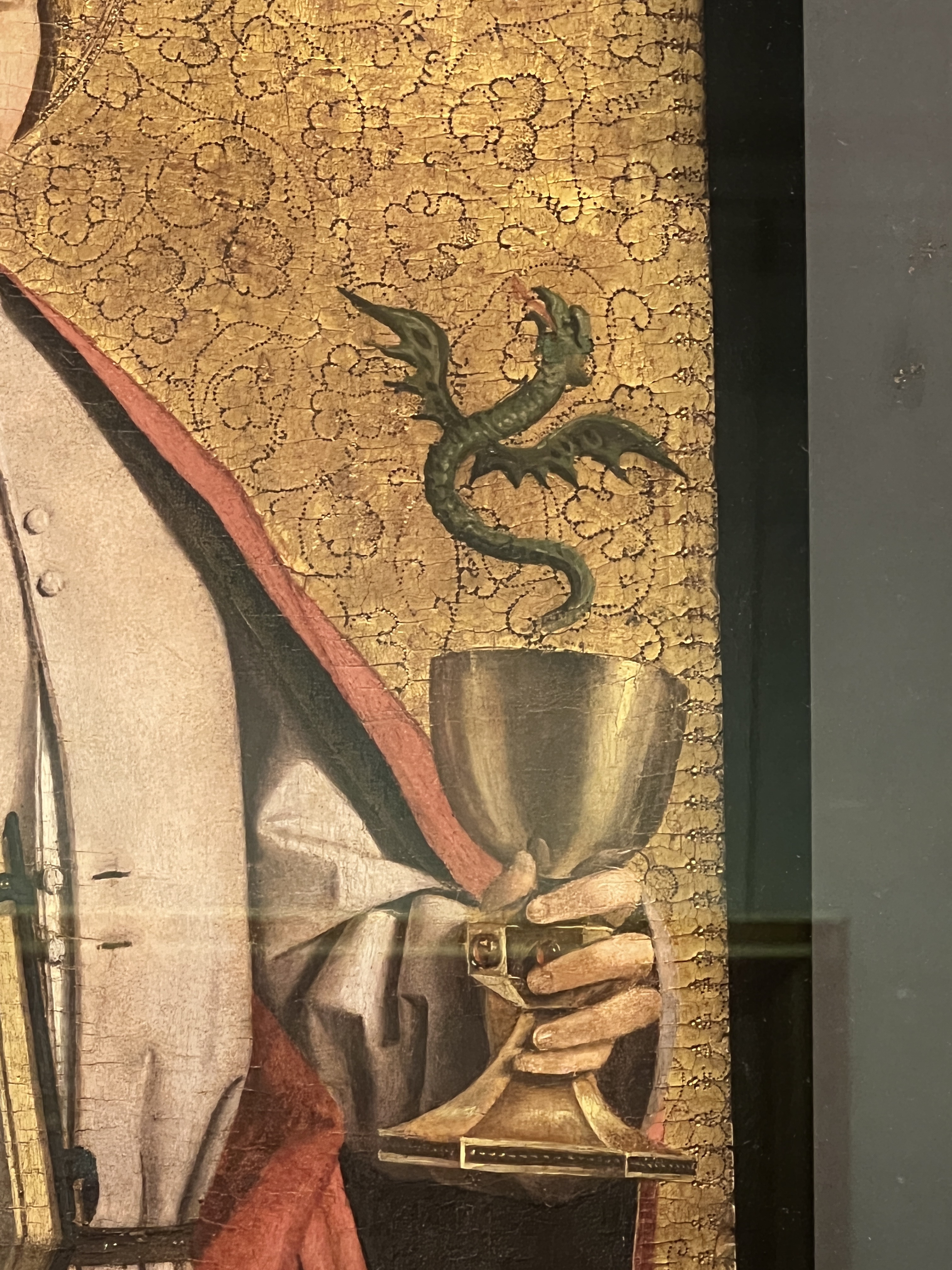
Well, the day was a busy one. I got up, had some breakfast, packed the bags, and headed down to the church. After a full day, including the mass at 4 p.m., I came back to the Casa to discover that there were no taxis available in all of Santiago. Two and a half kilometers later, I arrived at the train station after a nice, slow walk. Along the way, I stopped at a pastry shop and picked up something for breakfast in the morning. Three hours on the train, and I am now at my hotel in Madrid. The Casa Anglicana had a nice little bathroom that was about two and a half by six feet, maybe. The hot water tank in my room held two gallons, so each morning was a mad dash to beat the hot water before it ran out. Arriving at the Crowne Plaza Madrid Airport Hotel, I may have drained their hot water tank. It was really nice. I do believe it’s time for some sleep.
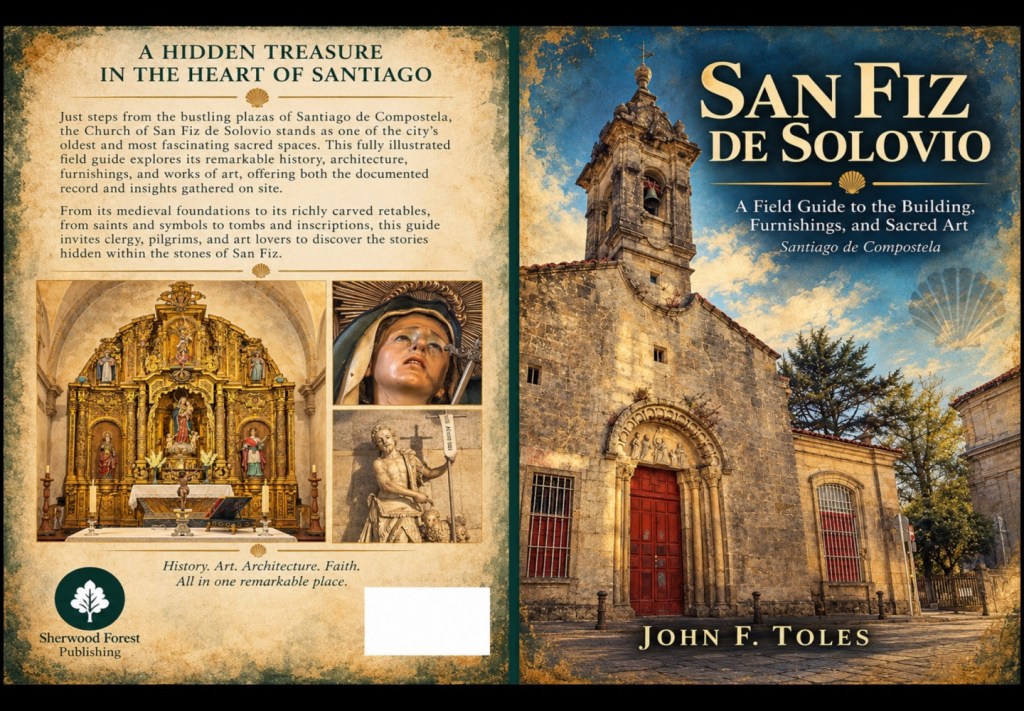
For those who are interested, here is a link to the book that I put together while I was here. I will tell you that the information is very interesting. The pictures are as good as I could take. And the layout—well, it’s a little wanting. It’s really difficult to publish books with pictures on Amazon. Anyhow, if it’s something you are interested in, you can go to Amazon and purchase a copy. Or, if you drop me a note, I will be more than happy to send you a free PDF version of it. The history of that one little church and all of the churches in Santiago is actually quite fascinating.
Exhibit: The Sense of Beauty: Six Centuries of Painting from Museo De Arte De Ponce. Flaming June is a painting I have loved since I first saw it… probably in my 20s. It made its way to the top of the things to do when I heard it would be showing in OKC. It was worth the wait!
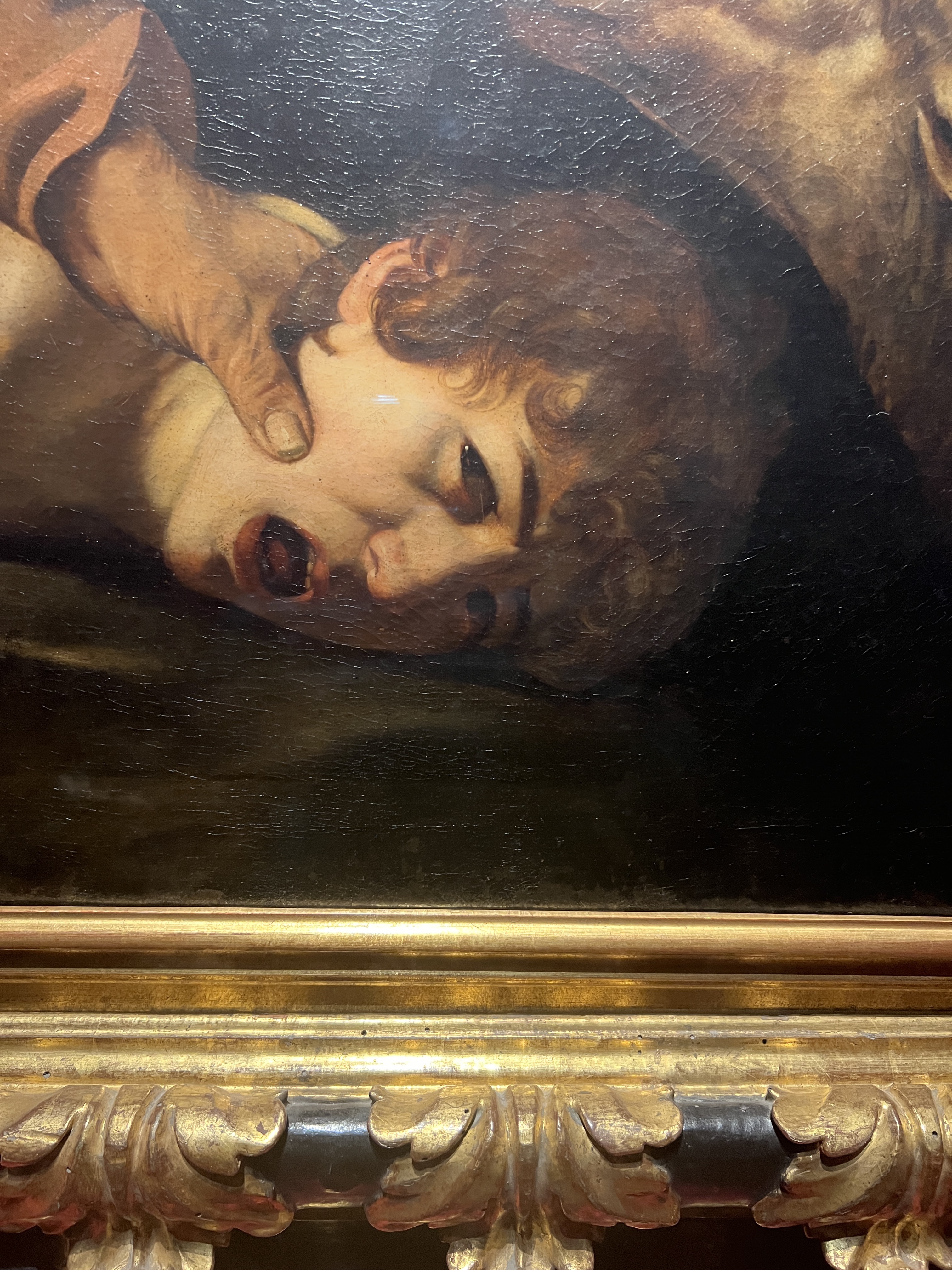
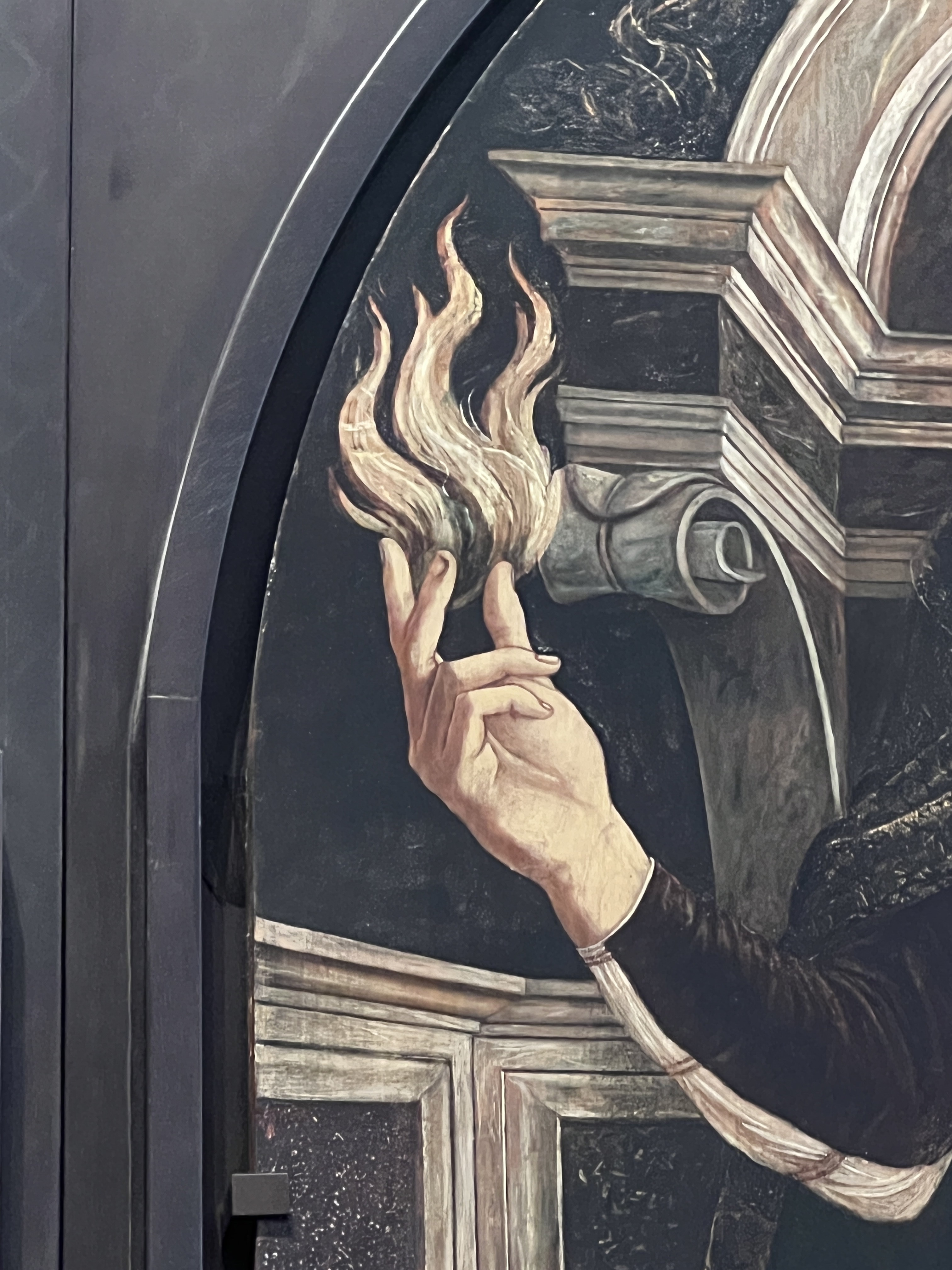
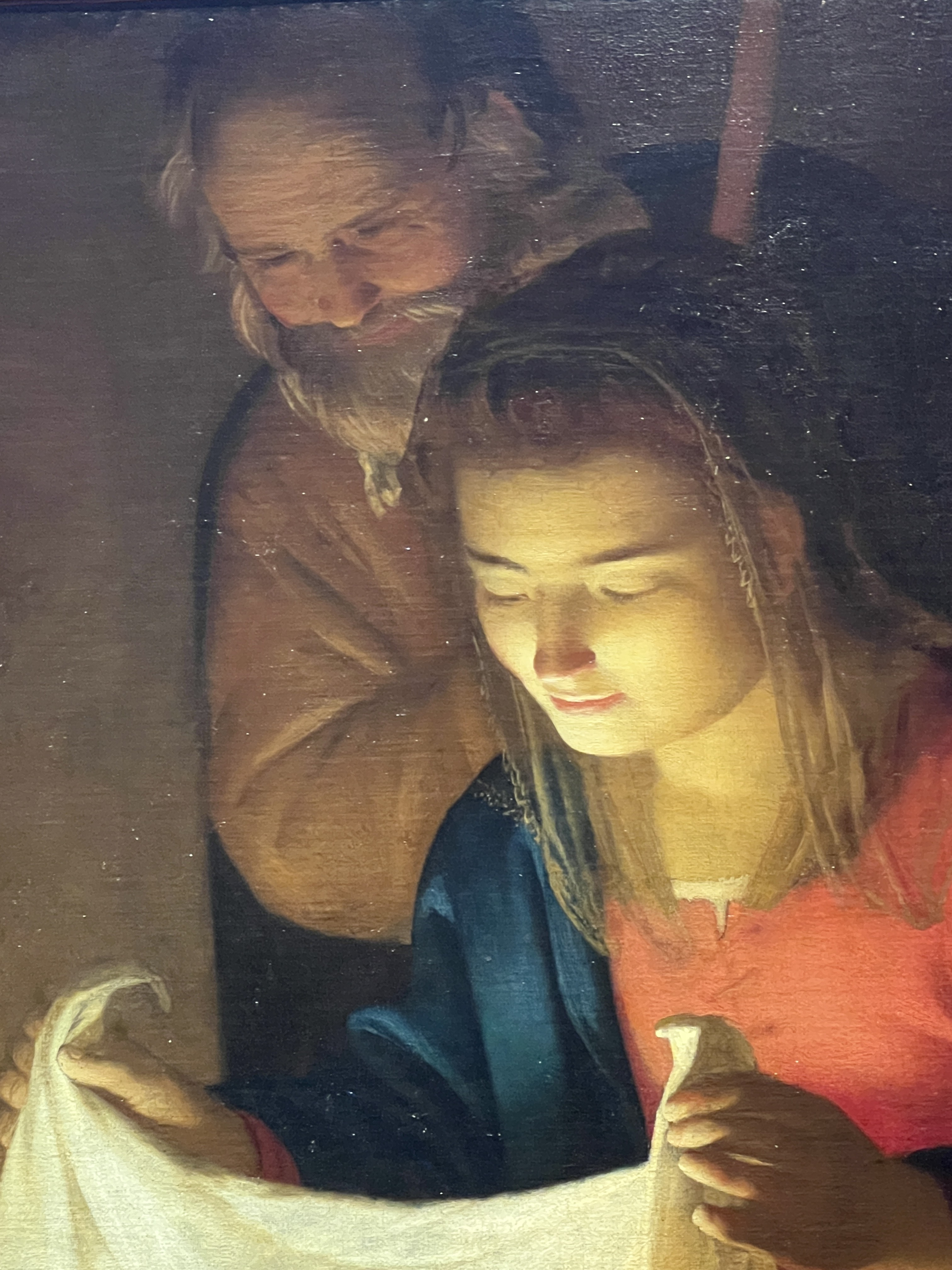
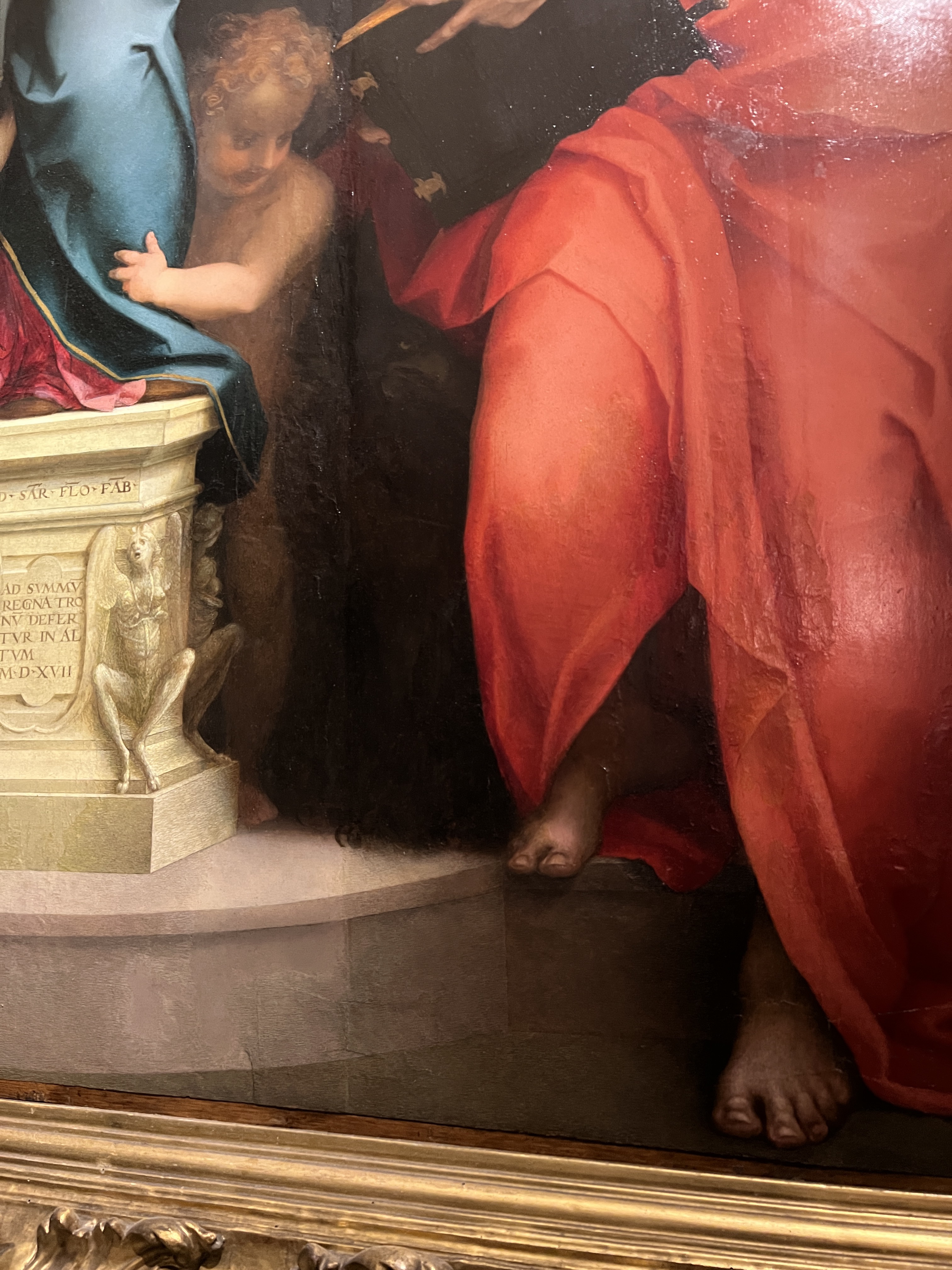
Miguel Trelles Puerto Rican, b. 1969 Philanthropist, 2000 Oil on canvas Raised in an academic and literate environment, Miguel Trelles is an artist, curator, and cultural manager based in New York City’s Lower East Side, committed to increasing the visibility of the Latino community in the city’s visual and performing arts scenes. His artistic work is notable for blending elements of Chinese and Latin American cultures. For this work, Trelles drew inspiration from figures such as American philanthropist Paul Mellon and Luis A. Ferré, founder of the Museo de Arte de Ponce, who was a key supporter of his artistic career from the beginning. The subject of the painting appears seated on a sofa, while an early modern portrait hangs on the wall behind him. This painting within a painting serves as a nod to the philanthropist’s role as a collector, highlighting the connection between art and patronage.William-Adolphe Bouguereau French, 1825-1905 Far from Home, 1868 Oil on canvas This canvas was among the first artworks acquired by Luis A. Ferré for the Museo de Arte de Ponce. It depicts two young sisters who survive by performing music and begging on the streets of Rome. William-Adolphe Bouguereau’s idealized figures, set against a classical-inspired architectural background, illustrate the theme of poverty without the harsh realism that can be unsettling. A polished finish, muted color palette, and classical poses define his work. Although Bouguereau stayed a dedicated supporter of the academic style throughout his career, this painting reveals an interest in the new themes that emerged during the second half of the nineteenth century, when increased social awareness led to the portrayal of scenes from daily life.Lucas Cranach the Elder German, 1472-1553 Judith with the Head of Holofernes, ca. 1527-1537 Oil on panel Lucas Cranach the Elder served as a court painter for the prince-electors of Saxony, who were based in Wittenberg. At the court, he befriended Martin Luther and supported his criticism of the Catholic Church. In this powerful portrayal of Judith, the heroine of the Old Testament, Cranach depicts her as victorious after beheading Holofernes, the Assyrian general who was besieging her city. Juxtaposing serene beauty with gruesome triumph, she is elegantly dressed in a red velvet contemporary gown trimmed with brocaded fabric and a pearl-embroidered trunk. She holds the enemy’s head with her slashed gloves, which reveal her lavish rings. Her gentle face, with the delicate features typical of the artist, is framed by the golden halo of her hair and jewel-encrusted necklaces. Judith’s story has been interpreted as an allegory of the struggle between good and evil, and, therefore, Cranach may have envisioned this composition as a symbol of the battle between the Protestant Reformation and the Catholic Church.Doménikos Theotokópoulos, “El Greco” l Greek, 1541-1614 Saint Francis of Assisi in Meditation with Brother Leo, ca. 1600- 1605 Oil on canvas Representations of Saint Francis of Assisi, especially those depicting his ascetic and contemplative life, exemplified the Christian life that the faithful were expected to follow according to the principles of the Counter-Reformation, initiated by the Council of Trent (1545-1563) to strengthen Catholic influence in response to the Protestant Reformation. Art played a crucial role in this effort, aiming to inspire faith and devotion through the visual expression of spiritual intensity. Building on the popularity of devotional art, El Greco created numerous depictions of the saint, with more than 30 versions of the composition showing Saint Francis alongside Brother Leon, his secretary and confessor. To meet the growing demand for devotional paintings, El Greco relied on the help of his assistants. Contemporary sources describe the small samples he would show clients, from which they could choose their preferred composition, with the value based on the artist’s involvement. The painting’s dramatic lighting and elongated forms are characteristic of El Greco’s style.Pedro Machuca Spanish, ca. 1490-1550 The Descent of the Holy Ghost, ca. 1520-1530 Oil on panel On the Christian feast of Pentecost, the Virgin Mary and the twelve apostles gathered in Jerusalem. During this gathering, they witnessed a miracle: the Holy Ghost, depicted as a dove surrounded by a large halo, descended into the room and empowered everyone to speak different languages, enabling them to preach the Gospel in foreign lands. The Spanish painter Pedro Machuca worked in Rome, most likely in Raphael’s renowned workshop, before returning to Spain in 1520. It is believed that he created this intensely emotional piece after returning to the Iberian Peninsula. Machuca brought with him artistic innovations that were popular in Italy at the time. The painting demonstrates the use of perspective and naturalistic figures, similar to the works of the great masters of the Italian Renaissance. Its horizontal format suggests that it was originally used as a predella for an altarpiece that would have been placed above it. This panel was one of sixteen Italian and Spanish paintings donated to the Museo de Arte de Ponce by the Samuel H. Kress Foundation in 1962.Tim Cherry – Salmons A’FootTim Cherry – Dreams of SalmonAndrew Peters Sandhill Cranes on the Great Migration Oil, gold, wood, metal | 60 × 60 × 12 in.Scott Burdick Transcending TimePaul Moore Moon Over the Pueblo Oil on canvas | 20 x 20 in.Frederic Leighton English, 1830-1896 Flaming June, ca. 1895 Oil on canvas Flaming June, an iconic work in art history, has been widely reproduced, cementing its place in our cultural consciousness. Its reproductive value was highlighted in one of its earliest reviews, a trait appreciated by its first owner, the publisher of an illustrated newspaper, who admired and promoted it by distributing free reproductions to his subscribers as a Christmas gift. The contemporary audience undoubtedly revered its creator, Frederic Leighton, who was then president of the Royal Academy of Arts in London. The work was one of six paintings Leighton displayed at the Academy’s summer exhibition in 1895, just months before he died in January 1896. Flaming June results from an extensive creative process where the artist experimented with multiple sketches to capture the complex posture of a woman reclining before a Mediterranean seascape. The painting echoes some of the artist’s earlier works and draws inspiration from historical masterpieces, including classical Greek sculptures and Renaissance artworks, especially those by Michelangelo. The interplay of line, color, and light offers a unique interpretation of Mediterranean antiquity, captured in the slumber of a sensual female form. Luis A. Ferré’s acquisition of the painting in 1963 for the Museo de Arte de Ponce, during a time when Victorian art was undervalued-this piece had been out of the public eye for more than three decades-reflects the philosophy of Ferré and his advisors, who aimed to acquire “pictures of quality, irrespective of their ‘fashion’ in the market,” thus contributing to the formation of the museum’s exceptional collection.I went with Christy and Len
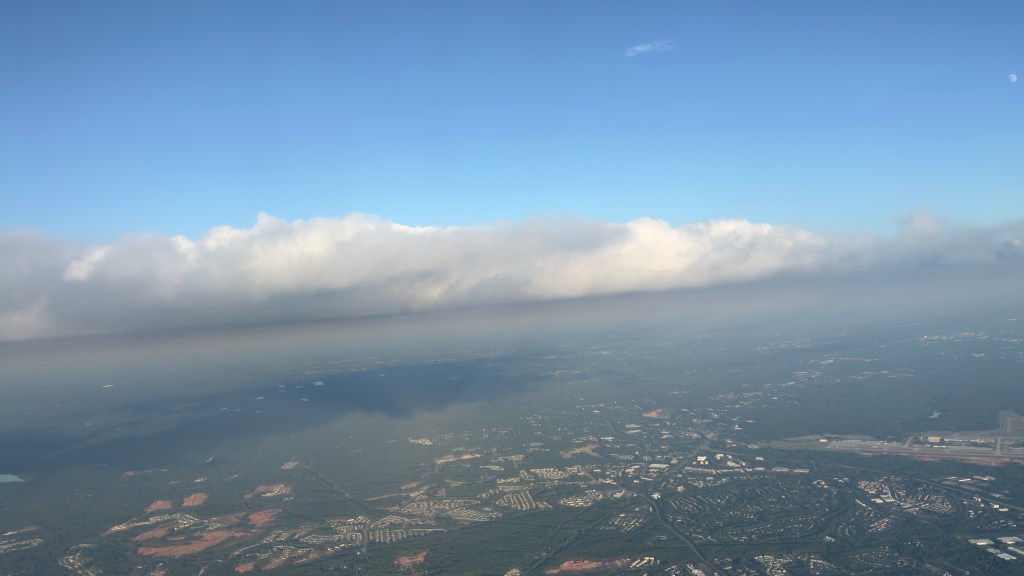
It all started out with The Queen giving me the stink eye, because she saw the suitcase and that always means trouble, in her pointy little head’s opinion. After the final treat, I headed to OKC and caught my first flight to Atlanta. I remember Drew always referring to it as “Hotlanta.” Somewhere I saw a sign… several years back… that said, Nobody calls it that. We did.
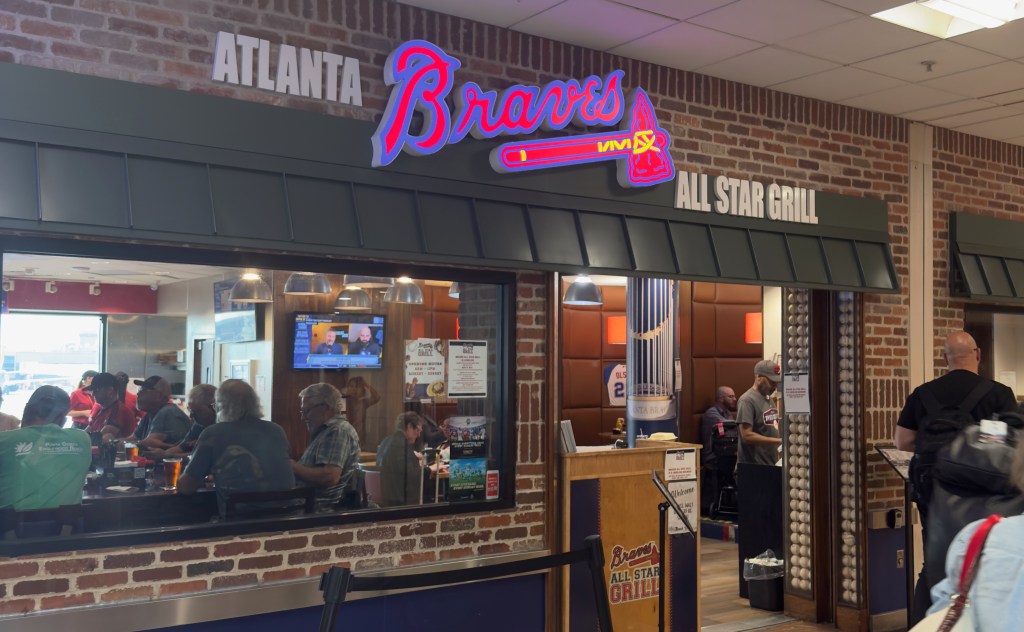
Spent an hour and a few dollars in the Braves Bar during the layover before taking off for RDU–The Raleigh/Durham airport.
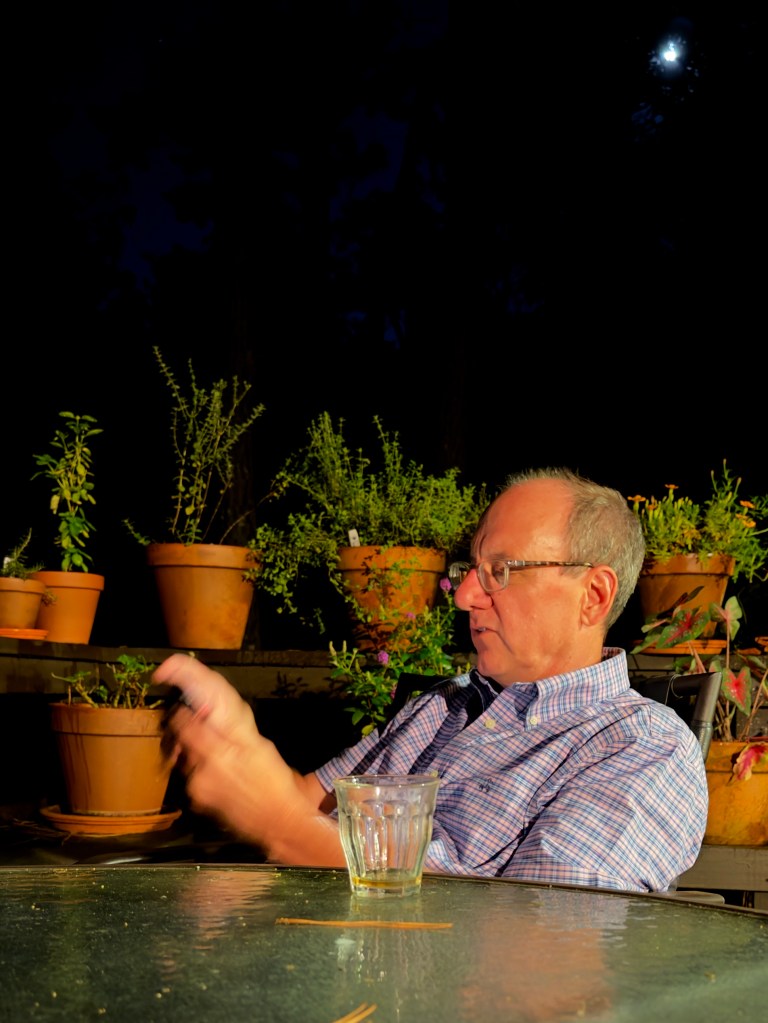
That evening, my brother and I spent hours outside talking and drinking. He was hanging something fierce the following day (the whiskey was good but perhaps a tad too much), so we lay low and just hung out.
Truly a very nice evening. We haven’t talked like that since we were kids, and I suppose that is a good thing.
Hangover and a Papilio glaucus
We spent the day just resting and enjoying being outdoors in the beautiful weather. There are several very fat mosquitoes around his house. I had no idea they were feeding on me until the following day. Ate my ass up! After a bit, the brother felt well enough to move around long enough to go to the grocery store. I picked up the fixin’s for a nice chicken curry. When I started to put it together, we discovered that they had no curry powder; however, they had all the ingredients to make their own curry powder… very tasty.
The butterfly was beautiful.
Duke
On this day, we went to Duke University, where my brother received his PhD. A beautiful campus and very rich. I bought a flimsy t-shirt and thought it would cost about $20. Turns out… $56! Almost told the girl she could keep it, but came home with it anyhow. Glad I did.
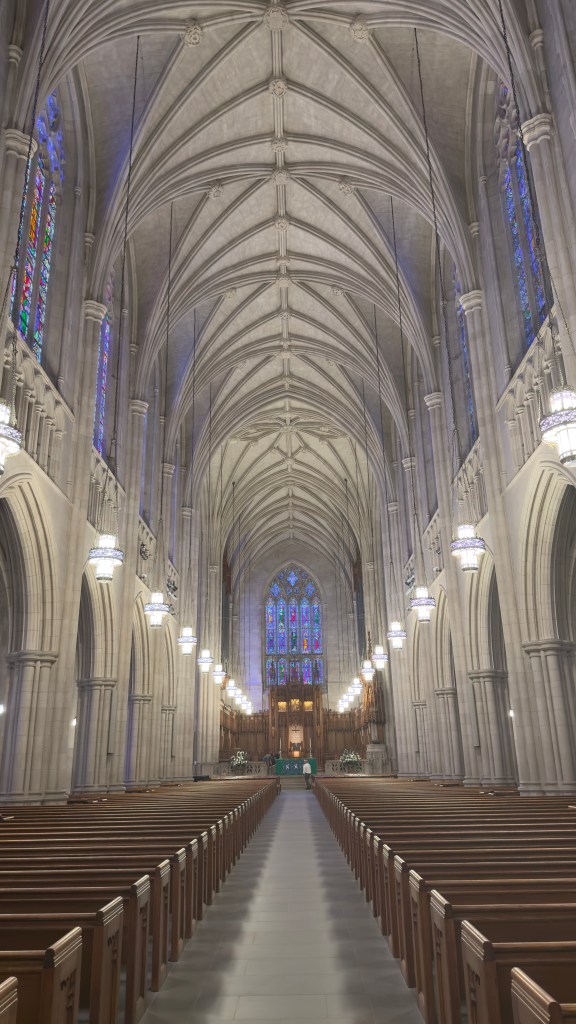
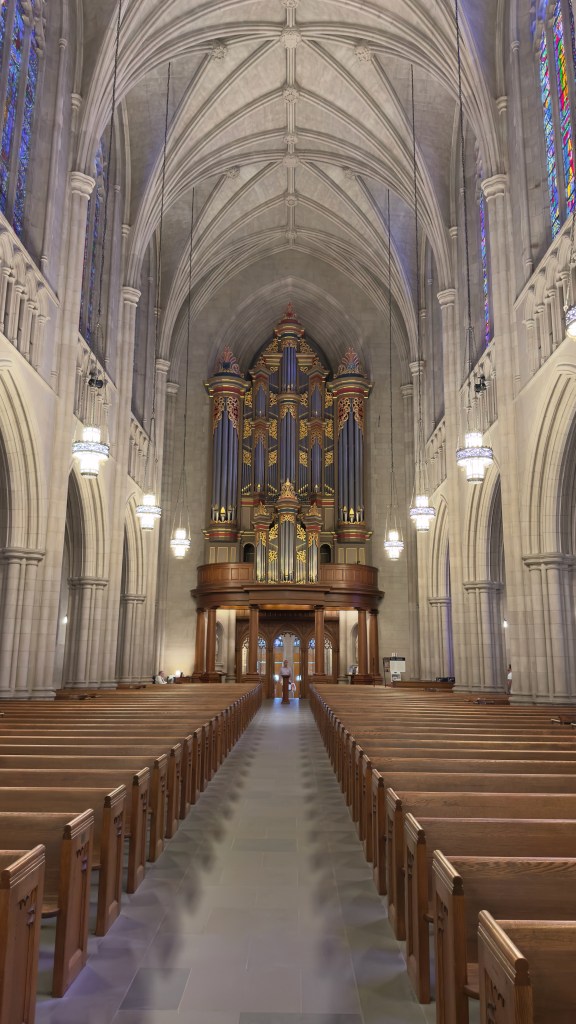
At the top of my list was the University Chapel. Yeah, they call that a chapel. Truly stunning and I would like to have heard that organ play.
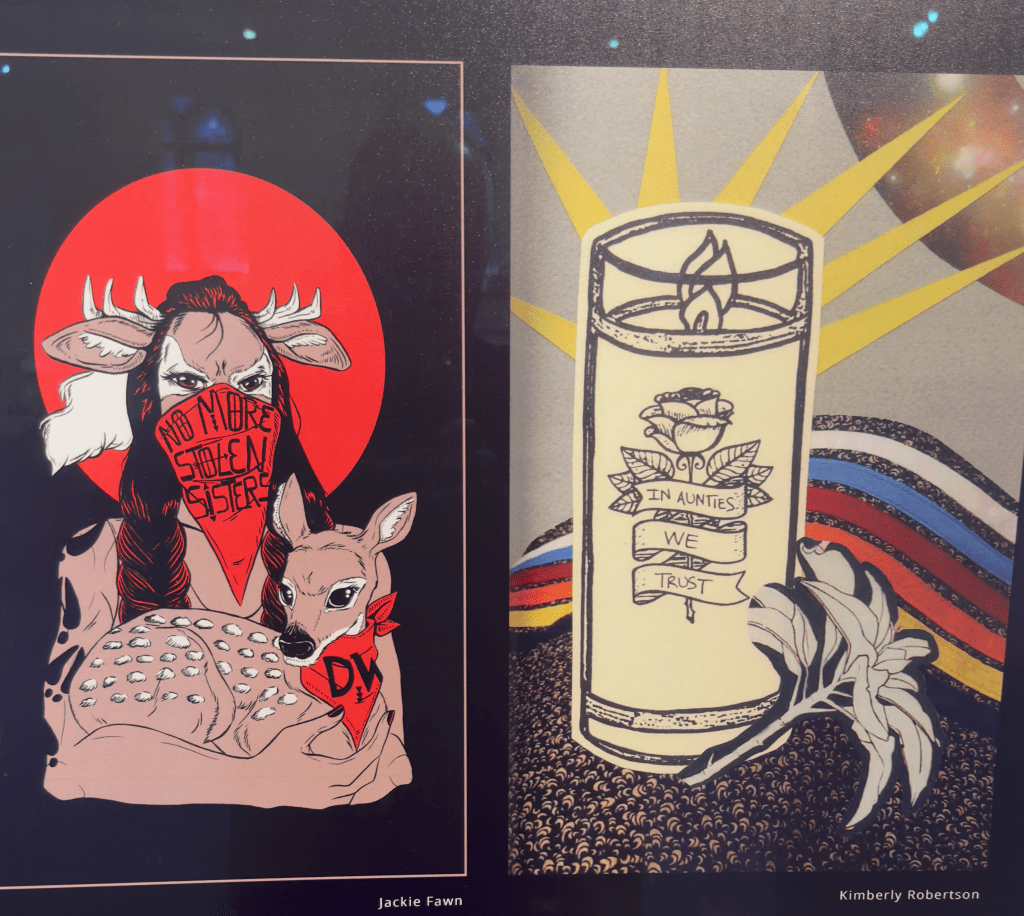
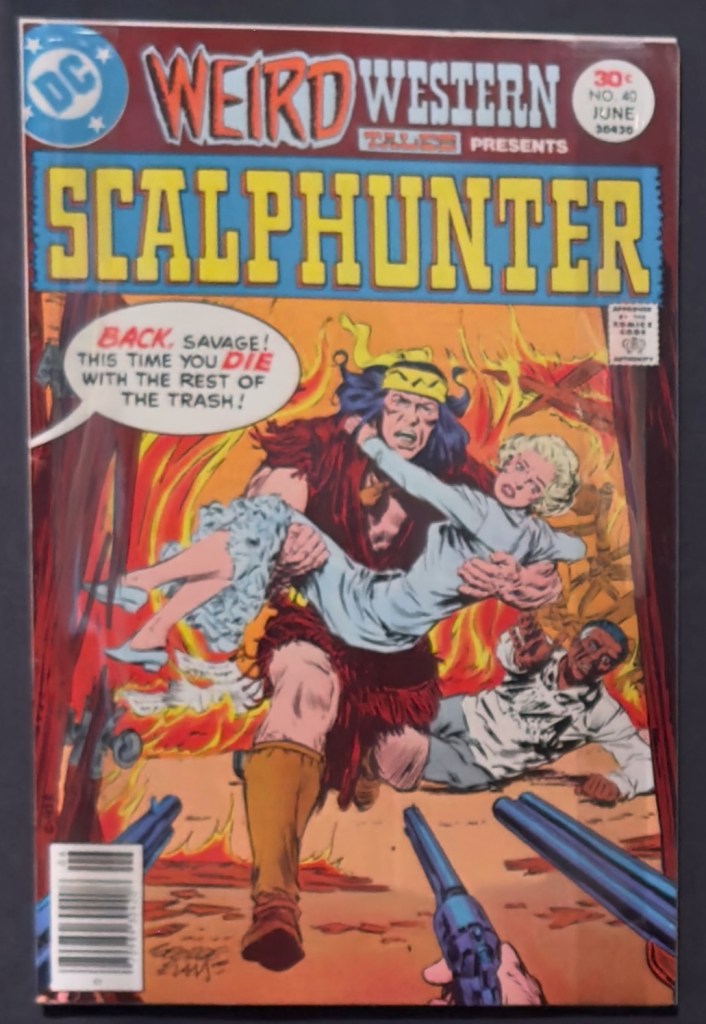
We went to lunch in the refectory at the School of Theology. Should have taken a picture, but had Zimbabwean Beef Stew, Fufu (a doughy African bread used for scooping food), and a curry cabbage dish. Everything was excellent. Afterward, we went over to one of the many libraries, where I saw an exhibit on Indigenous Peoples’ Graphic Novels/Comics.
Had to send several pictures to my friend, Faith. There were several pieces on The Missing and Murdered Indigenous Women (MMIW).
The interesting thing about the exhibit was to see the evolution of the portrayal of Indigenous People in the graphic novels/comics. From Scalphunter to Superhero…
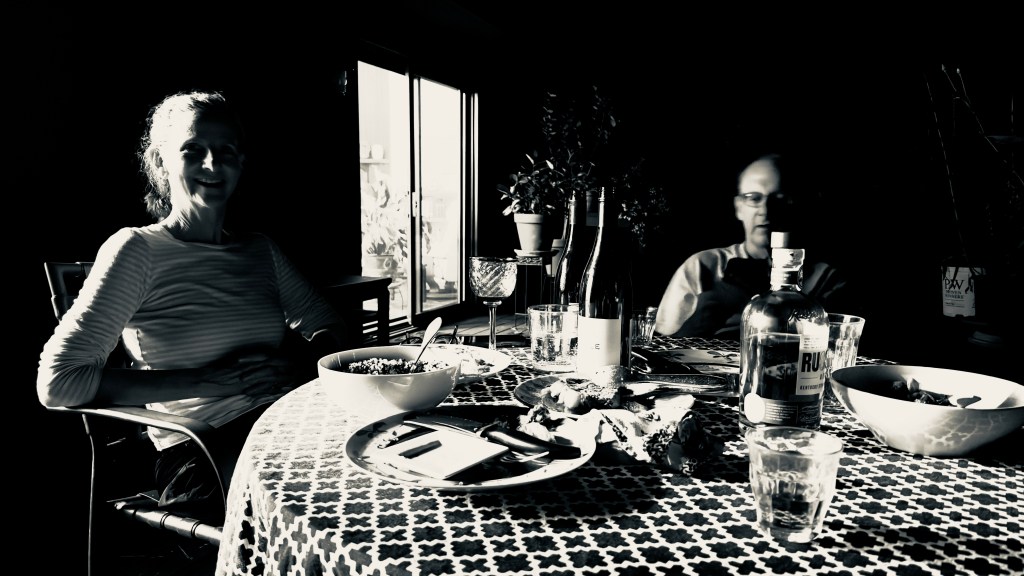
That evening, the brother fixed us all a steak dinner, and I had the opportunity to finally begin to know my sister-in-law, Tori. So great. The conversation was very wide-ranging, and before it was over, I had ordered a specific translation of Dante’s Inferno. Definitely looking forward to the read. I have shied away from it in the past because I did not understand all the historical references to persons and places. Tori says that it is not necessary. Seems it is a bit like Umberto Eco’s Foucault’s Pendulum–read and enjoy the larger story without getting too bogged down in the details.
Saturday with Mark and Tori
Tori had a meeting with their Quaker group, so Mark and I eased into the day. When we got moving, we headed to the University of North Carolina. Mark’s official title and position: MARK TOLES, PHD, RN, FAAN Professor; Beerstecher-Blackwell Distinguished Term Scholar & Senior Division Chair, Health Systems, Policy and Leadership Innovations. He’s pretty much got his act together.
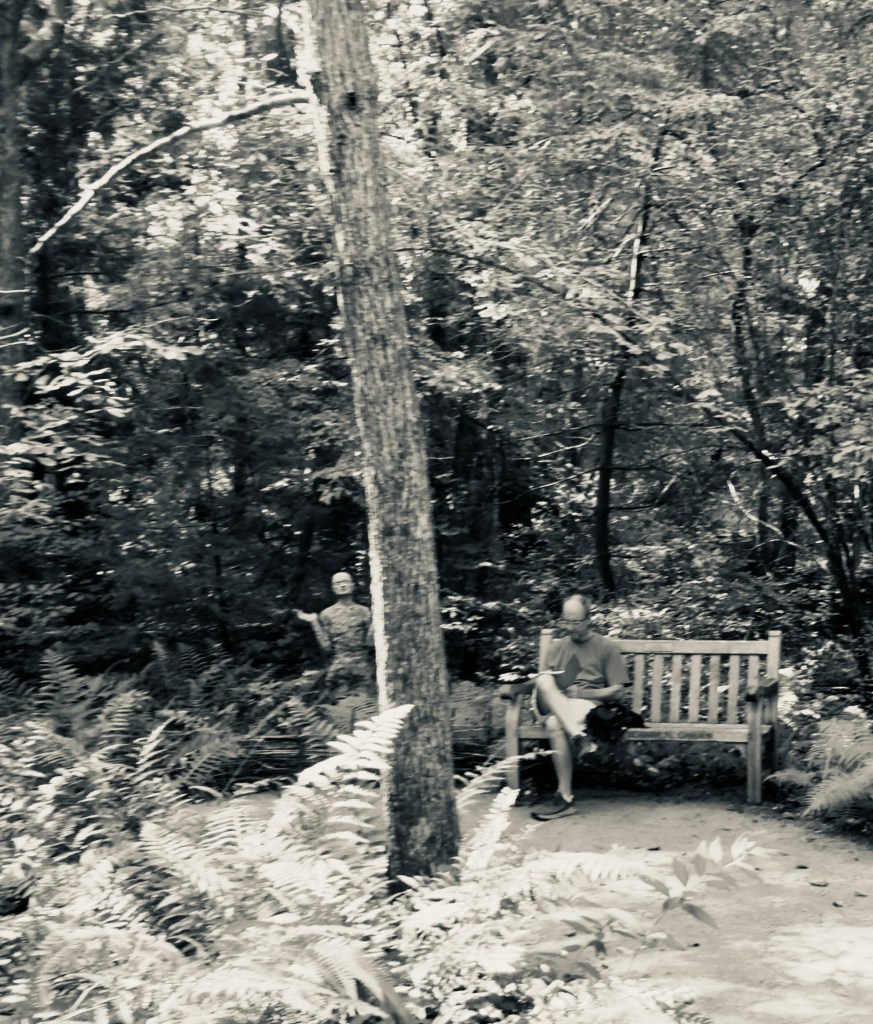
We began the day at UNC’s botanical garden. Way too many pictures to post here, but it was beautiful, even though late in the season.
Bald CypressTithonia
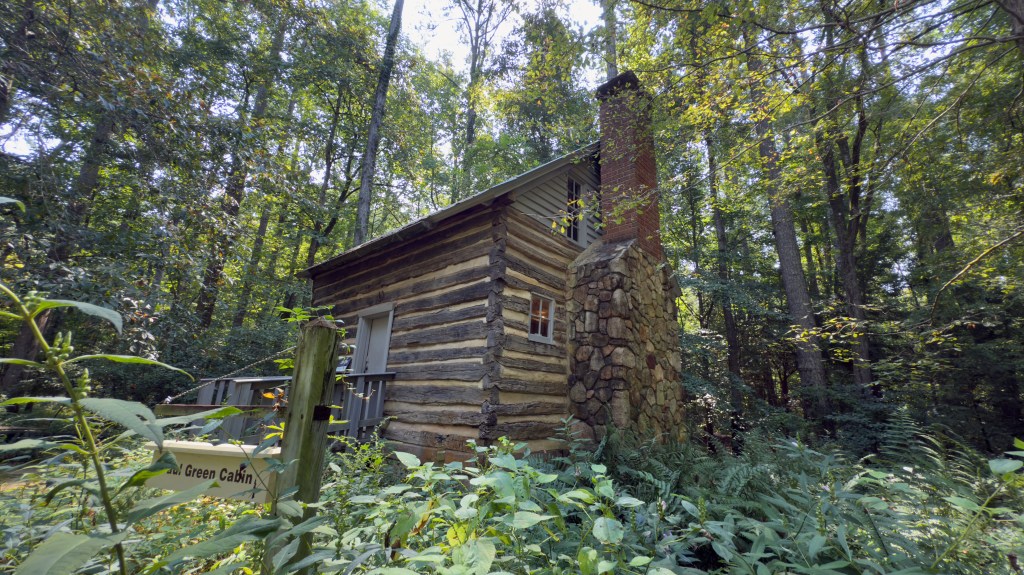
Also in the garden was the cabin of Paul Green. I knew nothing about him, but I very much enjoyed seeing him. According to Wikipedia:
Paul Eliot Green (March 17, 1894 – May 4, 1981) was an American playwright whose work includes historical dramas of life in North Carolina during the first decades of the twentieth century. He received the Pulitzer Prize for Drama for his 1927 play, In Abraham’s Bosom, which was included in Burns Mantle’s The Best Plays of 1926-1927.
His play The Lost Colony has been regularly produced since 1937 near Manteo, North Carolina, and the historic colony of Roanoke. Its success has resulted in numerous other historical outdoor dramas being produced; his work is still the longest-running.
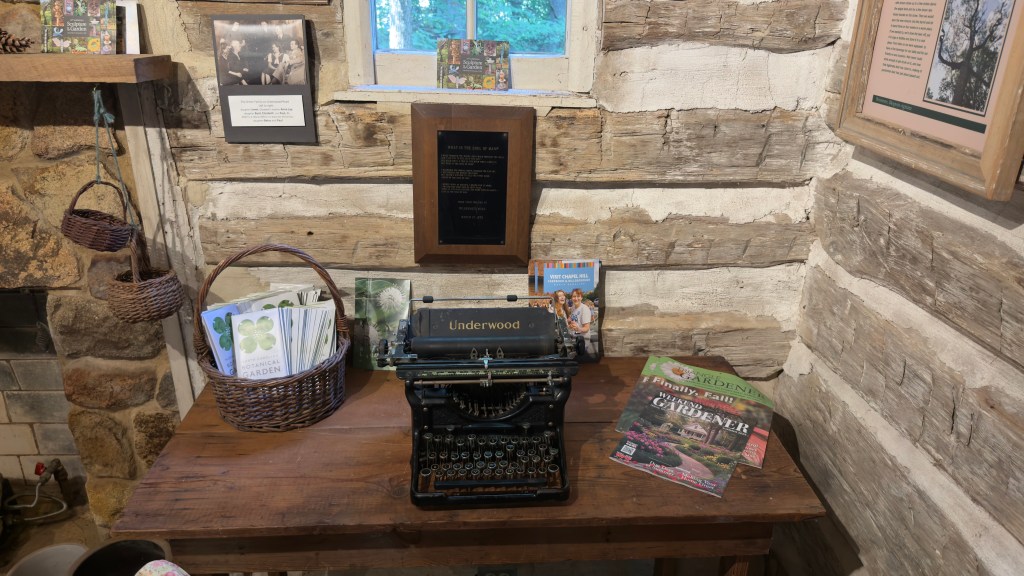
The plaque behind the desk reads:
WHAT IS THE SOUL OF MAN?
I WALK THROUGH THE WOODS, AND I WALK THROUGH THE HILLS, AND I ASK YOU TO TELL ME IF YOU CAN – YOU KNOW WHAT A TREE IS, YOU KNOW WHAT A ROCK IS, BUT WHAT IS THE SOUL OF MAN?
I SEARCHED THE BROAD EARTH, I BEGGED THE FAR SKY, I QUESTIONED THE RIVERS THAT RAN, BUT NEVER A WHISPER TO TELL THAT THEY KNEW AUGHT OF THE SOUL OF MAN.
I BOWED DOWN AT EVENING, I BOWED LOW AT MORN. I PRAYED FOR SOME SIGN OF LIFE’S PLAN, WHEN LO, THE GLAD ANSWER, THE WORD WITH ITS LIGHT — LOVE IS THE SOUL OF MAN.
FROM YOUR FRIENDS AT WILDERNESS ROAD
MARCH 17, 1979
It’ll probably show up in a sermon someday.
Mark also enjoys water painting. He is much better at it than I am.
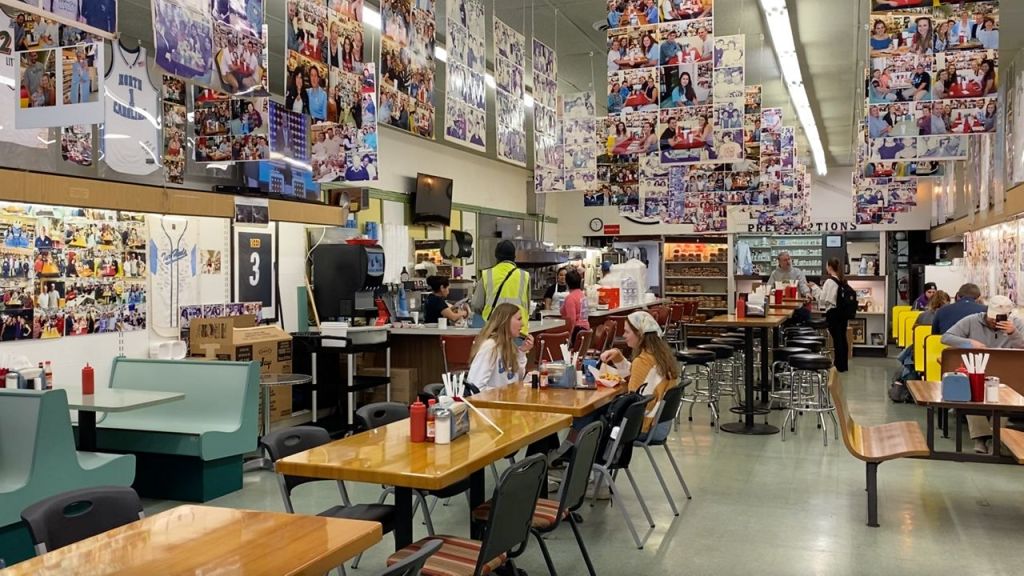
We met Tori for lunch at Sutton’s Drug Store, but unless a tasty chili cheeseburger is a drug, then it is now only a restaurant…. but what a burger, and yes, I got the t-shirt.
We continued touring the campus and saw a show at the planetarium (there may have been a nap involved during a portion of it) and then stopped at the Ackland Art Museum. We were all delighted with this visit, and it definitely made the day.
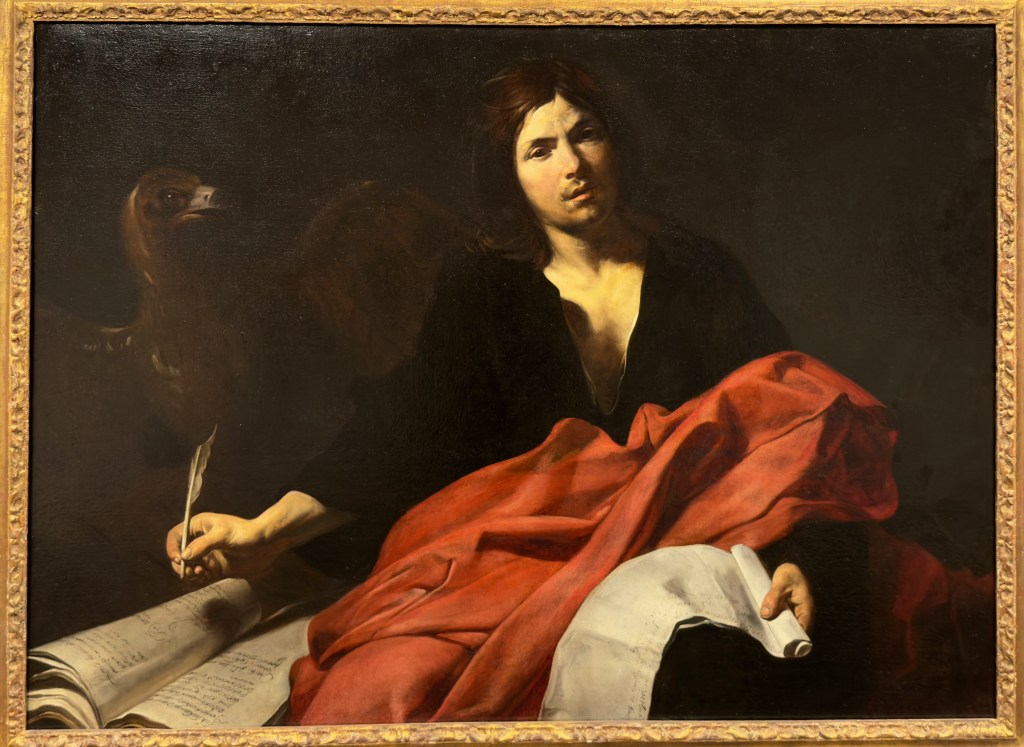
My favorite piece was Saint John the Evangelist by Valentin de Boulogne. He is listening so intently to the Spirit.
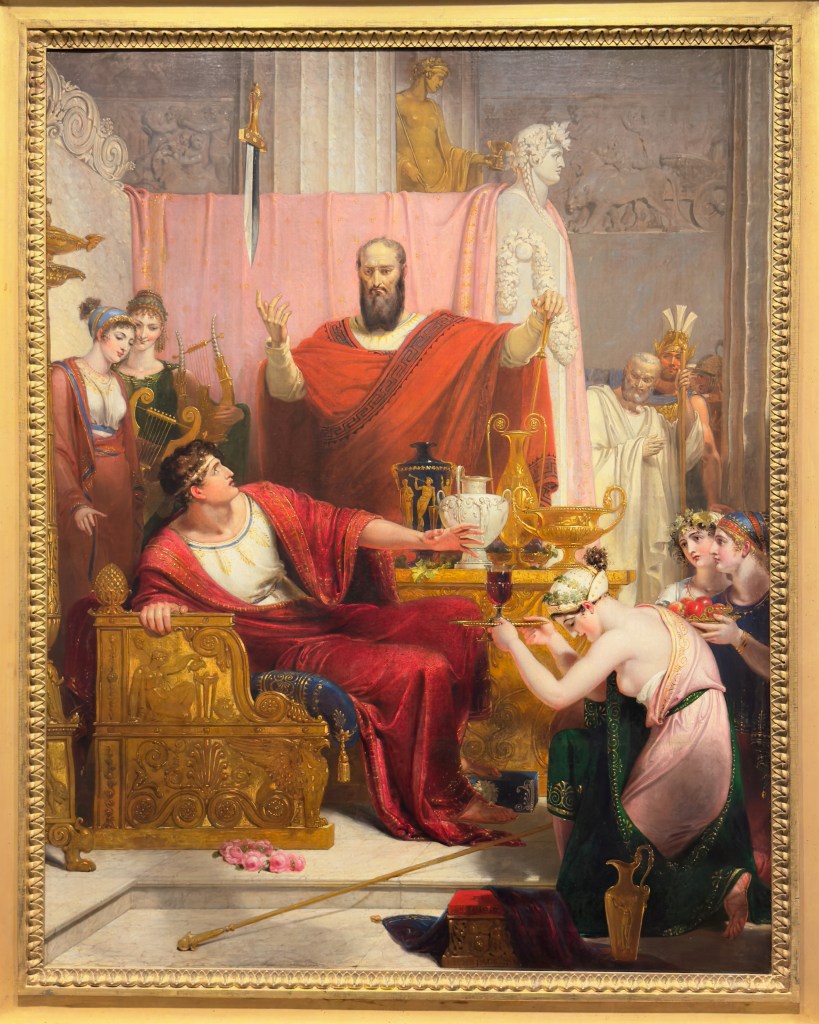
Richard Westall’s The Sword of Damocles. The story behind the painting:
The “sword of Damocles” refers to a situation where a person lives under the constant threat of an impending disaster or harm. The idiom comes from an ancient Greek anecdote where a sycophantic courtier named Damocles, who envied the powerful life of King Dionysius II, was offered to trade places with the king for a day. Damocles found himself in the king’s seat, enjoying the luxury, only to look up and see a sharp sword hanging precariously above his head by a single strand of horsehair, symbolizing the ever-present danger and anxiety that comes with power and fortune.
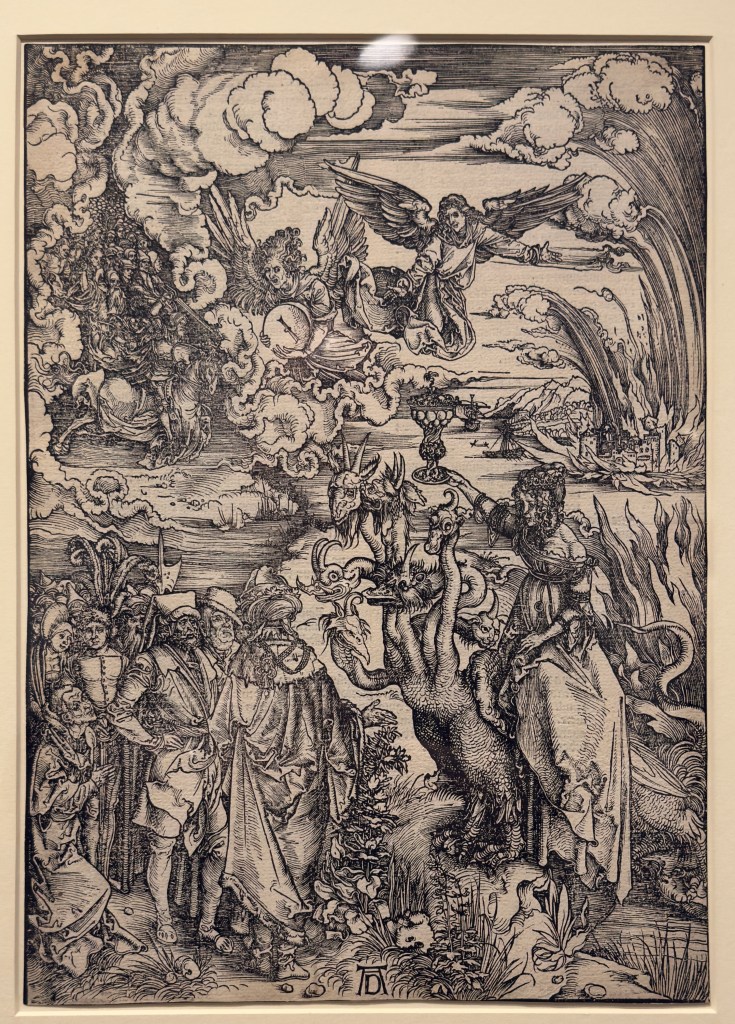
Finally, there was a fine etching by the German artist Albrecht Dürer titled The Babylonian Whore, a depiction of a scene from the Book of Revelation.
Saturday and Home
La Luna, è bellissima. A wonderful few days in North Carolina.
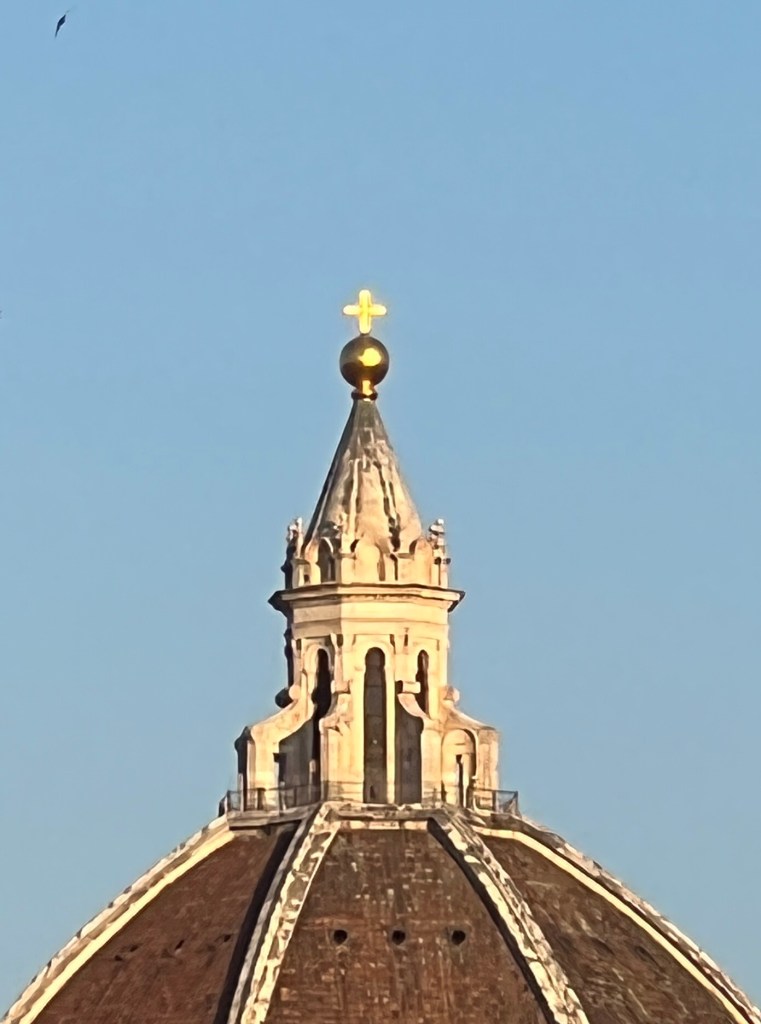
The day began with the sun glorifying the gold cross on top of the Duomo.
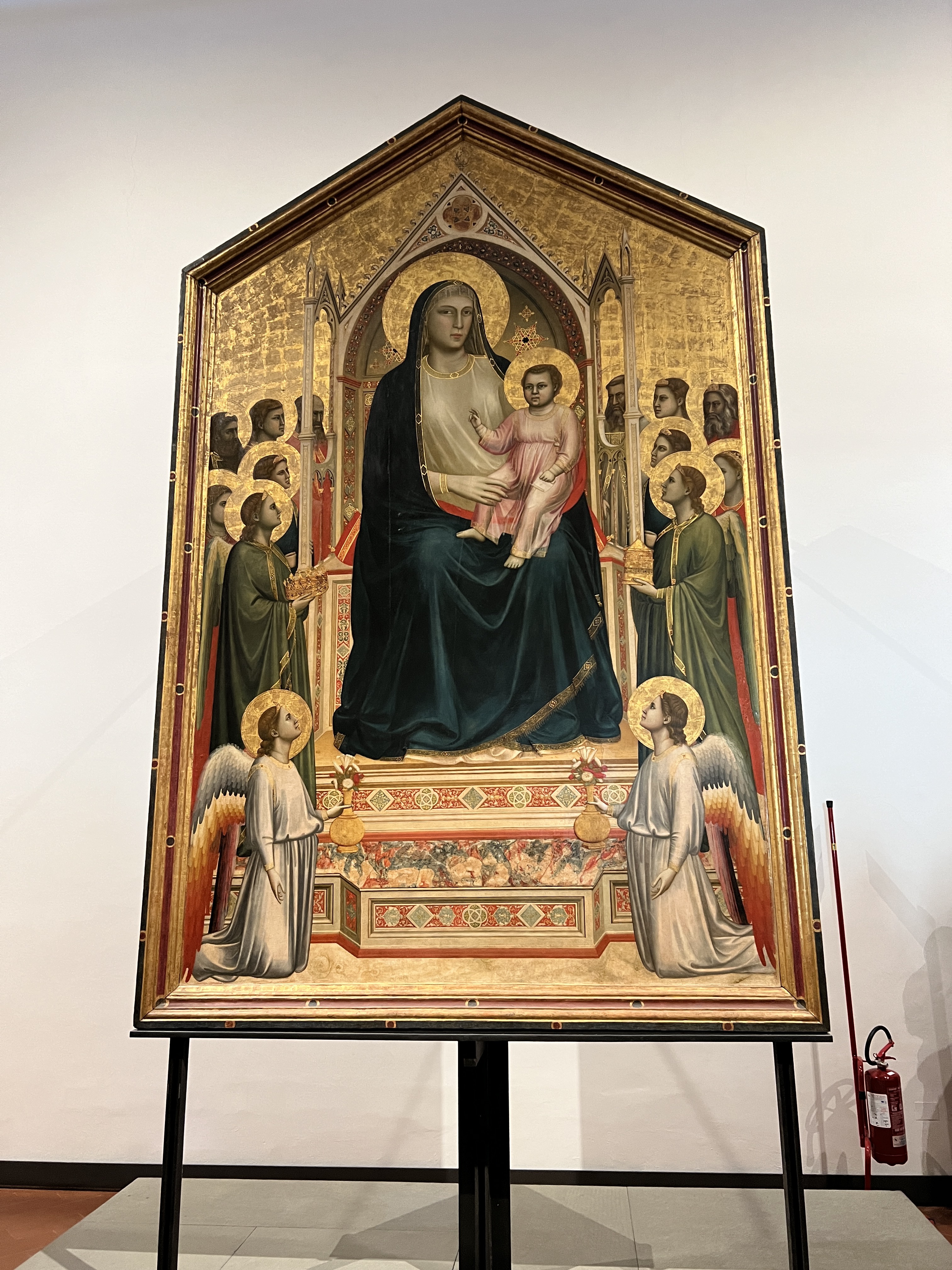
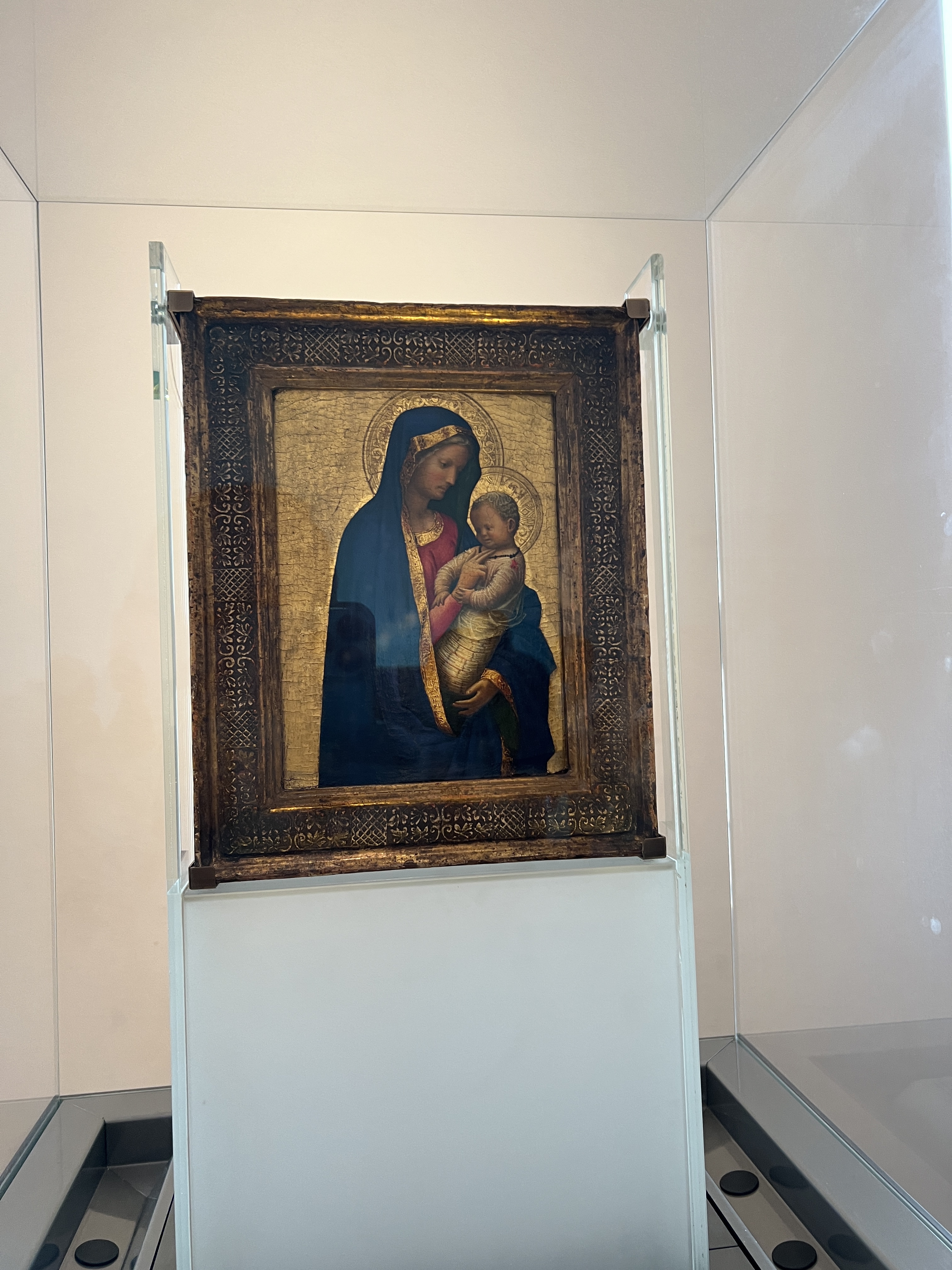
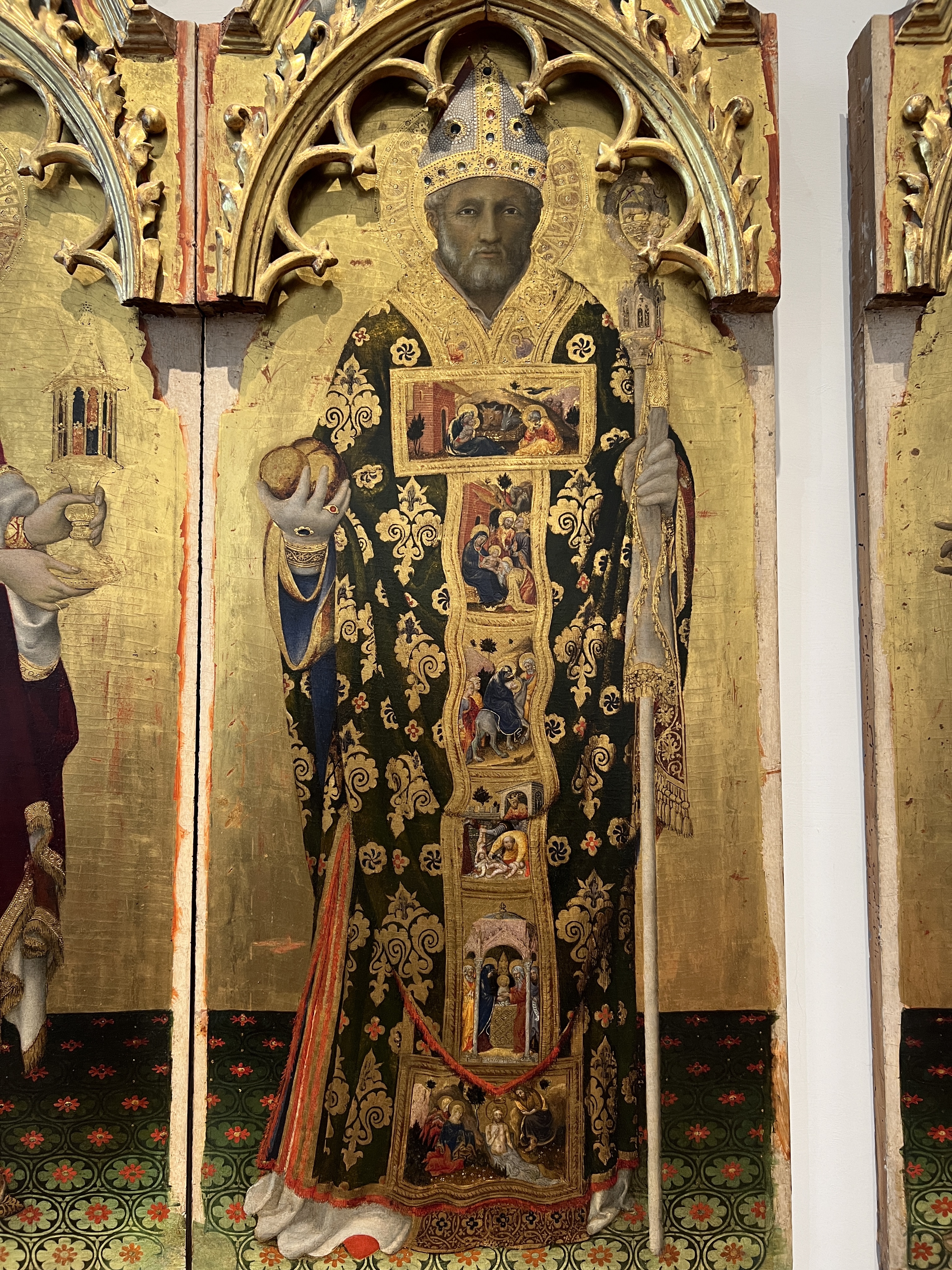
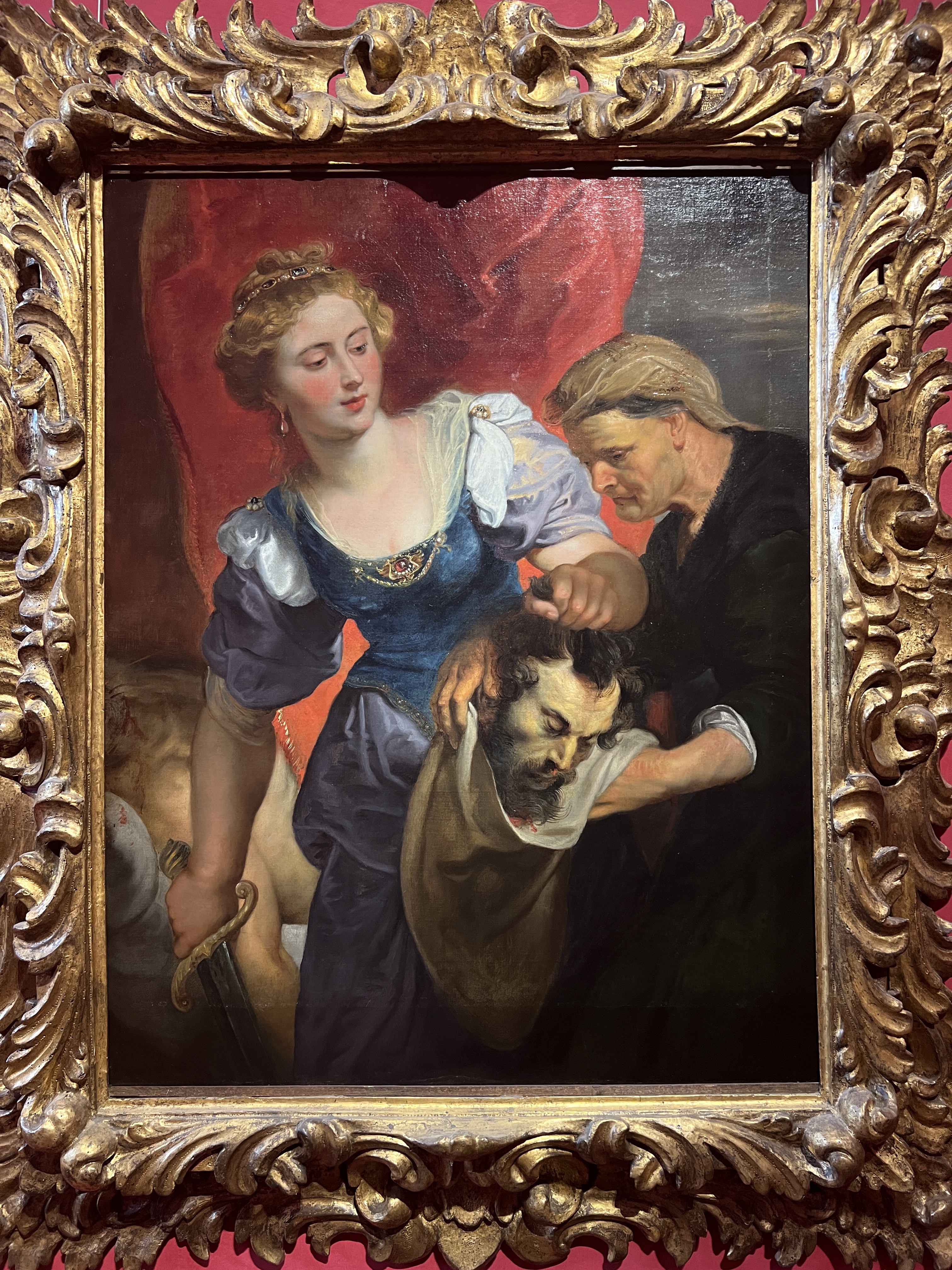
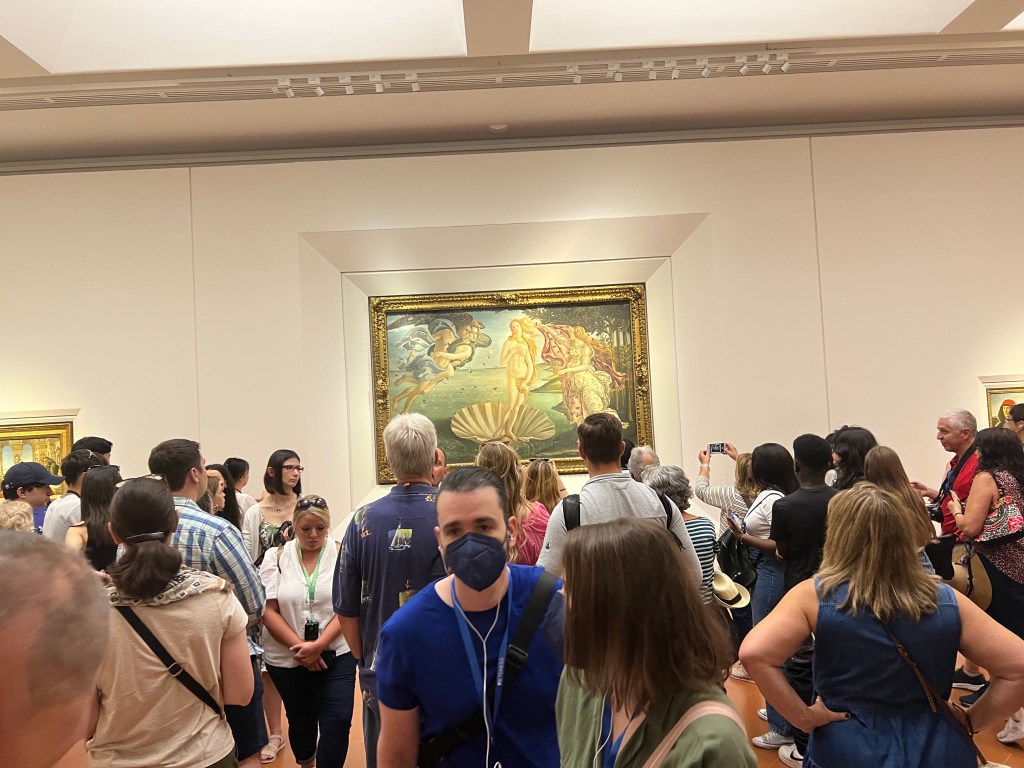
It was a wonderfully cool morning, so we walked up the street to Artigianale’s for a croissant and cappuccino. From there we made our way through the early morning bustle of the office workers and arrived at the Uffizi Gallery Florence precisely on schedule.
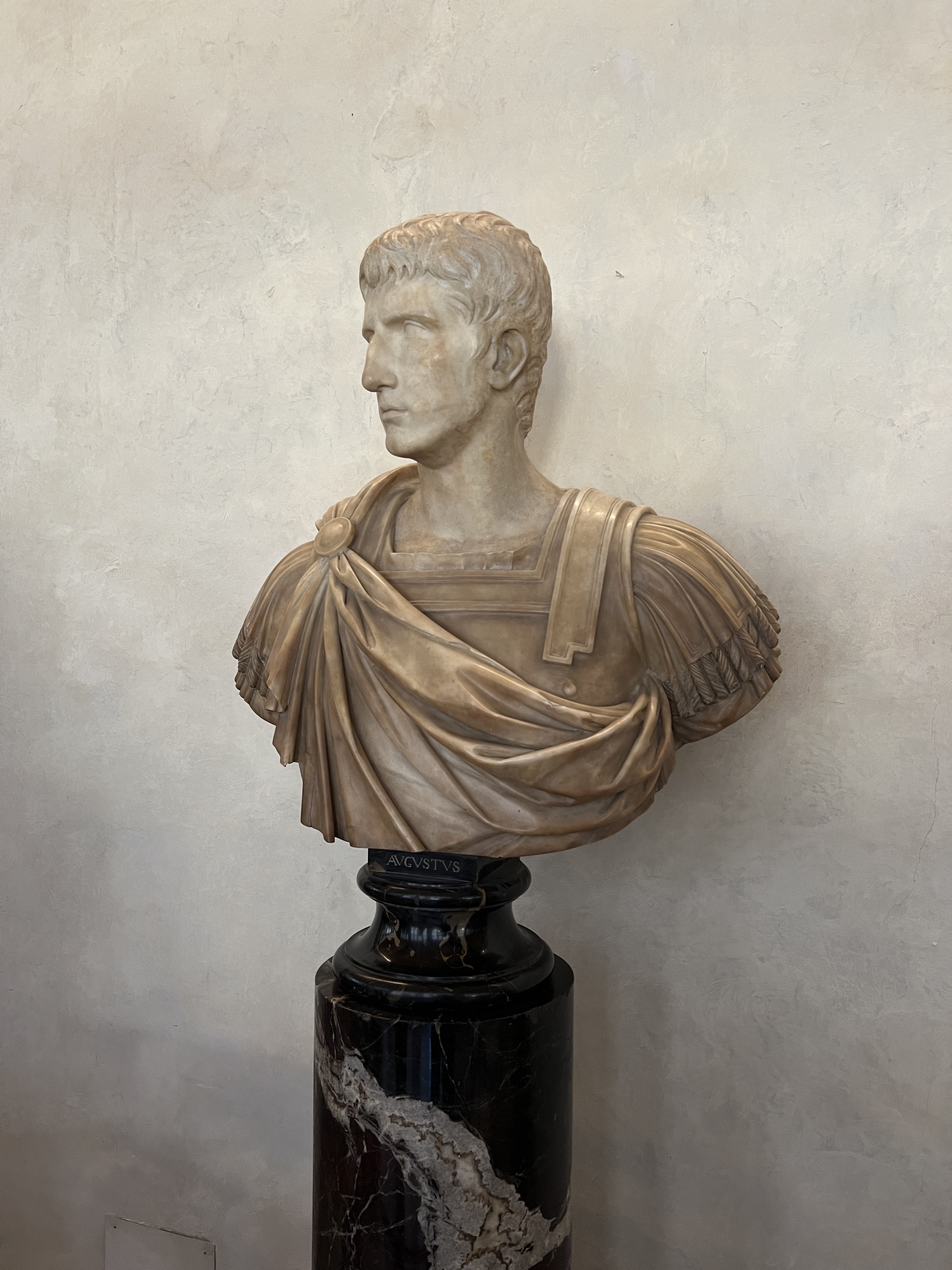
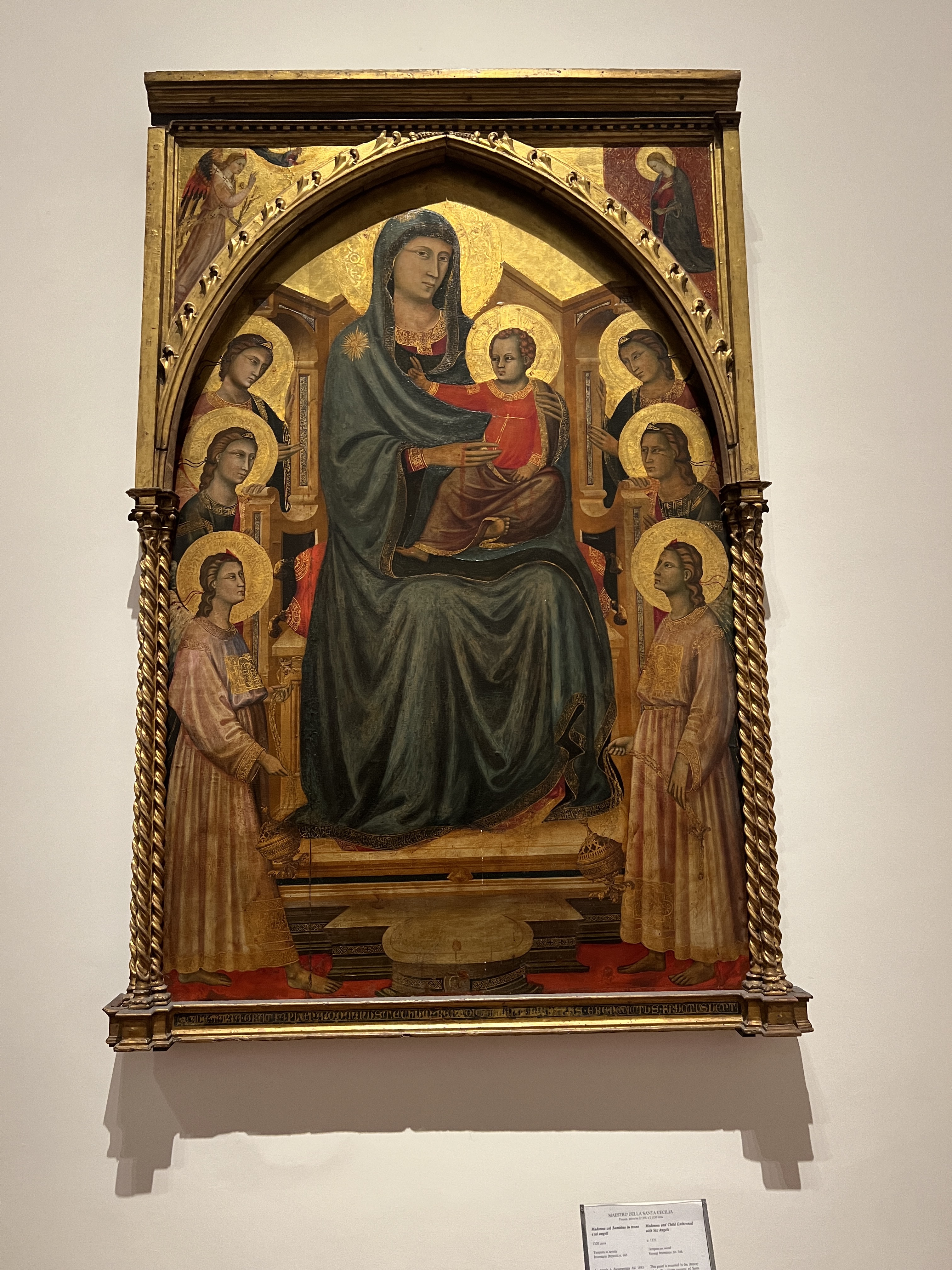
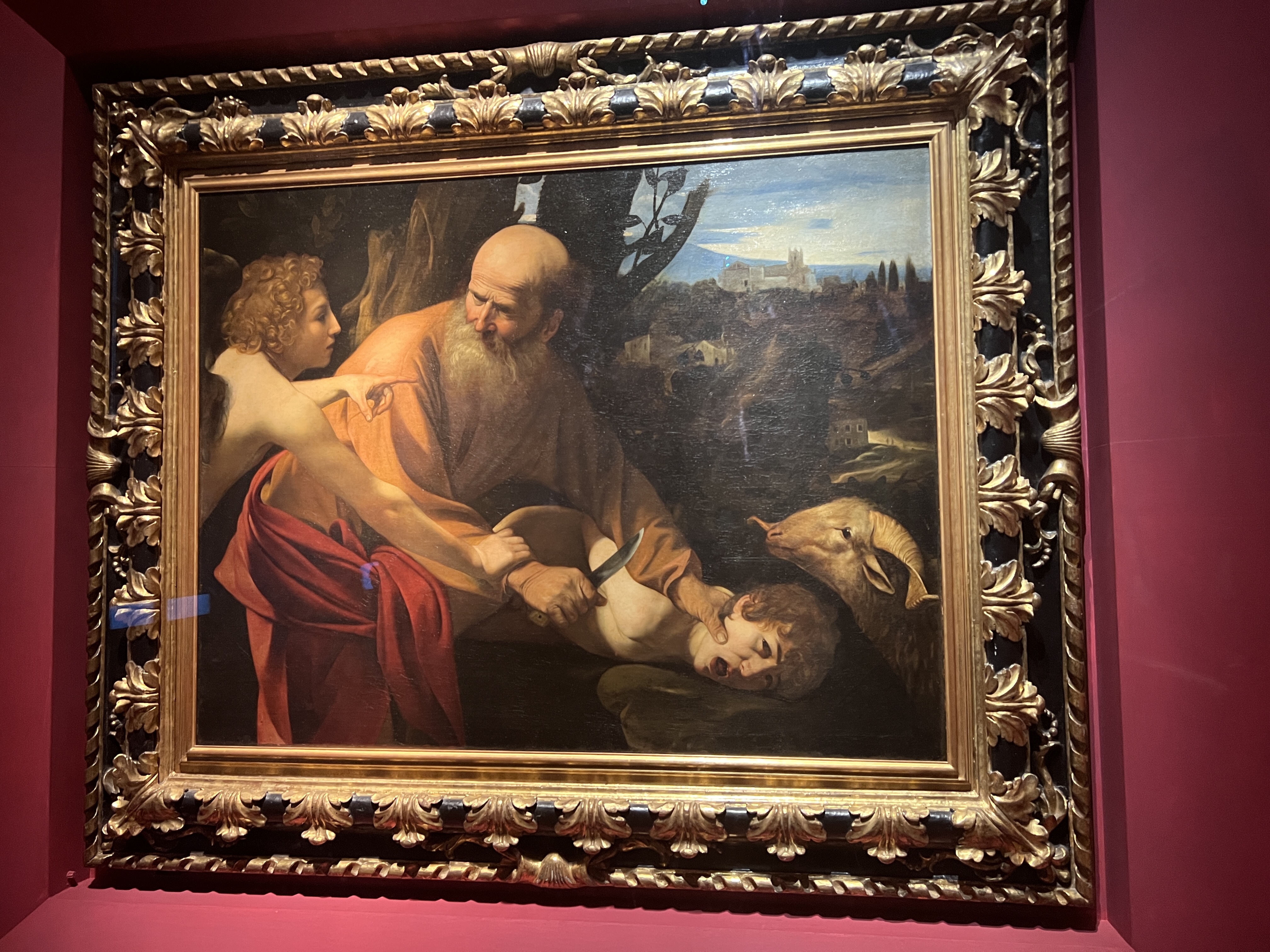
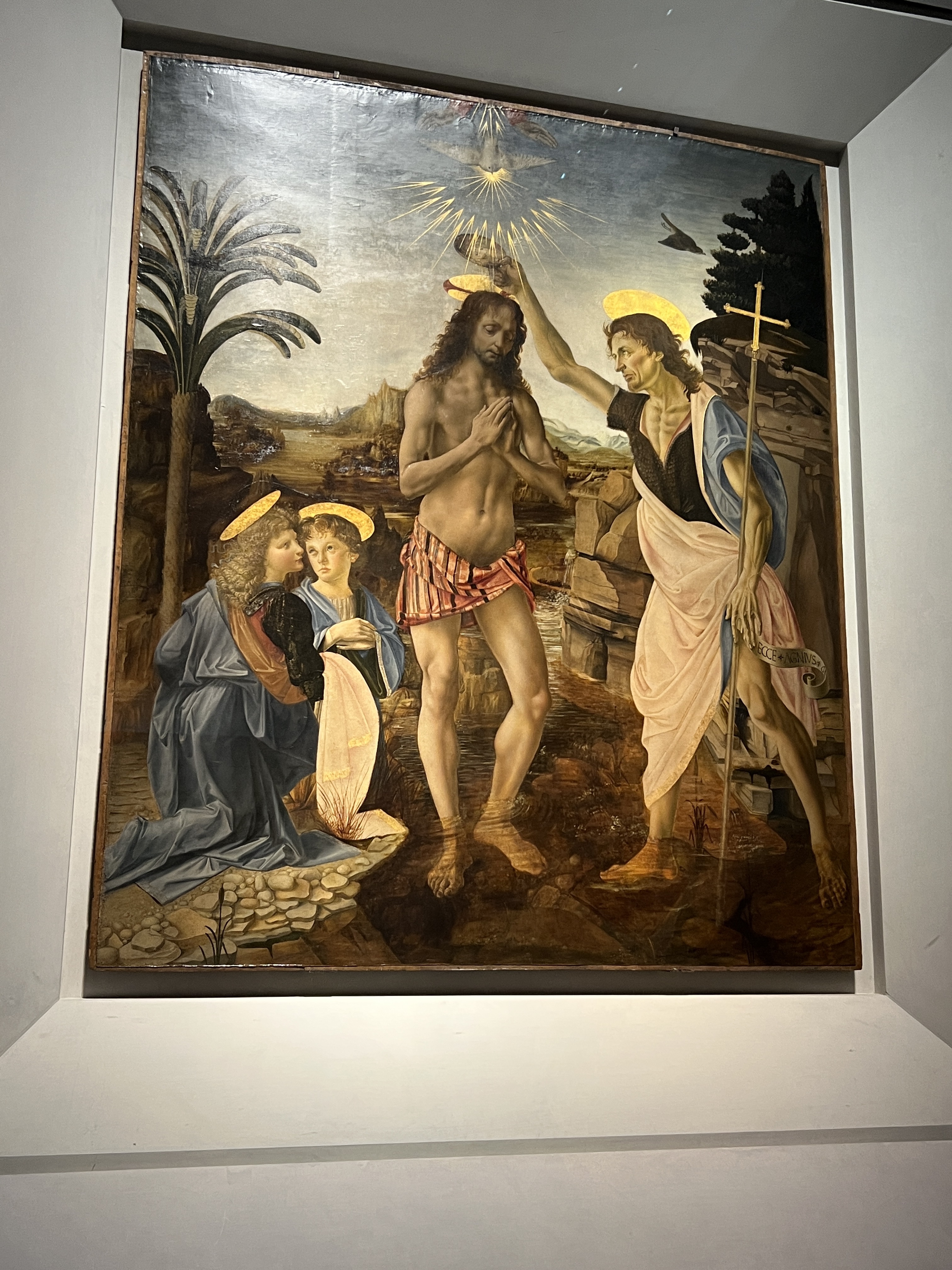
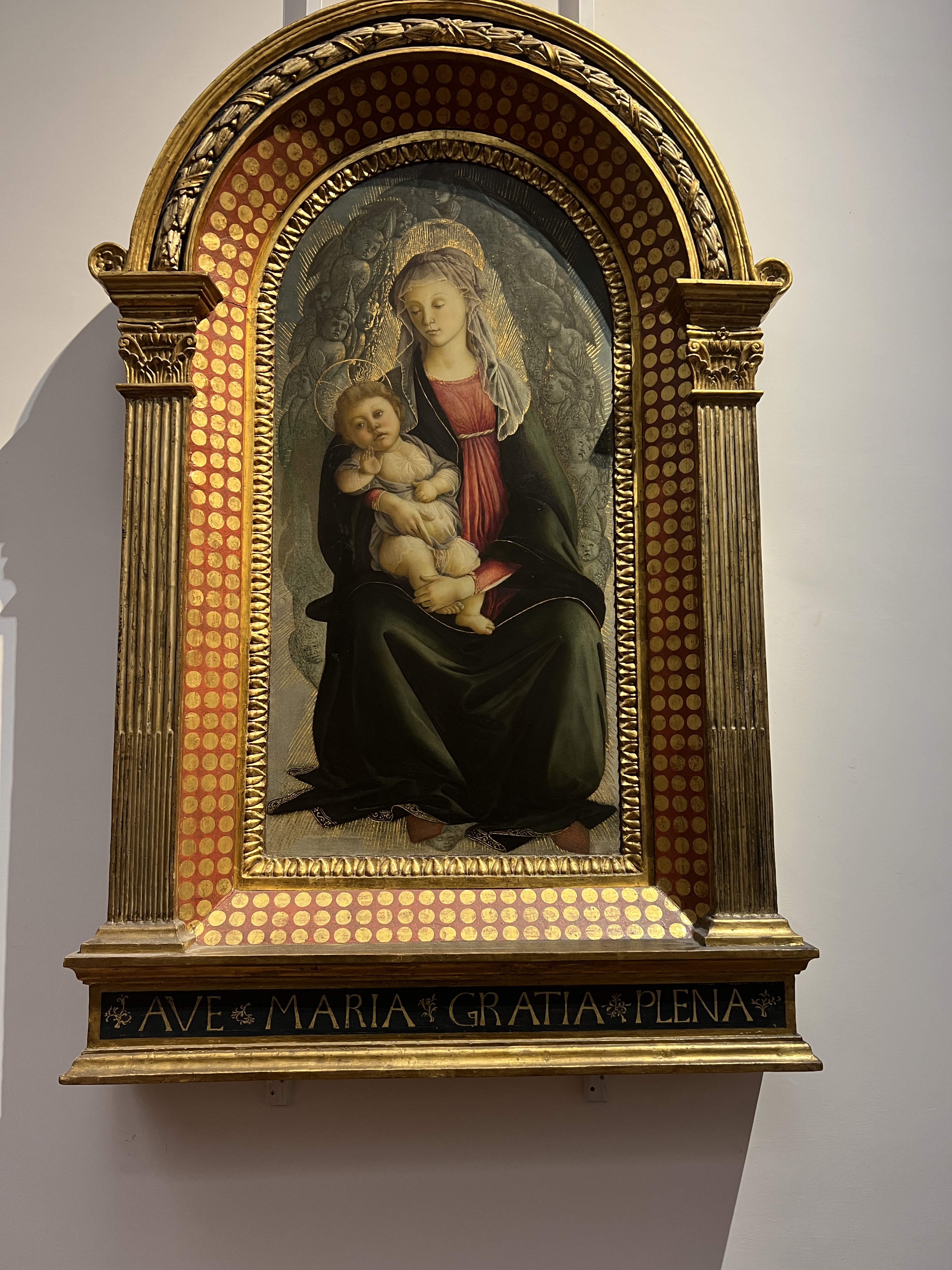
The Uffizi is like walking through the Metropolitan Museum of Art. It just never stops. You will either suffer from Stendhal Syndrome (being overwhelmed by such wondrous works of art) or Florence Disease (simply by being overwhelmed by the sheer abundance of art.) And there is much to see.
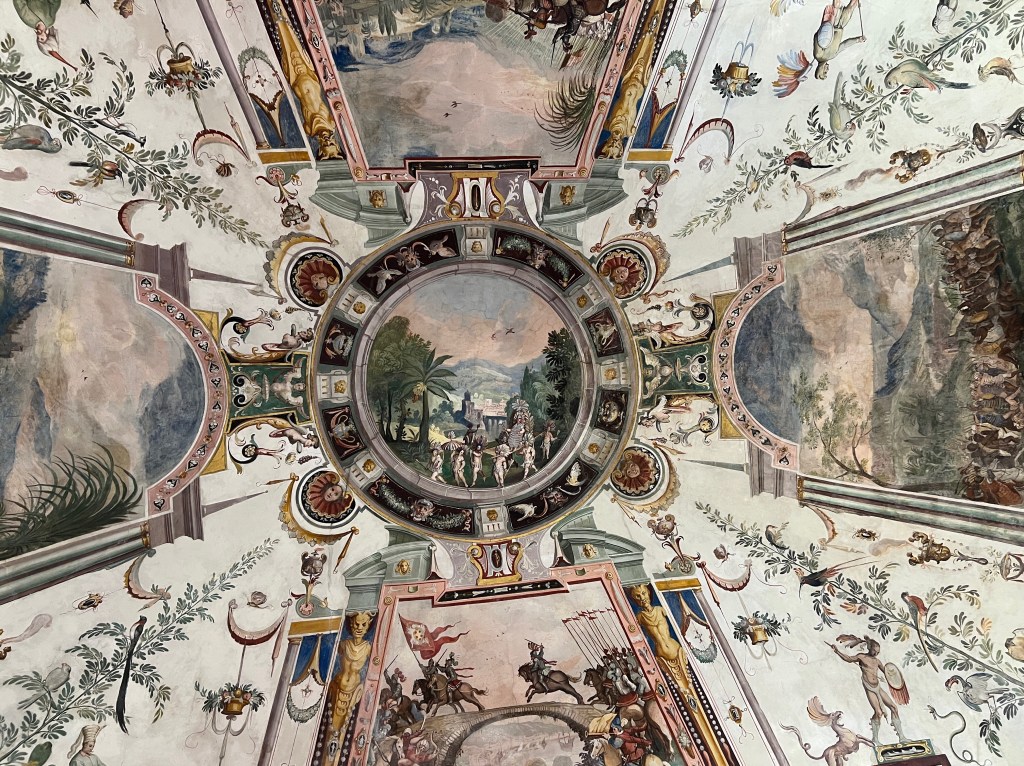
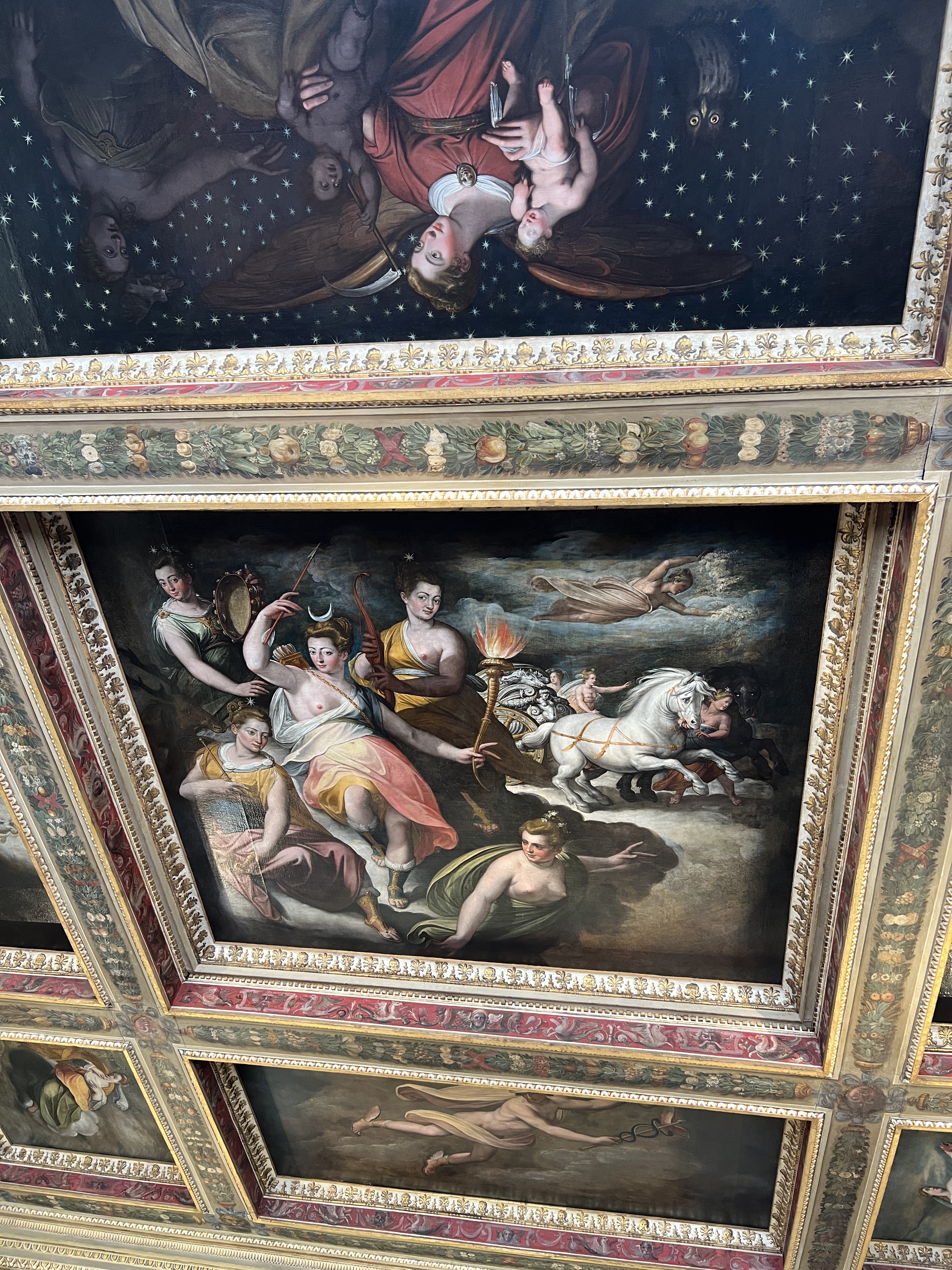
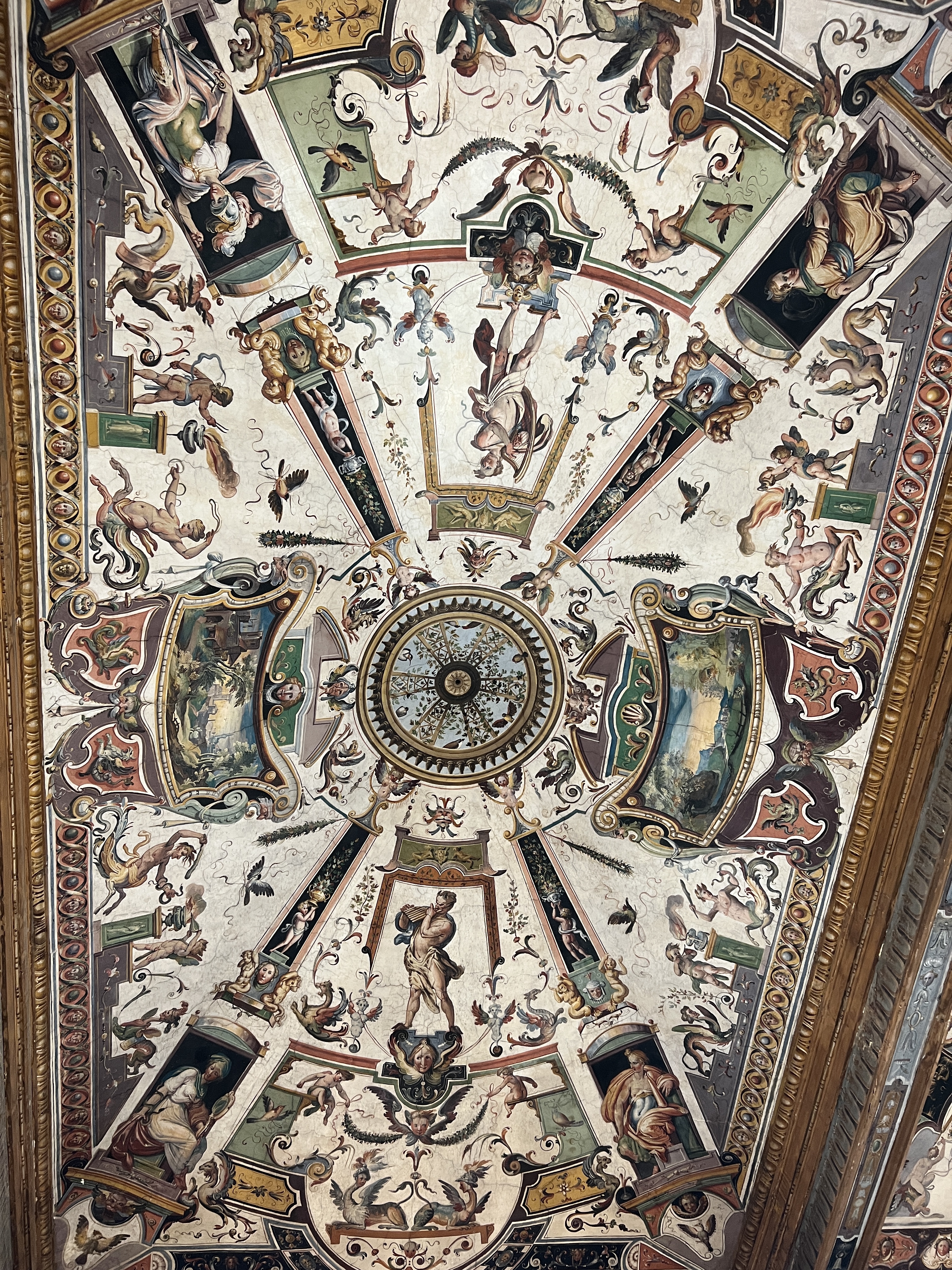
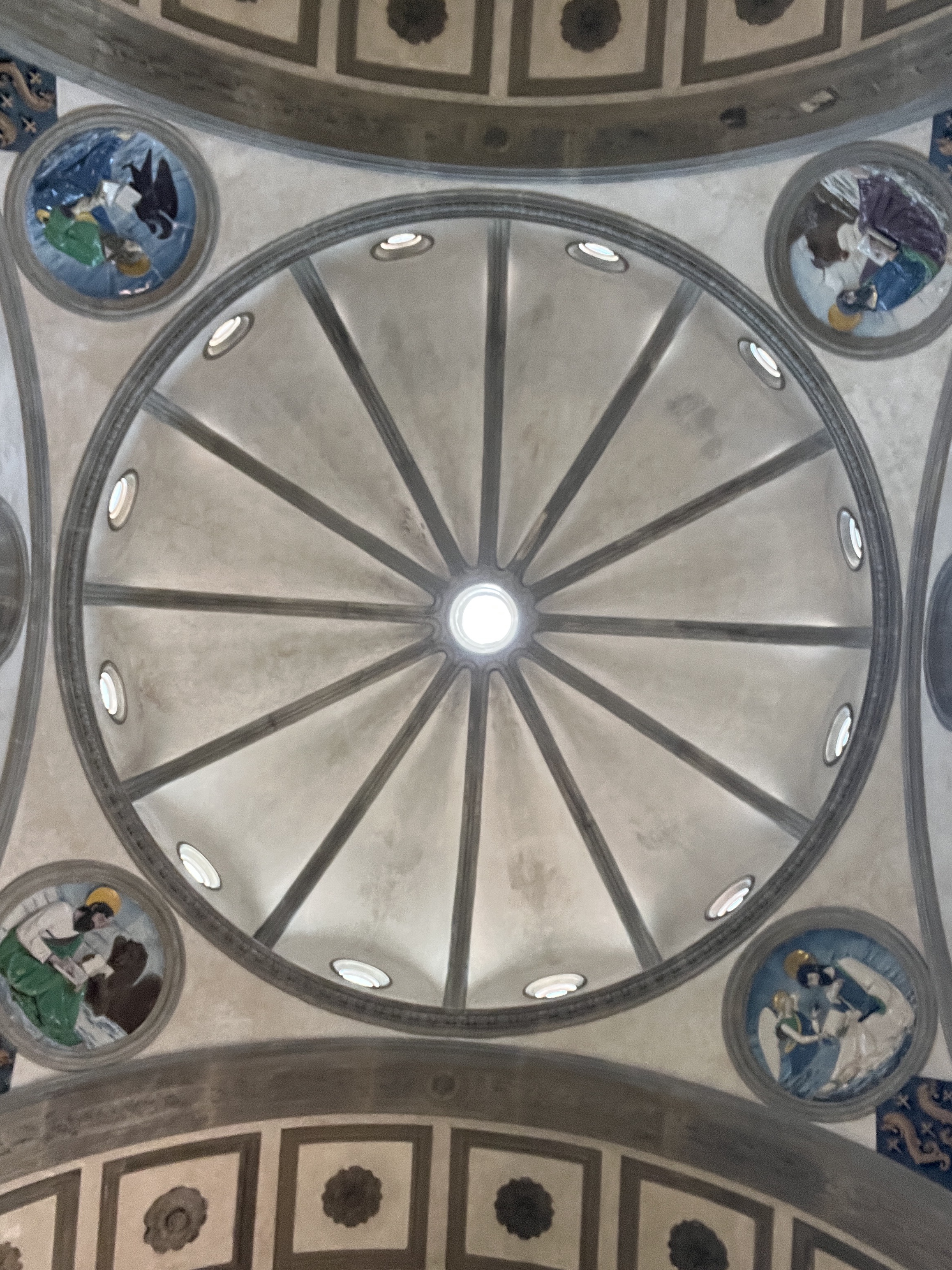
And don’t forget to look up, because the ceilings are just as beautiful…
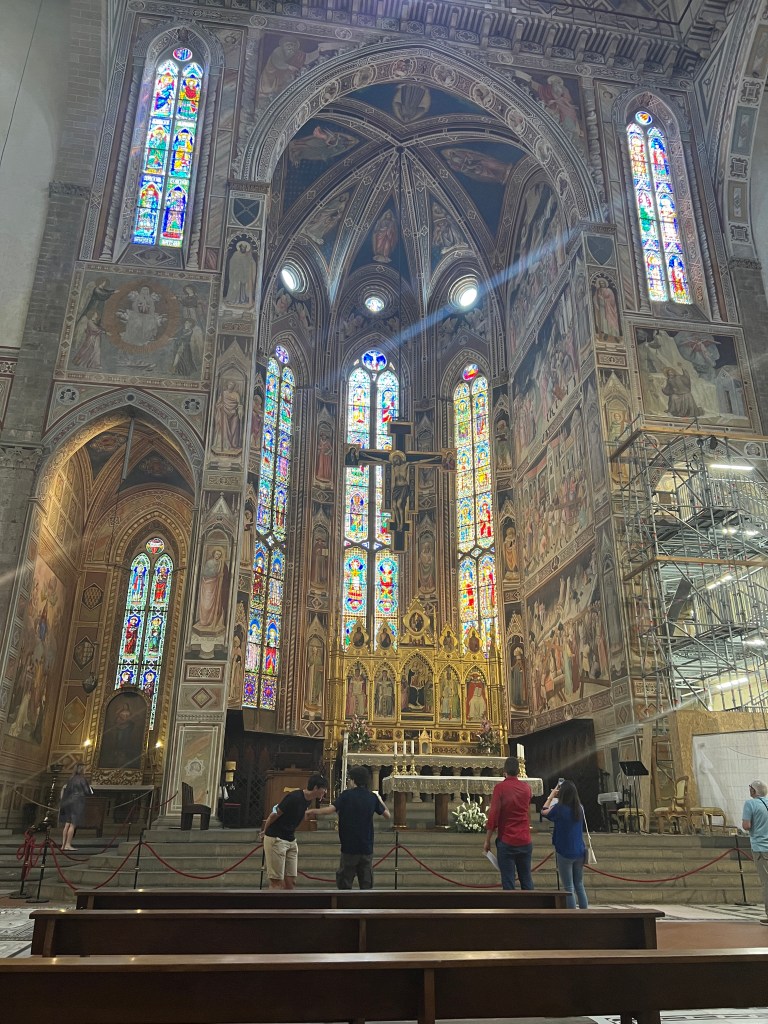
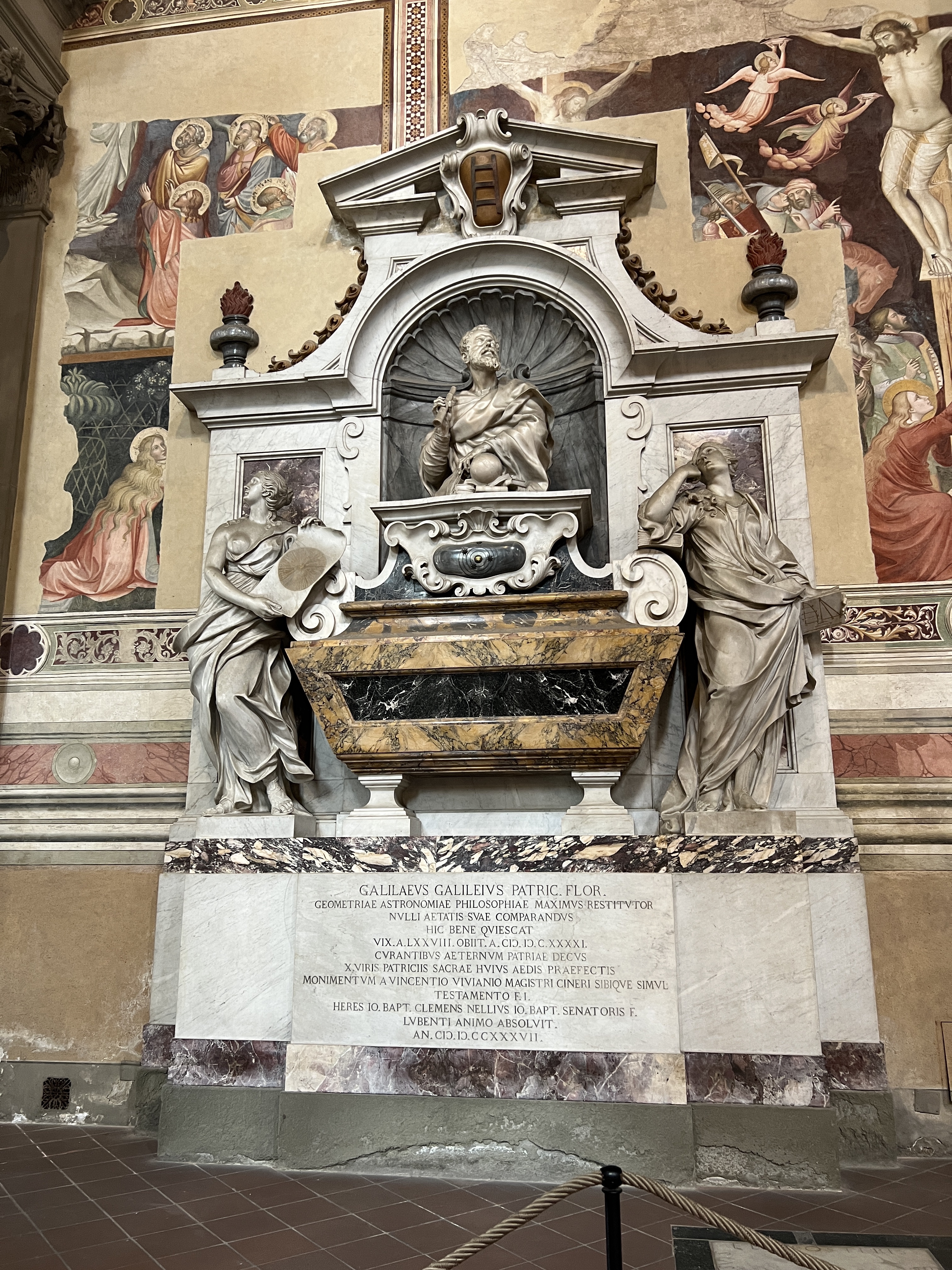
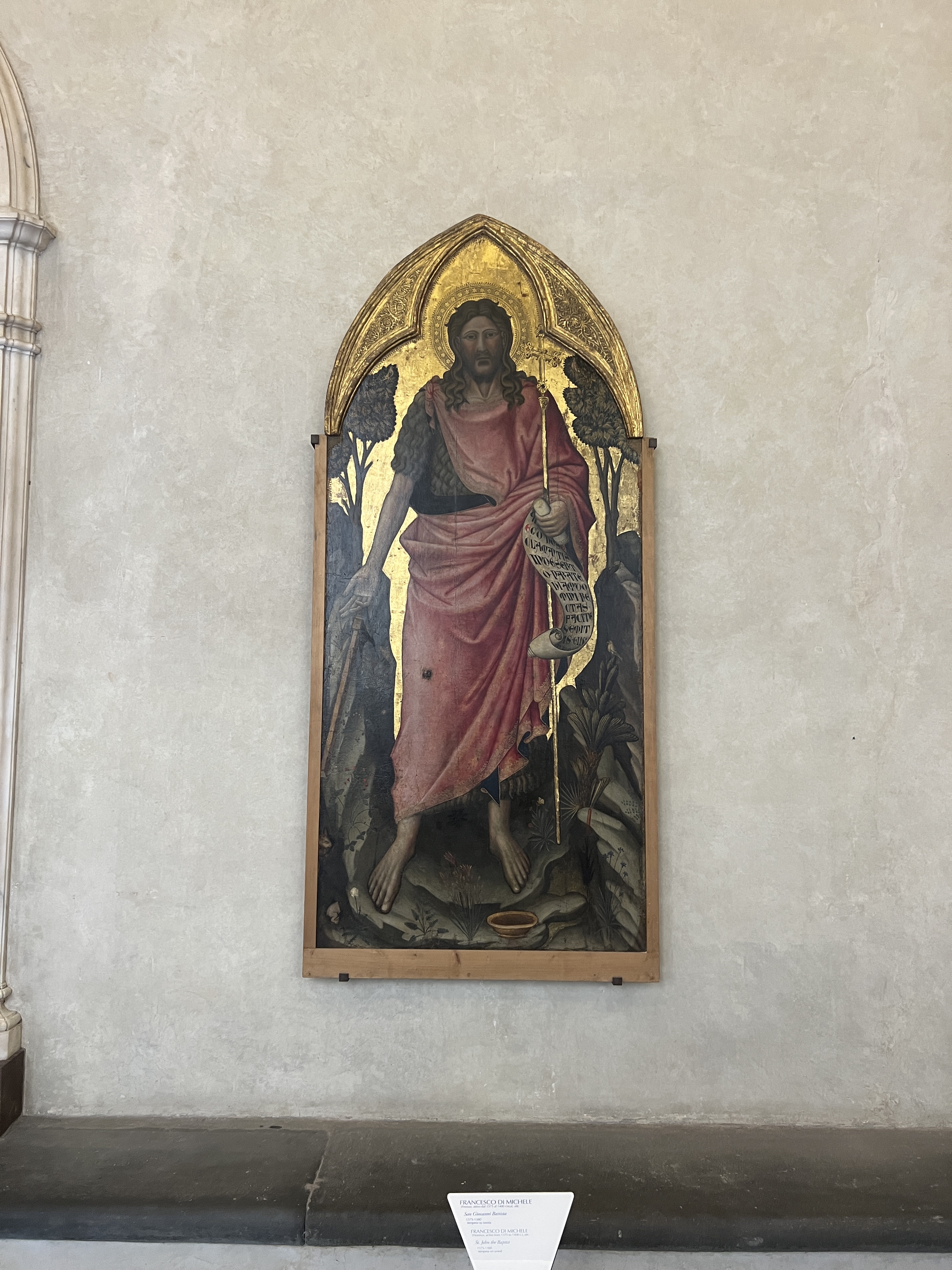
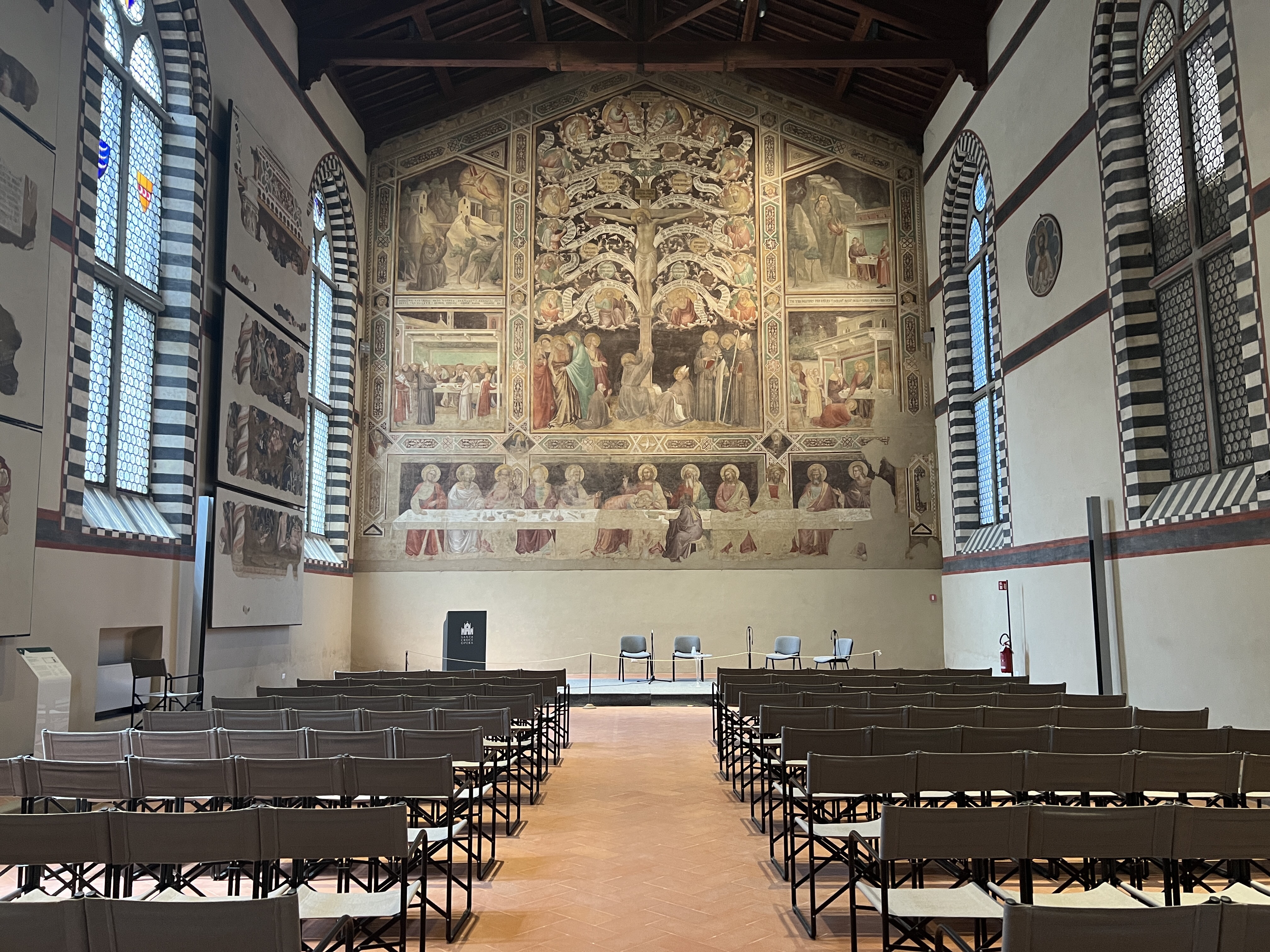
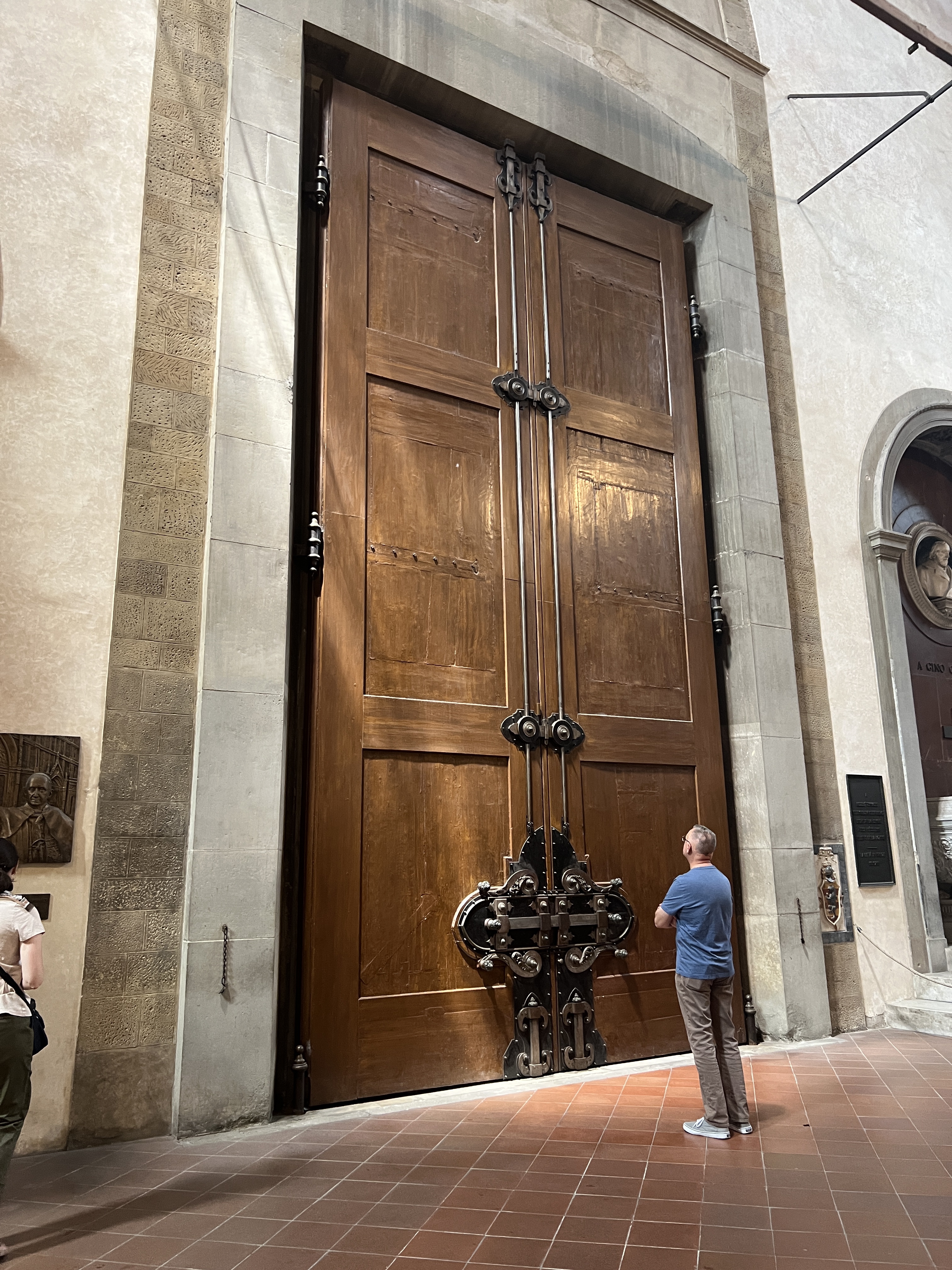
As we finished we stopped for some fizzy water then made our way to the Santa Croce Basilica. So much beauty…
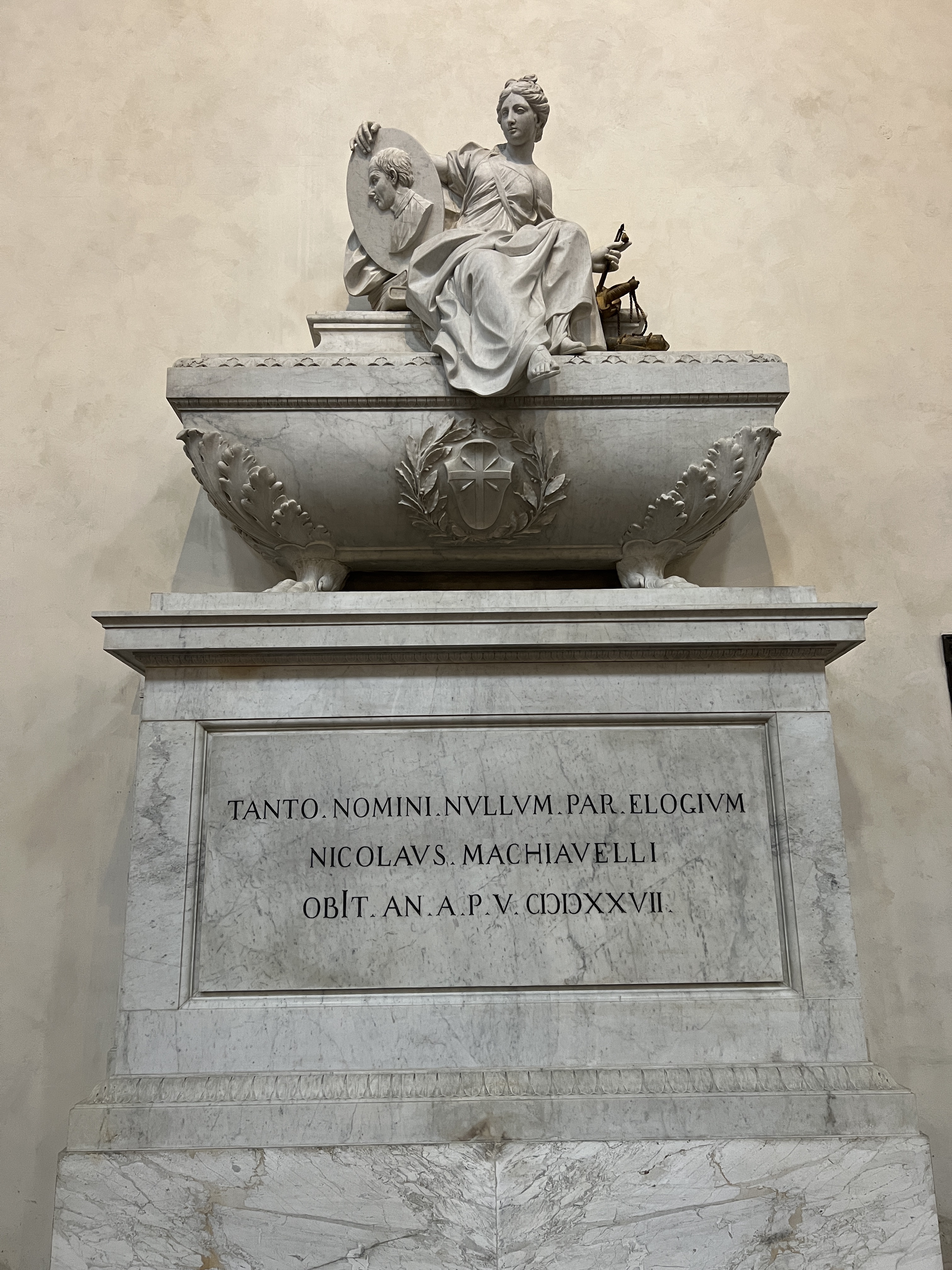
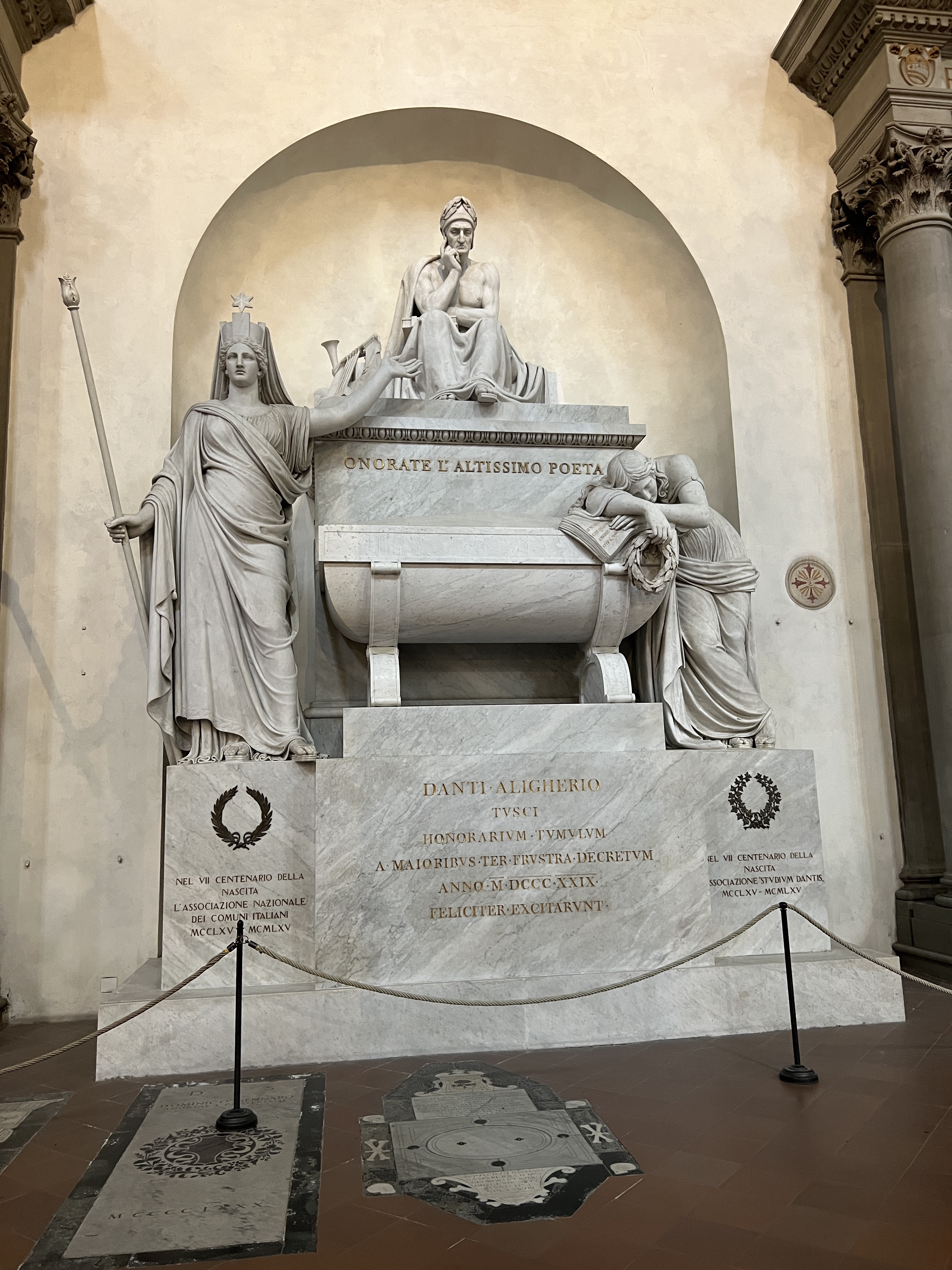
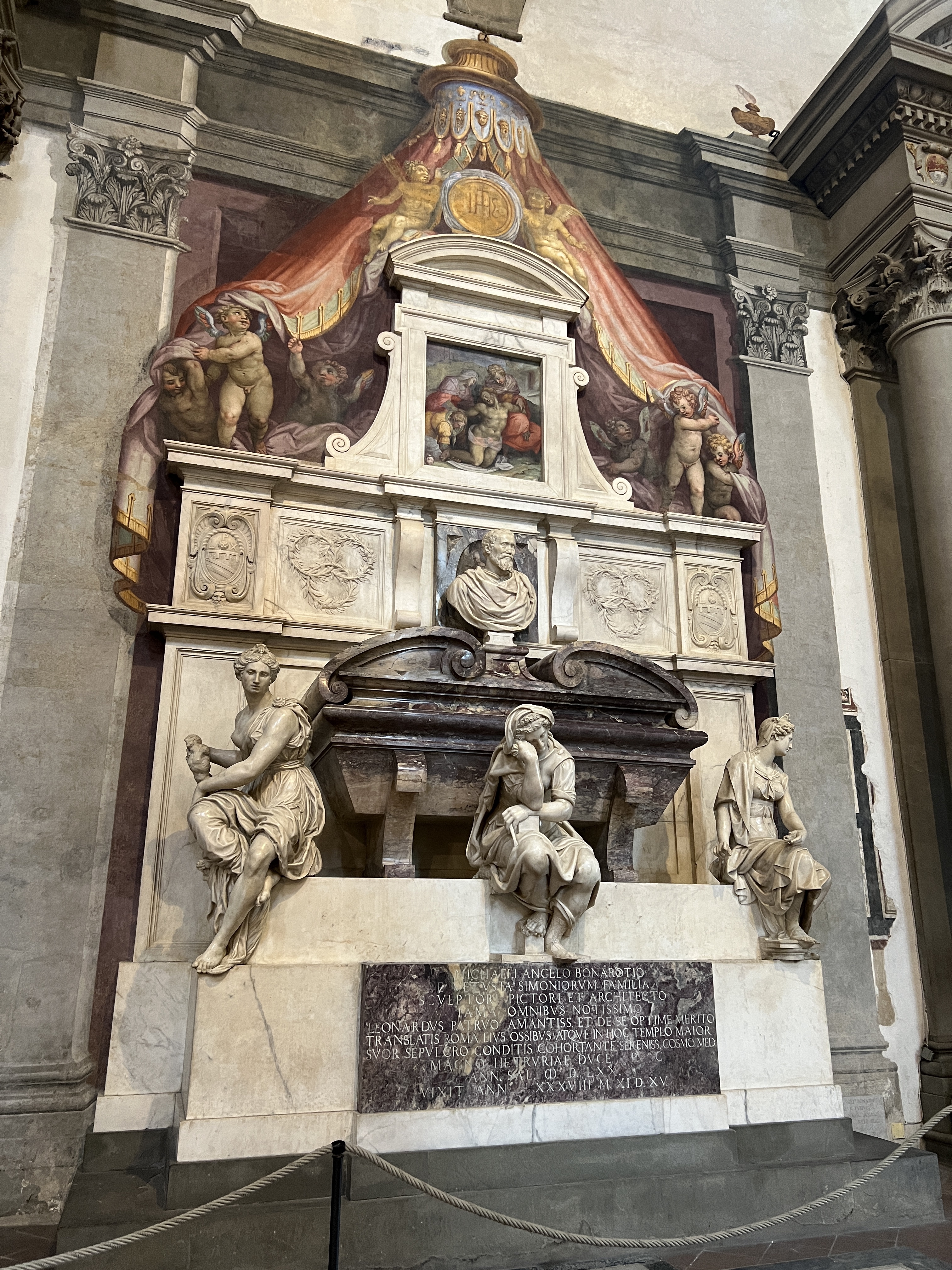
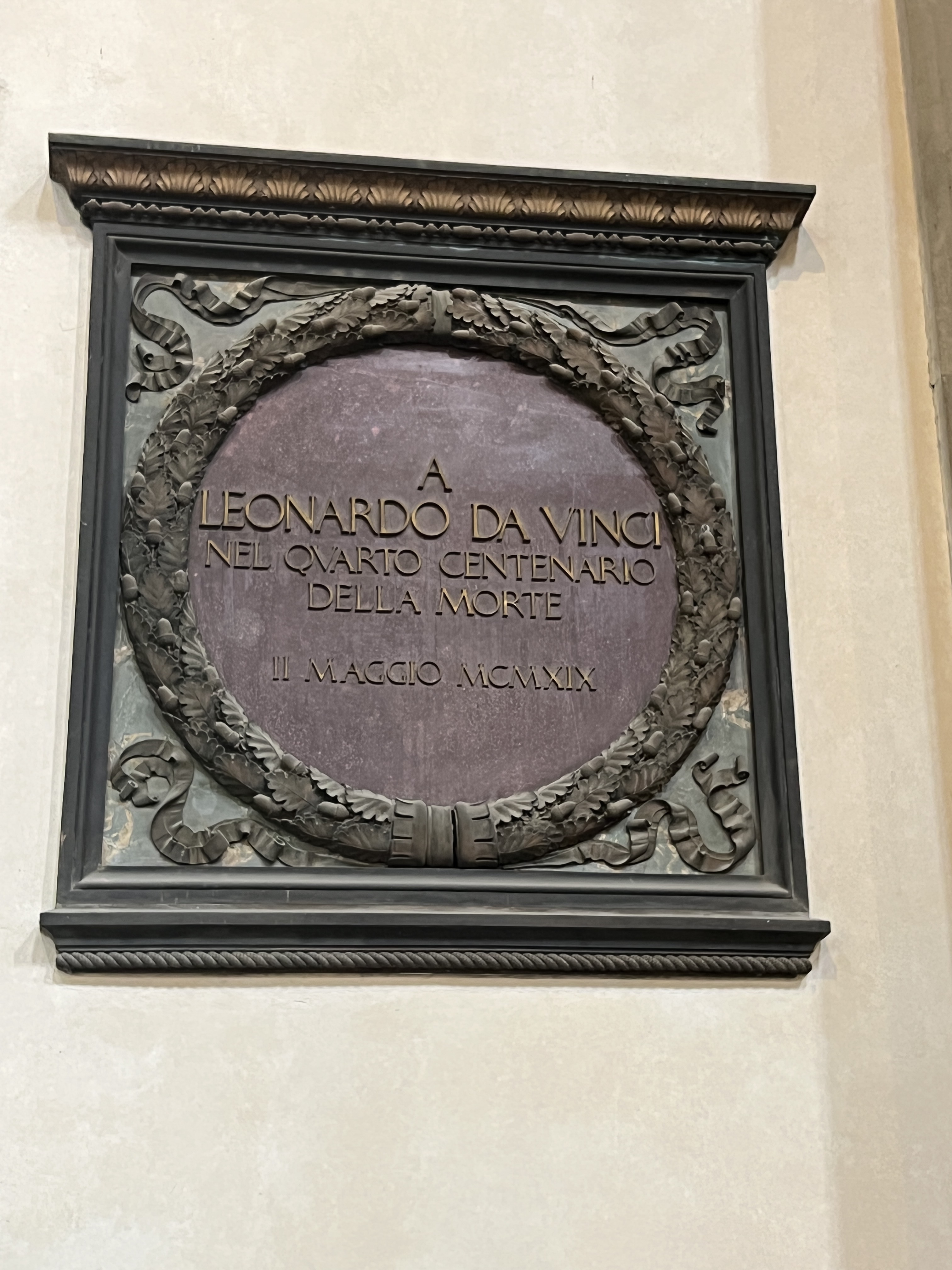
We sat with this view and spent some time in prayer before walking the inside perimeter and seeing the side chapels. I had no idea. This is the place where some of the greatest minds in history have been buried. When I say greatest, I mean…
MachiavelliDanteMichael AngeloGalileoDa Vinci
And many more. The floor is a maze of grave makers so worn that you can no longer read the names and for me, I found myself walking around them or between them so as not to “step” on anyone. From there we made our way into the church museum and again, just so much to see…
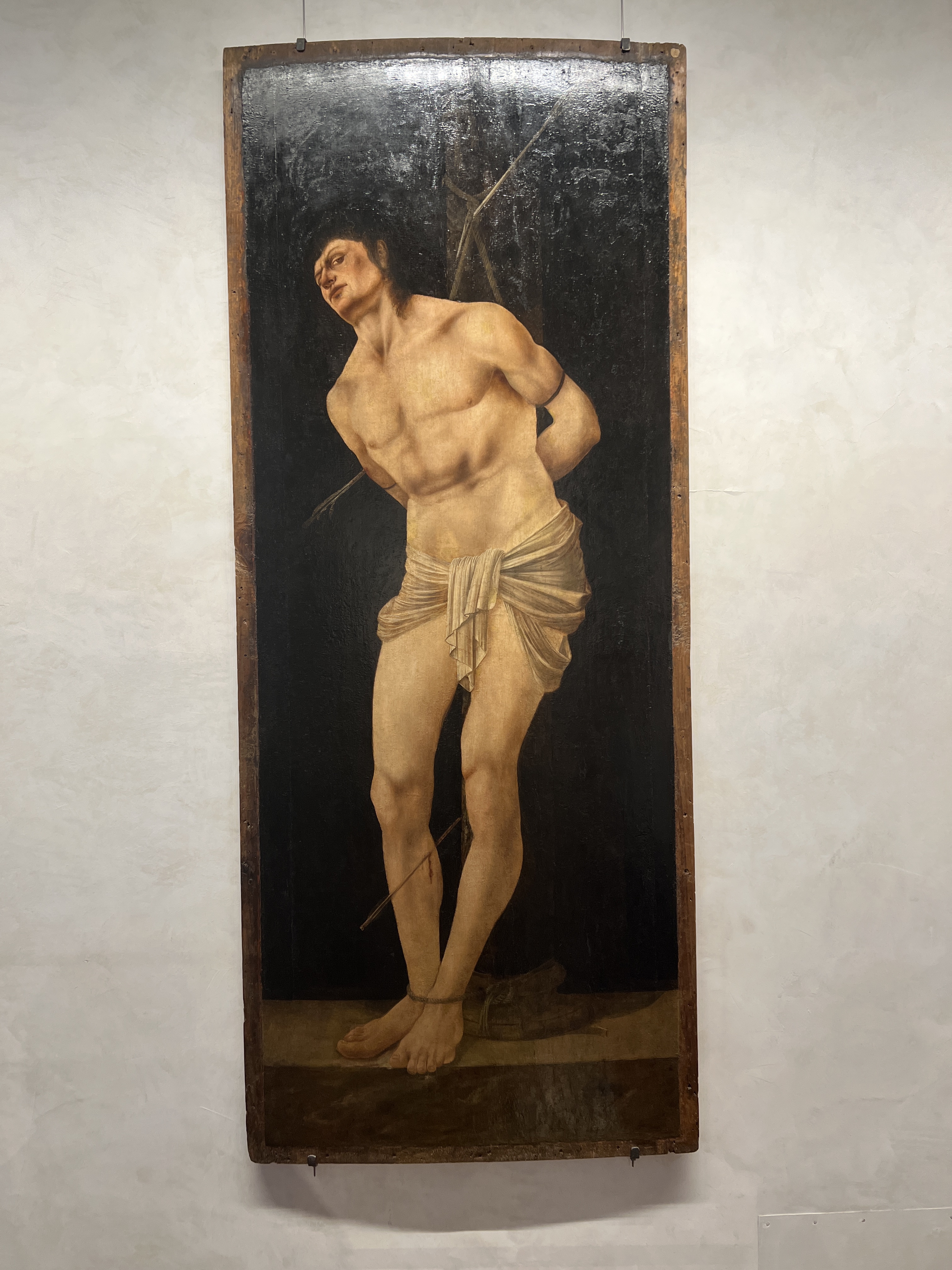
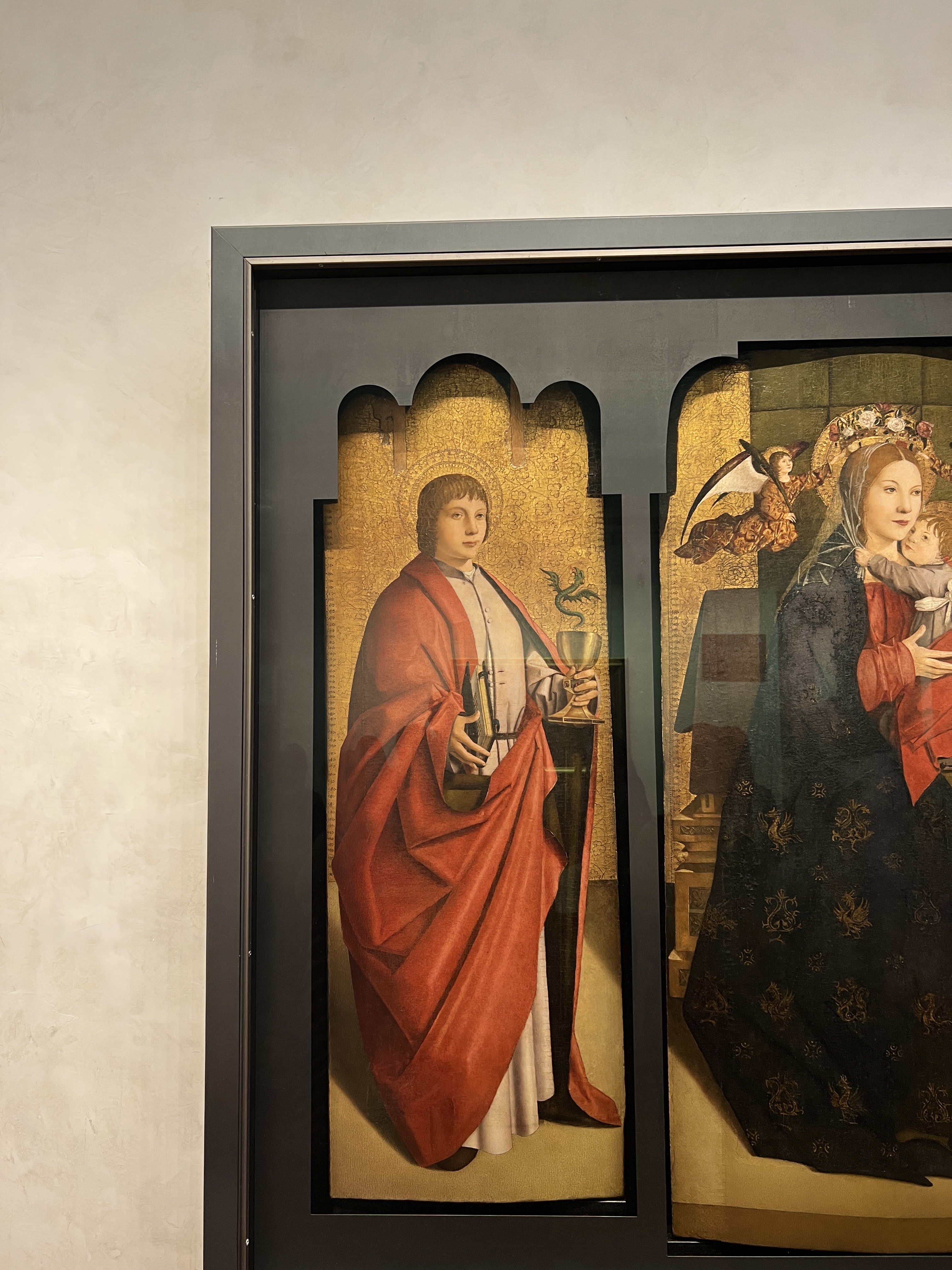
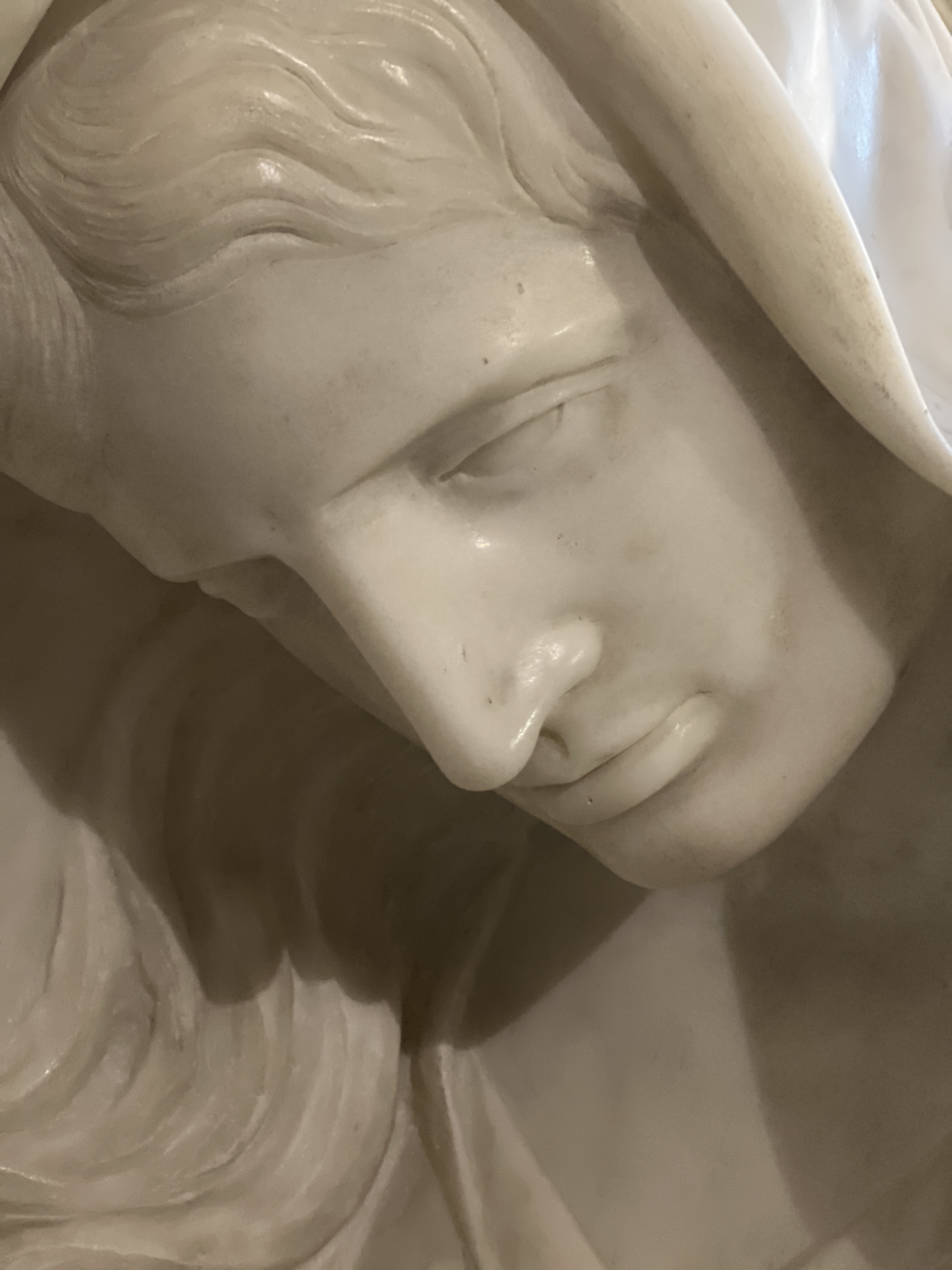
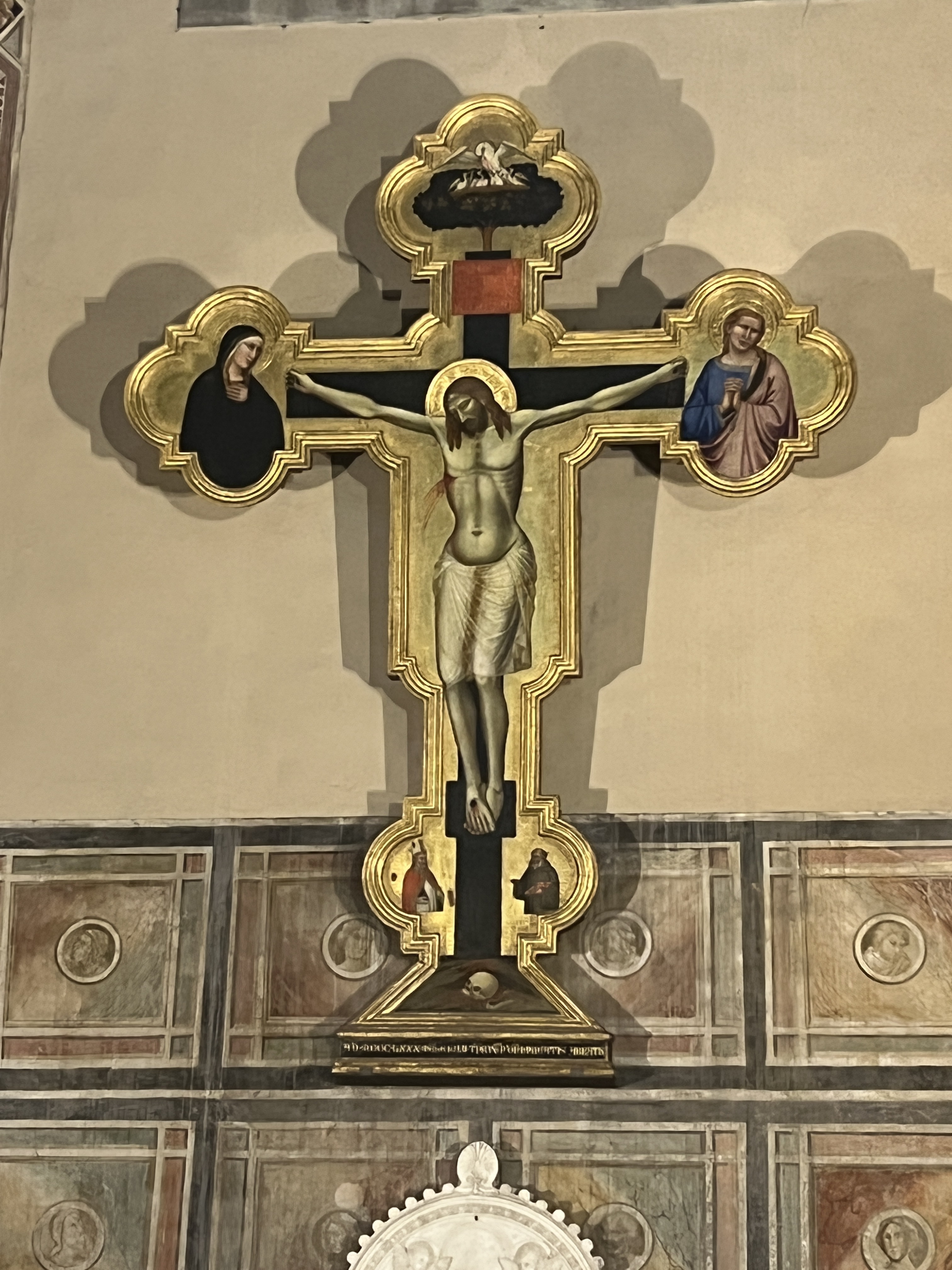
It was then that I simply decided to focus on one small detail of the works we were seeing. It allowed the opportunity to truly absorb a small piece of what was being offered.
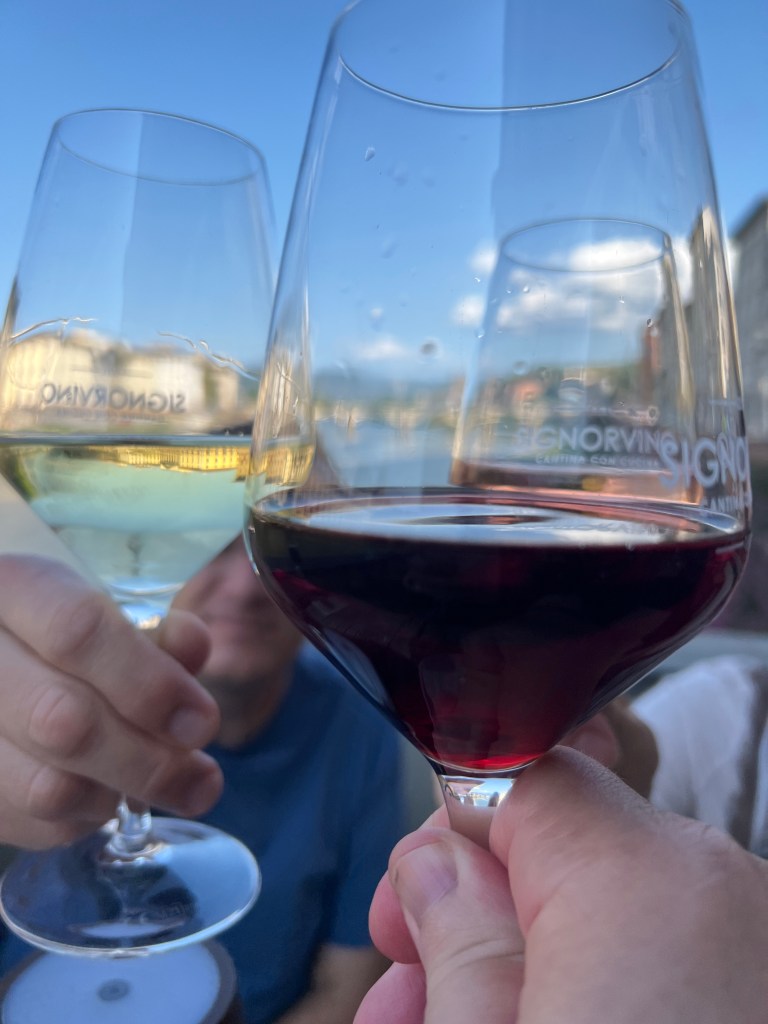
All this could only be followed up by some tasty food, so we made our way over to Oinos Ristorante / Pizzeria where I had lots of water, Penne al Chianti, and a nice glass of Chianti. We went on from there just wandering the city where we encountered the boar at the Boar Market and found a nice glass of wine in Signorvino along the Arno River.
Of all that I’ve been amazed with outside of the city, art, and food, it is the mass of people. So many here to take pictures of what they see but it does not seem that they take it in. They are moving so fast that it is not possible to form any real attachment to the art or to understand it. That’s not a judgment, I just find myself standing in front one piece that “speaks” to me and not really worrying about the rest. Lectio Divina is the method of reading until the text elicits a response from you. Seems art should do the same. You don’t go until you’ve seen everything there is to offer, you go until something speaks and then you let it write its message on your heart. I’m going to remember this as I make my way through the next two weeks.
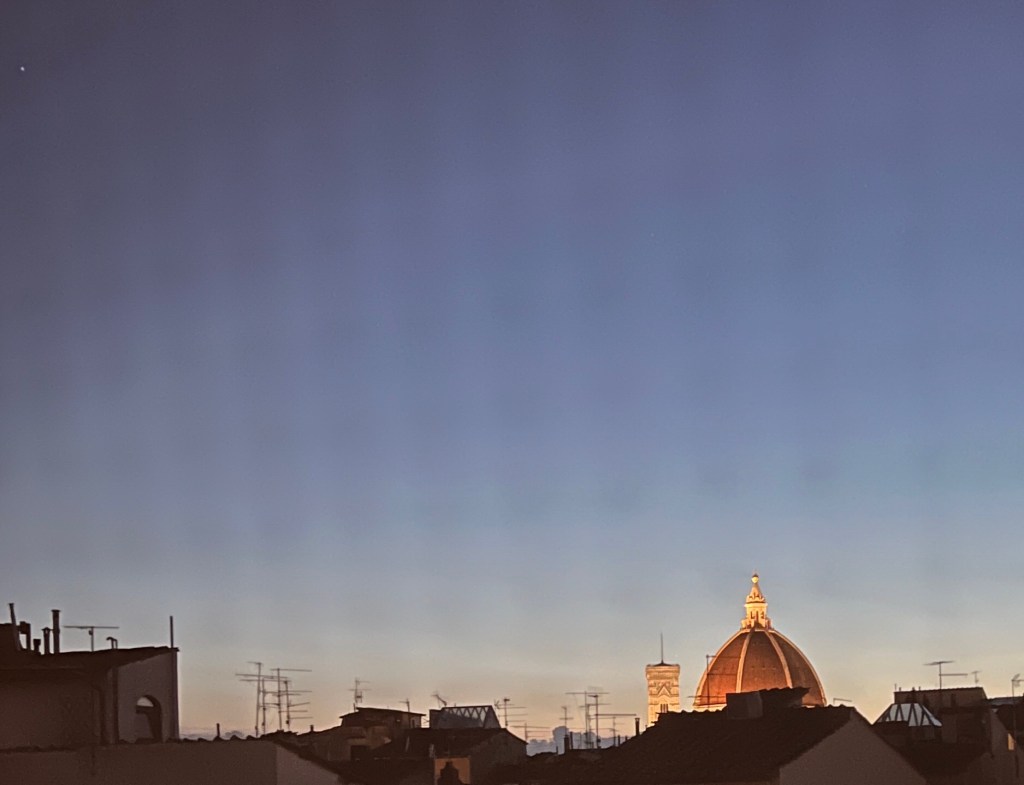
The day ended with the sun setting behind the duomo.
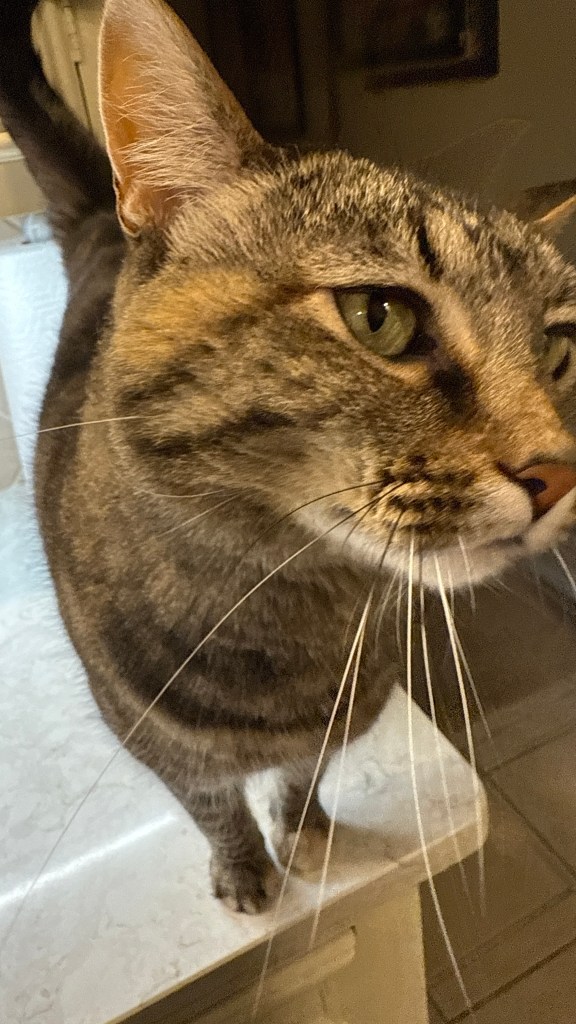
Picture it: approximately 4:00 a.m. Sleeping peacefully in a queen size bed… all by your lonesome. Things are going well. Not too hot… not too cold. You’ve had the bed to yourself for several years, so you’re accustomed to roaming from one side to the other. This side is too hot… roll over to the to her… Ahhh…. nice and cool. Then tragedy strikes: at some point in the night, you’ve forgotten that you’ve rolled over to the other side and then there is the cat. The cat is hot. So, throughout the night you subconsciously move away from that precious little ball of fur (a.k.a. Her Royal Highness, the Queen of All that has Ever Been Created) and unbeknownst to you–Yes, Charlie, you’re on the very precipice of a 30 inch drop. What do you do? You roll over and…. “Shi……!” The first “whack” is to the head, right on the eyebrow and the second is to the shoulder. I do not recall the last time I fell off the bed (IF EVER!), but a few nights ago, I did just that. Even The Queen was embarrassed, although I did catch her laughing hysterically a few moments afterwards…. little bitc….. and now, here we are. I hope to go another fifty-six years without doing it again. By then, my bones will be so brittle that my skull will pop like a melon and I won’t have to endure a ridiculing cat!
The sabbatical, the great adventure on the Camino de Santiago… yeah. Probably not going to happen next year. Sigh. Still planning the trip to Rome and maybe even to Lisbon… definitely Rome. That one is already booked.
There has also been another project that I’ve been working on since December 20th last year with my friend (yes, I have one), The Rev. Sean Ekberg. Code word: COKO and I hope to be sharing with you soon as we’ve just about completed round one. We feel confident that this will be something for the entire Episcopal Church and pray that it will bring a bit of hope to us all… trust me: it’s good. It is very good! You’ll know it when it arrives and probably ask me to please stop promoting it. Enough! However, with that on its way, Fr. Anthony will have a bit more time to solve another murder. The Marble Finger must have its story told!
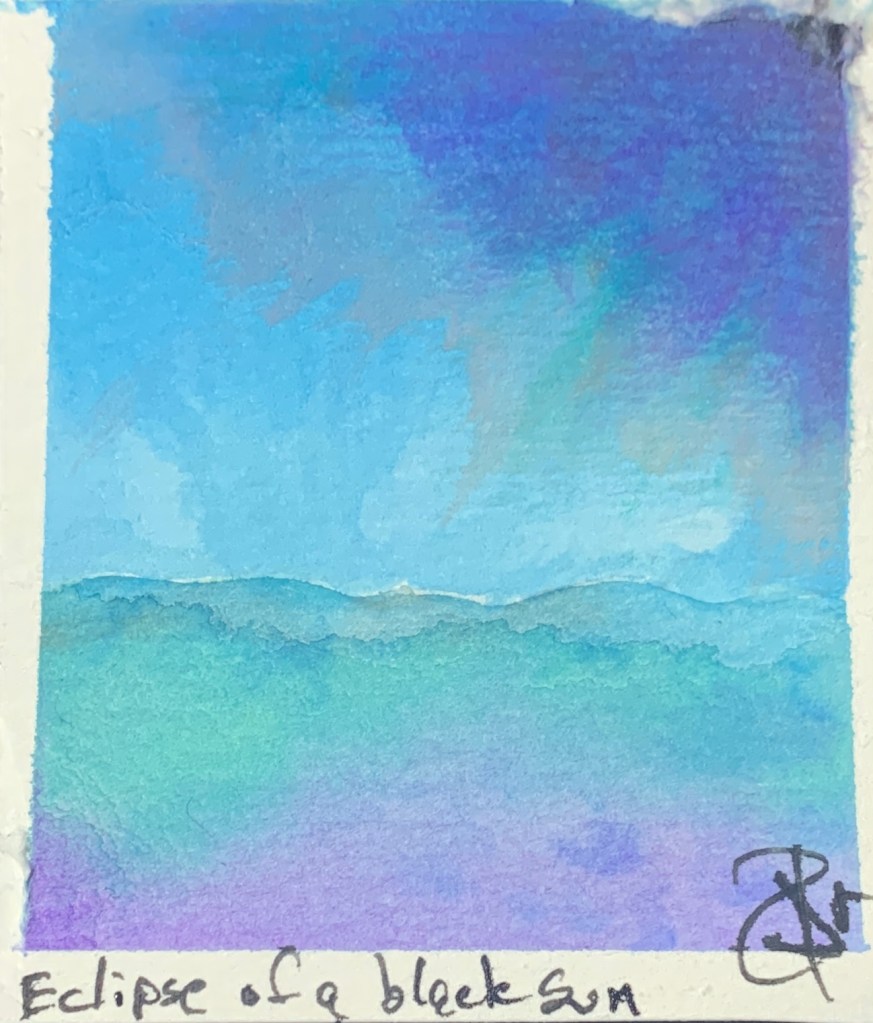
And I’ve picked up a new hobby… watercolors. This one is a challenge, but I find that I can do a bit of painting between other projects. Let’s the creative side have a walkabout without… I don’t know. It seems to go faster than writing, but I do need to be a bit more patient. Before putting a second color on top of another, there must be time for drying. Also, I’ve got to give the paints more time to do their thing as opposed to dabbing at it and spreading them. Leave them alone. They’ll spread on their on at their own time and make a much better picture. This is attempt #4 after watching a video. I actually kind of like it, but see the areas for improvement. I’ll keep practicing. Doesn’t really matter if you’re any good at this sort of thing. It really is about just enjoying the process and seeing what happens. Oh, and The Queen (she’s showing quite a bit in this post), she likes to drink the water that I wash the brush in. Weirdo. (Don’t tell her I said that.)
Thinking about going to NYC for a few days. Will take photos.
What I’ve learned: At some point, you have to start living. You can wait a lifetime to begin, but then that life will be over and you will be standing by the side of the desert road with your thumb stuck out while waiting for the ride that will never come. Start walking. Start walking and they’ll eventually find you and if your journey should take you into the desert where the cactus grow and the scorpions hunt… then watch your step and all shall be well and all shall be well and all manner of thing shall be well.
Thought for the day: Modo liceat vivere, est spes. While there’s life, there’s hope. — Terentius. Preaching on this Sunday. It is the one thing that didn’t escape out of the box, but it is what Jesus brings.