Sermon: St. Augustine

The podcast for this sermon can be found here.


In the garden of Eden, the piece of fruit that Adam and Eve took that bite from is never identified as an apple.  Although never named, that apple has perhaps become the most infamous piece of fruit known to humankind.  Today, I would suggest to you that the second most infamous piece of fruit is a pear, because it was a pear that St. Augustine stole when he was sixteen years old.  Why did he steal a pear and what is his significance?

He wrote in his work Confessions, “Yet I was willing to steal, and steal I did [… the pear …] although I was not compelled by any lack, unless it were the lack of a sense of justice or a distaste for what was right and a greedy love of doing wrong. For of what I stole I already had plenty, and much better at that, and I had no wish to enjoy the things I coveted by stealing, but only to enjoy the theft itself and the sin.” Continue reading “Sermon: St. Augustine”

Sermon: Dominic

About the image: Meeting of St. Francis of Assisi with St. Dominic, Josep Benlliure y Gil.


A man curious about Catholicism approached a Dominican monk.

He asked the Dominican about various subjects and eventually the conversation turned to religious orders. “So you are a Dominican?”

“Yes.”

“What can you tell me about the Dominicans?”

“Well, in short, we were founded by St. Dominic in the 13th century, in part to counter the Albigensian heresy.”

“I see. What about the Jesuits I keep hearing about?”

“They were founded by St. Ignatius of Loyala in the 16th century, in part to counter the Protestant Reformation.”

“Hmmm … so which is the greater order?”

The Dominican pondered this question for a moment and then replied: “Well, when was the last time you met an Albigensian?” Continue reading “Sermon: Dominic”

Sermon: Thomas à Kempis

Information regarding the image: Title – Thomas à Kempis on Mount Saint Agnes – (1569). In the Our Lady’s Basilica in Zwolle there is a painting on which Thomas van Kempen is pictured, with in the background the building complex of the Agnietenberg monastery. Also on the painting Arnold Waeyer (1606-1692), the archipelago of Salland can be seen. He led an important part of the church life of the Zwolle Catholics in the shelter period. The painting contains a comprehensive Latin text.

If the text is reliable, the painting would date from 1569 and be painted on behalf of Johannes Cuperinus, the last prior of the Agnietenberg monastery. He said, adding the text and self-portrait in 1654. In the Stedelijk Museum Zwolle, a virtually identical painting hangs. (source)  I’ve tried to locate the Latin text, but have not been successful.


The library at Nashotah House is something to behold. Two stories and a basement, wall-to-wall books and periodicals, almost all of which pertain to God and the Church. In addition, in the basement along one wall is a must visit at least once per week section. This is where they have the books that they are giving away. Duplicates, out of date, a bit to worn, etc. copies. It wasn’t every week that you will find one, but occasionally you will come across a gem. And I believe it was in my Junior year that I came across this one: My Imitation of Christ, published by the Confraternity of the Precious Blood. It is The Imitation of Christ by Thomas à Kempis. Continue reading “Sermon: Thomas à Kempis”

Sermon: Edward, King and Martyr

Early sources state that St. Edward “was a young man of great devotion and excellent conduct. He was completely Orthodox, good and of holy life. Moreover, he loved above all things God and the Church. He was generous to the poor, a haven to the good, a champion of the Faith of Christ, a vessel full of every virtuous grace.” He was martyred for good old fashioned greed. Greed of power and greed of wealth.

Around 963 Edgar the Peaceable was King of England. Prior to the birth of his first son, he had a dream which was interpreted for him: “After your death the Church of God will be attacked. You will have two sons. The supporters of the second will kill the first, and while the second will rule on earth the first will rule in heaven.” The first son was Edward, but the queen died shortly after giving birth. Edgar married again and gave birth to the second son, Ethelred, and Ethelred’s mother had great ambitions for her son. Citing some technicalities in the birth of Edward, she claimed that her son should be heir to the thrown, which set off divisions throughout the kingdom. Continue reading “Sermon: Edward, King and Martyr”

Sermon: The First Book of Common Prayer (1549)

I confess, I love reading Stephen King, enough so that when I’m not satisfied with other things that I’ve been reading, I’ll go pick up one of his books that I haven’t read for awhile and read it again. I also like reading about how he writes and what sparks the ideas for his stories and books. In several of these stories, he actually writes about a writer, and in the case of the short story, The Body (the movie Stand by Me is based on the story), he writes about Gordie LaChance, an author who is telling the story of when he was twelve. On writing, Gordie says, “The most important things are the hardest to say. They are the things you get ashamed of because words diminish them – words shrink things that seemed limitless when they were in your head to no more than living size when they’re brought out. But it’s more than that, isn’t it? The most important things lie too close to wherever your secret heart is buried, like landmarks to a treasure your enemies would love to steal away. And you may make revelations that cost you dearly only to have people look at you in a funny way, not understanding what you’ve said at all, or why you thought it was so important that you almost cried while you were saying it. That’s the worst, I think. When the secret stays locked within not for want of a teller, but for want of an understanding ear.” Continue reading “Sermon: The First Book of Common Prayer (1549)”

Sermon: Gregory of Nyssa

Once the Devil was walking along with one of his cohorts. They saw a man ahead of them pick up something shiny. “What did he find?” asked the cohort. “A piece of the truth,” the Devil replied. “Doesn’t it bother you that he found a piece of the truth?” asked the cohort. “No,” said the Devil, “I will see to it that he makes an idol out of it.”

You have heard of the Council of Nicea. It took place in the year 325. It was there that the Nicene Creed was established. To us today, the discussion may sound a bit tedious, but in them, the participants were in fact looking for the truth. Continue reading “Sermon: Gregory of Nyssa”

Sermon: RCL A – Ash Wednesday

George Sweeting, former President of Moody Bible Institute and author tells the following story: “Several years ago our family visited Niagara Falls. It was spring, and ice was rushing down the river. As I viewed the large blocks of ice flowing toward the falls, I could see that there were carcasses of dead fish embedded in the ice. Gulls by the score were riding down the river feeding on the fish. As they came to the brink of the falls, their wings would go out, and they would escape from the falls. “I watched one gull which seemed to delay and wondered when it would leave. It was engrossed in the carcass of a fish, and when it finally came to the brink of the falls, out went its powerful wings. The bird flapped and flapped and even lifted the ice out of the water, and I thought it would escape. But it had delayed too long so that its claws had frozen into the ice. The weight of the ice was too great, and the gull plunged into the abyss.” Continue reading “Sermon: RCL A – Ash Wednesday”

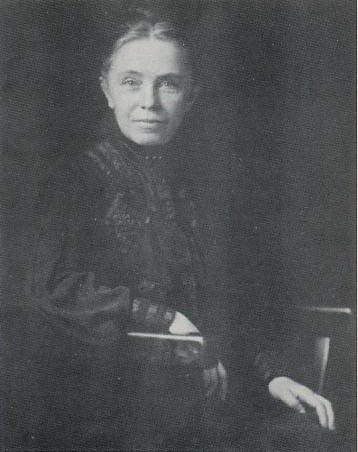
Sermon: Julia Chester Emery / United Thank Offering

In 1517, Martin Luther nailed his ninety-five theses to the church door in Wittenburg, Germany. In 1521, he was excommunicated from the church. What followed was a war between the protestants and the Roman Emperor who was in support of the Roman Catholic church. These wars claimed many lives, but peace was somewhat established in 1555 with the settlement known as the Peace of Augsburg, a part of which stated that the local German princes would have say over the religious preference of their individual realms, of which there were 224. This relative peace lasted for about 65 years until Ferdinand II was elected Holy Roman Emperor. Once elected, he tried to impose his Roman Catholic beliefs on everyone, which caused revolts in the German protestant north and was the spark that in 1618 ignited the 30 Years War in Europe. By the end, in 1648, the war had claimed some 8 million victims. Continue reading “Sermon: Julia Chester Emery / United Thank Offering”

Sermon: Christmas Feria – “Whatever is…”

Dr. Edward Miller was the Dean of the Medical Faculty at the medical school and CEO of the hospital of Johns Hopkins University, and he conducted a study on those who have had heart surgery in order to eliminate various heart conditions related to poor lifestyle choices.

His study stated that there are approximately 2,000,000 bypass and angioplasty surgeries per year in the United States at an approximate cost $120,000 each. Of those, only half of the patients will remain healthy for more than a year. Why? Because 8 out of 9 of them will not change their diet, exercise, etc. that got them into that condition in the first place. What is Albert Einstein’s definition of insanity: “doing the same thing over and over again and expecting different results.” Continue reading “Sermon: Christmas Feria – “Whatever is…””