
Sermon: Pentecost 17 / Proper 22 RCL A – “Listen”

listentogodBack when the telegraph was the fastest method of long-distance communication, a young man applied for a job as a Morse Code operator. Answering an ad in the newspaper, he went to the office address that was listed. When he arrived, he entered a large, busy office filled with noise and clatter, including the sound of the telegraph in the background. A sign on the receptionist’s counter instructed job applicants to fill out a form and wait until they were summoned to enter the inner office.

The young man filled out his form and sat down with the seven other applicants in the waiting area. After a few minutes, the young man stood up, crossed the room to the door of the inner office, and walked right in. Naturally the other applicants perked up, wondering what was going on. They muttered among themselves that they hadn’t heard any summons yet. They assumed that the young man who went into the office made a mistake and would be disqualified.

Within a few minutes, however, the employer escorted the young man out of the office and said to the other applicants, “Gentlemen, thank you very much for coming, but the job has just been filled.”

The other applicants began grumbling to each other, and one spoke up saying, “Wait a minute, I don’t understand. He was the last to come in, and we never even got a chance to be interviewed. Yet he got the job. That’s not fair!”

The employer said, “I’m sorry, but all the time you’ve been sitting here, the telegraph has been ticking out the following message in Morse Code: ‘If you understand this message, then come right in. The job is yours.’ None of you heard it or understood it. This young man did. The job is his.” They weren’t listening. They weren’t listening to the message that was right in front of them the entire time.

Our parable today could be summed up in one simple phrase, “How many times do I have to tell you ____?” Little Johnny got in trouble once by answering that question. His response, “Once more might do the trick.”  We’ve all heard it or said it, “How many times do I have to tell you to turn off the lights?” “How many times do I have to tell you to clean your room?” “How many times do I have to tell you that chocolate and peppermint don’t go together?” Maybe that one is just me.

In the parable, Jesus is talking to the Pharisee, the religious leaders. We have the owner of the vineyard who is God the Father, the vineyard that represents the people, and the caretakers of the vineyards who are the religious leaders.  The parable tells us that God gave the care of the vineyard – his children – into the hands of the caregivers – the religious leaders.  He gave them freedom. He entrusted the people’s spiritual well being to them, but over time, the religious leaders got it wrong, so God sent His prophets to bring correction. Yet, like the applicants for the telegraph job, the religious leaders weren’t listening to the message that was right in front of them the entire time. So time and time again they didn’t properly respond to that message.  God says, “How many times do I have to tell you?”  When they failed to listen to the prophets, God sent His one and only Son to say it again.  But as we know, the religious leaders will end up killing Him.  So what was this message that God kept trying to get across to His children?  We heard it this morning in our Old Testament lesson: The Law. The Law given to Moses and written on the tablets of stone by the very finger of God was the message, but they did not hear it as it was intended.

Instead, the religious leaders took the Law of God and interpreted it. For example, we have the US Constitution. Even with the amendments its not that long of a document, but all the various laws that come from the interpretation of the Constitution go on for volumes and volumes. The religious leaders of Jesus’ time and before did the same thing with the Law of Moses. Instead of teaching it as God intended, they interpreted it and used it to enslave the people and get around the true intent of the Law. Today, Jesus spoke to the religious leaders using a parable to condemn them for their actions. In two more chapters, He is crystal clear, “Woe to you teachers of the law and Pharisees, you hypocrites!… Woe to you blind guides!… You snakes!  You brood of vipers!  How will you escape being condemned to hell?”

I can’t imagine the religious leaders intentionally unleashing this kind of wrath upon themselves, but it happened just the same.  Why?  Because they weren’t listening.  Jesus said to them, “Isaiah was right when he prophesied about you hypocrites; as it is written, ‘The people honor me with their lips, but their hearts are far from me.  They worship me in vain; their teachings are but rules taught by men.’  You have let go of the commands of God and are holding on to the traditions of men.” “Woe to you, teachers of the law and Pharisees, you hypocrites! You give a tenth of your spices—mint, dill and cumin. But you have neglected the more important matters of the law—justice, mercy and faithfulness. You should have practiced the latter, without neglecting the former.  You blind guides! You strain out a gnat but swallow a camel.”  God asks, “How many times do I have to tell you?” The Law is not about rules and regulations that can be numbered and written down in books. The Law is about justice, mercy, faithfulness. The Law is  about the heart and that is what the religious leaders were not hearing.

Now you may be thinking to yourself, “This is the religious leaders problem. This here is Fr. John’s issue – not mine.  God will smite him if he goofs, but I’m off the hook on this on.” Please allow me to retort: 1 Peter chapter 2, “As you come to him, the living Stone—rejected by humans but chosen by God and precious to him— you also, like living stones, are being built into a spiritual house to be a holy priesthood, offering spiritual sacrifices acceptable to God through Jesus Christ.” Peter goes on, “You are a chosen people, a royal priesthood, a holy nation, God’s special possession, that you may declare the praises of him who called you out of darkness into his wonderful light.”

The things of God are not secret knowledge locked up in the heads of the ordained. As Luke says, “The kingdom of God is within you.”   This is not just an issue for religious leaders. It is for God’s chosen people, His royal priesthood, His Holy Nation, and His special possession. It is for you and it is within you. The Gospel of Thomas has been classified as heretical by the church and perhaps by quoting from it I make myself a heretic, but it would seem to contain some truth.  In it, Jesus says, “The Kingdom of God is within you, not in buildings and mansions of stone.  When I am gone, split a piece of wood and I am there, lift a stone and you will find me.” Understanding the things of God is not some secret knowledge. The knowledge of God is within the heart of every believer – you need only to listen.

The words of Jesus teach us that the Law of God was not originally intended for scholars and theologians, for books, and ivory towers. The Law was for the heart.  It was not about whether you could recite it verbatim, but can you live it. Paul said in the letter to the Philippians, “I want to know Christ and the power of his resurrection.” He wants to know Christ by listening to the things of God, not up here – in his head – but here – in his heart. The boxing great Rocky Marciano reportedly once said, “Hit the heart and the head will follow.” He also said, “Why waltz with a guy for 10 rounds if you can knock him out in one?” We can try all sorts of ways to know God, but the quickest way to this knowledge is to listen with our hearts.

Thomas a Kempis wrote, “O God, You Who are the truth, make me one with You in love everlasting. I am often wearied by the many things I hear and read, but in You is all that I long for. Let the learned be still, let all creatures be silent before You; You alone speak to me.”

Say to God, “You alone speak to me.” Then listen.
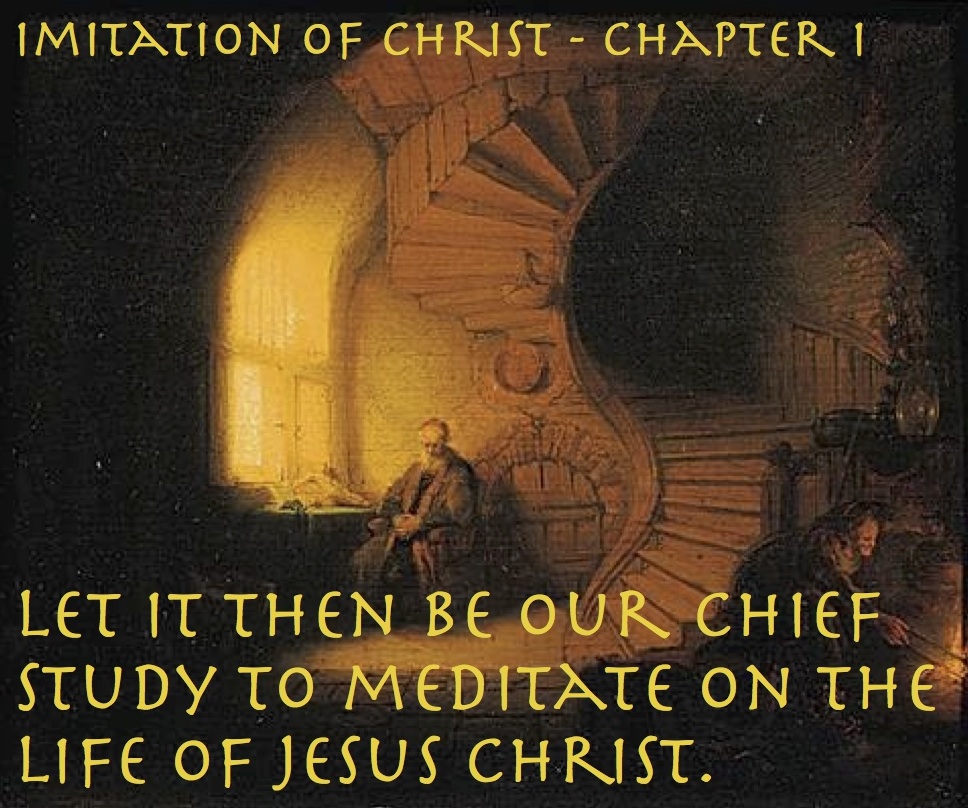
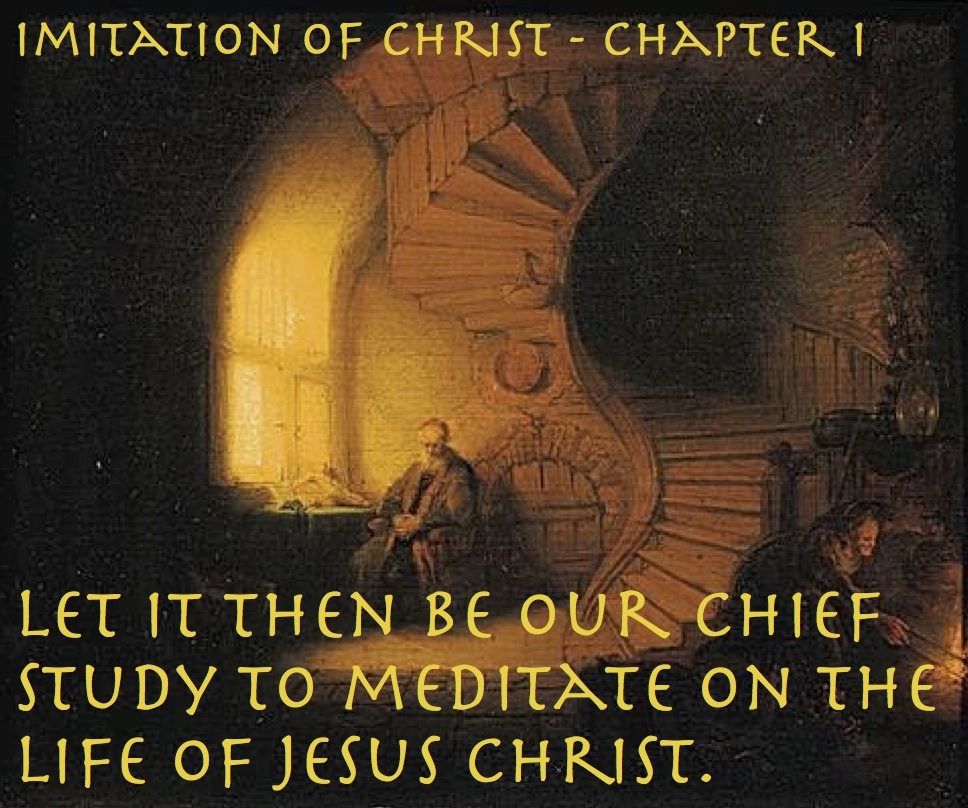
Imitation of Christ Project – Bk. 1, Ch. 1

IOC Ch1
“The Philosopher in Meditation” by Rembrandt Harmenszoon van Rijn

IMITATING CHRIST AND DESPISING ALL VANITIES ON EARTH

“He who follows Me, walks not in darkness,” says the Lord. By these words of Christ we are advised to imitate His life and habits, if we wish to be truly enlightened and free from all blindness of heart. Let our chief effort, therefore, be to study the life of Jesus Christ.

The teaching of Christ is more excellent than all the advice of the saints, and he who has His spirit will find in it a hidden manna. Now, there are many who hear the Gospel often but care little for it because they have not the spirit of Christ. Yet whoever wishes to understand fully the words of Christ must try to pattern his whole life on that of Christ.

What good does it do to speak learnedly about the Trinity if, lacking humility, you displease the Trinity? Indeed it is not learning that makes a man holy and just, but a virtuous life makes him pleasing to God. I would rather feel contrition than know how to define it. For what would it profit us to know the whole Bible by heart and the principles of all the philosophers if we live without grace and the love of God? Vanity of vanities and all is vanity, except to love God and serve Him alone.

This is the greatest wisdom — to seek the kingdom of heaven through contempt of the world. It is vanity, therefore, to seek and trust in riches that perish. It is vanity also to court honor and to be puffed up with pride. It is vanity to follow the lusts of the body and to desire things for which severe punishment later must come. It is vanity to wish for long life and to care little about a well-spent life. It is vanity to be concerned with the present only and not to make provision for things to come. It is vanity to love what passes quickly and not to look ahead where eternal joy abides.

Often recall the proverb: “The eye is not satisfied with seeing nor the ear filled with hearing.” Try, moreover, to turn your heart from the love of things visible and bring yourself to things invisible. For they who follow their own evil passions stain their consciences and lose the grace of God.

Sermon: “God’s Desire”

denariusDesmond Tutu was once asked why he became an Anglican rather than joining some other denomination. He replied that in the days of apartheid, when a black person and a white person met while walking on a footpath, the black person was expected to step into the gutter to allow the white person to pass and nod their head as a gesture of respect. “One day” Tutu says, “when I was just a little boy, my mother and I were walking down the street when a tall white man, dressed in a black suit, came toward us. Before my mother and I could step off the sidewalk, as was expected of us, this man stepped off the sidewalk and, as my mother and I passed, tipped his hat in a gesture of respect to her! I was more than surprised at what had happened and I asked my mother, ‘Why did that white man do that?’ My mother explained, ‘He’s an Anglican priest. He’s a man of God, that’s why he did it.’ When she told me that he was an Anglican priest I decided there and then that I wanted to be an Anglican priest too. And what is more, I wanted to be a man of God.”

It is quite easy today for us to determine a person’s worth based on color of skin, the clothes they wear, level of education, size of house, income, and so on. Like the whites in South Africa during apartheid, they looked at the color of the skin and declared in their hearts, “I am worth more than you.” What struck Desmond Tutu so about the priest was the fact that the priest, by his actions said, “No. This is not true. We are equal.”

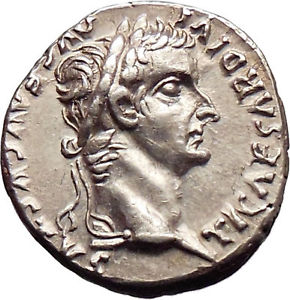
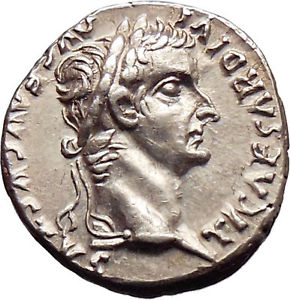
The parable of the generous landowner is curious in how it ends – a standoff. You can see the steward standing with hand extended offering the upset worker his denarii and the worker glaring back in his anger. Jesus does not tell us what happens next because he wants us to figure it out on our own. What we must figure out is that the parable is not about the amount of work an individual worker has done. Instead, the parable is about what the landowner and the steward are doing. The parable is about God the Father, God the Son, and the work they are accomplishing.

The landowner kept going to town looking for more workers, just as God the Father keeps coming to us, pursuing us – pursuing his children that we might return to him. The steward, Jesus, pays for each of us. He places that denarii, that coin in our hands and that coin is our salvation. Whether you come early in life or late, the same reward is made available to you. Why is God doing this? Because it is God’s desire that all return to Him.

As Paul states in his first letter to Timothy, “This is right and is acceptable in the sight of God our Savior, who desires everyone to be saved and to come to the knowledge of the truth.” Or as Peter says in his second epistle, the Lord “is patient with you, not wanting any to perish, but all to come to repentance.” We have this tendency to judge others by how we perceive their worth. God, on the other hand, sees all as his beloved children and he desires that all should be saved. To what extent will God go to save His children? You need only to look to the cross to know the answer.

Sermon: Pentecost 14 / Proper 19 RCL A – “Standing before God”

soul viewIn the Far East the emperor was growing old and knew it was time to choose his successor. Instead of choosing one of his assistants or his children, he decided to do something different. He called young people in the kingdom together one day. He said, “It is time for me to step down and choose the next emperor. I have decided to choose one of you.” The children were shocked, but the emperor continued. “I am going to give each one of you a seed today–one very special seed. I want you to plant the seed, water it, and come back here one year from today with what you have grown from this one seed. I will then judge the plants that you bring, and the one I choose will be the next emperor.”

One boy, named Ling, was there that day and he, like the others, received a seed. He went home and excitedly, told his mother the story. She helped him get a pot and planting soil, and he planted the seed and watered it, carefully. Everyday, he would water it and watch to see if it had grown. After about three weeks, some of the other youths began to talk about their seeds and the plants that were beginning to grow. Ling kept checking his seed, but nothing ever grew. Three weeks, four weeks, five weeks went by, still nothing. By now, others were talking about their plants, but Ling didn’t have a plant and he felt like a failure. Six months went by–still nothing in Ling’s pot.

He just knew he had killed his seed. Everyone else had trees and tall plants, but he had nothing. Ling didn’t say anything to his friends, however. He just kept waiting for his seed to grow. A year finally went by and all the youths of the kingdom brought their plants to the emperor for inspection. Ling told his mother that he wasn’t going to take an empty pot. But his mother asked him to be honest about what happened.

Ling felt sick at his stomach, but he knew his mother was right. He took his empty pot to the palace. When Ling arrived, he was amazed at the variety of plants grown by the other youths. They were beautiful–in all shapes and sizes. Ling put his empty pot on the floor and many of the other children laughed at him. A few felt sorry for him and just said, “Hey, nice try.”

When the emperor arrived, he surveyed the room and greeted the young people. Ling just tried to hide in the back. “My, what great plants, trees, and flowers you have grown,” said the emperor. “Today one of you will be appointed the next emperor!”

All of a sudden, the emperor spotted Ling at the back of the room with his empty pot. He ordered his guards to bring him to the front. Ling was terrified. He thought, “The emperor knows I’m a failure! Maybe he will have me killed!”

When Ling got to the front, the Emperor asked his name. “My name is Ling,” he replied. All the kids were laughing and making fun of him. The emperor asked everyone to quiet down. He looked at Ling, and then announced to the crowd, “Behold your new emperor! His name is Ling!”

Ling couldn’t believe it. Ling couldn’t even grow his seed. How could he be the new emperor?

Then the emperor said, “One year ago today, I gave everyone here a seed. I told you to take the seed, plant it, water it, and bring it back to me today. But I gave you all boiled seeds that would not grow. All of you, except Ling, have brought me trees and plants and flowers. When you found that the seed would not grow, you substituted another seed for the one I gave you. Ling was the only one with the courage and honesty to bring me a pot with my seed in it. Therefore, he is the one who will be the new emperor!”

“Then I saw a great white throne and him who was seated on it. The earth and the heavens fled from his presence, and there was no place for them.  And I saw the dead, great and small, standing before the throne, and books were opened. Another book was opened, which is the book of life. The dead were judged according to what they had done as recorded in the books.  The sea gave up the dead that were in it, and death and Hades gave up the dead that were in them, and each person was judged according to what they had done.  Then death and Hades were thrown into the lake of fire. The lake of fire is the second death.  Anyone whose name was not found written in the book of life was thrown into the lake of fire.”

Many read the Book of Revelation and are frightened by things like the dragon, the woman in the desert, the crashing star, Wormwood, not to mention the Four Horsemen, but this little section toward the end should really grab our attention. Everything that takes place before is leading up to this event. It is the time of God’s final decision with regards to our soul’s eternal destination.

Now, you’ve probably picked up on the fact by now that I’m not a “Hellfire and Brimstone” kind of preacher, and I’m not going to start today, but it was the passage from Paul’s letter to the Romans that we read today that made me consider this. Paul writes:

“We will all stand before the judgment seat of God. For it is written,
‘As I live, says the Lord, every knee shall bow to me,
and every tongue shall give praise to God.’
So then, each of us will be accountable to God.”

During your lifetime, whether you confess Jesus as Lord or not, on this day of judgment, you will, for Paul and John both state that we will all come before the throne of God. Therefore, the question for us is: what will we present?

In the story of the Emperor, all the children had been given the same opportunity and the same place to begin. Each had the command to take what they had been given and care for it. Each experienced the same frustration when their seed did not grow. Each had the choice to persevere, even though they believed they had failed, but only one chose to be true and faithful to the Emperor.

Jesus says, “many are invited, but few are chosen.” Why is that? The Book of Genesis states, “The Lord God formed the man from the dust of the ground and breathed into his nostril the breath of life, and the man became a living being.” God has placed within each of us the gift of his breath, of life, of spirit – a soul. Although our external circumstances may be different – some are rich others poor, slave or free, male or female, American or Zambian – we all have different external circumstances, but internally regarding the matters of the soul, we all have the same opportunity when presented with the knowledge of God. Our soul is ours to care for and to nurture. It is also ours to corrupt and neglect. In light of our failures, we all have the choice to persevere and remain faithful, or abandon what God has place within us for something that is unfit for the Kingdom of Heaven. So, coming back to the question: what will you present?

Paul wrote in his letter to the Romans, “I appeal to you therefore, brothers and sisters, by the mercies of God, to present your bodies as a living sacrifice, holy and acceptable to God, which is your spiritual worship. Do not be conformed to this world, but be transformed by the renewing of your minds, so that you may discern what is the will of God—what is good and acceptable and perfect.”

What will you present? “Present your bodies as a living sacrifice, holy and acceptable to God.” By doing so, on the day of God’s final decision, He will say to you, “Come, you that are blessed by my Father, inherit the kingdom prepared for you from the foundation of the world.”

Sermon: Decisions

DecisionsDo you ever wonder if you are making the right decision? Have you ever wondered if the decisions you make are according to the will of God? When it comes to what color socks I’m going to wear, I don’t usually fret over that too much, but when it comes to decisions regarding the church, career, family I want to feel confident that God is with me. The trouble is that there are many factors that play into any of the decisions we make. For example, if someone comes to you and ask your opinion or ask you to help them with a project, what factors enter in? Who they are? What is your relationship to them? Do you even like them? How long will the project take? What might you have to sacrifice in order to help them? On the smaller and more personal issues we will often be on our own, but on the larger ones Jesus gives us some pretty good advice.


Jesus said, “Again, truly I tell you, if two of you agree on earth about anything you ask, it will be done for you by my Father in heaven. For where two or three are gathered in my name, I am there among them.” So with larger issues we can come together and if we seek the mind of Christ, then He will be with us. However, when two or three Christians get together, do they always come up with the right answer?

Let’s see: Westboro Baptist Church? No. David Koresch and Jim Jones? No and No. Those are obvious though. What about someone that we might think is really spot on, for example, Martin Luther. Was he always right? During his time, he backed the ruling class which led to the death of 100,000 peasants and he also wrote concerning the Jews and referred to them as a “miserable, blind, and senseless people” who, if necessary, must be driven “out like mad dogs.” Many agreed with him at the time, but do you think he was right? Perhaps this is heresy, but given our track record, I’m not at all convinced that we can know the will of God with 100% accuracy; however, I do believe that we can move in the right direction.

It begins with humility, but from there we must learn to discern what is motivating us and what our true intentions are. When it comes to knowing the mind and will of Christ, it is not about assessing the end result, it is about determining the “Why?” behind it.

You decide you want to build a grand cathedral filled with the finest accoutrements. The floors are rose marble. The walls of Granite. The chalice on the altar is pure gold. In and of itself it is a testament to the glory of God and the love of his people, but why did you build it? Was it truly for the glory of God or did you want God and everyone else to see how special you are? How wealthy you are? What a great magnanimous soul you have?

Gandhi wrote, “Before the throne of the Almighty, man will be judged not by his acts but by his intentions. For God alone reads our hearts.”

When two or three of us come together with our hopes and prayers that Christ will truly be with us, we must ask ourselves a few very important questions: is our motivation pure and will it bring glory to God? If we can answer “Yes” to these questions, then we can humbly move forward, all the while continuously assessing our hearts.

Sermon: Pentecost 13 / Proper 18 – “Reconciliation”

agreement-survey-scale-3-1395769-mA kid goat was perched up on the top of a house, and looking down saw a Wolf passing under him. Immediately he began to revile and attack his enemy. “Murderer and thief,” he cried, “what do you want here near honest folks’ houses? How dare you make an appearance where your vile deeds are known?” “Curse away, my young friend,” said the Wolf. “It is easy to be brave from a safe distance.”

We all have our little spats and differences. Sometimes they are with family members – spouses, siblings, children – and other times with friends or neighbors. Most of the time these are easily worked out and everyone apologizes, unfortunately, many other times these disagreements and arguments sit and fester and can last for weeks, months, and years. And I’ve seen more than a few cases that were carried to the grave, where reconciliation is not possible.

Why we do this can be answered by any number of reasons: sometimes it is stubbornness or arrogance and for others it is a lack of compassion. There are some folks who live with these types of twisted relationships because they just like the drama of it all, but for the most part I think the biggest reason for not reconciling is fear. Fear of confrontation. Fear of being wrong. Fear of losing face (a.k.a. pride). Fear of any number of things.

When we are afraid the most common way to overcome that fear is to gather folks around us and so the usual tactic in unresolved disagreements is to build up a significant base of supporters on “your side.” You can go and talk to them about the person your arguing with – your enemy – and they will agree with you and back you up in the dispute. “That’s right man, he’s such a loser.” “She’s got no class.” And so on.” From there it falls into more personal attacks, “She’s got no class and don’t you think she’s getting fat?” To one degree or another, we are all guilty of such actions, because just like the goat and the wolf, it is very easy to be brave from a distance, but it takes true courage to meet face-to-face.

Hussein bin Talal was the King of Jordan, a very respected man and the King who first made peace with Israel in 1994. In the early 1980’s an officer in the army became discontent with the King and one night the king was informed by his security police that a group of seventy-five of his Jordanian officers, including the discontented one, were at that very moment meeting in a nearby barracks plotting a military overthrow of the kingdom. The security officers requested permission to surround the barracks and arrest the plotters. After a somber pause the king refused and said, “Bring me a small helicopter.” The helicopter was brought. The king climbed in with the pilot and himself flew to the barracks and landed on its flat roof. The king told the pilot, “If you hear gun shots, fly away at once without me.”

Unarmed, the king walked down two flights of stairs and suddenly appeared in the room where the plotters were meeting and quietly said to them, “Gentlemen, it has come to my attention that you are meeting here tonight to finalize your plans to overthrow the government, take over the country, and install a military dictator. If you do this, the army will break apart and the country will be plunged into civil war. Tens of thousand of innocent people will die. There is no need for this. Here I am! Kill me and proceed, that way only one man will die tonight.”

After a moment of stunned silence, it is reported, the rebels as one rushed forward to kiss the king’s hands and feet and pledged their loyalty to him for life.

Yes, it takes a great deal of courage to meet face-to-face with those we are in disagreement with, but in most cases the nervousness and fear over that encounter are far outweighed by the results of the meeting. In today’s Gospel reading, Jesus provides us with some very practical steps to take in the event of a disagreement. He begins, “If another member of the church sins against you, go and point out the fault when the two of you are alone. If the member listens to you, you have regained that one.”

In other words, don’t sit and stew over it. Don’t let it fester. As St. Paul writes to the Ephesians, “In your anger do not sin: Do not let the sun go down while you are still angry, and do not give the devil a foothold.” Don’t go out and gather up your supporters, instead, go to the person and in a manner becoming of a Christian man or woman, speak to them. This may not always work in your dealings with world, because note that Jesus is being very specific with who he is speaking to, “If another member of the church sins against you,” respond in this way. If you speak to them as one member of the church should speak to another member of the church, then it is expected that they would respond to you in a similar manner, which means that if you are the one who has done the offending, you must have the courage to admit you have done wrong.

Jesus goes on to provide other options if the disagreement cannot be overcome. He says, “If you are not listened to, take one or two others along with you, so that every word may be confirmed by the evidence of two or three witnesses. If the member refuses to listen to them, tell it to the church; and if the offender refuses to listen even to the church, let such a one be to you as a Gentile and a tax collector.” When we are angry, if we are being uncharitable, this may be our ultimate goal – “Tell everybody! See, I was right!” But when it gets to this point, there are no “winners.” Only broken relationships and a divided body. The whole point of the exercise is not to have winners and losers, but to have reconciliation. We seek to respond to each other as God in the person of Jesus responded to us.

A couple married for 15 years began having more than the usual disagreements. They wanted to make their marriage work and agreed on an idea the wife had. For one month they planned to drop a note into a “Fault” box. The notes would provide a place to let the other know about daily irritations. The wife was diligent in her efforts and approach: “leaving the jelly top off the jar,” “wet towels on the shower floor,” “dirty socks not in hamper,” on and on until the end of the month. After dinner, at the end of the month, they exchanged boxes. The husband reflected on what he had done wrong. Then the wife opened her box and began reading. They were all the same, the message on each slip was, “I love you!”

The book of Revelation tells us that, day and night, Satan stands before the throne of God accusing us of all our faults, but Jesus’ actions upon the cross counters each one of those accusations with the ultimate, “I love you.”

Instead of getting all twisted up and angry with someone, what would it take for you to respond to them with that same, “I love you.” I am not so naive as to think it will resolve all the problems we encounter, but it is a place to begin.

Sermon: “I’m just a ____.”

belThe play, Man of La Mancha, is based on the story of Don Quixote. Don Quixote falls for Aldonsa even though she is a prostitute. He begins to woo her with words in an attempt to win her over and refers to her as Dulcinea, “my sweet little one” and My Lady. However, given her hard life, she cannot take such sweet words and eventually becomes angry with him. I was born in a ditch. I have no idea who my father is. I’ve spent most of my life working on my back. She concludes by saying to him, “Blows and abuse I can take and give back again, but tenderness I cannot bear. I’m just a whore.” In God’s eyes, her own eyes, and the eyes of the world around her she thought she knew exactly who she was, a whore.

In our Gospel reading today, Jesus takes the twelve off by themselves to Caesarea Philippi. There he asks them a few questions. First, “Who do the people say that I am?” The apostles give him a few answers: John the Baptist, Elijah, or a prophet like Jeremiah. But then Jesus makes the question a bit more personal, “But who do you say that I am?” Simon Peter answered, “You are the Messiah, the Son of the living God.” Simon Peter got the gold star that day. He answered the question perfectly and the answer was not one that he could have known himself, but one that was revealed to him by God; however, Peter also could not have known that answer unless he first knew himself. Why? Because you can’t know Jesus as the Messiah, the Savior, unless you know yourself as a sinner – one in need of saving.

Peter, he knew the history of his people as well as his own. Like all those that had gone before him, he was unable to remain holy in the eyes of God. He may not have said, “I am just a whore,” but I suspect that he might have said something close to it and it was only in knowing himself that he knew he needed a savior, and was able to recognize that Savior in Jesus Christ.

When Aldonsa declared to Don Quixote, “I am just a whore,” he responded to her, “The past is over and done. We all stumble on the way to maturity. We all look for love in the wrong arms, happiness in the wrong places. But out of it, you’ve become real. You’ve got a heart of immense compassion for the brokenness of others. You are utterly incapable of hypocrisy and I am deeply in love with you.” Silence follows and finally Aldonsa answers, “From this day forward my name is no longer Aldonsa. I am Dulcinea,” My Lady.

We come before God and say to him, “I am a sinner.. a tax collector.. a whore.. a ___.” We know what we are, and in our confession, Jesus responds to us, “The past is over and done. We all stumble on the way. You are My Father’s child and I am deeply in love with you.” It is in recognizing who we are that, from that day forward, we can say to him, “You are the Messiah, the Son of the living God” and know in our hearts that we are free. Free to love and be loved by God.

Jesus asks, “Who do you say that I am?” With all faith we can answer, “You are the Messiah, the Son of the living God. You are my Savior.” Jesus responds, “My child. My beloved.”

Sermon: Pentecost 11 / Proper 16 – “It’s Not Over”

EverestA true story: A man goes to a party and has too much to drink. His friends plead with him to let them take him home. He says no — he only lives a mile away. About five blocks from the party, the police pull him over for weaving and ask him to get out of the car and walk the line. Just as he starts, the police radio blares out a notice of a robbery taking place in a house just a block away. The police tell the party animal to stay put, they will be right back and they hop a fence and run down the street to the robbery.

The guy waits and waits and finally decides to drive home. When he gets there, he tells his wife he is going to bed, and to tell anyone who might come looking for him that he has the flu and has been in bed all day. A few hours later the police knock on the door. They ask if Mr. Joe is there and his wife says yes. They ask to see him and she replies that he is in bed with the flu and has been so all day. The police have his driver’s license. They ask to see his car and she asks why. They insist on seeing his car, so she takes them to the garage. She opens the door. There sitting in the garage is the police car, with all its lights still flashing.

Perhaps we have never been so stupid, but we’ve all had somewhat similar experiences – just when we think we’ve gotten away with something, just when we think we’ve made it, the world crashes in around our ears.

For the last several weeks our Old Testament reading has been the story of Joseph, the favorite son of Jacob. Jacob loved Joseph, because as the scripture says, “He was the son of his old age.” Joseph would later have a dream and the dream was interpreted to mean that all the sons of Jacob and that even Jacob himself would one day bow down to Joseph. Needless to say, no one liked the story, especially his brothers who were so put out that they eventually contrived a plan and sold Joseph into slavery. As we read in our lessons, Joseph rises to power in the land of Egypt and becomes second only to Pharaoh. Time passes and there is a famine in the land and the other sons of Jacob come to Egypt to find food, having no idea that they would be encountering their brother. When they arrive, Joseph’s dream comes true, and the brothers fall down before him and beg for food. Later, Joseph is reconciled to his brothers and says to them, “Do not be grieved or angry with yourselves because you sold me here, for God sent me before you to save you.” Through these events, Joseph became the savior of the nation of Israel. They were given lands and animals. They thrived and grew in numbers and became a great nation, but just when they thought they had made it, “A new king arose over Egypt, who did not know Joseph. He said to his people, ‘Look, the Israelite people are more numerous and more powerful than we. Come, let us deal shrewdly with them, or they will increase and, in the event of war, join our enemies and fight against us and escape from the land.’ Therefore they set taskmasters over them to oppress them with forced labor.”

For 400 years the Israelites were the slaves of the Egyptians. Beaten and bruised, they built the great cities of Egypt and all along wondered what had happened to their salvation. When all seems lost, the Lord sends them another savior, Moses. For several Sundays we are going to be reading about Moses and his fight with Pharaoh. “Let my people go,” Moses will declare. We will hear of the ten plagues that the Lord visited upon the land of Egypt, eventually leading to Pharaoh releasing the Israelites. They will cross the Red Sea, wander in the desert for 40 years, and eventually come to the Jordan river. From there they will cross into the land of milk and honey.

Joseph was Israel’s savior. So was Moses and later it will be King David. Through these saviors Israel succeeded, but just when they think they have finally made it, there is failure, and they are eventually sent once again into captivity due to their sins against God.

It is a pattern that repeats itself: they are in misery, they have their salvation, but it slips through their fingers and they find themselves once again in misery.

George Mallory was the famed mountain climber who may have been the first person ever to reach the top of Mount Everest. In the early 1920’s he led a number of attempts to scale the mountain, eventually being killed in the third attempt in 1924. Before that last and fatal attempt he had said, “I can’t see myself coming down defeated.”

Mallory was an extraordinary climber, and nothing would force him to give up. His body was found in 1999, well preserved by the snow and ice, 27,000 feet up the mountain, just 2000 feet from the peak. Give up he did not. His body was found face down on a rocky slope, head toward the summit. His arms were extended high over his head. His toes were pointed into the mountain; his fingers dug into the loose rock, refusing to let go even as he drew his last breath.

When those who had set up camp for Mallory further down the mountain returned to England a banquet was held for them. A huge picture of Mount Everest stood behind the banquet table. It is said that the leader of the group stood to be applauded, and with tears streaming down his face, turned and looked at the picture. “I speak to you, Mount Everest, in the name of all brave men living and those yet unborn. Mount Everest, you defeated us once; you defeated us twice; you defeated us three times. But Mount Everest, we shall someday defeat you, because you can’t get any bigger but we can.”

Can you almost hear the Israelites declaring the same thing to the world? “You’ve defeated us once. Twice. Three times. But one day we shall defeat you!”

Now, shall I tell you the entire story of Jesus or do you know it? How he came to the people of God and gave them everything they desired, including miracles and teachings. Things were going to be made new. Oh, yes! The crowds gather around him and cheer him on. He asked the disciples, “Who do you say that I am.” Peter responds for them all, “You are the Messiah, the Son of the Living God” You are our savior. Our salvation. The people cry out, “Blessed is he who comes in the name of the Lord.” Yes, He is the savior, he is bringing the long awaited salvation. Yet, just when they thought they had finally made it, everything slips through their fingers as the blood of Christ trickles down that nail pierced cross.

I’ll ask you again, how many of you, just when you think you’ve made it, have had the world come crashing down around your ears? See everything just slip through your fingers like sand on a beach?

Following such events, it is very easy to look at the carnage in our wakes and say, “It’s just not possible.” “It can’t be done.” “All is lost.” We do it when someone is very sick – There is no cure. We do it with society – It’s just the way things are. We, good Christian people, even do it with our faith – God can’t help me. He has forgotten me. We can become like the Israelites in captivity or the disciples who sat at the foot of the cross and watched the life of Jesus slowly slip away. “Has God rejected his people? By no means!” But “Who will rescue” us? “Who then can be saved?” Jesus’ answer, “With man this is impossible, but with God all things are possible.” Three days after his crucifixion Jesus rose from the grave. “Thanks be to God, who gives us the victory through our Lord Jesus Christ.”

Like the Israelites, you may be experiencing one of those times of exile or, like the disciples, you may be in one of those three day periods where all seems lost, but remember, it’s not over. It’s far from it.

Consider the words of our Psalm for today:

Blessed be the LORD!
he has not given us over to be a prey for [the teeth of our enemies.]
We have escaped like a bird from the snare of the fowler;
the snare is broken, and we have escaped.
Our help is in the Name of the LORD,
the maker of heaven and earth.

Perhaps it is oversimplified, but there are days when my soul needs oversimplified, so I’ll put it in the words of the Brazilian writer, Fernando Sabino, perhaps some of you will remember the line from the movie, The Best Exotic Marigold Hotel, “Everything will be okay in the end. If it’s not okay then it’s not the end.”

There will always be those bad days when all seems lost, but to God’s people, not even death itself has the final say. Jesus said, “In this world you will have trouble. But take heart! I have overcome the world.” Jesus has overcome the world and although it may not always seem like it, you are already victorious.

Sermon: Power of the Mustard Seed

mustard-seedI saw an interesting movie this past week: Lucy. The story is based on the scientific premise that we as human beings only use 10% of our brain. It then goes on to hypothesize on what we would become if we began to use 20%. 30%. 50%. 100% of our brain. In movie world, this is all played out by a woman – I won’t spoil it for you – a woman who begins to use more and more of her brain’s power. The things she is eventually able to do are astounding, not to mention a lot of shoot ‘em ups. It’s over simplified and does the movie no justice, but summed up the movie asked the questions, “What is our potential? What can we become?”

The first of the five parables Jesus tells us in our Gospel reading is making a statement, but it is also asking those same questions: “The Kingdom of Heaven is like a mustard seed… the smallest of seeds, but when it has grown it is the greatest.” What is the potential of the Kingdom of Heaven? What can we as individuals, even though small and insignificant in the larger scheme of things, become as children of God?

I could give you the example of a child born in a manger in Bethlehem 2,000 years ago, but some might argue that this is a poor example, given that He was the Son of God. But what about those twelve fellas that followed him around for three years? They were fishermen and tax collectors, but were they able to affect much change in the world? What about a little nun in a blue and white habit walking the streets of Calcutta? Was she able to bring about a portion of the Kingdom of Heaven? Yes, those are a few of the superstars of the faith, but let me ask you this: does a person who feeds one hungry child do any less for the Kingdom than they did?

We only expect to find the kingdom in cathedrals and mega-churches, in professional choirs and pipe organs, and those persons recognized worldwide for their contributions, but the parable of the mustard seed suggest that the real kingdom-power is to be found in the most humble of places and in the most humble of people.

Emil Bruner, a German theologian, writes, “the kingdom’s form is perpetually little, always seed-sized, divinely designed to be a treasure in earthen, not golden, vessels so that the exceeding greatness of the gospel’s power might always be God’s, not human beings.” The greatness of God is revealed in His ability to take the smallest of instruments and do the greatest of works. A still small voice. A little child. A few fish and a couple of loaves of bread. Three nails. That still small voice spoke all of creation into being. That little child was the savior of the world. A few fish and couple of loaves of bread fed thousands. Three nails held the sins of the world to the Cross.

So, what is your potential? What is it that God desires for you to become? What great things has the Lord prepared for you to do? Later in Matthew’s Gospel Jesus tells the disciples, “I tell you the truth, if you have faith as small as a mustard seed, you can say to this mountain, ‘Move from here to there’ and it will move. Nothing will be impossible for you.”

I don’t know what type of power we would have if, like Lucy, we were able to use 100% of our brains, but I do know this: you are a mustard seed and through the power of God, you are able to do great things.  What’s stopping you?