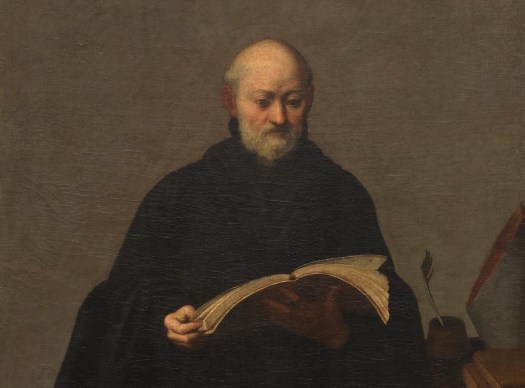
Sermon: Dame Julian of Norwich

The podcast can be found here.


Processed with VSCO with m3 preset


Today, I have several readings from the fifth chapter of Julian of Norwich’s showings/visions, in The Revelations of Divine Love, the chapter that writes of “something small, no bigger than a hazelnut.”  In this showing, the Lord gave her insight into his divine love. 

“And in this he showed me something small, no bigger than a hazelnut, lying in the palm of my hand, as it seemed to me, and it was as round as a ball. I looked at it with the eye of my understand­ing and thought: What can this be? I was amazed that it could last, for I thought that because of its littleness it would suddenly have fallen into nothing. And I was answered in my understand­ing: It lasts and always will, because God loves it; and thus everything has being through the love of God.

“In this little thing I saw three properties. The first is that God made it, the second is that God loves it, the third is that God preserves it. But what did I see in it? It is that God is the Creator and the protector and the lover.”

In the palm of her hand, she held something, no bigger than a hazelnut and she understood that this small thing represented all of creation: earth, moon, stars, galaxies, universe, and every living thing in it.  Everything.  And she understood that God created it, protected it, and loved it.  That is great comfort to us, to know that God loves it, but what Julian points out next is that our love and desire for part of this small thing, for parts of what have been created, is the source of our unease.  Our desire for something that is created leaves us wanting, always looking for more.  She says:

“This little thing which is created seemed to me as if it could have fallen into nothing because of its littleness. We need to have knowledge of this, so that we may delight in despising as nothing everything created, so as to love and have uncreated God. For this is the reason why our hearts and souls are not in perfect ease, because here we seek rest in this thing which is so little, in which there is no rest, and we do not know our God who is almighty, all wise and all good, for he is true rest… And this is the reason why no soul is at rest until it has despised as nothing all things which are created.”

We find no rest in this little thing, in the created.  Our only true rest comes from God, comes from turning away from the created to the One who created.

Five hundred years later, in Mere Christianity, C.S. Lewis said something quite similar: “If we find ourselves with a desire that nothing in this world can satisfy, the most probable explanation is that we were made for another world.”

Do you find yourself looking from one thing to the next, seeking happiness and peace?  Could the problem be that you are looking to the created instead of the Creator for that happiness and peace?  Are you happy and at peace, but still have this “itch” in your soul that things are a bit off?  Like a movie when a person’s lips are just slightly off timing from the sound.  Everything is right, but….?  Could it be that your soul is desiring something, that is not of this life?  It will not solve this dis-ease, but today, the Psalmist provided us with some advice on how to find a certain peace and easing of that longing: 

One thing have I asked of the Lord;

one thing I seek; *

that I may dwell in the house of the Lord all the days of my life;

To behold the fair beauty of the Lord *

and to seek him in his temple.

Do not seek after the created, but seek the Creator.  In Him you will find peace and the rest for your soul.

I’ll close with Julian’s prayer contained in this chapter—Let us pray: God, of your goodness give me yourself, for you are enough for me, and I can ask for nothing which is less which can pay you full worship. And if I ask anything which is less, always I am in want; but only in you do I have everything.  Amen.

Sermon: Easter 6 RCL B – “Friends”

The podcast can be found here.


pexels-photo


What is the friendliest animal in the world?  A wet dog.

There are plenty of touching quotes out there about friends.  “A friend is one who can see the truth and pain in you even if you’re fooling everyone else.” “A friend is someone who reaches for your hand, but touches your heart.”  “A friend is one that knows you as you are, understands where you have been, accepts what you have become, and still gently allows you to grow.”  Me?  I guess I’ve read too much Stephen King, because I like my friendship quotes to be a bit more edgy: “We are best friends.  Always remember that.  If you fall, I will pick you up… after I finish laughing.”  “A friend will calm you down when you are angry, but a best friend will skip beside you with a baseball bat singing, ‘Someone’s going to get it.’”  And my favorite: “Best friends are those who, when you show up at their door with a dead body, say nothing, grab a shovel, and follow you.”  Everyone needs at least one friend like that, even so, I’m guessing that’s not what Jesus had in mind when he called his disciples “friends.”

They have been with him all this time: following him, learning from him, trying to do what he asks of them.  Succeeding some of the time and failing at others.  Yet, in the end, when he knew he would be leaving them soon, he said, “I do not call you servants any longer, because the servant does not know what the master is doing; but I have called you friends.”

We often read the term “servant” or “slave” as being a negative; however, the word in Greek that Jesus uses is doulos and it was not a title of shame at the time Jesus spoke it.  In fact, from a Biblical perspective, it was a title of the highest honor.  Moses was the doulos of God (Deuteronomy 34: 5); so was Joshua (Joshua 24:29); as was David (Psalm 89:20).  Doulos was a title which Paul counted it an honor to use (Titus 1: 1); and so did James (James 1:1).  The greatest men and women of the past were proud to be called the douli, the slave of God. 

And yet Jesus says: “I have something greater for you than this, you are no longer to be called my slaves; rather I call you my friends,” but what does it mean to be called a “Friend of Jesus”?

In the times of the Caesars, certain individuals held the title “Friends of Caesar.” These were generally soldiers who had proven themselves undeniably loyal by remaining steadfast throughout assaults, hardship, suffering.  They hadn’t deserted or revolted or sought another leader or even complained when battle campaigns with Caesar had found them afflicted or in such pain that only the danger they were in could distract them.  The “friends” of Caesar counted it such an honor to soldier with Caesar that no campaign was too arduous and no adversity too wearing.

At the time of the Emperors, in the courts, there was a very select group called the friends of the king, or the friends of the Emperor.  At all times they had access to the king: they even had the right to come to his bed chamber at the beginning of the day.  He talked to them before he talked to his generals, his rulers, and his statesmen.  The friends of the king were those who had the closest and the most intimate connection with him. 

Jesus called his disciples “friend,” but the friendship he is offering far exceeds that of Caesar, the Emperors and the kings.  Jesus is offering an intimacy with God which not even the greatest and most worthy people knew before he came into the world. 

This idea of being the friend of God has a background.  Abraham was the friend of God and in The Book of Wisdom, Wisdom is said to make us the friends of God.  Moses was also called a Friend of God and Jesus, by calling us “friends” has listed our names with theirs.  He has chosen us for that role, that position, that intimacy.  Not with some earthly king or Emperor, but with God. 

That is a tremendous gift.  It means that we do not need to gaze longingly at God from a distance.  We are not like those outside of the king’s court who never have access to the one who rules over their lives and we are not like those in a crowd who only glimpse the king as he is passing by on some state occasion. 

Rather, as the friends of Jesus, we—like the disciples—are gifted the privilege to enter into the very bed chamber of our God and to speak with him on the most intimate level.  As St. Augustine writes, God becomes “more intimate with us than we are to ourselves.”

A writer tells the story of a slave woman living in the south prior to the civil rights: A lady in Charleston met this lady, who was a servant of a neighbour who had died.  “I”m sorry to hear of your Aunt Lucy’s death,” she said.  “you must miss her greatly.  You were such friends.” “Yes’m,” said the servant, “I is sorry she died.  But we wasn’t friends.” “Why,” said the lady, “I thought you were.  I’ve seen you laughing and talking together lots of times.” “Yes’m. That’s so,” came the reply. “We’ve laughed together, and we’ve talked together, but we is just “quaintances.  You see, Miss Ruth, we ain’t never shed no tears.  Folks got to cry together before dey is friends.” 

 Our Lord, our friend is with us in the most joyful of times, but he has also cried with us and for us, just as he wept over Jerusalem and those who would not come to him for his healing touch and forgiving word.  He cried at the tomb of Lazarus for Mary and for Martha and for all who were gathered there with him.   And He weeps most surely for us and with us today, when we are hurt, lost, or afraid.  He knows us so intimately and his every action and word speak of his love for us.

That is part of what makes the gospel such good news.  Jesus has walked our walk—and he did it as a friend does it—not simply to show us how things should be done, but to accompany us on our way.  To be our companion as well as our guide, our support as well as our teacher.

And he did all this without a word of judgment, except that judgment which a friend makes: the judgment of mercy, and of encouragement, and of gentle correction.  Aristotle was onto something when he said, “Friendship seems to lie in the loving rather than in the being loved,” and that is how Jesus expresses his friendship to us, by loving us.  As John writes and as we hear in the Eucharistic prayer, “Having loved His own who were in the world, He loved them to the end”… even after they denied him, betrayed him, left him alone to die.  He loved them to the end and his love for you is the same as it was for them.

And everyone says, “Yes, Fr. John.  We know.  God loves us.  If you’ve told us once, you’ve told us a hundred times.”  But hear what Brennan Manning says in The Furious Longing of God: “The wild, unrestricted love of God is not simply an inspiring idea. When it imposes itself on mind and heart with the stark reality of ontological truth [that is – truth that has the ability to change who we are], it determines why and at what time you get up in the morning, how you pass your evenings, how you spend your weekends, what you read, and who you hang with; it affects what breaks your heart, what amazes you, and what makes your heart happy.”

I say, “God loves you,” and some respond, “Yes. Yes.  I know.”  But when you experience God’s love, you are changed—body, soul, and spirit.  As St. Augustine said to God, “In loving me, you made me lovable.”  In loving me, you changed me.  Jesus says, “Behold, I make all things new.”

Friends love us for who we are.  Friends accept the rough edges and quite often look over our faults, but Jesus, when he calls us friend, when he loves us… Scripture says:

“Prepare the way of the Lord,

make his paths straight.

Every valley shall be filled,

and every mountain and hill shall be made low,

and the crooked shall be made straight,

and the rough ways made smooth;

and all flesh shall see the salvation of God.”

The scripture is not saying that the Rocky Mountains are going to be leveled.  Instead, it is saying that our crooked ways will be corrected, the valleys and low places in our lives will be filled with the Spirit of God, the mountains and barriers that impede our relationship with God, will be torn down, and the roughness of our existence will be made holy.  And all of this is made possible through the love of God if we will allow that life changing truth to enter into our souls.

You are the intimate friends of God.  Allow him to fill you with love and his Spirit.

Let us pray: Lord Jesus Christ you called us friends just as your Father called Abraham and Moses friends.  Be with us we pray and lead us on the path of righteousness so that we might be made worthy of so great an honor.  Help us to not only receive the love you give, but to also return it to you and to share it with others, which is our Christian duty.  Blessed Mother, pray for us, so that we may abide in that most blessed Trinity – Father, Son, and Holy Spirit.  Amen.

Sermon: Easter 5 RCL B – “Rwandans”

The podcast can be found here.


Aspens_at_Sunset,_Purgatory


Networking.  It is something that is talked about in computers, organizations, people—in any type of system where information is passed along—including plants.  For example, what is the world’s heaviest living organism?  It is a grove of Aspen trees named Pando, which is located in Utah’s Fishlake National Forest.  It appears to be a multiple trees (about 47,000), but it is in fact a single organism, networked together through its root system and is estimated to weigh approximately 6,600 tons.  Estimates also have it at 80,000 years old, making it the oldest living organism known.  That is the world heaviest organism, but what is the largest, as in area?   Armillaria solidipes.  Also known as the honey fungus (mushroom) located in Malheur National Forest in east Oregon.  Through its network of “roots” it covers an area of 3.7 square miles.  That’s a lot of cream-of-mushroom soup!

We humans like our networking as well.  There are over 4 billion users on the internet.  Facebook alone has almost 2 billion active users (which, by the way, is a lot of wasted time at work… and home for that matter.)  But, when we look at our connections, it is often by the visible attributes of others that binds us together: family, work, race, creed, and so on, but these types of connections like the Aspen groves and the mushrooms are above the ground, but is there a “network” below the surface that binds us together with an even greater strength?  A true story for you and it’s hard one.  

———- This part of the sermon contains violence ———-

It has been twenty-four years since Rwanda was ripped apart by a bloody civil war.  Within Rwanda, there are two primary groups: Hutu and Tutsi.  They look alike, share the same language, live side-by-side, but in 1994 “drunken soldiers and self-appointed militiamen from the Hutu tribe rampaged through the country and systematically murdered almost one million Tutsi men, women, and children.”  Just in the last few weeks, mass graves—that some were trying to keep hidden—have been discovered, which is bringing to the surface wounds that have not even begun to heal.  A Hutu woman told the Associated Press, “Those who participated in the killing of our relatives don’t want to tell us where they buried them. How can you reconcile with such people?”  But some have tried.

As early as 1997, three years after the war, Hutu and Tutsi children were once again sharing classrooms, but there were still some who held onto the hate.  Catherine Claire Larson in her book, As We Forgive: Stories of Reconciliation From Rwanda tells of one event that took place in a school for teenage boys.  She begins:

There was a noise of chairs scuffing against concrete as students ducked under their desks, covering their heads. Just then shots burst through the closed door and three men entered the classroom, two carrying guns and one a machete. No one had remembered to shut off the generator, so the students did not even have darkness to cover them, and the desks were a feeble shield.

“Do you know me?” asked one man in uniform, speaking French, the language spoken most commonly in the Congo.

“No,” whispered several of the students.

“Well, you are going to see me,” he continued, moving to the front of the classroom. “I am going to ask you one simple thing.” Phanuel tried to get a better glimpse of the man. He looked young, perhaps 22 or 23. “I want you to separate yourselves between Hutu and Tutsi.”

Phanuel froze, returning his eyes to the ground. He listened; no one seemed to make a sound except he could hear one of the girls whimpering.

“Do you want me to repeat?” came the rebel’s voice, louder, angrier. “I want those of you who are Hutu to go there and those of you who are Tutsi to go to the other side.”

Phanuel felt like his heart would beat out of his chest. As a Hutu, he knew that he could say something and perhaps spare his life, but he couldn’t imagine betraying his own friends. He knew also that as a Christian he didn’t have that option. He prayed, “Lord, help us.” It couldn’t have been more than a few moments that the rebel waited for an answer, but to Phanuel it seemed like time had slowed. And then there was a voice. Phanuel winced.

“All of us are Rwandans here,” said Chantal from the front of the classroom. A shot rang out in reply. The students gasped – the bullet hit Chantal squarely in the forehead.

“Hutu here! Tutsi there!” yelled the man.

“I don’t want to die. Please help my classmates not to separate,” Phanuel prayed again.

Then the rebels walked out of the room. Phanuel wondered what was happening – were they leaving? A moment later, an explosion shattered the soft sounds of crying and rapid breathing. Glass exploded and one of the walls crumbled. Excruciating pain shot through Phanuel as debris rained down on him. He could hear his other classmates wailing and groaning. When the smoke dissipated a bit, he heard the rebels move back in.

“This is your last chance,” came the voice. “You will separate or you will all die.”

Just then Emmanuel said in a steady low voice, “We are all Rwandans.”  

The response from the rebels was the same.  He was shot and killed.  Then, regardless of Hutu or Tutsi, the rebels fired on them all, killing most.

———- End ———-

Like the Aspen grove and the mushroom field, there are many things that connect us that are visible, above the ground.  Race, creed, religion, Hutu, Tutsi, but… “All of us are Rwandans here.”  All of us are of God.

Jesus said, “I am the vine, you are the branches.”  Jesus said, “We are all Rwandans.”  Yes, we are individual branches, but there is but one vine from which we all grow and that is Jesus.

And understand, I’m not talking about salvation or Christian or who’s right and who’s wrong.  Right, wrong, or indifferent, we are all Rwandans here.  We are all of God.  The vine from where you grow is the same vine for every individual on the planet which, as of 2:21 p.m. this past Thursday was estimated to be 7,618,062,630 souls.  Which means regardless of who you see or encounter, that person (the good, the bad, and the ugly) is a part of you.

I suppose I shouldn’t read the news so much because when I do, these are types of sermons you’ll get.  And I could go into some wide ranging political rant, but even the politics we speak are nothing more than these visible attributes that we believe bind us together, but instead do nothing but tear us apart, and while we are so focused on the outward visible, we completely forget and disregard the one and only thing that does bind us all together and the one thing of greatest significance: God.  He is the vine, we are the branches.  We are all Rwandans here.  

No, I’m not naive.  I know there is suffering in the world and I know there is evil in the world, but just a few weeks ago we celebrated the resurrection of Our Lord and in just a few more weeks, we will be celebrating the gift of his Holy Spirit, being poured out on all flesh.  Yet, sometimes we look at those events, and say, “Eh,” as though they didn’t change a thing.  As though they didn’t give us eternal life.  As though they did not bring us into union with our God.  As though they did not bind us all together as God’s children.

John said, “Those who say, ‘I love God,’ and hate their brothers or sisters, are liars; for those who do not love a brother or sister whom they have seen, cannot love God whom they have not seen. The commandment we have from him is this: those who love God must love their brothers and sisters also.”  Now, I suppose we could limit our definition of “brothers and sisters” and say that it only pertains to Christian believers, but John also says, “We love because he first loved us.”  God loved us while we were still his enemies.  So if God extended that grace to us, then perhaps we should extend that same grace to those around us and see them all as our brothers and sisters.  Perhaps they are not all “in Christ,” but they are his creation and they are a part of us.

Your reward may be no better than the one received by those boys in Rwanda who stood up against the rebels, but in face of hatred, evil, pettiness, be brave, be courageous, say to it, “We are all Rwandans here.  We are the children of God, bound together in His Spirit and His love.”

Let us pray: Lord, we pray for the power to be gentle; the strength to be forgiving; the patience to be understanding; and the endurance to accept the consequences of holding to what we believe to be right. 

May we put our trust in the power of good to overcome evil and the power of love to overcome hatred. 

We pray for the vision to see and the faith to believe in a world emancipated from violence, a new world where fear shall no longer lead men to commit injustice, nor selfishness make them bring suffering to others. 

Help us to devote our whole life and thought and energy to the task of making peace, praying always for the inspiration and the power to fulfill the destiny for which we and all others were created.  Amen.

Sermon: St. George

The podcast can be found here.


dragon


In the late 4th century there was a spring outside of Silene, Lybia where the people would go on a daily basis for their water.  All was well until one day a dragon decided to make its nest at the spring, making water collecting a dangerous business.  The locals tried several schemes to remove the dragon, one of which was offering it a sheep each day.  That worked until they ran out of sheep, so they resorted to offering the dragon a maiden who was chosen by the drawing of straws.  This also worked until the princess’ was selected.  The king begged for his daughter to be spared, but what is good for the peasant is apparently good for the princess and she was offered up.  However, before she was killed, who should show up but George, who protected himself with the sign of the cross and slew the dragon.  Everyone needs a friend like George.

In some tellings of the story, the dragon is a crocodile, and in others, the dragon is symbolic for the devil, and George is slaying the enemies of God.  Whatever the case, George’s reputation grew extensively.

He was born in Libya and served many years as a Roman soldier and officer.  Diocletian became Emperor, which was good for George because they became friends, but when the persecution of Christians under Diocletian began, George – despite the Emperor’s pleading – refused to renounce his faith and was eventually put to death.

He is the Patron Saint of many things and places, but important to us is that he is the Parton Saint of England.  Legend has it that he killed a dragon in Berkshire, England, but most likely he became known to the English through the crusaders who brought back with them the honoring of so noble a man.  His fame grew following the battle of Agincourt (1415) when many claimed to have seen George fighting alongside the English and his renown was solidified when Shakespeare had Henry V (in the play of the same name) cry out, “The game’s afoot: Follow your spirit, and upon this charge Cry ‘God for Harry, England, and Saint George!’”

shieldAs George is the Patron Saint of England, then we as Episcopalians also have ties to him, which are most evident in the shield of the Episcopal Church.  The red cross on the white background is the Cross of St. George, indicating our association with the Church of England.

G.K. Chesterton said, “Fairy tales do not tell children the dragons exist. Children already know that dragons exist. Fairy tales tell children the dragons can be killed.”  Whether fighting dragons or crocodiles, George’s life and his rebuke of a hateful Emperor demonstrate to us what it means to be courageous in the face of the enemy and also that the dragon who comes against us all can be defeated.

Let us pray: Heroic Catholic soldier and defender of your Faith, you dared to criticize a tyrannical Emperor and were subjected to horrible torture. You could have occupied a high military position but you preferred to die for your Lord.  Obtain for us the great grace of heroic Christian courage that should mark soldiers of Christ. Amen

Sermon: Easter 4 RCL B – “Beautiful”

The podcast can be found here.


good_shepherd-icon-thumb


A priest speaks of his trip to Timbuktu in West Africa to visit and work with some missionaries.  The missionaries told him that in that culture the larger the women were the more beautiful they were thought to be. In fact, a young missionary who had a small, trim wife said that the nationals had told him she was a bad reflection on him—he obviously was not providing well enough for her. A proverb in that part of Africa says that if your wife sits on a camel and the camel cannot stand up, your wife is truly beautiful.

Coco Chanel said, “A girl should be two things: classy and fabulous,”  and the ladies go through quite a bit to look that way, some of the instruments closely resembling torture devices.  But we can’t say that it’s just the ladies, the men have their fair share of products as well.  I don’t just wake up looking this good, you know.  How much do we spend?  If you combine the revenue of the perfumers, skin care products, beauty shops and barber shops, cosmetologist, manicurists and pedicurists, all of them, it is an industry that generates approximately $445 billion annually in revenue.  That’s a lot of lipstick.  “Vanity, vanity, all is vanity,” and we don’t mind paying for it, but we also know the old sayings, “Beauty is in the eye of the beholder” and “Beauty is only skin deep.”  Beauty then is not always about external appearance.  As Dorothy Parker said, “Beauty is only skin deep, but ugly goes clean to the bone.”

Our Gospel reading from John began: Jesus said, “I am the good shepherd. The good shepherd lays down his life for the sheep.”  For me, I hear this phrase and I think Jesus would have conveyed the point more accurately by saying, “I am the most excellent shepherd” or “the superior shepherd,” because, for me, “good” seems to fall a bit flat.  As we leave the house, we say to the dog, “Be a good boy,” and we’re hoping they don’t piddle on the floor.  When we say, “He made good grades,” it simply implies that he didn’t fail.  Or, perhaps when thinking of Jesus, when we say that he is good, we mean he is morally correct, but still… flat.  That word does not convey who he really is, but John, in writing his Gospel, chose a very specific word that we translate as “good”: kalós (καλός) however, it is far more nuanced than we generally understand, because it also translates as: “handsome, excellent, eminent, choice, surpassing, precious, useful, suitable, commendable, admirable.”  But more specifically, the word which we translate as good, most properly translates as “beautiful.”  Jesus said, “I am the beautiful shepherd. The beautiful shepherd lays down his life for the sheep.”  Now we may be getting somewhere.  

The former Bishop of Durham and theologian N.T. Wright states that “beautiful” “does not refer to what Jesus looked like.  It’s about the sheer attractiveness of what, as the shepherd, he was doing.  When he calls, people want to come.  When they realize he has died for them, they want to even more.  The point of calling Jesus ‘the good shepherd’ is to emphasize the strange, compelling power of his love.”  Jesus said, “ And I, when I am lifted up from the earth, will draw all people to myself.” (John 12:32) The strange, compelling, attractive, beauty of Jesus’ love expressed on the hard wood of the cross, draws all people to him, but it doesn’t end there.

On the night before he was crucified, Jesus prayed, “The glory that you have given me I have given them, so that they may be one, as we are one, I in them and you in me, that they may become completely one, so that the world may know that you have sent me and have loved them even as you have loved me.”  “I in them.”  “I in them.”  The same strange, compelling, attractive, beauty of Jesus’ love is in us, so that we too may draw all people to the Father.  

This beauty of Jesus is beyond the skills and talents of that $445 billion beauty industry.  It is a beauty that is free and a beauty that can be anyone’s, but it must be received before it can be shown.  But once received, this beauty of Jesus, radiating from within you, can build a Kingdom for the glory of God.

Jesus walked into the temple in Nazareth, open the scroll of the Prophet Isaiah, and began to read: 

“The Spirit of the Lord is upon me,

because he has anointed me

to bring good news to the poor.

But what if I told you that we are to make those words our own.  You are to make those words yours?

“The Spirit of the Lord is upon me…

The Spirit of the Lord is upon you, 

the beauty of the Lord is upon you.

because he has anointed you

to bring good news to the poor.

He has sent you to proclaim release to the captives

and recovery of sight to the blind,

He has sent you to proclaim the freedom of the oppressed,

to proclaim the year of the Lord’s favor.”

You are the beautiful people of God, and how beautiful you are.  We are called to present this beauty of Jesus to the world.  The alternative… 

Fred Craddock is one of the great preachers of our day and he tells of the first church he served in the tiny, rural community of Oak Ridge, Tennessee.  During his time there, the community exploded with laborers brought in to work at the newly developed nuclear plants.  Craddock wanted to attract the workers to his church, but there was just one problem: the church didn’t want them. 

It all started when Craddock began noticing recreational vehicles, trucks, wagons, and tents dotting the landscape. Since his church was nearby, he naturally began thinking about reaching out to the workers who’d migrated to the area.

After services one Sunday, he called a meeting of the church’s leadership and presented his plans. “Oh, I don’t know. I don’t think they’d fit in here,” one church member said. “They’re just here temporarily, just construction people. They’ll be leaving pretty soon.” Rev. Craddock countered with another plea to his church, but ran out of time before convincing them of their spiritual obligation. It was decided that they would take a vote on the following Sunday.

At the outset of the meeting one week later, one of the church members said, “I move that in order to be a member of this church, you must own property in the county.” It was quickly seconded and passed.  The workers would not be allowed to join the church (along with anyone else who was too poor to own property), so there was no reason to invite them.

Years later, Craddock – now a nationally-renowned preacher – returned to the area with his wife and wanted to show her the church he’d served. The countryside had changed over the years, along with the roads, but Dr. Craddock eventually found the little white building and stopped the car.

The parking lot was full; cars, trucks, and motorcycles surrounded the old structure which now sported a new sign: “BBQ: All You Can Eat.” Unable to resist, the Craddocks walked inside and saw the old pews lining a wall, and the organ pushed into a corner. The space was filled with different sized tables which were filled with people filling themselves on pork and chicken.

Dr. Craddock leaned over to his wife and whispered, “It’s a good thing this isn’t still a church…otherwise, these people couldn’t be in here.”

Jesus is ____.  Scripture fills in that blank with many titles: Son of God, Alpha and Omega, Bright Morning Star, King of Kings, Lion of Judah, and more.  Jesus is also the Good Shepherd, the Beautiful Shepherd who laid down his life and we are his disciples, called, through the power of the Holy Spirit, to complete his work in the world.

My friend St. Josemaría Escrivá writes in The Way, “Everything that is done out of Love acquires greatness and beauty.” (#429)  You, go out into the world and be great.  Be beautiful.

Let us pray:

The Lord is my shepherd… 

The Lord is my beautiful shepherd,

I shall not be in want.

He makes me lie down in green pastures 

and leads me beside still waters.

He revives my soul 

and guides me along right pathways for his Name’s sake.

Though I walk through the valley of the shadow of death,

I shall fear no evil; 

for you are with me;

your rod and your staff, they comfort me.

You spread a table before me in the presence of those who trouble me; 

you have anointed my head with oil,

and my cup is running over.

Surely your goodness and mercy shall follow me all the days of my life, 

and I will dwell in the house of the Lord for ever.

Amen.

Sermon: Anselm

The podcast can be found here.


wpid-screenshot_2015-03-27-19-39-01-1-1-1


Several years back, the Episcopal Church came out with some fairly clever advertising with black and white images and short messages.  Pall bearers carrying the casket into the church: “Will it take six strong men to bring you back into church?”  Two pictures – Jesus and the Easter Bunny: “Which one rose from the dead?”  And the one that is relevant to today – a picture of Jesus: “He died to take away your sins, not your mind.”

There are those who encourage us to have faith based on how and what we feel.  Do you feel the presence of God?  Can you feel the movement of the Holy Spirit?  It is a good thing to be able to “feel” God, but when our experience of God resides only in feeling, then how can our faith sustain us when there is no feeling, no perception of God?  Through feeling only, we can “feel” abandoned by God when He does not seem to be near.  Therefore, we must also discover him in our minds and through our intellect.  St. Anselm (he was martyred in 1109 a.d.), who we celebrate today, understood this.

Anselm writes, “I want to understand something of the truth which my heart believes and loves.  I do not seek thus to understand in order to believe, but I believe in order that I may understand.”  Through faith he believes and through this same faith, he seeks to understand through his intellect the truths of God.  However, what can be said about relying solely on feeling can also be said about relying solely on the intellect.  My friend Thomas à Kempis points this out, “What good does it do to speak learnedly about the Trinity if, lacking humility, you displease the Trinity?… I would rather feel contrition than know how to define it. For what would it profit us to know the whole Bible by heart and the principles of all the philosophers if we live without grace and the love of God? Vanity of vanities and all is vanity, except to love God and serve Him alone.”  

What Anselm and Thomas are both saying to us is that there is a balance between what we feel and what we know.  A balance of head and heart.  Such a balance is attained, not through books alone or by chasing spiritual highs, but instead, by seeking God.  Anselm writes in Proslogion (Discourse on the Existence of God), “Come on now little man, get away from your worldly occupations for a while, escape from your tumultuous thoughts. Lay aside your burdensome cares and put off your laborious exertions. Give yourself over to God for a little while, and rest for a while in Him. Enter into the cell of your mind, shut out everything except God and whatever helps you to seek Him once the door is shut. Speak now, my heart, and say to God, ‘I seek your face; your face, Lord, I seek.’”  The balance is attained by seeking God in prayer, by bringing heart and mind – our entire being – into the presence of God and seeking to know him more fully.  And it is the heart and the mind working in concert that makes God accessible to all, not just spiritual or intellectual giants.  As Jesus said in our Gospel: “I thank you, Father, Lord of heaven and earth, because you have hidden these things [that is, the truth of Jesus’ identity and the true nature of God] from the wise and the intelligent and have revealed them to infants; yes, Father, for such was your gracious will.”

King David said to the people, “Now set your mind and heart to seek the Lord your God.” (1 Chronicles 22:19a)  That is a piece of advice that Anselm would certainly be behind.  Seek God with your entire being. 

Sermon: Easter 2 RCL B – “Signs and Believing”

The podcast can be found here.


Screen Shot 2018-04-08 at 4.05.42 PM


The priest had been having trouble with his congregation. It seemed they could agree upon nothing, and controversy filled the air.  The Senior Warden of the vestry said, “Father, this cannot be allowed to continue. Come, there must be a meeting, and we must settle all areas of dispute once and for all.”

“Agreed,” said the priest.

At the appointed time, therefore, the priest, the senior warden and 10 vestry members met in the conference room of the church, sitting about a magnificent mahogany table. One by one the issues were dealt with and on each issue, it became more and more apparent that the priest was a lonely voice in the wilderness.

The senior warden said, “Come, Father, enough of this. Let us vote and allow the majority to rule.” He passed out slips of paper, and each person made their mark.  “You may examine them, Father.  It is 11 to one against you. We have a majority.” 

“So,” said the priest, “you now think because of the vote that you are right and I am wrong.  Well, that is not so. I call upon the Lord our God to give us a sign that I am right and you are wrong.”

And as he said so, there came a frightful crack of thunder and brilliant flash of lightning that struck the mahogany table and cracked it in two and the entire vestry was hurled to the floor.

Through the carnage, the priest remained erect and untouched, his eyes flashing and a grim smile on his face.

Slowly, the senior warden lifted himself above what was left of the table. His hair was singed, his glasses were hanging from one ear, his clothing was in disarray.

He said, “All right, 11 to two. We still have the majority.”

I suppose people have always asked for signs from God.  Whether it be in the form of thunder and lightning, dreams, or in other manner of “putting out the fleece,” an expression that comes from one of the Judges of Israel: Gideon.  

For a quick refresher: the Israelites had sinned against God, so God allowed the Midianites to oppress them; however, when the Israelites repented, the Lord called on Gideon to be the savior of the people, but Gideon wasn’t all together sure God was going to be with him and the people, so Gideon said to God, “In order to see whether you will deliver Israel by my hand, as you have said, I am going to lay a fleece of wool on the threshing floor; if there is dew on the fleece alone, and it is dry on all the ground, then I shall know that you will deliver Israel by my hand, as you have said.”  The next morning, the fleece was wet and the ground was dry, but Gideon was still not convinced, so again he spoke to the Lord, “Do not let your anger burn against me, let me speak one more time; let me, please, make trial with the fleece just once more; let it be dry only on the fleece, and on all the ground let there be dew.”  The next morning, the fleece was dry and the ground was wet.  Gideon had his sign and he gathered the army against the Midianites.  This past week, I thought of Gideon as I studied Thomas.  

You know the story: all the disciples except Thomas are present in the upper room when Jesus appears to them.  Thomas shows up after Jesus has left.  The disciples report: we have seen the Lord, but Thomas says to them, “Unless I see the mark of the nails in his hands, and put my finger in the mark of the nails and my hand in his side, I will not believe.”  In a sense, Thomas has “put out the fleece.”  He has asked for a sign from God, before he is willing to believe.  He is gently chastised for his unbelief, but he is also given that sign.  Jesus appeared a week later and Thomas was present.  He said to Thomas, “Put your finger here and see my hands. Reach out your hand and put it in my side. Do not doubt but believe.”

I read these two accounts, and know many other examples of signs in the Bible, and I’m thinking that I might want to go out and buy myself some fleece.  It would have come in handy several years back when a nice lady that I had been dating came to me and said that God told her that she was supposed to marry me.  I could have said, “Well, come see me in the morning and I’ll let you know if my fleece is wet.” 

We all ask for signs of sorts, but when the Pharisees and Sadducees came to Jesus looking for a sign from heaven, he said to them, “An evil and adulterous generation asks for a sign, but no sign will be given to it except the sign of Jonah.”  (This being a reference to the resurrection.  Jonah was in the belly of the beast for three days and Jesus was in the belly of the earth for three.)  But Jesus’ answer doesn’t quite seem fair.  Gideon received a sign and so did Thomas, so where is ours?

I’ll answer my own question with a question to you: do you want to run out and check your fleece every morning or would you rather have God dwelling within you?  Earlier in John’s Gospel, we read, “Judas (not Iscariot) said to [Jesus], Lord, how is it that you will reveal yourself to us, and not to the world?’ Jesus answered him, ‘Those who love me will keep my word, and my Father will love them, and we will come to them and make our home with them…. the Advocate, the Holy Spirit, whom the Father will send in my name, will teach you everything, and remind you of all that I have said to you.’”  We have what Gideon and Thomas did not have.  We have God, through the gift of the Holy Spirit, dwelling in us.  We don’t need a soggy piece of fleece to speak to us about the truths of God… and everybody says, “Yeah, well, it would come in handy every now and then.”  Maybe, but let me ask you this: what if you got an answer you didn’t like?  If that fleece came back and told me to marry that girl, to this day, I would still be putting it out every night, and like Gideon, asking God, “Are you sure about that?”  However, the bigger problem of putting out the fleece, asking God for a sign, is that the sign really has nothing to do with faith, with believing.

Jesus said to Thomas, “Do not doubt but believe.” Thomas answered him, “My Lord and my God!” Jesus said to him, “Have you believed because you have seen me? Blessed are those who have not seen and yet have come to believe.”

Blessed are you who believe in me.  Blessed are you who trust that through the Holy Spirit I will guide you.  The Apostle James writes in his epistle: “If any of you is lacking in wisdom, ask God, who gives to all generously and ungrudgingly, and it will be given you.  But ask in faith, never doubting, for the one who doubts is like a wave of the sea, driven and tossed by the wind; for the doubter, being double-minded and unstable in every way, must not expect to receive anything from the Lord.”

We are to seek God and his Wisdom and through faith, believe that He truly does hear the prayers of the righteous.

Does it mean we’ll get it right every time?  No.  We still see in a mirror dimly.  We still don’t know as we would like to, but in seeking God’s Wisdom through the Holy Spirit, we will receive what a soggy piece of fleece will never give: peace.  We will know that God is with us, for even in the most difficult of times and even when things seem to be against us, “We know that all things work together for good for those who love God, who are called according to his purpose.”

“Do not doubt but believe.”  Do not put out your fleece but believe.  Our God who overcame death and the grave is faithful to us, his beloved children.

Let us pray: Everliving God, who strengthened your apostle Thomas with firm and certain faith in your Son’s resurrection: Grant us so perfectly and without doubt to believe in Jesus Christ, our Lord and our God, that our faith may never be found wanting in your sight; through him who lives and reigns with you and the Holy Spirit, one God, now and for ever. Amen.

Sermon: Maundy Thursday RCL B – “Washing Judas’ Feet”

The podcast can be found here.


004-jesus-washes-feet


How much will you love? How far does it extend? At what point do you say of a person, “I will love them no more.” According to Scripture, “Love is patient; love is kind; love is not envious or boastful or arrogant or rude” and so on. And according to the same passage, we also read, “Love never ends,” but we all know, that’s just a figure of speech. Right? Love does end. We’ve all experienced it and probably more than once. However, just because it ends, doesn’t mean it should.

Our Gospel reading does not tell us about all the events surrounding the Last Supper, only the foot washing and then Jesus speaking about how the Father would glorify him. However, a closer examination of the reading tells us that we skipped a few verses. We read 13:1-17 and 31-35. Question: what happened in verses 18-30?

In these verses, Jesus says, “The one who ate my bread has lifted his heel against me.” He says, “Very truly, I tell you, one of you will betray me.” Scripture says that Jesus gave the bread to Judas Iscariot and he ate it. Scripture says that Satan entered Judas. Jesus said to him, “Do quickly what you are going to do.” Go about your business of betrayal and Judas did.

This sequence of events tells us that Judas received the Lord’s body and blood at the Last Supper and then sat in the chair before Jesus, who was kneeling before him, and allowed Jesus to wash his feet. Knowing what he was about to do, that took a lot of nerve on Judas’ part, but knowing what Judas was about to do, Jesus allowed it. Jesus knew that Judas was about to betray him, but he still gave Judas the gift of his life. Jesus still humbled himself and washed Judas’ feet.

Reflecting on this episode, Thomas à Kempis writes, “I praise and glorify you for your patient sufferance of that disloyal disciple, for though you foresaw that he was hastening to betray you, nevertheless, you did not manifest any anger toward him, nor did you speak any harsh words to him. You did not make his evil intentions known to others, nor after so villainous a deed did you remove him from his office or refuse him Holy Communion.” But then, Thomas, always aware of his own shortcomings continues, “How great is your patience, most gentle Jesus, and how great my impatience. Alas! How poorly I tolerate a brother when he has said or done something against me. But you, for so long a time and without complaint, have endured your disciple Judas, who would soon sell and betray you, while I, for a paltry insult, quickly yield to anger and think of various ways of vindicating myself or of offering excuses. Where then is my patience, where is my meekness?”

For the betrayal of Son of God, Dante Alighieri, in Inferno, concludes that Judas is in the 9th level – the lowest and most tortuous level of hell. Somebody has the audacity, the unmitigated gaul to disagree with some point I’ve posted on Facebook and I want to send them to the same place. What’s wrong with this picture?

How much will I love? How far will the love I have in my heart extend to other people? Apparently not very far.

Jesus told Peter that he was going to wash his feet. Peter responded, “Not in this lifetime.” Jesus answered him, “Unless I wash you, you have no share with me.” Simon Peter said to him, “Lord, not my feet only but also my hands and my head!” I’m with Peter on both his points. “I’m not worthy to untie the lace of your sandals and you want to wash my feet? No, my Lord.” I’m no better than Judas. How can I sit before you and allow you to wash my feet. I don’t have enough love in here to be worthy of such kindness. And Jesus responds: “You don’t, but I do.” Jesus says, “Allow me to love you and I will make you a part of me so that you can learn to love others. So in horror of my own sin, I cry out, “Yes, my Lord. Wash me. Wash all of me.” And my Lord, responds, “I will wash you, whiter than snow.”

To sit in the chair and have your feet washed is to be loved by God. We will never be worthy, but his desire to wash us never ends, because His love never ends.


Sermon: Palm Sunday RCL B – “Jesus Wept”

The podcast can be found here.


IMG_1593


We are told in Luke’s Gospel: As [Jesus] came near and saw [Jerusalem], he wept over it saying, “If you, even you, had only recognized on this day the things that make for peace! But now they are hidden from your eyes.” He saw the city and cried. That city was to have been the City of Peace, the City of God on earth, but instead, it was a place of bondage, corruption, suffering, and in just forty years from that point, it would also be a place of destruction. Jesus saw what His Father had intended and he saw what it had become and he wept.

I believe that this sight would have been enough to bring Jesus to tears, but the tears were not just for the city, but were mostly for the inhabitants. For the soul of the individual was to be the true dwelling place of God, but like the city, instead of seeing this dwelling place of God, Jesus looked within the souls of the people and saw bondage, corruption, suffering, and ultimately destruction. He saw what His Father had intended and he saw what it had become and he wept.

The tears over the city and the tears over the people were not tears of anger, but of sadness, brought on because God had such great love for his people, but through their corruption, they had become separated from him. We know, “For God so loved the world…”… a love so great that we lack the capacity to even comprehend it, but God’s love was not enough to turn us to him. So Jesus wept, but God did not turn his back on us. Jesus wept, but God did not give up.

Thomas à Kempis writes: “Jesus… often wept over man’s miseries, and when he had no more tears to shed, he shed his blood with even greater love.” St. John tells us, “No one has greater love than this, to lay down one’s life for one’s friends.” Jesus wept, because God loved, and when that wasn’t enough, God loved even more.

Beloved of God, you have been shown the Father’s greatest love.

Let us pray:
God, our Father,
may we love You in all things and above all things.
May we reach the joy which You have prepared for us in Heaven.
Nothing is good that is against Your Will,
and all that is good comes from Your Hand.
Place in our hearts a desire to please You
and fill our minds with thoughts of Your Love,
so that we may grow in Your Wisdom and enjoy Your Peace.
Amen.