G.K. Chesterton, in his biography of Thomas Aquinas, wrote, Aquinas “was called the Dumb Ox. He was the object, not merely of mockery, but of pity…[St. Albert the Great knew] that the dunce is not always a dunce.. his famous cry and prophecy [about Thomas] – “You can call him a Dumb Ox; I tell you this Dumb Ox shall bellow so loud that his bellowings will fill the world.”
Chesterton also says, Aquinas “would not be an Abbot; he would not be a Monk; he would not be a Prior or ruler in his own fraternity; he would not be a prominent or important Friar; he would be a Friar. It is as if Napoleon has insisted on remaining a private soldier all his life.”
Given the expanse of his mind, Thomas Aquinas could have done just about anything he chose. Instead, he chose to think deeply about his faith and then share with us what he learned.
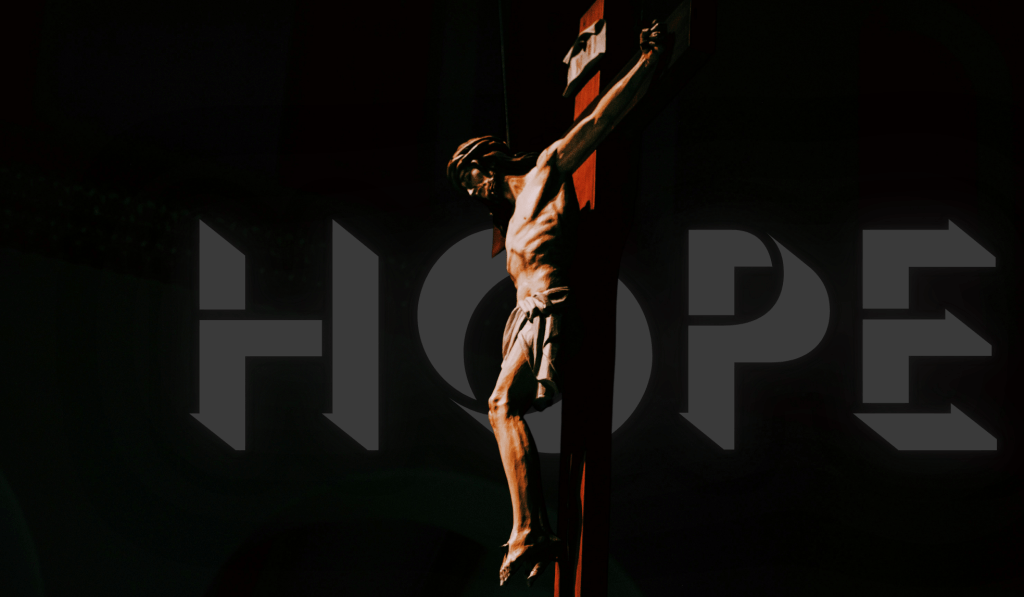
An excerpt from one of those writings—The cross exemplifies every virtue
“Why did the Son of God have to suffer for us? There was a great need, and it can be considered in a twofold way: in the first place, as a remedy for sin, and secondly, as an example of how to act.
“It is a remedy, for, in the face of all the evils which we incur on account of our sins, we have found relief through the passion of Christ. Yet, it is no less an example, for the passion of Christ completely suffices to fashion our lives. Whoever wishes to live perfectly should do nothing but disdain what Christ disdained on the cross and desire what he desired, for the cross exemplifies every virtue.
“If you seek the example of love: Greater love than this no man has, than to lay down his life for his friends. Such a man was Christ on the cross. And if he gave his life for us, then it should not be difficult to bear whatever hardships arise for his sake.
“If you seek patience, you will find no better example than the cross. Great patience occurs in two ways: either when one patiently suffers much, or when one suffers things which one is able to avoid and yet does not avoid. Christ endured much on the cross, and did so patiently, because when he suffered he did not threaten; he was led like a sheep to the slaughter and he did not open his mouth. Therefore Christ’s patience on the cross was great. In patience let us run for the prize set before us, looking upon Jesus, the author and perfecter of our faith who, for the joy set before him, bore his cross and despised the shame.
“If you seek an example of humility, look upon the crucified one, for God wished to be judged by Pontius Pilate and to die.
“If you seek an example of obedience, follow him who became obedient to the Father even unto death. For just as by the disobedience of one man, namely, Adam, many were made sinners, so by the obedience of one man, many were made righteous.
“If you seek an example of despising earthly things, follow him who is the King of kings and the Lord of lords, in whom are hidden all the treasures of wisdom and knowledge. Upon the cross he was stripped, mocked, spat upon, struck, crowned with thorns, and given only vinegar and gall to drink.
“Do not be attached, therefore, to clothing and riches, because they divided my garments among themselves. Nor to honors, for he experienced harsh words and scourgings. Nor to greatness of rank, for weaving a crown of thorns they placed it on my head. Nor to anything delightful, for in my thirst they gave me vinegar to drink.”
He wrote over 20,000 pages (some estimates say up to 100,000), and the way we think about your faith is directly related to those writings. His influence is beyond measure. Even so, on December 6, 1273, Aquinas had a deeply moving religious experience. He never wrote of it.“[E]verything he had written,” shared a friend, “seemed like straw to him by comparison with what he had seen and what had been revealed to him. He believed that he had at last clearly seen what he had devoted his life to figuring out and, by comparison, all he had written seemed pale and dry. Now that he could no longer write, he wanted to die.” He died four months later on March 7, 1274. Perhaps, one day, we’ll learn what he learned.
Someone asked me why I don’t tell Boudreaux jokes anymore. Answer: There are only so many of them, and the ones remaining aren’t necessarily suitable for church. Which leaves me today with having to tell you one I’ve already told you, but it is in my top five.
One summer, no one living along the bayou could catch any fish except old Boudreaux. Knowing Boudreaux, the game warden thought something might be up, so he asked him how he did it. Boudreaux told the game warden he would take him fishing the next day and show him. Once they got to the middle of the lake, Boudreaux took out a stick of dynamite, lit it, and threw it into the water. After the explosion, fish started floating to the surface. Boudreaux took out a net and started scooping them up. When he had them all gathered, he looked back at the game warden, who was just sitting there with his mouth open, too stunned to even speak. Finally getting his wits back, the game warden started hollering at Boudreaux, “You can’t fish like that. It is so illegal that I’m hauling you into jail this very moment.” Boudreaux sat there for a moment, then he took out another stick of dynamite, lit it, and handed it to the game warden, asking, “You gonna fish or you gonna talk?”
Today, we read about Peter and some of the other fellas out fishing, but I’m guessing they weren’t prepared for what happened either. How their lives could be so radically changed and so quickly. Perhaps, as they were hauling in the day’s catch, they were making plans for a family outing after Synagogue on Saturday or thinking they needed to renegotiate the price of fish due to the increased fishing tax. Whatever they were thinking, I can’t imagine it included hearing the words, “Follow me,” and then following after some itinerant rabbi.
When you consider those events, can you imagine doing the same? The Gospel says they “immediately” followed him. One second you are a fisherman, and the next you are a disciple, crisscrossing the country, living rough, snatching a piece of grain from a field you are passing to have something to eat, and going through a pair of sandals every week. Sure, you are meeting new people, and there are the miracles—my goodness, the miracles—and you are listening to teachings that, for the first time in your life, allow you to come to an understanding of God. But there are also the more difficult parts. Some truly hate the rabbi you are following. After a while, there is even talk among some of them about finding a way to have him arrested or even put to death. After all, they did try to throw him off the cliff that one time. Then there was the time you thought you were going to die out on the sea when that great storm came up out of nowhere. As you huddled in fear, the rabbi slept in peace. When you cried out to him in your fear, he chastised you, then he chastised the storm, and the seas were calm. Thinking back on the day you met him and he said, “Follow me,” probably more than once a day, you ask yourself, “What the heck was I thinking?”
Years later, after witnessing his death and resurrection, you find yourself in prison, awaiting your execution. In the hours leading up to it, you reflect once again on those first words, “Follow me,” but you no longer wonder what you were thinking. Instead, you know within your very soul why you were chosen, why you were called: to serve His purposes. To be a fisher of men and to assist in ushering in the very Kingdom of God.
If you think back on your life, many of you probably remember the time when Jesus spoke those same words, “Follow me,” to you. For many, including me, we don’t know why we responded as we did, immediately dropping our old life and following him. For me, I don’t remember the date and time, but I remember the moment, and I have no way to describe it. Yet—in the twinkling of an eye—I stopped everything and followed him.
Like you and those first disciples, I have seen miracles—oh, yes, I have—I have seen lives transformed, and I have begun to learn more deeply about the things of God. But things weren’t always so good, and then I stuck with you lot. There are still days when I ask myself, “What the heck were you thinking?” (I also direct that question to God!) But I still remember the moment he said, “Follow me,” and I’m still amazed that he chose me.
What does all this have to do with today? As I thought about those first disciples and us, I was reminded of how similar we are to them in our lives and experiences. Individually and together, we experience times of great joy and great sadness, times of need and times of abundance, faith and doubt. Through faith and the knowledge imparted to our souls, we sit on the hillside listening to Jesus teach. We look over His shoulder as He reaches out to bring life where there was death. We see those who love Him and those who deride Him. We witness His brutal death, and we wait in the upper room with the other disciples for those three days, then rush to the tomb after Mary Magdalene tells us He has risen. In all these ups and downs, we may once again ask, “What was I thinking?” But then we remember: we have been chosen and we have a purpose. “You are a chosen race, a royal priesthood, a holy nation, God’s own people, in order that you may proclaim the mighty acts of him who called you out of darkness into his marvelous light.” (1 Peter 2:9) We have been chosen for this time and this place to be the Church and to be His witnesses. Today, I ask you to remember that all we do is because we have been chosen to follow Jesus and to be a great light in the darkness. We are the Church, and we have all been called to be fishers of men to assist in ushering in the very Kingdom of God.
Take some time to consider this: Jesus said to you, “Follow me.” If you’re listening to me today, there is a very good chance you did just that. So if that is the case, why did He call you? To what purpose have you been called into service in the Kingdom of God? When you begin to discern that calling, engage with it. Live it. St. Paul said in his letter to the Ephesians, “We are his workmanship, created in Christ Jesus for good works, which God prepared beforehand, that we should walk in them.” (2:10) And again, he says in his letter to the Philippians, “It is God who works in you, both to will and to work for his good pleasure.” (2:13)
Thomas Merton said, “If you want to identify me, ask me not where I live, or what I like to eat, or how I comb my hair, but ask me what I am living for, in detail, ask me what I think is keeping me from living fully for the thing I want to live for.”
You have been called by Jesus. You have responded that you will follow. Now ask yourself, “What am I living for in Christ Jesus and His Kingdom?” Are you going to fish or talk? In the words of the Captain of the Starship Enterprise, Jean-Luc Picard, “Engage.” Start fishing.
Let us pray: O Lord, our God, You called Your people to be Your Church. As they gather in Your Name, may they love, honor, and follow Your Son to eternal life in the Kingdom He promised. Let their worship always be sincere, and help them to find Your saving Love in the Church and its Sacraments. Fill with the Spirit of Christ those whom You call to live in the midst of the world and its concerns. Help them, by their work on earth, to build up Your eternal Kingdom. May they be effective witnesses to the Truth of the Gospel and make Your Church a living presence in the midst of the world. Increase the gifts You have given Your Church so that Your faithful people may continue to grow in holiness and in imitation of Your Beloved Son. In His name we pray. Amen.
When I was 12 years old, my biggest concern was whether I was going fishing or hunting. It didn’t matter much to me. When our Saint for the day, Agnes, was 12, her biggest concern was avoiding being married off. She was a very beautiful girl and from a wealthy family. It sounds wrong to us, but 12 was about the right age for young girls to be married in the 300s, when Agnes was alive.
Agnes, however, had different plans. She said, “I am already promised to the Lord of the Universe. He is more splendid than the sun and the stars, and He has said He will never leave me!” “Jesus Christ is my only Spouse.” That didn’t go over with the many suitors, some of whom were much older, and one eventually accused her of being a Christian before the governor, which was illegal. At age 12, Agnes was beheaded for her faith. St. Abrose remembers her in his treatise On Virgins.
“Today is the birthday of a virgin; let us imitate her purity. It is the birthday of a martyr; let us offer ourselves in sacrifice. It is the birthday of Saint Agnes, who is said to have suffered martyrdom at the age of twelve. The cruelty that did not spare her youth shows all the more clearly the power of faith in finding one so young to bear it witness.
“There was little or no room in that small body for a wound. Though she could scarcely receive the blow, she could rise superior to it. Girls of her age cannot bear even their parents’ frowns and, pricked by a needle, weep as for a serious wound. Yet she shows no fear of the blood-stained hands of her executioners. She stands undaunted by heavy, clanking chains. She offers her whole body to be put to the sword by fierce soldiers. She is too young to know of death, yet is ready to face it. Dragged against her will to the altars, she stretches out her hands to the Lord in the midst of the flames, making the triumphant sign of Christ the victor on the altars of sacrilege. She puts her neck and hands in iron chains, but no chain can hold fast her tiny limbs.
“A new kind of martyrdom! Too young to be punished, yet old enough for a martyr’s crown; unfitted for the contest, yet effortless in victory, she shows herself a master in valor despite the handicap of youth. As a bride she would not be hastening to join her husband with the same joy she shows as a virgin on her way to punishment, crowned not with flowers but with holiness of life, adorned not with braided hair but with Christ himself.
“In the midst of tears, she sheds no tears herself. The crowds marvel at her recklessness in throwing away her life untasted, as if she had already lived life to the full. All are amazed that one not yet of legal age can give her testimony to God. So she succeeds in convincing others of her testimony about God, though her testimony in human affairs could not yet be accepted. What is beyond the power of nature, they argue, must come from its creator.
“What menaces there were from the executioner, to frighten her; what promises made, to win her over; what influential people desired her in marriage! She answered: “To hope that any other will please me does wrong to my Spouse. I will be his who first chose me for himself. Executioner, why do you delay? If eyes that I do not want can desire this body, then let it perish.” She stood still, she prayed, she offered her neck.
“You could see fear in the eyes of the executioner, as if he were the one condemned; his right hand trembled, his face grew pale as he saw the girl’s peril, while she had no fear for herself. One victim, but a twin martyrdom, to modesty and to religion; Agnes preserved her virginity, and gained a martyr’s crown.”
A Saint that demonstrates that God’s love and grace can extend to any, even the very young.
In a small town, it was T-Ball season. The kids were ages 5-6, and there were only enough to form two teams, each with 17 kids. Each child played at the same time, and it was a bit of madness, but great fun for all.
A father tells about his son, who played on one team, and a girl named Tracy, who played on the other. Tracy wore Coke-bottle glasses and hearing aids. When she ran, her bad leg would lag behind her, and one arm would windmill wildly. Tracy wasn’t very good, but she had a lot of spirit. When she batted, she would hit the air, and she would hit the T, but very rarely would she connect with the ball. When she did, it might roll six inches. However, the coach and everyone else, on both sides, would yell, “Run, Tracy! Run!” And she did, but she would get thrown out at first. This was the case until the very last game of the season. Tracy got up to bat, and Tracy clobbered it, knocking it past all 17 infielders (the outfielders had gotten bored out there, as nothing ever made it to them). The stadium erupted, “Run, Tracy! Run!” She did. The other team could have easily thrown her out, but chose to fumble around with the ball so that Tracy could score an in-park home run.
The coaches got her to first base, then second, then third, but… the father picks up the story.
“Tracy started for home, and then it happened. During the pandemonium, no one had noticed the twelve-year-old geriatric mutt that had lazily settled itself down in front of the bleachers five feet from the third-base line. As Tracy rounded third, the dog, awakened by the screaming, sat up and wagged its tail at Tracy as she headed down the line. The tongue hung out, mouth pulled back in an unmistakable canine smile, and Tracy stopped, right there. Halfway home, thirty feet from a legitimate home run.
“She looked at the dog. Her coach called, ‘Come on, Tracy! Come on home!’ He went to his knees behind the plate, pleading. “The crowd cheered, “Go, Tracy, go! Go, Tracy, go!” She looked at all the adults, at her own parents shrieking and catching it all on video. She looked at the dog. The dog wagged its tail. She looked at her coach. She looked at home. She looked at the dog. Everything went to slow motion. She went for the dog! It was a moment of complete, stunned silence.
“And then, perhaps, not as loud, but deeper, longer, more heartfelt, we all applauded as Tracy fell to her knees to hug the dog.” (Dangerous Wonder, p.60)
For me, that seemed like a very simple explanation of life. We have goals. We put in the work required to achieve them. We execute the plan. We set out.
For many, once the plan is in motion, there may be a few hiccups or interruptions along the way, but when we are truly focused or involved, these do not deter us from achieving the goal.
For Tracy, the goal was to hit the ball and score a run. In many ways, we are doing just that. However, unlike Tracy, when we are focused and achieving, we may notice the smiling dog along the third base line, but that is all. We will not stop to hug the dog. We will score. We will win. Over time, we will be like everyone else in the stadium that day—we will not notice the twelve-year-old geriatric mutt, lazily settled along the third base line. He will fade into the background, but that won’t matter. We will have met our goal and succeeded.
It is funny, in a sad way, how, as we grow older, we no longer notice many things like that. We say we don’t have time or that we can’t be bothered by such trivial things as a “smiling mutt” in whatever form it may take. Places to be. People to see. Things… very important things to do.
Trouble is—at least how I see it—we spend our lives like that, always chasing something, then one day we wake up old, never having truly reached our preset goals and having missed so many opportunities to witness the wonders of this world because we were so intent on our goals that they faded into the background.
When was the last time you were brought to a dead stop in wonder? In amazement? When was the last time your heart paused at what was unfolding before you? If you have, instead of staying in the moment—taking time to hug the goofy dog—simply smile and move on to the next item on the agenda. Does the brief moment of wonder fade as quickly as it arrives?
Perhaps I’m just talking about my own life this morning, and I’m the only one caught in this trap, but I don’t like to think about the things I’ve missed because I was so focused on what I was chasing. I believe this is why I’ve started traveling over the last few years and want to continue doing so, which is largely a response to a quote attributed to Virgil: “Death twitched my ear, ‘Live,’ he says, ‘for I am coming.’” That was all the motivation I needed.
You say, “Well, Father John, that’s all nice and good, but what does that have to do with anything today?” My response is a story from the Gospels.
It has been a long day with Jesus and the disciples. After all, they have fed 5,000 men, plus women and children. Jesus sends the disciples on ahead while He stays behind to pray. The disciples get in the boat and begin to cross the sea, believing Jesus will do the same after a while. Scripture tells us, “The sea became rough because a strong wind was blowing. When they had rowed about three or four miles, they saw Jesus walking on the sea and coming near the boat, and they were frightened. But he said to them, ‘It is I; do not be afraid.’” Jesus was walking on the water.
Within your mind and within your soul, how do you feel about that—Jesus walking on the water? Does that create a sense of wonder at least as strong as Tracy’s when she saw the geriatric mutt, or do you just keep moving toward your goal? What if I told you that this same Jesus healed a man with leprosy, gave sight to a blind man, and, after a man had been dead for four days, raised him to life? Anything? How about this? Jesus, the very Son of God, was crucified, died, and was buried, then on the third day rose from the grave. Does that get your motor running, or have you heard it so many times that it has just become part of the background between third base and home plate?
We become so focused on achieving our goals that even the wonder and amazement of Jesus can fade into the background. We know those old stories by heart and we no longer give them the power to transform our lives or the world around us. The statement “Jesus rose from the dead” should level us, but instead we ask, “Got it. What’s next?”
Today in our Gospel reading, we have another scene with John the Baptist. Jesus is nearby, and John speaks of him. The next day, John is visiting with two of his disciples, Andrew and, although unnamed, we believe to be the Apostle John. The Baptist points to Jesus, and Andrew and John follow. Sensing them, Jesus turns and asks, “What are you looking for?” They respond, “Well, uh, we were, you know, a buh buh buy… where are you staying?” Jesus says, “Come and see.”
Jesus says, “You are searching for many things. You have goals in your life, things you want to accomplish. You’ve been working toward them, but stop. Come and see what I will show you.” Come and see what?
Defending the faith, St. Paul told the Corinthians what they would see.
“What no eye has seen, nor ear heard, nor the heart of man imagined, what God has prepared for those who love him.”
(1 Corinthians 2:9)
Come and see the wonders of our God, given to us in Christ Jesus our Lord. Come and see lives transformed. Come and see the healing of bodies, minds, and spirits. Come and see God and participate in His Kingdom. Come and see, and the list goes on.
This is our Annual Meeting Sunday. It is a time when I seek to articulate where I would like to see us go over the course of the next year. This year, it is for us to come and see the great events of Jesus again. To be struck with such a sense of wonder that our hearts well up with a joy that brings us to an even greater love and deeper service to our God.
By all means, have your goals and aspirations, but do not let Jesus become just another part of the background. Bring Him to the forefront. Allow Jesus the opportunity to stop you in your tracks in wonder and draw you into a deeper relationship with Him.
Let us pray: God, our Father, You redeemed us and made us Your children in Christ. Through Him, You have saved us from death and given us Your Divine life of grace. By becoming more like Jesus on earth, may we come to share His glory in Heaven. Give us the peace of Your kingdom, which this world does not give. By Your loving care, protect the good You have given us. Open our eyes to the wonders of Your Love that we may serve You with a willing heart. Amen.
Trying something new with this audio version of the sermon delivered live. If you listen, would love to know what you think. Thank.
The Captain of a ship reports: When I first went to sea, I was a Third Mate. I knew everything. After sailing for a few years and earning my Second Mate license, I realized I had a lot to learn. A few years later, I became a Chief Mate. It became apparent that there was much I still didn’t know. After years of sailing, I became the Captain of my own ship. Reality set in; I didn’t have a clue what I was doing. It’s ok. I have a third mate who knows everything.
Author Charles Bukowski said, “The problem with the world is that the intelligent people are full of doubts, while the stupid ones are full of confidence.” That is a true statement. However, intelligent people sometimes also believe they are truly unqualified for the position they have been entrusted with. They consider themselves to be frauds. This is known as imposter syndrome, which can be broadly defined as “the tendency to favour a narrative that ‘you’re not good enough’, or doubting your own capabilities, while fearing exposure of being a fraud.” (Source)
I don’t know how widespread such a problem is, but I do know that inside the walls of the church—not just ours—it is likely widespread.
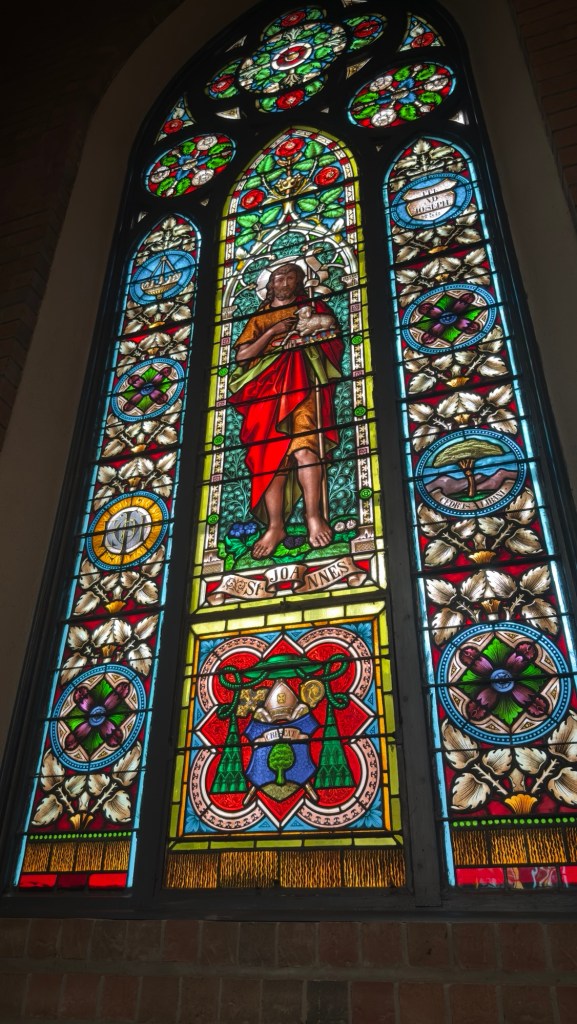
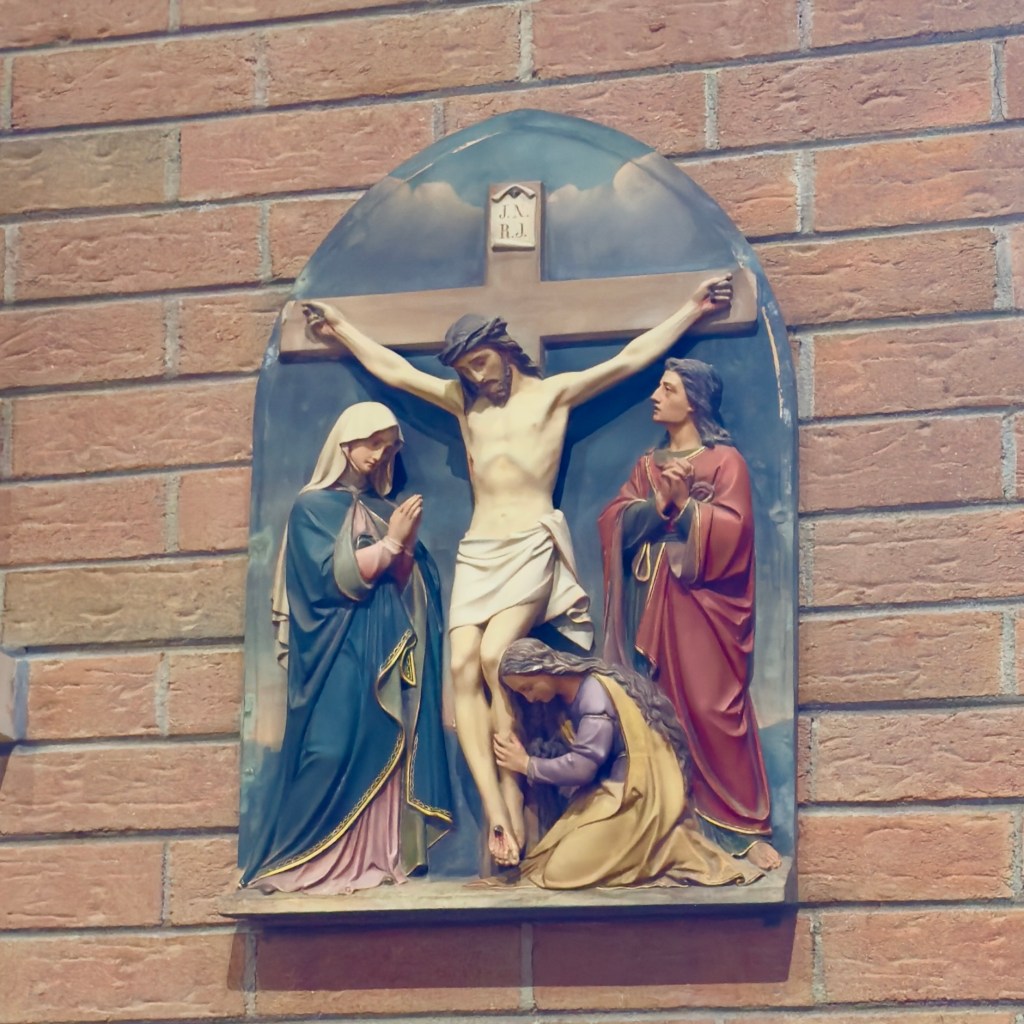
Think about your experience here. You come through the doors, and the floors are clean. Heck, Chuck makes them shine (thank you, Chuck). There’s the smell of incense in the air. It’s comfortable, and we’ll even give you a cushion if your backside is a bit thin and doesn’t provide enough padding. When we look at the images of Jesus in the stained-glass windows, including those of the crucifixion, I love them, but they’re so cleaned up. Jesus doesn’t look like He’s been beaten or flogged. There’s no dirt. There’s no blood. All that has been cleaned up. When we come forward to receive the Eucharist, we receive the bread—it’s a perfectly round, bleached wafer. It, too, has been cleaned up from what bread normally looks like. (Please don’t misunderstand what I’m saying. I would not change any of this. I believe that it is the way things are supposed to be. I’m just making observations here to make a point.) In addition, I wear some of the finest vestments available; our choir sings beautifully, accompanied by the organist and the lovely instrument he plays. Our entire experience of walking into this building is one of entering a well-ordered, clean place. That’s just elements of the space and the liturgy. What about the people?
Folks, you are marvelous, darling! Gorgeous. Handsome. It’s like walking into Garrison Keillor’s Lake Wobegon, “where all the women are strong, all the men are good-looking, and all the children are above average.” Then there’s you.
You look around you. You see the beauty of the place and all that takes place. You see folks all nicely scrubbed, sitting in their pews. And you think of yourself, and that imposter syndrome kicks in hard. You believe, “I’m not good enough,” “If they knew what I was like on the inside, they wouldn’t let me through the doors,” “This place and these people are all cleaned up, but I’ve been wandering through the mud of this world, and I track it around everywhere I go.” Not only do we see ourselves in such a poor light, but we also come to firmly believe that Jesus sees us the same way.
We think of Jesus—He’s nice and clean and shiny. He’s up there, looking down on my muddy self, and He’s disgusted by what He sees. How can He stand me? As a Christian, I am a fraud.
Today, we celebrate the Baptism of Our Lord. It occurs every year on the first Sunday after the Epiphany. It is the day when Jesus comes to the forerunner, John the Baptist, to be baptized in the Jordan River. The Church teaches us that through this one act, Jesus accomplished so many things. Primarily, it inaugurated Christ’s ministry, sanctified the waters so that all who enter the waters of baptism might be cleansed, and revealed the nature of the Holy Trinity. These things are good to know, but I’m thinking today about the physical event of that baptism.
When I was younger, growing up in Louisiana, I always thought of the Jordan River, where Jesus was baptized, as being about the size of the Mississippi or the Red. However, it is quite different. At its widest, the Jordan is only 80 to 100 feet wide. With a good arm, it would be easy enough to throw a rock across.
The environmental conditions in Israel are very arid and desert-like, except around the Jordan. There is fertile ground, and along the banks grow reeds and other water plants. It is also quite muddy.
If you think about the people coming to be baptized by John along the banks of the river, you can imagine it was a pretty trampled, sloppy place. Nothing pristine about it. Walking down to John, you’ll have to traipse through that mud. Going into the river, you’ll be washed clean—both spiritually and physically. However, when you come back out again, you’ll be spiritually clean, but physically… there you are in the mud again. The same was true for Jesus. When He came out of those waters, He didn’t miraculously glide across the mud and mire. No. He walked through it.
I thought of that image as I considered us here today. We come into this place and look around. It is clean and pristine. All these people are clean, with no blemishes or dirt on them (trust me, that is not the case. Oy!) Everything here is so well ordered, except for me. I’ve traipsed through the mud of this world, and I track it everywhere I go. How can Jesus stand me? But what we forget is that Jesus does not avoid the messy and dirty places. Jesus, in His humanity and divinity, chose… chose to walk through the mud of this world in order to find and save us, so that we might be with Him where He is.
St. Paul writes to the Philippians, “Christ Jesus, who, though he was in the form of God, did not count equality with God a thing to be grasped, but emptied himself, by taking the form of a servant, being born in the likeness of men. And being found in human form, he humbled himself by becoming obedient to the point of death, even death on a cross.” (Philippians 2:6-8)
Jesus humbled Himself to walk through the mud with us so that, in the end, He might raise us to new life through our own baptism. As Paul said to the Romans, “Do you not know that all of us who have been baptized into Christ Jesus were baptized into his death? We were buried therefore with him by baptism into death, in order that, just as Christ was raised from the dead by the glory of the Father, we too might walk in newness of life.” (Romans 6:3-4)
You’ve walked through the mud of this world. Jesus gave up the very throne room of Our God so that he might walk through that mud to find you.
The psychoanalyst Carl Jung wrote, “Modern man can’t see God because he doesn’t look low enough.”
We don’t believe Jesus can tolerate our messiness. We look up and around us. We look for Him in the Heavens and high on the altar, all clean and shiny. He is there, but perhaps more importantly, He is down here with us.
King David wrote,
“I waited patiently for the Lord; he turned to me and heard my cry.
He lifted me out of the slimy pit, out of the mud and mire; he set my feet on a rock and gave me a firm place to stand.
He put a new song in my mouth, a hymn of praise to our God. Many will see and fear the Lord and put their trust in him.”
(Psalm 40:1-3 NIV)
Through your baptism, Jesus lifted you out of the slimy pit and out of the mud and mire. He gave you a firm place to stand. He made you worthy of the promises of Heaven. If along the way you find yourself traipsing through some mud…
Remember the Last Supper, when Jesus washed the disciples’ feet and when He came to Peter. Peter said that Jesus would never wash his feet. What was Jesus’ response? “‘If I do not wash you, you have no share with me.’ Simon Peter said to him, ‘Lord, not my feet only but also my hands and my head!’ Jesus said to him, ‘The one who has bathed does not need to wash, except for his feet, but is completely clean. And you are clean.’” (John 13:8b-11)
When you come into this place, you are not an imposter. You are not a fraud. If you have walked through some muddy places, you need to wash your feet in the sacraments of Confession and the Eucharist, but you are clean. You are worthy. You are one whom Jesus loves. You are one He has gone to the furthest reaches to find. You are God’s child.
Let us pray: By God’s gift, through water and the Holy Spirit, we are reborn to everlasting life. In God’s goodness, may He continue to pour out His blessings upon us, His sons and daughters. May He make us always, wherever we may be, faithful members of His holy people. May He send His peace upon all who are gathered here, in Christ our Lord. Amen.
A group of women was talking together. One woman said, “Our congregation is sometimes down to 30 or 40 on a Sunday.”
Another said, “That’s nothing. Sometimes our congregation is down to six or seven.”
A maiden lady in her seventies added her bit, “Why, it’s so bad in our church on Sundays that when the minister says ‘dearly beloved,’ it makes me blush.”
With today being a low Sunday—especially after the wedding last night—I’m delighted to see you all here. Hopefully, you won’t regret your decision after hearing a few verses of this poem by Lord Byron. The title: Darkness.
I had a dream, which was not all a dream. The bright sun was extinguish’d, and the stars Did wander darkling in the eternal space, Rayless, and pathless, and the icy earth Swung blind and blackening in the moonless air; Morn came and went—and came, and brought no day, And men forgot their passions in the dread Of this their desolation; and all hearts Were chill’d into a selfish prayer for light.
It goes on from there, and I can assure you it doesn’t get any cheerier. It describes a post-apocalyptic world where the sun and stars have “gone out,” and humanity consumes everything in an attempt to create light, but all is despair. In the dim light of their fires, famine overcomes them. The last remaining survivors come together and build a fire so they can see one another, but they die of fright when they do because of the horror they have become.
In the end,
The world was void, The populous and the powerful was a lump, Seasonless, herbless, treeless, manless, lifeless— A lump of death—a chaos of hard clay. (Source)
Can I just say “Merry Christmas”?
I’m not sure where Byron was in his head when he wrote that one, but the words of our Gospel kept coming to me as I read it. “The light shines in the darkness, and the darkness has not overcome it.”
In the days leading up to the birth of Jesus, the world’s inhabitants lived in spiritual darkness. We know that there had not been a prophet in the land for over 400 years, and the oppression of the Roman legions was steadily increasing. It seemed that all of God’s promises had proved false. The Prophet Isaiah writes,
“Justice is far from us, and righteousness does not overtake us; we hope for light, and behold, darkness, and for brightness, but we walk in gloom. We grope for the wall like the blind; we grope like those who have no eyes; we stumble at noon as in the twilight, among those in full vigor we are like dead men.” (Isaiah 59:9-10)
The people were horrified by what had become of their lives and their dreams. Just as in the poem, a famine plagued the earth—the people were starving for God, for a Redeemer, a Savior. So they prayed, they prayed for the light to come.
And so it was, on a dark night, over the region of Judea above the City of David, which is called Bethlehem, that God once more said, “Let there be light,” and the Light of the World was given to us. It was God giving Himself to us in the form of a Babe, lying in a manger and wrapped in swaddling clothes.
“In him was life, and the life was the light of men. The light shines in the darkness, and the darkness has not overcome it…. The true light, which gives light to everyone, was coming into the world.”
As we declare in the Nicene Creed, “For us and for our salvation he came down from heaven, by the power of the Holy Spirit he became incarnate from the Virgin Mary and was made man.”
The birth of Jesus, the Incarnation of God, was what this dark world had been waiting and praying for. Yet we often make the mistake of limiting the Incarnation of our Lord to a historical event—something that happened 2,000 or so years ago—and we fail to understand its power in this present dark world and in our lives. However, it is an error to limit the Incarnation to a specific time and place. The light that first shone in the world on that first Christmas still shines as brightly today as it did then. It still has the power to dispel the darkness and to bring about our redemption through the forgiveness of sins.
St. Paul confirms this in his second letter to the Corinthians: “For God, who said, ‘Let light shine out of darkness,’ has shone in our hearts to give the light of the knowledge of the glory of God in the face of Jesus Christ.” Through this shining into the darkness, God has qualified us—that is, enabled us—to share in the inheritance of the saints in light. He has delivered us from the domain of darkness and transferred us to the kingdom of his beloved Son, in whom we have redemption, the forgiveness of sins.” (Colossians 1:12-14) And, as St. John tells us, all who believe this and call on Jesus’ Name are given the right by God to become His children.
However, even with this understanding, we are still left with one very important question: Why? Why has God rescued us? Why has He forgiven us? Why has He given us power to become His children?
Why did God become incarnate? Holy Scripture gives one answer to these questions: “Because of his great love for us.” (Ephesians 2:4) Scripture says, “In this the love of God was made manifest among us, that God sent his only Son into the world, so that we might live through him. In this is love, not that we have loved God but that he loved us and sent his Son to be the propitiation for our sins.” (1 John 4:9-10) God loves us so much that He sent His one and only Son into the world to die for us.
As we enter these celebratory times of the year, our hearts are lifted, we experience the joy of God, and this is a wonderful blessing from Him. Still, we can never separate the birth of Christ, His incarnation, from His crucifixion. It was for this reason—this ultimate expression of God’s radical love—that Christ the Savior was born.
In a sermon, St. Augustine said, “The Lord was born in order to die; he died in order that we might live. The wood of the crib was a sign of the wood of the cross; the narrow manger foreshadowed the narrow tomb.” (Sermon 196)
An elderly priest tells a story from his youth. He says, “I thought Christmas Day would never come, as it seemed like eternity, but the day finally arrived. After a night of tossing and turning, I awoke early in the morning, then ran to the tree and looked under it to see what was there. As I looked, I found nothing under the tree, so I turned to my Father and asked, ‘Where is the gift that you said you gave me?’ He told me that my gift was not under the tree but on it.” The priest reports, “As I looked up, I heard these words, ‘Father, forgive them, for they know not what they do.’ The gift was Jesus, looking down on me from that old rugged tree, the Cross, with love in his eyes.”
On a dark night, over the region of Judea above the City of David, which is called Bethlehem, God once more said, “Let there be light,” and through the Blessed Virgin Mary, the Light of the World was given to us. Mary wrapped him in swaddling cloths and laid him in a manger. For us, for our salvation, and for our sake, and because of his great love, God became one of us.
Give thanks, for the true light, which gives light to everyone, has come into the world.
Let us pray: God of love, Father of all, the darkness that covered the earth has given way to the bright dawn of your Word made flesh. Make us a people of this light. Make us faithful to your Word, that we may bring your life to the waiting world. Grant this through Christ our Lord. Amen.
The Gospel reading from the fifteenth chapter of St. John’s Gospel takes place at the Last Supper. There, Jesus says, “My command is this: Love one another as I have loved you.” When the disciples heard this, they might have been taken aback at first, but after a while, they may have come to the conclusion that they could do it. “I can minister to the sick, as Jesus did.” “I can help feed the hungry as He did.” “I can preach the Gospel.” “I can even be a servant to all.”
However, that was the fifteenth chapter; in the nineteenth chapter of John, the day after the Last Supper, Jesus radically redefined the meaning of the command to love one another as He loved us. Jesus demonstrated that His love extended far beyond ministering, serving, and preaching — it extended all the way to Golgotha and His death on the Cross.
What makes this such a great challenge for us today is that this radical commandment of Jesus—love one another as I have loved you—has crossed the centuries to us gathered here today. At first, we might be tempted to interpret it as the disciples did—“I can be a good person.” “I can take care of those in need.” “I can feed the hungry.” But we know, Jesus, just as He did with the Apostles, has much more in mind.
However, we might still want to dilute it to make it more acceptable. Simpler. We might say, “I will love you as much as you love me,” or “I will care for you as much as you care for me.” The issue with this is that this kind of love is based on our own strength, with all the conditions we set. Done in our own strength, it might sound good, especially on days like today, but it can also turn sour rather quickly, because “I will love you as much as you love me” can also mean “I will be as angry with you as you are angry with me,” or “I will forgive you when you forgive me.” We know, this is not what Jesus intended.
No. Jesus said, “Love one another as I have loved you.” There are no addenda, footnotes, or appendices to this statement, which means we are called to love one another sacrificially—to the Cross. How can we do this? I’m not sure it’s even possible, but maybe we can learn a few things from those who have tried.
About twenty years ago, I had the blessed opportunity to officiate at the renewal of wedding vows for Ronny and Bunny, who had been married for fifty years. Several days before the service, I received a letter from their daughter, who had asked her mom, “How is it that two people can stay in love for so long?” Her mom replied, “We chose to.” Bunny went on to say, “Every morning when I get up, I choose to be in love with your dad. And because I love and respect him so much, I don’t get angry with him. I couldn’t imagine hurting someone I care so much for or even making the least bit angry or uncomfortable. Don’t hold grudges. Instead, tell him when he makes you upset. It is just as easy to put the toilet seat down as it is to pick up socks. Hugs are a great way to dispel anger. And most importantly, the advice that makes the most sense is simply to choose to be in love.” Before the renewal of vows, I had the opportunity to visit with Ronny and ask him the same thing. His advice was basically the same. “Choose to be in love.”
When Jesus said, “Love one another as I have loved you,” I believe this is at least a beginning of what He had in mind. It involves dying to self so that we all can have life. As Bishop Barron often says, to love someone is to “will the good of the other”—to set aside our own desires so the needs of others are fulfilled.
Therefore, before God and these witnesses, I charge you, Kyler and you, Sophie, in the Name of Christ’s one holy catholic and apostolic Church to love one another as Christ Jesus has loved you. To build a loving home that the Lord may bless, to live your lives to the fullest, but to always remember that it can only be done through Christ Jesus our Lord. Amen.
The first words of the Bible are “In the beginning God created the heavens and the earth,” and then, in very poetic language, the account of creation follows: light and darkness, the sun, moon, and stars, earth, land and sea, plants, animals, and finally humankind. This is God’s creation.
The Gospel of John begins with a similar phrase: “In the beginning…” However, it is not the creation account that follows, but what was before even that — “In the beginning was the Word.” Then comes another poetic passage about who the Word is and what he does.
But why do we hear these verses today? It becomes clear when we read, “And the Word became flesh and dwelt among us.” These words point to the child in the manger. They reveal who this newborn child truly is—a human child, but not only that. His origins go back further and deeper than ours. We are people begotten of men, but Jesus is “God from God, Light from Light,” as the Nicene Creed states. He is God’s own Son, who has become man, taken on flesh, our mortal humanity, and become one of us.
God became man; this is what we say about the Christ Child in the manger. That is the focus of today’s Gospel. When God became man, He brought with Him the divine light that shines in the darkness—a light that brightens every shadow and dark corner as brightly as the noonday sun.
Why? Because He knows that we often wander in darkness—darkness of sin, death, sickness, war, and much more. We can become lost in a harsh world we don’t understand. We seek answers even when we don’t know the questions. That is why the Word became flesh, why God became man. So He could shine His divine light into the darkness of this world and our hearts, so that we might know joy and so that we all might find our way home to Him.
History records for us an interesting footnote. It was during the dark winter of 1864 at Petersburg, Virginia, where Robert E. Lee’s Confederate army faced the Union divisions led by General Ulysses S. Grant. The war, now three and a half years old, had transitioned from glorious charges to the muddy realities of trench warfare. Late one evening, Major General George Pickett, one of Lee’s generals, received news that his wife had given birth to a healthy baby boy. Throughout the line, Southerners lit large bonfires to celebrate the event. These fires did not go unnoticed in the Northern camps, prompting a cautious Grant to send a reconnaissance patrol to investigate. The scouts returned with news that Pickett had a son, and that the fires were celebratory. Interestingly, Grant and Pickett had been classmates at West Point and knew each other well. To mark the occasion, Grant also ordered bonfires to be built.
What a strange night it was. Fires blazed on both sides of the lines for miles. No gunshots, no shouts, no fighting. Just light celebrating the birth of a child. But that didn’t last long. Soon, the fires died out, and darkness took over again—both of the night and of the war.
The good news of Christmas is that in the midst of great darkness, there came a light, and the darkness was not able to overcome the light. It was not just a temporary flicker; it was an eternal flame. We need to remember that. There are times, in both world events and our personal lives, when we feel the light of the world will be snuffed out. But the Christmas story affirms that no matter what happens, the light still shines.
The theologian Robert Alden wrote, “There is not enough darkness in all the world to put out the light of even one small candle.” That being true, then the divine light born in a manger in Bethlehem is more than adequate to dispel the darkness of this world eternally.
In 1946, the first car phone service was launched. It was big, clunky, and expensive. In 1964, Ma Bell rolled out a newer generation. It wasn’t until 1973 that the first truly mobile phone call was made. Martin Cooper of Motorola called Joel Engel, his rival at Bell Labs, to say, “Joel, I’m calling you from a cell phone… a real handheld portable cell phone.” Yet, it wasn’t until October 13, 1983, that the first mobile phone network went online. The phone was the Motorola DynaTAC 8000X. It weighed 2.5 pounds, took ten hours to charge, and provided 30 minutes of talk time.
Today, 348 million people live in the United States, and it is reported that 331 million of us have a cellphone, which we use to watch countless millions of cat videos every day. I suppose none of us really knows all that those little devices can do, but one interesting feature comes to us from Uncle Sam—Wireless Emergency Alerts, or WEA.
Once or twice, we’ve had it alert during a service. It gives the government the power to send a message to every cellphone in a selected geographic location. It’ll override the silent features and everything else with a loud, blaring horn. I’m sure you know it. With this feature, the US government can send a message to every cellphone in the country (unless it is turned off), and, on average, almost all 331 million cellphones will receive it within two minutes. Why am I thinking on this?
In Holy Scripture, the image of the shepherd represents faithful leadership. The Psalmist says, “The Lord is my Shepherd, I shall not want.” Jesus says, “I am the Good Shepherd, my sheep know the sound of my voice.” However, the image of the shepherd in Holy Scripture is dramatically different from how the shepherd was perceived in society.
They were viewed as thieves, uneducated outsiders with little to no synagogue attendance, and were considered equal in depravity to dice-throwers, pigeon-racers, and tax collectors. They were ritually unclean because of their work with animals, and their testimony should never be trusted. Scripture speaks highly of them, but for the most part, they were seen as some of the lowest of the low. So, why, of all people, would the angels first announce the birth of the Messiah to shepherds, and why were they chosen as the first visitors to this newborn King?
It may not have been as efficient as the system we have today, but in Rome, there was one who could have quickly spread the message across the known world—Caesar Augustus.
Caesar Augustus is widely considered the greatest ruler of the Roman Empire. He came to power in 27 BC and ruled for forty years. Under his reign, there was the Pax Romana—the Peace of Rome, a period of almost two centuries of relative peace under Roman rule, and it was at its height under Caesar Augustus.
During his reign, the Romans had 250,000 miles of roads, 62,000 of which were paved to support the rapid deployment of military troops and trade. Sure, you had slavery, high taxation, and suppression, but what a small price to pay for Caesar and his cronies to live in comfort.
Caesar considered himself the son of God and the savior of the people, but let’s say he, instead of those dirty shepherds, heard the angel’s message, went to the manger, saw, and believed. Jesus could have been swept out of that dump and given a royal palace, servants, and everything He would ever want or need. The whole crucifixion business could have been dispensed with. How?
Caesar, using his own version of the Wireless Emergency Alert system, could have used those 250,000 miles of roads and the messengers, who were constantly running to and fro, to spread the word of this new King while keeping Jesus safely cloistered away. Within two months of Jesus’s birth and Caesar’s visit to the manger, the message would have been broadcast to the entire empire. Not as fast as we could today, but a heck of a lot faster and more efficient than a couple of untrustworthy shepherds with no means of communicating to the rest of the world.
The words of Judas Iscariot in the rock opera Jesus Christ Superstar, “Why’d you choose such a backward time in such a strange land? If you’d come today you could have reached a whole nation. Israel in 4 BC had no mass communication.”
Not only could Caesar have communicated the message more quickly, but he could have commanded and put into law that Jesus was the true Son of God, that there would be no other gods but the Father, and that anyone stupid enough to disagree could be put to death. How great is that?
Here, we’ve been trudging along for 2,000 years to make Jesus known and loved, but if the angels had gone to Caesar Augustus, the world would have become Christian almost overnight and would have remained so until 476 AD, when the Roman Empire fell. That’s when whoever rose to power would have ushered in a new god, required everyone to worship it, and put to death those who disagreed. And the world would have fallen into step with little to no resistance. Why?
God chose shepherds when he came into the world because Jesus would not be managed by politicians and used to further agendas. That type of system is always doomed to failure. Instead, Jesus came so that hearts would be changed. This does not happen with commands and dictates. It doesn’t happen with power and threats. It happens when the humble and meek, the lowly and despised—the shepherds—hear the angels’ message and submit themselves, body and soul, to the One who calls them into His presence and reveals Himself to them.
In a sermon preached in the early fifth century, St. Augustine said,
“Shepherds were watching their flocks by night. Shepherds—simple men, humble men, poor men—were watching, and the angel of the Lord stood by them. Not to kings, not to scribes, not to the wise of this world was the birth of Christ announced, but to shepherds.
Why shepherds? Because they were humble; because they were vigilant; because they were keeping watch. Pride does not keep watch; humility does.”
Jesus had no desire to conquer worldly empires. He came to conquer sin and death, so that those who believe in Him and call on His Name might receive forgiveness of sins and eternal life. This could never be accomplished by the dictates of Caesar. St. Leo the Great said, “Truth sought not the halls of kings, but the hearts of the humble.” Starting with shepherds has taken longer, but through those very humble beginnings, the world has never been the same.
This evening, we are the shepherds gathered in this place. We came not by compulsion or command, but because we too have had our hearts changed, made new. Somewhere within our souls, the angels spoke, saying to us as they did to the shepherds, “Do not be afraid; for see—I am bringing you good news of great joy for all the people: to you is born this day in the city of David a Savior, who is the Messiah, the Lord.” We have heard those words, and like the shepherds, we visit the manger, kneel before our infant King, and believe. In his sermon, St. Augustine went on to say,
Let us imitate the shepherds. Let us keep watch over what has been entrusted to us. Let us guard Christ in our hearts. Let us proclaim Him by our lives.
Our God and King has drawn near, come, let us adore Him.
Let us pray (also from St. Augustine): Let the just rejoice, for their justifier is born. Let the sick and infirm rejoice, for their Savior is born. Let the captives rejoice, for their Redeemer is born. Let slaves rejoice, for their Master is born. Let free men rejoice, for their Liberator is born. Let all Christians rejoice, for Jesus Christ is born. Amen.